

Nutraceutical Ingredients Market Analysis & Forecast
The nutraceutical ingredients market is estimated to be valued at USD 245.06 Bn in 2026 and is expected to reach USD 406.56 Bn by 2033, exhibiting a compound annual growth rate (CAGR) of 7.5% from 2026 to 2033.
Key Takeaways
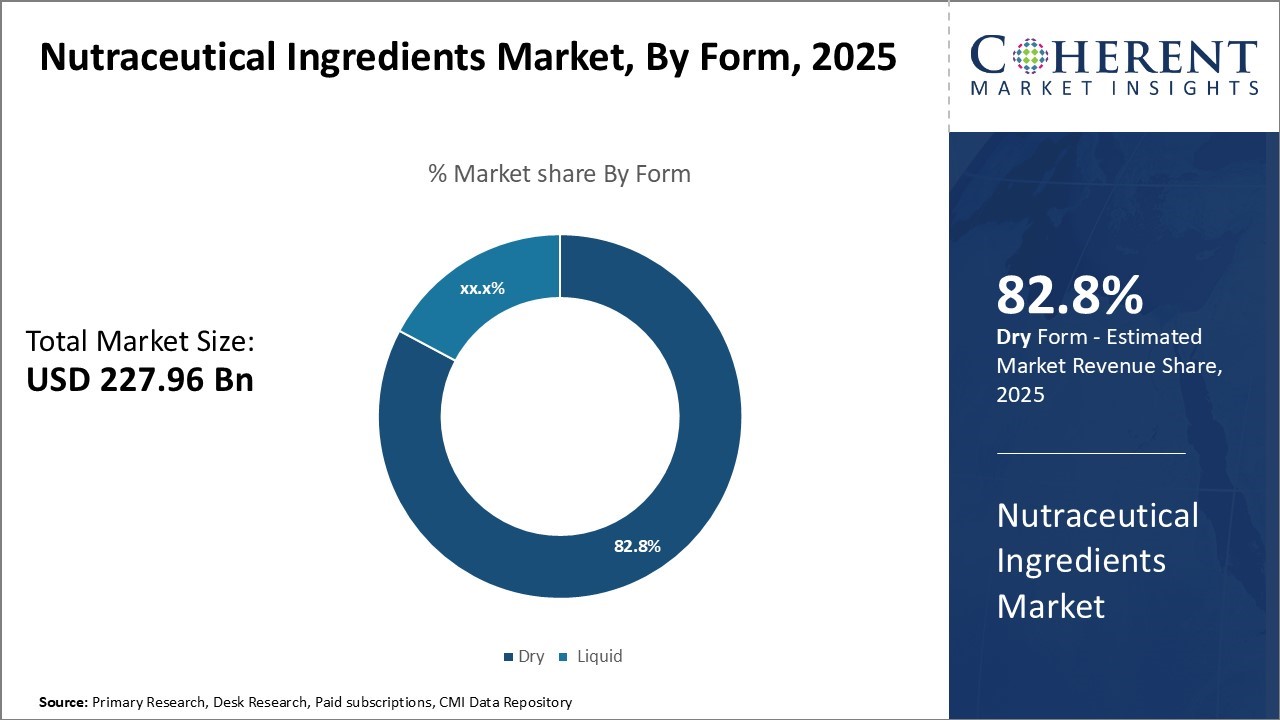
- Based on the Form, where the Dry segment dominates the market due with a share of 83.8% owing to better shelf life and storage convenience.
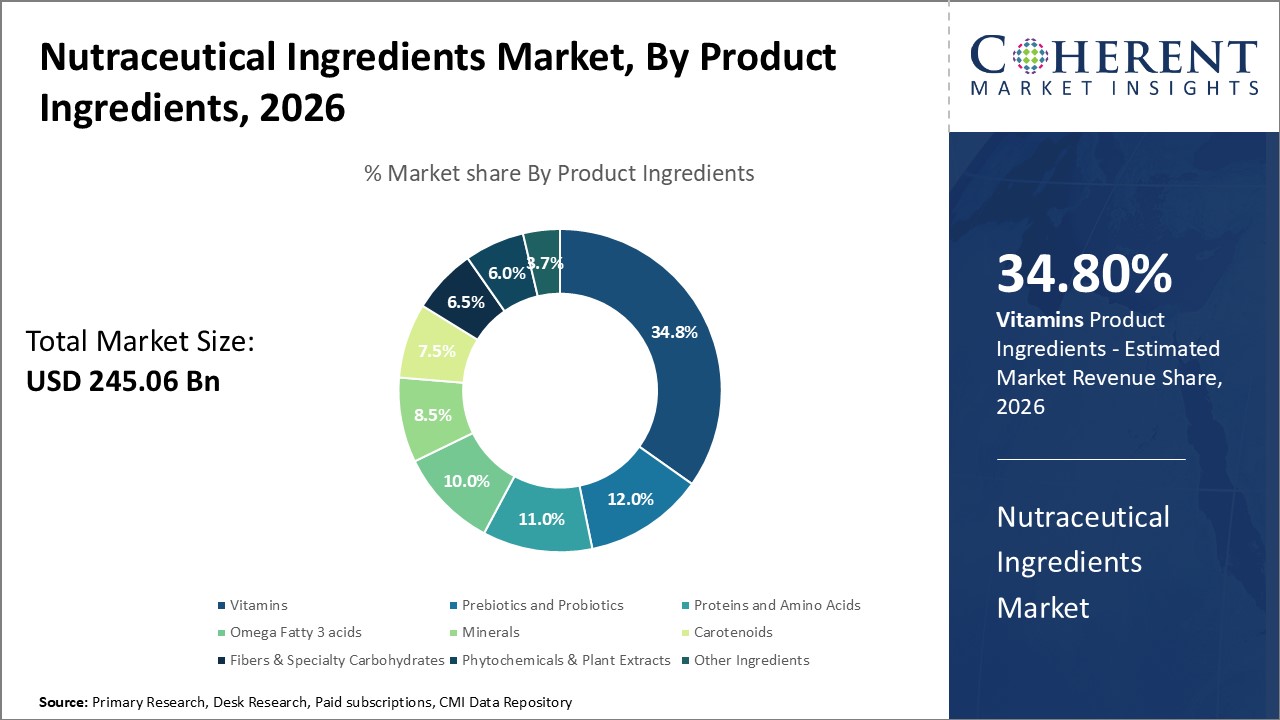
- Based on the Product Ingredients, where the Vitamins segment dominates the market with a share of 34.8% on account of the Vision of Wellness Drives Strong Demand for Vitamins.
- Based on the Application, where the functional beverages segment dominates the market with a share of 33.7% as on-the-go consumers boost the functional beverages segment.
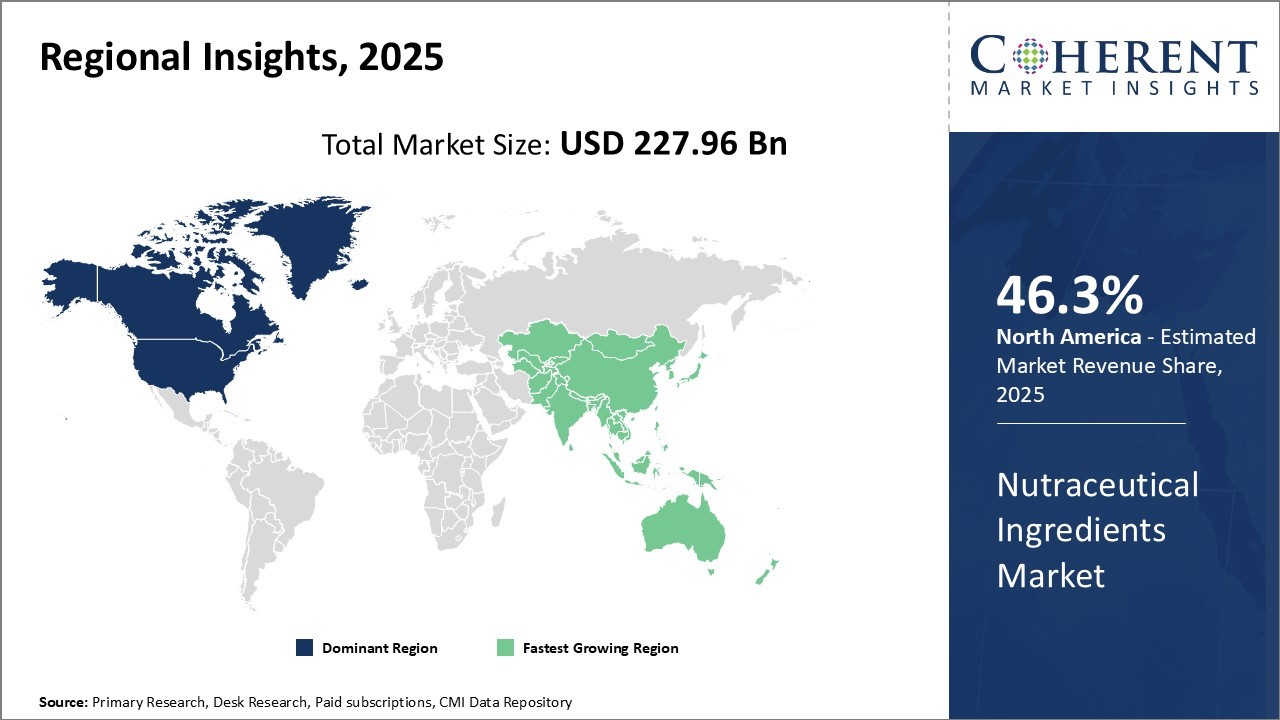
- On the basis of Region, North America has been dominating the global nutraceutical ingredients market and is expected to account for 46.3% of the market share in 2026 on account of the surging consumer awareness.
Market Overview
The rise in the nutraceutical ingredients market is driven by growing consumer awareness around preventive healthcare and the health benefits of functional foods. Increasing lifestyle-related diseases and demand for natural, plant-based ingredients further fuel the market growth.
Current Events and Their Impact on the Nutraceutical Ingredients Market
Current Events | Description and its impact |
Nano-Technology Breakthroughs |
|
Economic Demand Shifts |
|
Role of Artificial Intelligence (AI ) in the Nutraceutical Ingredients Market
Artificial Intelligence (AI) is playing a transformative role in the nutraceutical ingredients market by accelerating product innovation, enhancing ingredient discovery, improving supply chain efficiency, and enabling personalized nutrition. For instance, Brightseed, a biotech company, uses its AI platform Forager® to identify bioactive compounds NCT and NFT, which have both been shown in pre-clinical studies to support gut health. It also predicts the presence of these compounds in more than 80 plants and identifies hemp hull as the most naturally enriched source.
- Current Industry Events of 2026
- Market Size Estimation
- Regional Breakdown
- Competitive Landscape
- Customer Intelligence
- Segmental Analysis
- Pricing Analysis
- Key Market Drivers, Challenges & Future Trends
- Customized Insights Section
End-user Feedback and Unmet Needs in the Nutraceutical Ingredients Market
End-user Feedback
- Demand for Clean Label and Natural Products: Consumers prefer ingredients that are natural, organic, non-GMO, and free from artificial additives where transparency in sourcing and labeling is increasingly important.
- Personalized Nutrition Preference: Users are seeking products tailored to their specific health needs for example digestive health, cognitive function, immunity etc.
- Efficacy and Scientific: Consumers want clinically proven ingredients with visible health benefits and demand for evidence-based claims continues to rise.
Unmet Needs
- Standardization and Quality Control: Lack of uniform standards in ingredient quality, potency, and testing across regions, and more traceability and third-party verification are needed.
- Bioavailability Enhancement: Many nutraceuticals suffer from poor absorption and there’s an unmet demand for advanced delivery systems for example liposomal, nano-emulsions, etc.
- Regulatory Clarity: End users and manufacturers face confusion due to varying global regulatory guidelines on claims, formulations, and ingredient usage.
Segmental Insights
Nutraceutical Ingredients Market Insights, by Form
The Dry segment dominates the market due to Shelf Life and Storage Convenience
The dry segment is expected to contribute 83.8% share of the nutraceutical ingredients market in 2026, due to advantages in shelf life and storage convenience. Dry ingredients such as vitamins, minerals, proteins, and amino acids can be stored at room temperature for extended periods without degradation, making them more suitable for inventory management and transport. This is a major advantage over liquid ingredients which often require refrigeration and have a more limited shelf life. The dry form is also preferred for dietary supplements since tablets and capsules allow for precise dosing and uniform mixtures. Complex dry blends can be formulated to deliver multiple ingredients in a single dosage. This multipurpose functionality streamlines supplement manufacturing and inventory needs. The stable shelf life also ensures product freshness right up to the expiration date. From a consumer perspective, dry supplements tend to have a more convenient dosage form compared to liquids.
Tablets and capsules are compact and portable, making it effortless to consume supplements on the go or while traveling. This fosters higher user compliance. The absence of a liquid carrier also enables the inclusion of water-soluble and insoluble ingredients within the same formula. Overall, the advantages in storage, transport, manufacturing, and user experience have cemented dry ingredients as the dominant mode of delivery in the nutraceutical industry. Emerging portable lifestyles and the need for precise dosing will continue spurring preferences for this segment. In November 2024, DSM-Firmenich introduced Dry Vit A Palmitate, a clean-label functional ingredient for early-life nutrition. It enhances infant formula’s vitamin A content while addressing common stability challenges. This is further accelerating the nutraceutical ingredients market growth.
Nutraceutical Ingredients Market Insights, by Product Ingredients
The Vitamins segment dominates the market due to the Vision of Wellness Drives Strong Demand for Vitamins
Within the product ingredients segment, vitamins are expected to contribute 34.8% share in 2026, owing to their profound role in human nutrition and overall wellness. The growing awareness about how specific vitamins impact health has boosted their demand for dietary supplements and functional foods. Vitamins such as vitamins C and D are recognized for their immune-boosting and bone health properties. Rising pollution and indoor lifestyles have intensified vitamin D deficiencies.
Fat-soluble vitamins A, D, E, and K also experienced increased uptake to support heart and vision health. Multivitamin supplements targeting general wellness remain hugely popular as a holistic approach to nutrition. Their usage has expanded from the elderly to young working professionals as a preventive health measure. Manufacturers reinforce the vital role of vitamins through brands focused on anti-aging, beauty from within, and prevention of lifestyle diseases. For instance, Miduty an Indian nutraceutical brand offers a range of products including Vitamin B12, magnesium, and Vitamin ADK formulations.
Nutraceutical Ingredients Market Insights, by Application
The functional beverages segment dominates the market due to the On-The-Go Consumers Boost the Functional Beverages Segment
The functional beverages segment is expected to account for a 33.7% share of the application segment in 2026, owing to rising preferences for healthy and convenient on-the-go nourishment. Longer working hours and increasingly mobile lifestyles have boosted the popularity of beverages infused with nutraceuticals over pills or packaged foods. Protein-enriched waters and shakes address the need for portable muscle-building options. They are ideal for active individuals to refuel after a workout or stay energized through long days when traditional meal breaks may not be feasible. Waters and juices infused with antioxidants, vitamins, minerals, or plant extracts also provide a simple hydration-plus-nutrition solution.
Milk enriched with probiotics and prebiotics caters to digestive health-oriented consumers. RTD tea and coffee blends fortified with B vitamins, omega-3, and botanicals deliver functional benefits alongside daily rituals. Their normalized usage helps wean people away from regular versions onto healthier habit changes. Manufacturers leverage diverse flavors and formulations to introduce functionality across different beverage categories from sodas to juices. Novel formats like on-the-go powders and sticks further augment the segment's convenience appeal. This has made functional beverages a routine rather than a premeditated purchase for many. Sustained momentum in this segment will be guided by continued lifestyle shifts favoring portable indulgences. In March 2025, Benefit Juice launched a range of functional beverages targeting women’s health across all life stages, including menstruation, pregnancy, and menopause. This is further contributing to the nutraceutical ingredients market share.
Regional Insights
North America Nutraceutical Ingredients Market Trends
North America has been dominating the global nutraceutical ingredients market over the past few years owing to high health consciousness and increased adoption of healthy lifestyles among consumers in the region. The region is expected to account for 46.3% of the market share in 2026. Countries like the U.S. and Canada have seen a significant rise in the consumption of nutritional supplements and functional food products. This has encouraged major nutraceutical brands and supplement manufacturers to strengthen their presence in the region. The region is also home to some of the largest nutraceutical companies globally which are continuously investing in product innovation and new product development.
For instance, Abbott Laboratories, a U.S. company, expanded its product line with Ensure Plant-Based Protein supplement. Ensure® brand also offers plant-based protein options, focusing on both muscle and digestive health, while also being vegetarian and vegan-friendly. This is further contributing to the nutraceuticals ingredients market share.
Aisa Pacific Nutraceutical Ingredients Market Trends
The Asia Pacific region has emerged as the fastest-growing market for nutraceutical ingredients globally. Rapidly changing consumer eating habits, increasing health expenditures, and a growing focus on preventive healthcare are the major factors driving demand. Countries like India, China, Japan, and South Korea are anticipated to offer lucrative opportunities with their growing middle-class populations and rising disposable incomes. The region has also witnessed the proliferation of local nutraceutical brands in the past few years that rely on imports to fulfill their requirements. This dependence on imports is gradually decreasing with local suppliers improving their capabilities.
The development of native plant sources and investments in extraction technology by regional players will further help Asia Pacific become a dominant sourcing hub. Strong governmental support through initiatives focused on herbal medicines and traditional ingredients also ensures a positive outlook for nutraceutical suppliers targeting this high-potential market. Overall, Asia Pacific's favorable industry ecosystem and rising health-conscious consumer base make it an attractive investment destination for global nutraceutical players. For instance, Japanese company Ajinomoto Co., Inc. formed a strategic partnership with biotech startups, particularly those focused on amino acid and protein sciences, to boost innovation in nutraceutical ingredients, especially amino acid-based products. This is positively influencing nutraceuticals market revenue.
United States Nutraceutical Ingredients Market Trends
The rise in the U.S. Nutraceutical market is driven by increasing consumer awareness about preventive healthcare and wellness. Growing demand for functional foods, dietary supplements, and fortified beverages is further fueling market expansion. Additionally, advancements in ingredient innovation and personalized nutrition are enhancing product appeal and market penetration. For instance, the U.S. company Pharmachem Innovations, LLC leading provider of nutraceutical products and solutions, launched as an independent company following the acquisition of the company from Ashland, Inc.
India Nutraceutical Ingredients Market Trends
The Indian nutraceutical market is witnessing rapid growth due to increasing health awareness, a rising burden of lifestyle-related diseases, and a growing preference for preventive healthcare. Urbanization and higher disposable income are driving demand for functional foods and dietary supplements. For instance, Crius Life Sciences an Indian company Crius Life Sciences launched oil-infused gummies in June 2024, offering a new format for supplement consumption. The Oil-infused gummies are set to transform the global nutraceutical industry by combining wellness benefits with convenient, appealing formats. This innovation is reshaping how consumers approach dietary supplements. This is further contributing the nutraceutical ingredients market share in India.
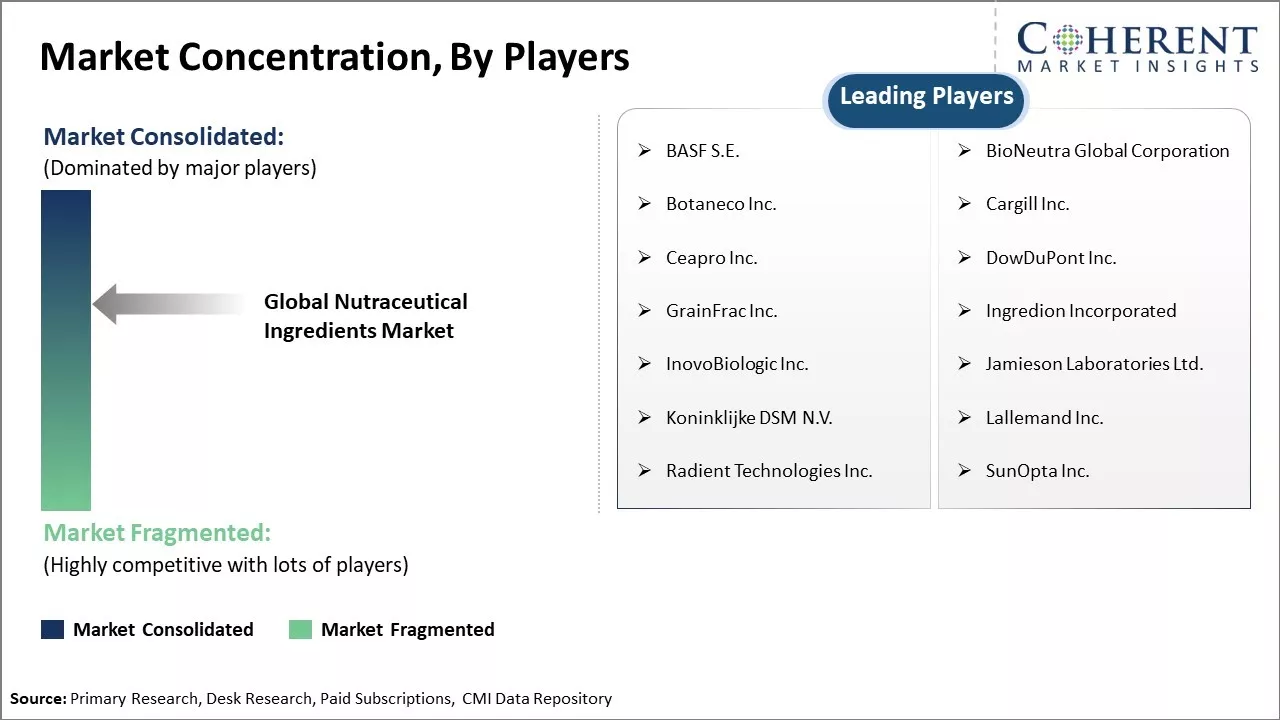
Market Concentration and Competitive Landscape
Nutraceutical Ingredients Industry News
- In June 2025, Finzelberg launched Agilirose Beauty, a nutraceutical blend of rosehip berry and collagen, at Vitafoods Europe. It supports the skin barrier and enhances hydration and elasticity.
- In May 2025, Natac Group, a biotech firm focused on sustainable botanical extracts and omega-3 oils, introduced its new branded ingredient, Oligut, at Vitafoods Europe in Barcelona.
- In March 2025, PureGreenLine ™ debuted as a sustainable botanical extraction tech for high-purity nutraceuticals.
- In May 2024, Roquette Pharma Solutions introduced LYCAGEL Flex, a pea-starch premix designed for soft-gel capsules seen at Vitafoods Europe.
Market Report Scope
Nutraceutical Ingredients Market Report Coverage
| Report Coverage | Details | ||
|---|---|---|---|
| Base Year: | 2025 | Market Size in 2026: | USD 245.06 Bn |
| Historical Data for: | 2020 To 2024 | Forecast Period: | 2026 To 2033 |
| Forecast Period 2026 to 2033 CAGR: | 7.5% | 2033 Value Projection: | USD 406.56 Bn |
| Geographies covered: |
| ||
| Segments covered: |
| ||
| Companies covered: | BASF S.E., BioNeutra Global Corporation, Botaneco Inc., Cargill Inc., Ceapro Inc., DowDuPont Inc., GrainFrac Inc., Ingredion Incorporated, InovoBiologic Inc., Jamieson Laboratories Ltd., Koninklijke DSM N.V., Lallemand Inc., Radient Technologies Inc., and SunOpta Inc. | ||
| Growth Drivers: |
| ||
| Restraints & Challenges: |
| ||
Nutraceutical Ingredients Market Growth Drivers
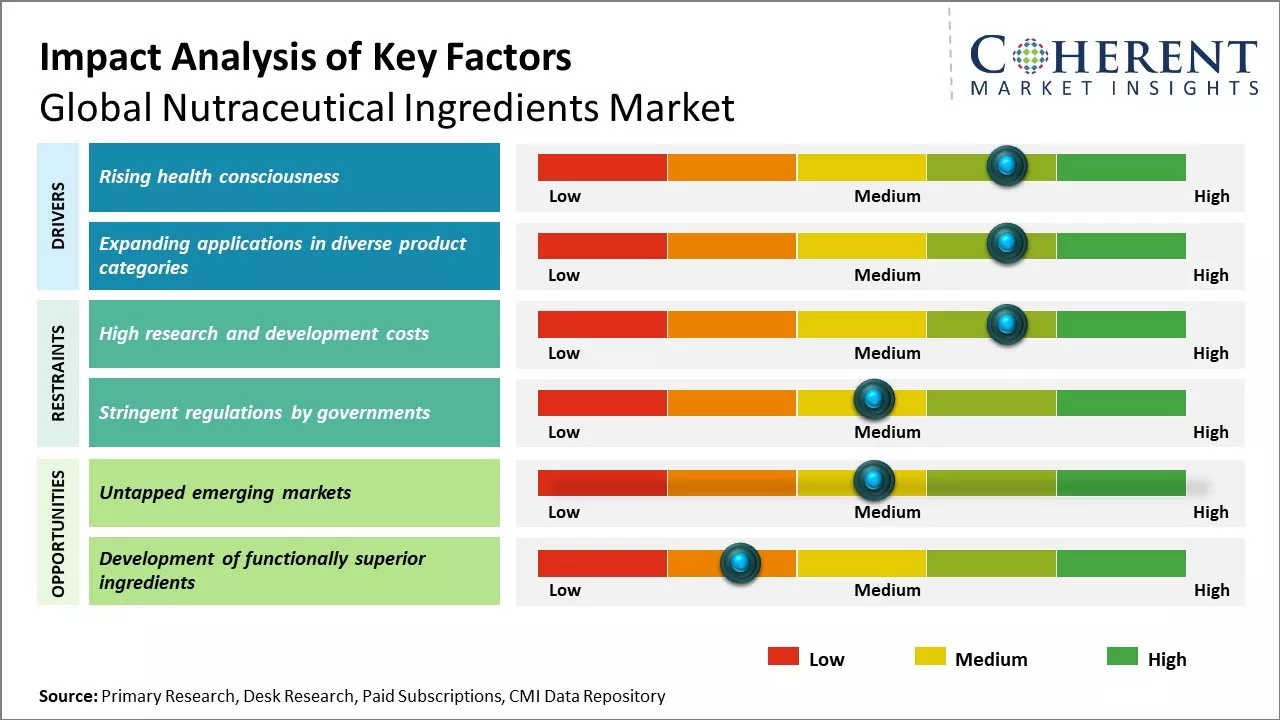
Rising health consciousness
The adoption of healthy lifestyle habits among consumers across the globe has been on a steady rise over the past few years. People are paying more attention to their diet and making an active effort to consume food products that are beneficial for their health and well-being. There is a growing awareness about the importance of maintaining optimum nutritional levels through the regular intake of various vitamins, minerals, proteins, fibers, and other nutritious components. This change in attitudes and behaviors has driven up the demand for functional ingredients that enrich foods and beverages.
Nutraceutical ingredients are popular choices owing to their scientifically proven health benefits. Many consumers prefer fortifying their regular diet with supplements containing these ingredients to fulfill their bodies' nutritional requirements and lower the risk of illnesses. The trend is particularly strong among the aging population who wish to remain active and prevent age-related diseases or conditions.
Expanding applications in diverse product categories
Nutraceutical ingredients are not only limited to regular supplements anymore. Innovative food and beverage manufacturers have found highly versatile applications for various functional ingredients across many consumer product categories. For instance, probiotic yogurt drinks and energy bars fortified with vitamins, minerals, proteins, and fibers are gaining wide acceptance. Similarly, herbal extracts and prebiotics are being incorporated into healthy snacks, cereals, juice,s and dairy alternatives. This allows companies to grab market share through novel offerings for health-conscious shoppers. Even traditional packaged food and beverage segments are recognizing emerging opportunities and incorporating nutraceutical ingredients to enhance their products' nutritional profiles and appeal to modern lifestyles.
Market Opportunities: Untapped emerging markets
Untapped emerging markets present a huge opportunity for growth in the global nutraceutical ingredients market. These emerging economies have large, young populations with increasing disposable incomes and a growing focus on health and wellness. Countries such as India, Brazil, Indonesia, and others in Southeast Asia, Latin America, and Africa are expected to see strong economic development and expansion of middle-income consumers in the coming years. As awareness about preventative healthcare rises and diets shift to include more nutritious foods, demand for supplements containing nutraceutical ingredients will surge.
Analyst Opinion (Expert Opinion)
- The nutraceutical ingredients market is rapidly evolving beyond mere consumer health trends into a sophisticated battleground for innovation and scientific validation. From my analysis, the key differentiator now is the integration of clinically substantiated efficacy with clean-label transparency—a shift that is reshaping product development and consumer trust simultaneously.
- For instance, DSM-Firmenich’s recent launch of Dry Vit A Palmitate in November 2024. This ingredient directly addresses the notorious stability challenges of vitamin A in infant formulas, an issue that has long hindered efficacy in early-life nutrition products. Their ability to deliver a clean-label solution while enhancing nutrient stability signals a broader industry movement toward functional precision rather than broad-spectrum supplementation. This exemplifies how innovation is no longer about quantity but about targeted, scientifically backed solutions that solve real formulation problems.
- Similarly, Finzelberg’s Agilirose Beauty, introduced in June 2025, underscores the rising importance of clinically proven nutraceuticals in the beauty-from-within category. The blend of rosehip berry and collagen not only supports skin barrier function but is backed by clinical evidence showing improvements in hydration and elasticity. This kind of robust validation is increasingly non-negotiable for consumers who are becoming far more discerning, demanding proof of benefit rather than marketing claims.
- Moreover, the launch of Benefit Juice’s functional beverages in March 2025 targeting women’s health across life stages illustrates a critical pivot in market segmentation strategies. By tailoring products to specific physiological phases like menstruation, pregnancy, and menopause, the nutraceutical space is moving from generic health claims to deeply personalized wellness solutions. This approach aligns with data showing that women, who make over 80% of household health and wellness purchase decisions, are actively seeking products that resonate with their unique health needs.
Speak to the analyst
Want personalized insights?
Take the findings above to one of our principal consultants, or have the report rebuilt around the segments, geographies and competitors you actually track.
Market Segmentation
- By Form (Revenue, USD Bn, 2021 - 2033)
- Dry
- Liquid
- By Product Ingredients (Revenue, USD Bn, 2021 - 2033)
- Vitamins
- Prebiotics and Probiotics
- Proteins and Amino Acids
- Omega Fatty 3 acids
- Minerals
- Carotenoids
- Fibers & Specialty Carbohydrates
- Phytochemicals & Plant Extracts
- Other Ingredients
- By Application (Revenue, USD Bn, 2021 - 2033)
- Functional Food
- Functional Beverages
- Dietary supplements
- Animal Feed
- Others
- By Region (Revenue, USD Bn, 2021 - 2033)
- North America
- U.S.
- Canada
- Latin America
- Brazil
- Argentina
- Mexico
- Rest of Latin America
- Europe
- Germany
- U.K.
- Spain
- France
- Italy
- Russia
- Rest of Europe
- Asia Pacific
- China
- India
- Japan
- Australia
- South Korea
- ASEAN
- Rest of Asia Pacific
- Middle East
- GCC Countries
- Israel
- Rest of Middle East
- Africa
- South Africa
- North Africa
- Central Africa
- North America
- Company Profiles:
- BASF S.E.
- BioNeutra Global Corporation
- Botaneco Inc.
- Cargill Inc.
- Ceapro Inc.
- DowDuPont Inc.
- GrainFrac Inc.
- Ingredion Incorporated
- InovoBiologic Inc.
- Jamieson Laboratories Ltd.
- Koninklijke DSM N.V.
- Lallemand Inc.
- Radient Technologies Inc.
- SunOpta Inc.
Sources
Primary Research
Interviews from the following stakeholders:
- In-depth interviews with marketing managers, business development heads, plant operations managers, R&D directors, supply chain leaders, and procurement heads involved in the manufacturing, distribution, and application of nutraceutical ingredients across key sectors such as functional foods, dietary supplements, personal care, and pharmaceuticals.
Databases
- Euromonitor International
- IBISWorld
- Mintel GNPD
Magazines
- Nutraceuticals World
- Nutrition Insight
- Natural Products Insider
- Food Business News
- NutraIngredients
Journals
- Journal of Functional Foods
- Food Chemistry
- Nutrients
- Journal of Dietary Supplements
- International Journal of Food Sciences and Nutrition
Newspapers
- The Wall Street Journal – Health & Industry Section
- Financial Times – Global Consumer and Wellness Trends
- The New York Times – Health & Nutrition
- Reuters – Nutraceuticals and Health News
- The Economic Times – Food, Health, and Retail News
Associations
- Council for Responsible Nutrition (CRN)
- International Alliance of Dietary/Food Supplement Associations (IADSA)
- Indian Dietetic Association (IDA)
- Global Organization for EPA and DHA Omega-3s (GOED)
- Food Safety and Standards Authority of India (FSSAI)
Public Domain Sources
- U.S. Food and Drug Administration (FDA) – Dietary Supplement and GRAS Notices
- European Food Safety Authority (EFSA) – Nutrition and Health Claims
- World Health Organization (WHO) – Nutrition and Health Data
- Ministry of AYUSH – India
- National Institutes of Health (NIH) – Office of Dietary Supplements
Proprietary Elements
- In-house data analytics tools and proprietary repository of nutraceutical ingredient market intelligence, including trend mapping, consumer behavior analysis, regulatory tracking, and end-use application insights developed over the past 8+ years.
*Definition: The nutraceutical ingredients market involves the production, processing, and marketing of ingredients that are derived from food sources and are sold as supplements with medicinal properties. These ingredients may include vitamins, minerals, probiotics, prebiotics, amino acids, enzymes, essential fatty acids, and fibers. Companies in this market supply nutraceutical ingredient products to manufacturers who incorporate them into supplements for distribution to health food stores, pharmacies, mass retailers, and direct-to-consumer online channels.
Get access to 250+ pages report
Every segment, forecast, competitor profile and data table behind the analysis above — available for instant download.
- ESOMAR Member
- ISO 9001:2015 Certified
- D-U-N-S Registered
- GDPR & CCPA Compliant
Missing comfort of reading report in your local language? Find your preferred language:
Transform your Strategy with Exclusive Trending Reports
Frequently Asked Questions
The Nutraceutical Ingredients Market is estimated to be valued at USD 245.06 Bn in 2026 and is expected to reach USD 406.56 Bn by 2033.
The CAGR of the Nutraceutical Ingredients Market is projected to be 7.5% from 2026 to 2033.
Rising health consciousness and expanding applications in diverse product categories are the major factors driving the growth of the global nutraceutical ingredients market.
High research and development costs and stringent regulations by governments are the major factors hampering the growth of the global nutraceutical ingredients market.
In terms of form, dry is estimated to dominate the market revenue share in 2026.
BASF S.E., BioNeutra Global Corporation, Botaneco Inc., Cargill Inc., Ceapro Inc., DowDuPont Inc., GrainFrac Inc., Ingredion Incorporated, InovoBiologic Inc., Jamieson Laboratories Ltd., Koninklijke DSM N.V., Lallemand Inc., Radient Technologies Inc., and SunOpta Inc. are the major players.
North America is expected to lead the global nutraceutical ingredients market.