

Botanical Extracts Market Size and Forecast — 2026-2033
Overview
Any drug or pesticide that is made or extracted from parts of plants is referred to as botanical extracts. Demand for botanical extracts is registering steady growth, particularly in pharmaceutical and cosmetic sectors. Increasing awareness regarding the side effects of allopathic medicines together with the growing awareness about therapeutic effects and medicinal benefits of herbal products is driving the growth of global botanical extracts market.
The long shelf life of botanical extracts along with its sudden reaction has led to an increase in demand for botanical extracts in the pharmaceutical industry. Functional food segment and self-medication are expected to drive the global botanical extracts market during the forecast period. Use of botanical extracts for weight management, anti-aging, joint & bone health, and digestion, among others, is identified to be a prominent trend in the global market.
Botanical Extracts Market Size and Forecast – 2026 – 2033
The Botanical Extracts Market size is estimated to be valued at USD 14.00 billion in 2026 and is expected to reach USD 26.26 billion by 2033, exhibiting a compound annual growth rate (CAGR) of 9.4% from 2026 to 2033.
Key Takeaways
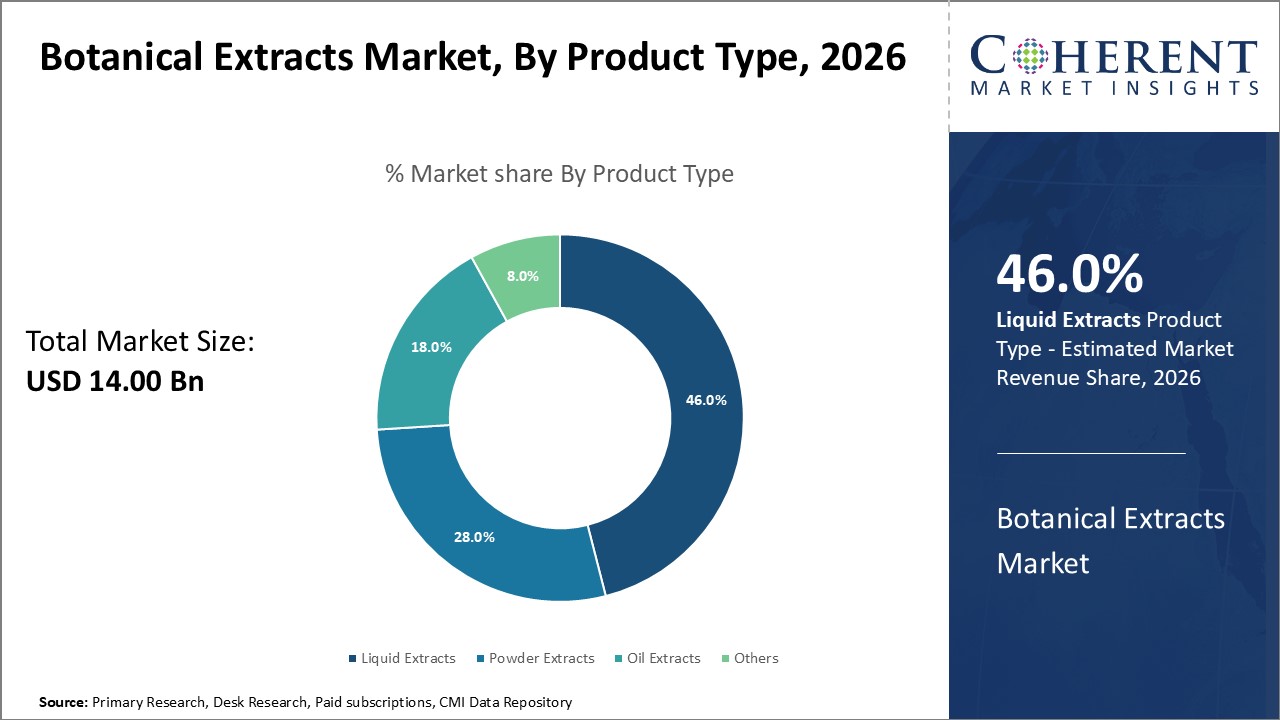
The Liquid Extracts segment dominates with 46% market share, led by widespread applications across cosmetics and pharmaceuticals, reflecting higher extraction yield and purity.
Cosmetics & Personal Care show the fastest growth among application segments fueled by the rising clean beauty movement, demand for anti-aging solutions, and expansion of the organic cosmetics sector fuel this market segment.
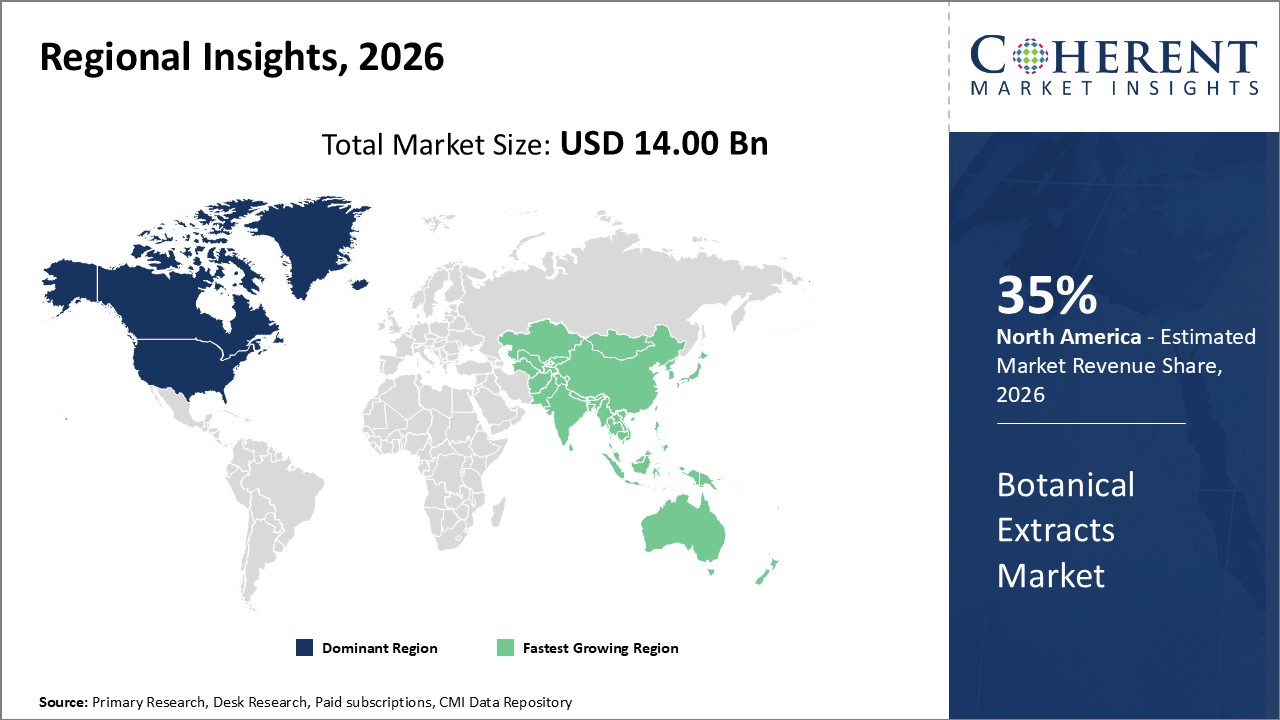
North America leads in technological advancements and regulatory support, maintaining substantial market revenue with high-value product innovation with 35% of market share.
Asia Pacific holds second largest market presence driven by traditional medicine and raw material availability.
Botanical Extracts Market – Segmentation Analysis
Botanical Extracts Market Insights, By Product Type
In terms of product type, the market is segmented into Liquid Extracts, Powder Extracts, Oil Extracts, and Others. Among these, Liquid Extracts dominate the market share, accounting for 46%, primarily due to their superior solubility and ease of incorporation across various applications including pharmaceuticals and cosmetics. This segment benefits from technological advancements in solvent-based extraction methods that enhance potency and purity.
Botanical Extracts Market Insights, By Application
In application, the Botanical Extracts market comprises Pharmaceuticals, Cosmetics & Personal Care, Food & Beverages, Nutraceuticals, Animal Feed, and Others. Cosmetics & Personal Care segments outpaces other sub segments with the largest market share, driven by the escalating consumer demand for natural and organic skincare products. The sector has witnessed consistent launches of botanical-based anti-aging and anti-inflammatory products, fueling industry revenue.
Botanical Extracts Market Insights, By Source
The market for leaves, roots and rhizomes, flowers, fruits and seeds, bark, and other products is included in the source section. The predominant sub segment is leaves, which are valued for their abundant phytochemical content and broad availability. Established supply networks and scalable harvesting methods are advantageous to this market.
Botanical Extracts Market Insights, By Geography
North America Botanical Extracts Market Analysis and Trends
The market domination of botanical extracts in North America is driven by significant R&D expenditures and strict laws that support natural product claims. Due to a sizable customer base that values sustainable and organic products, the region holds a nearly 35% market share. Due to its strong infrastructure and prominent companies, the U.S. market leads the world in the extensive use of botanical ingredients in medicines and nutraceuticals.
Asia Pacific Botanical Extracts Market Analysis and Trends
Due to the availability of raw materials, traditional medical systems like Ayurveda, and growing personal care industries, the Asia Pacific region is growing at the quickest rate in the world. With the support of government programs encouraging herbal exports and innovation, China and India stand out as significant suppliers.
Botanical Extracts Market Outlook for Key Countries
United States Botanical Extracts Market: Industry Analysis and Trends
The market for botanical extracts in the USA is expanding rapidly due to advancements in the formulation of natural products used in personal care and pharmaceuticals. About 20% of the world's earnings from botanical extracts came from the nation in 2025. Business growth is further anchored by regulatory support, such as the FDA's guidelines on the development of botanical drugs, and a growing population that is concerned about wellbeing. Leading companies like Givaudan and Naturex S.A. have increased the number of products they introduce with clean-label claims, which has improved the market picture.
India Botanical Extracts Market: Industry Analysis and Trends
India's market for botanical extracts is supported by its extensive biodiversity, long history of use, and growing export capabilities. Herbal extract output increased by 25% in 2025 thanks to the government's "Ayush" program and advantageous trade rules, making the nation a vital provider on a worldwide scale. Businesses like Synthite Industries Ltd. and Indena S.p.A. have benefited from local botanical sourcing by controlling niche markets and significantly increasing their market share throughout Asia Pacific.
Analyst Opinion
The escalating demand for clean-label and organic botanical extracts in skincare and cosmetic formulations is a significant supply-side driver. In 2025, natural extract incorporation reported a 15% growth in product launches globally, reflecting market shift towards plant-derived actives. Pricing dynamics remain favorable due to increased scalability of extraction techniques, enhancing market revenue.
Demand-side indicators underscore the rise in functional food and beverage innovations leveraging botanical extracts for immunity and wellness benefits. For instance, the U.S. nutraceutical sector accounted for over 35% of botanical extract imports in early 2026, emphasizing diversified industry use cases. The expansion of health-conscious consumer bases in North America supports the positive market forecast.
From a micro-indicator perspective, emergence of region-specific botanicals, such as Ayurvedic extracts from India and Amazonian plants from Latin America, is creating niche yet high-growth sub segments. India alone contributed to a 25% volume increase in herbal extract exports in 2025, indicating broader ecosystem opportunities supporting market share gains.
Nano-encapsulation technology integration in botanical extract formulations facilitates enhanced bioavailability, resolving some market restraints related to efficacy and stability. Recent trials in 2026 demonstrated a 31% improvement in active compound delivery, validating business growth potential within pharmaceutical and cosmetic sectors.
- Current Industry Events of 2026
- Market Size Estimation
- Regional Breakdown
- Competitive Landscape
- Customer Intelligence
- Segmental Analysis
- Pricing Analysis
- Key Market Drivers, Challenges & Future Trends
- Customized Insights Section
Market Scope
| Report Coverage | Details | ||
|---|---|---|---|
| Base Year: | 2025 | Market Size in 2026: | USD 14.00 billion |
| Historical Data for: | 2020 To 2024 | Forecast Period: | 2026 To 2033 |
| Forecast Period 2026 to 2033 CAGR: | 9.4% | 2033 Value Projection: | USD 26.26 billion |
| Geographies covered: |
| ||
| Segments covered: |
| ||
| Companies covered: | Naturex S.A., Givaudan, Chr. Hansen Holding A/S, Indena S.p.A., Kalsec Inc., Synthite Industries Ltd., Australian Botanical Products, Martin Bauer Group, Euromed S.A., Agroils Ltd., Alpinia Extracts | ||
| Growth Drivers: |
| ||
Growth factors
The surging consumer inclination towards natural personal care products is a primary catalyst, with skincare brands increasing botanical active usage by 19% in product innovation between 2023 and 2026.
In addition, improvements in environmentally benign extraction techniques, such as supercritical CO2 extraction, are increasing yields and reducing production costs, which makes wider commercial usage possible.
Furthermore, the need for nutraceuticals based on botanical extracts that promote immunity and preventative care is being driven by the increasing frequency of chronic diseases worldwide; this trend was highlighted by a 13% increase in global nutraceutical sales in 2025.
Botanical Extracts Market Development
In February 2025, According to a press statement from the firm, Herbalife Ltd., a nutrition company with a USD 1 billion market capitalization and a moderate P/E ratio of 3.6, launched MultiBurn, a new nutritional supplement made with botanical extracts intended to promote weight loss and metabolic wellness. Morosil from Moro blood oranges, which the company claims to promote overall weight loss; Metabolaid®, a blend of hibiscus and lemon verbena extracts targeted at healthy fat reduction; and Capsifen™, a combination of red chili pepper and fenugreek meant to support energy expenditure, are the three primary botanical ingredients in the supplement.
Market Trends
Recent years have seen a pronounced shift towards bioactive and sustainably sourced botanical extracts that prioritize eco-friendly cultivation and harvesting. For example, Europe’s adoption of organic ingredient standards prompted a 22% increase in certified botanical extract products in 2025.
The integration of AI and machine learning in supply chain management is enhancing traceability and quality compliance, which boosts stakeholder confidence. Furthermore, personalization in nutraceutical offerings leveraging botanical extracts is gaining momentum, with start-ups introducing tailor-made supplements in 2026, creating novel market niches.
Key Players
Naturex S.A.
Givaudan
Chr. Hansen Holding A/S
Indena S.p.A.
Kalsec Inc.
Synthite Industries Ltd.
Australian Botanical Products
Martin Bauer Group
Euromed S.A.
Agroils Ltd.
Alpinia Extracts
In order to increase botanical portfolios and advance extraction technology, competitive strategies have focused on significant R&D expenditures and mergers and acquisitions. A recent partnership between Kalsec Inc. and a biotech company, for instance, resulted in the introduction of a patented stabilized botanical oleoresin, improving the company's competitive positioning in the food and beverage industry. Likewise, Chr. Hansen increased their market share by 11% in 2025 through the purchase of regional extract manufacturers across Europe.
Prospects for the Market for Botanical Extracts in the Future
The growing demand for natural and plant-based products across a variety of industries, including food and beverage, pharmaceuticals, cosmetics, and personal care, is driving the market for botanical extracts, which is expected to have a bright future.
Because of their advantages over synthetic substances in terms of health, safety, and usefulness, consumers are increasingly choosing botanical extracts. Innovation and product diversification are anticipated as a result of expanding research and development activities and technological developments in extraction techniques.
The market is anticipated to gain from growing recognition of the medicinal qualities of botanical products as well as their growing use in dietary supplements and functional foods.
Demand will also be increased by the growing use of cosmetics, particularly those aimed at skincare and natural beauty. Strong regional expansion in the market is also anticipated, especially in Asia Pacific, North America, and Europe, driven by shifting consumer preferences toward sustainability and wellness as well as changing lifestyles and rising disposable incomes.
Growth may be constrained by issues including supply chain unpredictability and regulatory complexity, but these are being resolved by efforts at standardization and sustainable sourcing. All things considered, the market for botanical extracts is expected to grow steadily since it follows larger trends toward natural products, wellness, and health.
Historical Analysis
In Jan 2019, International Flavors & Fragrances Inc. announced that its Frutarom Division had completed the acquisition of 62% of the share capital of The Mighty Co. Ltd. This was done in Thailand with the objective of continuing its growth strategy in Southeast Asia.
In Nov 2018, FutureCeuticals, Inc. introduced S7, which was added to the sports nutrition line of the branded products. This product was a blend of seven plant-based ingredients, which had the capability of boosting the nitric oxide levels within the human body by 231% over the baseline.
In Aug 2016, Indesso Group made a strategic decision of expanding its extract production facility along with the initiation of the construction of an R&D center at the Cileungsi plant. At this new facility, the company also added new machinery such as the Multi-stage spray dryer, which was capable of producing the products in granule form that dissolved easily in water.
Sources
Primary Research interviews:
Herbal supplement companies
Nutraceutical companies
Functional food & beverage companies
Cosmetic & personal care product formulators
Databases:
PubChem
Scopus
Web of Science
PubMed
Magazines:
Nutraceuticals World
Natural Products Insider
HerbalGram
Journals:
Phytochemistry
Planta Medica
Journal of Agricultural and Food Chemistry
Newspapers:
The Hindu Business Line
Financial Times (Healthcare & Food Business section)
The Wall Street Journal (Life Sciences & Consumer Goods)
Associations:
International Alliance of Dietary/Food Supplement Associations (IADSA)
International Herb Association (IHA)
World Health Organization (WHO – Traditional Medicine program)
Get access to 250+ pages report
Every segment, forecast, competitor profile and data table behind the analysis above — available for instant download.
- ESOMAR Member
- ISO 9001:2015 Certified
- D-U-N-S Registered
- GDPR & CCPA Compliant
Missing comfort of reading report in your local language? Find your preferred language:
Transform your Strategy with Exclusive Trending Reports
Frequently Asked Questions
Leading market companies include Naturex S.A., Givaudan, Chr. Hansen Holding A/S, Indena S.p.A., Kalsec Inc., Synthite Industries Ltd., Australian Botanical Products, Martin Bauer Group, Euromed S.A., Agroils Ltd., Alpinia Extracts, have consolidated their industry share through innovation and strategic acquisitions.
The Botanical Extracts market size is projected to grow from USD 14.00 billion in 2026 to USD 26.26 billion by 2033, exhibiting a robust CAGR of 9.4% during the forecast period.
Cosmetics & Personal Care sectors present the most significant growth opportunities due to rising consumer focus on natural health and beauty solutions.
Emphasis will increase on sustainable sourcing, high-purity botanical actives, and integration of digital supply chain technologies to meet evolving market challenges and customer expectations.
The competitive landscape is characterized by innovation-driven market growth, with companies focusing on eco-friendly extraction, product diversification, and regulatory compliance. Challenges include supply chain sustainability and stringent quality standards.
Market companies predominantly pursue R&D investments, strategic collaborations, and regional expansions to optimize market revenue and broaden portfolio offerings.