

Xanthan Gum Market Analysis & Forecast: 2026-2033
The xanthan gum market is estimated to be valued at USD 803.0 Mn in 2026 and is expected to reach USD 1,100.1 Mn by 2033, exhibiting a compound annual growth rate (CAGR) of 4.6% from 2026 to 2033.
Key Takeaways
- By Form, the Dry Segment is projected to contribute 87.0% of the xanthan gum market share in 2026.
- By Function, the Thickeners Segment is expected to account for 33.7% of the market share in 2026.
- By End-use Industry, the Food & Beverages Segment is anticipated to comprise 34.8% of the xanthan gum market in 2026.
- The North American Region is expected to dominate the global xanthan gum market with a 40.8% share in 2026
Market Overview
The xanthan gum market is on a robust upward trajectory, primarily fueled by a growing preference for clean-label, natural ingredients in food production, especially among gluten-free and vegan formulations. Its multifunctional characteristics—thickening, stabilizing, and emulsifying—render it indispensable not only in food and beverage applications but also in cosmetics, pharmaceuticals, and oil and gas. A consumer shift toward diets free from synthetic additives is prompting producers to turn to xanthan gum and other natural substitutes. The energy sector further underscores this momentum, where the gum is employed in enhanced oil recovery and drilling muds. Illustratively, leading food manufacturers are now incorporating xanthan gum into the formulation of dressings and sauces to achieve the desired viscosity and emulsification, all while adhering to stringent clean-label demands; this underscores the gum’s growing latitude in contemporary formulation science.
Current Events and Its Impact on the Xanthan Gum Market
Event | Description and Impact |
Global Supply Chain Disruptions and Raw Material Shortages |
|
China’s Economic Policies and Manufacturing Regulations |
|
Rising Health Consciousness and Clean Label Trends |
|
Role of Technologies like AI on the Xanthan Gum Market
Artificial intelligence (AI) is transforming the xanthan gum industry by boosting production speed, consistency, and formulation agility. Industry leaders such as Cargill and CP Kelco now leverage AI-based platforms to fine-tune fermentation conditions on the fly, achieving tighter batch-to-batch reproducibility, lowering operating expenses, and shortening cycle times. Concurrently, AI is tightening quality assurance by combining machine learning and computer vision to monitor viscosity, particle size, and molecular weight; this approach accelerates lab-to-production transition.
For instance, AI-enhanced spectroscopic devices can now flag quality anomalies in seconds, eliminating the need for time-consuming lab assays. On the formulation front, DuPont applies AI to engineer xanthan gum grades fine-tuned for specific food systems, achieving texture and stability goals while halving development timelines.
Predictive maintenance algorithms further contribute by anticipating faults, leading to a 30% drop in unscheduled outages and raising overall equipment effectiveness. As technological progress continues, AI is poised to further advance eco-efficient processes and bio-based xanthan gum variants, strengthening the ingredient’s strategic importance in a growing, competitive marketplace.
- Current Industry Events of 2026
- Market Size Estimation
- Regional Breakdown
- Competitive Landscape
- Customer Intelligence
- Segmental Analysis
- Pricing Analysis
- Key Market Drivers, Challenges & Future Trends
- Customized Insights Section
Pricing Analysis of the Xanthan Gum Market
The global xanthan gum market exhibits a broad pricing spectrum, influenced by application-specific requirements across sectors such as salad dressings, ice cream formulations, beverage stabilization, sauces and gravies, bakery products, and dairy alternatives. Prices generally range from $3.50 to $25.00 per kilogram, depending on the grade and end-use functionality.
In salad dressings and sauces and gravies, where xanthan gum acts as a critical food emulsifier and thickener, food-grade variants are typically priced between $8.50 and $15.00/kg to meet stringent quality and texture demands. Similarly, in ice cream formulations and beverage stabilization, higher purity grades priced around $10.00 to $14.50/kg are favored for their superior stability and mouthfeel enhancement.
In the bakery product segment, manufacturers look for xanthan gum that balances affordability and performance, generally paying between $8.50 and $12.00 per kilogram for standard grades. Organic and specialty grades come at a premium. The dairy alternatives sector, buoyed by the rise of plant-based diets, typically opts for tailored xanthan grades positioned at the higher end of the food-grade price ladder, reflecting the need for rigorous stability and texture control. Top-tier suppliers such as CP Kelco and DuPont charge up to $22.00 per kilogram for pharmaceutical and ultra-purity grades.
Meanwhile, established mid-tier and value brands serve bulk industrial users with pricing that starts around $3.50 per kilogram. Pricing across the board correlates with the interplay of required performance, level of purity, and the distinct requirements of each end-use application.
Emergence of New Technology in the Xanthan Gum Market
The xanthan gum landscape is evolving fast, driven by breakthroughs that streamline every step from fermentation to end use. Continuous fermentation systems, now fitted with inline probes and automated feeds, deliver tighter growth curves and predictable rheological profiles. Coupled with CRISPR-tuned Xanthomonas strains, these setups convert feedstock into high-purity, structure-specific xanthan with minimal excess substrate.
Purification has similarly advanced; cross-flow ultrafiltration and microfiltration set-ups remove residual proteins and pigments in a single pass, augmenting transparency and quality without weakening the polymer. Gentle spray-drying no longer risks thermal cleavage, so the gum retains its critical thickening and stabilizing capabilities.
Nanostructured carriers and surface modifications boost xanthan’s delivery in drug formulations and topical antimicrobials, while also improving thermal stability in personal care lines. Industry 4.0 concepts are gaining ground, with predictive fermentation models and smart sensors that tune feed and aeration in real time, cutting batch-to-batch drift and raw material waste.
On the sustainability front, closed-loop recycle loops for process water, biogas recovery, and upcycled agro-residues as carbon sources slash both emissions and raw costs, creating a genuinely circular feedstock ecosystem. Collectively, these advancements furnish formulators with xanthan gum tailored to precise rheological, thermal, and interface-specific demands.
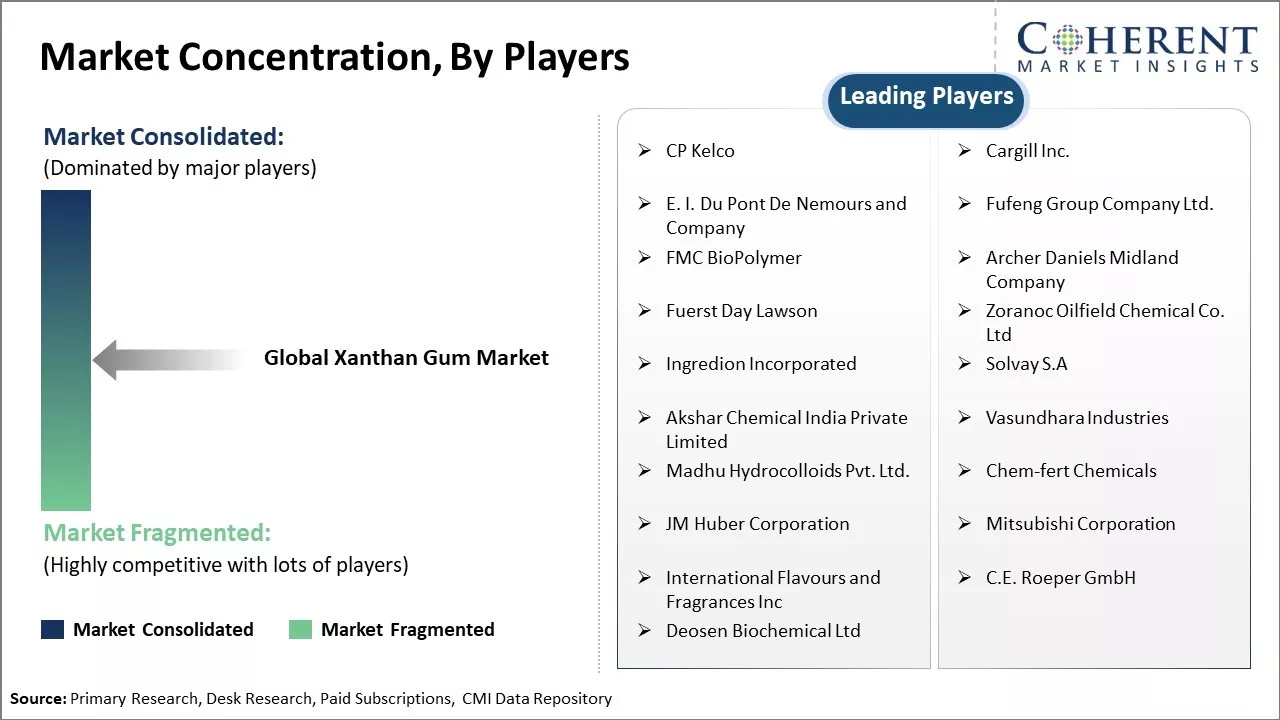
Market Concentration and Competitive Landscape
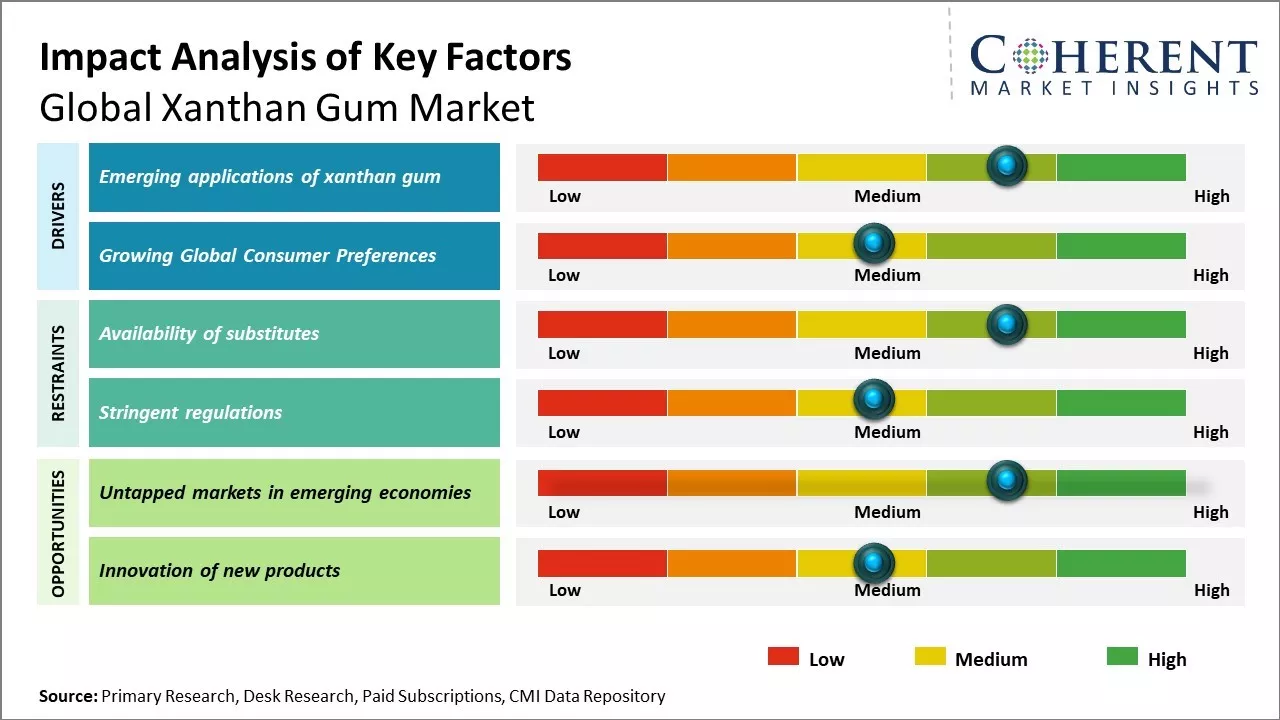
Emerging applications of xanthan gum
With several functional properties like thickening, stabilizing, and binding among others, xanthan gum has emerged as an important ingredient across many industries globally. The food and beverage industry has traditionally been the major consumer of xanthan gum, where it is used as a thickening and stabilizing agent in products like salad dressings, sauces, drinks, and dairy products. However, over the past decade xanthan gum has found several new applications outside of the food industry which are expected to drive future growth.
In the personal care industry, xanthan gum is widely gaining acceptance as a stabilizer in products such as shampoos, creams, and lotions. Several new formulations are being developed utilizing its gelling and stabilizing properties to provide enhanced texture and stability to personal care items. The unique ability of xanthan gum to immobilize oil droplets in water-based formulations makes it suitable for several stable emulsion systems.
Oil and gas operators are also incorporating xanthan gum solutions to drill, cement, complete, and stimulate wells. It is employed as a thickening agent for drilling fluids and hydraulic fracturing fluids to improve the efficiency of extraction processes. In the pharmaceutical industry, xanthan gum emerges as a promising excipient for sustained drug release formulations. Researchers are exploring its potential to develop extended-release matrix tablets along with other hydrocolloids to achieve targeted drug release profiles.
Preliminary studies indicate xanthan gum-based formulations could enable once-a-day dosing for some drugs to improve patient compliance. With the growing chronic disease burden globally, the demand for such specialized formulations is expected to increase significantly in the coming years. If successful, it will open up new revenues streams for xanthan gum producers.
Growing Global Consumer Preferences
Changing global consumer preferences also act as a key driver for the xanthan gum market. With rising health awareness, consumers are increasingly demanding products with clean label ingredients and without artificial preservatives, colors, or flavors. This growing trend has prompted several food companies to replace existing emulsifiers, stabilizers, and thickening agents with natural and organic alternatives such as xanthan gum.
It occurs naturally and is classified as generally recognized as safe by regulatory authorities worldwide. Manufacturers are actively promoting clean label and organic varieties of products in developed markets of North America and Europe.
Market Opportunities: Untapped markets in emerging economies
Untapped markets in emerging economies present a huge opportunity for growth in the xanthan gum market. Countries like India, Indonesia, Brazil and others that are experiencing rapid economic development and infrastructure growth could drive significant demand. As the middle class in these nations expands, disposable incomes are rising which enables greater consumption of processed and packaged foods where xanthan gum plays an important role as a thickening and stabilizing agent.
International food giants are already scaling up their presence in emerging market regions to cater to the evolving tastes of local populations. Compliant with various global food safety standards, xanthan gum allows these companies to offer standardized products across geographies.
Segmental Insights
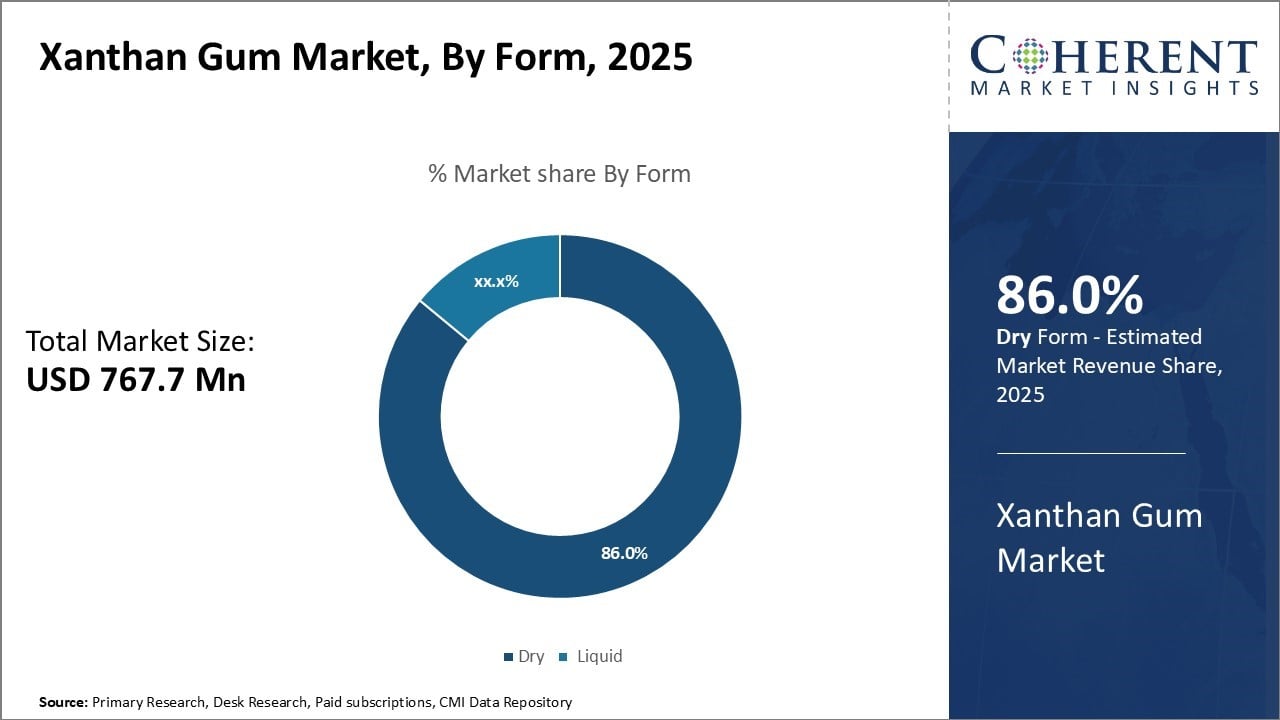
Global Xanthan Gum Market Insights, By Form
In terms of form, dry is expected to contributes 87% share of the xanthan gum market in 2026, owing to its convenience and versatility. As a dry powder, xanthan gum in its dry form is very convenient to use as it can be easily added in dry ingredients without any prerequisite of mixing it in water. This makes it highly preferable for industries such as food processing where dry premixing of ingredients is common.
Moreover, being soluble in both hot and cold liquids, dry xanthan gum provides excellent flexibility to food manufacturers to incorporate it into a wide range of product formulations. Its versatility has led to its widespread usage as a stabilizer in salad dressings and sauces where it helps maintain uniform dispersion of ingredients. The stable viscosity provided by dry xanthan gum at varying temperatures also makes it suitable for use in canned products.
Overall, the advantages of simplicity in handling and broader scope of applications have helped dry xanthan gum cement its leadership position among segments.
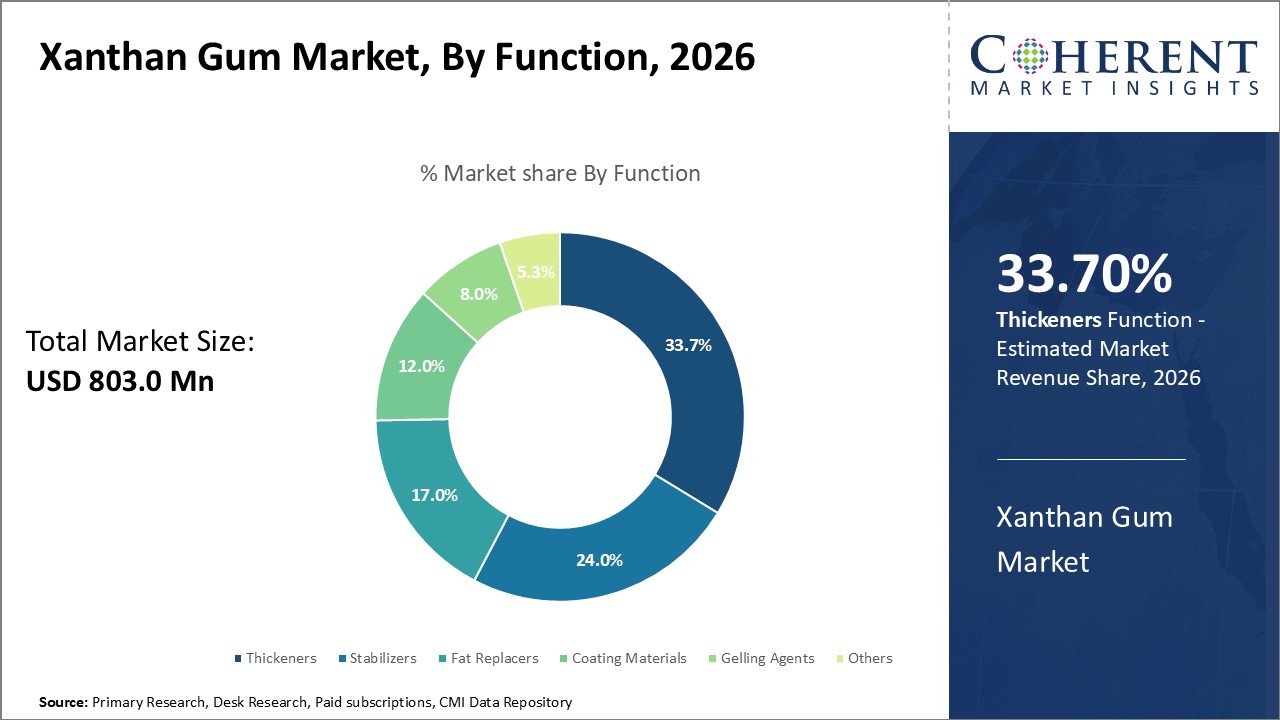
Global Xanthan Gum Market Insights, By Function
In terms of function, thickeners are expected to account for 33.7% share of the xanthan gum market in 2026, owing to its superior thickening performance. As an excellent thickening agent, xanthan gum is able to provide uniform viscosity even at very low concentrations. Its unique ability to prevent sedimentation of suspended particles in liquids has led to its widespread usage for enhancing mouthfeel in products like salad dressings, soups, and sauces.
Moreover, the shear-thinning property of xanthan gum allows formulations to be easily pourable while maintaining a thick consistency. This has increased its adoption in industries such as oil drilling where it is used to improve efficiency of drilling fluids. The dense viscosity provided by xanthan gum also aids in suspension and heat transfer in other applications. Overall, the unmatched thickening abilities have made xanthan gum the thickener of choice, driving robust growth of this segment.
Global Xanthan Gum Market Insights, By End-use Industry
In terms of end-use industry, the food & beverages segment is expected to account for 34.8% share in 2026, driven by the versatility of xanthan gum. Used as a texture modifier, xanthan gum helps improve mouthfeel, suspension and stability of a wide variety of food products without altering their nutritional profile. It is commonly found in dressings, sauces, cheeses, and dairy products where it provides uniform consistency. The heat resistance of xanthan gum also makes it suitable for canned, frozen and oven-baked goods.
Moreover, being labeled as a natural ingredient, it meets the consumer demand for clean-label products. Xanthan gum is also gaining popularity as a stabilizer in gluten-free baked foods. Its moisture retention abilities have led to new product development across categories. The broadening applications coupled with demands for multi-faceted ingredients have continued to push growth in the food and beverages segment.
Global Xanthan Gum Market - Regional Insights
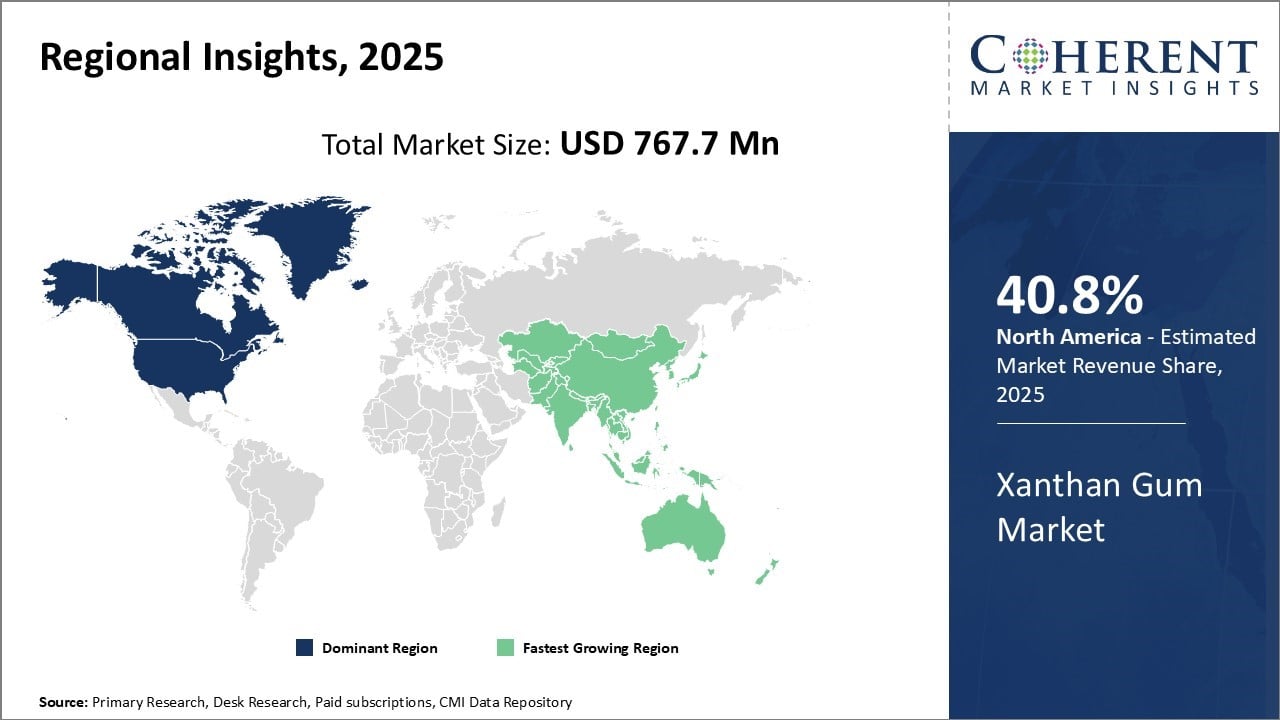
North America Xanthan Gum Market Analysis and Trends
North America continues to dominate the global xanthan gum market and is expected to account for over 40.8% of the total market share in 2026. This dominance is fueled by robust demand from major end-use industries such as food & beverages and oil & gas. Leading food manufacturers like Kraft Foods, General Mills, and PepsiCo—headquartered in the U.S. and Canada—use xanthan gum extensively in products like salad dressings, sauces, and baked goods to improve texture and stability.
The highly competitive nature of the packaged food sector pushes companies to innovate, increasing reliance on multifunctional additives like xanthan gum. Additionally, the rise in shale gas exploration activities across North America has propelled its use in oilfield applications. Xanthan gum serves as a viscosifier and fluid-loss control agent in drilling muds, helping operators drill complex wellbores efficiently while minimizing blow-out risks.
Asia Pacific Xanthan Gum Market Analysis and Trends
The Asia Pacific region has emerged as the fastest-growing market for xanthan gum, driven by a booming food processing industry and competitive manufacturing advantages. In China, the extensive use of hydrocolloids to replicate the mouthfeel of high-fat foods has made xanthan gum a preferred additive in snacks, ready-to-eat meals, and beverages.
India has become a significant importer as industries seek alternatives to synthetic stabilizers. Moreover, the region benefits from cost-effective production due to abundant labor and raw materials. These structural advantages have positioned Asia Pacific manufacturers as strong competitors on the global stage, further accelerating market growth.
Dominating Countries in the Xanthan Gum Market
United States Xanthan Gum Market Analysis and Trends
The United States is the leading contributor to the North American xanthan gum market. Its well-developed food and oil & gas sectors are major consumers of xanthan gum. The presence of global food conglomerates and ongoing innovation in processed food products supports consistent demand. In the oilfield sector, U.S.-based service providers incorporate xanthan gum in advanced drilling fluid systems to enhance operational efficiency and safety.
China Xanthan Gum Market Analysis and Trends
China dominates the Asia Pacific xanthan gum market, both as a major producer and consumer. Chinese food manufacturers widely use xanthan gum in texture enhancement, particularly in low-fat and shelf-stable products. Its growing processed food industry, paired with strong domestic production capabilities, makes China a global leader in xanthan gum supply and consumption.
India Xanthan Gum Market Analysis and Trends
India is a fast-rising player in the xanthan gum market, largely due to expanding applications in food, pharmaceuticals, and personal care. While much of the demand is met through imports, efforts toward domestic production and import substitution are gaining momentum. Rising health awareness and a shift toward natural additives have increased xanthan gum’s adoption across industries.
Market Report Scope
Xanthan Gum Market Report Coverage
| Report Coverage | Details | ||
|---|---|---|---|
| Base Year: | 2025 | Market Size in 2026: | USD 803.0 Mn |
| Historical Data for: | 2020 To 2024 | Forecast Period: | 2026 To 2033 |
| Forecast Period 2026 to 2033 CAGR: | 4.6% | 2033 Value Projection: | USD 1,100.1 Mn |
| Geographies covered: |
| ||
| Segments covered: |
| ||
| Companies covered: | CP Kelco, Cargill Inc., E. I. Du Pont De Nemours and Company, Fufeng Group Company Ltd., FMC BioPolymer, Archer Daniels Midland Company, Fuerst Day Lawson, Zoranoc Oilfield Chemical Co. Ltd, Ingredion Incorporated, Solvay S.A, Akshar Chemical India Private Limited, Vasundhara Industries, Madhu Hydrocolloids Pvt. Ltd., Chem-fert Chemicals, JM Huber Corporation , Mitsubishi Corporation , International Flavours and Fragrances Inc, C.E. Roeper GmbH, and Deosen Biochemical Ltd. | ||
| Growth Drivers: |
| ||
| Restraints & Challenges: |
| ||
Analyst Viewpoint
- The xanthan gum market is poised to experience steady growth in the coming years. As one of the key drivers, the food and beverages industry dominates the demand for xanthan gum and this trend is expected to continue.
- Xanthan gum's ability to stabilize emulsions, suspensions and foams makes it irreplaceable for various food and beverage applications. Additionally, a rise in conscious consumers favoring clean label and organic products will augment the use of natural and plant-derived ingredients like xanthan gum.
- Asia Pacific currently reigns as the fastest growing regional market for xanthan gum, North America is expected to grow at a significant rate as well, underpinned by increasing health-consciousness. Potential restraints to market growth include consumer concerns over excess food stabilizers and possibilities of alternative ingredients.
- However, xanthan gum manufacturers are investing in new product development and consumer education to mitigate risks.
- Expanding end-use industries like personal care and pharmaceuticals are likely to open new avenues of growth over the coming years. For example, a growing preference for clean label personal care products presents an opportunity to utilize xanthan gum as a stabilizer and thickener.
- The market is also anticipated to benefit from wider applications in emerging economies due to industrial expansion and rising awareness.
Xanthan Gum Market Key Developments
- In 2023 Mitsubishi Corporation Life Sciences Limited expanded its food ingredient product capacity at the Saiki Factory of its subsidiary Kohjin Life Sciences Ltd.
- In 2022 Cargill partnered with the Singapore Economic Development Board (EDB) to launch its first digital business studio in Asia. The studio is designed to support local founders with investments that bring Cargill solutions to the market.
- In 2020, Jungbunzlauer increases Xanthan Gum production capacity in Austria.
Market Segmentation
- Form Insights (Revenue, USD Mn, 2021 - 2033)
- Dry
- Liquid
- Function Insights (Revenue, USD Mn, 2021 - 2033)
- Thickeners
- Stabilizers
- Fat Replacers
- Coating Materials
- Gelling Agents
- Others
- End-use Industry Insights (Revenue, USD Mn, 2021 - 2033)
- Food & Beverages
- Meat and Poultry
- Bakery
- Confectionery
- Pharmaceuticals
- Oil and Gas
- Agrochemicals
- Paints and Coatings
- Others
- Regional Insights (Revenue, USD Mn, 2021 - 2033)
- North America
- U.S.
- Canada
- Latin America
- Brazil
- Argentina
- Mexico
- Rest of Latin America
- Europe
- Germany
- U.K.
- Spain
- France
- Italy
- Russia
- Rest of Europe
- Asia Pacific
- China
- India
- Japan
- Australia
- South Korea
- ASEAN
- Rest of Asia Pacific
- Middle East & Africa
- GCC Countries
- Israel
- Rest of Middle East & Africa
- Key Players Insights
- CP Kelco
- Cargill Inc.
- E. I. Du Pont De Nemours and Company
- Fufeng Group Company Ltd.
- FMC BioPolymer
- Archer Daniels Midland Company
- Fuerst Day Lawson
- Zoranoc Oilfield Chemical Co. Ltd.
- Ingredion Incorporated
- Solvay S.A
- Akshar Chemical India Private Limited
- Vasundhara Industries
- Madhu Hydrocolloids Pvt. Ltd.
- Chem-fert Chemicals
- JM Huber Corporation
- Mitsubishi Corporation
- International Flavours and Fragrances Inc.
- C.E. Roeper GmbH
- Deosen Biochemical Ltd.
Sources
Primary Research Interviews
- Xanthan gum manufacturers and producers
- Food and beverage industry executives
- Oil drilling and fracking specialists
- Pharmaceutical and cosmetic formulators
- Others
Databases
- IBISWorld Industry Reports
- Euromonitor International
- Others
Magazines
- Food Processing Magazine
- Chemical Engineering Magazine
- Oil & Gas Journal
- Cosmetics & Toiletries Magazine
- Others
Journals
- Journal of Food Engineering
- Carbohydrate Polymers
- Food Hydrocolloids
- Others
Newspapers
- Chemical Week
- Food Business Magazine
- Industrial Minerals
- Specialty Chemicals Magazine
- Others
Associations
- International Hydrocolloids Association (IHA)
- Food and Agriculture Organization (FAO)
- American Chemical Society (ACS)
- International Food Additives Council (IFAC)
- Others
Public Domain Sources
- U.S. Food and Drug Administration (FDA)
- European Food Safety Authority (EFSA)
- World Trade Organization (WTO) Trade Statistics
- United Nations Commodity Trade Statistics
- Others
Proprietary Elements
- CMI Data Analytics Tool
- Proprietary CMI Existing Repository of information for last 8 years
*Definition: The xanthan gum market involves the production and sale of xanthan gum, which is a polysaccharide produced through the fermentation of carbohydrates by the bacterium Xanthomonas campestris. Xanthan gum is commonly used as a thickening agent, emulsifier and stabilizer in various food, pharmaceutical and personal care products. It is used to improve texture, control crystallization, prevent ingredient separation and control viscosity. The xanthan gum market has seen steady growth due to its wide applications in the food, beverage, industrial, personal care, and other industries.
Get access to 250+ pages report
Every segment, forecast, competitor profile and data table behind the analysis above — available for instant download.
- ESOMAR Member
- ISO 9001:2015 Certified
- D-U-N-S Registered
- GDPR & CCPA Compliant
Missing comfort of reading report in your local language? Find your preferred language:
Transform your Strategy with Exclusive Trending Reports
Frequently Asked Questions
The Xanthan Gum Market size is estimated to be valued at USD 803.0 Mn in 2026, and is expected to reach USD 1,100.1 Mn by 2033.
The CAGR of the global Market is projected to be 4.6% from 2026 to 2033.
Availability of substitutes and stringent regulations are the major factors hampering the growth of the global market.
In terms of form, dry is estimated to dominate the market revenue share in 2026.
CP Kelco, Cargill Inc., E. I. Du Pont De Nemours and Company, Fufeng Group Company Ltd., FMC BioPolymer, Archer Daniels Midland Company, Fuerst Day Lawson, Zoranoc Oilfield Chemical Co. Ltd, Ingredion Incorporated, Solvay S.A, Akshar Chemical India Private Limited, Vasundhara Industries, Madhu Hydrocolloids Pvt. Ltd., Chem-fert Chemicals, JM Huber Corporation , Mitsubishi Corporation , International Flavours and Fragrances Inc , C.E. Roeper GmbH , and Deosen Biochemical Ltd are the major players.
North America is expected to lead the global market.
Xanthan gum is a polysaccharide produced by fermenting sugars with the bacterium Xanthomonas campestris, then dried and ground into a fine powder used as a thickener and stabilizer.