

Bacillus Subtilis Market Size and Share Analysis - Growth Trends and Forecasts (2026–2033)
The Bacillus Subtilis Market size is anticipated to grow at a CAGR of 3.6%, from USD 6.21 Bn in 2026 to approximately USD 7.94 Bn by 2033. The market growth is mainly attributed to the increased use of Bacillus subtilis in animal feed and probiotics preparations, growing need for biological plant protection and soil enhancement solutions, growing use of the bacteria in food processing and health supplements, and the increasing use of the bacteria in pharmaceuticals and industrial biotechnology applications. The stability, ability to form spores, adaptability to the environment, and production of enzymes and antimicrobials facilitate the commercial application of the bacteria in the mentioned industries. According to the 2025 Alltech Agri-Food Outlook, global feed production increased by 1.2%, from 1.380 Bn metric tons in 2023 to 1.396 Bn metric tons in 2024.
Key Takeaways
- The 100–300 Bn CFU/g segment is likely to dominate the Bacillus Subtilis Market with approximately 60.0% share in 2026. The segment’s growth is owing to its balance of high microbial potency, storage stability, lower formulation volume, dosage flexibility, and suitability for feed additives, probiotics, agricultural products, and industrial microbial formulations. The commercial Chr. Hansen microbial feed formulation of Bacillus subtilis requires at least 1.0 × 10¹¹ CFU/g, which is equal to 100 Bn CFU/g and falls in the top concentration range. Another interesting development occurred when Novonesis introduced Europe’s first probiotic using Bacillus for lactating dairy cows in April 2026.
- The feed additive segment is set to lead the Bacillus Subtilis Market with approximately 29.0% share in 2026. The segment’s growth is owing to the increasing incorporation of heat-stable Bacillus subtilis spores in poultry, swine, cattle, and aquaculture feed to support intestinal health, nutrient utilization, feed-conversion efficiency, and livestock performance. Global beef-feed production also increased by 1.8% to 134.1 million metric tons, providing a substantial addressable base for microbial feed additives.
- The Asia Pacific region is likely to dominate the Bacillus Subtilis Market with approximately 41.5% share in 2026. The region’s growth is owing to the large concentration of Bacillus subtilis manufacturers in China, expanding animal-feed and aquaculture production, growing adoption of microbial pesticides and biofertilizers, and rising probiotic and industrial-enzyme manufacturing across China, India, Japan, and South Korea. The 2025 Alltech Agri-Food Outlook reported that Asia Pacific remained the world’s largest feed-producing region, with approximately 533.1 million metric tons in 2024, representing around 38.2% of global feed production.
Market Drivers
Rising Adoption of Biological Crop Protection is Driving Agricultural Demand
The transition from conventional chemical pesticides toward biological crop-protection products is increasing demand for Bacillus subtilis-based formulations. The microorganism can suppress plant pathogens through antimicrobial metabolite production, competition for nutrients and colonization sites, and stimulation of plant-defense mechanisms. Its spore-forming ability also supports longer shelf life and greater environmental stability in commercial microbial pesticides.
The U.S. Environmental Protection Agency’s updated biopesticide database includes several Bacillus subtilis strains used as biological active ingredients. The EPA filed for the initial registration of the strain Bacillus subtilis CH4000 in 2024. In the November 2024 Biocontrol News Update released by the EPA, it was indicated that microbial pesticides tend to be quickly degraded and may be effective in small quantities. They also offer additional tools in integrated pest management programs.
In May 2026, it was determined that Bacillus subtilis M10 decreased common-bean root-rot by 20-28%, reduced the level of wilting by 20-37%, and boosted grain yield by more than 56-75%. These facts show how the organism can be used for both plant protection and improvement of its productivity.
Regulatory Acceptance in Functional Foods is Expanding Probiotic Applications
Increasing application of spore-forming probiotics in food and beverage industry is driving the growth of Bacillus Subtilis Market. In contrast to many other probiotic bacteria, spores of bacillus subtilis are able to withstand heat, variations in moisture levels, acidic environment, and long-term storage.
In January 2024, the U.S. Food and Drug Administration completed its review of GRAS Notice No. 1143 for Bacillus subtilis NRRL 68053 and issued a “no questions” response. The strain is suggested for use in regular foods as an ingredient at an upper limit of 1 × 10¹⁰ CFU per unit serving. The result of regulation offers a clear path towards the inclusion of high concentration Bacillus subtilis strains in consumer foods.
Current Events and Their Impact on the Bacillus Subtilis Market
Current Event | Description and its Impact |
European Commission Expands Bacillus Subtilis Feed-Additive Authorization to All Animal Species (2025) |
|
EU Authorizes Bacillus Subtilis-Based Feed Additive for Laying and Breeding Poultry (2025) |
|
- Current Industry Events of 2026
- Market Size Estimation
- Regional Breakdown
- Competitive Landscape
- Customer Intelligence
- Segmental Analysis
- Pricing Analysis
- Key Market Drivers, Challenges & Future Trends
- Customized Insights Section
Segmental Insights
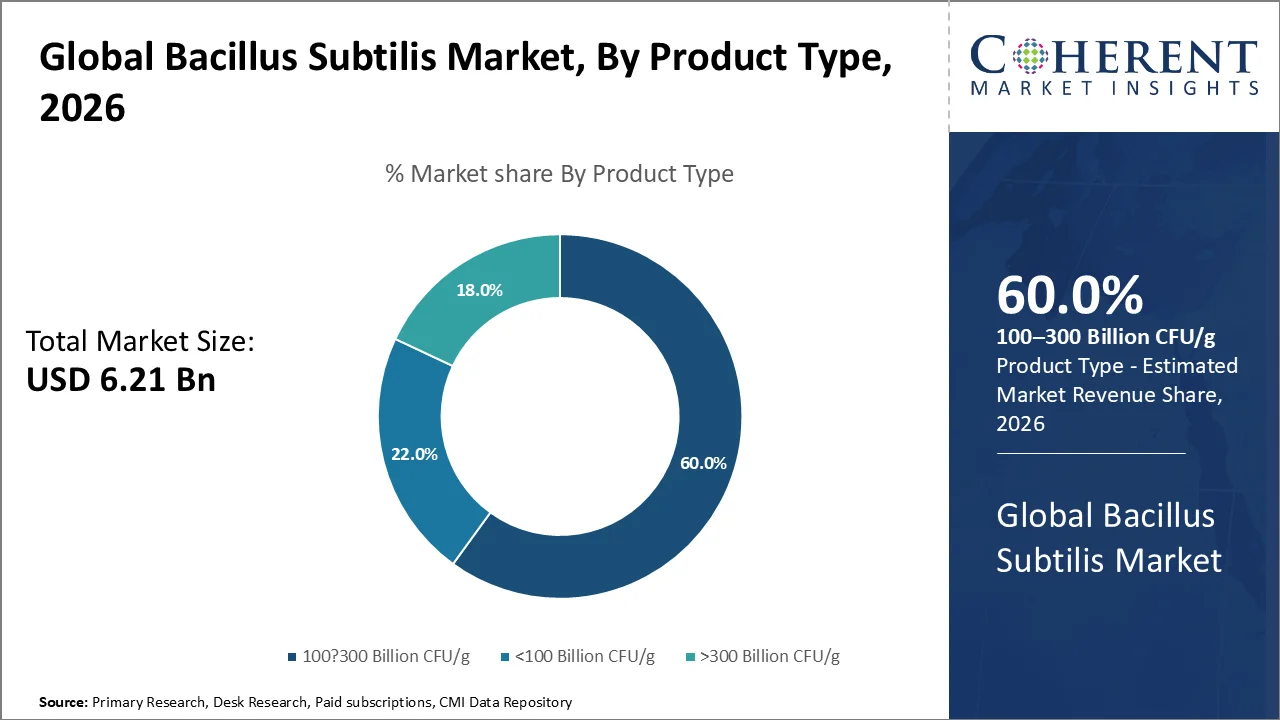
Why is the 100–300 Billion CFU/g Segment Acquiring the Largest Share?
On the basis of product type, the 100–300 Billion CFU/g segment is projected to account for the largest Bacillus Subtilis Market share of approximately 60.0% in 2026. The segment’s growth is owing to its balance of high microbial concentration, lower dosage volume, formulation flexibility, storage stability, and suitability for feed additives, probiotic foods, pharmaceutical formulations, agricultural biologicals, and industrial microbial products.
The Australian Therapeutic Goods Administration’s compositional guideline for Bacillus subtilis strain NRRL B-67989 specifies that the ingredient is dried to a concentration of 100–200 billion CFU/g, directly positioning the regulated ingredient within the leading concentration category. The guideline also establishes 100–200 billion CFU/g as the acceptable total viable-cell-count specification for the strain.
In May 2026, Taiwan-based Ming Chyi Biotechnology Ltd. showcased its MASTERBiotics MBS2000 probiotic ingredient through the official FOOD TAIPEI 2026 product platform. MBS2000 contains Bacillus subtilis at a concentration of up to 200 billion CFU/g, placing it directly within the 100–300 Billion CFU/g segment.
Feed Additives Hold the Largest Market Share
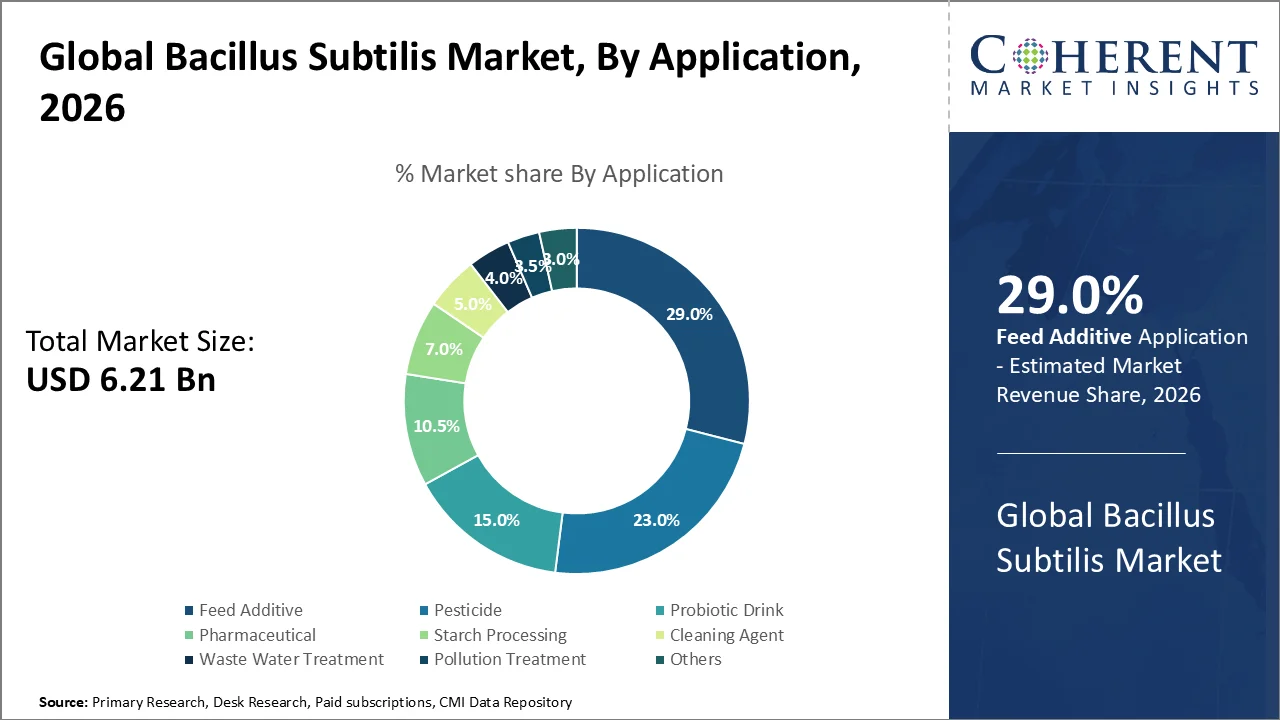
On the basis of application, the feed additive segment is projected to lead the Bacillus Subtilis Market with approximately 29.0% share in 2026. The segment’s growth is owing to the increasing use of heat-resistant Bacillus subtilis spores in poultry, livestock, and aquaculture feed to support intestinal microbial balance, nutrient digestion, feed utilization, animal productivity, and resistance to adverse production conditions.
A February 2026 evaluation report from the European Union Reference Laboratory assessed an authorization application for Bacillus subtilis DSM 34755 as a feed additive for all aquatic species. The proposed additive contains at least 1 × 10⁹ CFU/g, while its intended minimum inclusion level is 1 × 10⁹ CFU per kilogram of compound feed. The strain is of marine origin and is proposed as a non-genetically modified, spray-dried preparation. This indicates that Bacillus subtilis-based feed applications are expanding beyond conventional poultry and livestock products into aquaculture nutrition.
Bacillus Subtilis Market Trends
- Increased use of the Bacillus subtilis-based biofertilizers and biostimulants is increasing the applications of this bacterium in soil regeneration, efficiency of nutrient uptake, root development, and stress reduction of crops. In July 2024, Rovensa Next unveiled Wiibio, a soil regenerative solution using the Bacillus subtilis strain F1. The reason behind the release was the poor soil health of Europe estimated by the European Commission to be 60-70%.
- The growing incorporation of spore-forming probiotics into functional foods and beverages is widening the market beyond traditional capsules and animal-feed products. In April 2024, China’s National Health Commission approved ADM’s DE111 Bacillus subtilis probiotic for the Chinese market. ADM stated that it became the first and only supplier of a Bacillus subtilis food ingredient approved for that market. The strain’s shelf stability and resistance to challenging processing conditions support its use in beverages, foods, and dietary supplements.
- The growing trend of development of next-generation as well as metabolically active probiotic strains has led to a shift towards products with capabilities other than those offered by traditional gut health probiotics. ARM & HAMMER Performance Products, in November 2025, patented Bacillus subtilis 1579 in the U.S. for the conversion of polyphenols like quercetin to protocatechuic acid.
Regional Insights
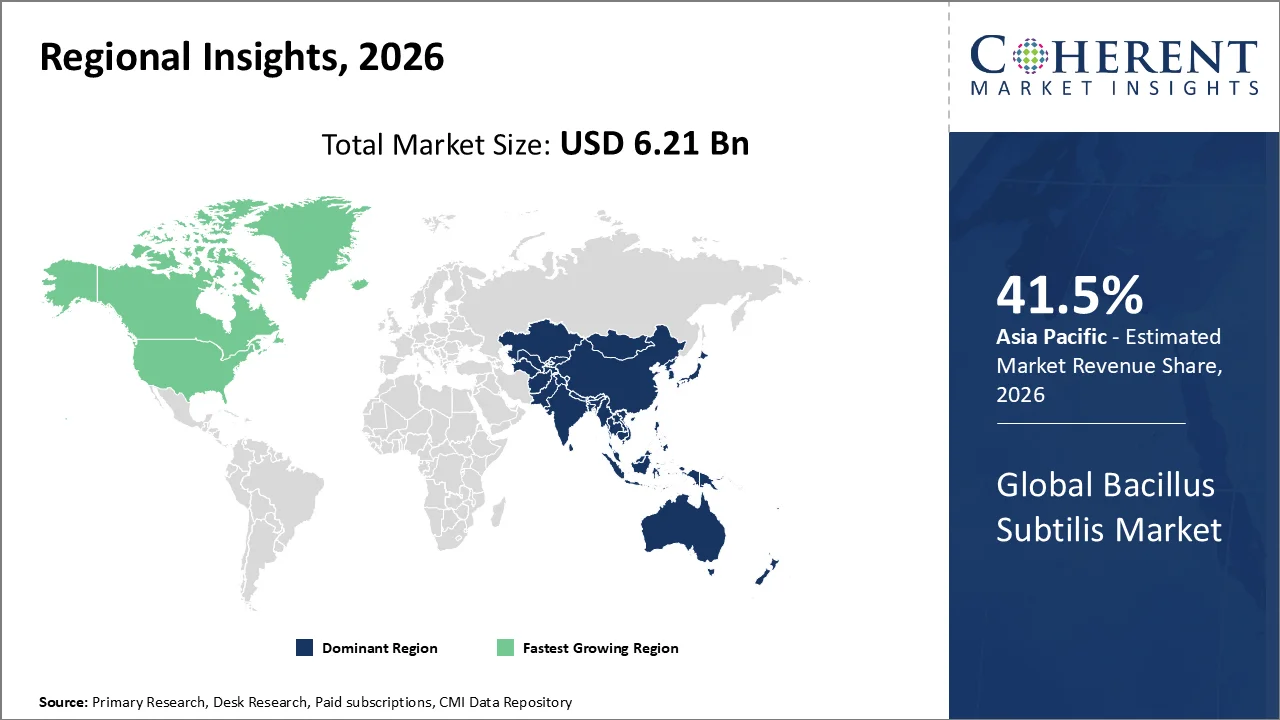
Asia Pacific Dominates Owing to its Large Agricultural Base and Expanding Microbial-Biotechnology Ecosystem
Asia-Pacific will hold about 41.5% of the Bacillus Subtilis Market share by 2026 and is estimated at about USD 2.58 Billion. This dominance of the region can be attributed to the strong agricultural and livestock production foundation that the region enjoys, as well as advancements in microbial fermentation and increased usage of bio-inputs for farming purposes.
In November, 2025, the Indian state government of Kerala announced Bacillus subtilis as the State Microbe due to its biosafety attributes and wide range of applications including agriculture, biosurfactants, bioremediation, food fermentation, and even human health applications. Such an official announcement is anticipated to enhance the research on microbiomes, strains, and commercial ventures involving Bacillus subtilis.
The region is also developing Bacillus subtilis for industrial purposes. In December 2025, Food Standards Australia New Zealand approved IFF Australia’s application for the use of dextransucrase produced by Bacillus subtilis for food processing. The enzyme would assist in producing oligosaccharides and polysaccharides, decrease the sucrose levels, and improve food textures.
North America is the Fastest-Growing Region
North America is anticipated to register the fastest growth in the Bacillus Subtilis Market during 2026–2033. The region’s growth is owing to rapid commercialization of microbial agricultural products, strong probiotic-product innovation, advanced fermentation infrastructure, and expanding regulatory pathways for Bacillus subtilis-based food, feed, and crop-protection applications.
Commercial innovation is also expanding the organism’s use in human-health products. In December 2025, U.S.-based Microbiome Labs announced the launch of DigestMate, which combines 14 digestive enzymes with spore-forming probiotics, including Bacillus subtilis HU58. The product became available through healthcare practitioners in May 2025 and entered broader online distribution in December 2025.
Established Biopesticide Regulation and Organic Agriculture are Accelerating the Bacillus Subtilis Market in the United States
The U.S. Bacillus Subtilis Market is witnessing strong growth owing to the country’s established microbial-pesticide regulatory framework, expanding organic and regenerative agriculture sector, advanced fermentation capabilities, and increasing research into Bacillus subtilis-based crop-protection and industrial biotechnology applications.
As of July 2026, the U.S. Environmental Protection Agency’s database contained 457 registered biochemical and microbial biopesticide active ingredients, including multiple Bacillus-based active ingredients. The existence of a mature regulatory pathway is supporting the development and commercialization of Bacillus subtilis-based biofungicides, seed treatments, soil applications, and foliar crop-protection products.
China Bacillus Subtilis Market Trends
China is expected to remain a major growth market for Bacillus subtilis owing to its large feed-production industry, substantial livestock and aquaculture sectors, extensive microbial-fermentation capacity, and widening regulatory acceptance of Bacillus subtilis-derived food enzymes and biological products.
China is also widening the industrial food-processing applications of Bacillus subtilis. In February 2026, the National Health Commission approved 11 new food-additive varieties, including D-psicose 3-epimerase sourced from Bacillus subtilis and glucose isomerase produced using Bacillus subtilis 168-N03. These enzymes have applications in specialty sweetener, starch-processing, and carbohydrate-conversion processes.
Who are the Major Companies in Bacillus Subtilis Industry
Some of the major key players in Bacillus Subtilis Market are Bayer AG, BASF SE, Jocanima Corporation, Tonglu Huifeng, Kernel Bio-tech, Wuhan Nature's Favour Bioengineering Co., Ltd., Real IPM, ECOT China, and Qunlin.
Key News
- In October 2025, Real IPM published an updated registered label for REAL BACILLUS BS01, a biological fungicide containing live Bacillus subtilis strain BS01, along with its fermentation metabolites and enzymes.
- In October 2023, Bayer launched Serenade SC, its first biological fungicide in Vietnam. The product is based on the patented Bacillus subtilis QST 713 strain and is intended to control diseases including powdery mildew, downy mildew, leaf spots, and other fungal and bacterial crop diseases.
Market Report Scope
Bacillus Subtilis Market Report Coverage
| Report Coverage | Details | ||
|---|---|---|---|
| Base Year: | 2025 | Market Size in 2026: | USD 6.21 Bn |
| Historical Data for: | 2020 To 2024 | Forecast Period: | 2026 To 2033 |
| Forecast Period 2026 to 2033 CAGR: | 3.6% | 2033 Value Projection: | USD 7.94 Bn |
| Geographies covered: |
| ||
| Segments covered: |
| ||
| Companies covered: | Bayer AG, BASF SE, Jocanima Corporation, Tonglu Huifeng, Kernel Bio-tech, Wuhan Nature's Favour Bioengineering Co., Ltd., Real IPM, ECOT China, and Qunlin. | ||
| Growth Drivers: |
| ||
| Restraints & Challenges: |
| ||
Analyst Opinion
- The Bacillus Subtilis Market is expected to expand beyond conventional probiotic and feed-additive applications into next-generation animal-health delivery systems. In June 2025, USDA Agricultural Research Service scientists developed Bacillus subtilis spores capable of delivering an Eimeria antigen through poultry feed. This research screened around 900 recombinant strains and performed a pilot test using 30 broiler chickens. This research has commercial significance because of poultry coccidiosis, which is responsible for an estimated annual loss of USD 13 billion worldwide, and there is a need for a heat stable and feed compatible biological solution to the problem.
- The approval of Bacillus subtilis by regulators will increase its application in enzymes for foods, specialty carbohydrates, and fermentation technology. In April 2026, Food Standards Australia New Zealand evaluated dextransucrase, which was generated via a genetically modified strain of Bacillus subtilis, for the reduction of sucrose and improvement of texture of food items. The assessment identified no safety concerns, reported a no-observed-adverse-effect level of 1,000 mg/kg body weight per day, and calculated an exposure margin of approximately 300. Such regulatory progress can strengthen investment in Bacillus subtilis-based processing aids and higher-value industrial ingredients beyond the organism’s traditional probiotic uses.
- Product stability and formulation performance will remain major factors determining the commercial success of Bacillus subtilis-derived products. A 2026 study demonstrated that alginate-encapsulated protease, lipase, cellulase, and amylase produced from Bacillus subtilis retained approximately 60–74% of their activity after 30 days, compared with only 34–42% for non-encapsulated enzymes. The results indicate that encapsulation can improve resistance to storage, temperature, and pH variations. Market participants investing in encapsulation, strain stabilization, controlled fermentation, and shelf-life validation are therefore expected to achieve stronger differentiation in feed additives and industrial-enzyme applications.
Speak to the analyst
Want personalized insights?
Take the findings above to one of our principal consultants, or have the report rebuilt around the segments, geographies and competitors you actually track.
Market Segmentation
- By Product Type (Revenue, USD Bn, 2021-2033)
- < 100 Billion CFU/g
- 100-300 Billion CFU/g
- >300 Billion CFU/g
- By Application (Revenue, USD Bn, 2021-2033)
- Cleaning Agent
- Starch Processing
- Waste Water Treatment
- Pollution Treatment
- Pesticide
- Feed Additive
- Probiotic Drink
- Pharmaceutical
- Others
- Global Bacillus Subtilis Market , By Region (Revenue, USD Bn, 2021-2033)
- North America
- U.S.
- Canada
- Latin America
- Brazil
- Mexico
- Argentina
- Rest of Latin America
- Europe
- Germany
- U.K.
- France
- Italy
- Spain
- Russia
- Rest of Europe
- Asia Pacific
- China
- India
- Japan
- Australia
- South Korea
- ASEAN
- Rest of Asia Pacific
- Middle East
- GCC
- Israel
- Rest of Middle East
- Africa
- South Africa
- Central Africa
- North Africa
- North America
Sources
Primary Research Interviews
- Bacillus subtilis strain developers and microbiologists
- Microbial fermentation and bioprocessing specialists
- Probiotic ingredient and formulation manufacturers
- Animal-feed additive manufacturers and nutritionists
- Biopesticide, biofertilizer, and biostimulant producers
- Industrial enzyme and specialty biochemical manufacturers
- Food, beverage, pharmaceutical, and nutraceutical product developers
- Agricultural-input distributors and feed-additive suppliers
- Livestock producers, aquaculture farms, and feed mills
- Wastewater-treatment and environmental-remediation specialists
- Regulatory and quality-assurance professionals
- Key opinion leaders in probiotics, microbial agriculture, and industrial biotechnology
Databases
- World Bank
- Organisation for Economic Co-operation and Development (OECD)
- FAOSTAT
- Eurostat
- USDA Economic Research Service
- USDA National Agricultural Statistics Service
- U.S. Environmental Protection Agency Biopesticide Database
- U.S. FDA GRAS Notice Inventory
- European Food Safety Authority
- European Commission Feed Additive Register
- China Ministry of Agriculture and Rural Affairs
- China Institute for the Control of Agrochemicals
- UN Comtrade
- European Patent Office Espacenet
- WIPO PATENTSCOPE
Magazines
- Feed Strategy
- All About Feed
- New Ag International
- Nutraceuticals World
- Food Business News
- Food Ingredients First
- AgriBusiness Global
- Genetic Engineering & Biotechnology News
- BioProcess International
- European Biotechnology
Journals
- Applied Microbiology and Biotechnology
- Microbial Cell Factories
- Frontiers in Microbiology
- Journal of Applied Microbiology
- Bioresource Technology
- Biological Control
- Applied and Environmental Microbiology
- International Journal of Food Microbiology
- Animal Feed Science and Technology
- Journal of Industrial Microbiology and Biotechnology
- Probiotics and Antimicrobial Proteins
- Environmental Technology & Innovation
Newspapers
- Reuters
- The Wall Street Journal
- Financial Times
- The Guardian
- The New York Times
- The Economic Times
- Nikkei Asia
- South China Morning Post
- Business Standard
- China Daily
Associations
- International Probiotics Association
- International Feed Industry Federation
- American Feed Industry Association
- European Feed Manufacturers’ Federation
- International Biocontrol Manufacturers Association
- Biological Products Industry Alliance
- International Federation of Organic Agriculture Movements
- CropLife Biologicals
- European Association for Bioindustries
- Association of Official Analytical Collaboration International
- International Society for Microbial Ecology
- American Society for Microbiology
Public Domain Sources
- Company annual reports and investor presentations
- Product brochures, technical data sheets, and strain specifications
- Government agriculture, livestock, aquaculture, and feed-production statistics
- FDA GRAS notices and food-ingredient safety assessments
- EFSA feed-additive opinions and European Commission authorizations
- EPA and national biopesticide registration databases
- University research publications and technology-transfer reports
- Clinical, animal-nutrition, and agricultural field-study publications
- Patent databases such as WIPO, USPTO, EPO, and Google Patents
- Company press releases covering product launches, registrations, partnerships, and capacity expansions
- Publicly available import-export and microbial-product trade data
- Regulatory publications covering probiotics, feed additives, microbial pesticides, and industrial enzymes
Proprietary Elements
- CMI Data Analytics Tool
- Proprietary CMI Existing Repository of Information for the Last 10 Years
Get access to 250+ pages report
Every segment, forecast, competitor profile and data table behind the analysis above — available for instant download.
- ESOMAR Member
- ISO 9001:2015 Certified
- D-U-N-S Registered
- GDPR & CCPA Compliant
Missing comfort of reading report in your local language? Find your preferred language:
Transform your Strategy with Exclusive Trending Reports
Frequently Asked Questions
The Bacillus Subtilis Market is expected to reach approximately USD 7.94 Bn by 2033, increasing from USD 6.21 Bn in 2026.
Major players operating in the global Bacillus Subtilis Market include Bayer AG, BASF SE, Jocanima Corporation, Tonglu Huifeng, Kernel Bio-tech, Wuhan Nature's Favour Bioengineering Co., Ltd., Real IPM, ECOT China, and Qunlin.
High production and fermentation costs, strict strain-specific regulatory requirements, variability in viable CFU counts, contamination risks, and challenges in maintaining product stability during processing and storage are the major factors hampering market growth.
The market is primarily driven by the increasing adoption of Bacillus subtilis in animal-feed additives, rising use of microbial pesticides and biofertilizers, growing demand for shelf-stable probiotics, and expanding applications in food processing, pharmaceuticals, and industrial biotechnology.
The Bacillus Subtilis Market is anticipated to grow at a CAGR of approximately 3.6% between 2026 and 2033.
Asia Pacific is expected to dominate the global Bacillus Subtilis Market with approximately 41.5% share in 2026, supported by its large agricultural and livestock base, microbial-fermentation capabilities, and growing use of biological crop inputs, probiotics, and industrial enzymes.
North America is anticipated to register the fastest growth during 2026–2033 due to the rapid commercialization of microbial agricultural products, strong probiotic innovation, advanced fermentation infrastructure, and expanding regulatory pathways for food, feed, and crop-protection applications.