

Dairy Alternative Market Size and Forecast — 2026 - 2033
The Global Dairy Alternative Market size is estimated to be valued at USD 40.2 billion in 2026 and is expected to reach USD 78.6 billion by 2033, exhibiting a compound annual growth rate (CAGR) of 9.8% from 2026 to 2033.
Overview
The dairy alternatives market is driven by rising lactose intolerance and dairy allergies, with conditions like Lactose Intolerance affecting a large global population. Growing vegan and flexitarian diets, supported by awareness of animal welfare and sustainability, boost demand for plant-based products. Health-conscious consumers increasingly prefer low-cholesterol and nutrient-fortified options. Innovations by companies such as Oatly and Danone expand product variety and improve taste and texture. Additionally, environmental concerns over dairy farming emissions and expanding retail availability further accelerate the adoption of dairy alternatives worldwide.
Key Takeaways
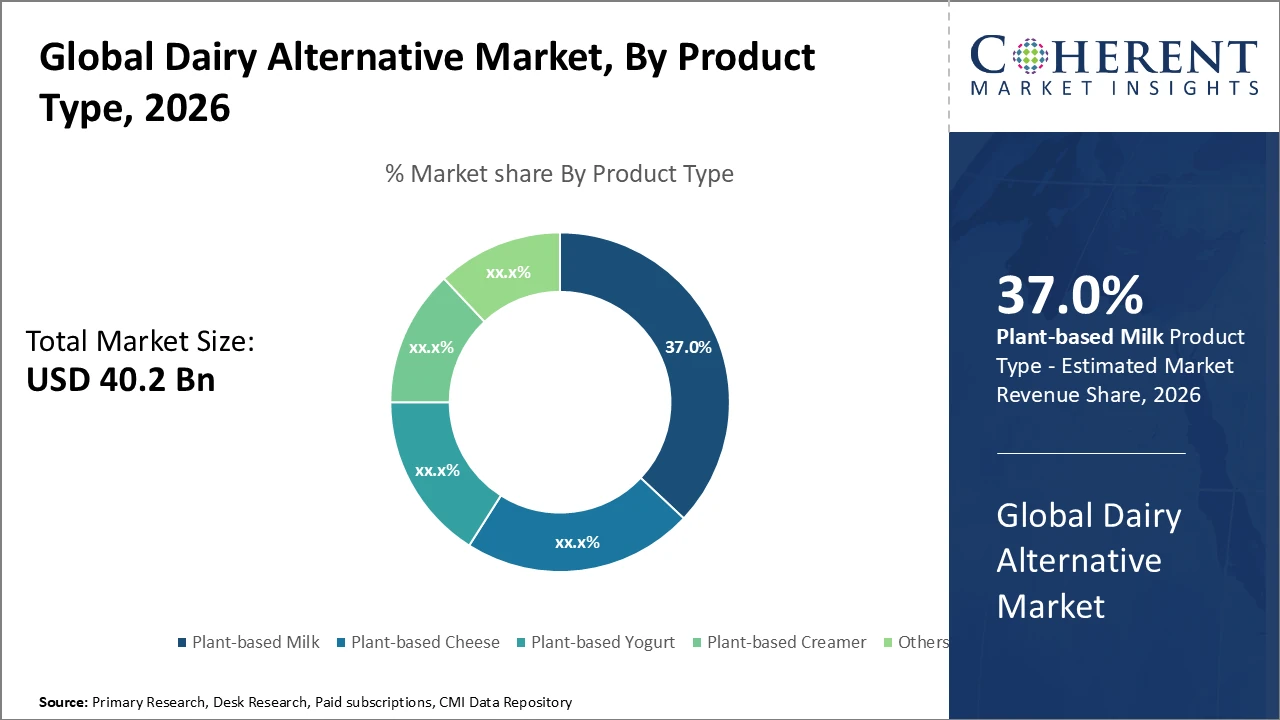
Plant-based milk dominates the dairy alternative market segment with over 37% share, driven by oat and almond varieties due to their creamy texture and nutritional benefits.
Oat milk is the fastest-growing source subsegment, outpacing soy in certain regions because of higher consumer acceptance and scalable supply chains.
The beverages application segment captures the largest industry share, fueled by demand for dairy-free milk in coffee and ready-to-drink products.
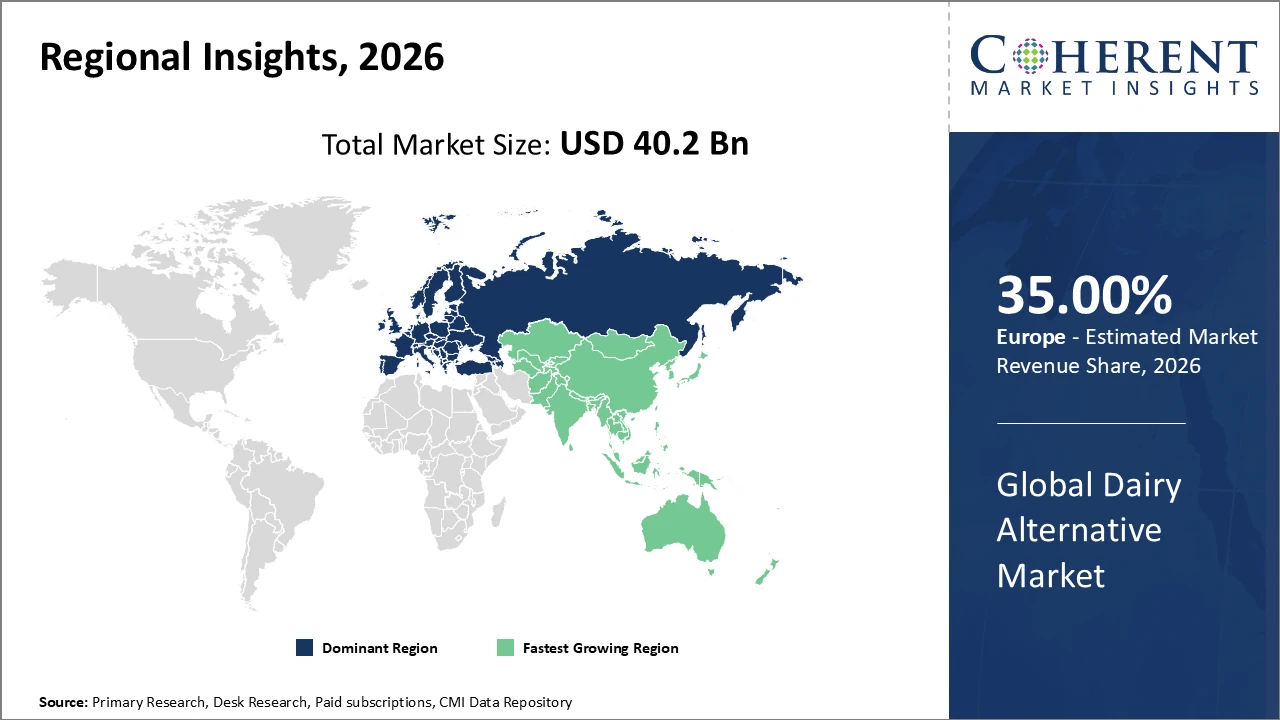
Europe holds the dominant global market share, accounting for nearly 35% of revenue, supported by strong consumer acceptance and a robust product innovation ecosystem.
Asia Pacific exhibits the fastest growth, with a CAGR exceeding 11%, driven by rising lactose intolerance awareness, expanding middle-class populations, and supportive government health policies.
Dairy Alternative Market Segmentation Analysis
Dairy Alternative Market Insights, By Product Type
Plant-based Milk leads the dairy alternative market with approximately 37% share, driven by its versatility and strong consumer acceptance. Popular variants like oat and almond milk have gained traction across beverages and functional foods, supported by innovations in flavor and nutrient fortification. Plant-based Cheese is the fastest-growing subsegment, fueled by advances in fermentation and texturizing technologies that replicate the taste and texture of traditional cheese, attracting vegan and lactose-intolerant consumers. Plant-based Yogurt continues steady growth due to probiotic benefits, while Plant-based Creamer caters to coffee applications. Other offerings, including butter substitutes and processed ingredients, are expanding as complementary dairy alternatives.
Dairy Alternative Market Insights, By Source
Almond leads the dairy alternative market share due to its established presence, distinctive flavor, and widespread use in milk and yogurt alternatives. Oat is the fastest-growing source, driven by its neutral taste, creamy texture, and sustainable cultivation, particularly favored in North America and Europe. Soy remains a key subsegment because of its high protein content and affordability, though growth has slowed due to allergen concerns and shifting consumer preferences toward other plant proteins. Coconut and pea are gaining popularity for their unique nutritional and sensory attributes, with pea protein also benefiting from sustainable sourcing trends. Rice and other minor sources serve niche dietary needs.
Dairy Alternative Market Insights, By Application
Beverages dominate the dairy alternative market, including plant-based milk, ready-to-drink drinks, and coffee creamers, driven by daily consumption habits and innovation in flavors. Dairy-free Desserts are the fastest-growing subsegment, fueled by rising consumer interest in indulgent yet allergen-friendly options such as non-dairy ice creams and puddings. Functional Food & Nutrition applications focus on fortified and enriched products targeting health-conscious buyers, including probiotic yogurts and vitamin-enhanced milks. Packaged Food applications incorporate dairy alternatives in bakery items, confectionery, and prepared meals, promoting product innovation. Other applications include infant formulas and nutritional supplements, supporting incremental market growth and diversification.
Dairy Alternative Market Trends
The surge in demand for oat milk in the Americas and Europe disrupted traditional market dynamics led by almond and soy, driving manufacturers to optimize production efficiency, resulting in a 22% sales increase in North America in 2025.
Increased focus on clean-label plant-based products, supported by fermentation technologies, aligns with consumer preference for natural ingredients, as seen in 18% of new product launches globally in 2024 featuring fermentation-derived components.
Sustainability trends are influencing packaging choices, with key companies reducing plastic usage by 20% in their dairy alternative product lines in 2025, reflecting growing environmental awareness.
Dairy Alternative Market Insights, By Geography
Europe Dairy Alternative Market Analysis and Trends
In Europe, the Dairy Alternative Market holds a dominant position with approximately 35% market share, driven by high consumer awareness of health, sustainability, and ethical consumption. Strong regulatory frameworks promoting plant-based diets and nutritional guidelines further support market growth. Countries such as Germany, the U.K., and France serve as innovation hubs, where both domestic and international companies actively introduce new products, ranging from plant-based milks and yogurts to cheeses and creamers. The region benefits from well-established retail networks, widespread e-commerce adoption, and strategic collaborations among key market players, all of which sustain product diversification, consumer adoption, and continuous market expansion.
Asia Pacific Dairy Alternative Market Analysis and Trends
The Asia Pacific region demonstrates the fastest growth in the dairy alternative market, with a CAGR exceeding 11%, driven by increasing lactose intolerance, a rising vegan population, and expanding disposable incomes. Countries like China and India have experienced significant uptake of plant-based milk, yogurt, and cheese alternatives, supported by both domestic brands and international collaborations that enhance product availability and distribution. Rising health awareness and government initiatives promoting nutrition and wellness further contribute to market expansion. Additionally, urbanization and growing e-commerce penetration are facilitating easier access to dairy alternatives, reinforcing the region’s position as a high-growth market in the global dairy alternative industry.
Dairy Alternative Market Outlook for Key Countries
USA Dairy Alternative Market Analysis and Trends
The USA continues to be a key market for dairy alternatives, driven by shifting consumer preferences toward healthier and plant-based options. In 2025, oat milk retail sales surged by over 20%, highlighting strong demand across both premium and mass-market segments. Leading brands such as Califia Farms and Silk expanded their product portfolios with fortified and nutrient-enhanced offerings, while e-commerce distribution channels accelerated market reach and revenue growth. Additionally, government programs promoting sustainable agriculture and environmentally friendly practices support favorable business conditions. These factors collectively reinforce the USA’s role as a major innovation and consumption hub in the global dairy alternative market.
Germany Dairy Alternative Market Analysis and Trends
Germany holds a prominent position in the European dairy alternative market, driven by high consumer awareness of health, sustainability, and ethical eating habits. The country has witnessed robust adoption of plant-based milk, yogurt, cheese, and cream alternatives, supported by strong retail networks and growing e-commerce penetration. Innovation in product formulation, including fortified and clean-label options, has further strengthened market growth. Leading domestic and international brands actively invest in marketing, R&D, and collaborations to capture consumer interest. Government initiatives promoting plant-based nutrition and environmentally sustainable practices, coupled with rising vegan and flexitarian populations, continue to shape Germany’s dynamic dairy alternative market landscape.
Analyst Opinion
Product Innovation and Consumer Demand: Growing interest in functional dairy alternatives enriched with vitamins and probiotics drives market revenue. In 2025, oat milk surpassed almond milk in retail sales growth with a 22% increase in North America, reflecting changing consumer preferences toward creamy, nutrient-rich options.
Supply Chain Optimization: Improved sourcing of plant-based ingredients at competitive prices amid global agricultural fluctuations boosts market expansion. For example, Brazil’s pea protein exports rose by 16% in 2024, allowing manufacturers to scale production and reduce costs, enhancing accessibility in Europe and Asia Pacific.
Market Penetration Across Demographics: Young adults and millennials significantly drive demand, particularly in urban areas where dairy alternative consumption aligns with sustainability goals. Surveys in 2026 show over 38% of European millennials regularly consume dairy substitutes, fueling growth in beverages and dairy-free desserts.
Regional Export and Import Dynamics: Trade patterns within Asia Pacific and Europe impact revenue streams. Spain’s almond-based milk exports to the Middle East grew 14% in 2025, offering opportunities for manufacturers to tap emerging markets with rising dairy intolerance prevalence.
- Current Industry Events of 2026
- Market Size Estimation
- Regional Breakdown
- Competitive Landscape
- Customer Intelligence
- Segmental Analysis
- Pricing Analysis
- Key Market Drivers, Challenges & Future Trends
- Customized Insights Section
Market Scope
| Report Coverage | Details | ||
|---|---|---|---|
| Base Year: | 2025 | Market Size in 2026: | USD 40.2 billion |
| Historical Data for: | 2020 To 2024 | Forecast Period: | 2026 To 2033 |
| Forecast Period 2026 to 2033 CAGR: | 9.8% | 2033 Value Projection: | USD 78.6 billion |
| Geographies covered: |
| ||
| Segments covered: |
| ||
| Companies covered: | Danone SA, Silk, NotCo, Perfect Day Inc., Ripple Foods, SunOpta Inc., Alpro, Whitewave Foods, Good Karma Foods, Forager Project | ||
| Growth Drivers: |
| ||
Dairy Alternative Market Growth Factors
The rising consumer preference for organic and non-GMO plant-based products has driven significant product development, with organic oat milk sales achieving double-digit growth in Europe in 2024. Globally increasing lactose intolerance and milk allergies have further fueled demand, particularly in Asia Pacific, where over 70% of adults experience lactose intolerance, prompting region-specific innovations. Enhanced distribution networks and e-commerce platforms have expanded market accessibility, making dairy alternatives widely available across urban and rural areas. Additionally, government initiatives promoting sustainable food consumption, particularly within the European Union, have encouraged manufacturers to scale production capacities, supporting strong revenue growth and overall market expansion.
Dairy Alternative Market Development
In January 2026, Dutch food-tech startup The Protein Brewery received a €2.3 million ($2.7 million) EU grant to commercialize its fungi-derived ingredient, Fermotein, a protein- and fiber-rich mycoprotein aimed at dairy alternative applications, as it advances toward EU novel food approval.
Key Players
Leading Companies of the Market
Danone SA
Silk
NotCo
Perfect Day Inc.
Ripple Foods
SunOpta Inc.
Alpro
Whitewave Foods
Good Karma Foods
Forager Project
Several market players are leveraging mergers and strategic partnerships to enhance their market position. For example, Oatly’s aggressive expansion into Asian markets through collaborations with local distributors and retailers resulted in a 27% revenue increase in 2025. Similarly, Danone’s acquisition of prominent regional brands in Latin America allowed the company to diversify its product portfolio and strengthen regional market penetration. These strategic moves illustrate how leading companies adapt to localized consumer preferences, optimize distribution networks, and capitalize on emerging market opportunities, ultimately driving growth and consolidating their presence in the competitive dairy alternative market.
Dairy Alternative Market Future Outlook
The Dairy Alternative Market is poised for robust growth in the coming years, driven by rising consumer demand for plant-based, lactose-free, and allergen-friendly products. Innovations in taste, texture, and nutritional fortification, such as protein-enriched and vitamin-fortified alternatives, will continue to attract health-conscious and vegan consumers. Expanding distribution channels, including e-commerce and foodservice, are improving accessibility globally. Sustainability concerns and environmental awareness are further fueling adoption of plant-based options. Additionally, emerging markets in Asia Pacific and Latin America present significant opportunities, while continued product diversification and strategic partnerships among key players are expected to shape the market’s competitive landscape and future trajectory.
Dairy Alternative Market Historical Analysis
The Dairy Alternative Market has experienced steady growth over the past decade, driven by increasing lactose intolerance, veganism, and health-conscious consumer trends. Early offerings, primarily soy and almond milk, gradually expanded to include oat, coconut, and pea-based alternatives, as well as non-dairy yogurts, cheeses, and creams. Market growth was supported by innovations in flavor, texture, and nutritional fortification, alongside expanding retail and foodservice distribution channels. North America and Europe led adoption initially due to higher awareness and purchasing power, while Asia Pacific emerged as a growing market. Strategic investments, product diversification, and sustainability-driven consumer preferences have collectively shaped the market’s historical trajectory and foundation for future growth.
Sources
Primary Research Interviews:
R&D managers, scientists, and product development leaders from companies producing plant-based dairy alternatives, including milk, yogurt, cheese, and cream substitutes.
Technical specialists from manufacturing firms focusing on production, quality control, flavor development, and shelf-life optimization.
Industry experts from organizations involved in regulatory compliance, sustainability initiatives, and global distribution of dairy alternative products.
Magazines:
Dairy Reporter – Market trends, product launches, and innovation news in the dairy alternative sector.
Food Navigator – Developments in plant-based foods, manufacturing technologies, and functional ingredient applications.
VegNews – Updates on vegan and plant-based product adoption, consumer behavior, and industry initiatives.
Journals:
Journal of Food Science – Research on nutritional composition, processing methods, and sensory evaluation of dairy alternatives.
Critical Reviews in Food Science and Nutrition – Studies on health impacts, functional ingredients, and consumer acceptance of plant-based dairy products.
Food Hydrocolloids – Insights on texture, stability, and formulation technologies for dairy alternatives.
Newspapers:
The Wall Street Journal – Corporate developments, mergers, and investments in plant-based dairy companies.
Financial Times – Market trends, regulatory policies, and global dairy alternative industry analysis.
Reuters – News on product launches, sustainability initiatives, and international distribution.
Bloomberg – Company strategies, revenue trends, and market forecasts for plant-based dairy products.
Associations:
Plant Based Foods Association (PBFA) – Guidelines, market data, and trends in the plant-based food sector.
Good Food Institute (GFI) – Research, funding, and innovation updates for plant-based and alternative protein products.
European Plant-Based Foods Association (ProVeg) – Policy updates, advocacy, and market insights for the European plant-based sector.
Get access to 250+ pages report
Every segment, forecast, competitor profile and data table behind the analysis above — available for instant download.
- ESOMAR Member
- ISO 9001:2015 Certified
- D-U-N-S Registered
- GDPR & CCPA Compliant
Missing comfort of reading report in your local language? Find your preferred language:
Transform your Strategy with Exclusive Trending Reports
Frequently Asked Questions
Leading companies include Danone S.A., NotCo, Good Karma Foods, Forager Project, and Silk (Danone), all leveraging innovation and strategic partnerships to maintain market leadership.
The market is estimated at USD 40.2 billion in 2026 and is projected to reach USD 78.6 billion by 2033, growing at a CAGR of 9.8%, driven by consumer health trends and ongoing product innovation.
The beverage segment, particularly plant-based milk for coffee and ready-to-drink products, presents the largest growth opportunity due to rising global consumer adoption.’
Trends are shifting toward hybrid dairy-plant formulations, fermentation-based products, and sustainability-focused packaging, reflecting evolving consumer demands and environmental awareness.
The market is highly competitive with continuous innovation, though challenges include raw material supply fluctuations and pricing volatility affecting growth strategies.
Companies focus on mergers, regional partnerships, product portfolio diversification, and localized production to expand market presence and address regional consumer preferences.