

Global Portable Ultrasound Market Size and Forecast – 2026 to 2033
The Global Portable Ultrasound Market is estimated to be valued at USD 3.10 Bn in 2026 and is expected to reach USD 5.78 Bn by 2033, exhibiting a compound annual growth rate (CAGR) of 9.3% from 2026 to 2033. This substantial growth reflects increasing demand for portable and efficient diagnostic tools across healthcare settings, driven by technological advancements, and rising prevalence of chronic diseases worldwide.
Key Takeaways of the Global Portable Ultrasound Market
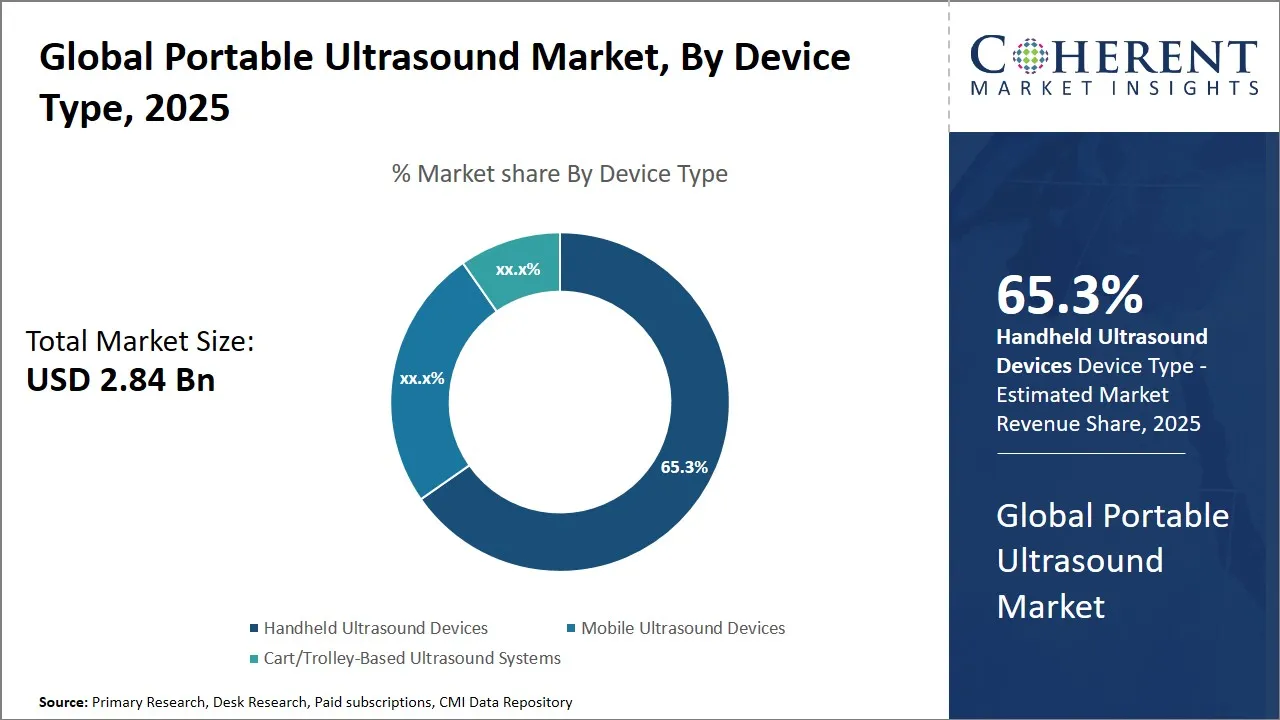
- Handheld ultrasound devices have quickly become the dominant force in the portable ultrasound market, accounting for an estimated 66.3 % of the market share in 2026.
- The cardiovascular segment is expected to lead the market with a 24.4 % share in 2026.
- 2D ultrasound imaging continues to be the foundational technology in portable ultrasound devices, holding an estimated 46.2 % of the market share in 2026.
- North America is expected to lead the market, holding a share of 38.3 % in 2026. Asia Pacific is anticipated to be the fastest-growing region, with a market share of 24.3% in 2026.
Market Overview
Market trends indicate a shift towards compact, user-friendly ultrasound devices that enable point-of-care diagnostics and telemedicine applications. Innovations such as AI integration and wireless connectivity are enhancing device accuracy and workflow efficiency, broadening adoption in remote and resource-limited environments. Additionally, the growing emphasis on minimally invasive surgery and early diagnosis continues to fuel the demand for portable ultrasound systems globally.
Current Events and Its Impact
Current Events | Description and its Impact |
Rapid Integration of Artificial Intelligence (AI) |
|
Global Expansion of Telehealth and Remote Patient Monitoring |
|
Segmental Insights
- Current Industry Events of 2026
- Market Size Estimation
- Regional Breakdown
- Competitive Landscape
- Customer Intelligence
- Segmental Analysis
- Pricing Analysis
- Key Market Drivers, Challenges & Future Trends
- Customized Insights Section
Portable Ultrasound Market Insights, By Device Type - Handheld ultrasound devices contribute the highest market share owing to their unparalleled portability and ease of use
The handheld ultrasound devices have quickly reshaped the portable ultrasound market with an estimated 66.3% in 2026, as they provide a level of convenience that has never been experienced before coupled with high quality imaging. Their lightweight nature, compactness, and better portability has made these devices the favorite among healthcare providers because it has facilitated real-time diagnostic imaging at the point of care. Handheld systems can be carried in any pocket of a lab coat or be carried between hospital wards, emergency rooms, or even remote locations, without logistical obstacles compared to traditional cart-based or even mobile ultrasound systems.
For example, in December 2024, France-based SuperSonic Imagine launched PocketVu, a new fleet of handheld ultrasound devices designed for diagnostic medical imaging. PocketVu offers multiple scanning modes, AI-powered auto image quality adjustment, and compatibility with DICOM 3.0 systems. With its lightweight design and long battery life, it supports a wide range of applications, including abdominal, cardiac, musculoskeletal, vascular, and obstetric imaging.
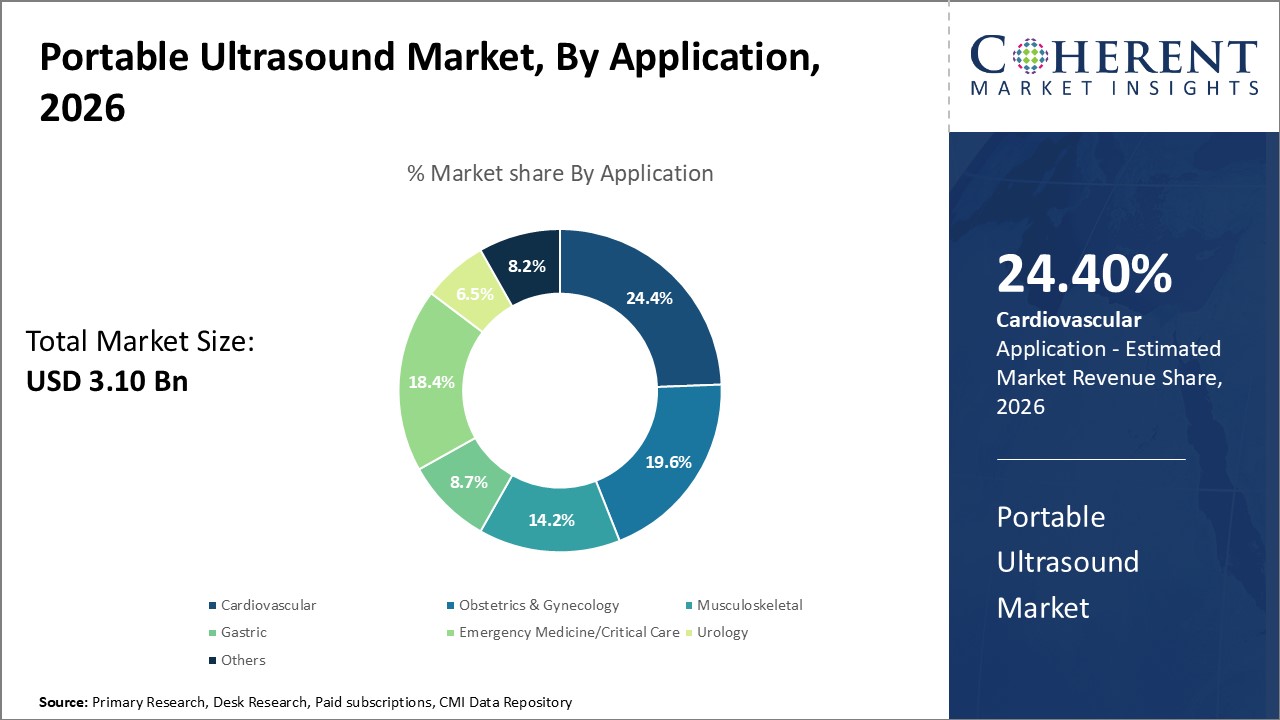
Portable Ultrasound Market Insights, By Application - Cardiovascular remains the dominant segment due to the critical need for non-invasive, real-time cardiac imaging and monitoring
The portable ultrasound market is expected to be dominated by cardiovascular applications, which take a significant portion of 24.4% in 2026 due to the fact that heart disease remains the main cause of both morbidity and mortality in the global scenario, and effective diagnostic tools are required. Portable ultrasound equipment gives clinicians the capability of conducting instant cardiac examinations like echocardiography, heart valve lesions, myocardial performance, and pericardial effusions beyond the hearsay of particular cardiology departments.
For example, Probo Medical released a comprehensive buyer's guide to help medical professionals choose the right cardiac ultrasound machine. As the demand for advanced imaging systems continues to grow in cardiology, the guide highlights key categories such as premium, high-end, midrange, economy, and portable machines.
Portable Ultrasound Market Insights, By Technology - 2D ultrasound imaging leads due to its proven reliability, cost-effectiveness, and broad clinical acceptance
2D ultrasound imaging remains the cornerstone technology in portable ultrasound devices with an estimated share of 46.2% in 2026 due to its long-established track record of delivering clear, real-time cross-sectional images essential for a wide range of diagnostic applications. Its simplicity, relative to more advanced imaging modes, allows for quick acquisition of diagnostically relevant information, making it highly suited for bedside use in various medical specialties.
For example, Siemens Healthineers showcased its innovative ultrasound systems at the ESC 2025 conference in Spain. These systems, including the ACUSON Sequoia, leverage the latest imaging technologies and AI-enabled tools to provide exceptional precision and clarity. With advanced features like 2D ultrasound imaging, the ACUSON Sequoia enables clinicians to deliver high-quality diagnostics for a variety of cardiac applications, ensuring accurate and reliable results.
Role of Artificial Intelligence (AI) in the Global Portable Ultrasound Market
- Artificial Intelligence (AI) is transforming the portable ultrasound market globally by facilitating major gains in efficiency, cost reduction, and automation. The devices with AI can process ultrasound images in real-time, which can be used to perform faster diagnostics and decrease the number of images that have to be manually analyzed. This does not only increase accuracy and similarity of results, but also reduces operational costs making ultrasound easier to access. Predictive analytics based on AI is able to estimate possible health risks to conduct proactive measures. Moreover, personalized care, and automated manual operations also enhance productivity and minimize human error, bringing more reliable results with the help of AI. Other businesses such as Butterfly Network already implemented AI in their portable ultrasound systems to allow healthcare to be more accessible and affordable, especially in the remote locations where the use of traditional imaging equipment is not as possible.
- The use of AI has new business opportunities and innovation in the portable ultrasound market. During the development of AI-powered devices, the personalization of patient experience can be offered, which is a new trend in the healthcare sector. Moreover, AI is making it possible to create smarter, more efficient products, and this can be used in the broader context of the market, where AI can be applied in other areas other than conventional imaging, e.g., in telemedicine and remote monitoring. Another area where AI will have an effect is through operational gains, such as streamlined workflows and resource distribution. Nevertheless, among all the benefits, various obstacles like the issue of data privacy, regulatory issues, and the threat of over-dependence on AI might be dangerous. The use of AI should be combined with human control to make AI use at companies responsible. To ensure success in the long-term, stakeholders need to prioritize the use of AI to increase scalability, enhance innovation, and follow ethical and regulatory guidelines.
Regional Insights
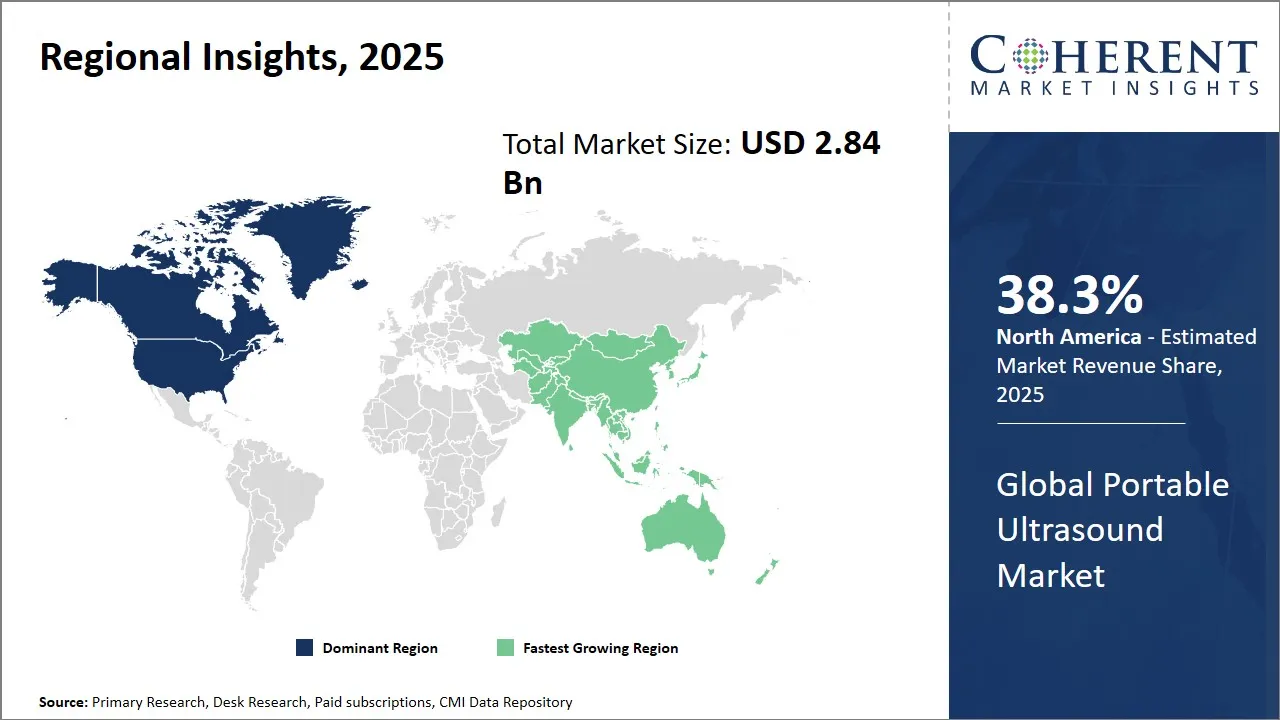
North America Portable Ultrasound Market Analysis and Trends
North America is expected to dominate the global portable ultrasound market, accounting for an estimated share of 38.3% by 2026, driven by an established healthcare system, high technological adoption, and widespread use of point-of-care ultrasound devices. The market is also highly mature with the presence of major medical device producers, including GE Healthcare, Philips Healthcare, and Siemens Healthineers. The adoption of portable ultrasound in the healthcare system has been with the help of government efforts to enhance access to healthcare especially in remote and rural regions.
In October 2024, EchoNous, a pioneer in ultrasound technology, entered a commercial alliance with Mendaera, a Silicon Valley healthcare tech firm specializing in robotics and AI. This partnership aims to integrate EchoNous' portable ultrasound platform, Kosmos, with Mendaera's handheld robotic system to revolutionize interventional care by improving precision and efficiency.
Asia Pacific Portable Ultrasound Market Analysis and Trends
Asia Pacific is expected show the fastest growth, accounting for an estimated share of 24.3% in 2026 due to increasing healthcare spending, growing population of patients, and growing demand for point-of-care diagnostics in developing economies. The adoption of portable ultrasound devices is also gaining ground in some countries such as China, India, and Japan because of its affordability and the fact that it has enabled early diagnosis in both urban and rural settings.
The penetration in the market is increased considerably by the government policies that encourage the modernization of healthcare infrastructure and the coverage of the whole population by healthcare, as well as increasing awareness regarding non-invasive diagnostic methods.
In August 2022, MGI, a pioneer in emergency medical technology, exhibited its novel robotic ultrasound system, MGIUS-R3 and the H1 series wireless handheld ultrasound in the 2022 ISEE & CEFE powered by INTERSCHUTZ in Hangzhou, China The MGIUS-R3 provides a new step in remote diagnosis enabling it to provide real-time ultrasounds without direct contact with the patient and eliminating risks of exposure and enhancing the efficiency of the fever clinics.
Portable Ultrasound Market Outlook for Key Countries
U.S. Portable Ultrasound Market Trends
The U.S. portable ultrasound market remains to be the most advanced based on its developed healthcare system and patient knowledge. Key competitors such as GE Healthcare, Philips and Butterfly Network are already developing innovative, handheld ultrasound products with artificial intelligence features and improving diagnostic efficiency. The country enjoys large healthcare allocations and favorable regulatory environments as manufacturers are quick to develop in different branches of medicine like emergency medicine, cardiology, obstetrics.
In June 2024, portable ultrasound device maker, Clarius Mobile Health was U.S. FDA approved to use its Clarius OB AI fetal biometric measurement device. This innovation will benefit the obstetrical prenatal care, particularly in underserviced areas, by automating the measurement of fetal biometry and giving an estimate of fetal age, weight, and growth ranges.
China Portable Ultrasound Market Trends
The portable ultrasound market in China can be described as a fast-growing market that is facilitated by governmental programs that have been initiated to enhance access to healthcare in rural and underdeveloped areas. Other manufacturers like Mindray are local and play a central role in creating demand in the market through their affordability in terms of prices, highly customized to regional demands. The trend of digitization and telemedicine promoted by the government contributes to the further advance of the demand of the portable diagnostic solutions due to the expansion of the outpatient screening and hospital-based applications.
CHISON Medical Technologies, a China-based leader in ultrasound devices, launched the SonoAir, the world’s lightest portable ultrasound system at just 2.1 kg. The SonoAir offers high-definition imaging, a 14.1-inch touchscreen, and ergonomic design, making it ideal for point-of-care exams. With its compact size and advanced features, it provides healthcare professionals with a versatile, efficient tool for accurate diagnoses in various medical settings.
Japan Portable Ultrasound Market Trends
Japan is still a leader in its high focus on healthcare innovation and aging population care. The market is characterized by the presence of globally recognized companies such as Canon Medical Systems and Fujifilm Healthcare that specialize in the creation of small, high-resolution ultrasound machines that can be used in the work with elderly patients and in preventive diagnostics. The regulatory environment in Japan supports the rapid pace of clinical adoption by healthcare providers who want to enhance patient outcomes through the use of minimal invasive equipment.
In January 2024, Canon Medical Systems and Olympus Corporation announced a collaboration to introduce an innovative endoscopic ultrasound (EUS) system. The combined system, unveiled in Tokyo, integrates Canon's Aplio i800 diagnostic ultrasound with Olympus’ Ultrasound Endoscope.
India Portable Ultrasound Market Trends
The portable ultrasound market in India is experiencing growth due to the growing healthcare infrastructure and improving access to primary care services in the rural areas. The government initiatives of providing cheap healthcare and diagnostic services spur the uptake among small clinics and mobile health units. Firms such as Siemens Healthineers and Philips are stepping up their marketing with affordable models designed to meet the needs of the Indian market, with wireless and battery-operated equipment to serve the regions with little electricity.
In August 2023, Wipro GE Healthcare introduced the Vscan Air in Nepal, a wireless, handheld ultrasound system intended to improve point-of-care ultrasound. This is the first device of Wipro GE to be launched in South Asia, as it allows scanning the entire body and allows healthcare specialists to make faster and more competent decisions.
Market Players, Key Developments, and Competitive Intelligence
Key Developments
- On September 05, 2025, Exo Imaging, a U.S.-based company specializing in medical technology, announced plans to launch its AI-powered portable ultrasound device in Bangladesh. This marks the company's first deployment in Asia. The USFDA-approved device aims to revolutionize healthcare access, particularly in rural areas, by enabling early detection of various conditions.
- In June 2025, Koninklijke Philips N.V., a global leader in health technology, launched the Flash Ultrasound System 5100 POC, a next-generation point-of-care ultrasound designed for anesthesia, critical care, emergency medicine, and musculoskeletal imaging. Built on Philips' established ultrasound technology, the Flash 5100 combines exceptional image clarity, smart automation, and an intuitive touchscreen interface, enabling clinicians to make fast, confident decisions in high-pressure environments like ERs and ICUs.
- In February 2025, Butterfly Network introduced the Butterfly iQ3, a revolutionary handheld ultrasound device that is now used in clinical research and space health monitoring. The Butterfly iQ3 integrates with smartphones or tablets, offering versatile imaging capabilities for abdominal, cardiac, vascular, and musculoskeletal scans. Its portability and affordability make it ideal for point-of-care diagnostics, even in remote locations and extreme environments such as space.
- In January 2025, Sutter Health, a leading healthcare provider, and GE HealthCare, a global leader in medical technology, formed a seven-year strategic partnership to enhance access to advanced imaging services across California. The collaboration focuses on incorporating AI-powered ultrasound technology to improve patient care and diagnostic accuracy.
Top Strategies Followed by Global Portable Ultrasound Market Players
- Leading industry players predominantly focus on heavy investment in research and development (R&D) as a critical strategy to maintain their market dominance. In addition to R&D, strategic partnerships with original equipment manufacturers (OEMs) and other major industry stakeholders form a cornerstone of their approach. These alliances not only facilitate technological advancements but also enable co-branding and enhanced product offerings, thereby solidifying their market leadership.
- In February 2023, GE HealthCare, a global innovator in healthcare solutions, announced its agreement to acquire Caption Health, Inc. The integration of Caption AI applications into GE's Point of Care and Handheld ultrasound portfolio will streamline ultrasound exams, enabling more healthcare professionals to perform basic echocardiograms.
- Mid-level market players occupy a pivotal position by striking a balance between affordability and quality, making them particularly appealing to price-sensitive consumers and healthcare facilities operating under budget constraints. Their key competitive strategy is to concentrate on offering cost-effective portable ultrasound devices without significantly compromising on functionality or reliability. This enables them to carve out substantial market shares, especially in regions where cost is a critical purchasing factor.
- In October 2024, EchoNous, a pioneer in ultrasound technology, entered a commercial alliance with Mendaera, a Silicon Valley healthcare tech firm specializing in robotics and AI. This partnership aims to integrate EchoNous' portable ultrasound platform, Kosmos, with Mendaera's handheld robotic system to revolutionize interventional care by improving precision and efficiency.
- Small-scale players in the portable ultrasound market adopt a more focused approach to differentiate themselves from larger competitors. They tend to carve out niches by concentrating on developing specialized features or ultra-innovative products tailored to specific clinical needs, such as portable devices designed for point-of-care applications or underserved medical fields.
- Small-scale players in the portable ultrasound market, such as Clarius Mobile Health and Healcerion, differentiate themselves by focusing on specialized features. Clarius has developed wireless, portable ultrasound devices for point-of-care applications, while Healcerion’s Sonon device targets quick, on-the-go use in obstetrics and musculoskeletal imaging.
Market Report Scope
Portable Ultrasound Market Report Coverage
| Report Coverage | Details | ||
|---|---|---|---|
| Base Year: | 2025 | Market Size in 2026: | USD 3.10 Bn |
| Historical Data for: | 2020 To 2024 | Forecast Period: | 2026 To 2033 |
| Forecast Period 2026 to 2033 CAGR: | 9.3% | 2033 Value Projection: | USD 5.78 Bn |
| Geographies covered: |
| ||
| Segments covered: |
| ||
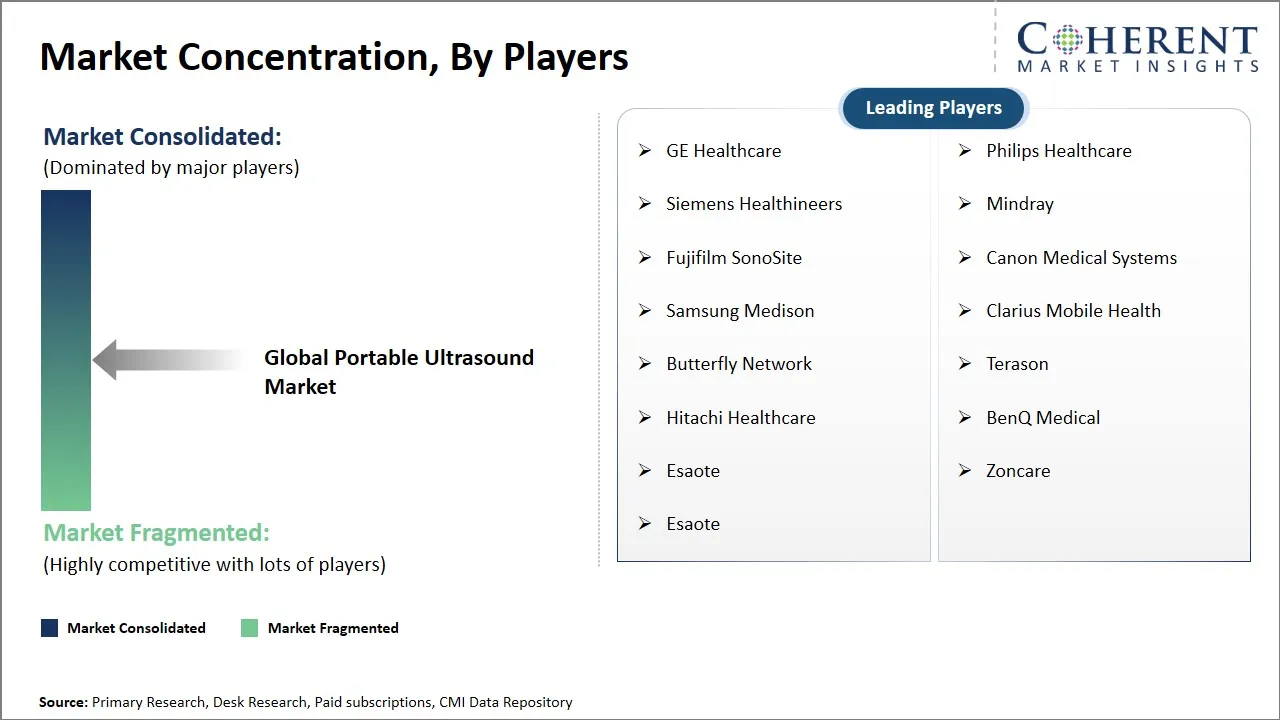
| Companies covered: | GE Healthcare, Philips Healthcare, Siemens Healthineers, Mindray, Fujifilm SonoSite, Canon Medical Systems, Samsung Medison, Clarius Mobile Health, Butterfly Network, Terason, Hitachi Healthcare, BenQ Medical, Esaote, Zoncare, and Esaote | ||
| Growth Drivers: |
| ||
| Restraints & Challenges: |
| ||
Portable Ultrasound Market Dynamics
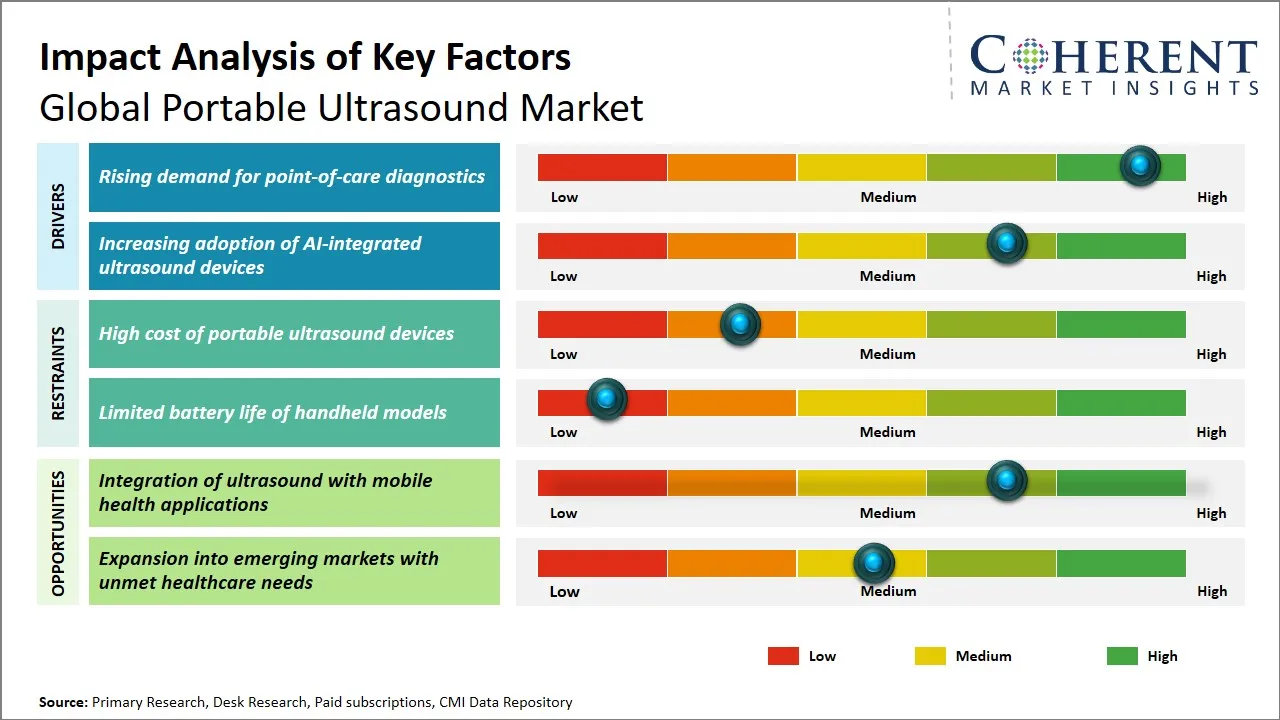
Portable Ultrasound Market Driver - Rising Demand for Point-of-care Diagnostics
The growing trend in the need of efficient and timely and correct diagnosis in many healthcare facilities is playing a significant role in generating the need of portable ultrasound equipment. Point-of-care diagnostics help health professionals to offer instant imaging and evaluations at the bedside of a patient, particularly vital in an emergency setting, intensive care unit, and outpatient clinic. This change of on-the-spot diagnostics lessens the reliance of the traditional radiology department, enhancing care delivery and patient outcomes. The portable ultrasound machines are small and simple to use thus enabling clinicians to determine conditions like cardiac status, abdominal crises and obstetric services immediately. Moreover, the increasing number of chronic illnesses and the ageing population is increasing the necessity of frequent observation using the provided diagnostic instruments.
In September 2024, GE HealthCare, a global leader in medical technology, introduced the Venue Sprint, a portable ultrasound system designed for use in critical care, emergency medicine, and medical transport. The Venue Sprint combines AI-enabled tools and wireless Vscan Air probes, offering clinicians high-quality imaging and enhanced flexibility in fast-paced environments.
Portable Ultrasound Market Opportunity - Integration of Ultrasound with Mobile Health Applications
Mobility of portable ultrasound devices can be seen in conjunction with mobile health (mHealth) apps as a great potential to develop the portable ultrasound market in the world. With the increasing penetration of smart phones in the world, integrating ultrasound technology and mobile platforms will mean that healthcare professionals can conduct real time diagnostic imaging with greater accessibility and convenience. This system helps to provide the possibility of remote consultation, telemedicine, and the exchange of diagnostic information immediately, which is especially useful in under-served or rural areas without a well-developed medical system. Artificial intelligence (AI) algorithms can also be integrated into mobile health applications to help clinicians interpret images and enhance diagnostic accuracy and reduce their reliance on radiologists with high levels of specialization.
In June 2024, Philips, a global leader in healthcare technology, launched Lumify, the world's first app-based portable ultrasound system. Designed to work with Android devices, Lumify offers an easy-to-use interface for both everyday users and healthcare professionals. The system is subscription-based, creating a new revenue stream for Philips, while ensuring portability and ease of access. Lumify’s cloud-based platform, powered by Snowflake Data Cloud, enhances the security and management of imaging data.
Analyst Opinion (Expert Opinion)
- The portable ultrasound market is experiencing significant growth, primarily driven by technological advancements, increased demand for point-of-care diagnostics, and a supportive regulatory environment. The rise of AI-powered ultrasound devices, which enhance imaging accuracy and diagnostic efficiency, is a key factor reshaping the industry. Additionally, rising healthcare costs and the need for more accessible and affordable diagnostic tools are pushing healthcare providers to adopt portable ultrasound solutions. With governments and organizations offering supportive policies to expand healthcare access, including telemedicine and mobile health initiatives, the market is set to flourish. However, challenges like the high cost of advanced portable devices and limited operator expertise persist, especially in emerging markets where infrastructure and training may lag.
- Emerging opportunities in the portable ultrasound market include the integration of ultrasound technology with mobile health apps and AI, which is transforming remote diagnostics. Notable industry events such as the Radiological Society of North America (RSNA) annual conference and the International Society of Ultrasound in Obstetrics and Gynecology (ISUOG) meetings have significantly contributed to knowledge-sharing, policy development, and the showcasing of cutting-edge ultrasound technologies. For instance, in 2023, the launch of the AI-driven ultrasound systems at global medical expos demonstrated the growing integration of machine learning, promising greater precision in diagnostic capabilities. These innovations, coupled with regional policy initiatives aimed at enhancing mobile health services, are expected to drive market growth and shape the future landscape of portable ultrasound technologies.
Speak to the analyst
Want personalized insights?
Take the findings above to one of our principal consultants, or have the report rebuilt around the segments, geographies and competitors you actually track.
Market Segmentation
- Device Type Insights (Revenue, USD Bn, 2021 - 2033)
- Handheld Ultrasound Devices
- Mobile Ultrasound Devices
- Cart/Trolley-Based Ultrasound Systems
- Application Insights (Revenue, USD Bn, 2021 - 2033)
- Cardiovascular
- Obstetrics & Gynecology
- Musculoskeletal
- Gastric
- Emergency Medicine/Critical Care
- Urology
- Others
- Technology Insights (Revenue, USD Bn, 2021 - 2033)
- 2D Ultrasound Imaging
- 3D/4D Ultrasound Imaging
- Doppler Ultrasound
- AI-Powered Ultrasound Imaging
- End User Insights (Revenue, USD Bn, 2021 - 2033)
- Hospitals
- Diagnostic Imaging Centers
- Ambulatory Surgical Centers
- Maternity Clinics
- Specialty Clinics
- Home Care Settings
- Others (e.g., Academic Institutions, Physician Clinics)
- Regional Insights (Revenue, USD Bn, 2021 - 2033)
- North America
- U.S.
- Canada
- Latin America
- Brazil
- Argentina
- Mexico
- Rest of Latin America
- Europe
- Germany
- U.K.
- Spain
- France
- Italy
- Russia
- Rest of Europe
- Asia Pacific
- China
- India
- Japan
- Australia
- South Korea
- ASEAN
- Rest of Asia Pacific
- Middle East
- GCC Countries
- Israel
- Rest of Middle East
- Africa
- South Africa
- North Africa
- Central Africa
- North America
- Key Players Insights
- GE Healthcare
- Philips Healthcare
- Siemens Healthineers
- Mindray
- Fujifilm SonoSite
- Canon Medical Systems
- Samsung Medison
- Clarius Mobile Health
- Butterfly Network
- Terason
- Hitachi Healthcare
- BenQ Medical
- Esaote
- Zoncare
- Esaote
Sources
Primary Research Interviews
Industry Stakeholders
- Senior Management at OEMs
- Regulatory Experts
- Supply Chain Managers
- Product Development Teams
- Sales and Marketing Executives
- Distributors and Resellers
End Users
- Emergency Medical Technicians (EMTs)
- General Practitioners (GPs)
- Obstetricians/Gynecologists
- Orthopedic Surgeons
- Cardiologists
- Radiologists
Government and International Databases
- World Health Organization (WHO)
- U.S. Food and Drug Administration (FDA)
- European Medicines Agency (EMA)
- Centers for Disease Control and Prevention (CDC)
- National Institutes of Health (NIH)
- National Center for Biotechnology Information (NCBI)
Trade Publications
- Signify Research
- ITN Online
- Medical Design and Outsourcing
- MedTech Dive
- Medical Device Network
- Healthcare IT News
Academic Journals
- Journal of Ultrasound in Medicine
- Ultrasound in Medicine & Biology
- BMJ Open
- Journal of Clinical Ultrasound
- Ultrasound Quarterly
- European Journal of Ultrasound
Reputable Newspapers
- The New York Times
- The Guardian
- The Wall Street Journal
- Reuters
- BBC News
- The Washington Post
Industry Associations
- Radiological Society of North America (RSNA)
- American Institute of Ultrasound in Medicine (AIUM)
- European Federation of Societies for Ultrasound in Medicine and Biology (EFSUMB)
- Indian Radiological and Imaging Association (IRIA)
- American Society of Echocardiography (ASE)
- Society of Diagnostic Medical Sonography (SDMS)
Public Domain Resources
- National Library of Medicine (NLM)
- ClinicalTrials.gov
- Directory of Open Access Journals (DOAJ)
Proprietary Elements
- CMI Data Analytics Tool: Proprietary analytics tool to analyze real-time market trends, consumer behavior, and technology adoption in market
- Proprietary CMI Existing Repository of Information for Last 8 Years
Get access to 250+ pages report
Every segment, forecast, competitor profile and data table behind the analysis above — available for instant download.
- ESOMAR Member
- ISO 9001:2015 Certified
- D-U-N-S Registered
- GDPR & CCPA Compliant
Missing comfort of reading report in your local language? Find your preferred language:
Transform your Strategy with Exclusive Trending Reports
Frequently Asked Questions
The global portable ultrasound market is estimated to be valued at USD 3.10 Bn in 2026 and is expected to reach USD 5.78 Bn by 2033.
The CAGR of global portable ultrasound market is projected to be 9.3% from 2026 to 2033.
Rising demand for point-of-care diagnostics and increasing adoption of AI-integrated ultrasound devices are the major factors driving the growth of the global portable ultrasound market.
High cost of portable ultrasound devices and limited battery life of handheld models are the major factors hampering the growth of the global portable ultrasound market.
In terms of device type, handheld ultrasound devices are estimated to dominate the market revenue share in 2026.
GE Healthcare, Philips Healthcare, Siemens Healthineers, Mindray, Fujifilm SonoSite, Canon Medical Systems, Samsung Medison, Clarius Mobile Health, Butterfly Network, Terason, Hitachi Healthcare, BenQ Medical, Esaote, Zoncare, and Esaote are the major players.
North America is expected to lead the global portable ultrasound market in 2026.