

Power Metering Market Size and Forecast – 2026 to 2033
The power metering market is estimated to be valued at USD 14.40 Bn in 2026 and is expected to reach USD 22.38 Bn by 2033, exhibiting a compound annual growth rate (CAGR) of 6.5% from 2026 to 2033.
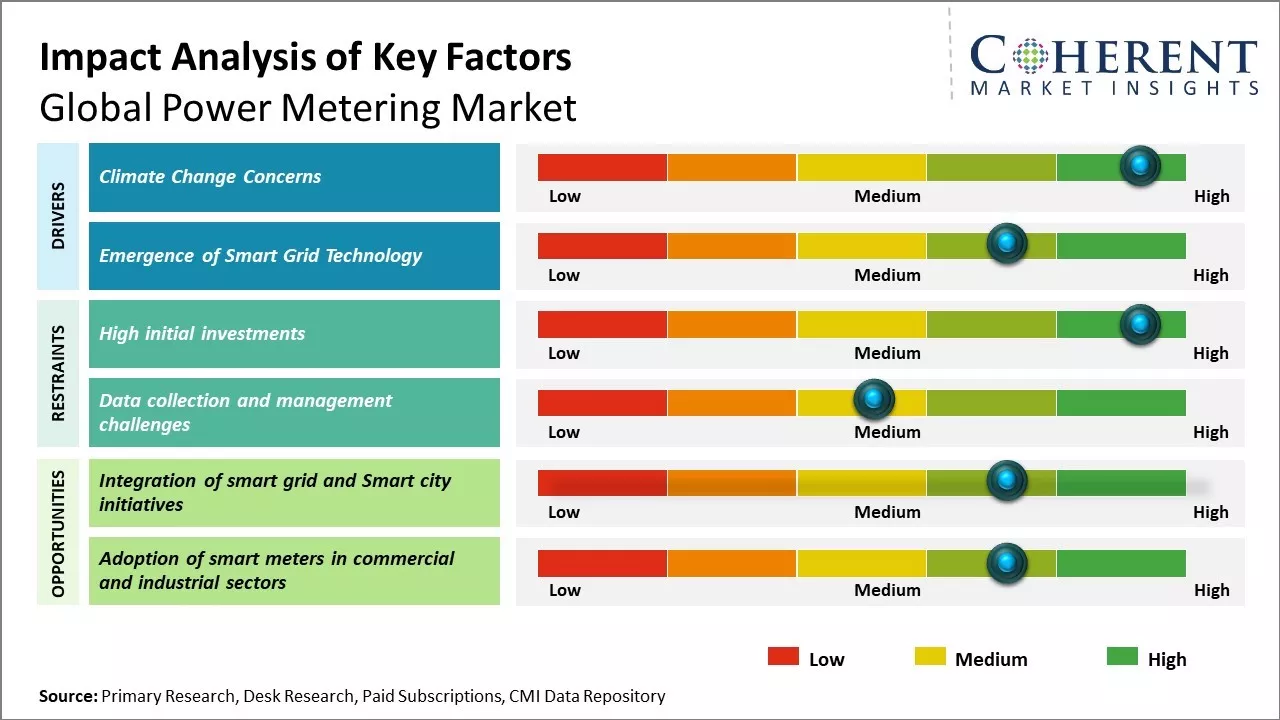
Key Takeaways
- Based on Type, Digital segment is projected to account for 40.2 % of the global market in 2026, owing to rapid digitization across sectors.
- Based on Phase Type, three-phase segment is expected to capture 69.3% share of the market in 2026, due to infrastructure upgrades.
- Based on End User, the Residential segment is projected to command 63.1% share of the market in 2026, due to growing focus on energy conservation.
- Based on Region, North America is set to dominate the global market with a 34.9 % share in 2026.
Market Overview
The power metering market is expected to witness significant growth over the forecast period. The high deployment of smart grids across utilities to ensure effective distribution and monitor power consumption is driving the demand for advanced metering infrastructure. Also, the focus toward establishing a strong energy infrastructure, reduction in energy losses, and meeting globe’s increasing power demand will continue boosting the implementation of smart meters. Further, favorable government policies and regulations aimed at the deployment of these meters to achieve energy conservation through behavior change shall accelerate the market expansion.
Current Events and Its Impact
Current Event | Description and its Impact |
Global Energy Transition and Net-Zero Commitments |
|
Smart Grid Modernization and Digital Infrastructure Investment |
|
Role of AI (Artificial Intelligence) in Power Metering Industry
The power metering industry is rapidly embracing AI to enhance operational capabilities and service delivery. Utilities worldwide are incorporating machine learning algorithms into their infrastructure to process vast amounts of data generated by smart meters. General Electric (GE) exemplifies this transformation through its Digital Power Plant initiative, which leverages AI-powered analytics platforms to optimize power generation and distribution networks.
By integrating AI into their core operations, GE has enabled utilities to predict equipment failures, optimize maintenance schedules, and improve overall grid reliability, demonstrating how AI is becoming fundamental to modern power management strategies.
For instance, in August 2025, US-based tech companies Easymetering and Qualcomm Technologies collaborated to integrate AI tech into next-generation smart meter products.
- Current Industry Events of 2026
- Market Size Estimation
- Regional Breakdown
- Competitive Landscape
- Customer Intelligence
- Segmental Analysis
- Pricing Analysis
- Key Market Drivers, Challenges & Future Trends
- Customized Insights Section
Market Drivers
Climate Change Concerns
As environmental awareness continues to increase globally, more emphasis is being placed on reducing carbon footprints and transitioning to cleaner sources of energy. Continuous monitoring of energy consumption has become important to identify areas where wastage can be minimized.
Power metering provides valuable insights into power usage patterns and helps pinpoint inefficiencies. This allows households and organizations to make small adjustments that cumulatively contribute to carbon emission reductions. With climate change becoming a pressing issue, many countries have implemented policies and programs encouraging energy efficiency.
The installation of smart meters is being incentivized as they facilitate a greener lifestyle. Consumers are also actively looking to play their part in mitigating global warming. Power metering supports this shift towards sustainability by creating awareness about energy usage behaviors and recommending simple optimizations. Over time, as societies transition to net-zero targets, advanced monitoring solutions will be vital to manage demand and optimize supply from renewable sources on a distributed level.
Segmental Insights
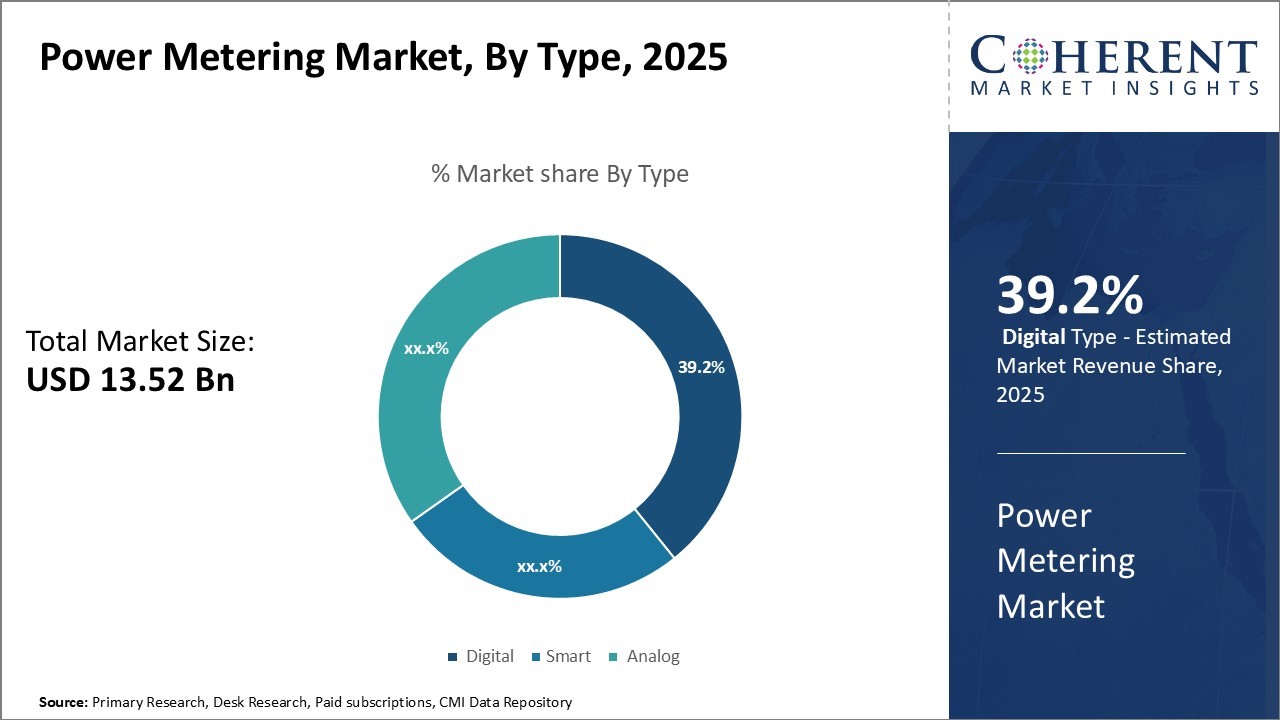
Power Metering Market Insights, by Type - Digitization is driving the digital segment growth
In terms of type, digital segment is expected to contributes 40.2% share of the market in 2026, owing to rapid digitization across sectors. Digital meters offer advantages like remote monitoring of consumption which helps utilities better manage power distribution and detect faults. They also allow two-way communication for automated meter reading that reduces manual intervention. This has significantly improved operational efficiency for utilities.
Further, digital meters provide consumers with granular usage data through mobile apps. This empowers consumers to curb wastage and optimize consumption. The availability of usage patterns helps consumers reduce bills through behavioral changes and targeted efficiency programs. The ability to detect theft and tampering has also benefitted utilities through reduced losses. Government initiatives to replace aging infrastructure with smart grids and smart meters have accelerated adoption.
In addition, smart city projects envisage the extensive deployment of digital meters. Rapid urbanization and focus on energy management are other factors contributing to the digital segment's leadership position.
For instance, in December 2024, UMA announced the completion of the open procurement process and the next step of their initiative to deploy approximately 1.5 million smart meters across Puerto Rico.
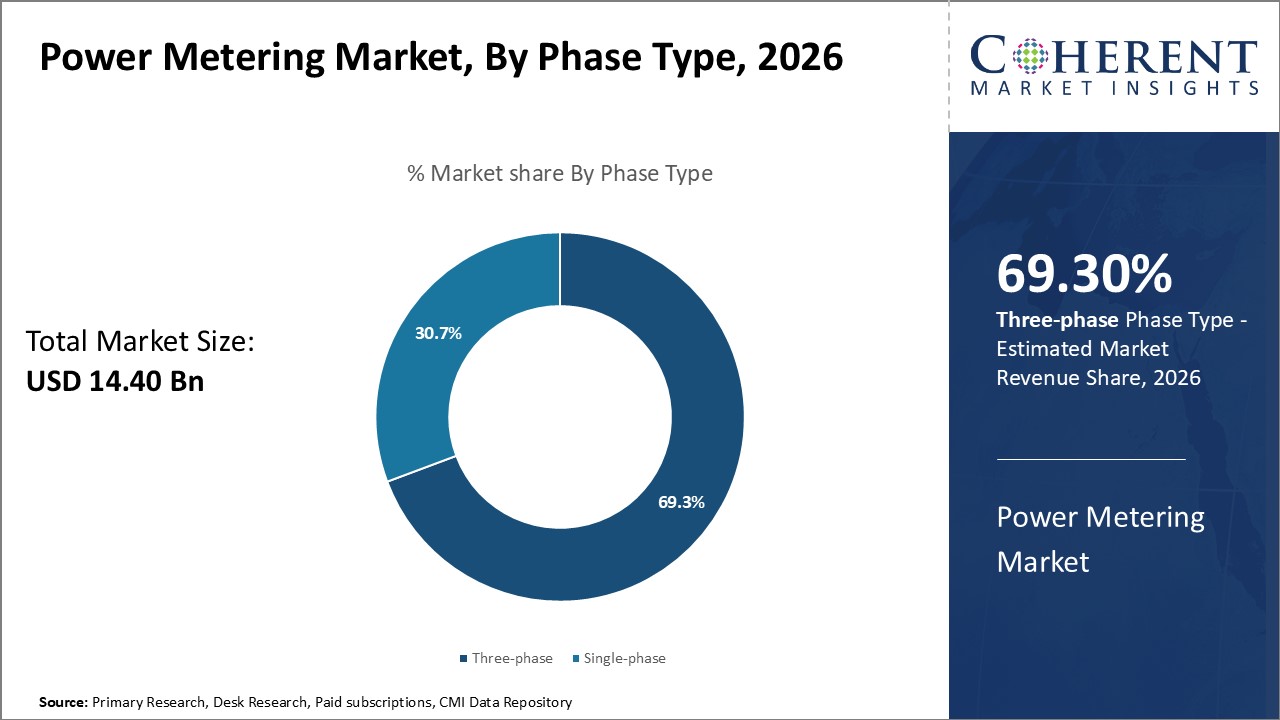
Power Metering Market Insights, by Phase Type - Infrastructure upgrades enable growth in the three-phase segment
In terms of phase type, three-phase is expected to contributes 69.3% share of the market in 2026 owing to infrastructure upgrades. Three-phase meters are primarily used to measure the consumption for medium and heavy industrial facilities or large commercial setups with higher load requirements. Given rapidly growing industrial and infrastructure development activities across developing regions, demand from these sectors has increased substantially. Modernization of existing industrial infrastructure also involves the replacement of obsolete meters with advanced three-phase meters.
Furthermore, the construction of new industrial parks and special economic zones necessitates the installation of three-phase meters. Government initiatives to boost manufacturing and 'Make in India' have promoted in-country investment, thus augmenting requirements.
Power Metering Market Insights, by End User - Emphasis on energy savings propels the residential segment growth
On the basis of end user, residential sector is expected to contributes 63.1% share to the power metering market in 2026, owing to growing focus on energy conservation. Population increase has led to higher overall domestic consumption. At the same time, greater awareness about financial and environmental benefits of efficient consumption patterns is driving adoption.
Policy interventions like time-of-day tariff systems have encouraged the adoption of smart meters that provide real-time usage analysis to residents. This enables behavioral changes to shift loads to off-peak hours and reduce bills. Furthermore, favorable regulatory norms for the integration of decentralized renewable sources have expanded residential prosumers. Smart meters effectively support micro-grid and net-metering arrangements.
For instance, in December 2023, Xylem unveiled its Stratus IQ+ electricity meter with grid-edge capabilities, meant to provide utilities with more data than before, including customer EV charging data.
Regional Insights
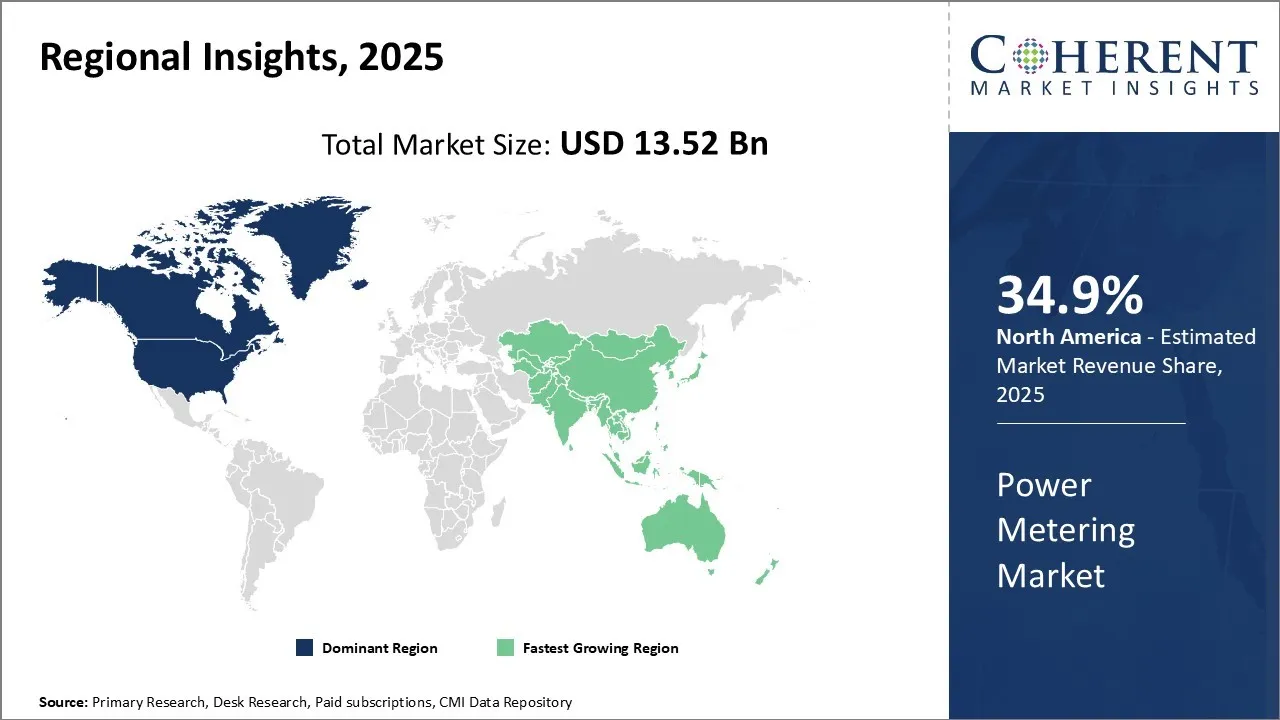
North America Power Metering Market Analysis & Trends
North America has established itself as the dominant region in the power metering market. The region is expected to account for 34.9% of the market share in 2026. The region boasts of a huge demand due to the high penetration of smart grid projects.
Countries like the U.S. and Canada have stringent norms to integrate renewable energy through extensive network upgrades. This has compelled utility companies as well as industrial consumers to invest heavily in advanced metering infrastructure. The presence of leading metering providers such as Siemens and Itron further strengthens North America's position. The technology-driven approach of utilities to optimize consumption helps sustain demand.
Moreover, efforts by state regulators to incentivize the adoption of smart meters via rebate programs promotes market growth. Large scale installations of smart grid pilots foster innovation and raise the bar for suppliers.
For instance, in July 2024, as per a report published by Smart Energy International, the number of smart meters in North America reached almost 146 million at the end of 2023 and with ongoing growth is expected to number 182.9 million in 2029.
Asia Pacific Power Metering Market Analysis & Trends
The Asia Pacific region is poised to be the fastest growing market for power metering globally over the coming years. Economic developments across countries like India, China and Southeast Asian nations are expected to fuel demand.
Power shortages and the need to reduce commercial and domestic losses drive utilities in APAC to invest in smart infrastructure upgrades. This presents immense opportunities for networked metering rollouts. Countries are introducing smart metering mandates that boost the market potential.
Additionally, inexpensive smart meter manufacturing capabilities within China and local sourcing by utilities to maximize cost savings augurs well for the region. Rising incomes are also enabling individual users to install distributed energy monitoring setups. The increasing focus on renewable integration under government energy policies provides tailwinds for meter data management providers.
For instance, in September 2026, Trilliant, continues to focus on enabling utilities and energy organizations in Asia-Pacific (APAC) with more than 13 million smart meters operational or in deployment in the region, and millions more planned through strategic partnerships in areas such as Thailand, Malaysia, Philippines, Indonesia, Japan and India.
Power Metering Market Outlook Country-Wise
The U.S. Power Metering Market Trends
The U.S. power metering market is shifting strongly toward Advanced Metering Infrastructure (AMI) and smart meters, with utilities increasingly replacing analog and basic digital meters with devices capable of two‑way communication, remote diagnostics, dynamic pricing / time‑of‑use billing, and tighter integration with grid modernization.
For instance, in March 2024, Itron, Inc. which is innovating new ways for utilities and cities to manage energy and water, announced that its customer, major U.S. electric and natural gas company Xcel Energy, has deployed 2 million Gen™5 Riva™ distributed intelligence (DI)-enabled electric smart meters.
India Power Metering Market Trends
India’s power‐metering market is undergoing rapid transformation driven by government policy, advances in technology, and the need to reduce losses and improve utility efficiency. Major drivers include large‑scale rollout schemes such as the Revamped Distribution Sector Scheme (RDSS) and the National Smart Metering Program, which aim to replace hundreds of millions of conventional meters with smart, prepaid, and two‑way digital meters.
For instance, in August 2026, Vi Business has announced plans to enable 12 million smart meters in India within the next three years.
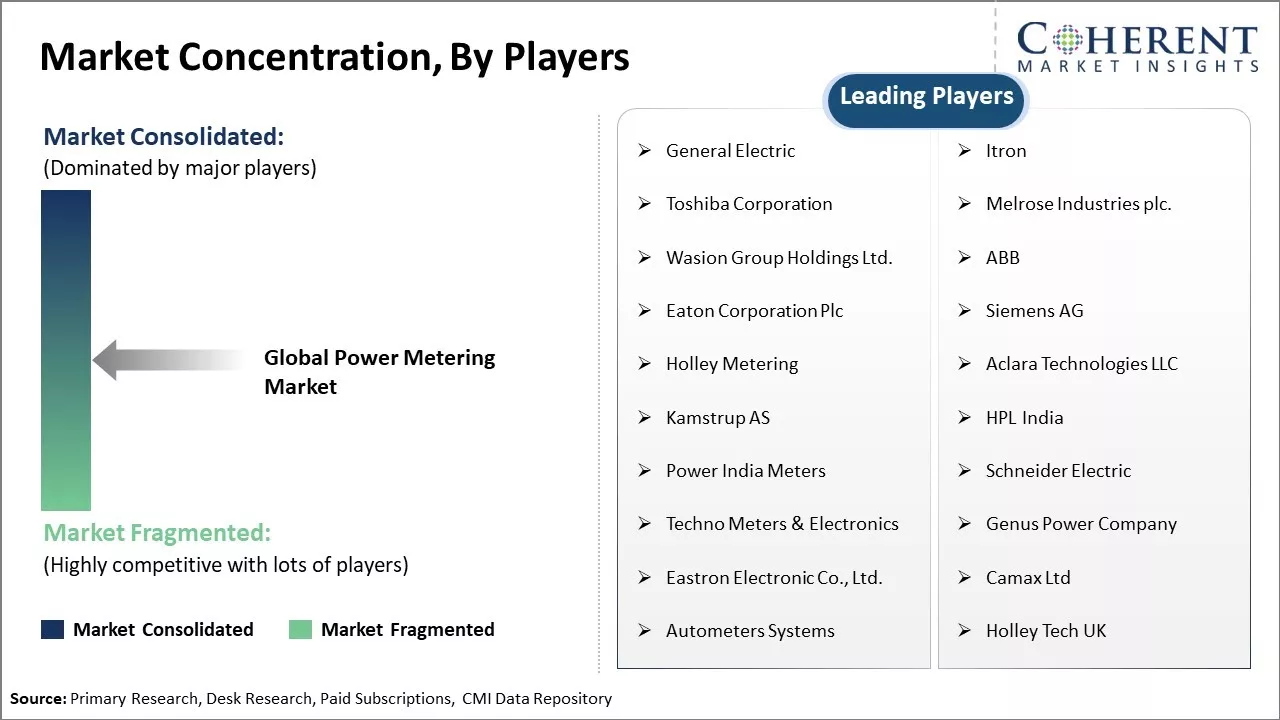
Market Concentration and Competitive Landscape
Analyst Opinion (Expert Opinion)
The power metering market is poised to grow at a significant rate over the next five years. The adoption of smart grid technologies and the need to reduce non-technical losses are major drivers for the increased adoption of smart meters globally. Government regulations and policies mandating the installation of smart meters in many countries will further propel market expansion. The ability of utilities to get real-time consumption data and efficiently manage load distribution through automated meter reading are expected to drive the replacement demand.
High initial installation costs involved in replacing existing infrastructure with smart meters could hinder the market growth. Data privacy and security concerns related to meters that collect and transmit household-level energy usage data online are notable restraints. The lack of standard communication protocols also challenges large-scale deployments.
North America currently dominates the market but Asia Pacific is emerging as the fastest growing regional market. Government initiatives to upgrade aging infrastructure in countries like India and China are boosting demand. Additionally, several utility providers in Southeast Asian countries are investing in smart grid projects which will require smart meter rollouts over the coming years.
Speak to the analyst
Want personalized insights?
Take the findings above to one of our principal consultants, or have the report rebuilt around the segments, geographies and competitors you actually track.
Power Metering Industry News
- In September 2025, inepro Metering introduced its PRO380-Eichrecht energy meter, designed to comply with a German regulation requiring all public EV charging stations to have certified, calibrated electricity meters.
- In February 2025, EDF India announced a strategic joint venture (JV) with Actis, a leading global investor in sustainable infrastructure. This collaboration aims to operate a dedicated platform company for Advanced Metering Infrastructure Service Provider (AMISP) concessions, reinforcing EDF India’s and Actis’ commitment to investing in the Indian power sector.
- In October 2024,
- In May 2024, Accuenergy, a leading manufacturer of energy management solutions, announced the launch of its Acuvim 3 Series Power Quality Meter. This advanced metering device is designed to provide comprehensive power quality monitoring and analysis, meeting the stringent IEC 61000-4-30 Class A compliance standards.
- In March 2024, Airtel Business, the enterprise arm of Bharti Airtel, announced a collaboration with Adani Energy Solutions Limited (AESL) in January 2024 to deploy connectivity for over 20 million smart meters. This strategic partnership aims to ensure the reliable and secure connectivity for AESL's smart metering deployments across India.
Market Report Scope
Power Metering Market Report Coverage
| Report Coverage | Details | ||
|---|---|---|---|
| Base Year: | 2025 | Market Size in 2026: | USD 14.40 Bn |
| Historical Data for: | 2020 To 2024 | Forecast Period: | 2026 To 2033 |
| Forecast Period 2026 to 2033 CAGR: | 6.5% | 2033 Value Projection: | USD 22.38 Bn |
| Geographies covered: |
| ||
| Segments covered: |
| ||
| Companies covered: | General Electric, Itron, Toshiba Corporation, Melrose Industries plc., Wasion Group Holdings Ltd., ABB, Eaton Corporation Plc, Siemens AG, Holley Metering, Aclara Technologies LLC, Kamstrup AS , HPL India, Power India Meters, Schneider Electric, Techno Meters & Electronics, Genus Power Company, Eastron Electronic Co., Ltd., Camax Ltd, Autometers Systems , and Holley Tech UK | ||
| Growth Drivers: |
| ||
| Restraints & Challenges: |
| ||
Market Opportunities: Integration of smart grid and Smart city initiatives
The integration of smart grid and smart city initiatives presents a great opportunity for the global power metering market. With more cities investing in smart infrastructure and digital technologies, the demand for advanced metering infrastructure and smart meters will see a significant rise. Smart grids aim to modernize the traditional power grid by incorporating two-way digital communication technology and automation.
This allows for better monitoring of electricity distribution and more efficient management of demand and supply. Smart meters, which can accurately measure and report energy usage in short intervals, play a vital role in the development of smart grids. As smart grids become widely adopted, the need for smart meter deployment will increase exponentially across both residential and commercial sectors.
Market Segmentation
- Type Insights (Revenue, USD Bn, 2021 - 2033)
- Smart
- Digital
- Analog
- Phase Type Insights (Revenue, USD Bn, 2021 - 2033)
- Single-phase
- Three-phase
- End User Insights (Revenue, USD Bn, 2021 - 2033)
- Residential
- Commercial
- Industrial
- Regional Insights (Revenue, USD Bn, 2021 - 2033)
- North America
- U.S.
- Canada
- Latin America
- Brazil
- Argentina
- Mexico
- Rest of Latin America
- Europe
- Germany
- U.K.
- Spain
- France
- Italy
- Russia
- Rest of Europe
- Asia Pacific
- China
- India
- Japan
- Australia
- South Korea
- ASEAN
- Rest of Asia Pacific
- Middle East & Africa
- GCC Countries
- Israel
- Rest of Middle East & Africa
- Key Players Insights
- General Electric
- Itron
- Toshiba Corporation
- Melrose Industries plc.
- Wasion Group Holdings Ltd.
- ABB
- Eaton Corporation Plc
- Siemens AG
- Holley Metering
- Aclara Technologies LLC
- Kamstrup AS
- HPL India
- Power India Meters
- Schneider Electric
- Techno Meters & Electronics
- Genus Power Company
- Eastron Electronic Co., Ltd.
- Camax Ltd
- Autometers Systems
- Holley Tech UK
Sources
Primary Research Interviews
- Power meter manufacturers and technology providers
- Utility companies and grid operators
- Smart grid solution integrators
- Energy management service providers
- Others
Databases
- IEA Energy Statistics Database
- Global Power Plant Database (WRI)
- Smart Grid Consumer Collaborative Database
- IEEE Xplore Digital Library
- Others
Magazines
- Utility Dive
- Smart Energy International
- Power Engineering Magazine
- Electric Light & Power Magazine
- Metering & Smart Energy International
- Others
Journals
- IEEE Transactions on Smart Grid
- International Journal of Electrical Power & Energy Systems
- Applied Energy Journal
- Others
Newspapers
- Financial Times (Energy Section)
- Wall Street Journal (Technology & Energy)
- Reuters Energy News
- Bloomberg Energy & Climate
- Energy News Network
- Others
Associations
- International Energy Agency (IEA)
- Edison Electric Institute (EEI)
- Smart Electric Power Alliance (SEPA)
- Association of Edison Illuminating Companies (AEIC)
- Global Smart Grid Federation
- Others
Public Domain Sources
- U.S. Department of Energy Reports
- European Commission Energy Statistics
- International Renewable Energy Agency (IRENA) Publications
- World Bank Energy Database
- National Institute of Standards and Technology (NIST) Guidelines
- Others
Proprietary Elements
- CMI Data Analytics Tool
- Proprietary CMI Existing Repository of information for last 8 years
*Definition: The power metering market comprises companies involved in manufacturing, distributing, and selling devices that are used to monitor and measure the electrical power consumption of residential, commercial, and industrial properties. Power meters help utility companies collect accurate usage data from customers while also enabling customers to better understand and manage their power consumption. Some of the key products in this market include smart meters, electricity meters, and industrial power meters.
Get access to 250+ pages report
Every segment, forecast, competitor profile and data table behind the analysis above — available for instant download.
- ESOMAR Member
- ISO 9001:2015 Certified
- D-U-N-S Registered
- GDPR & CCPA Compliant
Missing comfort of reading report in your local language? Find your preferred language:
Transform your Strategy with Exclusive Trending Reports
Frequently Asked Questions
The Power Metering Market is estimated to be valued at USD 14.40 Bn in 2026, and is expected to reach USD 22.38 Bn by 2033.
The CAGR of the Power Metering Market is projected to be 6.5% from 2026 to 2033.
Climate change concerns and emergence of smart grid technology are the major factors driving the growth of the global power metering market.
High initial investments and data collection and management challenges are the major factors hampering the growth of the global power metering market.
In terms of type, digital is estimated to dominate the market revenue share in 2026.
General Electric, Itron, Toshiba Corporation, Melrose Industries plc., Wasion Group Holdings Ltd., ABB, Eaton Corporation Plc, Siemens AG, Holley Metering, Aclara Technologies LLC, Kamstrup AS , HPL India, Power India Meters, Schneider Electric, Techno Meters & Electronics, Genus Power Company, Eastron Electronic Co., Ltd., Camax Ltd, Autometers Systems , and Holley Tech UK are the major players.
North America is expected to lead the global power metering market.