

Global Probiotic Yeast Market Size and Forecast – 2026 To 2033
The Global Probiotic Yeast Market is estimated to be valued at USD 590.4 Mn in 2026 and is expected to reach USD 986.2 Mn by 2033, growing at a compound annual growth rate (CAGR) of 7.6% from 2026 to 2033. Growth is supported by greater attention to digestive and microbiome health, alongside wider use of probiotic yeast in dietary supplements, clinical nutrition, and gastrointestinal-health applications.
Saccharomyces boulardii remains particularly relevant where probiotic support is used alongside antibiotic-based treatment. In April 2026, according to Springer Nature a randomized controlled trial published in BMC Gastroenterology found that adding S. boulardii to vonoprazan–amoxicillin therapy for H. pylori significantly reduced overall adverse events, reinforcing the clinical relevance of probiotic yeast in adjunctive digestive-health applications.
Key Takeaways of the Global Probiotic Yeast Market
- Saccharomyces boulardii is estimated to record an 8.2 % CAGR during 2026–2033 and account for 61.8% of the global probiotic yeast market in 2026, supported by strong strain documentation, gastrointestinal survivability, and established digestive-health positioning. In May 2024, Nature Communications reported an engineered S. boulardii platform that prolonged gut residence and improved outcomes in a preclinical colitis model.
- Powder and Granules are estimated to expand at a 7.9 % CAGR during 2026–2033 and capture 46.7% of the market in 2026, as dry formats support convenient dosing, storage, blending, and product customization across consumer and clinical uses. In September 2025, Lallemand Health Solutions highlighted a commercial formulation containing S. boulardii CNCM I-1079 supplied in powder form for mixing with water.
- Dietary Supplements are estimated to grow at an 8.4 % CAGR during 2026–2033 and represent 37.6% of the market in 2026, reflecting preference for convenient gut-health products and manufacturers’ ability to combine yeast with complementary probiotic strains. In May 2025, Lab4 Probiotics launched its expanded portfolio at Vitafoods Europe, including Lab4S, which combines its proprietary probiotic consortium with Saccharomyces boulardii.
- Europe is estimated to advance at a 7.2 % CAGR during 2026–2033 and hold 31.7% of the global market in 2026, underpinned by mature probiotic adoption, established clinical use, specialist manufacturing, and structured authorization pathways for microbial feed additives. In January 2026, the European Commission renewed authorization of Saccharomyces cerevisiae NCYC R404 as a feed additive for dairy cows, supporting continued commercial use.
- Asia Pacific is estimated to post a 9.1 % CAGR during 2026–2033 and account for 29.6% of the market in 2026, supported by preventive-health spending, wider supplement access, livestock nutrition modernization, and investment by international microbiota companies. In April 2025, Biocodex inaugurated its Vietnam subsidiary, explicitly linking the expansion to gut microbiota health and its Saccharomyces boulardii CNCM I-745 heritage.
Segmental Insights
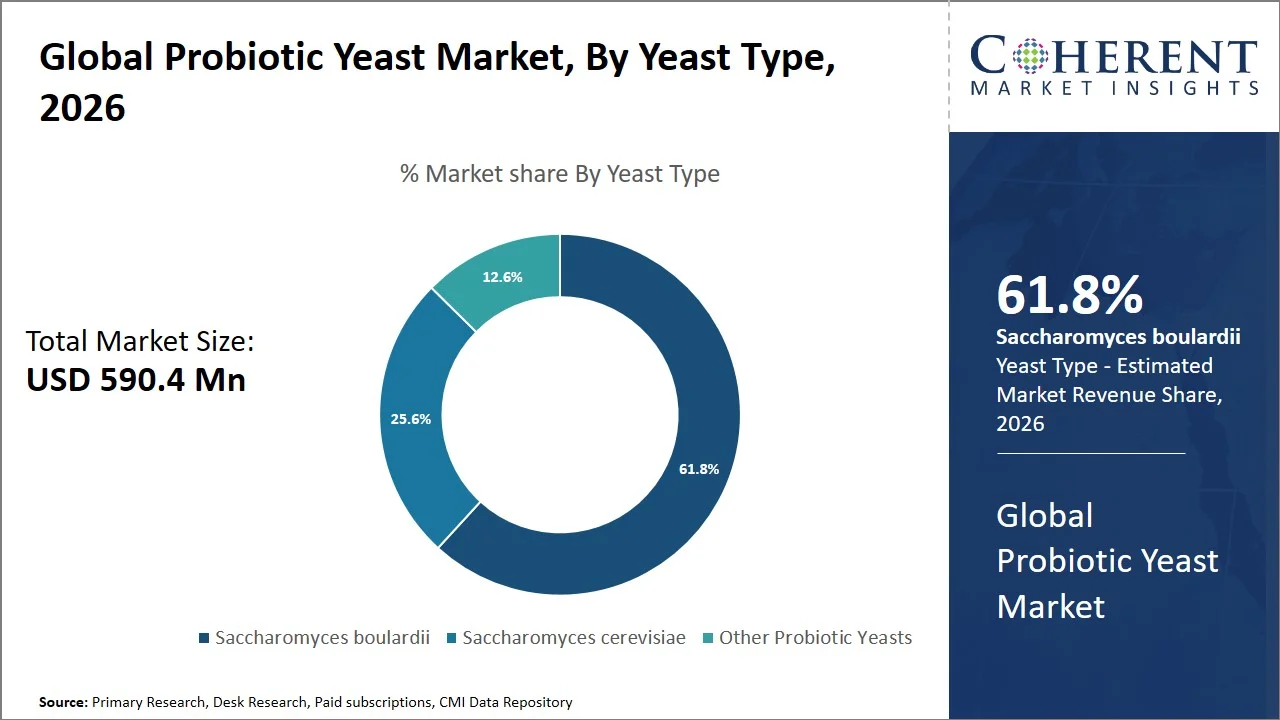
Why Does Saccharomyces boulardii Dominate the Global Probiotic Yeast Market?
Saccharomyces boulardii is expected to hold 61.8% of the global probiotic yeast market in 2026 because its commercial value extends beyond general microbiome support into strain-specific gastrointestinal and adjunctive clinical applications. Unlike many bacterial probiotics, its yeast biology allows use alongside antibacterial therapies, giving supplement and healthcare formulators a differentiated positioning route. Established clinical familiarity also supports pharmacy, practitioner, and medical-nutrition channels, while suppliers benefit from a recognizable organism with a substantial evidence base across digestive-health indications. This strengthens pricing resilience relative to less-documented probiotic yeasts and encourages investment in validated strains and indication-focused formulations. In May 2024, according to National Library of Medicine a randomized triple-blind placebo-controlled trial reported that S. boulardii supplementation improved pain, selected quality-of-life measures, and inflammatory markers in overweight or obese knee-osteoarthritis patients, illustrating research expansion beyond conventional diarrhea-focused use.
- Current Industry Events of 2026
- Market Size Estimation
- Regional Breakdown
- Competitive Landscape
- Customer Intelligence
- Segmental Analysis
- Pricing Analysis
- Key Market Drivers, Challenges & Future Trends
- Customized Insights Section
Why Do Powder and Granules Represent the Largest Form Segment in the Global Probiotic Yeast Market?
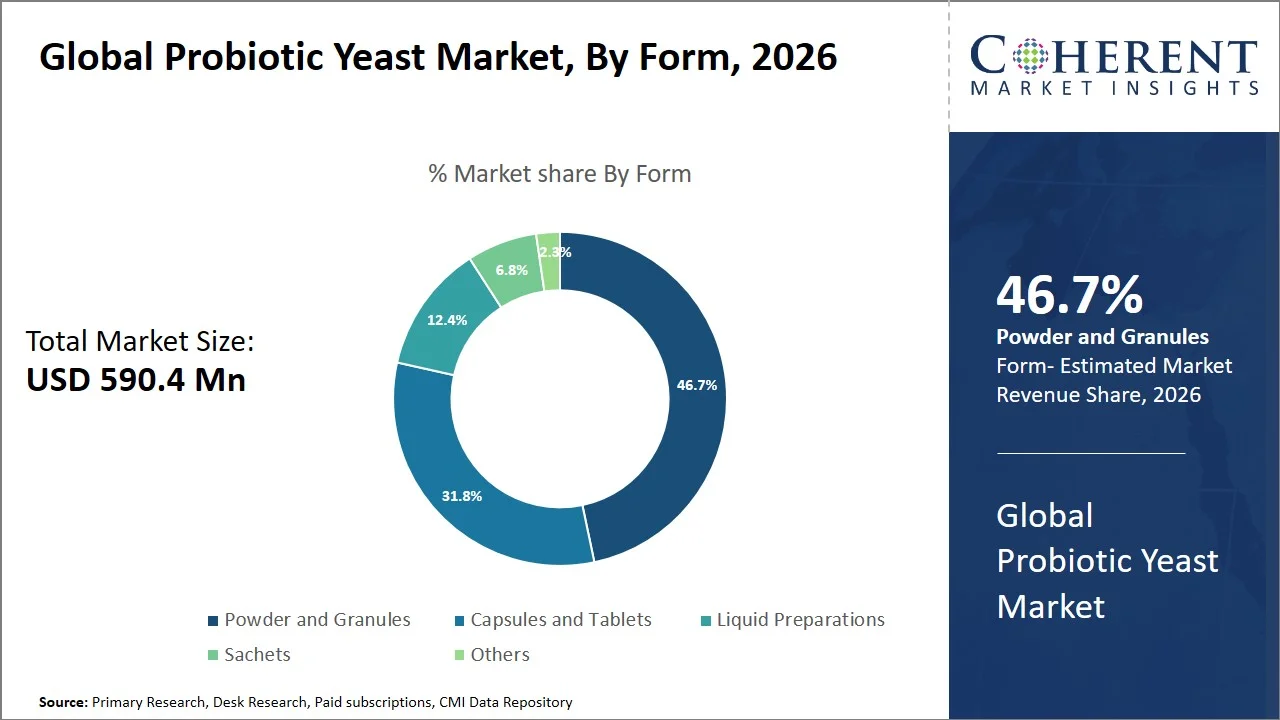
Powder and Granules are expected to account for 46.7% of the global probiotic yeast market in 2026 because dry formats give manufacturers broad flexibility across human nutrition, veterinary products, premixes, and feed applications. They simplify dose adjustment, blending, sachet filling, and incorporation into foods or animal diets while avoiding the formulation constraints associated with liquids. For suppliers, powder production also supports bulk B2B shipment and downstream repackaging, allowing one stabilized ingredient platform to serve multiple customers and channels. The format is especially valuable where probiotic yeast must be sprinkled, mixed, or incorporated immediately before consumption. In May 2025, Royal Canin launched yeast-based probiotic powders for cats and dogs containing live S. boulardii CNCM I-1079, designed for direct sprinkling onto wet or dry food, demonstrating the commercial adaptability of dry yeast delivery in companion-animal nutrition.
Why Do Dietary Supplements Dominate the Application Segment of the Global Probiotic Yeast Market?
Dietary Supplements are expected to represent 37.6% of the global probiotic yeast market in 2026 because this application gives brands the clearest route to translate strain-specific benefits into convenient, repeat-purchase wellness products. Capsules, stick packs, and combination synbiotics allow formulators to position probiotic yeast around digestive regularity, microbiome balance, antibiotic-associated disruption, and targeted age-group needs without depending on food reformulation. The channel also supports practitioner recommendation, specialty retail, and direct consumer education, creating room for differentiated formulations rather than bulk ingredient competition alone. Manufacturers that pair probiotic yeast with complementary bacterial strains or fibers can build broader functional propositions and improve portfolio segmentation. In September 2025, the U.S. National Library of Medicine’s DailyMed database listed Krewe Pharma’s Saccharomyces boulardii 250 mg capsules as a dietary supplement, with a marketing start date of September 8, 2025. The product contains S. boulardii CNCM I-1079 and is positioned for professional recommendation, demonstrating continued commercialization of strain-specific probiotic yeast through capsule-based dietary supplement channels.
Current Events and their Impact
Current Event | Description and Its Impact |
FSSAI Re-operationalization of Probiotic and Nutraceutical Regulations – August 2024 |
|
Health Canada Licenses a Saccharomyces boulardii Natural Health Product – February 2026 |
|
EFSA Implements Updated Feed-Additive Efficacy Guidance – December 2024 |
|
Global Probiotic Yeast Market Dynamics
Key Market Drivers
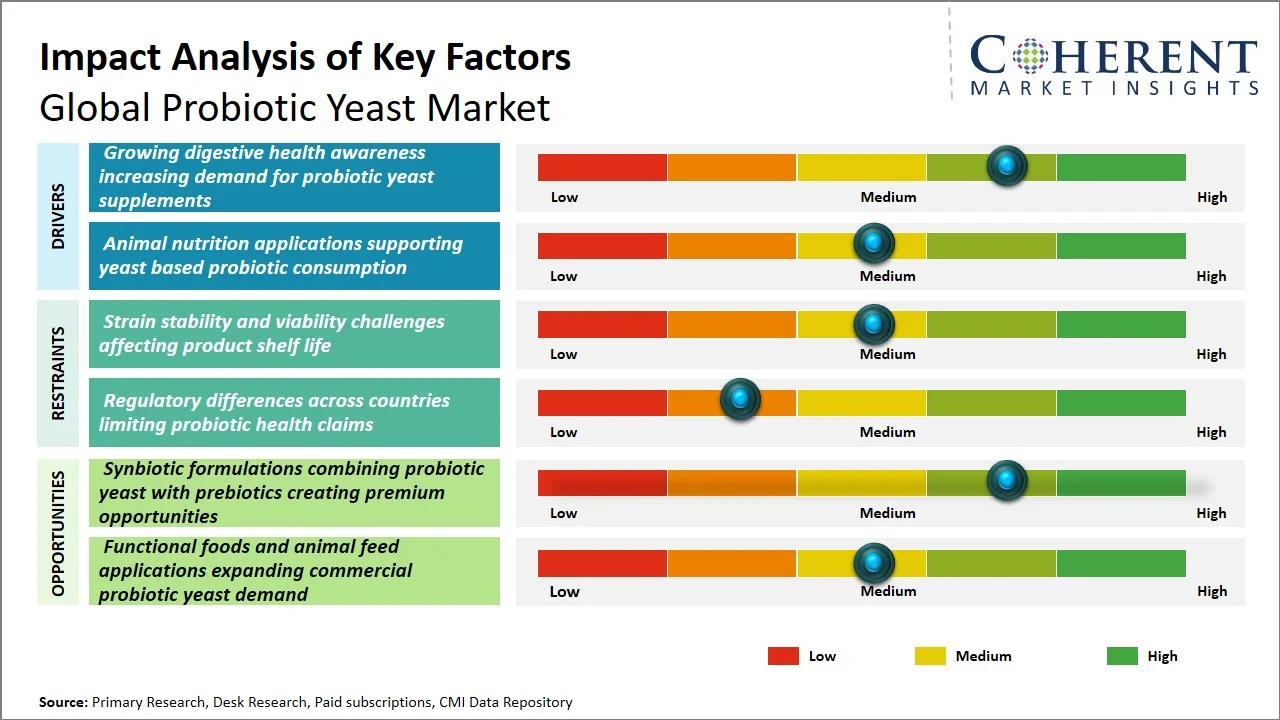
- Growing digestive health awareness increasing demand for probiotic yeast supplements: Greater focus on digestive health is strengthening the role of probiotic yeast in routine gastrointestinal care. Saccharomyces boulardii is differentiated from bacterial probiotics and is commonly positioned for microbiome balance during travel, dietary disruption, and antibiotic use. This supports demand across pharmacies, practitioner channels, nutraceutical brands, and online wellness platforms. Manufacturers benefit by offering convenient, shelf-stable formats with clear strain-level positioning. In March 2024, TrueNorth launched SensiBiotics for Sensitive Gut in India, combining Saccharomyces boulardii with Lactobacillus rhamnosus GG in a smart-release capsule for digestive and travel-related gut support.
- Animal nutrition applications supporting yeast based probiotic consumption: Animal nutrition is expanding probiotic yeast demand across dairy, swine, poultry, and other livestock applications. Producers increasingly assess yeast additives for digestive stability, feed efficiency, resilience during production stress, and compatibility with reduced antibiotic use. This benefits feed formulators, premix companies, livestock producers, and fermentation specialists capable of maintaining yeast viability during feed processing. In February 2024, Phileo by Lesaffre published a cradle-to-farm-gate life-cycle assessment for its Actisaf Sc 47 yeast probiotic, connecting supplementation with feed-efficiency-related sustainability performance in dairy production and reinforcing the commercial role of probiotic yeast in managed herds.
Emerging Market Trends
- Multi-Biotic Formulation Architecture Is Repositioning Probiotic Yeast: Multi-biotic formulations are changing probiotic yeast from a stand-alone ingredient into part of broader microbiome solutions. Formulators are combining yeast with bacterial strains, prebiotics, fibers, enzymes, or micronutrients to target specific consumer needs. This shifts competition toward formulation compatibility, stability, dosage design, and evidence supporting combined products. Ingredient suppliers with application and formulation capabilities are likely to gain an advantage, while commodity strain suppliers may face pricing pressure. Over the forecast period, probiotic yeast is expected to be increasingly incorporated into differentiated, outcome-focused formulations rather than marketed as an isolated digestive ingredient.
- Omnichannel Self-Care Is Changing How Probiotic Yeast Reaches Buyers: Probiotic yeast distribution is expanding across pharmacies, practitioner channels, e-commerce, subscription models, travel-health categories, and general wellness retail. This requires brands to communicate strain identity, usage occasion, storage needs, and product benefits more clearly to consumers making independent purchase decisions. Digital channels also increase price transparency, creating pressure on undifferentiated products while favoring recognizable use cases and convenient formats. Manufacturers with limited consumer reach may increasingly use private-label, licensing, or distribution partnerships. Over the forecast period, channel access and customer communication are likely to become nearly as important as fermentation and formulation capability.
Regional Insights
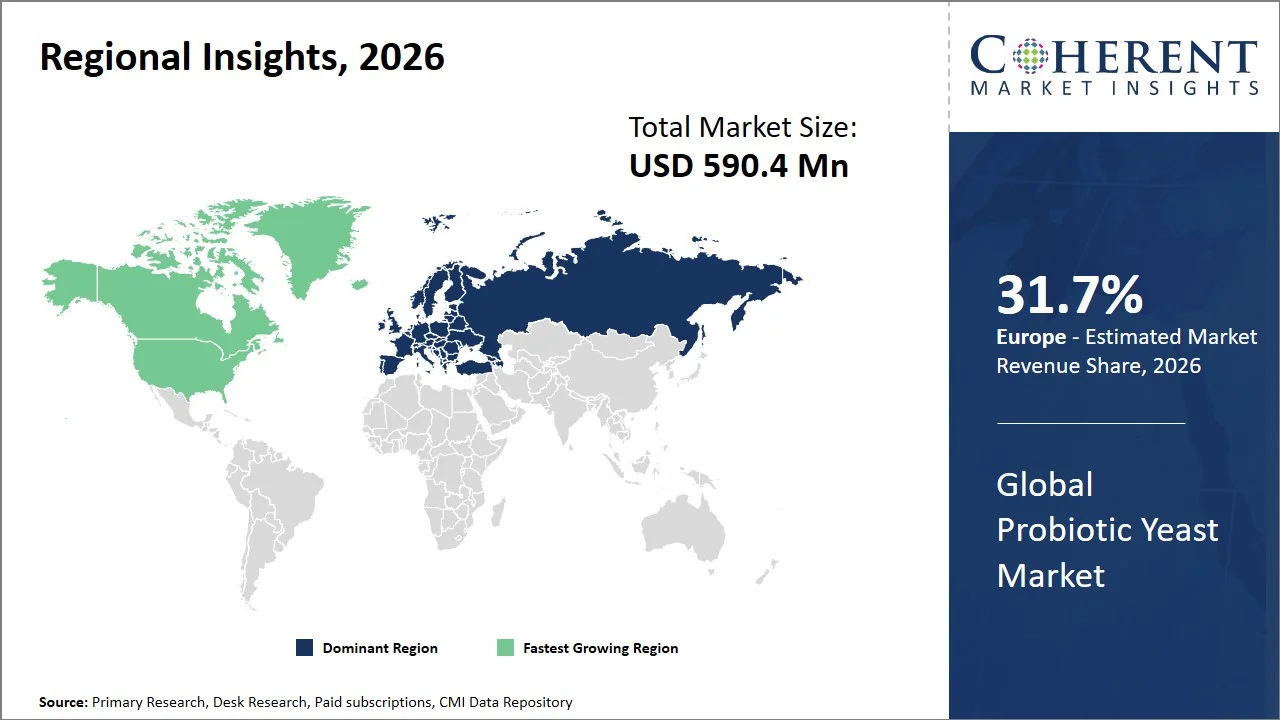
Why Does Europe Dominate the Global Probiotic Yeast Market?
Europe leads the global probiotic yeast market because probiotic yeast already fits within established digestive-health, pharmaceutical, clinical-nutrition, and specialty feed channels across the region. The region combines strong pharmacy access, clinician familiarity with strain-specific probiotics, mature supplement purchasing, and demanding quality standards that favor suppliers with documented strain identity and stability. European buyers also place high value on evidence-backed gastrointestinal applications, supporting premium positioning for Saccharomyces boulardii rather than purely price-led competition. Regulatory discipline further advantages experienced manufacturers capable of maintaining compliant dossiers across food, supplement, medicinal, and feed uses. In November 2024, a multicenter Phase IV trial across 63 outpatient practices in Bulgaria found that a probiotic combination containing S. boulardii reduced antibiotic-associated diarrhea versus placebo, reinforcing clinical interest in yeast-containing probiotic regimens.
Why Is Asia Pacific Emerging as the Fastest-Growing Region in the Global Probiotic Yeast Market?
Asia Pacific is emerging as the fastest-growing region in the global probiotic yeast market as probiotic adoption expands from general wellness into clinically supported digestive care, pediatric use, functional nutrition, and animal health. Large populations, expanding pharmacy and e-commerce access, greater attention to microbiome health, and a sizeable regional fermentation base create room for international strains and locally developed products. Manufacturers can also tailor sachets, capsules, powders, and feed formats to different income levels and treatment settings. Clinical research from Asian institutions is strengthening confidence in yeast-based interventions and supporting practitioner acceptance. In June 2025, Chiang Mai University researchers in Thailand published a randomized controlled trial showing that S. boulardii used with vancomycin reduced recurrence in mild-to-moderate Clostridioides difficile infection, illustrating expanding regional investigation beyond routine wellness applications.
Global Probiotic Yeast Market Outlook for Key Countries
Why Is the U.S. a Key Market for the Global Probiotic Yeast Market?
The U.S. is a key market for probiotic yeast because it combines a large dietary-supplement industry with strong direct-to-consumer distribution, practitioner-led nutrition, hospital research, and advanced microbiome engineering capabilities. Saccharomyces boulardii benefits from consumer familiarity with probiotics, broad availability of capsules and powders, and demand for products addressing antibiotic-associated digestive disruption and gastrointestinal resilience. The U.S. also supports higher-value innovation because universities and biotechnology groups are exploring probiotic yeast as a programmable therapeutic platform rather than solely as a conventional supplement ingredient. This creates opportunities for strain engineering, targeted metabolite delivery, and precision microbiome applications while raising evidence and regulatory requirements. In May 2025, researchers at North Carolina State University published work reviewing enabling technologies for in-situ biomanufacturing using probiotic yeast, highlighting movement toward engineered S. boulardii platforms.
Why Is India Important in the Global Probiotic Yeast Market?
India is important in the global probiotic yeast market because gastrointestinal health needs intersect with a rapidly expanding supplement, pharmaceutical, and clinical-nutrition ecosystem. Probiotic yeast is commercially relevant where physicians and consumers seek support for diarrhea management, antibiotic-associated digestive disturbance, and gut-microbiota recovery. India also offers fermentation expertise, cost-competitive manufacturing, contract-development capabilities, and growing domestic distribution through pharmacies and digital-health channels. Local evidence is especially valuable because treatment patterns, sanitation conditions, antibiotic exposure, and consumer affordability differ from Western markets, making country-specific validation commercially useful. In April 2024, a multicenter real-world study of Indian adults with diarrhea found that patients receiving S. boulardii CNCM I-745 showed better diarrhea control than those receiving non-probiotic treatment, including among patients taking concomitant antibiotics. The evidence supports broader clinical relevance for yeast-based probiotic products in routine Indian care.
Why Does China Support Growth in the Global Probiotic Yeast Market?
China supports growth in the global probiotic yeast market through its pediatric digestive-health population, extensive pharmacy network, strong fermentation industry, and expanding interest in evidence-based microbiome products. The country is important for sachet-based pediatric use, functional foods, and locally manufactured microbial ingredients, giving suppliers multiple commercialization routes beyond imported premium supplements. Domestic clinical literature can strengthen physician familiarity, while Chinese manufacturing capabilities support scale, localization, and competitive pricing. The strongest opportunity favors companies combining clinically recognizable strains with local regulatory execution and dosage formats suited to pediatric and family use. In June 2025, a systematic review and meta-analysis identified 10 randomized trials conducted in China involving 1,125 participants and concluded that S. boulardii CNCM I-745 was effective and well tolerated for pediatric acute gastroenteritis, strengthening the country-specific clinical evidence base.
Why Is Germany a Strategic Country in the Global Probiotic Yeast Market?
Germany is a strategic country in the global probiotic yeast market because its healthcare system, pharmacy channel, clinical-research infrastructure, and emphasis on evidence-based gastrointestinal care create favorable conditions for strain-specific probiotic products. German healthcare buyers generally require stronger documentation than markets where probiotics compete primarily as lifestyle supplements, increasing the value of clinical evidence, quality-controlled manufacturing, and clearly defined applications. The country also benefits from a strong life-sciences and fermentation ecosystem supporting formulation development and premium positioning. In July 2026, researchers from LMU University Hospital Munich and other German institutions published a meta-analysis evaluating S. boulardii as an adjunct to Helicobacter pylori eradication therapy and reported improvements in eradication outcomes and several therapy-associated adverse effects. This strengthens Germany’s role in generating clinically relevant evidence that can influence probiotic yeast positioning in professional healthcare channels.
Why Is Japan an Important Growth Market for the Global Probiotic Yeast Market?
Japan is an important growth market for probiotic yeast because consumers are highly familiar with gut-health products, fermented foods, functional ingredients, and premium preventive-health positioning. Its sophisticated supplement and food-ingredient sectors create an environment where probiotic yeast can differentiate through strain identity, stability, formulation quality, and clearly communicated digestive-health functions. Japan is particularly relevant for suppliers seeking compact dosage formats, high-quality imported ingredients, and partnerships with domestic ingredient distributors or finished-product developers. Regulatory and consumer expectations make substantiation and localized communication important for market entry. In April 2024, Japanese ingredient supplier Medience announced plans to introduce Saccharomyces boulardii CNCM I-3799 probiotic yeast to the Japanese market for supplement and gastrointestinal-health applications while completing domestic import-clearance procedures. This demonstrates a direct route for specialized probiotic yeast ingredients into Japan’s functional-nutrition supply chain.
Technology Adoption Landscape in the Global Probiotic Yeast Market
Technology | Adoption Level | Key Application Area | Business Impact |
High-Cell-Density Controlled Fermentation | High | Production of viable S. boulardii and S. cerevisiae biomass | Improves viable-cell yield, batch consistency, manufacturing scalability, and production economics. |
Lyophilization with Protective Carrier Systems | High | Powder, granule, capsule, and sachet manufacturing | Preserves viable organisms during storage and supports longer shelf life without excessive cold-chain dependence. |
Microencapsulation and Enteric Delivery Systems | Medium | Oral supplements and clinical-nutrition formulations | Protects viable yeast during gastric passage and enables more controlled release at the intended gastrointestinal site. |
Thermo-Resistant Coating for Pelleted Feed | Medium | Livestock and poultry feed additives | Limits viability loss from heat, pressure, and mechanical stress during feed processing, improving functional dose consistency. |
Whole-Genome Sequencing and Strain Fingerprinting | Medium | Strain identification, safety assessment, IP protection, and regulatory dossiers | Strengthens strain traceability, detects undesirable characteristics, supports differentiation, and reduces identity-related compliance risk. |
Integrated Viability and Molecular Quality-Control Testing | High | Raw-material release, finished-product testing, and shelf-life verification | Confirms potency and strain identity, reduces out-of-specification batches, and supports label-claim reliability through distribution. |
How Are Women’s Intimate-Health Applications Creating New Growth Opportunities in the Global Probiotic Yeast Market?
Women’s intimate-health applications represent an underdeveloped route for probiotic yeast suppliers to move beyond conventional gastrointestinal positioning. The commercial opportunity lies in orally administered, strain-specific solutions designed to support microbiome balance in women who experience recurring disruption associated with antibiotics, hormonal changes, lifestyle factors, or conventional treatment cycles. Capturing this opportunity requires more than repackaging a digestive probiotic: suppliers need indication-relevant clinical evidence, safety documentation, dosage-form stability, carefully controlled claims, and education materials suitable for gynecologists, pharmacists, nutraceutical brands, and women’s-health platforms. Companies can differentiate through proprietary strains, combination protocols, practitioner-oriented products, and region-specific regulatory dossiers while using contract manufacturing to accelerate market entry. The opportunity is likely to favor specialists with defensible microbiology and clinical capabilities, but established fermentation companies can compete by licensing validated strains and providing formulation support. Overinvestment in broad wellness messaging should be avoided; credibility will depend on clearly defined use cases, compliant claims, and evidence that separates probiotic yeast from generic women’s microbiome products.
Market Players, Key Development, and Competitive Landscape
Key Developments
- In February 2025, European Union Prosol S.p.A. received renewed European Union authorization for Biosprint, its live probiotic Saccharomyces cerevisiae MUCL 39885 preparation, as a feed additive for cattle for fattening. The renewal preserves commercial access for a strain-specific live yeast solution in European animal nutrition and reinforces the importance of regulatory continuity, documented efficacy, and proprietary strains in feed-market competition.
- In April 2024, Advanced Nutrition Programme secured a UK patent for Skin Clear Biome, an ingestible microbiome formulation containing Saccharomyces boulardii alongside selected bacterial strains and zinc. The development expands probiotic yeast beyond conventional digestive-health positioning into the gut–skin axis and demonstrates how intellectual property around indication-specific formulations can support premium differentiation in the global probiotic yeast market.
Competitive Landscape
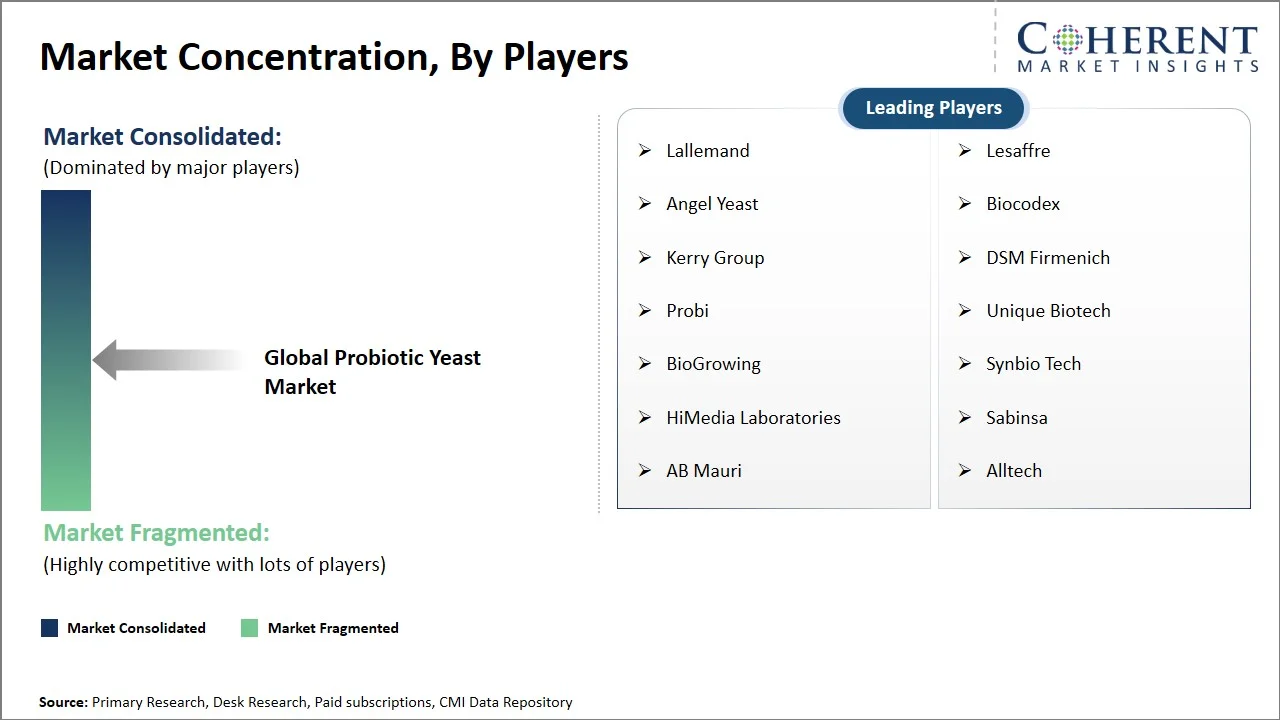
The global probiotic yeast market is moderately fragmented, with specialist yeast producers, probiotic developers, nutraceutical and pharmaceutical companies, animal-nutrition suppliers, and regional brands competing across multiple applications. Competition centers on strain documentation, shelf-life potency, regulatory compliance, formulation flexibility, supply reliability, and technical support. Proprietary strains and application expertise support premium positioning, while regional players compete through pricing, local market knowledge, and distribution strength.
Key focus areas include
- Strain differentiation and proprietary documentation: Clearly characterized strains with defensible functional positioning reduce direct substitutability.
- Viability through shelf life: Suppliers able to maintain declared potency during storage and transportation strengthen buyer confidence and lower replacement risk.
- Fermentation consistency and supply reliability: Repeatable manufacturing performance becomes critical for pharmaceutical, nutraceutical, and feed customers operating standardized formulations.
- Regulatory and quality-assurance capability: Region-ready documentation, traceability, contamination control, and appropriate certifications can shorten customer qualification cycles.
- Format and formulation flexibility: Capability across powders, granules, capsules, tablets, sachets, and feed-compatible formats widens addressable customer groups.
- Private-label and contract-manufacturing support: End-to-end development can attract brands seeking faster commercialization without building dedicated probiotic infrastructure.
- Technical and application support: Stability testing, dosage guidance, compatibility evaluation, and customer troubleshooting can protect margins better than competing primarily on ingredient price.
Market Report Scope
Probiotic Yeast Market Report Coverage
| Report Coverage | Details | ||
|---|---|---|---|
| Base Year: | 2025 | Market Size in 2026: | USD 590.4 Mn |
| Historical Data for: | 2020 To 2024 | Forecast Period: | 2026 To 2033 |
| Forecast Period 2026 to 2033 CAGR: | 7.6% | 2033 Value Projection: | USD 986.2 Mn |
| Geographies covered: |
| ||
| Segments covered: |
| ||
| Companies covered: | Lallemand, Lesaffre, Angel Yeast, Biocodex, Kerry Group, DSM Firmenich, Probi, Unique Biotech, BioGrowing, Synbio Tech, HiMedia Laboratories, Sabinsa, AB Mauri, Alltech | ||
| Growth Drivers: |
| ||
| Restraints & Challenges: |
| ||
Analyst Opinion (Expert Opinion)
- The global probiotic yeast market leadership is likely to shift from broad strain portfolios toward clearly defined commercial use cases. Suppliers focused on digestive health, clinical nutrition, livestock performance, women’s health, and specialized wellness can strengthen differentiation, improve pricing power, and build more defensible customer relationships.
- Postbiotic and inactivated microbial alternatives could reshape competition by reducing the need to maintain live-cell viability through processing and shelf life. Probiotic yeast suppliers will need to demonstrate where live organisms provide superior functional value to justify added formulation, stability, and quality-control requirements.
- Market participants should prioritize shelf-life potency, manufacturing consistency, regulatory readiness, formulation stability, and supply resilience. Investment should concentrate on differentiated applications with premium potential, while avoiding excessive capacity expansion and SKU proliferation that could dilute margins, evidence investment, and distributor attention.
Speak to the analyst
Want personalized insights?
Take the findings above to one of our principal consultants, or have the report rebuilt around the segments, geographies and competitors you actually track.
Market Segmentation
- Yeast Type Insights (Revenue, USD Mn, 2021 - 2033)
- Saccharomyces boulardii
- Saccharomyces cerevisiae
- Other Probiotic Yeasts
- Form Insights (Revenue, USD Mn, 2021 - 2033)
- Powder and Granules
- Capsules and Tablets
- Liquid Preparations
- Sachets
- Others
- Application Insights (Revenue, USD Mn, 2021 - 2033)
- Dietary Supplements
- Animal Feed and Nutrition
- Pharmaceuticals and Clinical Nutrition
- Functional Foods and Beverages
- Others
- Distribution Channel Insights (Revenue, USD Mn, 2021 - 2033)
- Direct Sales
- Indirect Sales
- Regional Insights (Revenue, USD Mn, 2021 - 2033)
- North America
- U.S.
- Canada
- Latin America
- Brazil
- Argentina
- Mexico
- Rest of Latin America
- Europe
- Germany
- U.K.
- Spain
- France
- Italy
- Russia
- Rest of Europe
- Asia Pacific
- China
- India
- Japan
- Australia
- South Korea
- ASEAN
- Rest of Asia Pacific
- Middle East
- GCC Countries
- Israel
- Rest of Middle East
- Africa
- South Africa
- North Africa
- Central Africa
- North America
- Key Players Insights
- Lallemand
- Lesaffre
- Angel Yeast
- Biocodex
- Kerry Group
- DSM Firmenich
- Probi
- Unique Biotech
- BioGrowing
- Synbio Tech
- HiMedia Laboratories
- Sabinsa
- AB Mauri
- Alltech
Sources
Primary Research Interviews
- Probiotic yeast manufacturers, fermentation companies, microbial culture developers, and strain owners
- Dietary supplement, nutraceutical, pharmaceutical, clinical nutrition, and functional food manufacturers
- Animal feed producers, premix manufacturers, livestock nutrition companies, and veterinary nutrition specialists
- R&D, microbiology, fermentation, formulation, regulatory affairs, quality, procurement, production, marketing, and sales executives
Stakeholders
- Saccharomyces boulardii, Saccharomyces cerevisiae, and other probiotic yeast manufacturers
- Probiotic ingredient suppliers, strain developers, fermentation technology providers, and contract manufacturers
- Capsule, tablet, sachet, powder, granule, and liquid formulation companies
- Pharmaceutical, nutraceutical, functional food, clinical nutrition, and animal-feed companies
- Distributors, pharmacies, healthcare practitioners, laboratories, CROs, and e-commerce supplement platforms
End-use Sectors
- Dietary supplements and consumer digestive-health products
- Pharmaceuticals and clinical nutrition
- Functional foods and beverages
- Animal feed, livestock nutrition, pet nutrition, and veterinary applications
- Pharmacies, specialty health retailers, practitioner channels, and online wellness platforms
Regulatory and Government Bodies
- U.S. Food and Drug Administration (FDA)
- European Commission and European Food Safety Authority (EFSA)
- UK Food Standards Agency and Medicines and Healthcare products Regulatory Agency
- Health Canada and Canadian Food Inspection Agency
- China State Administration for Market Regulation and National Health Commission
- Japan Ministry of Health, Labour and Welfare and Consumer Affairs Agency
- India Food Safety and Standards Authority of India (FSSAI)
- Food Standards Australia New Zealand and Therapeutic Goods Administration
- Brazil ANVISA and Ministry of Agriculture and Livestock
Databases
- PubMed and MEDLINE
- ClinicalTrials.gov
- WHO International Clinical Trials Registry Platform
- Health Canada Licensed Natural Health Products Database
- U.S. NIH Dietary Supplement Label Database
- EFSA scientific opinions and OpenFoodTox
- EU Register of Feed Additives
- UN Comtrade and ITC Trade Map
- Eurostat
- National pharmaceutical, nutraceutical, food-supplement, and feed-additive registration databases
- Company annual reports, product catalogues, strain portfolios, regulatory dossiers, and pricing databases
Magazines and Journals
- Gut Microbes
- Nutrients
- Beneficial Microbes
- Journal of Fungi
- Frontiers in Microbiology
- Microorganisms
- Clinical Nutrition
- Applied and Environmental Microbiology
- Animal Feed Science and Technology
- Journal of Functional Foods
Associations
- International Probiotics Association
- International Scientific Association for Probiotics and Prebiotics
- IPA Europe
- Council for Responsible Nutrition
- Food Supplements Europe
- FEFANA
- International Feed Industry Federation
- American Feed Industry Association
Public Domain Sources
- Probiotic yeast strain identity, CFU specifications, stability, dosage, formulation, and shelf-life information
- Clinical evidence covering gastrointestinal health, antibiotic-associated diarrhea, microbiome balance, and adjunctive applications
- Fermentation capacity, biomass production, drying, lyophilization, microencapsulation, and strain-preservation information
- Dietary supplement, pharmaceutical, functional-food, and animal-feed product registrations
- Retail pricing, dosage formats, pack sizes, claims, distribution channels, and product availability
- Feed-additive approvals, safety assessments, efficacy evaluations, and strain-specific regulatory documentation
- Company product launches, manufacturing investments, partnerships, distribution agreements, clinical studies, and market entries
Key Standards and Regulations
- U.S. Dietary Supplement Health and Education Act (DSHEA)
- 21 CFR Part 111 – Current Good Manufacturing Practice for Dietary Supplements
- 21 CFR Part 101 – Food and Dietary Supplement Labeling
- FDA New Dietary Ingredient Notification Requirements
- EU Regulation (EC) No 1924/2006 – Nutrition and Health Claims Made on Foods
- EU Regulation (EC) No 1831/2003 – Additives for Use in Animal Nutrition, relevant to microorganism-based feed additives including probiotic yeast applications, EU Regulation (EU) 2015/2283 – Novel Foods.
- EFSA Qualified Presumption of Safety (QPS) Framework for Microorganisms
- Canada Natural Health Products Regulations, covering probiotics and requirements relating to product licensing, GMP, labeling, safety, efficacy, and quality.
- India Food Safety and Standards (Health Supplements, Nutraceuticals, Food for Special Dietary Use, Food for Special Medical Purpose, Functional Food and Novel Food) Regulations, 2016, including foods containing probiotics.
- Australia New Zealand Food Standards Code
- Codex General Principles of Food Hygiene – CXC 1-1969
- ISO 22000 – Food Safety Management Systems
Proprietary Elements
- CMI Data Analytics Tool, Proprietary CMI Existing Repository of information for last 10 years.
Get access to 250+ pages report
Every segment, forecast, competitor profile and data table behind the analysis above — available for instant download.
- ESOMAR Member
- ISO 9001:2015 Certified
- D-U-N-S Registered
- GDPR & CCPA Compliant
Missing comfort of reading report in your local language? Find your preferred language:
Transform your Strategy with Exclusive Trending Reports
Frequently Asked Questions
The CAGR of global probiotic yeast market is projected to be 7.6% from 2026 to 2033.
The global probiotic yeast market is estimated to be valued at USD 590.4 million in 2026 and is expected to reach USD 986.2 million by 2033
Probiotic yeast is widely used in dietary supplements, animal feed and nutrition, pharmaceuticals and clinical nutrition, and functional foods and beverages.
Saccharomyces boulardii is widely used because of its established role in supporting digestive health, maintaining intestinal microbial balance, and complementing gastrointestinal care applications.
Probiotic yeast products are commonly available as powders and granules, capsules and tablets, liquid preparations, and sachets, depending on the intended application and end-user requirements.
Growing digestive health awareness increasing demand for probiotic yeast supplements and animal nutrition applications supporting yeast based probiotic consumption are the major factor driving the growth of global probiotic yeast market.
Strain stability and viability challenges affecting product shelf life and regulatory differences across countries limiting probiotic health claims are the major factor hampering the growth of global probiotic yeast market.