

Rapid Infuser Market Size and Forecast — 2026-2033
Global rapid infuser market is estimated to be valued at USD 880.3 Mn in 2026 and is expected to reach USD 1,255.3 Mn by 2033, exhibiting a compound annual growth rate (CAGR) of 5.2% from 2026 to 2033.
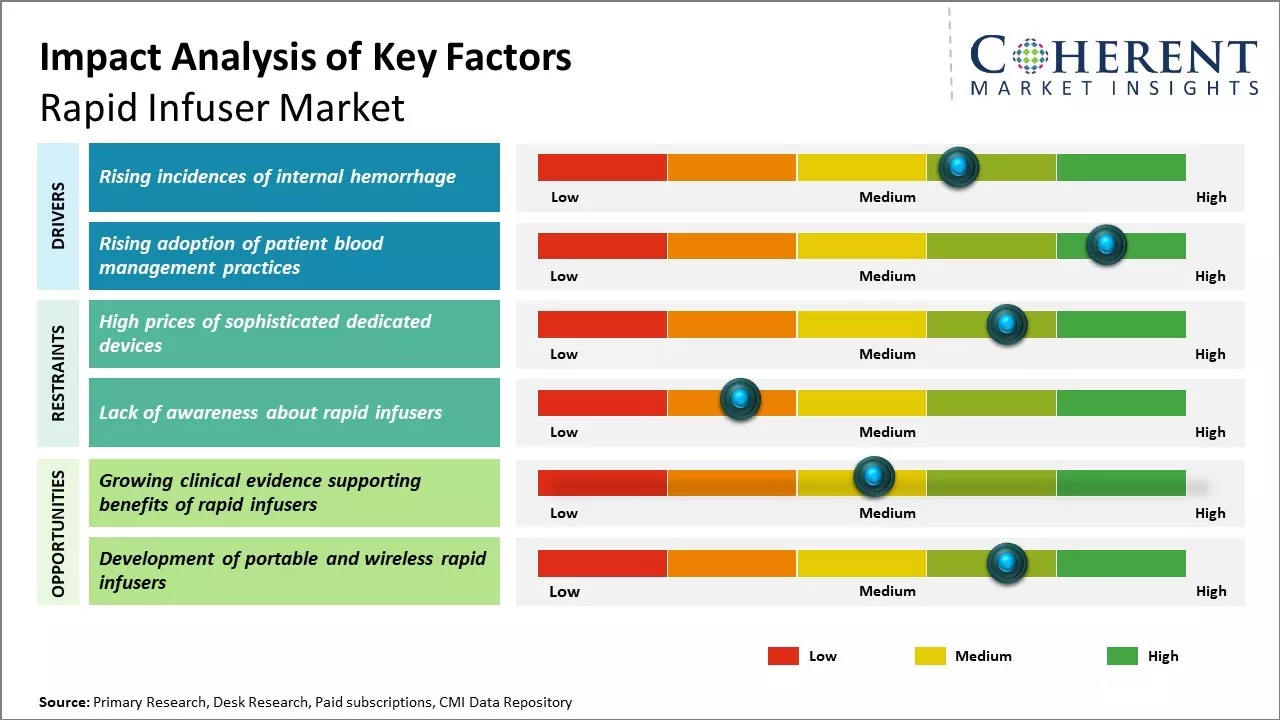
Rapid infusion devices have witnessed increased adoption in the recent years due to growing demand for emergency blood infusion in trauma and surgery cases. Rapid infusion devices offer standardized and controlled infusion, thus, helping medical staff focus on critical patient care. Developed markets in North America and Europe currently account for majority of demand for rapid infusion devices. However, Asian markets are expected to witness highest growth during the forecast period supported by rising medical infrastructure, healthcare expenditure and greater focus on patient safety.
Rising incidences of internal hemorrhage
The rate of internal hemorrhage associated injuries has witnessed a steady rise over the past decade due to traumatic injuries caused in accidents or non-traumatic hemorrhaging occurring owing to medical conditions such as gastrointestinal bleeding, uterine bleeding post childbirth, ruptured ectopic pregnancies, and others. Rapid administration of blood products is critical in managing massive hemorrhage to prevent fatality. Traditionally blood transfusion has been a lengthy process involving manual extraction and administration of packed red cells from banks. With delayed intervention, the rate of mortality increases substantially. Rapid infusers address this challenge effectively. These devices can automatically extract blood from bags/containers and infuse it into the patient in a controlled manner but at a much faster pace compared to traditional methods. Some advanced rapid infuser models have the capability to accurately measure blood components being administered and regulate the flow and volume infused. This ensures blood is supplied to the patient efficiently without any delays due to automated processes but also in a safe controlled method.
Insights, By Product Type
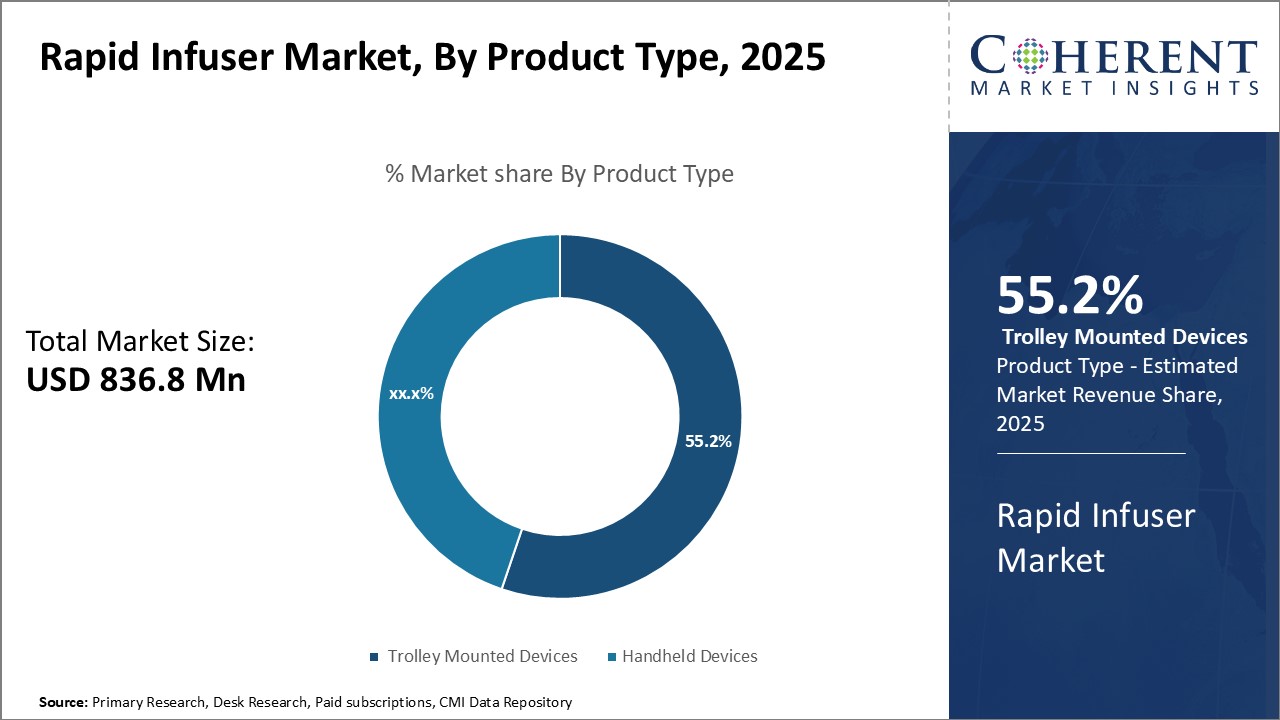 Insights, By Product Type: Technical Superiority Fuels Demand for Trolley Mounted Rapid Infusers
Product Type segment is sub-segmented into handheld devices and trolley mounted devices. Trolley mounted devices segment is estimated to hold 56.2% share of the market in 2026. Trolley mounted devices offer stable and consistent CO2 flow rates during treatments, ensuring optimal absorption. Trolley mounted infusers offer more stability and accuracy during fluid administration compared to handheld variants due to their integration with medical carts or stands. The steady platform ensures drip rate is maintained precisely as prescribed by physicians. This is crucial in emergency response and critical care settings to quickly resuscitate patients without delay. Trolley mounted designs also allow for larger fluid bags that can hold more volume, extending treatment time between replacements. Their portability within hospital facilities lets clinicians transport patients without disturbing intravenous lines. Overall, trolley mounted rapid infusers have gained preference in clinical environments for their reliability and safety attributes that benefit both providers and patients undergoing high-acuity medical care.
Insights, By Application
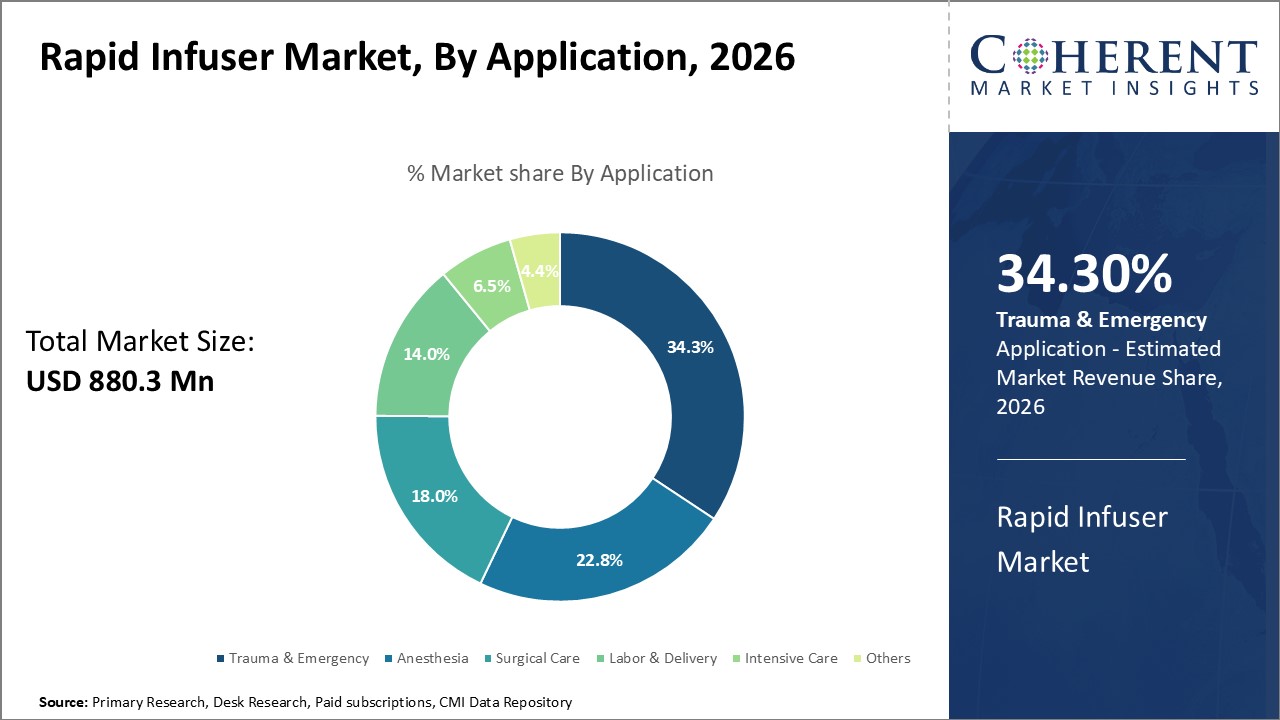
Insights, By Application: Rise in Trauma and Emergency Cases
Application segment is sub-segmented into trauma & emergency, anesthesia, surgical care, labor & delivery, intensive care, and others. Trauma & emergency segment is expected to hold 34.3% of the market share in 2026. Rapid fluid resuscitation is imperative in trauma and emergency rooms dealing with critically ill or injured patients. Speedy intravenous access and controlled fluid delivery are indispensable for stabilizing conditions like hemorrhagic shock, sepsis, major burns, or blood loss from physical trauma. Clinicians rely on rapid infusers to quickly restore circulatory volume and normalize vital signs. The high-pressure environments of trauma and emergency units especially value how rapid infusers streamline urgent therapy administration versus manual methods. This makes trauma and emergency the dominant application segment.
Insights, By End User
Insights, By End User: Rise in Ambulatory Surgery Centers Application Drives Growth
End User segment is sub-segmented into hospitals, ambulatory surgery centers, specialty clinics, and others. Ambulatory surgery centers segment is expected to hold 36.2% of the market share in 2026. Rapid infusers enable ambulatory surgery centers to expeditiously treat same-day surgical patients recovering from procedures. Their fast fluid delivery gets patients feeling well enough to be safely discharged in a timely manner, opening beds for new admissions. This boosts patient turnover and facility revenue. Rapid infusers also reduce nursing workload versus traditional gravitation methods, minimizing additional labor expenses. As ambulatory surgery grows to accommodate more cost-effective outpatient options, infrastructure investments like rapid infusers help maximize financial viability for surgery centers. Their benefits in terms of better recovery outcomes, higher patient throughput, and staff efficiency make rapid infusers a desirable purchase.
Regional Insights
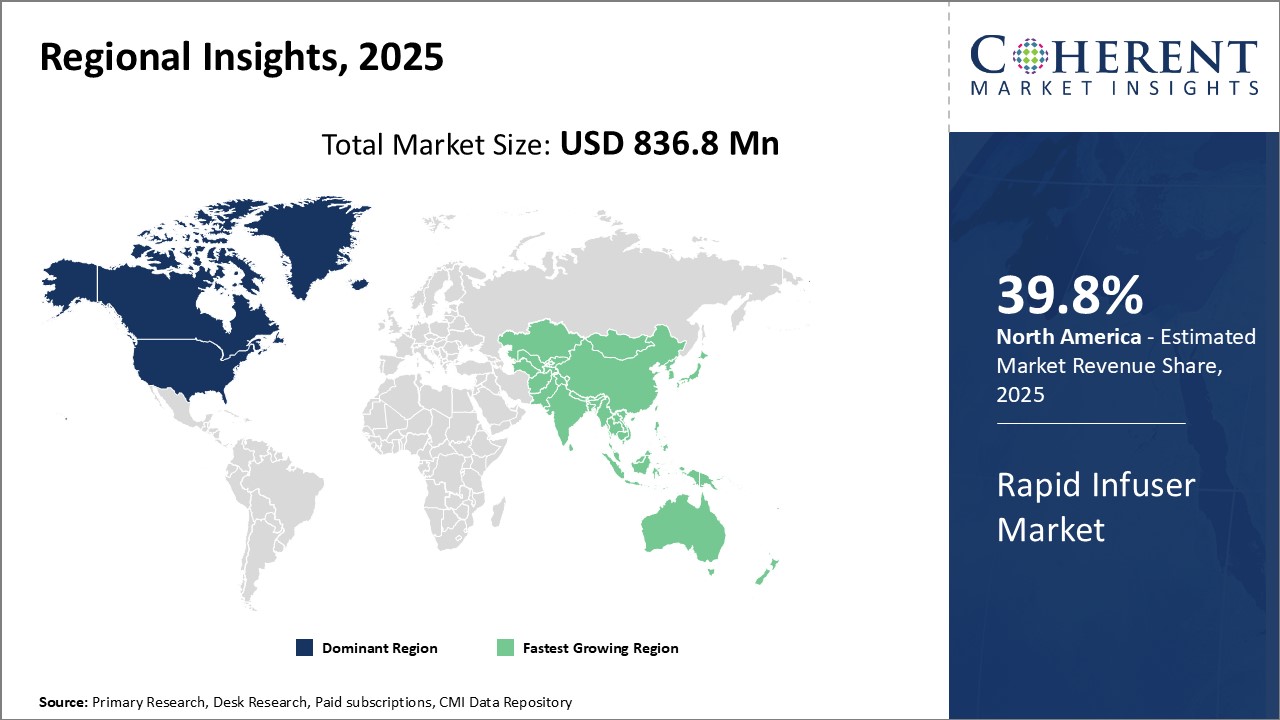 North America has dominated the global rapid infuser market for several years and is projected to hold 39.8% of the market share in 2026. The presence of major market players and well-established medical infrastructure have further strengthened North America's position. Most of the leading manufacturers of rapid infusion systems are headquartered in the U.S. and Canada. This has enabled them to directly from hospitals and ambulatory surgical centers, minimizing delivery times. The reimbursement environment in the U.S. and Canada is favorable for new medical technologies, allowing providers to invest in advanced rapid infusion devices without significant budget constraints. The trade volumes of rapid infusion equipment within North America are also higher than other regions due to intense competition and technology upgrades.
The Asia Pacific region has emerged as the fastest growing market for rapid infusers in recent times. Countries such as China, India, Japan and South Korea owing to expanding healthcare industry and rising medical tourism. Growing prevalence of chronic diseases and injuries has boosted the number of surgical procedures in Asia Pacific. This has increased the need for rapid blood infusion capabilities in hospitals to support complex surgeries. Furthermore, improvements in healthcare infrastructure, rising penetration of health insurance and increasing willingness to pay for quality care are fueling market growth. Local manufacturers are also entering the market and offering rapid infusion systems at competitive prices. This is making such technologies more accessible. Given the immense growth opportunities, global companies have enhanced their distributor networks and presence in Asia Pacific through new product launches, partnerships and acquisitions.
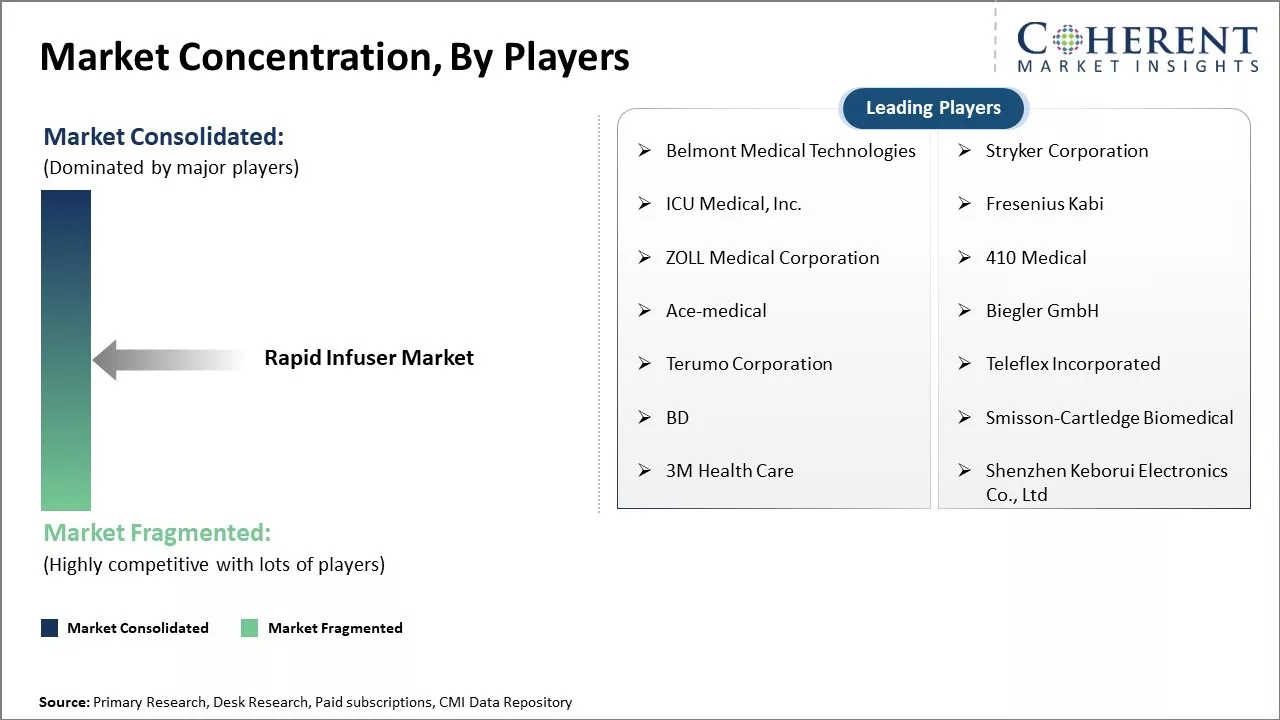
Market Players, Key Development, and Competitive Intelligence
 Rising adoption of patient blood management practices
Over the past few years, patient blood management has emerged as a pivotal strategy adopted across hospital settings to improve patient safety, clinical outcomes and optimize transfusion practices. It involves applying evidence-based medical and surgical concepts designed to maintain hemoglobin levels and optimize hemodynamic status without exposing patients to unnecessary allogeneic blood transfusions. Traditional blood transfusion practices relied on manual methods to extract and infuse blood, which were cumbersome and time consuming. With patient blood management gaining international recognition, rapid infusion technology addresses one of the core challenges viz timely fluid resuscitation.
Key Developments
- On February 19, 2024, Ballad Health, a hospital network in the U.S., and the Ballad Health Innovation Center partnered with 410 Medical, Inc., a medical device firm, to employ their LifeFlow device, a quick fluid delivery mechanism that lowers the time required to resuscitate a patient in need of blood or fluids. LifeFlow is a user-friendly, portable device that promptly and efficiently provides fluids to patients with critical situations such as sepsis, shock, trauma, cardiac arrest, and severe hemorrhage.
- In June 2023, ICU Medical, Inc., a global leader in the development, manufacturing, and sale of innovative medical devices, announced the availability of the Level 1 H-1200 Fast Flow Fluid Warmer, a blood and fluid warming device used to heat blood, blood products, and other intravenous solutions in hospital settings, a critical process required for patients experiencing blood loss, at risk of hypothermia after surgery, or undergoing urological irrigation.
- In May 2023, Catalyst by Wellstar, the first-of-its-kind innovation and venture business founded by one of Georgia's largest health systems, announced the launch of a US$ 100 million venture fund to change the future of healthcare by improving treatment and increasing market value. Catalyst by Wellstar's direct investment initiative also supports the LifeFlow fast infuser device from 410 Medical.
- In December 2022, Belmont Medical Technologies, a leading manufacturer of fluid resuscitation and patient temperature control solutions, sent 100 buddy light portable blood and fluid warmers, as well as 20 fast infusers, to Ukraine in an effort to save the lives of people injured during the ongoing conflict.
*Definition: Rapid Infuser Market consists of medical devices that are used to rapidly infuse blood or blood components into a patient's circulatory system. Rapid infusers can rapidly and reliably provide large volumes of warmed blood or fluids to trauma patients who have experienced significant blood loss. They allow healthcare professionals to infuse various blood products like whole blood, packed red blood cells, fresh frozen plasma, or crystalloids directly into patients undergoing emergent resuscitation in the operating room, emergency department, or intensive care unit setting.
- Current Industry Events of 2026
- Market Size Estimation
- Regional Breakdown
- Competitive Landscape
- Customer Intelligence
- Segmental Analysis
- Pricing Analysis
- Key Market Drivers, Challenges & Future Trends
- Customized Insights Section
Market Report Scope
Rapid Infuser Market Report Coverage
| Report Coverage | Details | ||
|---|---|---|---|
| Base Year: | 2025 | Market Size in 2026: | USD 880.3 Mn |
| Historical Data for: | 2020 To 2024 | Forecast Period: | 2026 To 2033 |
| Forecast Period 2026 to 2033 CAGR: | 5.2% | 2033 Value Projection: | USD 1,255.3 Mn |
| Geographies covered: |
| ||
| Segments covered: |
| ||
| Companies covered: | Belmont Medical Technologies, Stryker Corporation, ICU Medical, Inc., Fresenius Kabi, ZOLL Medical Corporation, 410 Medical, Ace-medical, Biegler GmbH, Terumo Corporation, Teleflex Incorporated, BD, Smisson-Cartledge Biomedical, 3M Health Care, Shenzhen Keborui Electronics Co., Ltd | ||
| Growth Drivers: |
| ||
| Restraints & Challenges: |
| ||
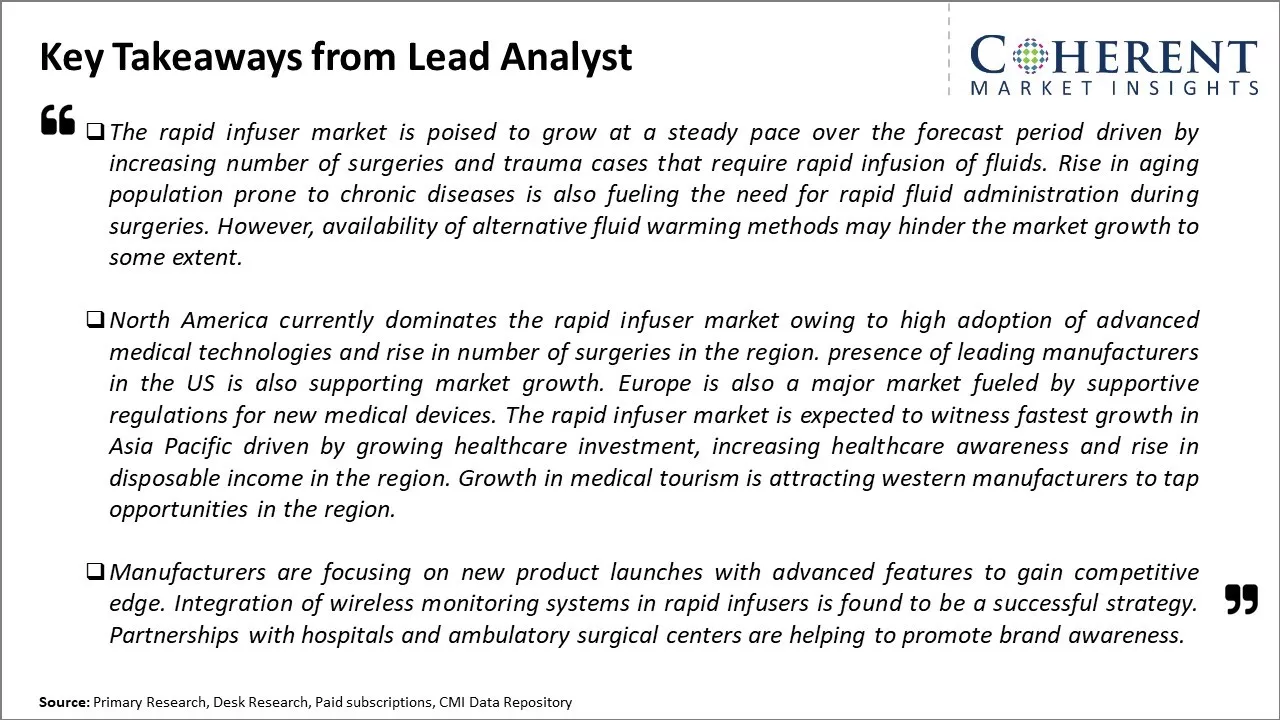
Analyst Opinion (Expert Opinion)
 Market Challenges – High prices of sophisticated dedicated devices
Global rapid infuser market faces several key challenges. The smaller medical clinics and practices may want access to rapid infusion technology for stabilizing patients before emergency transport but cannot always afford sophisticated dedicated devices. Product uptake could also be slowed by the need for clinical staff training on new equipment and the added steps and supplies associated with rapid infusion systems compared to gravity-fed methods.
Market Opportunities – Growing clinical evidence supporting benefits of rapid infusers
As the global population ages and more patients develop conditions requiring fluid resuscitation, such as sepsis, demand for rapid infusion capabilities increases. Manufacturers may gain traction by offering portable, easy to use systems at lower price points. Expanding clinical evidence demonstrating the benefits of rapid fluid administration in improving patient outcomes could also increase urgency for hospital investment, thus, creating lucrative opportunities for market development over the projected period.
Speak to the analyst
Want personalized insights?
Take the findings above to one of our principal consultants, or have the report rebuilt around the segments, geographies and competitors you actually track.
Market Segmentation
- Product Type Insights (Revenue, USD Mn, 2021 - 2033)
- Handheld Devices
- Trolley Mounted Devices
- Application Insights (Revenue, USD Mn, 2021 - 2033)
- Trauma & Emergency
- Anesthesia
- Surgical Care
- Labor & Delivery
- Intensive Care
- Others
- End User Insights (Revenue, USD Mn, 2021 - 2033)
- Hospitals
- Ambulatory Surgery Centers
- Specialty Clinics
- Others
- Regional Insights (Revenue, USD Mn, 2021 - 2033)
- North America
- U.S.
- Canada
- Latin America
- Brazil
- Argentina
- Mexico
- Rest of Latin America
- Europe
- Germany
- U.K.
- Spain
- France
- Italy
- Russia
- Rest of Europe
- Asia Pacific
- China
- India
- Japan
- Australia
- South Korea
- ASEAN
- Rest of Asia Pacific
- Middle East
- GCC Countries
- Israel
- Rest of Middle East
- Africa
- South Africa
- North Africa
- Central Africa
- North America
- Key Players Insights
- Belmont Medical Technologies
- Stryker Corporation
- ICU Medical, Inc.
- Fresenius Kabi
- ZOLL Medical Corporation
- 410 Medical
- Ace-medical
- Biegler GmbH
- Terumo Corporation
- Teleflex Incorporated
- BD
- Smisson-Cartledge Biomedical
- 3M Health Care
- Shenzhen Keborui Electronics Co., Ltd
Get access to 250+ pages report
Every segment, forecast, competitor profile and data table behind the analysis above — available for instant download.
- ESOMAR Member
- ISO 9001:2015 Certified
- D-U-N-S Registered
- GDPR & CCPA Compliant
Missing comfort of reading report in your local language? Find your preferred language:
Transform your Strategy with Exclusive Trending Reports
Frequently Asked Questions
The Rapid Infuser Market is estimated to be valued at USD 880.3 Mn in 2026, and is expected to reach USD 1,255.3 Mn by 2033.
The CAGR of the Rapid Infuser Market is projected to be 5.2% from 2026 to 2033.
Rising incidences of internal haemorrhage and rising adoption of patient blood management practices are the major factor driving the growth of global rapid infuser market.
High prices of sophisticated dedicated devices and Lack of awareness about rapid infusers are the major factor hampering the growth of global rapid infuser market.
In terms of product type, trolley mounted devices segment is estimated to dominate the market in 2026.
Belmont Medical Technologies, Stryker Corporation, ICU Medical, Inc., Fresenius Kabi, ZOLL Medical Corporation, 410 Medical, Ace-medical, Biegler GmbH, Terumo Corporation, Teleflex Incorporated, BD, Smisson-Cartledge Biomedical, 3M Health Care, Shenzhen Keborui Electronics Co., Ltd are the major players.
North America is expected to lead the global rapid infuser market.