

Global Skin Tag Remover Market Size and Forecast – 2026 To 2033
The global skin tag remover market is expected to grow from USD 412.8 Mn in 2026 to USD 678.5 Mn by 2033, registering a compound annual growth rate (CAGR) of 7.4% from 2026 to 2033. The market for skin tag removers is poised for significant expansion, fueled by the soaring burden of obesity globally, a major risk factor for skin tag development that results from increased friction of the skin and metabolic diseases.
According to World Obesity Federation 2024 analysis based on NCD Risk Factor Collaboration (NCD-RisC) data, more than 1 billion people in the world are living with obesity, including nearly 880 million adults and 159 million children and adolescents aged 5-19 years, underscoring the growing number of individuals at risk of skin related conditions associated with obesity such as skin tags.
(Source: World Obesity Federation)
Key Takeaways of the Global Skin Tag Remover Market
- Topical skin tag removers are projected to hold 48.6% of the global skin tag remover market share in 2026, making it the dominant product type segment throughout North America where consumers increasingly use OTC dermatology treatment options for a variety of minor skin problems. The mature non-prescription healthcare setup in the region ensures that self-treatment products are readily available either at the pharmacies or at other retail outlets. For instance, in the U.S., OTC dermatology products are handled under the U.S. FDA's OTC framework, which includes section 21 CFR Part 330, which specifies requirements for the safety, effectiveness, labeling, and marketing of non-prescription drug products. This system allows suitable self-care skin treatment products to be broadly distributed through pharmacies, drugstores, and retail locations and facilitates the use of topical skin treatment products. (Source: Code of Federal Regulations)
- Homecare users are projected to hold 54.7% of the global skin tag remover market share in 2026, making it the dominant end user segment, across Europe particularly in the U.K., where skin tags are almost universally treated as a cosmetic rather than a medical condition requiring clinical intervention. This has been beneficial in prompting consumers to seek convenient self-treatment alternatives. For instance, the NHS (National Health Service) in the U.K. states that skin tags are not harmful and usually don't need treatment, unless they become annoying or uncomfortable to the patient. Consequently, many people choose to treat skin tags at home with over-the-counter products rather than undergoing medical treatment; hence the homecare market develops. (Source: National Health Service)
- Pharmacies and drug stores are projected to hold 41.5% of the global skin tag remover market share in 2026, making it the dominant distribution channel segment, throughout Europe with high penetration in Germany, where community pharmacies serve as a primary source of guidance and product access for self-care treatments. Consumers frequently rely on pharmacists for recommendations on OTC dermatological products before making purchase decisions. For instance, The Pharmacy Act (Apothekengesetz) of Germany, provides framework for pharmacy-centric healthcare system, where the licensed pharmacies become a privileged part of the system for distribution of health-related products and for delivering counseling services to patients, therefore reinforces the status of pharmacies as a preferred channel for skin tag removal products and self-care dermatology range. (Source: Federal Union of German Associations of Pharmacists)
- North America maintains its dominance with an expected share of 36.1% in 2026, bolstered by the region’s sophisticated dermatology care infrastructure and substantial consumer expenditures for cosmetic skin treatments. The accessibility of professional dermatological treatments along with consumer-driven over-the-counter skin care products has facilitated the use of professional intervention to treat benign skin conditions such as skin tags. For instance, the American Academy of Dermatology advises that skin tags should be managed by methods including surgical procedures performed by a doctor such as cryosurgery, electrosurgery and surgical excision, representing current standard practice with respect to skin lesion removal in the U.S. dermatology practice. (Source: American Academy of Dermatology)
- Asia Pacific is expected to exhibit the fastest growth with an estimated contribution of 23.9% share in 2026, driven by exponential growth in aesthetic dermatology services and surging consumer demand for cosmetic skin treatments. Countries such as South Korea, Japan, and China continue to witness increasing utilization of minimally invasive dermatological procedures for benign skin concerns. For instance, Korean Accreditation Program for Hospitals Serving Foreign Patients (KAHF) is run under the auspices of Korean Ministry of Health and Welfare, which allows registered hospitals to offer dermatology and aesthetic treatment to international patients. Through the program, South Korea has fortified its status as the regional cosmetic dermatology center, supporting increasing popularity of cosmetic treatments and related products. (Source: Korea Tourism Organization)
- Growth of Teledermatology-Based Skin Assessment Services: The boom in teledermatology is giving rise to novel possibilities for skin tag remover manufacturers. Benign skin lesions can now be evaluated remotely by dermatologists, thus providing people with greater opportunities to decide on a course of removal (OTC or clinical treatment) following an expert opinion. This, in turn, is contributing to increasing awareness levels, facilitating earlier treatment and widening the reach of skin treatment options in the remote and underdeveloped sectors.
- Demand for Precision Cryotherapy and Targeted Removal Devices: Rising consumer demand for minimally invasive and scarless skin treatment procedures has led to the exploration of portable cryotherapy and pinpoint lesion removal devices. Companies have been more focused on creating user-friendly devices intended for the treatment of benign skin growths for more accurate and focused treatment without causing harm to surrounding skin areas. Such trends could lead to possibilities for the dermatology profession and the home use market.
Segmental Insights
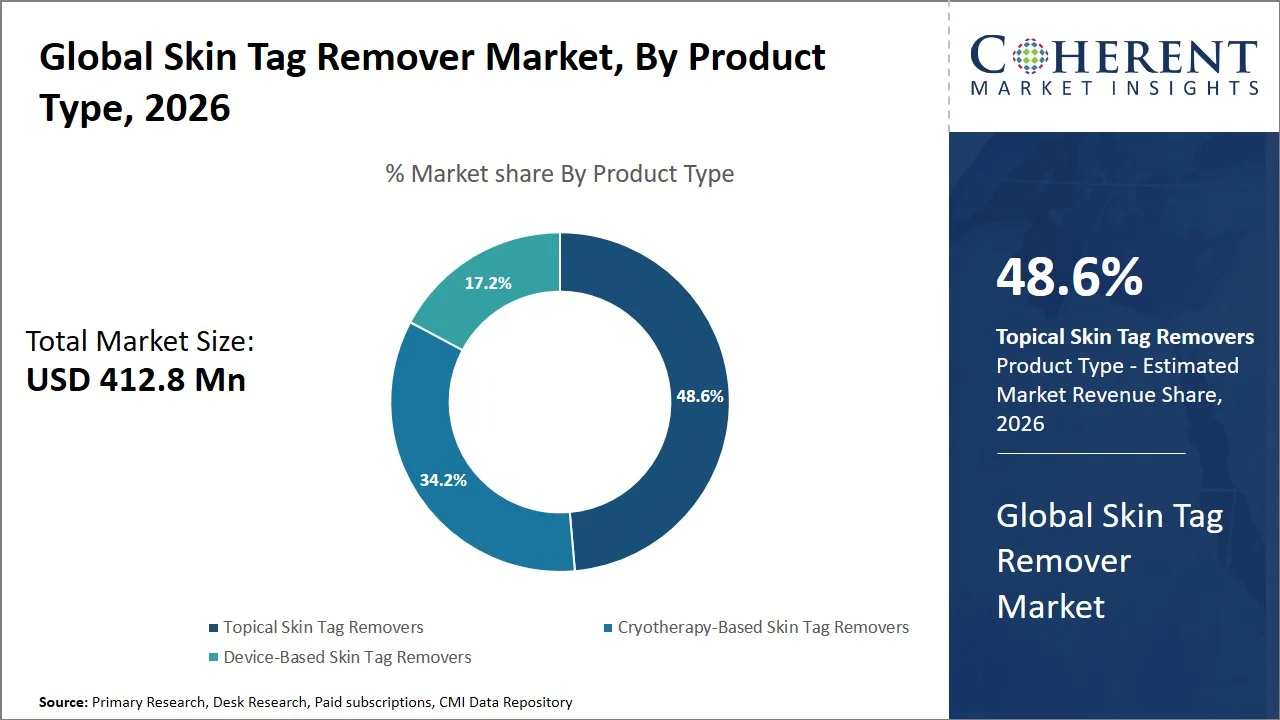
Why Do Topical Skin Tag Removers Dominate the Global Skin Tag Remover Market?
Topical skin tag removers are projected to hold a market share of 43.2% in 2026, owing to their ease of application, non-invasive property and the convenience they offer to the consumer in treating skin tags at home. Consumers tend to opt for the topical formulations that could be applied by oneself, with no need of clinical setup or equipment. Continuous product innovation with emphasis on convenience and easy application is contributing to growth of the segment. For instance, Claritag is marketed as an over-the-counter (OTC) at-home treatment for skin tags, in a pen-like application system which allows the targeting of skin tags with reduced impact on surrounding healthy skin. The availability of this consumer-focused offering demonstrates the growing desire for readily available, non-invasive solutions to skin tag management and the leading position of topical formulations in the treatment of skin tags. (Source: Claritag)
- Current Industry Events of 2026
- Market Size Estimation
- Regional Breakdown
- Competitive Landscape
- Customer Intelligence
- Segmental Analysis
- Pricing Analysis
- Key Market Drivers, Challenges & Future Trends
- Customized Insights Section
Why Do Homecare Users Represent the Largest End User Segment in the Skin Tag Remover Market?
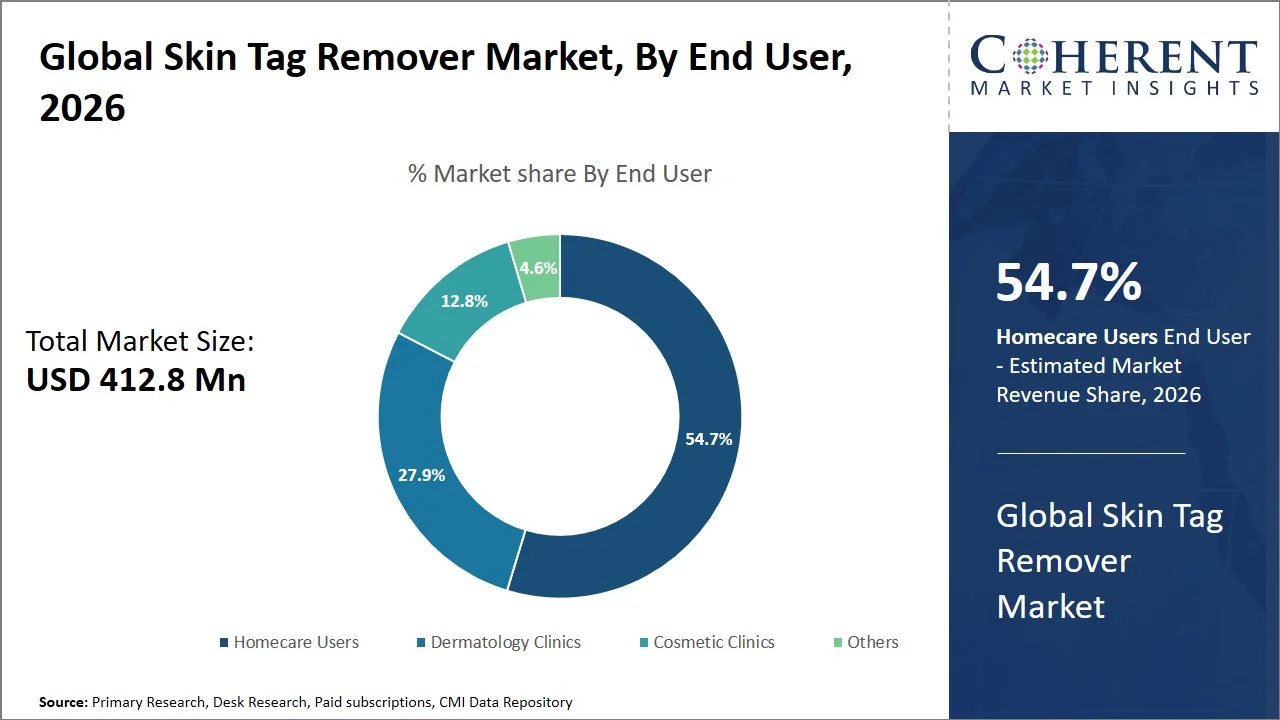
Homecare users are projected to hold a market share of 54.7% in 2026, owing to the rising self-treatment of benign skin diseases and surging demand among consumers to have effective at-home skincare solutions. Self-treatment products do not require visits to the clinic and are a cost effective, discreet way for the consumer to manage concerns related to cosmetic skin issues. The availability of purpose-built removal systems designed specifically for consumer use will additionally drive the growth of the segment. For instance, Cryotag offers a consumer focused at home skin tag removal kit based on focused cryotherapy technology. These new convenient solutions have helped boost consumer confidence regarding the safety and efficacy of the treatments at home and have thus rapidly expanded the homecare users market segment in the global skin tag remover market. (Source: Cryotag)
Pharmacies and Drug Stores Segment Dominates the Global Skin Tag Remover Market
The pharmacies and drug stores segment is projected to hold a market share of 41.5% in 2026, due to their primary role as leading healthcare retail outlets that provide product accessibility along with pharmacist guidance. The consumers favor skin tag remover purchase from pharmacies due to increased trust on product originality, compliance with quality regulations and recommendations from the experts. In addition, pharmacies and drug stores provide an extensive range of OTC dermatological products, which facilitates informed purchasing decisions. For instance, in the U.K., the NHS Pharmacy First initiative allows community pharmacies to offer advice and management options for numerous minor ailments, which is central in maintaining the position of pharmacies as the leading channel for both self-care and treatment of skin conditions. Consumers have thus become increasingly reliant on pharmacies for the management of minor skin conditions and associated over-the-counter treatments. (Source: National Health Service)
Currents Events and their Impact
Current Events | Description and its Impact |
India Notifies Cosmetics (Amendment) Rules, 2025 (July 2025) |
|
U.S. Advances Implementation of MoCRA Cosmetic Regulations (September 2025) |
|
(Source: Global Product Compliance, Food and Drug Administration)
Skin Tag Remover Market Dynamics
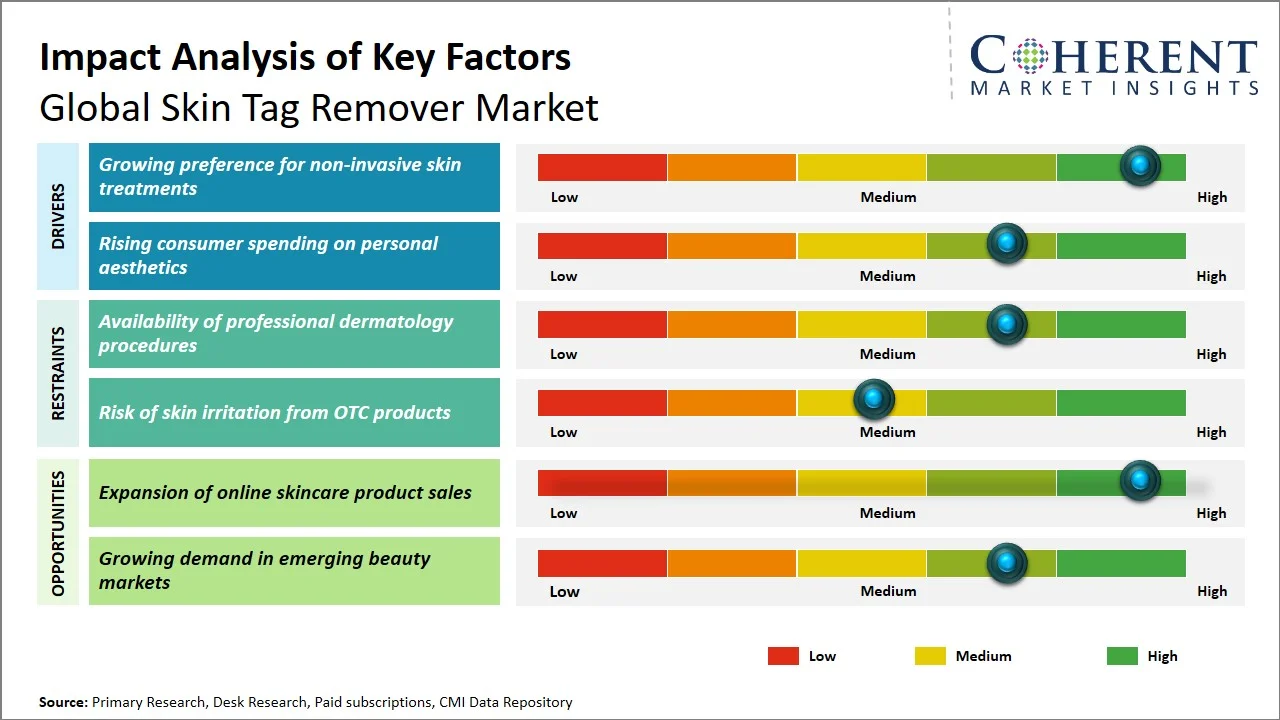
Market Drivers
- Growing preference for non-invasive skin treatments: The growing consumer preference for non-invasive skin treatments has contributed to the increased growth of the skin tag remover market. Consumers are increasingly looking for products that involve no pain, scarring or lengthy downtime with readily available at-home or outpatient treatments. With better topical solutions, cryotherapy methods and a precisely applied form, user satisfaction with these treatments will improve further. Increasing consumer demand for aesthetic skincare products coupled with a demand for procedures with minimum downtime will further bolster the market growth. For instance, according to the International Society of Aesthetic Plastic Surgery (ISAPS), non-surgical cosmetic procedures increased from 19.1 million globally in 2023 to 34.9 million in 2024, illustrating a growing consumer trend towards minimally invasive cosmetic procedures. (Source: International Society of Aesthetic Plastic Surgery)
- Rising consumer spending on personal aesthetics: Consumers are tending toward the products that improve their skin texture and fix minor issues without requiring professional intervention. In response to rising emphasis on appearance, grooming practices, a more rigorous approach to skincare regimes, demand for at-home treatment products is expanding rapidly. The increase in a consumer's discretionary spending in beauty and personal care products has thus been translating into a higher demand for specialty skin treatment solutions. For instance, according to the U.S. Bureau of Economic Analysis (BEA), personal care products and services continues to be an established element of consumer spending, indicative of consumer willingness to maintain investment in beauty, grooming, and aesthetic well-being products that may accompany the use of skin tag removers. (Source: U.S. Bureau of Economic Analysis)
Emerging Trends
- Rising Adoption of Home-Use Cryotherapy Devices: At home cryotherapy devices are becoming an increasingly popular choice for removing skin tags, as a more convenient alternative to undergoing clinic treatments. They provide focused treatments with a lower level of pain and more convenience, complementing an increasing trend toward aesthetic self-care.
- Integration of E-Commerce and Direct-to-Consumer Sales Models: Manufacturers have turned to e-commerce websites and direct to consumers channels in an effort to extend their market reach and increase access to their products. Online selling allows companies to distribute educational information, recommend suitable products, and offer concealed buying methods for skin tag removal products, speeding up the adoption of these products by customers.
Regional Insights
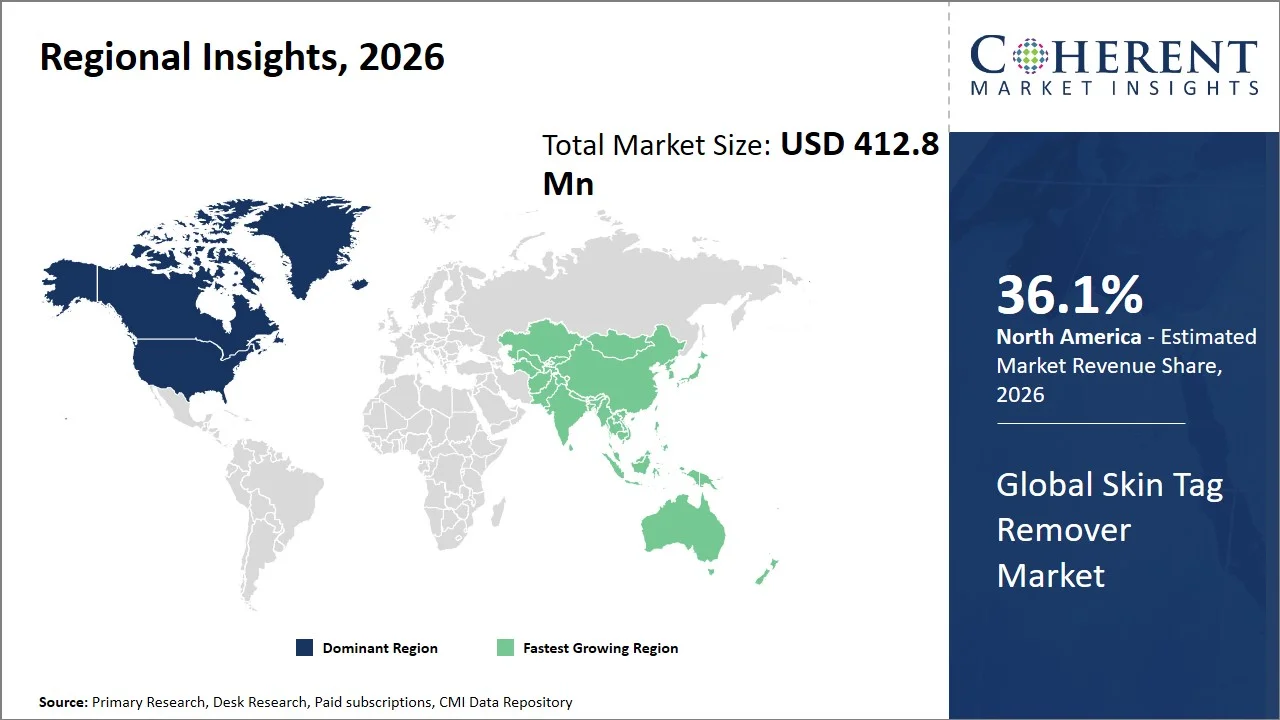
Why is North America a Strong Market for Skin Tag Removers?
North America leads the global skin tag remover market, accounting for an estimated 36.1% share in 2026, strengthened by robust government regulation for safety and effectiveness of products, which in turn stimulate innovative product development due to well-defined intellectual property rights (IPRs). For instance, the U.S. FDA's modernization of cosmetic regulations via MoCRA has continued, requiring US cosmetic companies to register facilities, list products, validate product safety, and report any adverse events for cosmetic products marketed in the U.S. The system builds consumer trust, encourages producers to make an investment in quality, safety and the innovation of products. (Source: Food and Drug Administration)
This dominance is further reinforced by the presence of leading dermatology clinics (such as, Mayo Clinic, Cleveland Clinic, Schweiger Dermatology Group, Advanced Dermatology and Cosmetic Surgery, and U.S. Dermatology Partners) and cosmetic product manufacturers (such as, Clarion Brands, Dr. Scholl's, Emuaid, Skincell Pro, and Amarose). Additionally, the region’s well-developed distribution networks and high e-commerce penetration ensures faster supply and direct-to-consumer sales. For instance, according to the U.S. Census Bureau, e-commerce sales accounted for 16.1% of total retail sales in 2024, compared with 15.6% in 2023, while total retail e-commerce sales grew by 8.1% year-over-year, reflecting the continued shift toward online purchasing channels. (Source: U.S. Census Bureau)
Why Does the Asia Pacific Skin Tag Remover Market Exhibit High Growth?
The Asia Pacific skin tag remover market is expected to exhibit the fastest growth with an estimated contribution of 23.9% share to the global market in 2026, due to increasing disposable income, urbanization, and growing awareness toward personal grooming and skin care. Growing middle-class population in countries like India, China, and Southeast Asia are leading to surge in demand for affordable and non-invasive cosmetic treatments. For instance, according to World Economic Forum, in 2020, an estimated 2 billion Asians were members of the middle class and that number is set to increase to 3.5 billion by 2030, highlighting substantial growth in consumer purchasing power and spending on personal care and aesthetic products. (Source: World Economic Forum)
Moreover, increasing investments in health care infrastructure, government policies favoring the growth of the manufacturing of the medical devices, as well as open and fair-trade policies will make market more accessible. For instance, The Indian Medical Devices Production Linked Incentive (PLI) Scheme still supports and stimulates production and investment in healthcare and related technologies products. Such initiatives boost healthcare manufacturing infrastructure and make low-cost medical and skin care products accessible in the Asia Pacific region. (Source: Department of Pharmaceuticals)
Global Skin Tag Remover Market Outlook for Key Countries
Why is the U.S. Leading Innovation and Adoption in the Skin Tag Remover Market?
The U. S. is at the forefront of innovation and adoption in the skin tag remover market driven by well-established commercialization processes within OTC dermatology and the availability of various home skin care options. The market has a well-established track record of early adoption for many consumer-relevant innovation aspects, such as precision cryotherapy applicators, spot targeting topical formulations, and dermatologist-originated personal skin care. Specialized skin care brands with direct-to-consumer selling models facilitate swift product launches and market penetrations. With increasing availability of digital skin care learning resources and online purchasing options, consumer adoption for skin tag removers will be accelerated further.
Is the U.K. a Favorable Market for Skin Tag Remover Market?
The U.K. is one of the most promising markets for the skin tag remover market owing to robust community pharmacy network and positive consumer desire to undertake treatments for minor skin conditions at home. The favorable environment for this market is aided by the ubiquity of OTC skincare available through pharmacies, health retailers and on-line sites, leading to an accessibility that means skin tag removal can readily be accessed. Moreover, the increasing trend towards accessible and discrete at-home treatments for aesthetic skin issues favors both topical and cryotherapy-based products.
Is China Emerging as a Key Growth Hub for the Skin Tag Remover Market?
China is positioned as a key growth hub in the global skin tag attributable to the fast-paced growth of the Chinese cosmetic and aesthetic beauty market. Chinese consumers are choosing cosmetic home treatment products that provide affordable, convenient, and visible results without the need of visiting a clinic. The country's e-commerce network makes the country an ideal market for cosmetic manufacturers to commercialize and distribute skin tag removal products to its massive customer base. For instance, according to China's National Bureau of Statistics (NBS), the country's total online retail sales reached USD 2.15 trillion (15.52 trillion yuan) in 2024, representing a 7.2% increase from the 2023. (Source: The people’s Republic of China)
Why Does Germany Top the European Skin Tag Remover Market?
Germany is the leader in the European market for skin tag remover due to country’s mature pharmacy-led skincare system and a strong inclination of consumers toward dermatologist-endorsed personal care products. This country has a mature OTC healthcare system that facilitates widespread availability of skin treatment products across various pharmacies and health stores. The quality, safety and clinical formulation of the products being offered are important to German consumers, thereby stimulating demand for regulated skin tag removal devices.
Is Skin Tag Remover Market Developing in Japan?
Japan is emerging as a lucrative market for skin tag remover driven by nation's intensive interest in skincare and growing consciousness on clear, smooth, young skin image. The Japanese market prefers secure, minimally invasive and easy-to-use personal care items, which leads to the opportunity for home use skin care solutions. The increasing use of functional skin care and constantly innovation on micro-topical formulations also contributes to the market growth. Moreover, Japan's established retail/e-commerce facilities are conducive to the availability of dermatology-related self-care devices.
Regulatory Landscape Governing the Global Skin Tag Remover Market
Region | Authority & Classification | Approval Pathway | Key Regulatory Insight |
North America | U.S. Food and Drug Administration (FDA); products may be regulated as cosmetics, OTC drugs, or medical devices depending on ingredients and claims | OTC Monograph pathway, 510(k) clearance (for applicable devices), or cosmetic compliance under MoCRA | Products claiming to treat or remove skin lesions may fall under drug or device regulations. MoCRA has strengthened cosmetic product registration, safety substantiation, adverse event reporting, and facility registration requirements. |
Europe | European Commission / Competent Authorities under Regulation (EC) No. 1223/2009; Medical Device Regulation (MDR) for applicable devices | Cosmetic Product Notification Portal (CPNP) notification for cosmetics; CE marking under MDR for devices | Strict requirements for ingredient safety assessments, product information files (PIF), labeling, traceability, and post-market surveillance support consumer safety and product transparency. |
Asia Pacific | National Medical Products Administration (NMPA, China), Ministry of Food and Drug Safety (MFDS, South Korea), PMDA/MHLW (Japan) | Product registration, notification, or approval depending on product classification and claims | Regulatory authorities maintain increasing oversight of cosmetic and aesthetic skin treatment products, with growing emphasis on product safety, labeling compliance, and quality standards. |
Latin America | ANVISA (Brazil), COFEPRIS (Mexico) | Cosmetic notification or registration depending on risk classification and product claims | Regulatory frameworks emphasize ingredient safety, manufacturing compliance, and labeling requirements, supporting the commercialization of OTC skin care and cosmetic products. |
Middle East & Africa | Saudi Food and Drug Authority (SFDA), UAE Ministry of Health & Prevention (MOHAP), national regulatory bodies | Product registration and conformity assessment prior to commercialization | Increasing harmonization of cosmetic regulations and stricter product registration requirements are improving quality standards and consumer confidence in personal care and skin treatment products. |
How is the expansion of online skincare product sales creating new growth opportunities in the skin tag remover market?
Growth in the online sales of skincare products is providing substantial growth opportunities for the skin tag remover market due to increased availability of various treatment options to customers. Manufacturers can easily reach larger customer segments through e-commerce portals. In countries where dermatology clinics or specialty stores are difficult to access for customers, online stores have a positive impact on the growth of the skin tag remover market. E-commerce platforms also facilitate comparison shopping, online customer reviews, online educational material, and direct to consumer advertising to enhance the awareness of skin tag removing solutions and encourage adoption of same by customers. In addition, customer inclination towards purchasing cosmetic products online discretely further boosts the market for skin treatment products for home care. For instance, Walgreens Boots Alliance has further expanded its omnichannel health and beauty retail strategy with Boots Online Doctor and Boots.com allowing UK consumers to choose from a wider range of skincare and personal care items online. (Source: ALLIANCE UNICHEM IP LIMITED) Such advances are further improving online distribution channels for OTC dermatology and skin treatment products.
Market Players, Key Development, and Competitive Intelligence
Key Developments
- In November 2025, Hikma announced a strategic collaboration with DGI Group to increase the availability of Claritag across the MENA dermatology market. It will enable the enhancement of access to minimally invasive dermatology solutions through DGI Group's regional distribution network. This development highlights the increasing demand for over-the-counter skin treatment products and the ongoing penetration of cryotherapy-based dermatology treatments across emerging markets.
- In May 2025, CryoConcepts, LP launched Skin Clinic - The Ultimate Skin Tag Remover, adding a new OTC skin treatment product to the company's lineup. With its launch, the company aims to offer consumers a home-use alternative for skin tag removal, through cryotherapy-based technology. The launch of Skin Clinic is part of an ongoing trend of increasing availability of new OTC skincare treatments and innovations in skin tag removal products.
Competitive Landscape
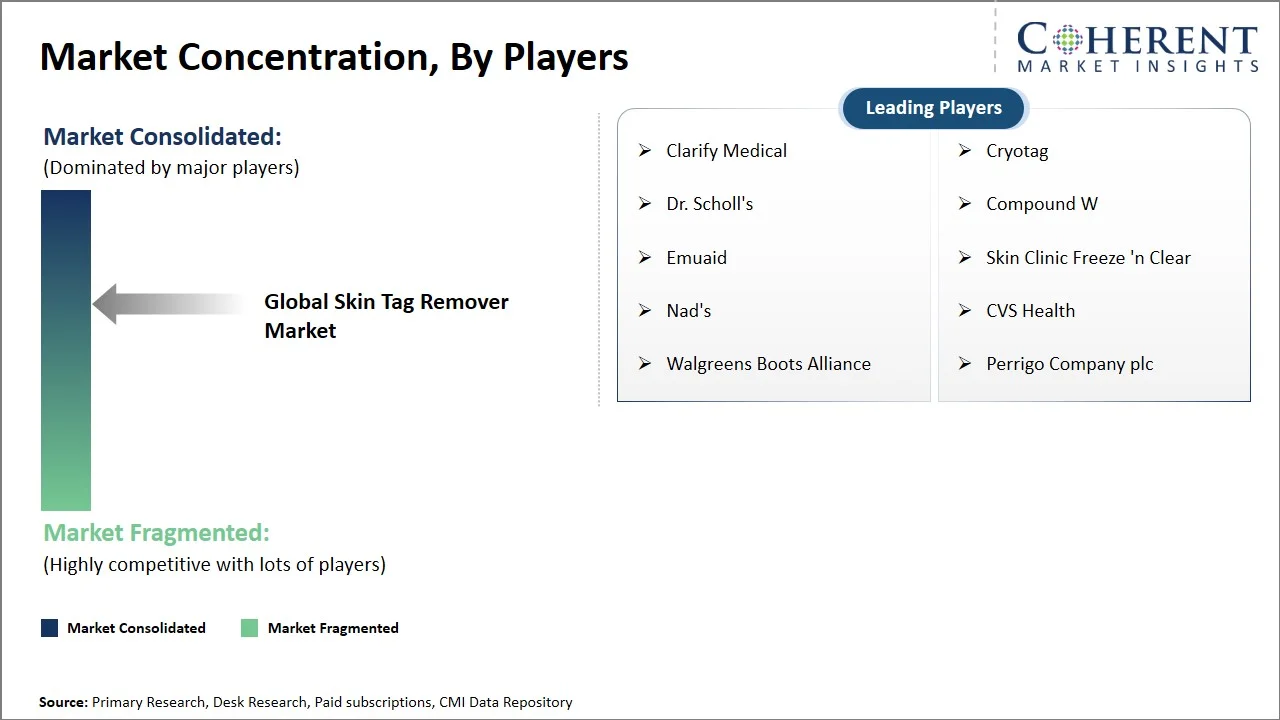
The global skin tag remover market is moderately fragmented, led by OTC skincare brands, dermatology companies, and manufacturers of home-use skin treatment devices. Companies are investing in the development of innovative products such as accuracy applicators, cryotherapy-based devices, and skin-friendly formulations to provide greater usability and a more effective treatment, along with increasing their online presence. Products are becoming increasingly accessible through e-commerce platforms and direct-to-consumer sales. Key focus areas include:
- Development of non-invasive and easy-to-use skin tag removal formulations and devices
- Expansion of direct-to-consumer and online retail distribution channels
- Introduction of precision applicators and cryotherapy-based home-use solutions
- Strengthening regulatory compliance, product safety, and consumer education initiatives
Market Report Scope
Skin Tag Remover Market Report Coverage
| Report Coverage | Details | ||
|---|---|---|---|
| Base Year: | 2025 | Market Size in 2026: | USD 412.8 Mn |
| Historical Data for: | 2020 To 2024 | Forecast Period: | 2026 To 2033 |
| Forecast Period 2026 to 2033 CAGR: | 7.4% | 2033 Value Projection: | USD 678.5 Mn |
| Geographies covered: |
| ||
| Segments covered: |
| ||
| Companies covered: | Clarify Medical, Cryotag, Dr. Scholl's, Compound W, Emuaid, Skin Clinic Freeze 'n Clear, Nad's, CVS Health, Walgreens Boots Alliance, and Perrigo Company plc | ||
| Growth Drivers: |
| ||
| Restraints & Challenges: |
| ||
Analyst Opinion (Expert Opinion)
- The future of the skin tag remover market will largely be dependent upon the convergence of aesthetic skin care, self-care medical and a digital marketplace. Consumers demand minimally invasive treatment and higher levels of privacy, convenience and lower cost of treatment than clinic-based procedures. As awareness continues to grow on aesthetic skin conditions, market demand will favor more advanced topical treatments and at-home cryotherapy products that offer quick, non-painful, less time-consuming procedures. Integration of teledermatology and online consultations for skin care advice should contribute to product adoption with easier identification of benign skin conditions.
- The maximum opportunities will probably exist within home-use cosmetic skin tag removal products in the U.S., South Korea, and China. The U.S. is considered to have a well-established OTC skin care market and acceptance among consumers for self-treatment products, whereas South Korea is perceived to have an extremely advanced aesthetic dermatology market. As a result of the increasing disposable income and a growing interest in beauty as well as rapidly expanding e-commerce channels in China, China is considered to provide the ideal market setting for self-treatment skin care solutions.
- In order to obtain a competitive advantage, market participants should invest in clinically validated products that can offer the combination of safety, convenience and visibly effective treatment. It would be beneficial for brands to leverage investment in the innovation of precision applicators, skin-kind formulation, and consumer education programs. The companies should focus on presence across various e-commerce platforms and social media and influencers-based engagement to create awareness and attain consumer trust along with regulatory compliance and product transparency.
Speak to the analyst
Want personalized insights?
Take the findings above to one of our principal consultants, or have the report rebuilt around the segments, geographies and competitors you actually track.
Market Segmentation
- Product Type Insights (Revenue, USD Mn, 2021 - 2033)
- Topical Skin Tag Removers
- Cryotherapy-Based Skin Tag Removers
- Device-Based Skin Tag Removers
- End User Insights (Revenue, USD Mn, 2021 - 2033)
- Homecare Users
- Dermatology Clinics
- Cosmetic Clinics
- Others
- Distribution Channel Insights (Revenue, USD Mn, 2021 - 2033)
- Pharmacies and Drug Stores
- Online Retail
- Supermarkets and Hypermarkets
- Regional Insights (Revenue, USD Mn, 2021 - 2033)
- North America
- U.S.
- Canada
- Latin America
- Brazil
- Argentina
- Mexico
- Rest of Latin America
- Europe
- Germany
- U.K.
- Spain
- France
- Italy
- Russia
- Rest of Europe
- Asia Pacific
- China
- India
- Japan
- Australia
- South Korea
- ASEAN
- Rest of Asia Pacific
- Middle East
- GCC Countries
- Israel
- Rest of Middle East
- Africa
- South Africa
- North Africa
- Central Africa
- North America
- Key Players Insights
- Clarify Medical
- Cryotag
- Scholl's
- Compound W
- Emuaid
- Skin Clinic Freeze 'n Clear
- Nad's
- CVS Health
- Walgreens Boots Alliance
- Perrigo Company plc
Sources
Primary Research Interviews
- Dermatologists and cosmetic dermatology specialists involved in skin tag diagnosis and removal procedures
- Skincare product formulation scientists and OTC dermatology product developers
- Retail pharmacy managers and personal care category buyers overseeing skin treatment product distribution
- Aesthetic clinic practitioners utilizing cryotherapy and minor skin lesion removal procedures
- Regulatory affairs professionals managing cosmetic, OTC skincare, and medical device compliance
Stakeholders
- Skin tag remover manufacturers and skincare product companies
- End-use Sectors
- Homecare and self-treatment consumers
- Dermatology clinics and cosmetic treatment centers
- Retail pharmacies and community pharmacy chains
- Online health, beauty, and personal care retailers
- Specialty skincare and wellness stores
- Regulatory & Health Bodies: U.S. Food and Drug Administration (FDA) – cosmetic regulations OTC drug framework, and MoCRA compliance
- European Commission – Cosmetic Products Regulation (EC) No. 1223/2009
- Health Canada – Cosmetic Regulations and consumer product safety requirements
- Central Drugs Standard Control Organization (CDSCO) – cosmetics and personal care product regulations
- Ministry of Food and Drug Safety (MFDS), South Korea – cosmetic and aesthetic product oversight
Databases
- FDA Cosmetics Product Facility Registration and Listing Database
- European Commission Cosmetic Product Notification Portal (CPNP)
- Health Canada Cosmetic Notification System
- OECD Health Statistics – personal care expenditure and healthcare utilization trends
- World Bank Data – consumer spending and retail infrastructure indicators
Magazines
- Cosmetics & Toiletries
- Global Cosmetic Industry
- Happi Magazine
- BeautyMatter
- Personal Care Magazine
Journals
- International Journal of Cosmetic Science
- Journal of Cosmetic Dermatology
- Dermatologic Surgery
- Clinical, Cosmetic and Investigational Dermatology
- Skin Research and Technology
Newspapers
- Financial Times – beauty and consumer health industry developments
- The Wall Street Journal – retail, e-commerce, and personal care market trends
- The New York Times (Well Section) – skincare and wellness developments
- The Guardian (Health Section) – consumer health and cosmetic product updates
- USA Today (Health Section) – skincare and self-care product trends
Associations
- American Academy of Dermatology (AAD)
- International Society of Dermatology (ISD)
- British Association of Dermatologists (BAD)
- Personal Care Products Council (PCPC)
- Cosmetics Europe
Public Domain Sources
- World Health Organization (WHO) – skin health and healthcare statistics
- Centers for Disease Control and Prevention (CDC) – skin condition awareness and healthcare utilization data
- National Institutes of Health (NIH) – dermatology and skin lesion research publications
- European Commission Directorate-General for Health and Food Safety (DG SANTE)
- U.S. National Library of Medicine (MedlinePlus) – skin tag and dermatological condition resources
Proprietary Elements
- CMI Data Analytics Tool, Proprietary CMI Existing Repository of information for last 10 years.
Get access to 250+ pages report
Every segment, forecast, competitor profile and data table behind the analysis above — available for instant download.
- ESOMAR Member
- ISO 9001:2015 Certified
- D-U-N-S Registered
- GDPR & CCPA Compliant
Missing comfort of reading report in your local language? Find your preferred language:
Transform your Strategy with Exclusive Trending Reports
Frequently Asked Questions
The global skin tag remover market is estimated to be valued at USD 412.8 Mn in 2026 and is expected to reach USD 678.5 Mn by 2033.
Topical skin tag removers dominate due to their non-invasive nature, ease of application, affordability, and suitability for at-home use. Their widespread availability through pharmacies, drug stores, and online channels further supports consumer adoption.
A skin tag remover is a topical product or device designed to remove benign skin growths (acrochordons) through methods such as cryotherapy, chemical action, or mechanical treatment.
The CAGR of the global skin tag remover market is projected to be 7.4% from 2026 to 2033.
Cryotherapy-based skin tag removers freeze the targeted tissue, causing the skin tag to gradually dry out and detach from the skin.
No, topical skin tag removers are intended only for benign skin tags and should not be used on moles, pigmented lesions, or suspicious skin growths without medical evaluation.
Availability of professional dermatology procedures and risk of skin irritation from OTC products are the major factors hampering the growth of the global skin tag remover market.