

Global Slide Staining Market Size and Forecast – 2026 to 2033
The Global Slide Staining Market is estimated to be valued at USD 5.29 Bn in 2026 and is expected to reach USD 8.49 Bn by 2033, exhibiting a compound annual growth rate (CAGR) of 7.0% from 2026 to 2033. This steady growth reflects rising demand for advanced rapid diagnostic techniques and increasing adoption of automated slide staining systems, which enhance accuracy and efficiency in clinical and research laboratories worldwide.
Key Takeaways of the Global Slide Staining Market
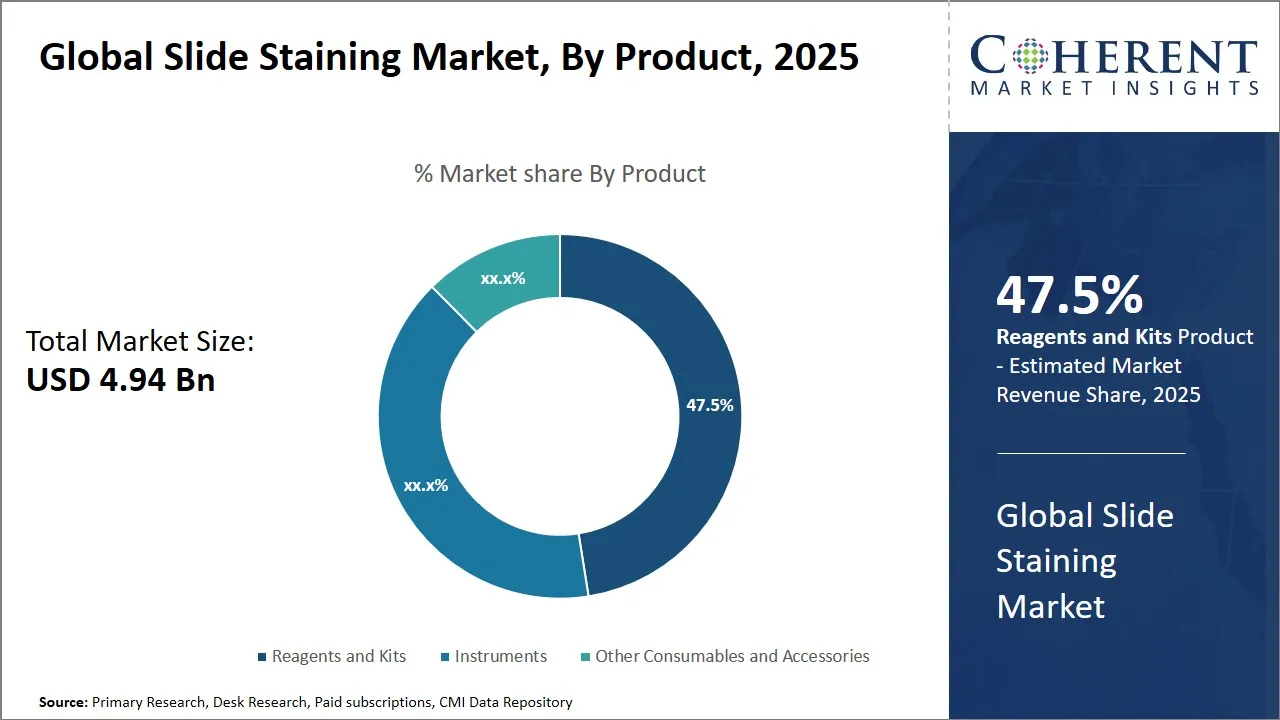
- In the global slide staining market, reagents and kits are expected to account for the largest market share among product segments, with 48.5 % in 2026.
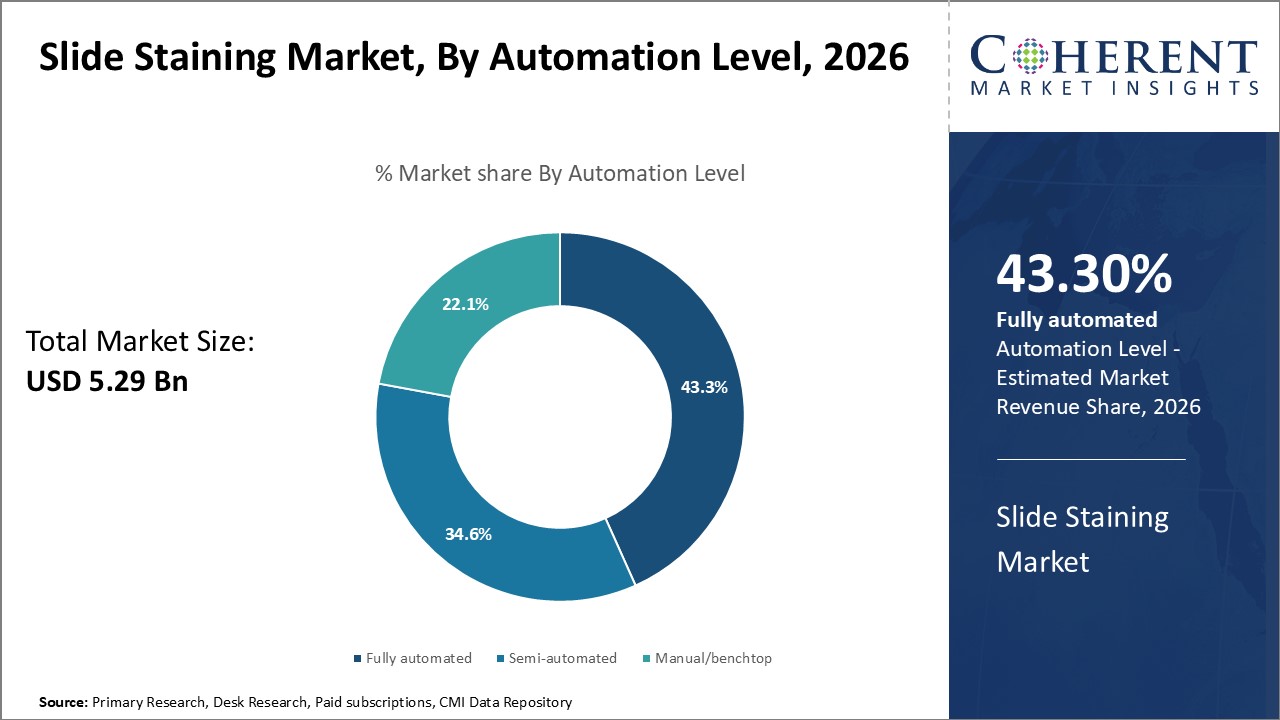
- Within the automation segment, fully automated systems are projected to lead with a 43.3 % share in 2026.
- Among the staining techniques, the Histology: H&E, special stains segment is anticipated to hold the highest usage share, representing 23.3 % in 2026.
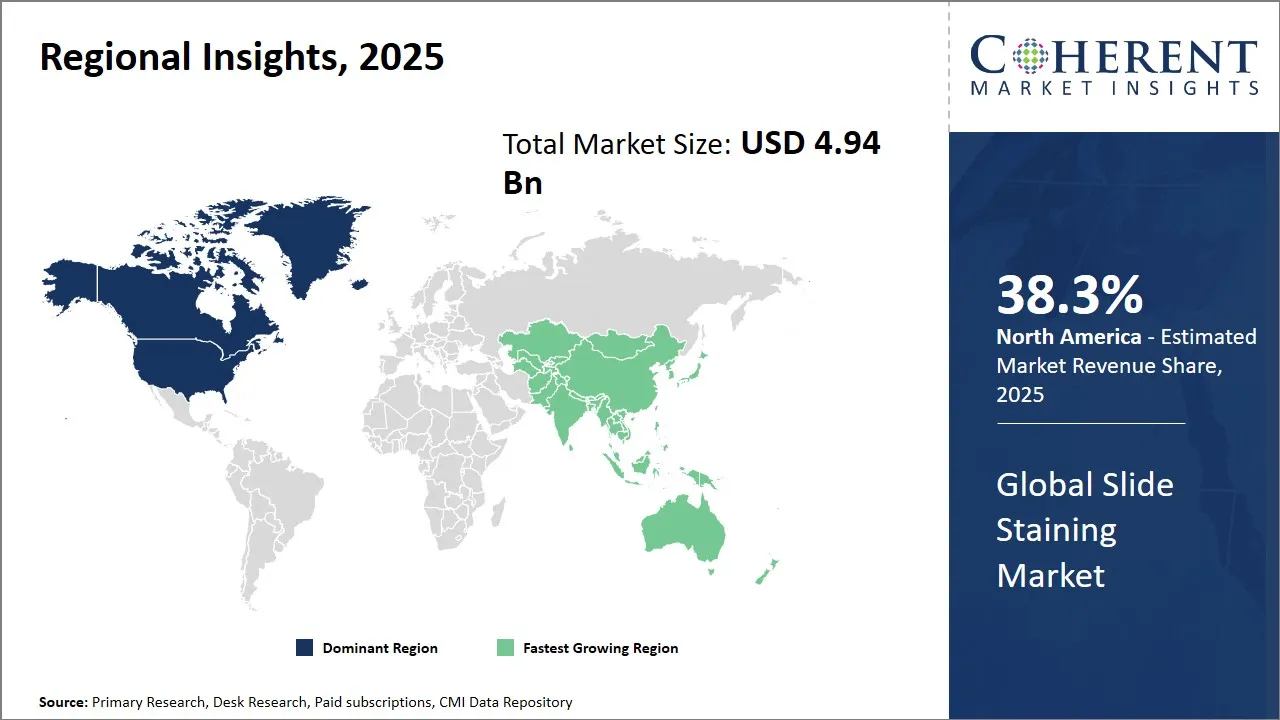
- North America is expected to lead the market, holding a share of 38.3 % in 2026. Asia Pacific is anticipated to be the fastest-growing region, with a market share of 24.5% in 2026.
Market Overview
A prominent trend in the slide staining market is the integration of automation and digital technologies, enabling faster processing times and improved reproducibility. Additionally, the growing prevalence of chronic diseases and increasing investments in personalized medicine are driving the demand for precise histopathological analysis. Manufacturers are also focusing on developing eco-friendly staining reagents and multiplexing techniques, further fueling market expansion and innovation within the sector.
Current Events and Its Impact
Current Events | Description and its Impact |
Expansion of Precision Medicine and Companion Diagnostics |
|
Advancements in Slide Staining Technology |
|
Segmental Insights
- Current Industry Events of 2026
- Market Size Estimation
- Regional Breakdown
- Competitive Landscape
- Customer Intelligence
- Segmental Analysis
- Pricing Analysis
- Key Market Drivers, Challenges & Future Trends
- Customized Insights Section
Slide Staining Market Insights, By Product - Reagents and Kits Segment is Dominant due to their Essential Role in Various Staining Procedures and Widespread Use in Diagnostics
In the global slide staining market, referring to reagents and kits, these two product segments together hold an estimated market share of 48.5% in 2026. Essentially, the growth of this segment is driven primarily by the exceptional quality and high demand for efficient staining processes. The role of stimulants like dyes, stains, antibodies, buffers, and fixatives is crucial in the process of preparing and highlighting cellular and tissue structures on slides thus making them necessary for microscopic analysis.
Kits which are generally composed of these stimulants along with optimized protocols and controls, further facilitate laboratory workflows, decrease variability, and increase reproducibility which are all needed for diagnostic consistency in pathology and research areas.
Slide Staining Market Insights, By Automation Level - Fully Automated Segment is Dominant due to their Ability to Reduce Manual Labor, Enhance Throughput, and Improve Consistency in Results
As for the automation segment in the global slide staining market, fully automated systems will rank the highest with 43.3% share in 2026 on account of their high throughput, reliability and consistent staining quality being the most important factors. These systems do not need much human involvement at all, and the whole process of operating the automatic stainers consists of loading the slides, dispensing the reagents, incubating, washing and drying which are all done in one smooth flowing step. The reduction of variability in the whole process that occurs due to the human operator is very significant and that is particularly true for diagnostics in clinics where consistency and reproducibility can possibly decide patient outcomes.
For example, Beckman Coulter, a well-known company in the area of clinical diagnostics, has unveiled the DxH Slidemaker Stainer II Cellular Analysis System that helps in automating and optimizing the hematology workflows, which has thus become a registered trademark of Beckman Coulter and is also a globally recognized leader in clinical diagnostics. The system takes over the whole process of preparing and staining blood slides, according to the LIS orders, thus freeing up the lab's staff to concentrate on setting the custom protocols for the film preparation.
Slide Staining Market Insights, By Technique - Histology: HandE, Special Stains Segment is Dominant due to their Clinical Relevance in Diagnosing a Wide Range of Diseases, Particularly Cancer
Histology: HandE, special stains are projected to account for 23.3% of the market share in 2026 due to their main role in tissue visualization and diagnosis. H&E staining is the gold standard in histopathology as it provides the best differentiation of cellular components, thus helping in identifying the disease state.
Its simplicity, low cost, and wide range of applicability are the main reasons for its being preferred. The special stains are used along with H&E to point out specific tissue elements and thus help in the identification of infections, metabolic abnormalities, and tumor characteristics.
Regional Insights
North America Slide Staining Market Analysis and Trends
In North America, the dominance in the global slide staining market is driven by the region's mega healthcare infrastructure with an estimated share of 38.3% in 2026, significant R&D investments, and the presence of top biopharma and biotech firms. The existing ecosystem incorporates highly advanced diagnostic laboratories and hospitals dedicated to pathology and histology, who in turn benefit from the advanced ecosystem.
For instance, Sakura Finetek USA, a major provider of laboratory and diagnostic solutions, has launched the Tissue-Tek Genie Advanced Staining System, which is meant for IHC and ISH applications and is 100% automated. This system provides the facilities of actual random access and has 30 independent staining stations making the workflows faster and more efficient.
Asia Pacific Slide Staining Market Analysis and Trends
With an estimated share of 24.5% in 2026, the Asia Pacific region shows the fastest growth in the slide staining market owing to the rapid expansion of healthcare infrastructure, rising awareness about early disease diagnosis, and increasing the number of chronic patients. The countries like China and India, which are emerging markets, are making huge investments in their healthcare sectors, and they are also focusing on laboratory automation.
A case in point is Sysmex, who is the foremost provider of clinical diagnostic solutions across the Asia Pacific region, and did not hesitate to announce the XN-1500, a fully automated hematology workstation. The system combines the XN-Series analyzer, the market's best, with the newly introduced slide maker and stainer, the SP-50, thus catering to the moderate capacity laboratories with a complete solution.
Slide Staining Market Outlook for Key Countries
U.S. Slide Staining Market Trends
Automated staining technology is among the primary reasons why the U.S. slide staining market is thriving along with excellent healthcare facilities, and hefty investments in life sciences research. The two companies, Thermo Fisher Scientific and Agilent Technologies, which are the major players in the U.S. slide staining market, keep on leading the way towards forward and backward integration of staining technologies and the production of high throughput systems. The large number of clinical trials taking place in the country together with the country’s very accommodating regulatory supervision are factors that constantly support the demand for the slide staining solutions.
In April 2024, InventionHome, a U.S. invention licensing firm, announced that inventor Mr. Yolanda R. from Anderson, South Carolina, created a new Slide Stainer with Automated Filtration System. The innovation enhances laboratory efficiency and safety by preventing reagent cross-contamination and reducing manual handling.
Germany Slide Staining Market Trends
The slide staining market in Germany has a strong industrial foundation and a wide range of life sciences companies that are engaged in providing precision diagnostics. Because of the country’s regulatory measures, the laboratory diagnostics specifications in terms of quality and safety are very high, hence the steady demand for the slide staining products. Industry giants like Merck KGaA have extensive research and development resources and manufacturing capabilities, and they sell a broad range of staining reagents that are customized to comply with the European Union’s regulatory standards.
In September 2024, PictorLabs, a software company revolutionizing histopathology with AI-powered virtual staining technology, raised USD 30 million in Series B funding. Led by Insight Partners and joined by M Ventures, the venture arm of Merck KGaA, the funding will support the company's mission to transform traditional histological staining.
China Slide Staining Market Trends
The Asia Pacific slide staining market is still being dominated by China as the largest player owing to the ever extending healthcare system of the country and the government actions aimed at improving disease screening and laboratory modernization, among other things. In addition, the collaboration of multinational corporations with local companies is making it easier to get the latest staining technologies. The urbanization and the hefty investments in medical infrastructure are also contributing to the increase of the demand for both clinical and research applications.
Among the top providers of the market are Leica Biosystems and Thermo Fisher Scientific who are taking the approach of supporting local firms in the development of advanced staining technologies. Their partnerships give access to very modern solutions that can be used in the areas of clinical diagnostics and research, which are both, surprisingly so, the most demanding ones.
India Slide Staining Market Trends
In India, the slide staining market is projected to grow rapidly, and this is mainly due to the increasing awareness about diagnostic testing and the expansion of healthcare services in the urban and semi-urban areas. The policies of the government that are focused on raising the standards of healthcare and making it more accessible, together with the influx of private healthcare investments boost the market growth. Moreover, academic and research activities are a steady source of demand that continues to grow along the years.
The growth of the market for slide staining in India can be attributed to the rising awareness about diagnostic testing and the improvement of healthcare. Thermo Fisher Scientific collaborates with Indian firms like Apex Life Sciences to facilitate the distribution of advanced staining technologies and the training of local laboratories. On the other hand, Agilent Technologies has entered a partnership with institutions such as the Indian Institute of Technology (IIT) which is helping strengthen the research-oriented demand for staining solutions.
End User Feedback and Unmet Needs – Global Slide Staining Market
- End users in the global slide staining market, particularly in diagnostic labs and research institutions, have generally reported high satisfaction with automated slide stainers due to their ability to streamline workflow and enhance diagnostic accuracy. For instance, many users have praised the efficiency of fully automated systems that significantly reduce manual labor and human error. The ability to automate staining processes, such as H&E and special stains, has been cited as a key benefit, with pathologists noting improved consistency and faster turnaround times.
- Despite the positive feedback, there are recurring unmet needs in the market. A common concern is the lack of customization in some automated staining systems, which can limit their applicability across different tissue types and specific research needs. Additionally, users often report challenges with integration between staining equipment and existing laboratory information management systems (LIMS). Addressing these gaps could lead to more affordable and customizable solutions, potentially expanding market reach, improving customer satisfaction, and creating opportunities for innovation in product design and integration.
Market Players, Key Developments, and Competitive Intelligence
Key Developments
- In August 2025, scientists at the Icahn School of Medicine at Mount Sinai, a leading U.S. academic medical institution, developed MARQO, an AI-powered computational tool that enhances cancer tissue analysis by rapidly processing whole-slide images from multiple staining technologies including IHC and IF slides MARQO streamlines image interpretation without dividing slides into patches enabling faster and more scalable slide stainer data processing while maintaining accuracy and supporting pathologist validation for personalized cancer diagnostics.
- In January 2025, Roche Diagnostics, a global diagnostics leader, gained U.S. FDA clearance for its VENTANA DP 600 high-volume slide scanner, part of the Roche Digital Pathology Dx system. The 240-slide stainer enhances diagnostic speed and image quality expanding Roche’s digital pathology portfolio and strengthening its position in advanced cancer diagnostics.
- In October 2023, Biocare Medical, a global leader in immunohistochemistry and molecular diagnostic solutions, announced a partnership with EmeritusDX, a CAP-accredited and CLIA-certified laboratory, to enhance diagnostic workflows through the integration of its IntelliPATH FLX Automated Slide Stainer. The system optimized staining speed and precision while supporting Biocare’s broad IHC antibody and detection kit menu.
- In August 2023, Abbott, a global healthcare and diagnostics company, received U.S. FDA clearance for its Alinity h-series hematology system, which includes the Alinity hq analyzer and Alinity hs slide maker and stainer. The system enables faster and more accurate complete blood count testing and integrates seamlessly with existing Alinity platforms, expanding lab efficiency and strengthening Abbott’s position in automated diagnostic and slide staining technologies.
Top Strategies Followed by Global Slide Staining Market Players
- The major players in this sector generally make huge investments into research and development (R&D) as their main innovation and high-performance products sourcing strategy. Their considerable R&D spending allows them to present cutting-edge staining technologies that are high in accuracy, fast, and easy to use, which are especially liked by clinical labs and research institutions. Apart from innovation, these companies also establish partnerships with OEMs and diagnostic companies to further increase the value of their products and consequently the number of users.
- Leading players in the slide staining market, such as Roche Diagnostics and Agilent Technologies, invest heavily in research and development to stay at the forefront of innovation. These companies continuously introduce cutting-edge staining technologies that enhance diagnostic accuracy and operational efficiency.
- Companies that operate in the middle segment of the market take the same approach as the bigger ones but in a different manner, by highlighting low-priced but also high-quality solutions. They make a variety of products that can be used in laboratories and institutions that are very cautious with their spending, like in developing countries where the price factor is very important.
- Mid-tier companies like Biotium and Sigma-Aldrich target the cost-sensitive segment by offering affordable yet reliable slide staining solutions. Biotium, for instance, provides high-quality reagents at competitive prices, which are favored by many research institutions in emerging markets like Latin America
- Meanwhile, small companies are targeting niche segments of the market by offering highly specialized or superior slide staining solutions that cater to the peculiar needs of the market not met by the big players. Often, these companies are the ones that use the latest technologies like automation, digital imaging integration, or eco-friendly reagents in order to make their products different from others and be able to compete.
- Small-scale companies like Stainsfile and Aptum Biotech focus on highly specialized solutions that address specific needs in niche segments. Stainsfile, a startup focused on eco-friendly staining reagents, offers an alternative to traditional toxic chemicals, catering to labs that prioritize sustainability. Similarly, Aptum Biotech uses automation technologies in their staining systems, enabling smaller laboratories to achieve high-throughput staining without compromising on quality or precision.
Market Report Scope
Slide Staining Market Report Coverage
| Report Coverage | Details | ||
|---|---|---|---|
| Base Year: | 2025 | Market Size in 2026: | USD 5.29 Bn |
| Historical Data for: | 2020 To 2024 | Forecast Period: | 2026 To 2033 |
| Forecast Period 2026 to 2033 CAGR: | 7.0% | 2033 Value Projection: | USD 8.49 Bn |
| Geographies covered: |
| ||
| Segments covered: |
| ||
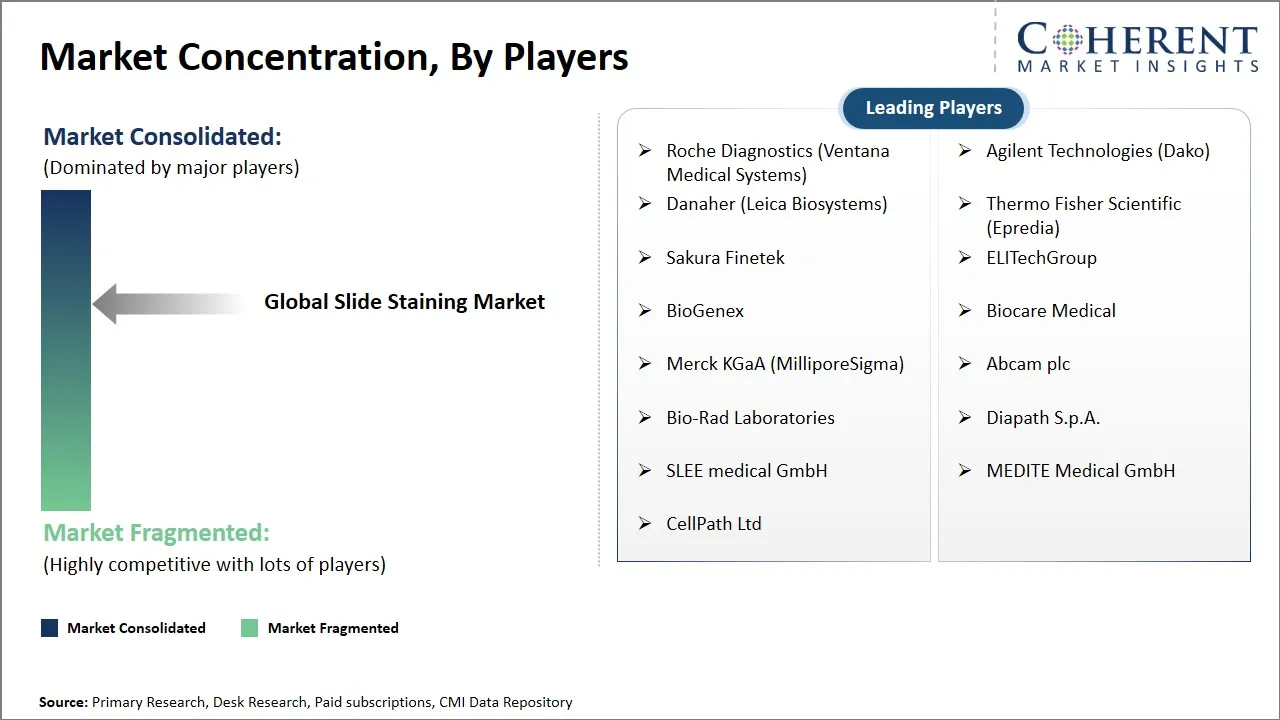
| Companies covered: | Roche Diagnostics (Ventana Medical Systems), Agilent Technologies (Dako), Danaher (Leica Biosystems), Thermo Fisher Scientific (Epredia), Sakura Finetek, ELITechGroup, BioGenex, Biocare Medical, Merck KGaA (MilliporeSigma), Abcam plc, Bio-Rad Laboratories, Diapath S.p.A., SLEE medical GmbH, MEDITE Medical GmbH, and CellPath Ltd | ||
| Growth Drivers: |
| ||
| Restraints & Challenges: |
| ||
Laboratory Glassware Market Dynamics
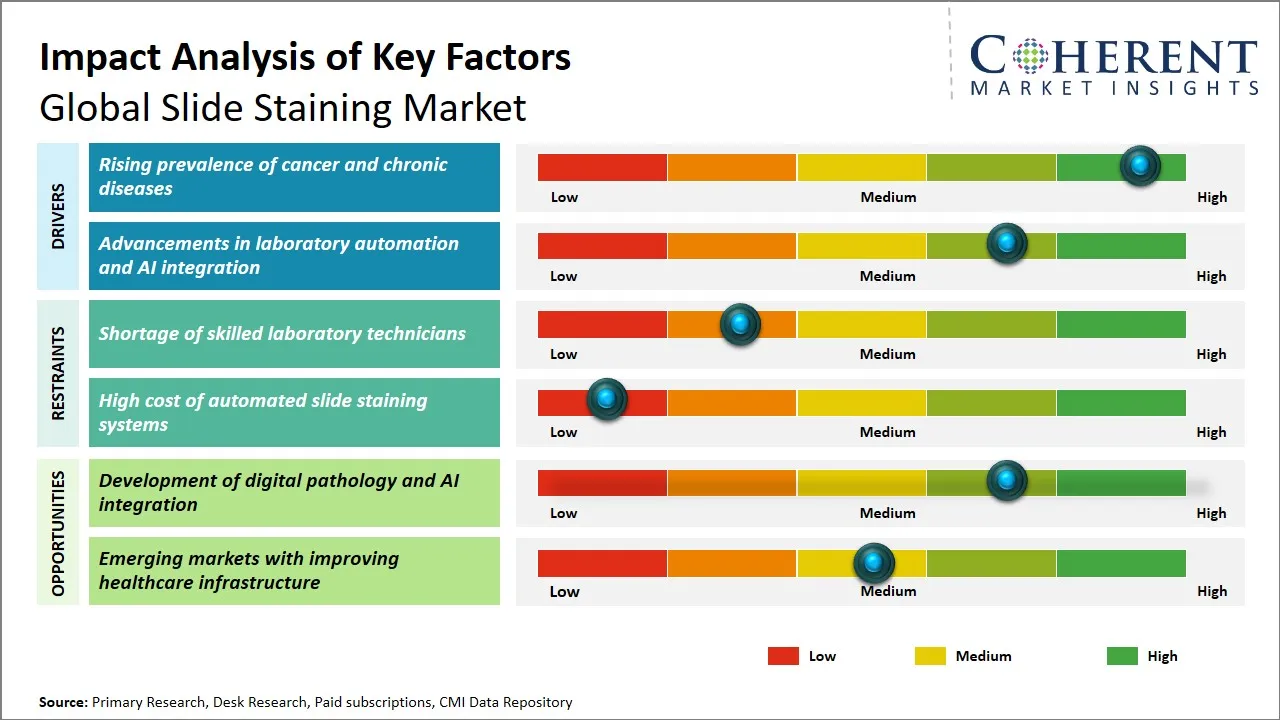
Laboratory Glassware Market Driver - Rising Prevalence of Cancer and Chronic Diseases
The rising incidence of cancer and chronic diseases around the globe is. The medical sector is going all out in the battle against cancers and other chronic conditions, so pathologists depending on slide staining methods for cellular morphology visualization and disease markers' detection heavily. The intricate process of cancer diagnosis that entails distinguishing between malignantly and benignly affected tissues alongside tumor subtyping is so extensive that it demands the use of special staining protocols that not only increase but also regulate the visibility of the various cell components critical for the microscopy.
For instance, in February 2025, according to the WHO, cancer caused nearly 10 million deaths globally in 2020, with the most common types being breast, lung, colon, prostate, skin, and stomach cancers. Lung cancer led to the highest number of deaths, followed by colon, liver, stomach, and breast cancers. Around 400,000 children are diagnosed with cancer each year, highlighting its widespread impact.
Moreover, in September 2025, the World Health Organization (WHO) reported a sharp rise in the global burden of chronic or non-communicable diseases, which claimed around 43 million lives in 2021—accounting for 75% of non-pandemic-related deaths
Laboratory Glassware Market Opportunity - Development of Digital Pathology and AI Integration in the Global Slide Staining Market
Digital pathology, which very much resembles human interaction and the integration of AI, is a tremendous opportunity for the global slide staining market. Digital pathology is the technology that allows converting of the traditional glass slides into high-resolution digital images making it possible that the images are easily stored, shared and even analyzed which leads to workflow enhancement in clinical and research laboratories. When digital images are combined with AI, the images can be analyzed with greater speed and accuracy, allowing for the automation of identification of cellular patterns, detection of anomalies and patient diagnosis support. AI software-driven diagnostics have the added advantage of minimizing human errors, hence increasing the efficiency of staining protocols, and furthermore, predicting the best reagent combinations and staining times.
In October 2025, Leica Biosystems, a leader in digital pathology, launched its new Aperio HALO AP system, which integrates AI-powered image management with digital slide review and collaboration tools. Developed in partnership with Indica Labs, the platform connects to the Aperio AI Store, offering AI applications from multiple partners, including Deep Bio, Histofy, Indica Labs, and Lunit. This scalable AI integration addresses challenges in managing multiple software platforms by centralizing tools into a single workflow.
Analyst Opinion (Expert Opinion)
- The slide staining market is currently on a booming path, and technological advancements such as the automation of staining processes and the introduction of more efficient reagents are the main drivers of this growth. Innovations like these have resulted in a better demand for faster and more accurate diagnoses, hence the healthcare sector is the most important beneficiary. Furthermore, the market loves the increase in the investment flow towards healthcare infrastructure and the backing of regulatory policies. Still, the high price tag of modern staining machines and the insufficient number of skilled laboratory technicians are two major challenges that are particularly acute in the developing world.
- Personalized medicine has great potential, and molecular diagnostics depend on the advanced staining techniques for their accuracy. Among the events that have been instrumental in the slide staining market's progress are the International Conference on Biomedical and Pharmaceutical Sciences and the Annual Diagnostic Pathology Conference. The latter has not only put the latest technological innovations on display but also allowed regulatory frameworks discussions to take place, thus indirectly shaping policies. Specifically, projects funded under the EU’s Horizon 2020 program which intend to enhance the precision of diagnosis through advanced staining technologies will, in turn, lead to the growth of the market in the long run and also tackle the existing challenges in the area.
Speak to the analyst
Want personalized insights?
Take the findings above to one of our principal consultants, or have the report rebuilt around the segments, geographies and competitors you actually track.
Market Segmentation
- Product Insights (Revenue, USD Bn, 2021 - 2033)
- Reagents and Kits
- Antibodies (Primary, Secondary)
- Dyes and Stains (Hematoxylin, Eosin, Romanowsky, Papanicolaou, Special Stains)
- Blocking Sera and Buffers
- Mounting Media
- Fixatives
- Instruments
- Automated Slide Stainers
- Manual Staining Systems
- Slide Warmers and Dryers
- Cover slippers
- Other Consumables and Accessories
- Reagents and Kits
- Automation Level Insights (Revenue, USD Bn, 2021 - 2033)
- Fully automated
- Semi-automated
- Manual/benchtop
- Technique Insights (Revenue, USD Bn, 2021 - 2033)
- Histology: HandE, special stains
- Immunohistochemistry (IHC)
- In-situ hybridization (ISH/FISH/CISH)
- Cytology staining (e.g., Pap variants)
- Microbiology staining (e.g., Gram, AFB, spore)
- Hematology staining (e.g., Wright-Giemsa)
- Application Insights (Revenue, USD Bn, 2021 - 2033)
- Disease diagnosis
- Biomarker detection/companion diagnostics
- Drug discovery and preclinical studies
- Academic and translational research
- Quality control and proficiency testing
- End User Insights (Revenue, USD Bn, 2021 - 2033)
- Hospital and reference pathology labs
- Pharmaceutical and Biotechnology Companies
- Contract Research Organizations (CROs)
- Independent diagnostic labs
- Academic and research institute
- Others (Government and public health labs, etc.)
- Connectivity Insights (Revenue, USD Bn, 2021 - 2033)
- Standalone systems
- LIS/LIMS-integrated systems
- Remote/IoT-enabled monitoring
- Regional Insights (Revenue, USD Bn, 2021 - 2033)
- North America
- U.S.
- Canada
- Latin America
- Brazil
- Argentina
- Mexico
- Rest of Latin America
- Europe
- Germany
- U.K.
- Spain
- France
- Italy
- Russia
- Rest of Europe
- Asia Pacific
- China
- India
- Japan
- Australia
- South Korea
- ASEAN
- Rest of Asia Pacific
- Middle East
- GCC Countries
- Israel
- Rest of Middle East
- Africa
- South Africa
- North Africa
- Central Africa
- North America
- Key Players Insights
- Roche Diagnostics (Ventana Medical Systems)
- Agilent Technologies (Dako)
- Danaher (Leica Biosystems)
- Thermo Fisher Scientific (Epredia)
- Sakura Finetek
- ELITechGroup
- BioGenex
- Biocare Medical
- Merck KGaA (MilliporeSigma)
- Abcam plc
- Bio-Rad Laboratories
- Diapath S.p.A.
- SLEE medical GmbH
- MEDITE Medical GmbH
- CellPath Ltd
Sources
Primary Research Interviews
Industry Stakeholders
- National Cancer Institute (NCI)
- World Health Organization (WHO)
- U.S. Centers for Disease Control and Prevention (CDC)
- European Society of Pathology (ESP)
- Indian Council of Medical Research (ICMR)
- National Institute for Health and Care Excellence (NICE)
End users
- Johns Hopkins Hospital
- Mayo Clinic
- All India Institute of Medical Sciences (AIIMS)
- Memorial Sloan Kettering Cancer Center
- Cleveland Clinic
- Tata Memorial Centre
Government and International Databases
- World Health Organization (WHO) Global Health Observatory
- U.S. Centers for Disease Control and Prevention (CDC)
- National Institutes of Health (NIH)
- European Medicines Agency (EMA)
- Indian Council of Medical Research (ICMR)
- National Cancer Institute (NCI)
Trade Publications
- Journal of Clinical Pathology
- The American Journal of Surgical Pathology
- Pathology
- Histopathology
- Journal of Pathology
- Laboratory Medicine
Academic Journals
- Journal of Histochemistry & Cytochemistry
- Modern Pathology
- Diagnostic Pathology
- Journal of Clinical Pathology
- The American Journal of Pathology
- Histopathology
Reputable Newspapers
- The New York Times
- The Guardian
- The Times of India
- The Washington Post
- The Economic Times
- The Hindu
Industry Associations
- Digital Pathology Association (DPA)
- American Society for Clinical Pathology (ASCP)
- European Society of Pathology (ESP)
- Indian Association of Pathologists and Microbiologists (IAPM)
- Pathological Society of Great Britain and Ireland (PSGBI)
- Canadian Association of Pathologists (CAP-ACP)
Public Domain Resources
- PubMed Central
- Google Scholar
- National Center for Biotechnology Information (NCBI) Bookshelf
- Directory of Open Access Journals (DOAJ)
- Public Library of Science (PLOS)
- Open Access Theses and Dissertations (OATD)
Proprietary Elements
- CMI Data Analytics Tool: Proprietary analytics tool to analyze real-time market trends, consumer behavior, and technology adoption in market
- Proprietary CMI Existing Repository of Information for Last 8 Years
Get access to 250+ pages report
Every segment, forecast, competitor profile and data table behind the analysis above — available for instant download.
- ESOMAR Member
- ISO 9001:2015 Certified
- D-U-N-S Registered
- GDPR & CCPA Compliant
Missing comfort of reading report in your local language? Find your preferred language:
Transform your Strategy with Exclusive Trending Reports
Frequently Asked Questions
The global slide staining market is estimated to be valued at USD 5.29 Bn in 2026 and is expected to reach USD 8.49 Bn by 2033.
The CAGR of the global slide staining market is projected to be 7.0% from 2026 to 2033.
Rising prevalence of cancer and chronic diseases and advancements in laboratory automation and AI integration are the major factors driving the growth of the global slide staining market.
Shortage of skilled laboratory technicians and high cost of automated slide staining systems are the major factors hampering the growth of the global slide staining market.
In terms of product, reagents and kits are estimated to dominate the market revenue share in 2026.
Hematoxylin and eosin (H&E) staining is the most commonly used technique in diagnostic laboratories.
The market is expected to continue growing, driven by ongoing advancements in diagnostic technologies and increasing healthcare needs worldwide.