

Pregnancy Testing Devices Market Size and Forecast – 2026 to 2033
The Pregnancy Testing Devices Market is anticipated to grow at a CAGR of 5.8% with USD 1.9 Bn share in 2026 and is expected to reach USD 2.8 Bn in 2033. Growing awareness of early pregnancy detection, and continuous advancements in rapid, digital, and highly accurate pregnancy test devices are driving the growth of the pregnancy testing devices market. In 2023, more than 90 million pregnancy test kits were sold, including 43 million digital tests.
Key Takeaways
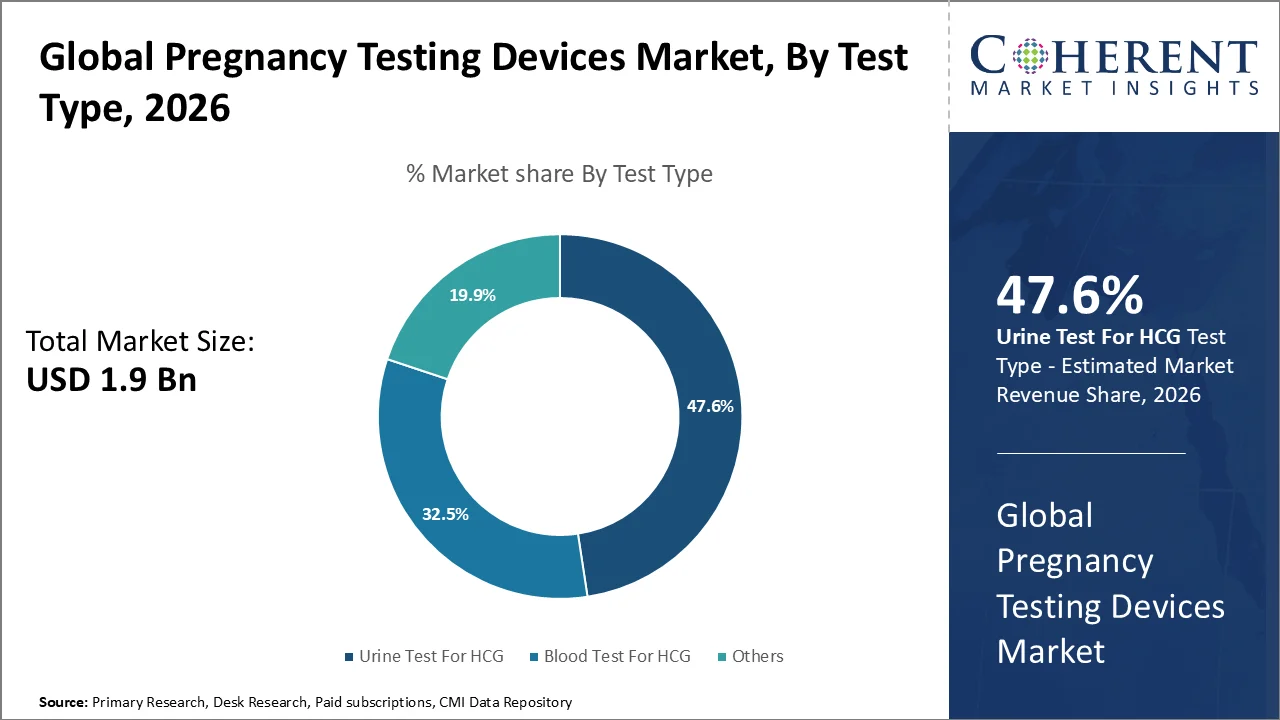
- Urine Test For HCG hold the largest market share of 47.6% in 2026 owing to its rising pregnancy rates and family planning awareness. According to a 2026 PIB report, India's Total Fertility Rate (TFR) is 2.0.
- Digital Devices expected to hold largest market share of 38.8% in 2026 owing to the increasing consumer preference for digital results. Digital pregnancy tests are over 99% accurate from the expected day of menstruation.
- Hospitals acquired the prominent market share of 37.7% in 2026 owing to its increasing number of hospital-based pregnancies and deliveries. In rural India, 76.6% of deliveries occur in government hospitals.
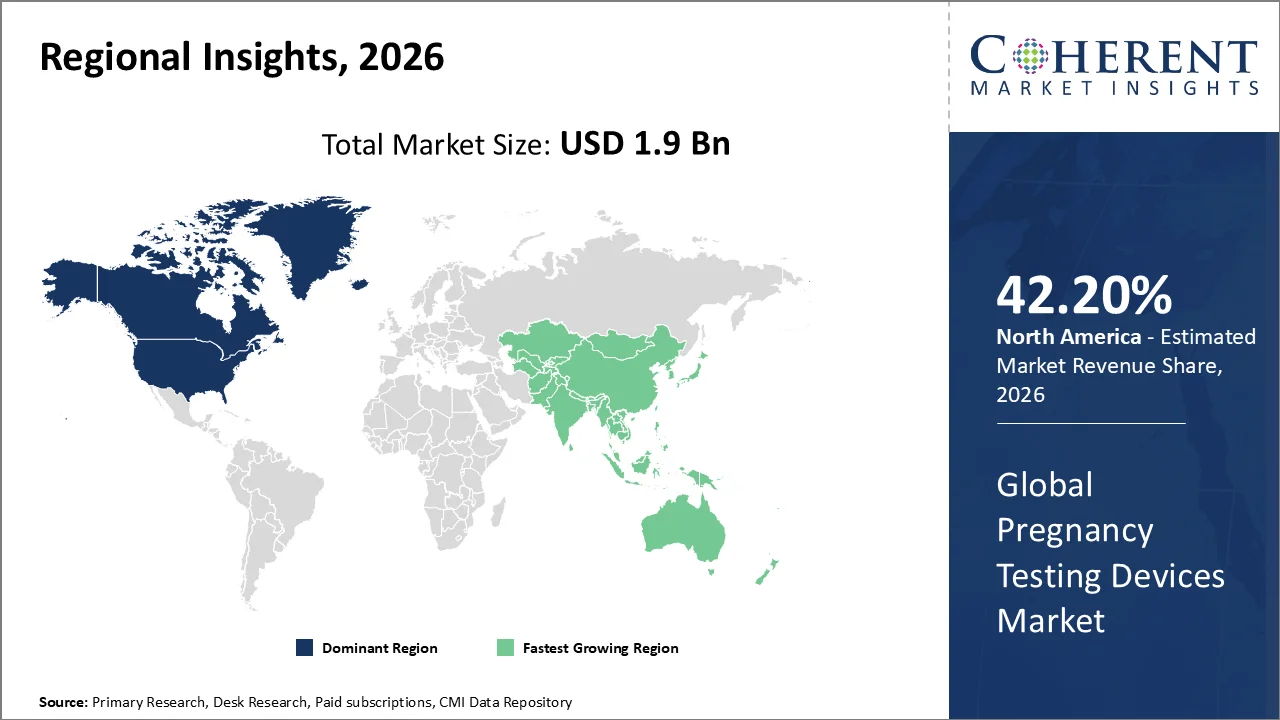
- North America is expected to acquire the dominant share of 42.2% in 2026 owing to its high awareness of reproductive and maternal health.
Current Events and Their Impact on the Pregnancy Testing Devices Market
Current Event | Description and its Impact |
Expansion of Pradhan Mantri Surakshit Matritva Abhiyan (PMSMA) (2026) |
|
Continuation of Janani Shishu Suraksha Karyakram (JSSK) Reimbursement Policy (2026) |
|
Segmental Insights
- Current Industry Events of 2026
- Market Size Estimation
- Regional Breakdown
- Competitive Landscape
- Customer Intelligence
- Segmental Analysis
- Pricing Analysis
- Key Market Drivers, Challenges & Future Trends
- Customized Insights Section
Why is Urine Test For HCG Acquiring the Largest Market Share?
Urine Test For HCG hold the largest market share of 47.6% in 2026. Consumers are increasingly choosing urine HCG tests because they offer a convenient, affordable, and non-invasive method for home pregnancy detection, driving growth in the pregnancy testing devices market. Greater awareness of early pregnancy detection, broader availability of over-the-counter products, and expanding distribution through pharmacies and e-commerce platforms continue to encourage adoption. Manufacturers are improving test accuracy, sensitivity, and ease of use through technological advancements, while healthcare providers promote early prenatal care and reproductive health awareness. Moreover, most home urine pregnancy tests claim over 99% accuracy when used from the day of the expected menstrual period, reinforcing consumer confidence and supporting the continued dominance of the urine hCG testing segment.
Digital Devices expected to hold largest market share
Digital Devices expected to hold largest market share of 38.8% in 2026 owing to the growing adoption of smart healthcare solutions. Consumers are increasingly adopting digital pregnancy testing devices because they provide clear, easy-to-read results, enhance confidence, and eliminate interpretation errors. Manufacturers are driving market growth by introducing advanced features such as early detection capabilities, digital displays, and smartphone connectivity to improve the user experience. Consumers value these devices for their convenience, accuracy, and privacy during home testing. Growing awareness of reproductive health, expanding retail and online distribution, rising disposable incomes, and increasing acceptance of self-testing continue to accelerate demand for digital pregnancy testing devices. In May 2026, BillionToOne, Inc. launched Unity Confirm, a non-invasive circulating fetal cell-based pregnancy confirmation test that uses a simple maternal blood sample.
Which End User segment dominates the market?
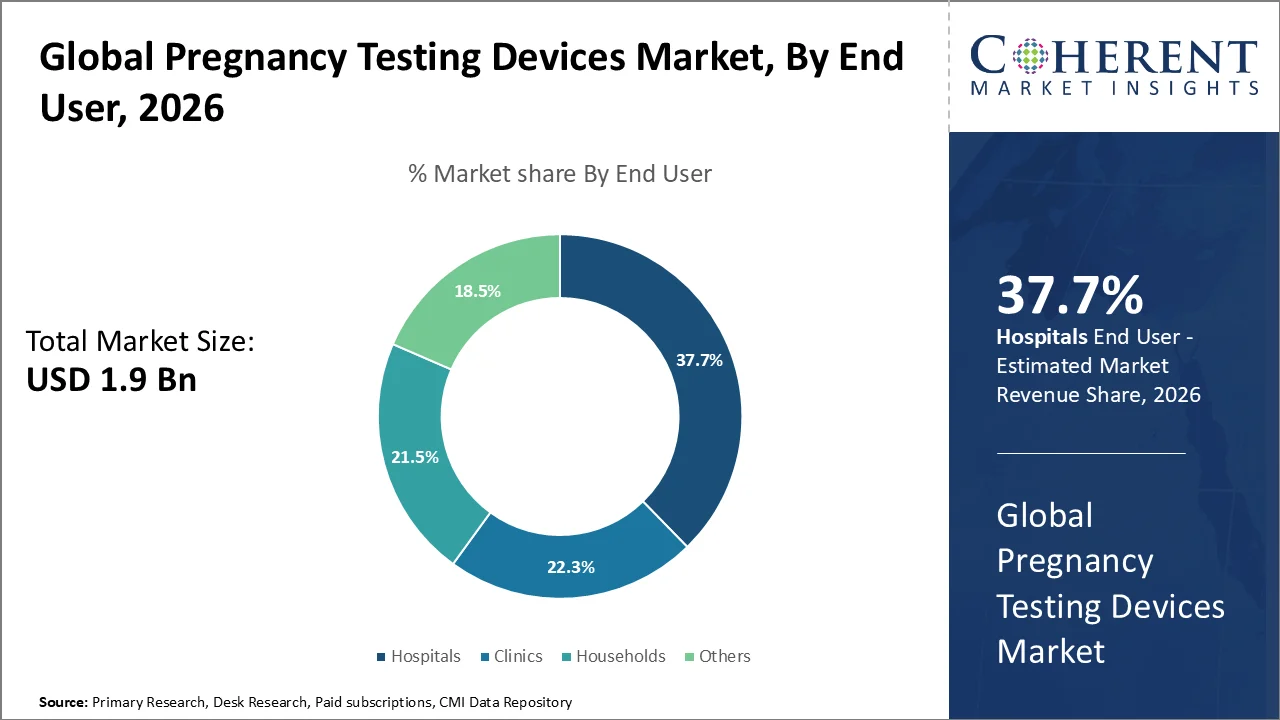
Hospitals acquired the prominent market share of 37.7% in 2026. Hospitals are increasing the adoption of pregnancy testing devices by using rapid and reliable diagnostic solutions for emergency care, prenatal services, and routine patient assessments. Healthcare professionals perform pregnancy tests to enable early detection, support pre-procedure evaluations, and improve clinical decision-making. Growing patient admissions, expanding maternity and reproductive healthcare services, and wider implementation of point-of-care testing are accelerating market demand. Hospitals also benefit from improved diagnostic accuracy, advanced healthcare infrastructure, and the need for timely pregnancy confirmation, which further drive the use of pregnancy testing devices.
Pregnancy Testing Devices Market Trends
- Growing adoption of home-based pregnancy testing solutions increases market demand, as consumers seek convenient, private, and rapid methods for early pregnancy detection without requiring immediate clinical visits. The World Health Organization (WHO) recommends pregnancy self-testing as an additional option alongside health worker-led testing to improve access to reproductive healthcare services.
- Increasing awareness of reproductive health and early prenatal care drives demand for pregnancy testing devices, as women prioritize timely pregnancy confirmation. According to the Government of India, more than 6.19 crore antenatal check-ups have been conducted under the Pradhan Mantri Surakshit Matritva Abhiyan (PMSMA) since its launch, reflecting continued emphasis on early pregnancy registration and maternal care.
- Rising adoption of point-of-care pregnancy testing in hospitals and clinics improves diagnostic efficiency by enabling rapid pregnancy confirmation before emergency treatment, surgery, imaging procedures, and fertility interventions. Under India's National Health Mission, the Free Diagnostics Service Initiative supports the availability of essential diagnostic services across public healthcare facilities, strengthening the use of rapid diagnostic tests.
Regional Insights
North America dominates owing to increasing focus on early prenatal care
North America is expected to acquire the dominant share of 42.2% in 2026. Consumers and healthcare providers in North America are accelerating growth in the pregnancy testing devices market by adopting advanced home-based and clinical diagnostic solutions. The region’s strong healthcare infrastructure and widespread access to over-the-counter pregnancy tests through pharmacies and online platforms encourage greater product usage. Increasing demand for early pregnancy detection, digital testing technologies, and point-of-care diagnostics continues to expand market opportunities. Rising awareness of reproductive health, growing fertility service utilization, and ongoing innovations from manufacturers further drive the adoption of pregnancy testing devices throughout North America. For instance, Rubi, the world’s first wearable pregnancy monitor, launched through a Kickstarter campaign, with the BYU-Hawaii Enactus team highlighting its impact on women in rural and island communities.
Asia Pacific Pregnancy Testing Devices Market Trends
Consumers and healthcare providers across Asia Pacific are accelerating growth in the pregnancy testing devices market by increasing the adoption of affordable and accessible diagnostic solutions. Growing awareness of reproductive health encourages consumers to use home pregnancy tests for convenient, private, and rapid results. Expanding healthcare infrastructure, rising urbanization, and broader availability of over-the-counter products through pharmacies and online platforms are improving market reach. Governments are supporting maternal health initiatives, while increasing fertility service demand and adoption of advanced testing technologies further drive market expansion across the region. On 17 September 2025, the Government of India launched the Swasth Nari, Sashakt Parivar Abhiyaan alongside the 8th Poshan Maah to strengthen healthcare and nutrition services for women, adolescent girls, and children through a joint initiative of the Ministry of Health & Family Welfare and the Ministry of Women & Child Development.
United States Pregnancy Testing Devices Market Trends
Increasing awareness of early pregnancy detection, growing demand for convenient at-home testing solutions, and better access to reproductive healthcare services drive the United States pregnancy testing devices market. Consumers increasingly prefer rapid, accurate, and easy-to-use diagnostic products, which accelerates market adoption. Advances in digital pregnancy testing technologies, improved healthcare education, and greater emphasis on family planning further support demand. In July 2026, New York State child welfare and juvenile justice officials launched an initiative to strengthen fathers’ involvement in their children’s lives.
Japan Pregnancy Testing Devices Market Trends
Rising awareness of early pregnancy detection, growing demand for convenient home-based diagnostic solutions, and the need for privacy in reproductive health management drive the Japan pregnancy testing devices market. Consumers increasingly adopt advanced digital pregnancy test technologies due to their improved accuracy and user-friendly features. Pharmacies and online platforms expand access to these devices, while higher healthcare awareness, delayed marriages, and increased focus on family planning further encourage the use of reliable pregnancy testing solutions across Japan.
Who are the Major Companies in Pregnancy Testing Devices Industry
Some of the major key players in Pregnancy Testing Devices are Piramal Enterprises, Alere Inc., Prestige Brands Holdings Inc., Quidel Corporation., Procter and Gamble Co., Cardinal Health, and Confirm Biosciences.
Key News
- In June 2026, Vespexx Inc. launched Soonr Health in the U.S., integrating its Surearly SMART connected hormone testing device to support couples trying to conceive.
Market Report Scope
Pregnancy Testing Devices Market Report Coverage
| Report Coverage | Details | ||
|---|---|---|---|
| Base Year: | 2025 | Market Size in 2026: | USD 1.9 Bn |
| Historical Data for: | 2020 To 2024 | Forecast Period: | 2026 To 2033 |
| Forecast Period 2026 to 2033 CAGR: | 5.8% | 2033 Value Projection: | USD 2.8 Bn |
| Geographies covered: |
| ||
| Segments covered: |
| ||
| Companies covered: | Piramal Enterprises, Alere Inc., Prestige Brands Holdings Inc., Quidel Corporation., Procter and Gamble Co., Cardinal Health, and Confirm Biosciences. | ||
Analyst Opinion
- Pregnancy testing devices are supported by a fundamental healthcare need rather than short-term consumer trends. Globally, around 121 million unintended pregnancies occur every year, highlighting the continued requirement for accessible, accurate, and early pregnancy detection solutions. In my view, demand will increasingly shift toward products that provide faster results, higher reliability, and greater privacy, especially as more consumers prefer self-testing options over traditional clinical visits.
- Home-based pregnancy testing has become a critical component of reproductive health management, with urine-based tests remaining among the most widely used diagnostic tools due to their simplicity and convenience. Tests that can detect pregnancy before a missed period and provide digital result interpretation are gaining preference, as consumers increasingly value reduced uncertainty and ease of use. For example, digital pregnancy tests from brands such as Clearblue have introduced features like conception indicator technology, reflecting the market’s move toward value-added diagnostic experiences rather than basic detection alone.
- Accuracy and trust will remain the strongest competitive factors in the pregnancy testing devices market. Leading home pregnancy tests typically demonstrate accuracy rates of more than 99% when used from the day of an expected period, which has strengthened consumer confidence in self-diagnosis.
Speak to the analyst
Want personalized insights?
Take the findings above to one of our principal consultants, or have the report rebuilt around the segments, geographies and competitors you actually track.
Market Segmentation
- By Test Type (Revenue, USD Bn, 2021-2033)
- Blood Test For HCG
- Urine Test For HCG
- Others
- By Product Type (Revenue, USD Bn, 2021-2033)
- Digital Devices
- Line Indicators
- Strips
- Mid-Stream Devices
- Cassettes
- Others
- By End User (Revenue, USD Bn, 2021-2033)
- Hospitals
- Clinics
- Households
- Others
- By Region (Revenue, USD Bn, 2021-2033)
- North America
- U.S.
- Canada
- Latin America
- Brazil
- Mexico
- Argentina
- Rest of Latin America
- Europe
- Germany
- U.K.
- France
- Italy
- Spain
- Russia
- Rest of Europe
- Asia Pacific
- China
- India
- Japan
- Australia
- South Korea
- ASEAN
- Rest of Asia Pacific
- Middle East
- GCC
- Israel
- Rest of Middle East
- Africa
- South Africa
- Central Africa
- North Africa
- North America
Sources
Primary Research interviews
- Interviews with key industry stakeholders, including manufacturers, distributors, healthcare professionals, laboratory specialists, and reproductive health experts
- Discussions with fertility clinics, diagnostic centers, pharmacies, and retail healthcare providers
- Feedback from end users and healthcare practitioners regarding pregnancy testing device adoption, preferences, and usage trends
Databases
- U.S. Food and Drug Administration (FDA) medical device databases
- World Health Organization (WHO) health statistics and reproductive health databases
- Centers for Disease Control and Prevention (CDC) reproductive health and pregnancy-related databases
- National health ministry and government healthcare databases
- United Nations (UN) population and health databases
- World Bank health and demographic databases
Magazines
- Healthcare industry publications
- Medical device and diagnostics trade magazines
- Biotechnology and life sciences magazines
- Pharmaceutical and healthcare technology publications
Journals
- Peer-reviewed journals covering reproductive health, diagnostics, clinical chemistry, and medical devices
- Publications in obstetrics and gynecology research
- Clinical laboratory science and diagnostic technology journals
- Public health and epidemiology journals
Newspapers
- Healthcare and life sciences news publications
- Business and technology newspapers covering medical device innovations
- General news sources reporting on healthcare policies, diagnostic advancements, and regulatory developments
Associations
- World Health Organization
- Centers for Disease Control and Prevention
- Food and Drug Administration
- Professional associations related to obstetrics, gynecology, reproductive medicine, and clinical diagnostics
- Medical device industry associations and healthcare technology organizations
Public Domain sources
- Government health reports and regulatory filings
- Public healthcare statistics and demographic datasets
- Clinical trial registries and publicly available research publications
- Patent databases and intellectual property records related to pregnancy testing technologies
- Regulatory guidance documents and device approval records
- Public company filings and investor disclosures from pregnancy testing device manufacturers
Proprietary Elements
- CMI Data Analytics Tool
- Proprietary CMI Existing Repository of information for last 10 years
Get access to 250+ pages report
Every segment, forecast, competitor profile and data table behind the analysis above — available for instant download.
- ESOMAR Member
- ISO 9001:2015 Certified
- D-U-N-S Registered
- GDPR & CCPA Compliant
Missing comfort of reading report in your local language? Find your preferred language:
Transform your Strategy with Exclusive Trending Reports
Frequently Asked Questions
Pregnancy testing devices are diagnostic tools used to detect the presence of human chorionic gonadotropin (hCG), a hormone produced during pregnancy. These devices are available in urine-based home test formats and clinical testing formats.
The market is driven by increasing awareness of early pregnancy detection, rising preference for home-based testing, demand for privacy in reproductive health decisions, advancements in digital testing technologies, and wider availability through pharmacies and online platforms.
The major types include urine pregnancy test strips, midstream test kits, cassette-based tests, digital pregnancy tests, and advanced testing devices that provide additional information such as estimated weeks of pregnancy.
Consumers increasingly prefer home pregnancy tests because they offer convenience, quick results, affordability, and privacy compared with visiting healthcare facilities for initial pregnancy confirmation.
Digital pregnancy tests use electronic displays to provide clearer results, reducing interpretation errors associated with line-based tests. Some advanced versions also provide additional indicators related to pregnancy timing.