

Global Synbiotic Product Market Size and Forecast – 2026 To 2033
The Global Synbiotic Product Market is estimated to be valued at USD 2.45 Bn in 2026 and is expected to reach USD 4.28 Bn by 2033, growing at a compound annual growth rate (CAGR) of 8.3% from 2026 to 2033. Market expansion is supported by stronger consumer focus on gut health, wider use of combined probiotic–prebiotic formulations, and growing availability of synbiotics across supplements and functional nutrition products. Product innovation around clinically validated strains, targeted prebiotic substrates, and improved delivery formats is further strengthening commercial adoption.
In July 2025, dsm-firmenich reported results from a randomized, double-blind, placebo-controlled study involving 120 adults with irritable bowel syndrome, in which a synbiotic formulation containing probiotics, prebiotic fructooligosaccharides, and microencapsulated sodium butyrate improved gastrointestinal symptom outcomes. The development demonstrates the increasing role of clinical validation and advanced formulation technology in expanding synbiotic applications for digestive health.
Key Takeaways of the Global Synbiotic Product Market
- Dietary Supplements, with an estimated CAGR of 8.7% during 2026–2033, are expected to account for 42.6% of the global synbiotic product market in 2026, supported by precise dosing, portability, repeat-purchase routines, and targeted benefit positioning. In March 2025, The Vitamin Shoppe launched a GLP-1 Support Synbiotic combining prebiotic, probiotic, and postbiotic components for digestion and metabolic wellness.
- Powder, with an estimated CAGR of 8.8% during 2026–2033, is expected to hold 34.8% of the market in 2026 because flexible serving sizes, beverage mixing, single-serve formats, and formulation compatibility suit both adult and family wellness routines. In June 2026, GNC listed its Complete Synbiotic 4-in-1 Digestive Support Powder in thirty individual packets, combining prebiotics, probiotics, and postbiotics.
- Digestive and Gut Health, with an estimated CAGR of 8.9% during 2026–2033, is expected to represent 44.7% of the market in 2026 as consumers prioritize regularity, bloating relief, gastrointestinal resilience, and microbiome support as tangible daily outcomes. In April 2025, Seed Health reported randomized controlled-trial findings showing its DS-01 Daily Synbiotic improved abdominal discomfort, constipation-related measures, and gut-barrier integrity.
- North America, with an estimated CAGR of 8.1% during 2026–2033, is expected to command 34.6% of the global market in 2026, reflecting established supplement consumption, sophisticated specialty retail, strong microbiome awareness, and active ingredient commercialization. In January 2024, Probi reported two scientifically supported synbiotic solutions developed with Clasado Biosciences after their introduction at SupplySide West in Las Vegas.
- Europe, with an estimated CAGR of 9.4% during 2026–2033, is expected to hold 29.7% of the global market in 2026 while expanding fastest through science-led formulation, specialized nutrition investment, premium health positioning, and microbiome-focused product development. In May 2024, dsm-firmenich and Lallemand Health Solutions announced synergistic synbiotic solutions combining human milk oligosaccharides with probiotics for early-life nutrition.
Segmental Insights
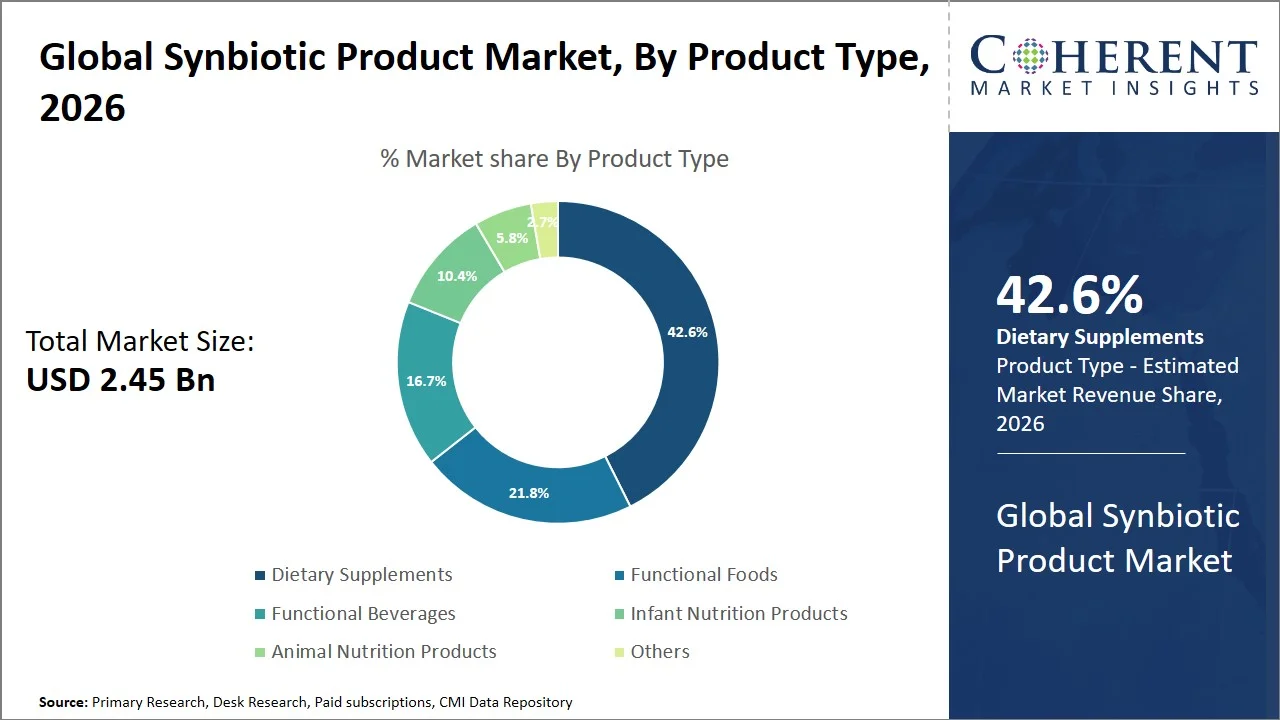
Why Do Dietary Supplements Dominate the Global Synbiotic Product Market?
Dietary Supplements are expected to command 42.6% of the global synbiotic product market in 2026 because the format allows manufacturers to combine defined probiotic strains with measured prebiotic substrates in standardized daily doses. Capsules, tablets, sachets, and specialty supplements also support premium positioning, subscription purchasing, pharmacy distribution, and direct-to-consumer education without requiring reformulation of mainstream foods. For suppliers, this creates attractive opportunities around strain selection, encapsulation, stability testing, and condition-specific formulations spanning gut, immune, metabolic, and women’s health. In May 2025, according to the National Library of Medicine a registered U.S. clinical study began evaluating Ritual Synbiotic+, a dietary supplement containing prebiotics, probiotics, and postbiotics, for gastrointestinal health, mood, and behavior in women. The study illustrates how supplement brands are using structured clinical evaluation to strengthen differentiation and substantiate microbiome-focused product propositions.
- Current Industry Events of 2026
- Market Size Estimation
- Regional Breakdown
- Competitive Landscape
- Customer Intelligence
- Segmental Analysis
- Pricing Analysis
- Key Market Drivers, Challenges & Future Trends
- Customized Insights Section
Why Does Powder Represent the Largest Form in the Global Synbiotic Product Market?
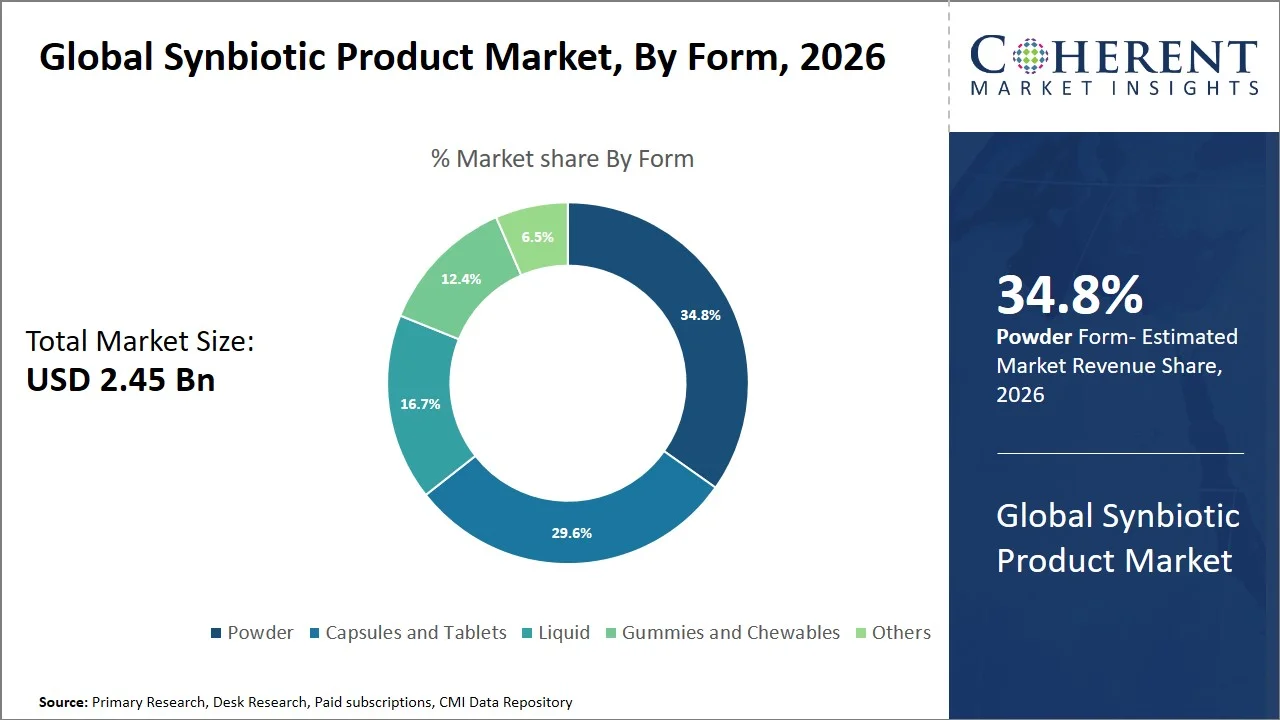
Powder is expected to hold 34.8% of the global synbiotic product market in 2026 because dry delivery enables high ingredient loading, flexible serving sizes, and easier incorporation of microbial cultures and prebiotic fibers than many ready-to-consume formats. Powdered synbiotics can be offered in tubs or single-dose sticks, mixed into food or beverages, and adapted for adults, children, sports nutrition, or specialized wellness programs. Lower moisture exposure can also simplify stability management when manufacturers optimize strains, carriers, packaging, and storage conditions. Commercially, this gives formulators room to differentiate through dosage, flavor, portability, and multi-biotic combinations while supporting efficient distribution. In June 2025, Thorne detailed Complete Biotic, a daily fast-melt powder combining a prebiotic, probiotic, and postbiotic, illustrating how premium supplement companies are using powder delivery to package complex microbiome formulations into convenient daily-use formats.
Why Does Digestive and Gut Health Dominate the Application Segment of the Global Synbiotic Product Market?
Digestive and Gut Health is expected to represent 44.7% of the global synbiotic product market in 2026 because it provides the clearest consumer-facing use case for combining beneficial microorganisms with substrates intended to support their activity. Buyers can readily connect synbiotic products with regularity, digestive comfort, microbiome balance, and broader gastrointestinal wellness, supporting repeat consumption across supplements, functional nutrition, and early-life products. This application also gives manufacturers a focused framework for selecting strains, prebiotics, dosage forms, and benefit positioning around gut-related outcomes. Retailers and healthcare-oriented channels can further differentiate offerings by age and digestive need. In June 2025, Nestlé announced the international rollout of NAN Sinergity, combining probiotics with six human milk oligosaccharides to support a favorable gut environment and immunity in early childhood, underscoring the commercial reach of gut-focused synbiotic nutrition.
Current Events and their Impact
Current Event | Description and Its Impact |
June 2026 – FSANZ approves additional HMOs for infant formula |
|
March 2026 – Health Canada’s updated Natural Health Product GMP guide takes effect |
|
July 2025 – FDA closes GRAS notice for Lacticaseibacillus rhamnosus ATCC PTA-126815 with “no questions” |
|
Global Synbiotic Product Market Dynamics
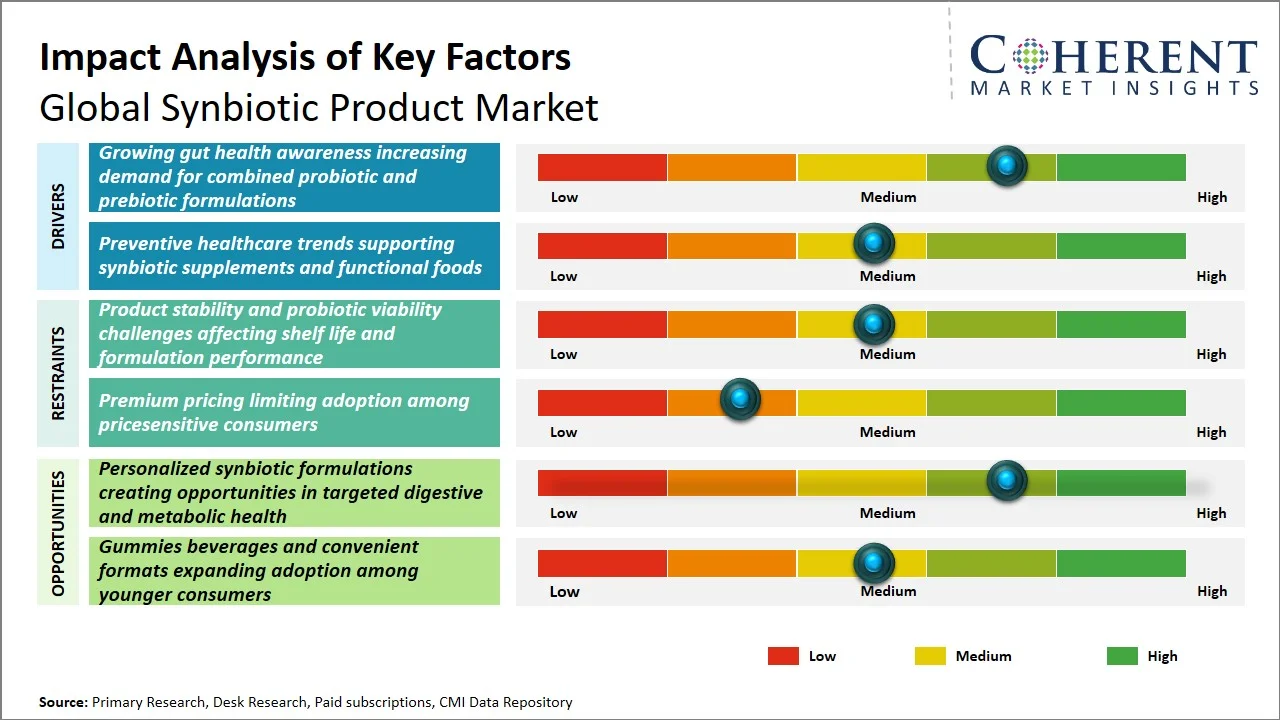
Key Market Drivers
- Growing gut health awareness increasing demand for combined probiotic and prebiotic formulations: Growing gut health awareness is shifting synbiotic purchasing toward formulations that clearly combine probiotics with complementary prebiotic substrates. Digestive comfort, regularity, microbiome balance, and immune support are increasingly viewed as connected outcomes, encouraging supplement and nutrition brands to develop multi-component products. This benefits strain suppliers, prebiotic producers, contract manufacturers, and retailers that can demonstrate formulation compatibility, dosage, and stability. In April 2026, IFF outlined its targeted synbiotic-development approach, emphasizing the deliberate pairing of specific probiotic strains with complementary prebiotics to improve microbial survival, activity, and persistence while supporting defined digestive and immune-health outcomes. This highlights how gut-health innovation is moving toward scientifically designed probiotic–prebiotic combinations rather than broadly assembled microbiome formulations.
- Preventive healthcare trends supporting synbiotic supplements and functional foods: Preventive healthcare is expanding synbiotic use beyond digestive support toward metabolic, immune, and life-stage wellness. Consumers increasingly seek nutritional products that can be incorporated into daily routines, creating opportunities for supplements and functional foods supported by stronger scientific evidence. This favors companies with microbiome research, biomarker expertise, and clinically documented strains. In September 2025, Novonesis and Novo Nordisk announced a research partnership to develop and test synbiotic food supplements for metabolic-health parameters, including blood glucose and cholesterol, while exploring microbiome-based biomarkers. The collaboration demonstrates how prevention-focused healthcare research is expanding synbiotic development into cardiometabolic applications.
Emerging Market Trends
- Precision Strain–Substrate Pairing for Outcome-Specific Synbiotics: Precision pairing of probiotic strains with targeted substrates is becoming an important product-development trend. Formulators are moving beyond generic probiotic–fiber combinations toward solutions designed around microbial compatibility, metabolite production, and specific health outcomes. This increases the importance of documented strain identity, substrate utilization, stability data, and formulation expertise. Ingredient suppliers with integrated probiotic and prebiotic portfolios are likely to gain stronger influence, while differentiated combinations may support premium positioning across digestive, metabolic, immune, women, and early-life applications.
- Shelf-Stable Multi-Biotic Delivery Moving Beyond Conventional Capsules: Shelf-stable multi-biotic formats are changing how synbiotic products are formulated and distributed. Manufacturers are focusing on moisture control, protective coatings, low-water-activity matrices, and optimized packaging to maintain microbial viability without complex cold-chain requirements. This supports wider use of stick packs, gummies, tablets, beverages, and portable powders while improving e-commerce and cross-border distribution. Contract manufacturers with expertise in microbial stability and shelf-life testing are likely to gain importance as formulation performance becomes a stronger basis for brand differentiation and channel expansion.
Regional Insights
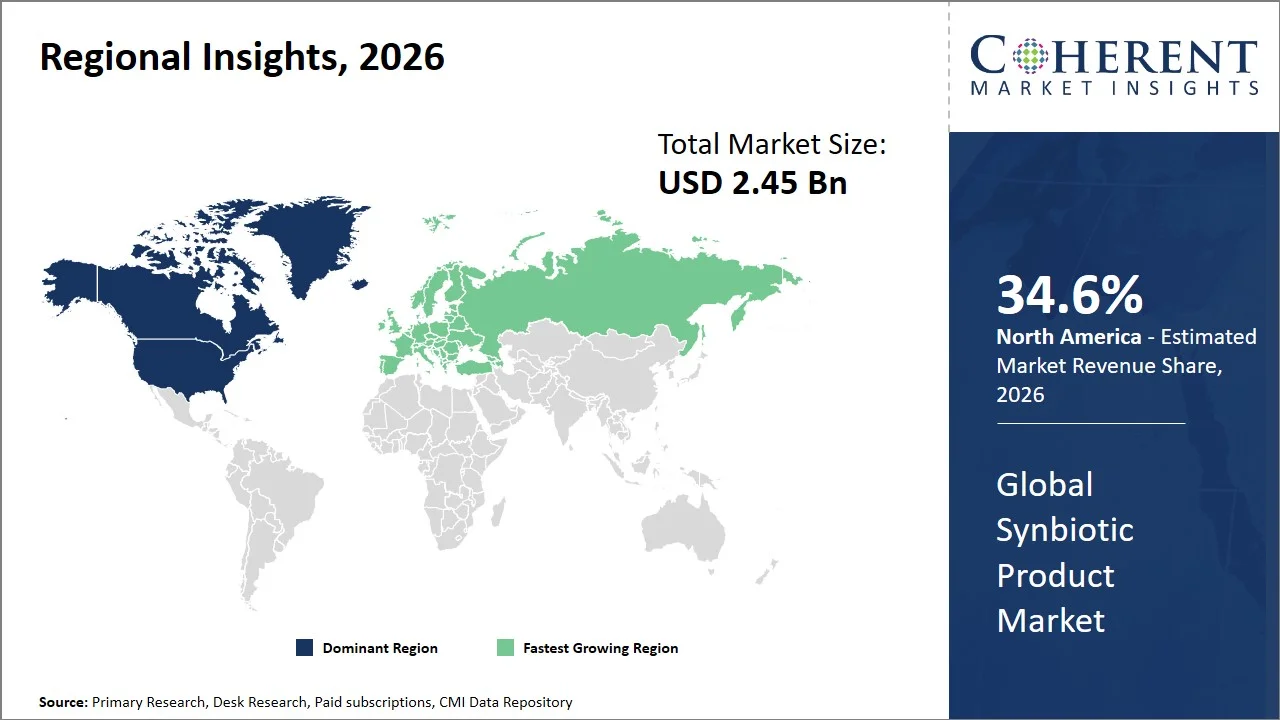
Why Does North America Dominate the Global Synbiotic Product Market?
North America is expected to retain leadership with expected market share 34.6% in 2026 because synbiotic products fit an established dietary-supplement ecosystem with strong pharmacy, specialty-health, and online retail access. Consumers can choose powders, capsules, gummies, functional foods, and targeted formulations spanning digestive, immune, metabolic, women, and infant health, enabling brands to serve multiple wellness occasions. The region also benefits from clinical-research capacity, microbiome biotechnology, practitioner education, and manufacturers able to commercialize strain-specific products at premium price points. Evidence scrutiny is increasingly important, favoring suppliers that document strain identity, dose, stability, and health relevance. In March 2025, the U.S. NIH Office of Dietary Supplements updated its health-professional guidance, explicitly noting that commercial products combining prebiotics and probiotic microorganisms are often called synbiotics and emphasizing strain-specific evaluation. This strengthens the evidence-led environment supporting category maturity.
Why Is Europe Emerging as the Fastest-Growing Region in the Global Synbiotic Product Market?
Europe is positioned for the fastest expansion with expected market share 29.7% in 2026 as synbiotic suppliers increasingly compete through formulation quality, scientific substantiation, and differentiated delivery formats rather than simple probiotic count. The region’s established nutraceutical, pharmacy, functional-food, and specialty-health channels provide routes for premium powders, capsules, gummies, beverages, and early-life nutrition products. At the same time, demanding product-quality and health-communication requirements encourage manufacturers to invest in documented strains, formulation stability, and defensible benefit positioning. This favors specialized ingredient developers and contract manufacturers capable of combining probiotics with targeted prebiotic substrates in consumer-friendly formats. In March 2025, TopGum unveiled Gummiotics, an all-in-one synbiotic gummy using a prebiotic-fiber matrix, with the product scheduled for presentation at Vitafoods Europe 2025. The development illustrates how European industry platforms are accelerating commercial exposure for next-generation synbiotic delivery concepts.
Global Synbiotic Product Market Outlook for Key Countries
Why Is the U.S. a Key Market for the Global Synbiotic Product Market?
The U.S. is a key market because it combines sophisticated supplement purchasing with a strong microbiome biotechnology and clinical-validation ecosystem. Commercial opportunities are moving beyond general digestive support toward life-stage and condition-specific formulations, including infant health, metabolic wellness, women’s health, and healthy aging. Direct-to-consumer channels allow emerging brands to educate buyers about strains, prebiotic substrates, and formulation logic, while pharmacies and specialist retailers provide broader access once products establish credibility. The country is also important for translating microbiome datasets into differentiated consumer products. In September 2025, San Diego-based Persephone Biosciences launched its Daily Synergistic Synbiotic for infants and toddlers after 10,000 parents and caregivers joined its waitlist in just over a month. The formulation combines selected Bifidobacterium strains with human milk oligosaccharides, demonstrating U.S. commercialization of research-led, highly targeted synbiotic nutrition.
Why Is India Important in the Global Synbiotic Product Market?
India is important to the global synbiotic product market because urban preventive-health spending, digital wellness retail, and consumer interest in digestive comfort are creating room for accessible microbiome-focused products. The market is particularly suited to powders, sachets, capsules, effervescent, and other formats that can be positioned around bloating, regularity, immunity, metabolic health, and women’s wellness. Domestic digital-first brands can test targeted formulations quickly, while pharmacy and e-commerce distribution helps extend reach beyond premium specialty stores. Formulation stability and clear consumer education are especially important for converting probiotic and prebiotic awareness into synbiotic adoption. In February 2025, Mumbai-based The Good Bug stated that its portfolio included clinically tested synbiotic formulas and had expanded its gut-health offering with a Ferments collection. This illustrates the shift toward broader microbiome portfolios built around everyday consumption occasions and targeted wellness needs.
Why Does China Support Growth in the Global Synbiotic Product Market?
China supports growth in the global synbiotic product market through its large food, dairy, infant-nutrition, and dietary-supplement manufacturing base, which can integrate probiotic and prebiotic combinations into multiple consumer formats. Domestic innovation is increasingly supported by defined strain-approval pathways, making regulatory eligibility a central consideration for companies developing functional foods and infant-health products. Strong e-commerce and modern retail channels also help brands introduce specialized microbiome products and educate consumers at scale. China is particularly relevant for infant nutrition because approved Bifidobacterium strains can widen formulation options for products designed around early-life gut health. In July 2025, China’s National Health Commission approved Bifidobacterium animalis subsp. lactis BLa80 and Bifidobacterium longum subsp. infantis LMG 11588 for inclusion in the list of strains permitted in infant foods. The decision expands the compliant ingredient toolkit available to nutrition formulators.
Why Is Germany a Strategic Country in the Global Synbiotic Product Market?
Germany is a strategic country because its strength lies less in mass-market volume alone and more in high-value nutraceutical ingredients, biotechnology, formulation science, and quality-controlled production. German suppliers can support synbiotic brands with characterized microbial strains, targeted bioactive combinations, scalable processing, dosage-form expertise, and B2B formulation services. This capability is commercially important as the market moves toward products designed for specific outcomes such as digestive, metabolic, immune, and inflammation-related wellness rather than undifferentiated gut-health claims. Germany’s research-oriented industrial base also supports the translation of microbiome science into exportable ingredient systems for supplement manufacturers. In January 2023, Essen-headquartered Evonik launched IN VIVO BIOTICS, a category of science-based synbiotic nutraceutical solutions combining probiotics with additional health ingredients. The platform demonstrates Germany’s role as a technology and formulation supplier to the wider global synbiotic value chain.
Why Is Brazil an Important Growth Market for the Global Synbiotic Product Market?
Brazil is an important growth market because consumer engagement with intestinal microbiota creates a receptive base for synbiotic supplements, functional foods, and digestive-health products. Pharmacy access, nutrition professionals, digital retail, and a sizeable wellness consumer base can support products positioned around microbiome balance, immunity, regularity, and preventive health. Commercial success, however, depends on translating technical concepts such as probiotics, prebiotics, strains, and microbiota into understandable everyday benefits and suitable price points. Evidence of consumer readiness is already visible. In the 2025 International Microbiota Observatory survey, conducted from January to February, 95% of Brazilian respondents were familiar with the term “prebiotics,” while 63% said they had adopted specific habits to improve microbiota balance. This combination of awareness and active behavior gives brands a stronger educational foundation for introducing combined probiotic-prebiotic formulations.
Technology Adoption Landscape in the Global Synbiotic Product Market
Technology | Adoption Level | Key Application Area | Business Impact |
Lyophilization and Low-Water-Activity Stabilization | High | Powders, capsules, tablets, microbial ingredients | Helps preserve microorganism viability during storage and distribution, improving shelf-life consistency and reducing dependence on refrigerated logistics. |
Microencapsulation and Enteric-Release Delivery | High | Capsules, tablets, powders, functional nutrition | Protects microorganisms from oxygen, moisture, processing stress, and gastric conditions, supporting more reliable delivery of viable strains. |
Whole-Genome Sequencing for Strain Identity and Quality Control | High | Strain characterization, batch release, contamination control | Strengthens strain-level verification, traceability, intellectual-property protection, and regulatory documentation while reducing misidentification risk. |
Precision-Fermented HMOs and Specialty Oligosaccharides | Medium | Infant nutrition, premium supplements, life-stage formulations | Expands the range of targeted prebiotic substrates available for strain-specific synbiotic pairing and premium product differentiation. |
In-vitro Gut Simulation and Metabolomics | Medium | Preclinical formulation screening and strain–substrate selection | Helps identify promising microbial combinations and metabolite responses before expensive human studies, improving R&D prioritization. |
Microbiome Sequencing-Guided Formulation | Medium | Personalized wellness, practitioner-led programs, targeted nutrition | Supports narrower consumer segmentation and response-oriented product design, although clinical interpretation, privacy, and validation requirements constrain broad adoption. |
How Are Women’s and Life-Stage Microbiome Solutions Creating New Growth Opportunities in the Global Synbiotic Product Market?
Women’s and life-stage microbiome solutions represent an underdeveloped opportunity because synbiotic design can be tailored to changing physiological needs rather than sold as a single general-purpose gut product. Commercial white space exists across reproductive wellness, pregnancy and postpartum nutrition, vaginal microbiome support, menopause-related metabolic changes, and healthy aging. These use cases allow manufacturers to build differentiated portfolios around specific strains, selectively utilized substrates, delivery routes, and practitioner-led education. Companies can capture the opportunity through clinically supported formulations, age- and life-stage-specific dosing, subscription models, pharmacy and practitioner channels, and digital education that explains why a given microbial combination is appropriate. Entry will require stronger safety documentation, stability validation, claims discipline, and, in some applications, specialized delivery technology. Microbiome-focused specialists and vertically integrated ingredient suppliers may be best positioned initially because they can control strain selection, evidence generation, and formulation compatibility. Larger nutrition brands can scale the opportunity once clinical positioning and regulatory pathways become clearer.
Market Players, Key Development, and Competitive Landscape
Key Developments
- In May 2026, NurtureBio announced the launch of a synbiotic supplement for infants and toddlers combining human milk oligosaccharides with targeted probiotic strains. The development is important for the global synbiotic product market because it illustrates the emergence of age-specific microbiome products designed around early-life gut ecology rather than adapting general adult probiotic formulations for children, creating room for specialized ingredient combinations and targeted caregiver education.
- In April 2025, Morinaga Milk reported results from collaborative research evaluating a synbiotic yogurt containing Bifidobacterium longum BB536 and lactulose, with findings published in Gut Microbes Reports. The work is important for the global synbiotic product Market because it extends formulation development beyond conventional supplement formats and supports functional-food positioning based on clinically investigated microbiome combinations rather than ingredient presence alone.
- In February 2024, Danone introduced Neocate Syneo in Spain, a specialized infant formula designed for cow’s milk protein allergy that combines a synbiotic system with the human milk oligosaccharide 2′-FL. The development is important because it demonstrates how synbiotic concepts are moving into specialized medical and early-life nutrition, where formulation quality, healthcare-professional engagement, and evidence-supported ingredient selection can support higher-value product positioning.
Competitive Landscape
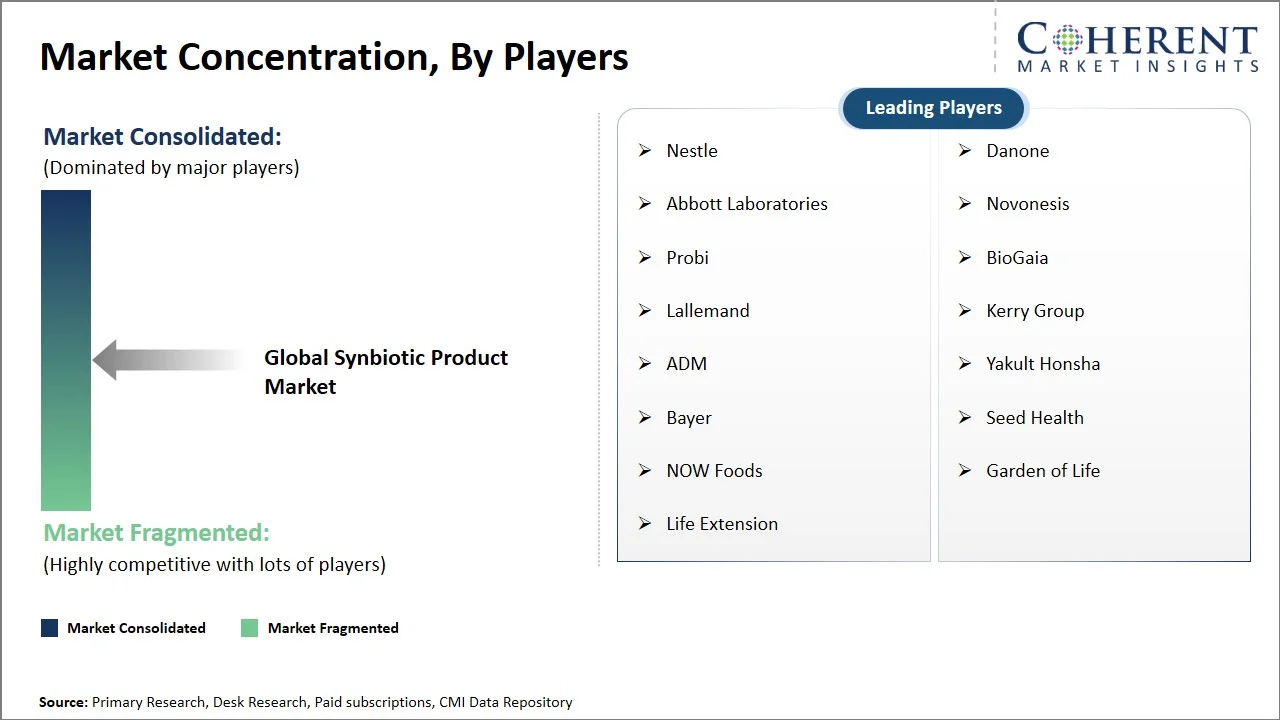
The global synbiotic product market remains fragmented, with competitive influence distributed across probiotic and prebiotic ingredient specialists, nutraceutical manufacturers, functional-food producers, consumer supplement brands, contract manufacturers, and regional wellness companies. Competitive advantage increasingly depends on the ability to connect strain science with substrate selection, formulation stability, defensible claims, and convenient delivery rather than relying only on ingredient count. Specialist suppliers can establish strong positions in narrowly defined applications through proprietary microbial assets and technical expertise, while larger nutrition companies benefit from manufacturing scale, broader retail access, and regulatory resources. Supply reliability and formulation support are becoming particularly important as buyers demand reproducible viability and performance throughout shelf life.
Key focus areas include
- Clinical Substantiation: Evidence at strain and combination level can support premium positioning and reduce dependence on generic microbiome claims.
- Formulation Durability: Survival during processing, storage, transport, and gastrointestinal passage is becoming a core product-performance criterion.
- Proprietary Ingredient Assets: Characterized strains and differentiated prebiotic substrates provide stronger barriers to commoditization.
- Dosage-Form Economics: Manufacturers must balance microbial viability, consumer convenience, taste, production complexity, and unit cost across powders, capsules, gummies, and foods.
- Regulatory Execution: Safety documentation, label discipline, manufacturing quality, and jurisdiction-specific ingredient eligibility influence speed to market.
- Channel Architecture: Pharmacy, practitioner, specialty-health, direct-to-consumer, and mainstream retail channels require different education and pricing strategies.
- Manufacturing and Supply Assurance: Fermentation capacity, stabilization expertise, protective packaging, qualified secondary suppliers, and contract-manufacturing capability support reliable commercialization.
Market Report Scope
Synbiotic Product Market Report Coverage
| Report Coverage | Details | ||
|---|---|---|---|
| Base Year: | 2025 | Market Size in 2026: | USD 2.45 Bn |
| Historical Data for: | 2020 To 2024 | Forecast Period: | 2026 To 2033 |
| Forecast Period 2026 to 2033 CAGR: | 8.3% | 2033 Value Projection: | USD 4.28 Bn |
| Geographies covered: |
| ||
| Segments covered: |
| ||
| Companies covered: | Nestle, Danone, Abbott Laboratories, Novonesis, Probi, BioGaia, Lallemand, Kerry Group, ADM, Yakult Honsha, Bayer, Seed Health, NOW Foods, Garden of Life, Life Extension | ||
| Growth Drivers: |
| ||
| Restraints & Challenges: |
| ||
Analyst Opinion (Expert Opinion)
- Competition is expected to shift from strain count toward integrated microbiome solutions combining validated strain substrate formulations, delivery technology, stability, and regulatory support. Suppliers controlling both scientific evidence and formulation capabilities will be better positioned to differentiate and capture higher value.
- Microbiome-response verification could enable more personalized synbiotic use by linking products with measurable microbiome or metabolic responses. This may challenge one-size-fits-all products and favor companies with biomarker analysis, data capabilities, and adaptive formulation expertise.
- Companies should prioritize stable formulations, clinically supported combinations, regulatory-ready documentation, and reliable ingredient sourcing. They should avoid overloading products with costly strains or substrates lacking clear evidence, while strengthening practitioner partnerships and targeted applications with recognizable consumer benefits.
Speak to the analyst
Want personalized insights?
Take the findings above to one of our principal consultants, or have the report rebuilt around the segments, geographies and competitors you actually track.
Market Segmentation
- Product Type Insights (Revenue, USD Bn, 2021 - 2033)
- Dietary Supplements
- Functional Foods
- Functional Beverages
- Infant Nutrition Products
- Animal Nutrition Products
- Others
- Form Insights (Revenue, USD Bn, 2021 - 2033)
- Powder
- Capsules and Tablets
- Liquid
- Gummies and Chewables
- Others
- Application Insights (Revenue, USD Bn, 2021 - 2033)
- Digestive and Gut Health
- Immune Health
- Metabolic and Weight Management
- Women’s Health
- Infant Health
- Others
- Distribution Channel Insights (Revenue, USD Bn, 2021 - 2033)
- Pharmacies and Drugstores
- Online Retail
- Supermarkets and Hypermarkets
- Specialty Health Stores
- Direct Sales
- Others
- Regional Insights (Revenue, USD Bn, 2021 - 2033)
- North America
- U.S.
- Canada
- Latin America
- Brazil
- Argentina
- Mexico
- Rest of Latin America
- Europe
- Germany
- U.K.
- Spain
- France
- Italy
- Russia
- Rest of Europe
- Asia Pacific
- China
- India
- Japan
- Australia
- South Korea
- ASEAN
- Rest of Asia Pacific
- Middle East
- GCC Countries
- Israel
- Rest of Middle East
- Africa
- South Africa
- North Africa
- Central Africa
- North America
- Key Players Insights
- Nestle
- Danone
- Abbott Laboratories
- Novonesis
- Probi
- BioGaia
- Lallemand
- Kerry Group
- ADM
- Yakult Honsha
- Bayer
- Seed Health
- NOW Foods
- Garden of Life
- Life Extension
Sources
Primary Research Interviews
- Synbiotic product manufacturers, probiotic culture producers, prebiotic ingredient suppliers, and microbiome formulation specialists
- Dietary supplement, functional food, functional beverage, infant nutrition, and animal nutrition companies
- Contract manufacturers, pharmacies, distributors, e-commerce retailers, nutritionists, gastroenterologists, microbiome researchers, and industry experts
Stakeholders
- Probiotic strain and microbial culture manufacturers
- Prebiotic fiber, oligosaccharide, HMO, inulin, FOS, GOS, and specialty substrate suppliers
- Synbiotic supplement, powder, capsule, tablet, gummy, and functional food manufacturers
- Infant nutrition, functional beverage, nutraceutical, pharmaceutical, and animal nutrition companies
- Contract development and manufacturing organizations, clinical research organizations, microbiome laboratories, distributors, and retailers
End-use Sectors
- Dietary supplements
- Functional foods
- Functional beverages
- Infant and maternal nutrition
- Animal and pet nutrition
- Preventive health and wellness products
Regulatory and Government Bodies
- U.S. Food and Drug Administration, Federal Trade Commission, and National Institutes of Health Office of Dietary Supplements
- European Commission and European Food Safety Authority
- UK Food Standards Agency and Medicines and Healthcare products Regulatory Agency
- Health Canada
- China National Health Commission and State Administration for Market Regulation
- Food Safety and Standards Authority of India
- Japan Consumer Affairs Agency
- Food Standards Australia New Zealand
- National food, dietary supplement, infant nutrition, and health-claim authorities across major markets
Databases
- ClinicalTrials.gov and WHO International Clinical Trials Registry Platform
- PubMed/MEDLINE and Cochrane Library
- FDA GRAS Notice Inventory and microbial-derived food ingredient records
- EFSA Journal, Qualified Presumption of Safety assessments, and European food-safety databases
- EU Register of Nutrition and Health Claims
- National dietary supplement, novel food, probiotic strain, and functional food approval databases
- WIPO PATENTSCOPE and Espacenet
- Company annual reports, investor presentations, product registries, scientific publications, and patent filings
Magazines and Journals
- Nature Reviews Gastroenterology & Hepatology
- Gut Microbes
- Beneficial Microbes
- Journal of Functional Foods
- Nutrients
- Frontiers in Microbiology
- Microorganisms
- International Journal of Food Microbiology
- Clinical Nutrition
- Journal of Nutrition
Associations
- International Scientific Association for Probiotics and Prebiotics
- International Probiotics Association
- Global Prebiotic Association
- Council for Responsible Nutrition
- International Alliance of Dietary/Food Supplement Associations
- Food Supplements Europe
- National nutraceutical, dietary supplement, functional food, and microbiome associations
Public Domain Sources
- Product labels, ingredient lists, formulation specifications, and synbiotic product catalogues
- Probiotic strain identity, CFU levels, prebiotic composition, dosage, shelf-life, storage, and stability information
- Clinical trials evaluating digestive health, immune health, metabolic health, women’s health, and infant-health applications
- Scientific studies on microbiome modulation, strain–substrate interaction, microbial viability, and metabolite production
- Regulatory approvals, GRAS notices, safety assessments, novel-food decisions, and health-claim evaluations
- Annual reports, patents, R&D programs, product launches, manufacturing expansions, partnerships, and distribution initiatives
Key Standards and Regulations
- ISAPP Consensus Statement on the Definition and Scope of Synbiotics
- U.S. Dietary Supplement Health and Education Act and applicable FDA dietary supplement requirements
- U.S. FDA Current Good Manufacturing Practice requirements for dietary supplements
- FDA GRAS framework for probiotic microorganisms and other food ingredients
- EU Regulation (EC) No. 1924/2006 on Nutrition and Health Claims
- EU Food Supplements Directive 2002/46/EC
- EU Novel Food Regulation (EU) 2015/2283, where applicable
- EFSA Qualified Presumption of Safety framework for microorganisms
- Codex guidelines covering nutrition and health claims
- National regulations governing probiotics, prebiotics, dietary supplements, functional foods, infant formula, labeling, safety, and permissible health claims
Proprietary Elements
- CMI Data Analytics Tool, Proprietary CMI Existing Repository of information for the last 10 years
Get access to 250+ pages report
Every segment, forecast, competitor profile and data table behind the analysis above — available for instant download.
- ESOMAR Member
- ISO 9001:2015 Certified
- D-U-N-S Registered
- GDPR & CCPA Compliant
Missing comfort of reading report in your local language? Find your preferred language:
Transform your Strategy with Exclusive Trending Reports
Frequently Asked Questions
The CAGR of global synbiotic product market is projected to be 8.3% from 2026 to 2033.
The global synbiotic product market is estimated to be valued at USD 2.45 billion in 2026 and is expected to reach USD 4.28 billion by 2033.
Synbiotic products combine probiotics and prebiotics in a single formulation to support beneficial gut microorganisms and promote digestive and overall microbiome health.
Synbiotic products are commonly available as powders, capsules, tablets, liquids, gummies, chewables, functional foods, and functional beverages.
Synbiotic products are distributed through pharmacies and drugstores, online retail platforms, supermarkets and hypermarkets, specialty health stores, and direct sales channels.
Synbiotic products are primarily used for digestive and gut health, immune support, metabolic wellness, women’s health, and infant nutrition.
Product stability and probiotic viability challenges affecting shelf life and formulation performance and Premium pricing limiting adoption among price sensitive consumers are the major factor hampering the growth of global synbiotic product market.