

Global Tampon Market Size and Forecast – 2026-2033
The Global Tampon Market is estimated to be valued at USD 7.25 Bn in 2026 and is expected to reach USD 11.65 Bn by 2033, exhibiting a compound annual growth rate (CAGR) of 7.0% from 2026 to 2033.
Key Takeaways of the Tampon Market
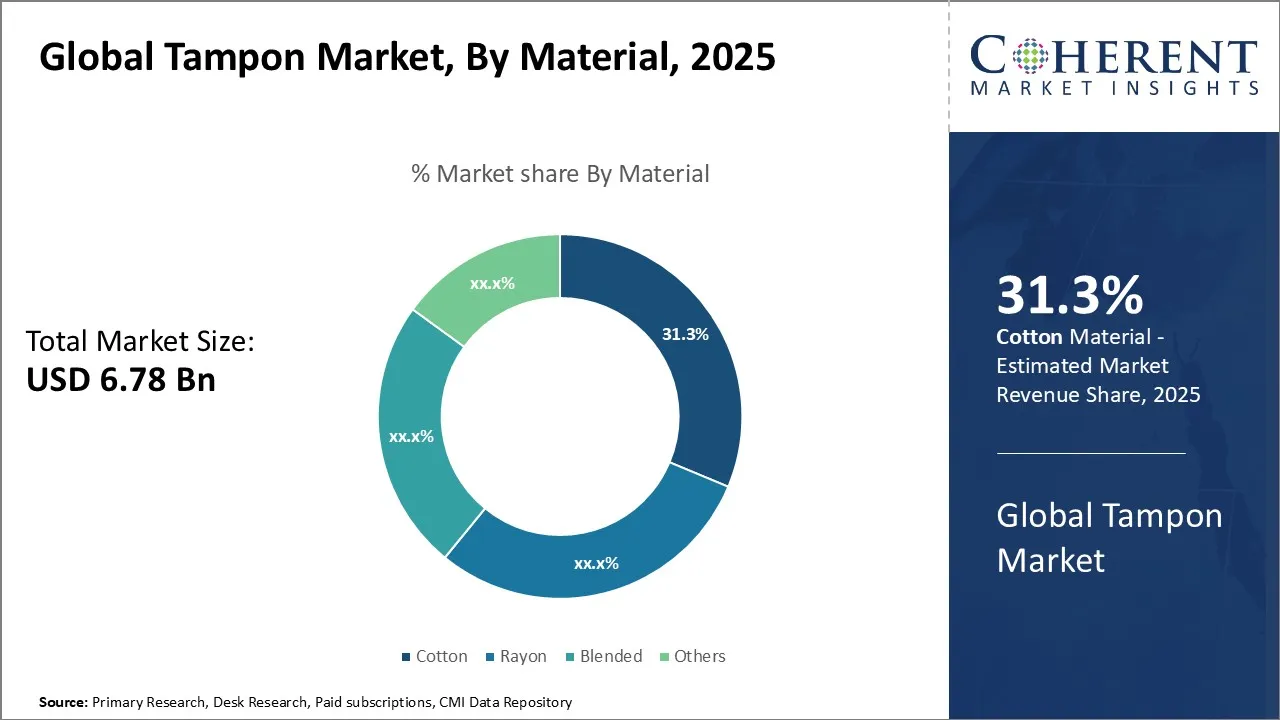
- The cotton segment is expected to account for 32.3% of the market share in 2026, driven by its exceptional comfort and natural appeal.
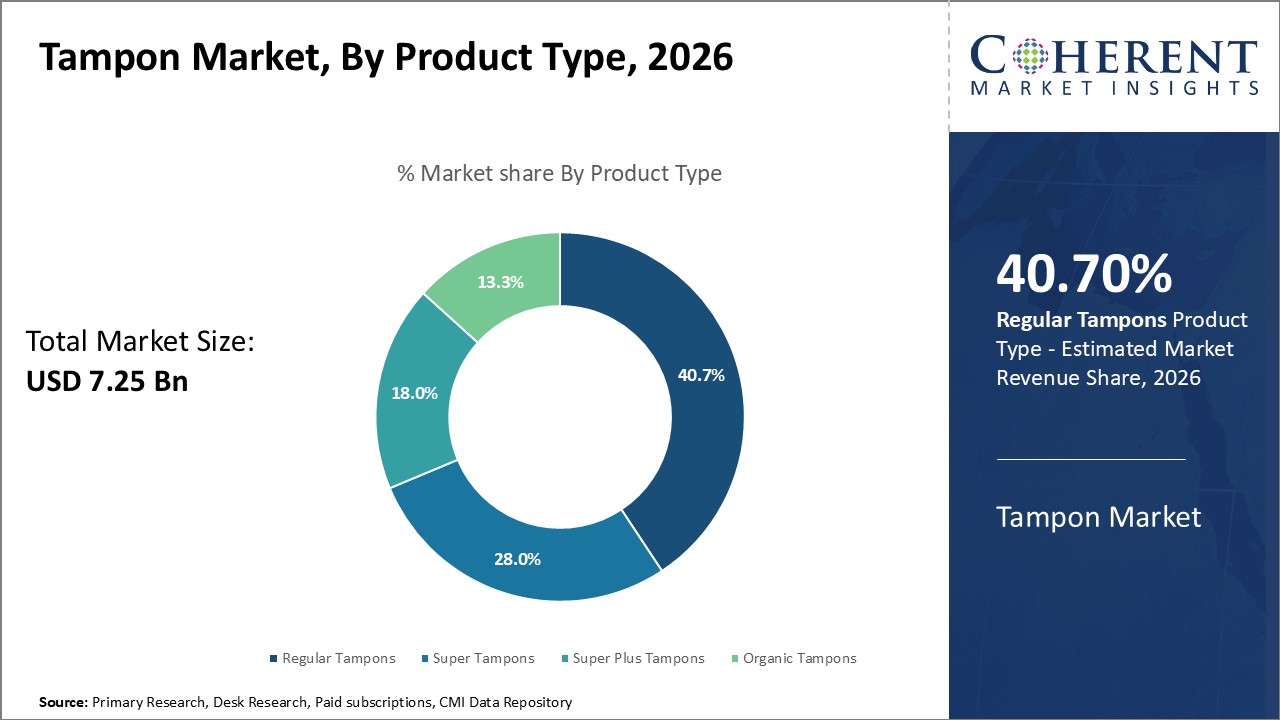
- The regular tampons segment is projected to hold a 40.7% share of the global tampon market in 2026, driven by their long-standing presence and established consumer trust.
- The supermarkets & hypermarkets segment is expected to hold 33.8% of the global tampon market in 2026, driven by their wide networks and one-stop shopping convenience.
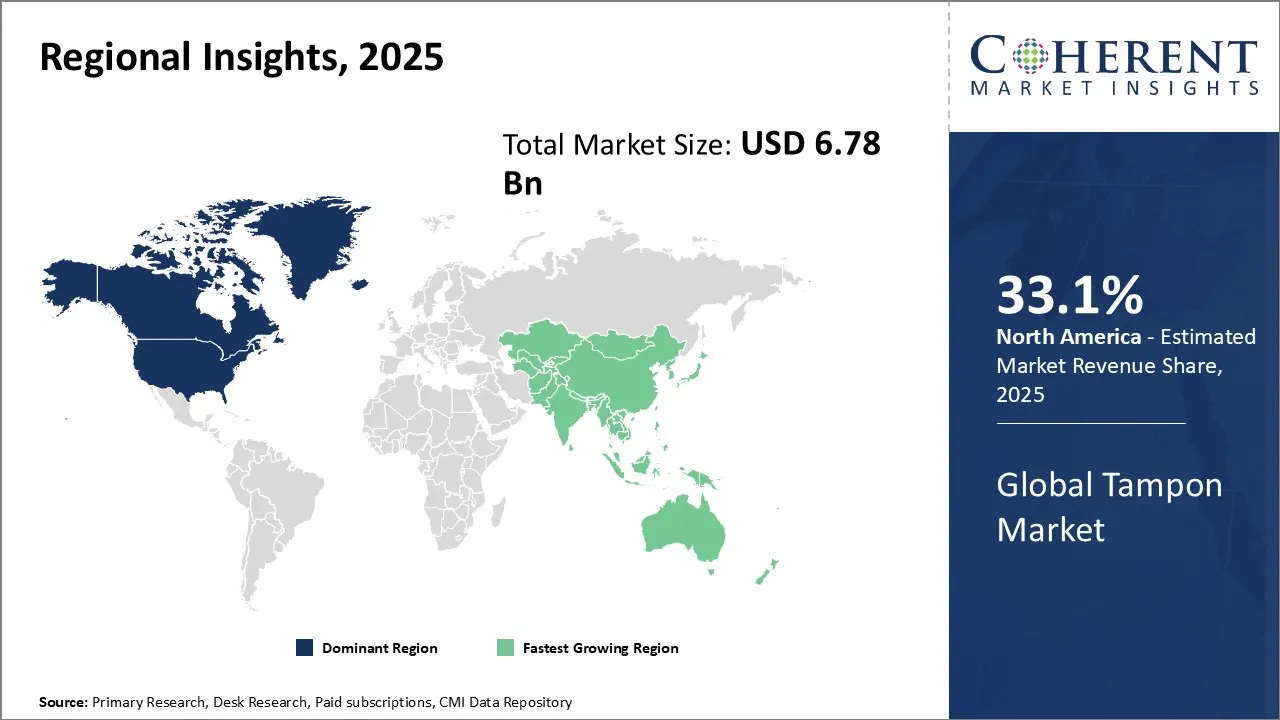
- North America is set to lead the global tampon market in 2026 with a 33. 1% share, driven by the growing demand for high-quality, trusted products and established consumer preferences. Asia Pacific, with a 22.5% share in 2026, will be the fastest-growing region, fueled by increasing awareness about hygiene, rising disposable incomes, and a growing population.
Market Overview
Current market trends indicate a shift towards organic and biodegradable tampons and reusable sanitary pads, reflecting consumer preference for sustainable and eco-friendly products. Additionally, innovations such as applicator-free tampons, enhanced comfort designs, and the rise of reusable sanitary pads are gaining traction. The influence of digital marketing and e-commerce platforms is expanding product reach, while increasing educational initiatives are driving adoption among younger demographics, further propelling market growth.
Current Events and Its Impact
Current Events | Description and its impact |
Expansion of Government-Funded Menstrual Health Programs in Developing Regions (e.g., “Swasthya Sakhi” Campaign in India, 2025) |
|
Technology Integration: Smart Tampons and Health-Tracking Features |
|
Segmental Insights
- Current Industry Events of 2026
- Market Size Estimation
- Regional Breakdown
- Competitive Landscape
- Customer Intelligence
- Segmental Analysis
- Pricing Analysis
- Key Market Drivers, Challenges & Future Trends
- Customized Insights Section
Tampon Market Insights, By Material – The Cotton Segment Leads the Market, Driven by its Natural, Hypoallergenic Qualities and the Increasing Consumer Demand for Organic and Eco-friendly Products
The cotton segment is expected to contribute 32.3% share of the market in 2026, owing to its superior comfort and natural appeal. One of the primary drivers behind cotton's leading position is its reputation for being gentle and hypoallergenic compared to synthetic alternatives. Women increasingly prioritize comfort and skin-friendliness in personal hygiene products, making cotton a preferred choice for those prone to irritation or allergic reactions. The material’s breathability further enhances user comfort by reducing moisture retention, which helps in minimizing bacterial growth, an essential factor for health-conscious consumers.
Tampon Market Insights, By Product Type - Regular Tampons Segment Lead due to their Accessibility, Convenience, and Widespread Consumer Familiarity
The regular tampons segment is expected to hold 40.7% share of the global tampon market in 2026, supported by their long-standing presence and established trust among consumers. The core driver for this segment is the balance it offers between absorbency and comfort for typical menstrual flow, making it an ideal everyday option for a broad user base.
Accessibility and affordability are significant factors in driving the popularity of regular tampons. These tampons are widely available across various sales channels, enabling easy purchase for consumers globally. Their pricing is generally competitive, appealing to budget-conscious customers while meeting the baseline functional needs during menstruation. This affordability, coupled with convenience, positions regular tampons as a go-to choice for a majority.
Tampon Market Insights, By Distribution Channel - Supermarkets and Hypermarkets Segment Dominate Owing to Their Extensive Reach and Consumer Convenience
The supermarkets & hypermarkets segment is expected to account for 33.8% share in the global tampon market in 2026, largely due to their extensive networks and ability to provide a one-stop shopping experience. These channels capitalize on the growing trend of consumers, particularly in developed and emerging economies, preferring to purchase personal care products during routine grocery shopping trips. This bundling of essential items drives frequent tampon sales, making them a consistent part of household purchases.
Regional Insights
North America Tampon Market Analysis and Trends
The North America region is projected to lead the market with a 33.1% share in 2026, driven by a confluence of factors including a well-established healthcare infrastructure, advanced distribution networks, and high consumer awareness regarding feminine hygiene products. The presence of major industry players, such as Procter & Gamble (Tampax) and Kimberly-Clark (Kotex), ensures a consistent supply of innovative tampon products that cater to varying consumer preferences, from organic and biodegradable options to technologically advanced designs like applicator tampons.
Government policies in North America actively support women’s health initiatives and hygiene product accessibility, further solidifying market penetration. Additionally, consumer inclination towards sustainability and premium products strengthens the market, supported by a mature retail ecosystem comprising drug stores, supermarkets, and e-commerce platforms.
Asia Pacific Tampon Market Analysis and Trends
The Asia Pacific region is expected to exhibit the fastest growth in the market contributing 22.5% share in 2026, propelled by increasing urbanization, rising disposable incomes, and growing awareness about feminine hygiene. Cultural shifts toward acceptance and usage of tampons, driven by educational campaigns and digital media penetration, are creating new consumer bases particularly in countries like India, China, and Japan.
The region benefits from favorable government policies aimed at improving women’s health and sanitation standards, which encourage product adoption and accessibility. Emerging local and international companies such as Unicharm Corporation, Papilion Laboratories, and Sofy are expanding their footprint in Asia Pacific with innovations suited to regional preferences like biodegradable materials and affordability. Enhanced e-commerce penetration and improving supply chains in remote areas are also contributing to the market’s accelerated growth.
Global Tampon Market Outlook for Key Countries
U.S. Tampon Market Trends
The U.S. continues to lead the tampon market with consumers exhibiting strong preferences for high-quality and innovative products. Key players like Procter & Gamble’s Tampax and Kimberly-Clark’s Kotex dominate the shelves while also driving product innovation in applicator design, organic variants, and eco-friendly packaging. The country’s robust retail infrastructure, widespread e-commerce adoption, and proactive government campaigns on women’s health facilitate sustained market expansion. Furthermore, increased social conversations around menstrual health reduce stigma and promote wider usage.
Germany Tampon Market Trends
Germany’s tampon market reflects Western Europe’s overall maturity, with awareness and acceptance of tampons being high due to comprehensive health education and strong consumer purchasing power. Notable companies such as Edgewell Personal Care and local brands emphasize sustainability by incorporating organic cotton and biodegradable components, aligning with the environmentally conscious German consumer base. Stringent regulatory frameworks ensure product safety, which reassures consumers. The presence of well-established pharmacy chains and supermarkets enhances product availability nationwide.
India Tampon Market Trends
India’s tampon market is witnessing rapid transformation, supported by government initiatives promoting menstrual hygiene under schemes targeting rural and urban women. Rising middle-class incomes and increasing exposure to feminine care advertising propel demand. Domestic players such as AdvaCare Pharma adapt their products to meet affordability and cultural preferences, including the launch of discreet and easy-to-use tampon variants. E-commerce channels and social media play vital roles in educating women and driving acceptance beyond metropolitan areas.
China Tampon Market Trends
China’s tampon market expansion is significantly driven by urbanization, changing cultural perceptions, and increased health awareness among younger women. Multinational corporations such as Procter & Gamble and local manufacturers like Liby are investing in localized R&D and marketing. The government’s focus on improving public health infrastructure and product safety regulations supports market confidence. Enhanced distribution through modern retail outlets and online platforms facilitates broad access, contributing to sustained demand growth.
Brazil Tampon Market Trends
Brazil represents Latin America’s burgeoning tampon market, fueled by growing consumer education and government programs emphasizing menstrual hygiene management. Brands such as Johnson & Johnson and local companies like Intimus maintain strong market shares by offering a mix of traditional and innovative tampon products. The expanding retail sector, along with increasing online sales, enables penetration in both urban and semi-urban areas. Economic factors and increased women's workforce participation are also positively influencing market prospects.
Consumer Behavior Analysis for the Tampon Market
- Consumer behavior in the tampon market is increasingly influenced by a growing preference for sustainable and eco-friendly products. As environmental concerns rise, many consumers are shifting towards organic and biodegradable tampons, often made from 100% certified organic cotton, free from harmful chemicals like pesticides and chlorine. This growing demand is driven by a heightened awareness of the health and environmental impacts of conventional tampons, leading to a significant increase in the adoption of organic and eco-friendly alternatives.
- This market is witnessing a rise in interest towards reusable sanitary pads and applicator-free tampons, which align with consumers' evolving needs for convenience, comfort, and sustainability. Younger demographics, in particular, are highly influenced by educational campaigns and digital platforms that focus on menstrual health awareness. Social media influencers and online discussions are further promoting awareness, breaking down traditional taboos, and driving consumer preferences towards more sustainable menstrual products.
- E-commerce platforms play a vital role in this shift, allowing consumers to easily access a wide variety of tampon options, including organic, eco-friendly, and reusable products. As online shopping becomes more prevalent, brands are capitalizing on digital marketing strategies to reach a broader audience and enhance brand visibility, driving market growth across diverse consumer segments.
Market Players, Key Development, and Competitive Intelligence
Key Developments
- On July 10, 2025, VYLD, a female-led start-up based in Berlin, introduced the first tampon made from seaweed, providing an eco-friendly alternative to traditional menstrual products. The innovative seaweed-based hygiene products not only contribute to reducing waste but also promote better menstrual health. Supported by the EU’s BlueInvest initiative, VYLD has patented this unique solution and successfully attracted investment, marking a significant step towards sustainable menstrual care.
- In November 2024, Victoria, Australia, launched an initiative to install free pad and tampon vending machines across Melbourne city. The program aims to provide essential menstrual products to individuals facing financial challenges. These vending machines were strategically placed in public spaces and educational institutions, ensuring easy access to hygiene items for those in need. This initiative improves convenience and supports the well-being of the community.
Top Strategies Followed by Global Tampon Market Players
- Established companies dominate the landscape by leveraging substantial investments in research and development (R&D), which enables them to innovate and launch high-performance products that cater to evolving consumer preferences. These innovations often include enhanced absorbency, comfort, eco-friendly materials, and integration of smart technologies. Additionally, these market leaders actively pursue strategic partnerships with major industry players and original equipment manufacturers (OEMs), fostering collaboration that amplifies product quality, distribution efficiency, and brand reach.
- For instance, Procter & Gamble, with its Tampax brand, has led the market for years. P&G invests heavily in innovation, with products like the Tampax Pearl line, which offers enhanced absorbency, comfort, and a unique design that prevents leaks. They also integrate smart technology through tampons like Tampax Radiant, which incorporates a more ergonomic design and uses a biodegradable cotton core, aligning with consumer demand for eco-friendly materials.
- Mid-level players in the tampon market adopt a distinct approach centered on delivering cost-effective solutions that strike a balance between quality and affordability. This focus targets price-sensitive consumers, especially in developing regions where cost is a critical driver of purchasing decisions. By positioning themselves as providers of reliable yet budget-friendly products, these players fill an important gap in the market between premium offerings and low-cost alternatives.
- For example, Sofy, a prominent mid-level player, has made a significant impact in Asia Pacific by offering affordable and reliable options without compromising on essential product qualities such as absorbency. Sofy Ultra-Thin offers a more economical option while maintaining comfort and protection.
- Small-scale players in the global tampon market distinguish themselves by carving out specialized niches through innovation and tailored product offerings. These companies often focus on unique features such as organic or biodegradable materials, customizable sizes, or designs catering to specific demographic groups. To maintain competitiveness, small players adopt cutting-edge technologies in manufacturing, product design, and packaging, ensuring that their offerings appeal to discerning consumers seeking alternatives to mainstream products.
- For example, Rael, a company that specializes in biodegradable and organic cotton tampons, has made a name for itself among consumers seeking more natural options. Their unique selling proposition revolves around creating healthier and eco-friendly feminine hygiene products, which are free from synthetic chemicals and fragrances.
Market Report Scope
Tampon Market Report Coverage
| Report Coverage | Details | ||
|---|---|---|---|
| Base Year: | 2025 | Market Size in 2026: | USD 7.25 Bn |
| Historical Data for: | 2020 To 2024 | Forecast Period: | 2026 To 2033 |
| Forecast Period 2026 to 2033 CAGR: | 7.0% | 2033 Value Projection: | USD 11.65 Bn |
| Geographies covered: |
| ||
| Segments covered: |
| ||
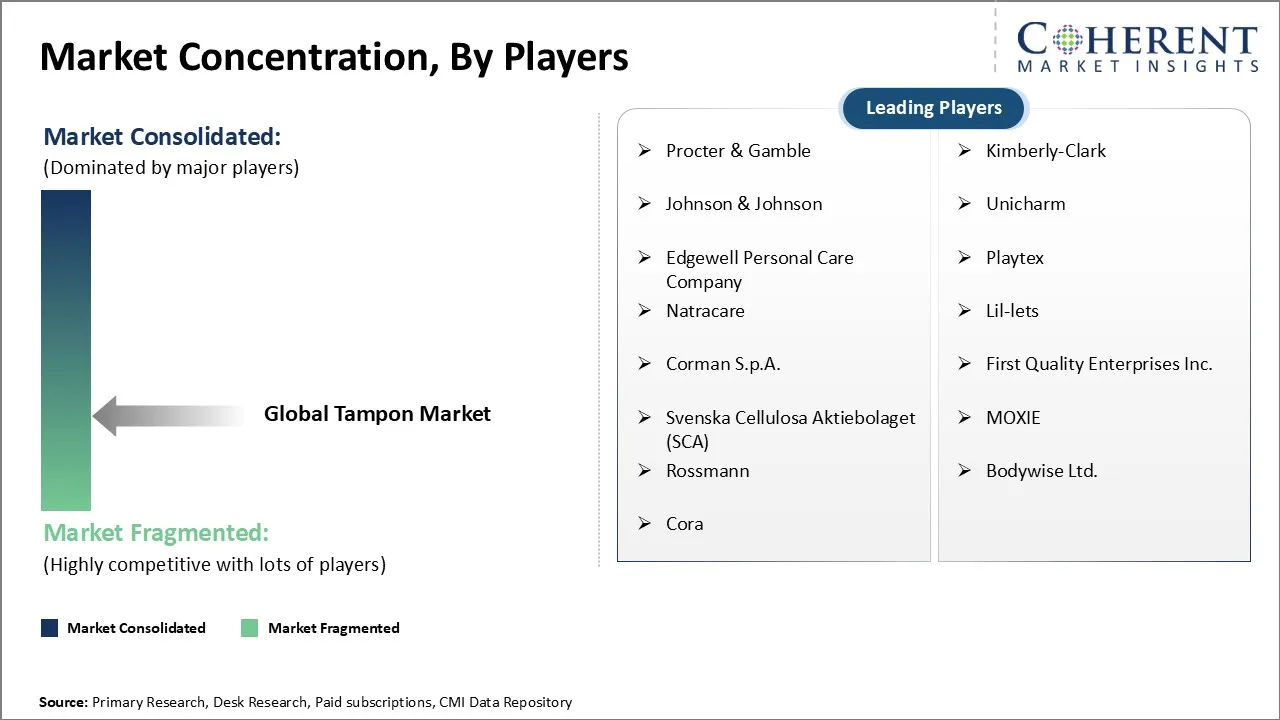
| Companies covered: | Procter & Gamble, Kimberly-Clark, Johnson & Johnson, Unicharm, Edgewell Personal Care Company, Playtex, Natracare, Lil-lets, Corman S.p.A., First Quality Enterprises Inc., Svenska Cellulosa Aktiebolaget (SCA), MOXIE, Rossmann, Bodywise Ltd., and Cora | ||
| Growth Drivers: |
| ||
| Restraints & Challenges: |
| ||
Tampon Market Dynamics
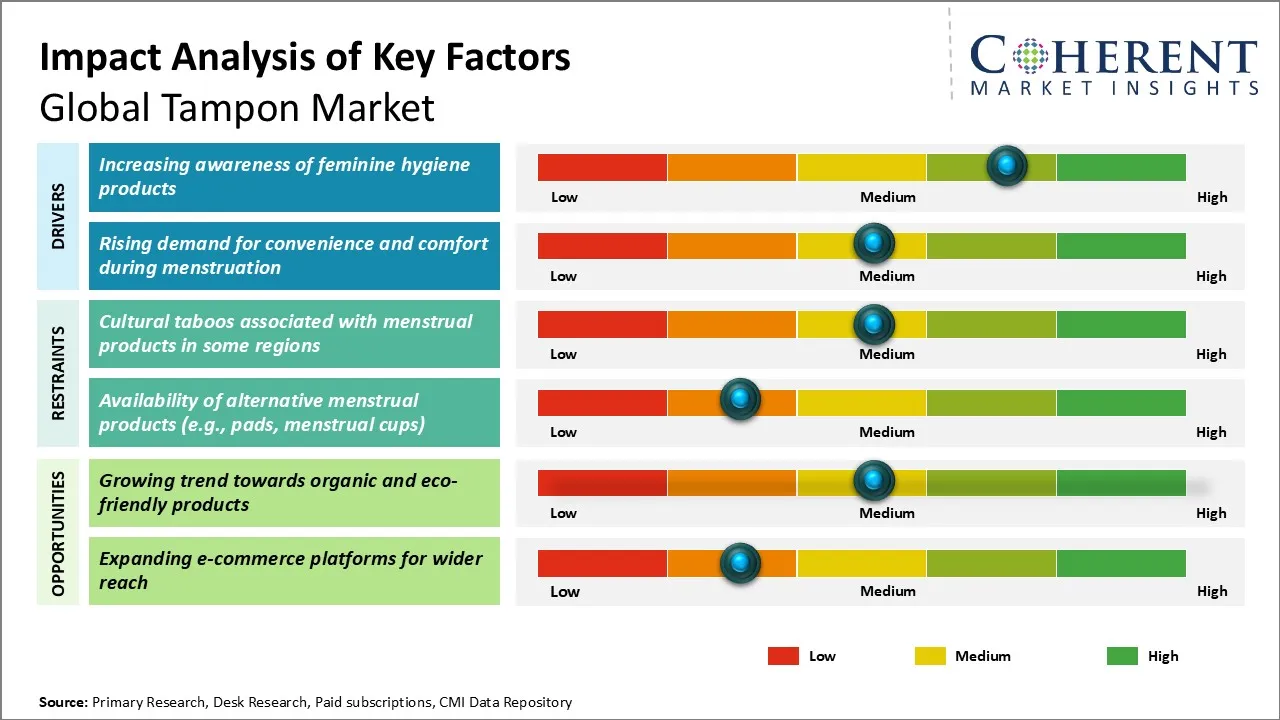
Tampon Market Driver - Increasing Awareness of Feminine Hygiene Products
The growing awareness and acceptance of feminine hygiene products, driven by educational campaigns and social media, is boosting global tampon demand. Cultural taboos surrounding menstruation are diminishing, with more open conversations about women’s health. A notable example is "Project Period," which has reached over 2 million people, distributed 5,000 products through Tampon Taxis, and garnered a combined reach of 20 million, with 5 million average engagements through local influencers and non-traditional partners.
Tampon Market Opportunity - Rising Demand for Organic and Eco-Friendly Tampon Products
The global tampon market is witnessing a significant opportunity driven by the growing consumer preference for organic and eco-friendly products. Increasing awareness about the adverse effects of synthetic materials and chemicals commonly used in conventional tampons is propelling women towards safer and more sustainable alternatives. Organic tampons, made from 100% certified organic cotton, free from pesticides, chlorine, and fragrances, appeal to health-conscious consumers seeking to minimize exposure to harmful substances.
For example, Cora, a brand that emphasizes its ethical sourcing of organic cotton and its commitment to menstrual health, donates a portion of its proceeds to help women in developing countries. Cora’s rise in popularity, especially in the U.S., showcases the growing demand for products that align with social causes.
Analyst Opinion (Expert Opinion)
- The global tampon market is undergoing transformative changes, driven by evolving consumer preferences for sustainable and innovative menstrual products. Brands like Tampax and Cora are leading the way by introducing organic and eco-friendly options that resonate with environmentally conscious consumers.
- Recent events, such as the Menstrual Health Conference (2023) and the Global Women’s Health Summit (2022), have spotlighted advancements in tampon technology and the importance of menstrual health awareness. Presentations at these conferences highlighted how brands are not only focusing on product efficacy but also on breaking the stigma around menstruation, showcasing initiatives that promote education and accessibility.
- Furthermore, market reports indicate a growing trend towards subscription services, allowing consumers to receive products conveniently while fostering brand loyalty. As the demand for transparency in ingredients and sustainable practices intensifies, the tampon market is poised for substantial growth. The intersection of innovative product development, community engagement, and strategic marketing will be pivotal in shaping the future of this market, establishing a new standard for menstrual health products in the consumer landscape.
Speak to the analyst
Want personalized insights?
Take the findings above to one of our principal consultants, or have the report rebuilt around the segments, geographies and competitors you actually track.
Market Segmentation
- Material Insights (Revenue, USD Bn, 2021 - 2033)
- Cotton
- Rayon
- Blended
- Others
- Product Type Insights (Revenue, USD Bn, 2021 - 2033)
- Regular Tampons
- Super Tampons
- Super Plus Tampons
- Organic Tampons
- Distribution Channel Insights (Revenue, USD Bn, 2021 - 2033)
- Supermarkets & Hypermarkets
- Specialty Stores
- Pharmacy Stores
- Online
- Regional Insights (Revenue, USD Bn, 2021 - 2033)
- North America
- U.S.
- Canada
- Latin America
- Brazil
- Argentina
- Mexico
- Rest of Latin America
- Europe
- Germany
- U.K.
- Spain
- France
- Italy
- Russia
- Rest of Europe
- Asia Pacific
- China
- India
- Japan
- Australia
- South Korea
- ASEAN
- Rest of Asia Pacific
- Middle East
- GCC Countries
- Israel
- Rest of Middle East
- Africa
- South Africa
- North Africa
- Central Africa
- North America
- Key Players Insights
- Procter & Gamble
- Kimberly-Clark
- Johnson & Johnson
- Unicharm
- Edgewell Personal Care Company
- Playtex
- Natracare
- Lil-lets
- Corman S.p.A.
- First Quality Enterprises Inc.
- Svenska Cellulosa Aktiebolaget (SCA)
- MOXIE
- Rossmann
- Bodywise Ltd.
- Cora
Sources
Primary Research Interviews
- Product Development Manager – Leading Tampon Manufacturer
- Procurement Director – Major Retailer of Feminine Hygiene Products
- Marketing Head – Well-Known Tampon Brand
- Health & Wellness Expert – Gynecologist and Product Specialist
- Regulatory Expert – Global Regulatory Body for Consumer Health Products
Stakeholders
- Manufacturers
- End-use Sectors:
- Feminine Hygiene (Tampons, Pads, Menstrual Cups)
- Retail Chains (Supermarkets, E-commerce Platforms)
- Healthcare Professionals
- NGOs promoting menstrual health awareness
- Regulatory Bodies:
- S. Food and Drug Administration (FDA)
- European Medicines Agency (EMA)
- Health Canada
- World Health Organization (WHO)
- Retailers and E-commerce Platforms:
- Online Retailers (Amazon, Walmart)
- Pharmacy Chains (CVS, Walgreens)
- Technology Integration Players:
- AI-based Period Tracking and Personalization Platforms
Databases
- UN Comtrade Database
- Global Market Data - Tampon Industry Analysis
Magazines
- Health & Hygiene Magazine – Market trends in feminine hygiene products
- Women's Health Journal – Focus on menstrual health and product innovations
- The Hygiene Journal – Insights into menstrual product innovations
- The Sustainable Period – Focus on eco-friendly period products
Journals
- International Journal of Gynecology & Obstetrics – Menstrual product innovation and usage studies
- Journal of Women's Health – Trends in menstruation and tampon usage
- The Journal of Consumer Product Safety – Regulatory perspectives on tampons and menstrual hygiene products
- Journal of Applied Health & Wellness – Tampons' impact on menstrual health and safety
Newspapers
- The Financial Times – Market analysis of feminine hygiene products, focusing on the tampon market
- The Guardian – Trends in consumer preferences for sustainable menstrual products
- Asia Health Journal – Growing demand for tampons in the Asia-Pacific region
- The New York Times – Shift in consumer behavior towards organic and eco-friendly tampons
Associations
- American Menstrual Health Association (AMHA)
- International Society for Menstrual Hygiene Management (ISMH)
- National Women’s Health Network (NWHN)
- European Federation of Period Products Manufacturers (EFPPM)
- Menstrual Health Hub
Public Domain Sources
- U.S. FDA – Guidelines for Feminine Hygiene Products
- European Commission – Regulation on Menstrual Hygiene Products
- World Health Organization – Menstrual Health and Product Safety
Proprietary Elements
- CMI Data Analytics Tool, Proprietary CMI Existing Repository of information for last 8 years.
Get access to 250+ pages report
Every segment, forecast, competitor profile and data table behind the analysis above — available for instant download.
- ESOMAR Member
- ISO 9001:2015 Certified
- D-U-N-S Registered
- GDPR & CCPA Compliant
Missing comfort of reading report in your local language? Find your preferred language:
Transform your Strategy with Exclusive Trending Reports
Frequently Asked Questions
The global tampon market is estimated to be valued at USD 7.25 Bn in 2026 and is expected to reach USD 11.65 Bn by 2033.
The CAGR of the global tampon market is projected to be 7.0% from 2026 to 2033.
Increasing awareness of feminine hygiene products and rising demand for convenience and comfort during menstruation are the major factors driving the growth of the global tampon market.
Cultural taboos associated with menstrual products in some regions and availability of alternative menstrual products (e.g., pads, menstrual cups) are the major factors hampering the growth of the global tampon market.
In terms of material, cotton is estimated to dominate the market revenue share in 2026.
Procter & Gamble, Kimberly-Clark, Johnson & Johnson, Unicharm, Edgewell Personal Care Company, Playtex, Natracare, Lil-lets, Corman S.p.A., First Quality Enterprises Inc., Svenska Cellulosa Aktiebolaget (SCA), MOXIE, Rossmann, Bodywise Ltd., and Cora are the major players.
North America is expected to lead the global tampon market in 2026.