

Global Trachoma Treatment Market Size and Forecast – 2026-2033
According to Coherent Market Insights, the global trachoma treatment market is estimated to be valued at USD 709.3 Mn in 2026 and is expected to reach USD 1,207.8 Mn by 2033, exhibiting a compound annual growth rate (CAGR) of 7.9% from 2026 to 2033. This growth is driven by increasing awareness, improved healthcare infrastructure, and expanding government initiatives aimed at combating trachoma in endemic regions. The rising prevalence of trachoma in developing countries is also expected to contribute significantly to the market expansion over the forecast period.
Key Takeaways of the Global Trachoma Treatment Market
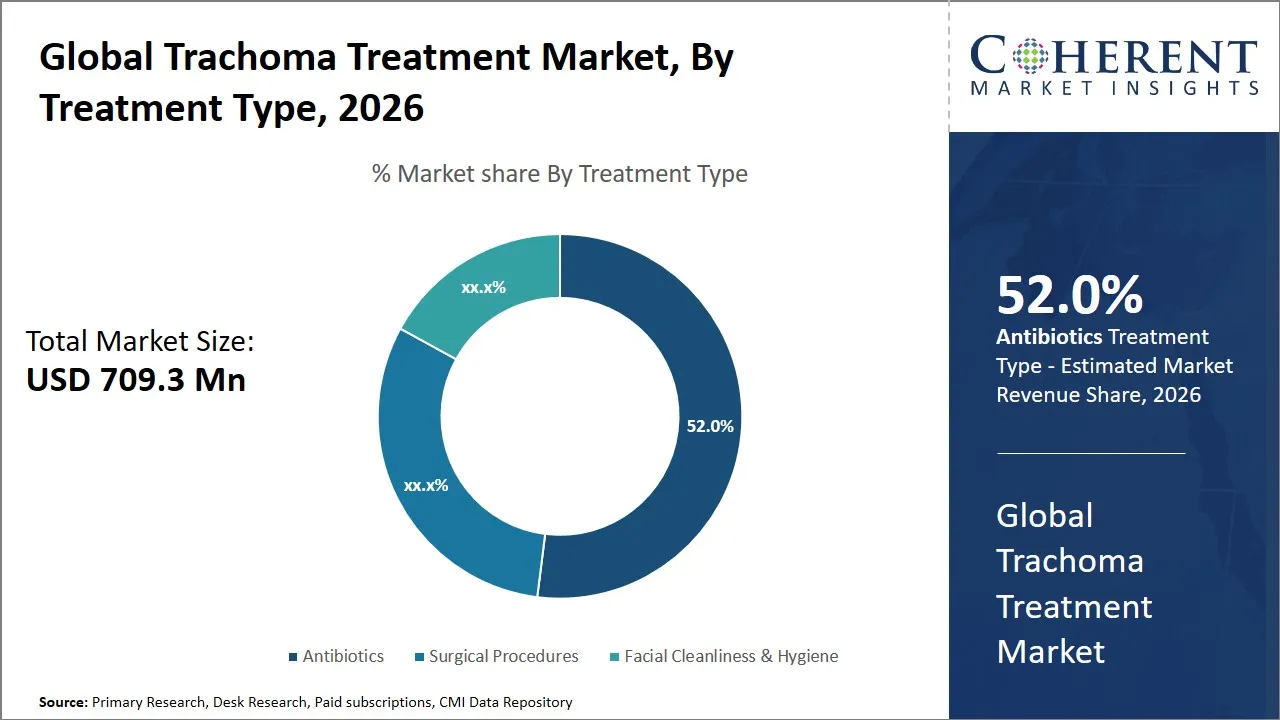
- Antibiotics segment is expected to lead the trachoma treatment market, capturing 52% share in 2026.
- Oral Tablets segment is estimated to represent 32% of the trachoma treatment market share in 2026.
- Hospitals segment is projected to dominate with 40% of the global trachoma treatment market share in 2026.
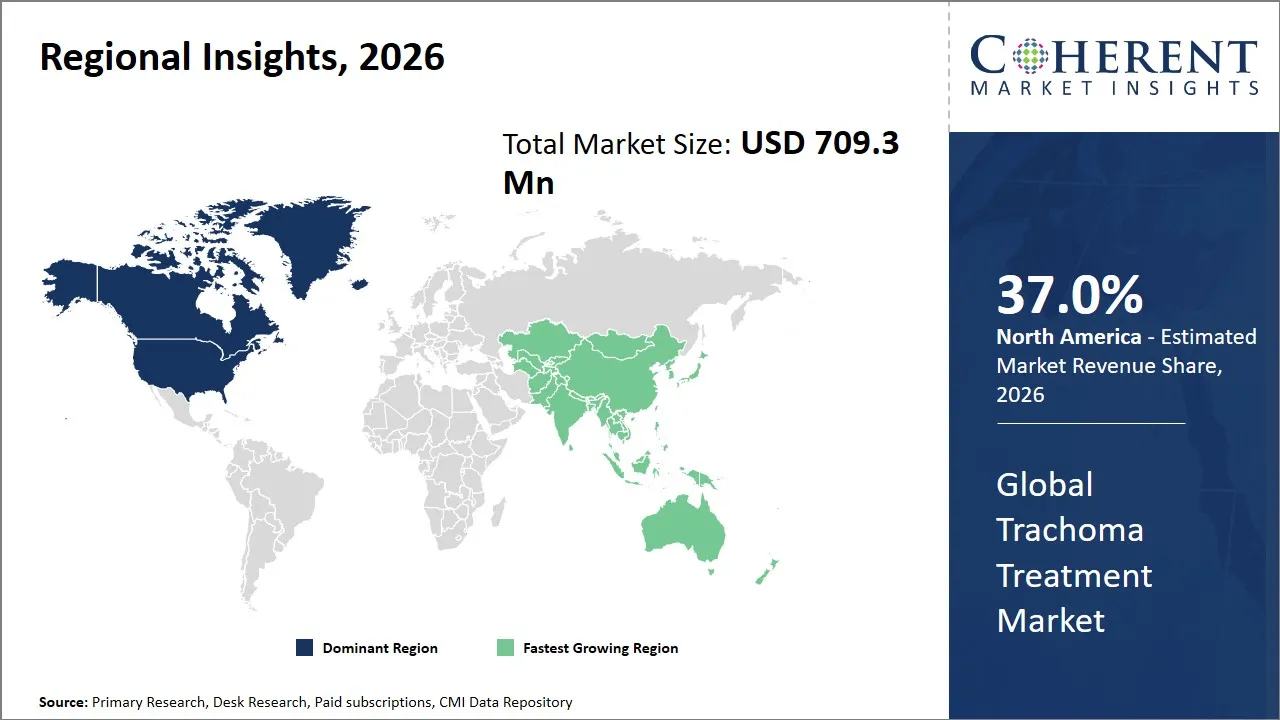
- North America is expected to lead the market, holding a share of 37% in 2026. Asia Pacific is anticipated to be the fastest-growing region, with 21% share in 2026.
Market Overview
- Increased funding and awareness from governments, NGOs, and international organizations, alongside WHO’s Surgery, Antibiotics, Facial cleanliness, Environmental improvement (SAFE) strategy, are key growth drivers.
- The demand for azithromycin (used in mass drug administration campaigns) remains dominant in the market due to its high effectiveness in treating trachoma and its widespread distribution.
- There is growing opportunity for public-private partnerships, innovative diagnostics, and digital health technologies to improve diagnosis, treatment accessibility, and monitoring in endemic regions.
- Barriers include limited healthcare infrastructure, poor sanitation, and the lack of consistent access to treatments in remote and low‑income areas.
Currents Events and their Impact
Current Events | Description and its Impact |
Expansion of WHO’s SAFE Strategy Implementation |
|
Both countries, Senegal and Burundi, have been validated by WHO for eliminating trachoma as a public health issue |
|
Segmental Insights
- Current Industry Events of 2026
- Market Size Estimation
- Regional Breakdown
- Competitive Landscape
- Customer Intelligence
- Segmental Analysis
- Pricing Analysis
- Key Market Drivers, Challenges & Future Trends
- Customized Insights Section
Why Does the Antibiotics Segment Dominate the Global Trachoma Treatment Market in 2026?
The antibiotics segment is expected to hold the largest share of 52% in 2026, driven by their proven efficacy in controlling and eliminating the bacterial infection caused by Chlamydia trachomatis. Antibiotics especially oral and topical antibiotics are the first line of treatment because they are able to directly address the infection, thus avoiding disease advancement to more serious levels that cause blindness. Oral antibiotics, e.g., azithromycin, have such merits as they are easy to administer and easy to comply, as a single dose may be effective to provide the coverage. This will decrease the logistical stress on medical practitioners and increase the compliance of patients, particularly in remote or underserved communities.
For instance, WHO recommends 3 to 5 annual rounds of community‑wide oral azithromycin where baseline prevalence of active trachoma (TF1‑9) is ≥10 % to reduce prevalence toward target thresholds (typically <5 %).
(Source- https://journals.plos.org/plosntds/article?id=10.1371/journal.pntd.0002115#:~:)
The Oral Tablets Segment Dominates the Global Trachoma Treatment Market
The oral tablets segment is projected to capture 32% share in 2026, driven by the robust clinical effectiveness of specific antibiotic classes like azithromycin and tetracycline, which are internationally recommended by the World Health Organization for mass drug administration programs. The broad-spectrum effect of Azithromycin enables it to successfully eliminate Chlamydia trachomatis with only one dose, which simplifies greatly treatment regimens as compared to tetracycline which only needs multiple doses yet provides similar efficacy.
For instance, a single oral dose of azithromycin has been shown to reduce active trachoma prevalence from 9.5% at baseline to around 2.1% at 2 months and 0.1% at 24 months following mass treatment.
Hospitals Dominate the Global Trachoma Treatment Market
The hospitals segment is expected to capture the highest share of 40% in 2026, due to their superior infrastructure, specialist expertise, and ability to provide integrated care for trachoma patients. Hospitals do not only promote the administration of antibiotics but also the practice of surgical procedures like the trichiasis surgery of the throat that involves highly trained ophthalmic surgeons and operation rooms that are regularly sterilized, which are not always available in smaller clinics or pharmacies. The hospital environment provides a one-stop shop of diagnosis, treatment commencement, management of patients and follow-up services, hence enhancing compliance to treatment and improved clinical outcomes.
Prevalence and Endemicity Intensity of Trachoma by WHO Regions (2025) in Global Trachoma Treatment Market
- High Prevalence and Endemicity: Sub-Saharan Africa has been the most affected with various countries like Ethiopia, Tanzania, Mali and Sudan still continuing to record high levels of trachoma. The region has received global focus on the eradication efforts as it is largely endemic. Specifically, the most affected places are the rural communities of remote and hard-to-reach locations. Severity of trachoma is directly related to poor hygiene, inability to obtain clean water, and poor healthcare infrastructures. The current issues in these regions are the lack of constant access to treatment, a poor infrastructure, and social stigmas concerning eye diseases which are the obstacles to successful treatment and prevention strategies. Although efforts are being made such as WHO SAFE strategy the solution to this trachoma has to lie in the overcoming of socio-economic barriers and enhancing the availability of health services.
- Moderate to High Endemicity: Eastern Mediterranean region and other countries such as Afghanistan, Yemen, and to some extent Syria still grapple with high trachoma endemicity particularly in the conflict-torn regions that have been affected by disruptions in the healthcare system. Persistent trachoma prevalence is also observed in Southeast Asia with some of the countries such as India, Bangladesh and some parts of Myanmar being affected. The factors that usually compound the endemicity in these areas include overcrowding of living conditions, poor sanitation and lack of awareness about the disease. Nevertheless, the WHO SAFE plan has taken momentum and in certain areas of these regions there have been tremendous improvements. The battle has seen prevailing cases of trachoma reduced through efforts to enhance access to antibiotics, improve hygiene behaviors, and pursue surgery especially in advanced cases, though challenges still exist especially in isolated regions that lack well established infrastructural facilities. Moreover, the government and international health bodies are in the process of eradicating trachoma by 2030 and although some efforts are being made, there is still a lot to be done to achieve total eradication.
Regional Insights
North America Trachoma Treatment Market Analysis and Trends
The North America region is projected to lead the market with a 37% share in 2026, driven by a well-established healthcare infrastructure, advanced research capabilities, and significant government investment in eye health initiatives. The region has enjoyed the advantage of a well matured market ecosystem that includes the leading pharmaceutical firms that include Pfizer, GlaxoSmithKline, and Novartis that have launched new trachoma treatment therapies and trachoma awareness initiatives. The U.S. Centers of Disease Control and Prevention (CDC) and other regulatory agencies are highly advocacy towards trachoma control by financing and creating awareness especially within communities that have been underserved. Moreover, effective regulatory avenues and a strong supply chain support the generality of the treatment options. Trade relations are in favor of importation and exportation of sophisticated medications and diagnostic equipment to enhance the domination of the market.
For instance, Canada partnered with the Pan American Health Organization through USD 11.1 million initiative to strengthen surveillance and expand SAFE strategy implementation across the Americas. These efforts reflect how North American contributions extend beyond commercial sales to strategic financing and program support that influence treatment availability and elimination efforts across the region and globally.
Asia Pacific Trachoma Treatment Market Analysis and Trends
The Asia Pacific region is expected to exhibit the fastest growth in the trachoma treatment market contributing 21% share in 2026, due to rising awareness, expanding healthcare infrastructure, and increasing government focus on neglected tropical diseases, including trachoma. It is observed that countries such as India, China, and Indonesia have great efforts to eradicate trachoma as a result of the national health programs and the international organization such as WHO and the International Trachoma Initiative.
Market expansion is further promoted by the increased emergence of large pharmaceutical companies like Cipla, Sun Pharmaceutical, and Dr. Reddy Laboratories that provide low-cost treatment of antibiotics. Also, the improvement of trade relations in the ASEAN and other Asia Pacific economic alliances are also a factor in a better distribution channel and availability of modern treatment regimes.
Trachoma Treatment Market Outlook for Key Countries
How is the U.S. Helping in the Growth of the Trachoma Treatment Market?
Trachoma treatment market in the U.S. has been identified as having advanced clinical research and offering the latest treatment protocols of trachoma. Large corporations such as Pfizer and GlaxoSmithKline are also very active and are creating new forms of antibiotics and diagnostic equipment that are specific to the early signs and treatment. Federal programs lay emphasis on the health of vision and the CDC leads the entire trachoma control efforts. Also, the partnership of the government and the private sector are beneficial as they assist in expanding the coverage to vulnerable groups, allowing the company to maintain dominance in the market.
How is India Helping in the Growth of the Trachoma Treatment Market?
The India trachoma treatment market is currently changing very fast with concerted efforts by the government in eliminating trachoma in the National Programme of Control of Blindness. The major pharmaceuticals like Cipla and Dr. Reddy’s Laboratories are already involved in the provision of affordable treatment services, which are appropriate in meeting the high number of patients in the rural areas. The combination of the NGO-led mass drug administration campaigns with the government policies increases the treatment penetration. In addition, the rapidly developing healthcare system in India and the growing awareness of the population also leads to a fast increase in the market.
Key Drivers for the Growth of the China Trachoma Treatment Market
China is still leading with high government determination to eliminate trachoma as one of its general public health agendas. Sino Biopharmaceutical and Hualan Biological engineering are Chinese pharmaceutical giants that specialize in the production of antibiotics as well as researching on vaccines. These health programs focus on early screening and prevention by the government through enhancement of sanitation. Trade policies in China and national strength in manufacturing also support its roles, as distribution and prices are easily implemented in both urban and rural regions.
Brazil Trachoma Treatment Market Trends
The Brazil trachoma treatment market has shifted into a high gear with improved public health education containing the forgotten diseases such as trachoma, particularly among the remote and indigenous societies. Efforts of the Ministry of Health programs are combined with the work of such companies as Eurofarma and Aché Laboratoires in order to offer specific antibiotic treatment. It is important to note that Brazil is determined to provide universal healthcare through its Sistema Único de Saúde (SUS) that provides care at the grassroot level, increasing demand. Access to international pharmaceutical products is also made easy through trade agreements in Latin America.
Cost Comparison of Treatment Modalities for Trachoma Treatment Market
- The price per treatment modality of trachoma is variable in terms of methodology as well as the resources used. In endemic areas, oral antibiotics are commonly used in mass drug distribution campaigns and prevalently the drugs used are azithromycin and the cost incurred is mainly related to the drug and logistics. Azithromycin is relatively cheap in terms of price with an average of USD 0.50 Mn to USD 1.50 Mn per treatment per individual on a single dose basis, with the cost varying based on bulk buying and the supply chain management factors. Although these mass treatment programs are cost-effective in large population, they have the extra logistical and distribution expenses such as transportation and community mobilization. Yet, the mass application of azithromycin has been the main component of the trachoma eradication efforts because it is efficacious and rather inexpensive.
- On the other hand, surgical therapies of the severe trachoma like trachomatous trichiasis (TT) surgery are associated with a higher initial cost. Surgical operation usually costs USD 50 Mn to USD 150 Mn per individual, depending on the location, healthcare facilities and the type of healthcare that the operation is conducted in either a government or a private health facility. Even though the surgical treatments are a single procedure, they are only required to those who have already suffered severe scarring or complications caused by trachoma. Other cost-effective treatment options include topical antibiotics like tetracycline ointment which costs USD 0.10 Mn to USD 0.30 Mn per capita per course of treatment but the treatment takes weeks to perform and its application is restricted compared to the oral antibiotics. The modalities have their own benefits and the oral antibiotics are more applicable in the mass prevention of the disease and surgery covers the severe cases.
Market Players, Key Developments, and Competitive Intelligence
Key Developments
- On February 3, 2026, the GHIT Fund has invested approximately USD 2.0 Mn (JPY 280 million) in a project to develop a rapid diagnostic test (RDT) kit for trachoma, marking a significant step toward eliminating the disease.
- In May 2025, Bausch + Lomb Corporation announced that it will feature 39 scientific presentations reflecting the latest research from across its eye care portfolio at the 2025 Association for Research in Vision and Ophthalmology (ARVO) annual meeting, scheduled to take place in Salt Lake City.
- In February 2023, AbbVie and Capsida Biotherapeutics expanded their collaboration to develop precision genetic medicines for eye disorders with unmet needs, including technologies that could impact future treatment approaches relevant to trachoma and other blinding conditions.
Top Strategies Followed by Global Trachoma Treatment Market Players
Player Type | Strategic Focus | Examples |
Established Market Leaders | Established market leaders focus heavily on R&D investments to innovate and improve treatment efficacy. By developing advanced formulations and delivery methods, they maintain a competitive edge and meet evolving regulatory standards. These companies often partner with major pharmaceutical firms and healthcare providers to enhance market presence, optimize supply chains, and ensure wider product availability. | Pfizer has invested significantly in azithromycin development and partnered with WHO for mass distribution programs, aiming to eliminate trachoma in high-burden regions like Africa. |
Mid-Level Players | Mid-level competitors in the trachoma treatment market focus on offering cost-effective solutions without compromising on quality. They target price-sensitive consumers, especially in developing regions, and partner with manufacturers, technology providers, and distributors to boost production, reduce costs, and expand reach. | Cipla, a mid-level player, offers generic azithromycin at a lower cost, ensuring broad accessibility in regions with high trachoma prevalence while maintaining efficacy. |
Small-Scale Players | Small-scale players in the trachoma treatment market focus on innovative, specialized solutions to carve out niche markets. By developing unique formulations and leveraging technologies like nanotechnology and advanced drug delivery systems, these companies differentiate themselves. | Unitan, a smaller player, utilizes novel antimicrobial agents and partners with local healthcare providers in endemic regions to offer affordable, targeted treatments for trachoma. |
Market Report Scope
Trachoma Treatment Market Report Coverage
| Report Coverage | Details | ||
|---|---|---|---|
| Base Year: | 2025 | Market Size in 2026: | USD 709.3 Mn |
| Historical Data for: | 2020 To 2024 | Forecast Period: | 2026 To 2033 |
| Forecast Period 2026 to 2033 CAGR: | 7.9% | 2033 Value Projection: | USD 1,207.8 Mn |
| Geographies covered: |
| ||
| Segments covered: |
| ||
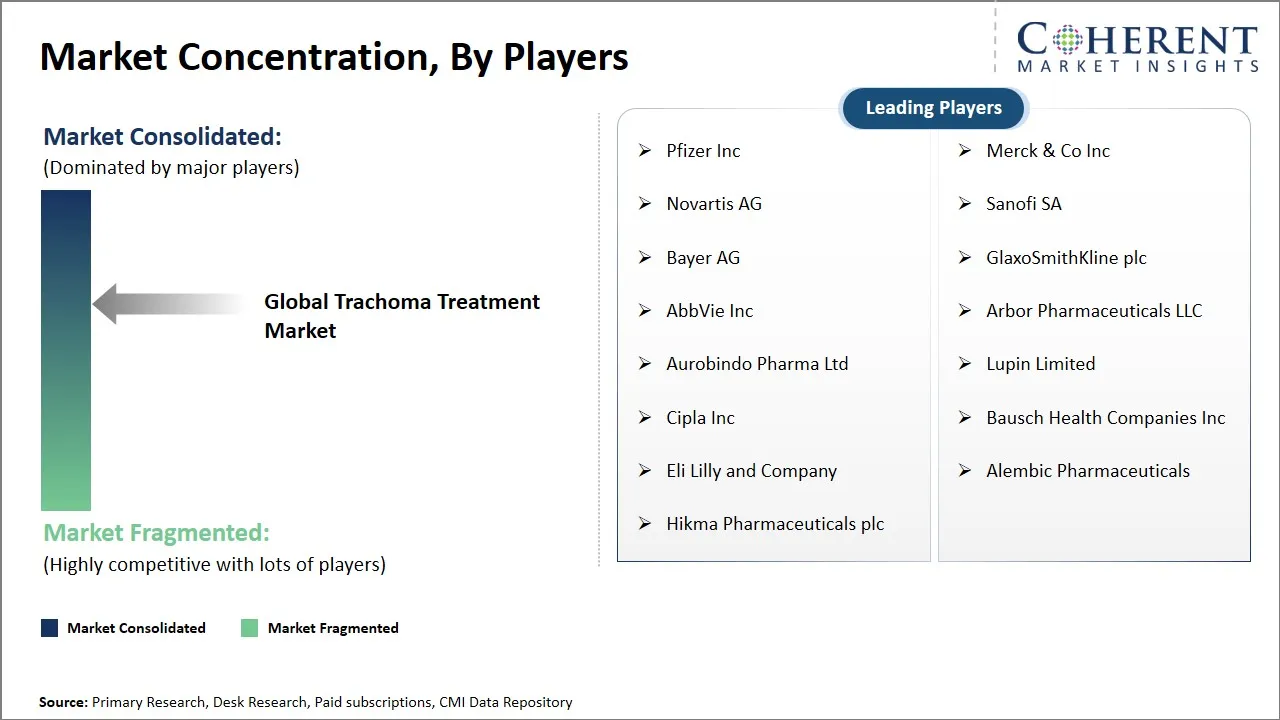
| Companies covered: | Pfizer Inc, Merck & Co Inc, Novartis AG, Sanofi SA, Bayer AG, GlaxoSmithKline plc, AbbVie Inc, Arbor Pharmaceuticals LLC, Aurobindo Pharma Ltd, Lupin Limited, Cipla Inc, Bausch Health Companies Inc, Eli Lilly and Company, Alembic Pharmaceuticals, and Hikma Pharmaceuticals plc | ||
| Growth Drivers: |
| ||
| Restraints & Challenges: |
| ||
Global Trachoma Treatment Market Dynamics
Global Trachoma Treatment Market Driver - High Disease Prevalence in Endemic Regions
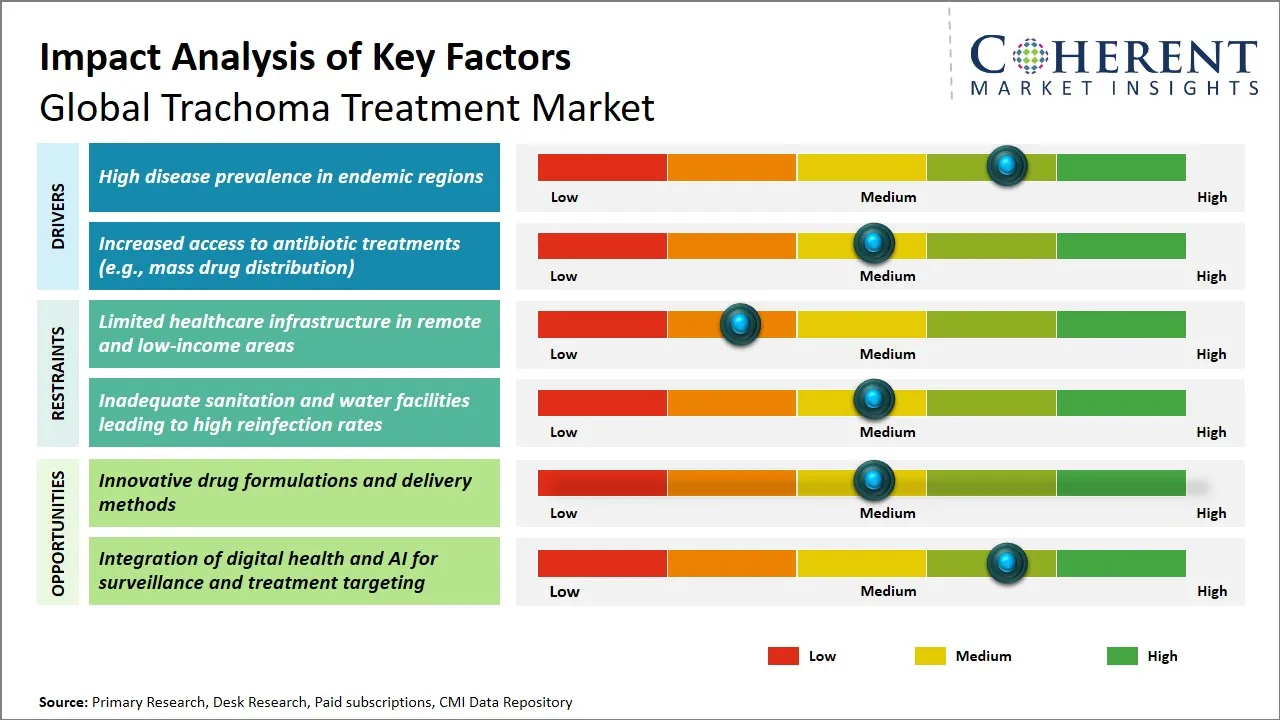
The prevalence of trachoma in endemic areas is high, which is a major contributor to the demand of effective treatment modalities hence a driving force behind the trachoma treatment market in the globe. The disease mainly occurs in communities living in low-income regions in rural regions of parts of Africa, the Middle East, and Southeast Asia where poor hygiene and access to clean water contribute to the spread of the disease. Repeated infections can lead to the loss of vision or blindness of millions of people, which is why there is an urgency to use constant medical intervention and prevention programs. The continued high level of cases in these regions has forced governments, non-governmental agencies and health care service providers to make much emphasis on the control measures of trachoma associated diseases that requires the use of antibiotics and surgery.
For instance, the African region accounts for about 90% of the global trachoma burden, with approximately 93 million people living in trachoma‑endemic areas, making it the most intensely affected WHO region.
(Source- https://www.who.int/news-room/fact-sheets/detail/trachoma)
Global Trachoma Treatment Market Opportunity - Innovative Drug Formulations and Delivery Methods
The global trachoma treatment market offers tremendous opportunities due to the introduction and implementation of new drug formulations and new efficient delivery procedures. Common challenges encountered in the implementation of the traditional treatment regimens against trachoma include non-compliance to drugs, low drug bioavailability, and side effects, which are disabling factors to the success of the disease management. The development of new drugs formulations like sustained release antibiotics, nano-formulations, combination therapies can be used to improve therapeutic efficacy by guaranteeing longer drug activity and better targeting of the ocular tissues.
Furthermore, novel delivery models such as ocular insertion, biodegradable implants, and high-tech topical delivery devices can transform the treatment protocols and make the dosing frequency more frequent, systemic exposure less, and patient compliance more effective. Such innovations do not only maximize the efficacy of drugs, but also solve logistical issues in more remote and underserved areas, where there is a lack of healthcare infrastructure.
For instance, traditional oral tablets of azithromycin have been a staple in mass drug administration campaigns for trachoma. However, oral suspensions have become a more effective option, particularly in areas with high populations of young children, as they can easily swallow the liquid form. This formulation has proven essential in programs targeting children under 7 years old, who may struggle to take tablets. The oral suspension allows for efficient population-level treatment, particularly in regions with limited healthcare access. It’s also more versatile, as it accommodates a broader range of patients.
(Source- https://journals.plos.org/plosntds/article?id=10.1371/journal.pntd.0009491)
Analyst Opinion (Expert Opinion)
- The world market of trachoma treatment is recording a consistent growth that is due to various main events. The effectiveness and availability of care, especially in remote areas, is increasing as a result of the technological advancements made in diagnostic equipment and the mode of treatment, including the use of mobile health (mHealth) to track the progress of the sick. The international organizations, such as the World Health Organization (WHO), have also been instrumental in supporting such initiatives as the so-called "SAFE" strategy (Surgery, Antibiotics, Facial cleanliness, and Environmental improvement). The increased awareness and investments in neglected tropical diseases (NTDs) are contributing to the market expansion, and government and non-governmental organizations invest in mass treatment. Nonetheless, it still has its difficulties especially ensuring continued access to treatments in local low-income neighborhoods and logistical challenges in supplying medicine to areas with less developed infrastructure.
- One of the new opportunities in the treatment market of trachoma is the possibility of new partnerships of pharmaceutical companies with public health bodies, which are discussing new drug formulations and delivery options. Significant advances have been made in the last several years with global conferences like the Global NTDs Summit and the WHO 2-year meetings creating valuable debate on trachoma eradication, which leads to policy change and technological development. Moreover, promising outcomes have been reported by the introduction of Trachoma Elimination Program in Africa that intends to eradicate trachoma by 2030. It is anticipated that these programs will have a major impact on the market and influence the accessibility to treatment as well as the overall perspective of the trachoma control efforts of the global level.
Speak to the analyst
Want personalized insights?
Take the findings above to one of our principal consultants, or have the report rebuilt around the segments, geographies and competitors you actually track.
Market Segmentation
- Treatment Type Insights (Revenue, USD Mn, 2021 - 2033)
- Antibiotics
- Oral Antibiotics
- Topical Antibiotics
- Surgical Procedures
- Trachomatous Trichiasis (TT) Surgery
- Eyelash Removal (e.g., Epilation)
- Facial Cleanliness & Hygiene
- Hygiene Kits
- Public Health Campaigns
- Antibiotics
- Drug Formulation Insights (Revenue, USD Mn, 2021 - 2033)
- Oral Tablets
- Oral Suspension
- Topical Ointment
- Injectable Formulations
- Sustained-Release / Ocular Inserts (R&D Stage)
- End User Insights (Revenue, USD Mn, 2021 - 2033)
- Hospitals
- Clinics
- Pharmacies
- Public Health Organizations
- Disease Stage Insights (Revenue, USD Mn, 2021 - 2033)
- Active Trachoma
- Trachomatous Trichiasis
- Cicatricial Scarring
- Distribution Channel Insights (Revenue, USD Mn, 2021 - 2033)
- Online
- Offline
- Regional Insights (Revenue, USD Mn, 2021 - 2033)
- North America
- U.S.
- Canada
- Latin America
- Brazil
- Argentina
- Mexico
- Rest of Latin America
- Europe
- Germany
- U.K.
- Spain
- France
- Italy
- Russia
- Rest of Europe
- Asia Pacific
- China
- India
- Japan
- Australia
- South Korea
- ASEAN
- Rest of Asia Pacific
- Middle East
- GCC Countries
- Israel
- Rest of Middle East
- Africa
- South Africa
- North Africa
- Central Africa
- North America
- Key Players Insights
- Pfizer Inc
- Merck & Co Inc
- Novartis AG
- Sanofi SA
- Bayer AG
- GlaxoSmithKline plc
- AbbVie Inc
- Arbor Pharmaceuticals LLC
- Aurobindo Pharma Ltd
- Lupin Limited
- Cipla Inc
- Bausch Health Companies Inc
- Eli Lilly and Company
- Alembic Pharmaceuticals
- Hikma Pharmaceuticals plc
Sources
Primary Research Interviews
- Industry Stakeholders List
- Ministry of Health (various countries)
- World Health Organization (WHO)
- End-users List
- Non-governmental Organizations (NGOs)
- Public Health Agencies
Government and International Databases
- World Health Organization (WHO) Global Health Observatory
- United Nations Development Programme (UNDP)
- Centers for Disease Control and Prevention (CDC)
- World Bank Health Data
- National Institutes of Health (NIH)
- European Centre for Disease Prevention and Control (ECDC)
Trade Publications
- The Lancet Global Health
- The Journal of Tropical Medicine and Hygiene
- Global Health Action
- International Journal of Infectious Diseases
- The American Journal of Tropical Medicine and Hygiene
- Health Affairs Journal
Academic Journals
- The Journal of Infectious Diseases
- PLOS Neglected Tropical Diseases
- The Lancet Infectious Diseases
- The American Journal of Epidemiology
- Clinical Infectious Diseases
- Journal of Global Health
Reputable Newspapers
- The New York Times
- The Guardian
- The Washington Post
Industry Associations
- International Trachoma Initiative (ITI)
- The Global Health Council
- The American Society of Tropical Medicine and Hygiene (ASTMH)
- The International Federation of Pharmaceutical Manufacturers & Associations (IFPMA)
- International Agency for the Prevention of Blindness (IAPB)
- Coalition for Operational Research on NTDs (COR-NTD)
Public Domain Resources
- Centers for Disease Control and Prevention (CDC) Data & Statistics
- The World Bank Data
- Open Knowledge Repository by the World Bank
- U.S. National Library of Medicine (NLM)
- United Nations Children’s Fund (UNICEF) Reports
Proprietary Elements
- CMI Data Analytics Tool: Proprietary analytics tool to analyze real-time market trends, consumer behavior, and technology adoption in market
- Proprietary CMI Existing Repository of Information for Last 8 Years
Get access to 250+ pages report
Every segment, forecast, competitor profile and data table behind the analysis above — available for instant download.
- ESOMAR Member
- ISO 9001:2015 Certified
- D-U-N-S Registered
- GDPR & CCPA Compliant
Missing comfort of reading report in your local language? Find your preferred language:
Transform your Strategy with Exclusive Trending Reports
Frequently Asked Questions
The global trachoma treatment market is estimated to be valued at USD 709.3 million in 2026 and is expected to reach USD 1,207.8 million by 2033.
The CAGR of global trachoma treatment market is projected to be 7.9% from 2026 to 2033.
High disease prevalence in endemic regions and increased access to antibiotic treatments (e.g., mass drug distribution) are the major factors driving the growth of the global trachoma treatment market.
The prevalence of trachoma treatment is growing in hospital pharmacies due to increased awareness, improved diagnostic tools, and stronger regulatory support for neglected tropical diseases. Hospitals are becoming key centers for administering antibiotics and conducting surgeries, especially in regions with high trachoma incidence. The availability of better treatment options, along with government-backed initiatives, is driving the demand for these services, making hospital pharmacies crucial in the fight against trachoma.
The primary treatments for trachoma include oral antibiotics like azithromycin, which is used in mass drug administration (MDA) campaigns, and topical antibiotics such as tetracycline ointment. For advanced cases, surgical procedures, particularly for trachomatous trichiasis (TT), are used to prevent blindness.
Limited healthcare infrastructure in remote and low‑income areas and inadequate sanitation and water facilities leading to high reinfection rates are the major factors hampering the growth of the global trachoma treatment market.
In terms of treatment type, antibiotics are estimated to dominate the market revenue share in 2026.