

Global Transmission Line Market Size and Forecast – 2026-2033
The global transmission line market is estimated to be valued at USD 85.44 Bn in 2026 and is expected to reach USD 119.42 Bn by 2033, exhibiting a compound annual growth rate (CAGR) of 4.9% from 2026 to 2033.
Key Takeaways of the Transmission Line Market
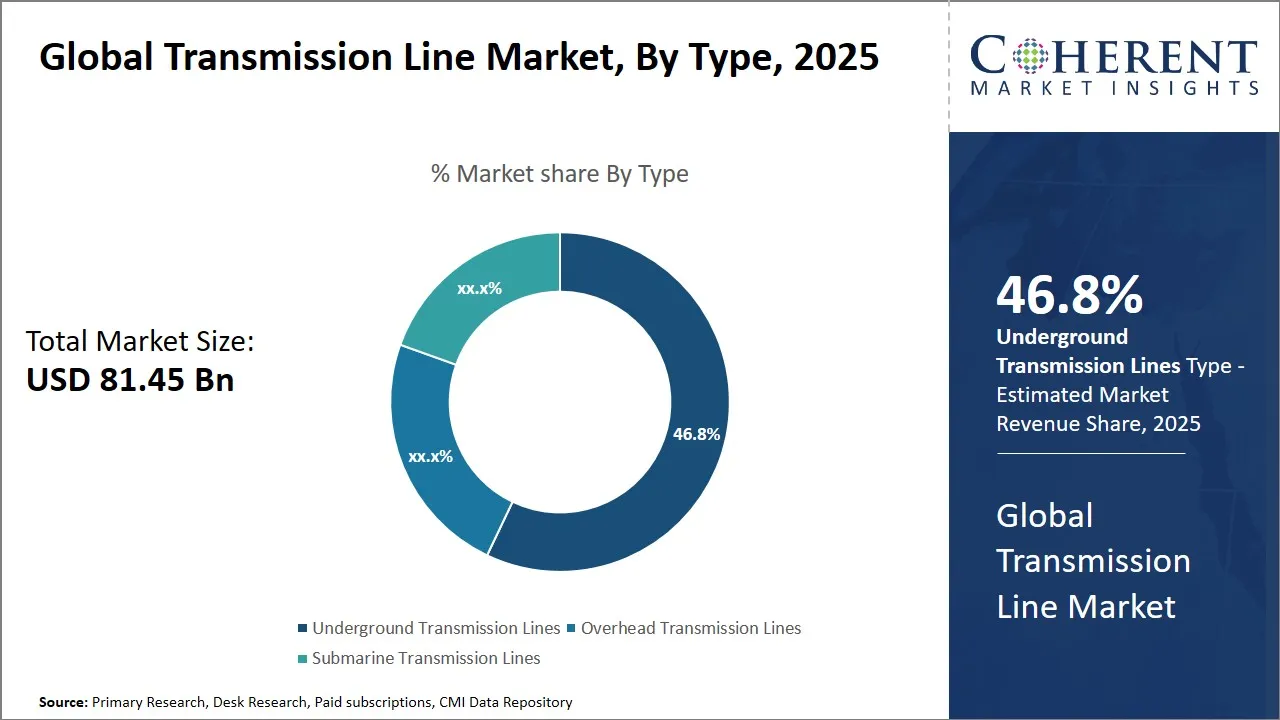
- The underground transmission lines segment is expected to account for 47.8 % of the global transmission line market in 2026.
- The 130 kV–220 kV segment is projected to capture 42.6% of the global transmission line market in 2026.
- The utility segment is anticipated to account for 29.5 % of the global transmission line market in 2026.
- Asia Pacific is set to lead the global transmission line market in 2026 with a 35.3 % share. Middle East, with a 15.5% share in 2026, will be the fastest-growing region.
Market Overview
One important trend in the market is the shift towards advanced technologies, such as high-voltage direct current (HVDC) systems and smart grid applications, which provide better efficiency and reliability in the transmission aspect. Moreover, the increasing focus on green energy sources leads to an increase in transmission lines to accommodate the movement of electricity from generation sites in remote areas to city populations. The advancements in this market are being driven primarily by the development of enhanced efficiencies that address transmission losses, as well as regulatory power assistance for modernization of the grid.
Current Events and Its Impact
Current Events | Description and its impact |
Expansion of Ultra-High Voltage (UHV) Transmission Projects in China (2025) |
|
U.S. Federal Grid Modernization Initiative (2025) |
|
Segmental Insights
- Current Industry Events of 2026
- Market Size Estimation
- Regional Breakdown
- Competitive Landscape
- Customer Intelligence
- Segmental Analysis
- Pricing Analysis
- Key Market Drivers, Challenges & Future Trends
- Customized Insights Section
Transmission Line Market Insights, By Type - Underground Transmission Lines Segment Dominates the Market due to Enhanced Reliability and Urban Infrastructure Demands
The underground transmission lines segment is projected to capture a significant 47.8% of the global transmission line market by 2026. This will be driven by their ability to enable safe and reliable distribution of electricity, especially in densely populated areas. They are emerging as a preferred alternative in regions where space is limited, aesthetics are important, and permitting agencies are reluctant to authorize overhead lines as per environmental regulations.
In bustling urban centers, where residential, commercial, and industrial spaces are packed closely together, there is a strong need for infrastructure that minimizes disruptions and keeps the visual appeal intact. Underground lines meet these needs perfectly by removing the risk of outages caused by severe weather events like storms, ice, or high winds, which often wreak havoc on overhead cables.
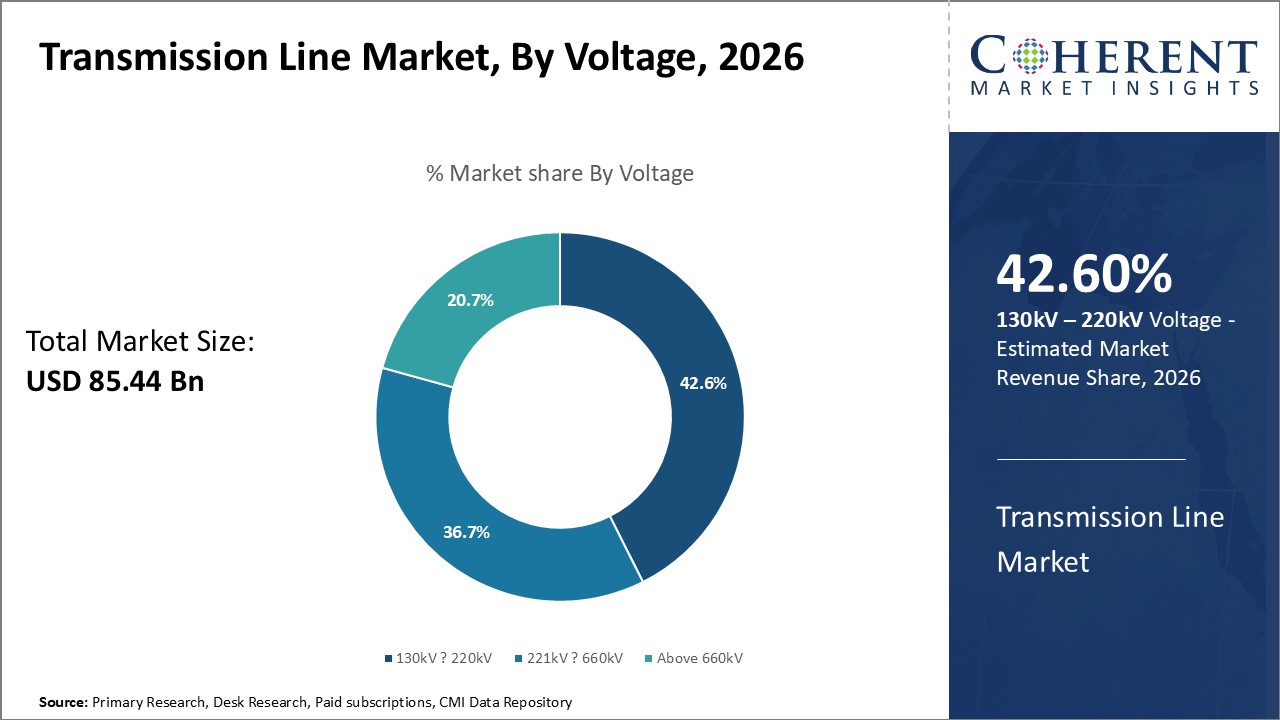
Transmission Line Market Insights, By Voltage - 130kV – 220kV Segment Dominates the Market Driven by Medium-Range Transmission Needs and Infrastructural Compatibility
The 130kV – 220kV market segment is expected to account for 42.6% share of the global transmission line market by 2026. The 130kV-220kV segment is a critical transmission range due to its combination of efficiency, price, and compatibility with existing infrastructures. Often found in regional transmission networks connecting power generation to local distribution systems and ideally suited to serve urban and suburban areas without the upcharge associated with ultra-high voltage lines.
With a rating typical of the medium voltage range, the 130kV-220kV lines allows utilities to transmit electricity over a medium distance at the power loss acceptable with the rating. This allows to work in areas with moderate demand for electricity but not a demand so high that a higher voltage transmission would be required. This is a vital voltage range when considering improvements in electricity transmission capacity for developing countries where the transmission infrastructure continues to expand for regions that are still needing electricity for remote or developing urban centers. This segment also provides flexibility in the system design of these networks to be improved over time in grid capacity as the demand grows with moderate challenges of integration with existing infrastructure.
Transmission Line Market Insights, By Application – Utility Segment Dominates the Market due to the Critical Role of Public Electricity Supply and Grid Modernization Initiatives
The utility sector is expected to claim a 29.5% share in the overall transmission line market by 2026, mainly due to the increasing modernization of public electrical grids around the globe. The utility sector is critical in the reliable delivery of electricity to everyone, including individuals, businesses, and governmental agencies. This essential function requires an effective transmission infrastructure that can adjust as demand and supply conditions evolve.
A major factor driving utility sector growth is the rapid transition toward smart grid technology and infrastructure improvements. Modern utilities are investing responsibly in improving their current transmission infrastructure to improve efficiency, minimize losses, and harden the power system against outages and cyber threats, including upgrades to transmission infrastructure to utilize more underground lines than overhead and convert to higher voltages to accommodate increased loads.
Regional Insights
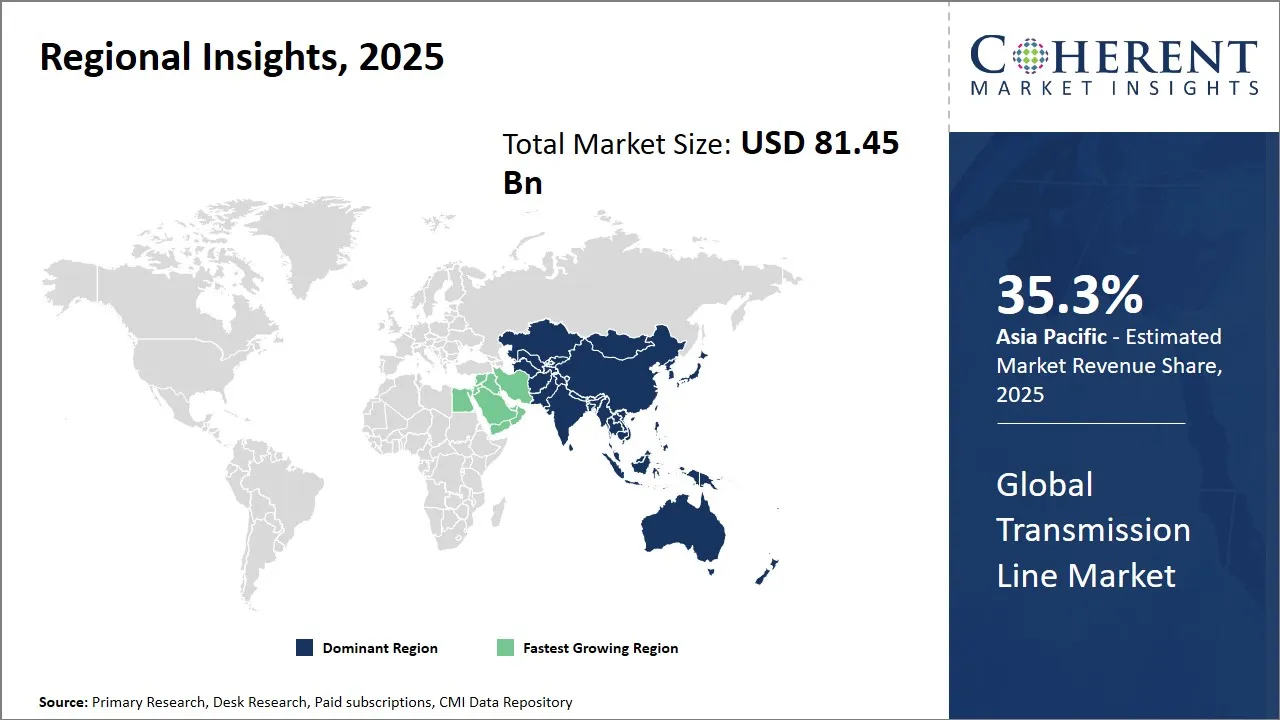
Asia Pacific Transmission Line Market Analysis and Trends
The Asia Pacific region is projected to lead the market with a 35.3% share in 2026, due to significant infrastructure investments, aggressive urbanization, and rapid industrial growth. Countries like China, India, and Japan have strong energy demand, which is driving improvement in the networks of transmission lines. Government initiatives toward renewable integration and modernizing the grid have further supported market growth. The presence of major industry players such as ABB, Siemens, and Tata Power boosts this through technological innovation and large-scale project executions.
Middle East Transmission Line Market Analysis and Trends
The Middle East region is expected to exhibit the fastest growth in the market, contributing 15.5% share in 2026, due to surging electrification needs especially in emerging economies and urban hubs within the region. Governments are prioritizing infrastructure upgrades as part of broader economic diversification strategies. There has been a big push in the expansion and modernization of transmission networks to support renewable energy integration and improve grid reliability. The influx of investments from sovereign wealth funds and international partnerships act as catalysts for growth.
Capacity building and technological advancements are actively pursued by leading companies such as Siemens Energy, GE Grid Solutions, and local entities. In addition, regional agreements for trade facilitation further accelerate equipment and technology transfer, thereby promoting the development of this market at a faster pace.
Global Transmission Line Market Outlook for Key Countries
China Transmission Line Market Trends
China market growth is attributed to its commitment to expanding ultra-high voltage and smart grid transmission lines. The country is committed to exceptional policies with respect to adopting renewable energy and controlling grid stability that have initiated extremely large infrastructure projects, supported by industry leaders such as State Grid Corporation of China and China Southern Power Grid. Partnerships with companies based in other countries, such as ABB and GE, have helped elevate the overall technological capabilities of each unique project. Further efforts by the federal government have enabled faster project approvals and provided monetary assistance for their implementation.
India Transmission Line Market Trends
The transmission line market of India is steadily increasing in market size, mainly due to rural electrification and the needs of renewable energy sources, especially solar and wind. Government incentives around modernizing or expanding the grid has created considerable growth opportunities for companies like Power Grid Corporation of India and Larsen & Toubro, as well as others. International investment partnerships have encouraged modernization of the grid, and helped to mitigate the challenges of anticipated grid losses related to transmission bottlenecks.
U.S. Transmission Line Market Trends
The U.S. transmission line market leads the global landscape due to its rapidly evolving, innovation-driven ecosystem and strong participation from private sector players. Federal policies are being released in support of clean energy and resilient grids, which have encouraged upgrades to existing infrastructure. Key players known for innovation and project management include NextEra Energy, American Electric Power, and Eaton Corporation.
Germany Transmission Line Market Trends
The Germany transmission line market is characterized by strong government commitment to the energy transition, its policies on the integration of renewable energy and grid expansion. Regulatory frameworks encourage investment in smart grids and high-voltage lines. Industry leaders such as Siemens and TenneT are driving this development. Sustainability concerns and reduction of carbon emissions drive Germany’s transmission infrastructure development supported by collaborative market eco-system.
Brazil Transmission Line Market Trends
The growing demand for reliable power due to increased industrialization and rural electrification shapes Brazil's transmission line market. Government incentives and public-private partnerships facilitate expansion and modernization projects, with companies such as Eletronorte and CPFL Energia playing significant roles. Geographic diversity calls for adaptive solutions in transmission, thus driving innovation and the deployment of advanced technologies across the country.
Macro and Micro Economic Factors Impacting the Transmission Line Market Growth
Macro-Economic Factors
- Increasing Global Electricity Demand: Urbanization, industrialization, and electrification are leading to the need for improved transmission infrastructure worldwide. Emerging economies, like China and India, are leading the way with significant investments in high-voltage and ultra-high-voltage transmission projects to bolster the efficiency of power transportation and meet rapidly growing power demand.
- Government Policies and Regulatory Framework: Supportive policy for modernizing and expanding the grid, integrating renewable energy, and investing in infrastructure expansion is essential in growing transmission line markets. Many countries have enacted regulations for smart grid expansion, cross-border barriers, and integration of renewable energy sources to promote market growth.
- Investment in Renewable Energy: While solar, wind, and hydroelectric power generation is growing, most supply is intermittent and requires transmission line extension so these types of power generation sources can be used.
Micro Economic Factors
- Prices and Supply Chain of Raw Materials: The prices of metals and components used in transmission lines are subject to fluctuations, which has an effect on overall project costs. Supply chain resilience would help mitigate those costs and delays.
- Utility Respondents' Willingness to Invest: The willingness of a utility company to invest in smarter infrastructure and grid upgrades varies based on the region and regulatory levels. In developed markets, utilities are driven more toward reliability and cyber resilience while they are focused on expanding capacity in developing markets.
- Adoption of New Technologies and Innovative Practices: Competitive technological innovation and adoption by key market players on materials, smart grid solutions or predictive maintenance affects market share, product development cycles and timelines.
- Operational Efficiency & Maintenance Costs: AI driven monitoring systems that create predictive maintenance cycles for components, reduce down time and operating costs.
Market Players, Key Development, and Competitive Intelligence
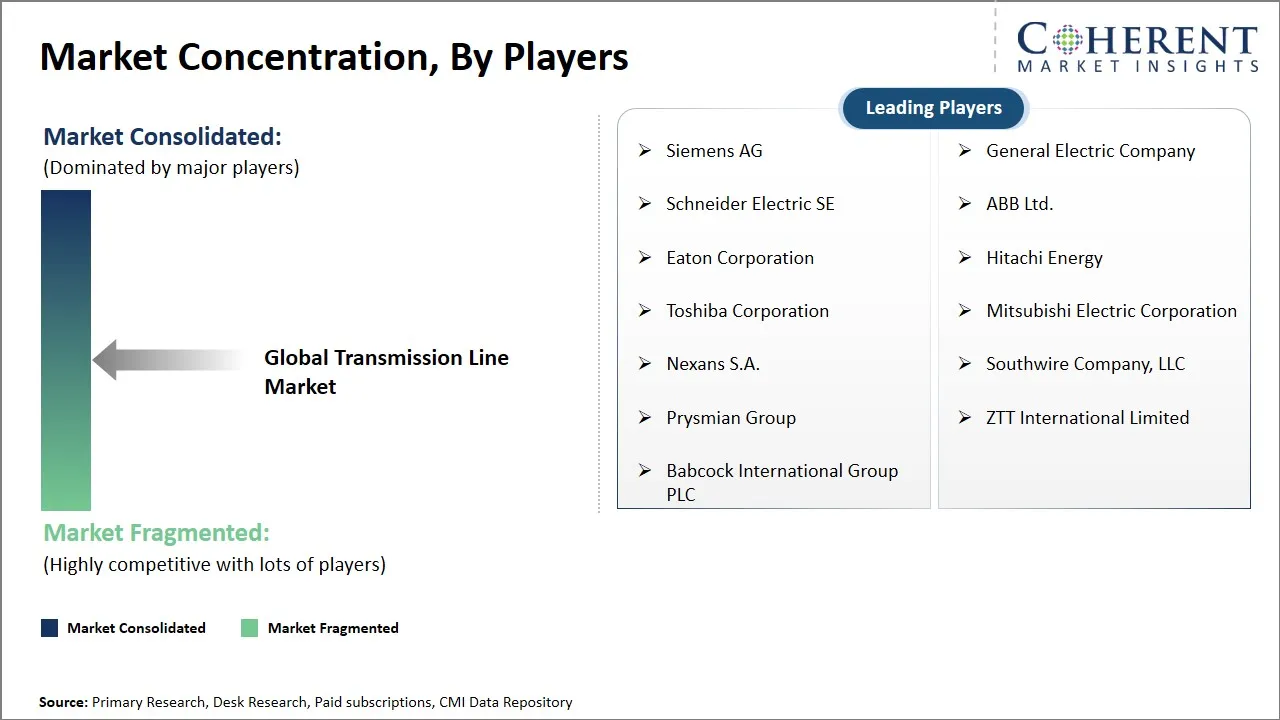
Key Developments
- In February 2024, Nexans received a contract for a power utility to support energy transition in Italy. Nexans provide 6,000 km of low- and medium-voltage power distribution cables and services. The cables will be manufactured at Nexans Italian plant in Battipaglia, Italy and use 100% guaranteed low-carbon aluminum, reducing greenhouse gas emissions by 35% to 50%.
- In June 2023, ArcelorMittal Nippon Steel's advanced steel cold rolling mill in Hazira, Gujarat, India, awarded ABB an electrification and automation contract for steel processing lines. ABB will provide advanced electrification and automation, including the ABB Ability System 800xA distributed control system (DCS) along with other associated equipment and components. The advanced electrification and automation will help improve energy efficiency, optimize zinc consumption, and enhance corrosion resistance through the steel production process.
- In May 2023, Nexans announced that TenneT, a Transmission System Operator (TSO) for the Netherlands and part of Germany, has awarded Nexans an order for turnkey high voltage direct current projects for offshore wind farms.
Top Strategies Followed by Global Transmission Line Market Players
- Large and medium-sized enterprises dominate the global transmission line market because of their large investments in research and development (R&D) to innovate better products to meet the evolving standards of both the marketplace and customers. Collaborations enhance their product offerings and also facilitate their entry into large infrastructure projects. Market leaders also take additional steps to expand their international distribution networks into emerging markets, especially where infrastructure buildout is on the rise.
- For examples of large companies include Siemens Energy, which is developing high-voltage direct current (HVDC) systems, and GE, which is working on the Grid Solutions segment to increase operational efficiency and reduce energy loss. ABB has made investments to develop composite insulators and rebuild digital substations to enhance grid reliability.
- A mid-sized player in the transmission line market adopts a balanced view of delivering a cost-effective product, while continuing to appease price-sensitive customers. Mid-sized players will target this population because they can accept reduced quality in exchange for lower cost because these clients typically don't have funding to pay for higher end products. Additional measures could include collaborations and partnerships with other firms to grow production capabilities and to gain access to technologies not previously available, as well as marketing access in different geographical regions, or new market segments.
- For instance, Sterlite Power’s low-loss conductors support developing economies such as Brazil and India, while Prysmian’s carbon-efficient transmission cables add to its presence in the EU.
- Small and mid-size players do not have the same level of resources as larger companies, but they carve specialization out of working within a narrower part of the transmission line space. These firms tend to differentiate their products by providing unique product attributes or custom offerings for customer-specific needs, such as lightweight conductors or high-strength materials, or offering products tailored for limited or extreme environmental conditions.
- For example, LS Cable produces lightweight aluminum conductors and high-tension lines designed for coastal environments. ZTT supplies corrosion resistant and submarine power cables for the offshore wind farm segment.
Market Report Scope
Transmission Line Market Report Coverage
| Report Coverage | Details | ||
|---|---|---|---|
| Base Year: | 2025 | Market Size in 2026: | USD 85.44 Bn |
| Historical Data for: | 2020 To 2024 | Forecast Period: | 2026 To 2033 |
| Forecast Period 2026 to 2033 CAGR: | 4.9% | 2033 Value Projection: | USD 119.42 Bn |
| Geographies covered: |
| ||
| Segments covered: |
| ||
| Companies covered: | Siemens AG, General Electric Company, Schneider Electric SE, ABB Ltd., Eaton Corporation, Hitachi Energy, Toshiba Corporation, Mitsubishi Electric Corporation, Nexans S.A., Southwire Company, LLC, Prysmian Group, ZTT International Limited, and Babcock International Group PLC | ||
| Growth Drivers: |
| ||
| Restraints & Challenges: |
| ||
Transmission Line Market Dynamics
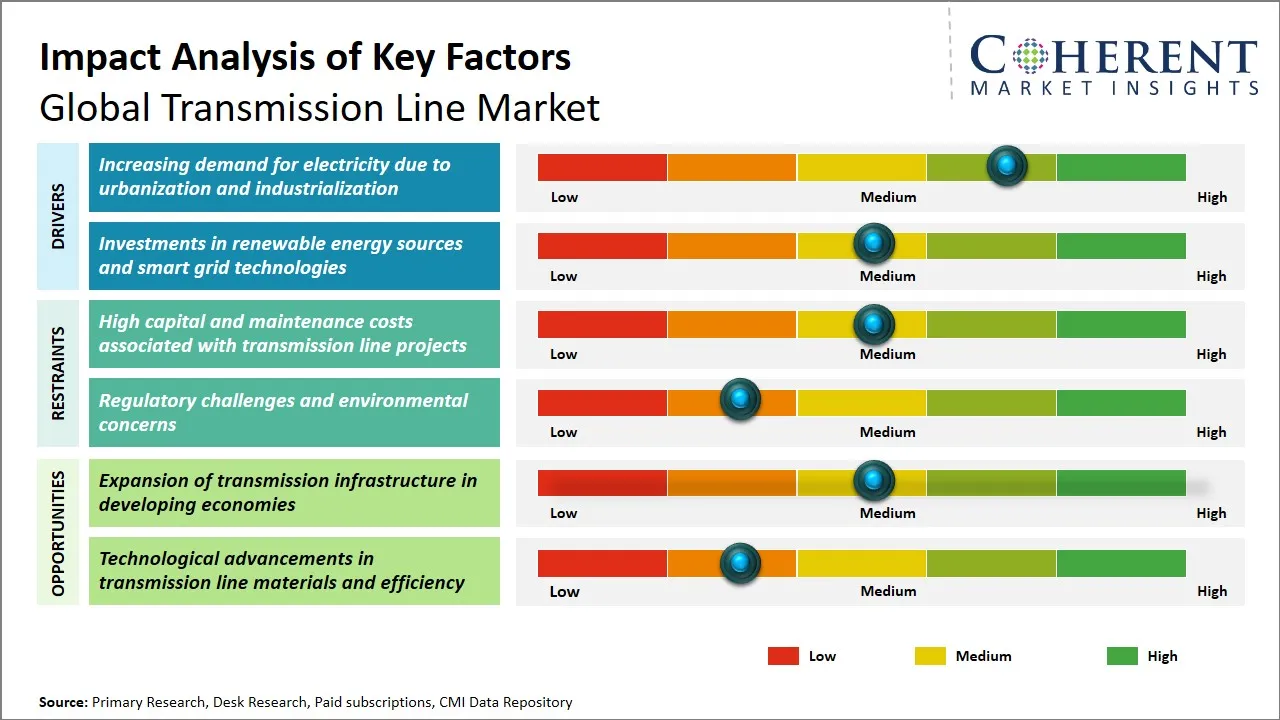
Transmission Line Market Driver - Increasing Demand for Electricity due to Urbanization and Industrialization
A sharp increase in electricity need, driven by urbanization and industrialization, is driving the transmission line market. Population growth and industrial developments in urban and emerging economies have necessitated increasingly reliable and effective electrical infrastructure. Urban centers require updated power distribution unit, systems to meet growing residential and commercial energy demand. Industrial areas require a consistent and stable electricity supply to run their operations successfully.
According to the International Energy Agency (IEA), global electricity consumption is projected to increase by nearly 4% each year until 2027, spurred on by industrial growth, the rising use of air conditioning, appliances, electric vehicles, heat pumps, and AI-driven digital loads.
Transmission Line Market Opportunity - Expansion of Transmission Infrastructure in Developing Economies
The growth of transmission infrastructure in developing economies is creating a fantastic opportunity for the global transmission line market. With rapid urbanization, industrialization, and an increasing demand for energy in regions like Asia Pacific, Africa, and Latin America, there's a pressing need for better power transmission capabilities. Many developing nations are stepping up to modernize and expand their electrical grids, ensuring that reliable and efficient electricity reaches underserved and rural communities. This movement is being further supported by government initiatives and international funding, all aimed at enhancing energy access and promoting sustainable development goals.
For instance, investment models highlight that Independent Transmission Projects (ITPs) are being implemented in emerging markets like India, Brazil, Peru, and Chile to facilitate the expansion of transmission lines.
Analyst Opinion (Expert Opinion)
- The global transmission line market is expected to generate significant growth due to the growing demand for energy and the increasing need for infrastructure improvements. The International Conference on Power Systems (2023) and the Transmission & Distribution Conference (2022) provided valuable insights into the evolution of the marketplace, including innovative developments by companies like Siemens and General Electric reimagining smart grids and developing high-capacity transmission solutions.
- Siemens' deployment of a digital transmission line management system demonstrates a response within the marketplace to the increased demand for efficiencies and reliability in energy distribution. Both conferences for example mentioned the increased integration of renewable energy sources into existing grids as a crucial means of achieving global sustainability goals, but both conferences also cited regulatory hurdles and the challenges of expensive infrastructure as potential consequences.
- Companies undertaking initiatives to improve collaboration with government agencies and invest in public-private partnerships will benefit from solutions to market challenges. Also competitor companies that engage in the materials science space in developing durable high-efficiency transmission lines will be better positioned advantage over others. In the end, the global transmission line market will grow if the market can innovate for the critical needs of today’s energy needs.
Speak to the analyst
Want personalized insights?
Take the findings above to one of our principal consultants, or have the report rebuilt around the segments, geographies and competitors you actually track.
Market Segmentation
- Type Insights (Revenue, USD Bn, 2021 - 2033)
- Underground Transmission Lines
- Overhead Transmission Lines
- Submarine Transmission Lines
- Voltage Insights (Revenue, USD Bn, 2021 - 2033)
- 130kV – 220kV
- 221kV – 660kV
- Above 660kV
- Application Insights (Revenue, USD Bn, 2021 - 2033)
- Utility
- Industrial
- Regional Insights (Revenue, USD Bn, 2021 - 2033)
- North America
- U.S.
- Canada
- Latin America
- Brazil
- Argentina
- Mexico
- Rest of Latin America
- Europe
- Germany
- U.K.
- Spain
- France
- Italy
- Russia
- Rest of Europe
- Asia Pacific
- China
- India
- Japan
- Australia
- South Korea
- ASEAN
- Rest of Asia Pacific
- Middle East
- GCC Countries
- Israel
- Rest of Middle East
- Africa
- South Africa
- North Africa
- Central Africa
- North America
- Key Players Insights
- Siemens AG
- General Electric Company
- Schneider Electric SE
- ABB Ltd.
- Eaton Corporation
- Hitachi Energy
- Toshiba Corporation
- Mitsubishi Electric Corporation
- Nexans S.A.
- Southwire Company, LLC
- Prysmian Group
- ZTT International Limited
- Babcock International Group PLC
Sources
Primary Research Interviews
- Chief Technology Officer – Major Transmission Line Manufacturer
- Senior Procurement Analyst – Leading Utility Provider
- Product Development Manager – Global Engineering Firm (Power Sector)
- Sustainability Lead – International Power Infrastructure Certification Body
Stakeholders
- Manufacturers (Transmission line, tower, and conductor producers)
- End-use Sectors
- Power Utilities (Electricity Transmission Companies, State Grids)
- Renewable Energy Developers integrating with transmission networks
- Regulatory & Certification Bodies (Energy, grid safety authorities)
- EPC Contractors and Infrastructure Developers
- E-commerce Platforms & Equipment Distributors (for replacement parts/components)
Databases
- UN Comtrade Database (Transmission line equipment trade)
- India Import Export (EXIM) Database (Cable, conductor and transmission component data)
- International Energy Agency (IEA) Data Portal – Transmission network length, capacity
- U.S. Energy Information Administration (EIA) – Power transmission infrastructure data
Magazines
- T&D World – Trends and news in transmission and distribution
- Transmission & Distribution Journal – Technical innovations in power lines
- Utility Products Magazine – Equipment updates and transmission line advances
- Global Transmission Report – Market updates and growth opportunities worldwide
Journals
- IEEE Transactions on Power Delivery – Research on transmission line performance and standards
- International Journal of Electrical Power & Energy Systems – Innovations in grid construction and management
- Journal of Energy Engineering – Studies on transmission efficiency and development
- Renewable Energy Journal – Grid integration and transmission for renewables
Newspapers
- The Financial Times – Market growth and investment in transmission infrastructure
- The Guardian – Renewable energy and transmission expansion news
- Asia Power Journal – Transmission line growth in Asia-Pacific
- European Energy News – Regulation and infrastructure policy
Associations
- International Council on Large Electric Systems (CIGRE)
- Global Transmission Research
- International Energy Agency (IEA)
- Institute of Electrical and Electronics Engineers (IEEE)
- National Electric Manufacturers Association (NEMA)
- European Network of Transmission System Operators for Electricity (ENTSO-E)
Public Domain Sources
- U.S. Federal Energy Regulatory Commission (FERC) – Guidelines and data
- European Commission – Electricity market and infrastructure regulations
- World Bank – Infrastructure finance and country-level transmission projects
- World Health Organization – Health and safety standards (EMF from transmission lines)
Proprietary Elements
- CMI Data Analytics Tool, Proprietary CMI Existing Repository of information for last 8 years.
Get access to 250+ pages report
Every segment, forecast, competitor profile and data table behind the analysis above — available for instant download.
- ESOMAR Member
- ISO 9001:2015 Certified
- D-U-N-S Registered
- GDPR & CCPA Compliant
Missing comfort of reading report in your local language? Find your preferred language:
Transform your Strategy with Exclusive Trending Reports
Frequently Asked Questions
The global transmission line market is estimated to be valued at USD 85.44 Bn in 2026 and is expected to reach USD 119.42 Bn by 2033.
Government regulations shape the transmission line industry by setting safety, environmental, and permitting standards that influence project costs, timelines, and technology adoption.
Transmission line market expansion impacts the environment through land use changes, habitat disruption, visual intrusion, and potential effects on wildlife and ecosystems.
The CAGR of the global transmission line market is projected to be 4.9% from 2026 to 2033.
In terms of type, the underground transmission lines segment is estimated to dominate the market revenue share in 2026.
High capital and maintenance costs associated with transmission line projects and regulatory challenges and environmental concerns are the major factors hampering the growth of the global transmission line market.
Increasing demand for electricity due to urbanization and industrialization and investments in renewable energy sources and smart grid technologies are the major factors driving the growth of the global transmission line market.