

Global Two-Photon Microscopy Market Size and Forecast – 2026 to 2033
The Global Two-Photon Microscopy Market is estimated to be valued at USD 1.50 Bn in 2026 and is expected to reach USD 2.67 Bn by 2033, exhibiting a compound annual growth rate (CAGR) of 8.9% from 2026 to 2033.
Key Takeaways of the Two-photon Microscopy Market
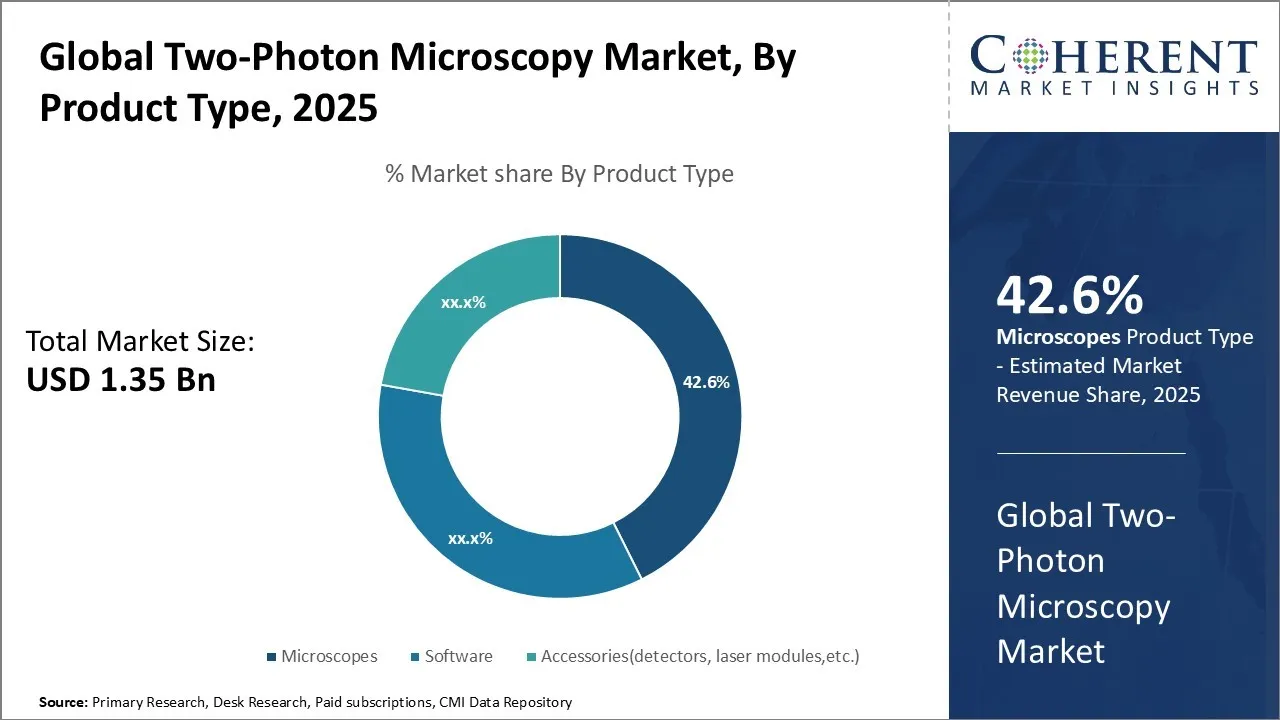
- By product type, the microscopes segment is anticipated to hold the largest market share of 43.6 % in 2026, supported by technological innovations and diverse applications across research disciplines.
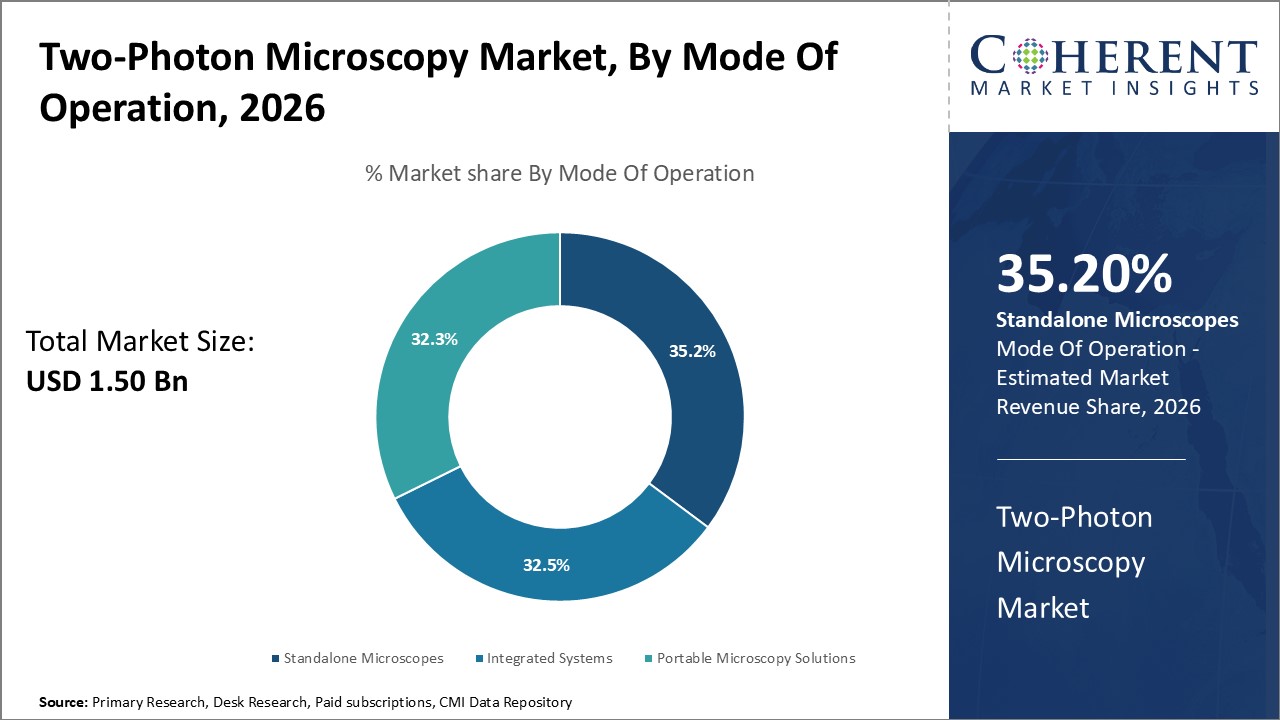
- By mode of operation, standalone microscopes are expected to lead the market with a 35.2 % share in 2026, driven by their flexibility and adaptability for specific user needs.
- By application, the neuroscience segment is projected to secure the highest market share of 35.3 % in 2026, reflecting the increased focus on brain research and the growing prevalence of neurological disorders.
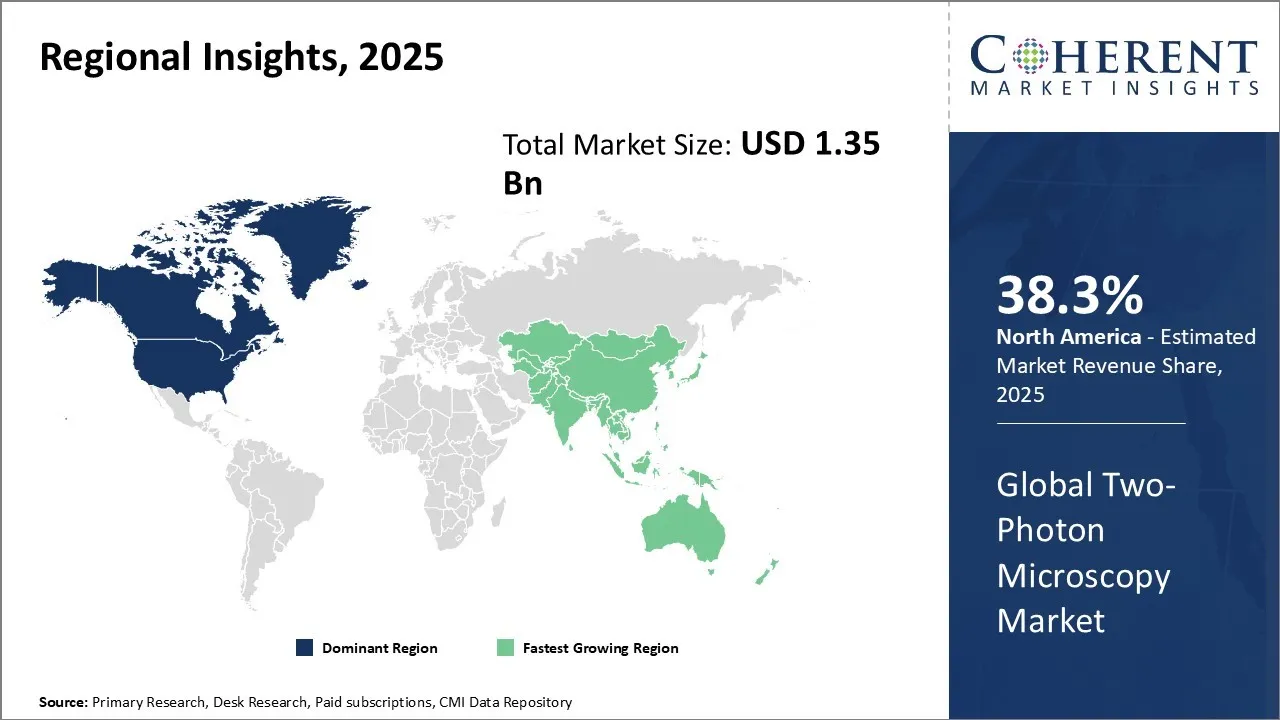
- North America is expected to lead the market, holding a share of 38.3 % in 2026. Asia Pacific is anticipated to be the fastest-growing region, with a market share of 30.2% in 2026.
Market Overview
The market trend for the two-photon microscopy market is driven by the increasing demand for high-resolution imaging in various research fields such as neuroscience, cell biology, and tissue engineering. The growing adoption of two-photon microscopy in drug discovery and development processes, coupled with technological advancements in laser technology and optics, is further fueling the market growth. Additionally, the rising prevalence of chronic diseases and the need for early diagnosis and treatment are expected to contribute to the market's expansion during the forecast period.
Current Events and Its Impact
Current Events | Description and its impact |
Launch of FHIRM-TPM 3.0: Miniature Two-Photon Microscope |
|
Regulatory Changes in Medical Devices |
|
Segmental Insights
- Current Industry Events of 2026
- Market Size Estimation
- Regional Breakdown
- Competitive Landscape
- Customer Intelligence
- Segmental Analysis
- Pricing Analysis
- Key Market Drivers, Challenges & Future Trends
- Customized Insights Section
Two-Photon Microscopy Market Insights, By Product Type - Microscopes Dominate the Market due to Technological Advancements and Versatility
In terms of product type, the microscopes segment is expected to contribute the highest share of the market with 43.6% in 2026 owing to their technological advancements and versatility in various research applications. Two-photon microscopes have revolutionized the field of biological imaging by enabling deep tissue penetration, reduced photobleaching, and improved signal-to-noise ratio. The continuous development of advanced microscopy techniques, such as multi-photon excitation, has further enhanced the capabilities of these microscopes. Moreover, the increasing demand for high-resolution imaging in neuroscience, developmental biology, and other research areas has driven the growth of the microscopes segment.
Manufacturers are focusing on developing microscopes with enhanced features, such as faster scanning speeds, higher sensitivity, and improved spatial resolution. The integration of advanced optics, laser systems, and detection modules has enabled researchers to capture detailed images of living tissues and organisms with minimal invasiveness. Furthermore, the increasing adoption of two-photon microscopy in clinical applications, such as ophthalmology and oncology, has expanded the market for these microscopes beyond basic research.
Two-Photon Microscopy Market Insights, By Mode of Operation - Standalone Microscopes Lead the Market due to their Flexibility and Customization Options
In terms of mode of operation, the standalone microscopes segment is projected to contribute the highest share of the market with 35.2% in 2026 due to their flexibility and customization options. Standalone two-photon microscopes offer researchers the freedom to configure the system according to their specific experimental requirements. These microscopes can be easily integrated with various accessories, such as multiple laser sources, scanners, and detectors, allowing researchers to tailor the system to their needs. This flexibility is particularly important in advanced research applications, where customization is essential to obtain optimal results.
Moreover, standalone microscopes provide a higher level of control over imaging parameters such as excitation wavelength, laser power, and scanning speed. This enables researchers to fine-tune the system for specific experiments and achieve the desired level of resolution and sensitivity. The ability to optimize the microscope's performance for different samples and imaging conditions is a key factor driving the growth of the standalone microscope segment.
Two-Photon Microscopy Market Insights, By Application - Neuroscience Dominates the Market due to the Increasing Focus on Brain Research and Neurological Disorders
In terms of application, the neuroscience segment is expected to contribute the highest share of the market with 35.3% in 2026 due to the increasing focus on brain research and neurological disorders. Two-photon microscopy has become an indispensable tool in neuroscience research, allowing scientists to study the structure and function of neural circuits with unprecedented detail. The ability to image deep into the brain tissue and capture the activity of individual neurons has revolutionized understanding of brain function and dysfunction.
The growing prevalence of neurological disorders, such as Alzheimer's disease, Parkinson's disease, and epilepsy, has driven the demand for advanced imaging techniques in neuroscience research. Two-photon microscopy enables researchers to investigate the underlying mechanisms of these disorders at the cellular and subcellular level. By studying the changes in neural activity, synaptic plasticity, and neuronal morphology, scientists can gain insights into the pathogenesis of neurological disorders and develop new therapeutic strategies.
Role of Artificial Intelligence (AI) in the Two-photon Microscopy Market
- Artificial Intelligence (AI) is rapidly reshaping the Global Two-Photon Microscopy Market, driving a paradigm shift in imaging workflows, data interpretation, and product innovation. By integrating AI-powered algorithms, companies can automate complex tasks such as image reconstruction, segmentation, and feature extraction, thereby accelerating data analysis and reducing manual workload. AI enhances predictive analytics capabilities, enabling researchers to forecast cellular behaviours, disease progression, and treatment outcomes with higher accuracy. Additionally, AI-driven solutions facilitate personalization in imaging applications, offering tailored parameters for specific tissue types, experimental models, or clinical requirements. This automation and customization significantly improve efficiency, lower operational costs, and enhance reproducibility, which are critical in both academic research and clinical diagnostics. Furthermore, AI enables real-time feedback during imaging sessions, optimizing parameters like laser power and scanning speed for superior image quality while safeguarding sample integrity.
- Emerging opportunities in the two-photon microscopy market driven by AI include the development of AI-empowered smart microscopes, predictive maintenance tools for microscopy hardware, and AI-based image repositories that facilitate collaborative research across institutions. For instance, Inscopix, a California, U.S.-based company, is a prominent player leveraging AI in this space. Inscopix combines two-photon imaging systems with AI-powered data analysis platforms to decode neural circuits, enabling deeper insights into brain function and neurological disorders. Their AI-integrated microscopy solutions have transformed brain mapping by offering automated signal extraction, behavioral correlation, and advanced visualization tools. While AI offers transformative benefits, challenges such as data standardization, model transparency, and the risk of over-reliance on AI predictions remain. Companies in the two-photon microscopy market must balance AI integration with rigorous validation processes, ethical considerations, and regulatory compliance to ensure long-term success, scalability, and sustained market relevance.
Regional Insights
North America Two-Photon Microscopy Market Analysis and Trends
In North America, the dominance in the two-photon microscopy market with an estimated share of 38.3% in 2026 can be attributed to several factors. The region boasts a robust healthcare infrastructure, coupled with high investment in research and development activities. The presence of leading academic and research institutions, as well as a favorable regulatory environment, has further propelled the adoption of two-photon microscopy in various applications, including neuroscience, developmental biology, and tissue imaging. Moreover, the region is home to several key players in the market, such as Bruker Corporation, Olympus Corporation, and Nikon Corporation, which have significantly contributed to technological advancements and product innovations.
For example, Thermo Fisher Scientific Inc., a global provider of scientific instruments, reagents, consumables, software, and services, offers Two-Photon Excitation Microscopy (TPE) products, including Molecular Probes fluorophores like Alexa Fluor, Qdot probes, ion indicators, and oxidative stress detection dyes. These solutions enable deep-tissue imaging with minimal photodamage, ideal for live-cell studies, neuronal tracing, and cytoskeletal analysis. The company also provides bioconjugates, labeling kits, and custom solutions for diverse research needs.
Asia Pacific Two-Photon Microscopy Market Analysis and Trends
Meanwhile, the Asia Pacific region is expected to exhibit the fastest growth in the two-photon microscopy market with a share of 30.2% in 2026. Rapid economic development, increasing healthcare expenditure, and growing awareness about advanced imaging techniques have fueled the demand for two-photon microscopy in the region. Countries like China, Japan, and South Korea have made significant investments in life sciences research, leading to the establishment of state-of-the-art imaging facilities and driving the adoption of two-photon microscopy.
Additionally, the expanding biotechnology and pharmaceutical industries in the region have further propelled the market growth. The presence of local manufacturers and distributors, along with strategic partnerships between international players and regional entities, has facilitated the penetration of two-photon microscopy in various research and clinical settings across Asia Pacific.
Global Two-Photon Microscopy Market Outlook for Key Countries
U.S. Two-Photon Microscopy Market Trends
The U.S. market for two-photon microscopy is characterized by its strong emphasis on research and innovation. The country houses numerous prestigious universities, research institutes, and government-funded organizations that actively employ two-photon microscopy in their studies. The National Institutes of Health (NIH) and the National Science Foundation (NSF) play a pivotal role in providing grants and funding for research projects involving advanced imaging techniques. Key players such as Bruker Corporation and Olympus Corporation have a significant presence in the U.S. two-photon microscopy market, offering a wide range of two-photon microscopy systems and accessories. The collaborations between academia and industry further drive technological advancements and foster the adoption of two-photon microscopy in various research fields.
For example, ibidi GmbH, a biotechnology company which operates in the U.S. and Germany, majorly supports two-photon and multiphoton microscopy applications for deep tissue imaging of live cells, organoids, and whole organisms, allowing 3D visualization up to 1 mm depth. Its systems minimize photobleaching and photodamage by using longer excitation wavelengths, ideal for sensitive live-cell experiments.
China Two-Photon Microscopy Market Trends
China's market for two-photon microscopy has witnessed remarkable growth in recent years, driven by the country's increasing investment in life sciences research and its rapidly expanding healthcare sector. The Chinese government's initiatives, such as the "Made in China 2026" and the "Healthy China 2030" plans, have provided a conducive environment for the development and adoption of advanced imaging technologies. Leading Chinese universities and research institutions have established state-of-the-art imaging facilities, employing two-photon microscopy in neuroscience, cell biology, and other research areas. For example, Shanghai Laser & Optics Century Co., Ltd. (SLOC) manufactures a range of diode-pumped solid-state (DPSS) lasers, including blue and orange lasers, which are integral components in two-photon microscopy setups.
Japan Two-Photon Microscopy Market Trends
Japan continues to be a prominent player in the two-photon microscopy market, owing to its strong technological capabilities and robust research infrastructure. The country's leading universities and research institutes, such as the University of Tokyo and RIKEN, have made significant contributions to the field of two-photon microscopy. The Japan two-photon microscopy market is characterized by its focus on precision, innovation, and miniaturization, leading to the development of advanced two-photon microscopy systems with improved resolution and faster imaging speeds.
For example, Olympus Corporation is a global leader in optical and digital precision technology, renowned for its advanced imaging systems, life science solutions, and medical devices. In the two-photon microscopy space, Olympus—through its Evident Scientific division—offers advanced multiphoton imaging solutions such as the FluoView FVMPE-RS system. This system enables deep-tissue fluorescence imaging, providing high spatial and temporal resolution while minimizing photodamage.
Germany Two-Photon Microscopy Market Trends
Germany's market for two-photon microscopy is driven by its thriving life sciences sector and its position as a hub for scientific research in Europe. The country is home to numerous prestigious universities and research institutions, such as the Max Planck Society and the Helmholtz Association, which actively employ two-photon microscopy in various research fields. German companies, including Carl Zeiss AG and Leica Microsystems, are globally recognized for their cutting-edge imaging solutions and have a significant presence in the two-photon microscopy market.
For example, Carl Zeiss AG, a Germany-based technology company, offers cutting-edge multiphoton microscopy systems, such as the LSM 980 NLO Airyscan 2, which combines confocal and two-photon imaging capabilities for deep tissue visualization.
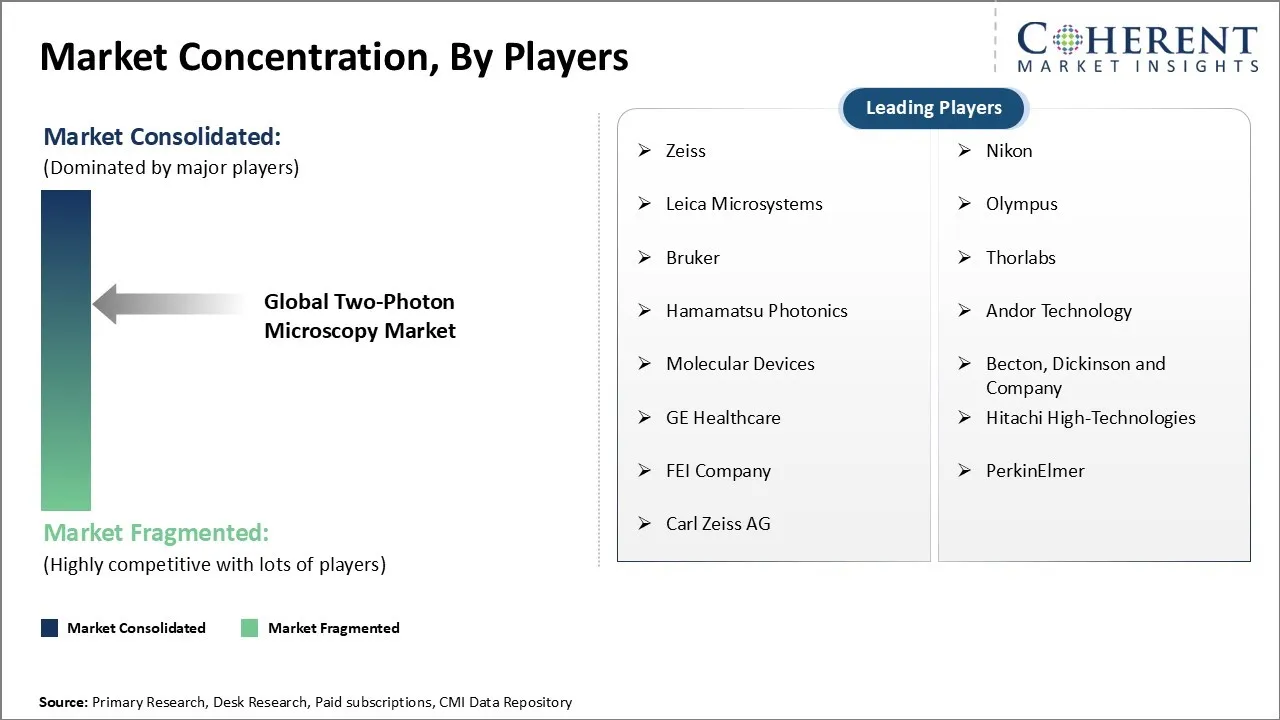
Concentration and Competitive Landscape
Key Developments
- In April 2025, Bruker Corporation, a global leader in scientific instruments and analytical solutions, introduced the nVista 2P miniature two-photon microscope—a cutting-edge addition to its Inscopix product line. Weighing only ~2 grams, the nVista 2P offers single-cell resolution and imaging depths up to 300 microns, enabling detailed studies of deep brain regions such as the entorhinal cortex and hypothalamus.
- In December 2024, Rockefeller University—a premier biomedical research institution—opened the Elizabeth R. Miller Brain Observatory (MBO) to advance ambitious neurobiology projects beyond the capabilities of commercial tools. Located in Smith Hall, the MBO offers cutting-edge optical imaging technologies like light-beads microscopy (LBM), which enables recording the activity of over one million neurons simultaneously in a mouse brain.
- In August 2024, researchers at the University of California, California, U.S have developed a next-generation two-photon fluorescence microscope that enables high-speed, low-damage imaging of neural activity in real time. By combining an adaptive line-illumination scheme with advanced scanning techniques, the system captures images 10x faster and at 10x lower laser power than traditional two-photon setups.
- In January 2024, researchers at the University of Oxford, a global leader in biomedical research, advanced the study of serotonin (5-HT) signaling by combining genetically encoded fluorescent biosensors with two-photon microscopy in awake mice. Their study reveals how sensory stimuli, like whisker stimulation, trigger serotonin release in the somatosensory cortex. While initial results highlighted potential artifacts, refined controls confirmed accurate, stimulus-locked 5-HT responses.
Top Strategies Followed by Global Two-Photon Microscopy Market Players
- Established players in the global two-photon microscopy market prioritize extensive research and development (R&D) investments to innovate high-performance products. These companies focus on developing cutting-edge technologies and advanced features to maintain their competitive edge. For instance, leading manufacturers invest heavily in improving the resolution, speed, and depth penetration of their two-photon microscopy systems. Additionally, established players often form strategic partnerships with major industry players or original equipment manufacturers (OEMs) to solidify their market presence.
- In October 2024, Beijing Transcend Vivoscope Bio-Technology Co., Ltd, a prominent provider of advanced biomedical imaging solutions, introduced the SUPERNOVA-600, an innovative miniature two-photon microscopy (mTPM) system. This cutting-edge device is engineered for high-resolution, real-time imaging of neural and cellular activity in freely behaving animal models.
- Mid-level players in the global two-photon microscopy market often focus on delivering cost-effective solutions to target price-sensitive consumers. These companies aim to offer quality products with essential features at competitive prices, making two-photon microscopy more accessible to a wider range of customers. Moreover, mid-level players frequently engage in collaborations with other companies to boost their technology, production capabilities, and market presence.
- In November 2021, ISS, a biomedical imaging solutions provider specializing in advanced fluorescence and phosphorescence technologies, successfully implemented phosphorescence lifetime imaging (PLIM) capabilities on the Nikon A1 Multi-Photon Microscope system. Its newly developed module enables PLIM measurements using Ti-Sapphire femtosecond oscillators operating at 80–100 MHz, enabling two-photon (2P) phosphorescence imaging with decay times ranging from 100 ns to 100 ms.
- Small-scale players in the global two-photon microscopy market, such as Femtonics, Mightex, and Thorlabs Imaging Systems, focus on niche segments like neuroscience and optogenetics. They differentiate by offering specialized features—high-speed scanning (Femtonics), compact all-in-one systems for in vivo studies (Mightex), and modular platforms for deep-tissue imaging (Thorlabs)—gaining a loyal customer base and competitive advantage in specific research applications.
Market Report Scope
Two-Photon Microscopy Market Report Coverage
| Report Coverage | Details | ||
|---|---|---|---|
| Base Year: | 2025 | Market Size in 2026: | USD 1.50 Bn |
| Historical Data for: | 2020 To 2024 | Forecast Period: | 2026 To 2033 |
| Forecast Period 2026 to 2033 CAGR: | 8.9% | 2033 Value Projection: | USD 2.67 Bn |
| Geographies covered: |
| ||
| Segments covered: |
| ||
| Companies covered: | Zeiss, Nikon, Leica Microsystems, Olympus, Bruker, Thorlabs, Hamamatsu Photonics, Andor Technology, Molecular Devices, Becton, Dickinson and Company, GE Healthcare, Hitachi High-Technologies, FEI Company, PerkinElmer, and Carl Zeiss AG | ||
| Growth Drivers: |
| ||
| Restraints & Challenges: |
| ||
Two-Photon Microscopy Market Dynamics
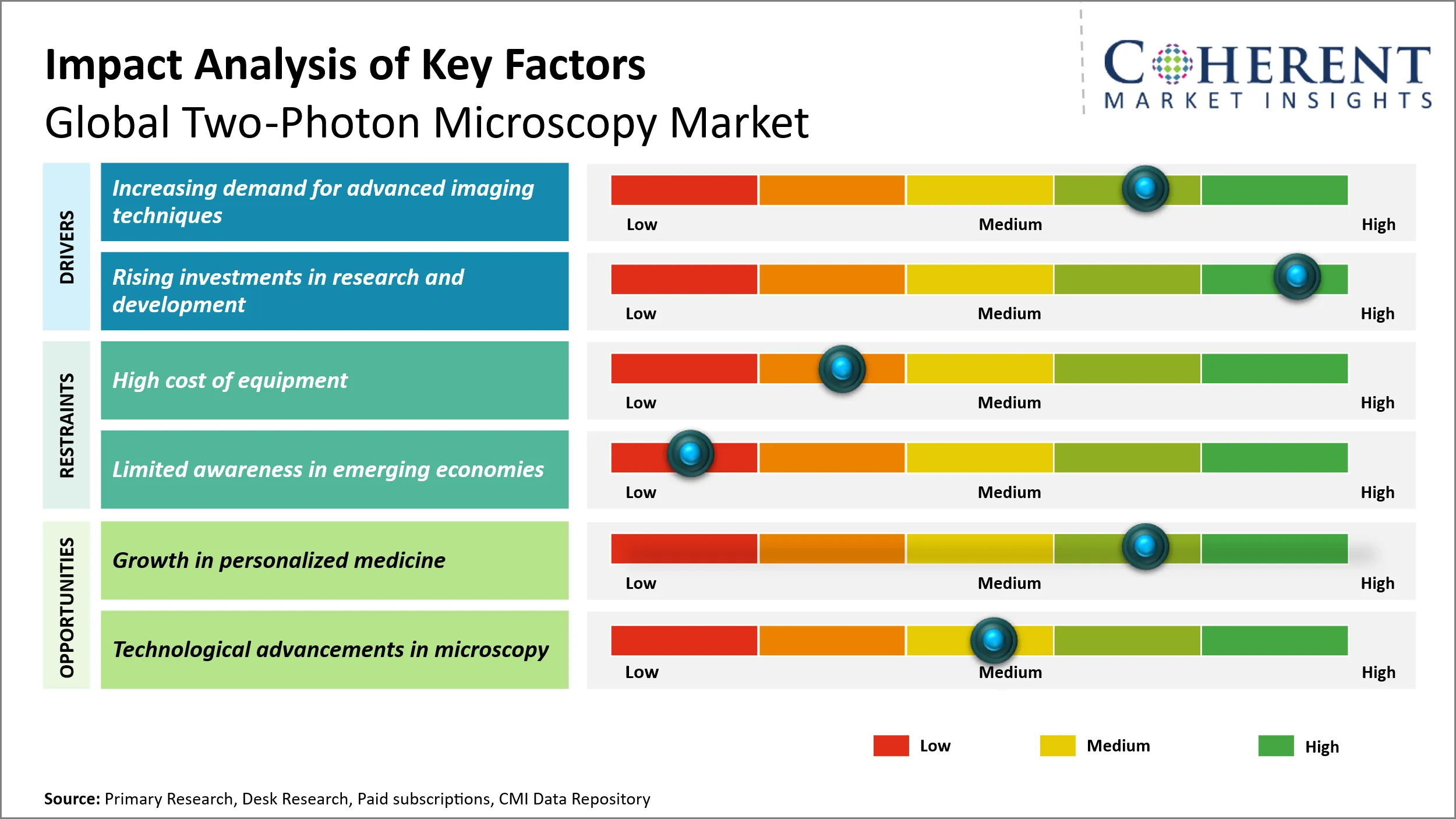
Two-Photon Microscopy Market Driver - Increasing demand for advanced imaging techniques
The global two-photon microscopy market is witnessing a significant driver in the form of increasing demand for advanced imaging techniques. Researchers and scientists across various fields, including neuroscience, cell biology, and tissue engineering, are continuously seeking cutting-edge tools to visualize and study complex biological processes at the cellular and subcellular levels. Two-photon microscopy offers unparalleled advantages over traditional imaging methods, such as deeper tissue penetration, reduced phototoxicity, and higher spatial resolution.
These benefits have made two-photon microscopy an indispensable tool for investigating live specimens, tracking cellular dynamics, and understanding the intricacies of biological systems. For instance, in November 2024, ASH, a leading digital imaging solutions provider, launched VANTAGE, an advanced 4K digital microscope system. Designed to enhance precision and efficiency across industries, VANTAGE combines ultra-high-definition imaging with innovative measurement software. Its 4K Ultra HD camera captures minute details with exceptional clarity—four times the resolution of standard HD—empowering users to improve inspection accuracy, reduce waste, enhance throughput, and safeguard brand integrity.
Two-Photon Microscopy Market Opportunity - Growth in personalized medicine
The increasing focus on personalized medicine presents a significant opportunity for the two-photon microscopy market. Personalized medicine aims to tailor medical treatments to an individual's specific genetic profile, lifestyle, and environment. Two-photon microscopy plays a crucial role in advancing personalized medicine by enabling high-resolution imaging of living tissues and cells. With its ability to capture detailed images of biological processes at the molecular level, two-photon microscopy can provide valuable insights into disease mechanisms, drug responses, and treatment efficacy. By leveraging two-photon microscopy, researchers can study the heterogeneity of diseases and develop targeted therapies that are more effective and have fewer side effects.
Furthermore, two-photon microscopy can be used to monitor the real-time effects of drugs on living tissues, allowing for the optimization of treatment strategies. As the demand for personalized medicine continues to grow, the need for advanced imaging techniques like two-photon microscopy will also increase. This presents a significant opportunity for market players to develop and offer innovative two-photon microscopy solutions that cater to the specific needs of personalized medicine research. In April 2025, Flash Pathology, a Netherlands-based startup, is developing a compact multiphoton microscope for fast, label-free cancer diagnosis—supporting the growth of personalized medicine. The portable system uses femtosecond laser pulses for two- and three-photon excitation and harmonic imaging, providing pathology-quality images of unprocessed tissue in real time.
Analyst Opinion (Expert Opinion)
- The global two-photon microscopy market is witnessing steady growth driven by continuous technological advancements, particularly in laser sources, detectors, and miniaturization technologies. Rising demand for high-resolution, non-invasive imaging in neuroscience, cancer research, and pharmacological studies is further boosting market expansion. The integration of artificial intelligence (AI) for image analysis and predictive diagnostics is creating new avenues, enhancing workflow efficiency and accuracy. However, the high cost of two-photon microscopy systems, coupled with limited accessibility in low- and middle-income countries, poses a significant challenge. Additionally, the need for highly skilled operators and complex sample preparation processes can hinder widespread adoption.
- Key conferences such as SPIE Photonics West, Focus on Microscopy (FOM), and Microscience Microscopy Congress (MMC) have played a vital role in fostering knowledge exchange, showcasing breakthroughs, and influencing future R&D directions within the microscopy sector. Notably, initiatives like the Brain Research Through Advancing Innovative Neurotechnologies (BRAIN) Initiative in the U.S. and the Human Brain Project in Europe are fueling the demand for advanced imaging techniques, including two-photon microscopy, to map neural circuits with unprecedented detail. Companies such as Inscopix, Femtonics, and Bruker have launched innovative products—such as head-mounted miniature microscopes and high-speed two-photon systems—that are redefining research capabilities and market standards. These developments, alongside strategic funding and public-private collaborations, are expected to drive the market’s evolution over the coming years.
Speak to the analyst
Want personalized insights?
Take the findings above to one of our principal consultants, or have the report rebuilt around the segments, geographies and competitors you actually track.
Market Segmentation
- Product Type Insights (Revenue, USD Bn, 2021 - 2033)
- Microscopes
- Software
- Accessories (detectors, laser modules, etc.)
- Mode of Operation Insights (Revenue, USD Bn, 2021 - 2033)
- Standalone Microscopes
- Integrated Systems
- Portable Microscopy Solutions
- Application Insights (Revenue, USD Bn, 2021 - 2033)
- Neuroscience
- Developmental Biology
- Cell Biology
- Oncology
- Cardiology
- Ophthalmology
- Others
- End User Insights (Revenue, USD Bn, 2021 - 2033)
- Academic Research Institutes
- Pharmaceutical and Biotechnology Companies
- Hospitals and Diagnostic Laboratories
- Others
- Regional Insights (Revenue, USD Bn, 2021 - 2033)
- North America
- U.S.
- Canada
- Latin America
- Brazil
- Argentina
- Mexico
- Rest of Latin America
- Europe
- Germany
- U.K.
- Spain
- France
- Italy
- Russia
- Rest of Europe
- Asia Pacific
- China
- India
- Japan
- Australia
- South Korea
- ASEAN
- Rest of Asia Pacific
- Middle East
- GCC Countries
- Israel
- Rest of Middle East
- Africa
- South Africa
- North Africa
- Central Africa
- North America
- Key Players Insights
- Zeiss
- Nikon
- Leica Microsystems
- Olympus
- Bruker
- Thorlabs
- Hamamatsu Photonics
- Andor Technology
- Molecular Devices
- Becton, Dickinson and Company
- GE Healthcare
- Hitachi High-Technologies
- FEI Company
- PerkinElmer
- Carl Zeiss AG
Sources
Primary Research Interviews
- Experts from leading academic research laboratories
- Professors and researchers in biomedical imaging, neurobiology, and photonics departments of global universities
- Product development engineers from microscopy hardware manufacturers
- Medical imaging specialists in hospitals and research centers
- R&D scientists from materials science and nanotechnology labs
Databases
- United States Patent and Trademark Office (USPTO) Database
- European Patent Office (EPO) – Espacenet
- World Intellectual Property Organization (WIPO) – PATENTSCOPE
- National Institutes of Health (NIH) – RePORTER and PubMed
- S. Food and Drug Administration (FDA) – Medical Device Databases
- European Medicines Agency (EMA) – Regulatory Updates
- Eurostat – Science and Technology Indicators
Magazines
- Photonics Media – Photonics Spectra
- Laser Focus World
- BioPhotonics Magazine
- Imaging & Microscopy Journal
- Advanced Imaging Pro
Journals
- Nature Photonics
- Optics Letters
- Biomedical Optics Express
- Journal of Microscopy
- Journal of Biophotonics
- Nature Methods
- Science Advances (for multi-photon imaging breakthroughs)
Newspapers
- The New York Times – Science Section
- The Guardian – Science Section
- The Washington Post – Health & Science
- The Financial Times – Technology Insights
- The Times (UK) – Science & Technology
- The Hindu – Science and Technology
Associations
- Optical Society (Optica)
- SPIE – The International Society for Optics and Photonics
- European Microscopy Society (EMS)
- Royal Microscopical Society (RMS)
- American Chemical Society (ACS) – Analytical Division
Public Domain Sources
- Zenodo – Open science research datasets in photonics and microscopy
- NASA Technical Reports Server (NTRS) – Imaging-related reports in aerospace and photonics
- NIH Data Sharing Repositories – Imaging data in neuroscience and biology
- NCBI Datasets – Genomics and molecular imaging datasets
Proprietary Elements
- CMI Data Analytics Tool: Proprietary analytics tool to analyze real-time market trends, consumer behavior, and technology adoption in market
- Proprietary CMI Existing Repository of Information for Last 8 Years
Get access to 250+ pages report
Every segment, forecast, competitor profile and data table behind the analysis above — available for instant download.
- ESOMAR Member
- ISO 9001:2015 Certified
- D-U-N-S Registered
- GDPR & CCPA Compliant
Missing comfort of reading report in your local language? Find your preferred language:
Transform your Strategy with Exclusive Trending Reports
Frequently Asked Questions
The global two-photon microscopy market is estimated to be valued at USD 1.35 Bn in 2025 and is expected to reach USD 2.42 Bn by 2032.
The CAGR the two-photon microscopy market is projected to be 8.70% from 2025 to 2032.
Increasing demand for advanced imaging techniques and rising investments in research and development are the major factors driving the growth the two-photon microscopy market.
High cost of equipment and limited awareness in emerging economies are the major factors hampering the growth the two-photon microscopy market.
In terms of product type, the microscopes segment is estimated to dominate the market revenue share in 2025.
Zeiss, Nikon, Leica Microsystems, Olympus, Bruker, Thorlabs, Hamamatsu Photonics, Andor Technology, Molecular Devices, Becton, Dickinson and Company, GE Healthcare, Hitachi High-Technologies, FEI Company, PerkinElmer, and Carl Zeiss AG are the major players.
North America is expected to lead the two-photon microscopy market in 2025.