

Neuroscience Market Size and Forecast – 2026-2033
Neuroscience Market is estimated to be valued at USD 37.02 Bn in 2026 and is expected to reach USD 49.70 Bn in 2033, exhibiting a compound annual growth rate (CAGR) of 4.3% from 2026 to 2033.
Key Takeaways
- Based on Component, the Instrument segment is projected to account for 41% share in 2026, as it is vital for both clinical care and research.
- Based on End User, the Hospitals segment is expected to lead the market with largest share in 2026, as they manage the largest patient base for neurological disorders and possess advanced imaging and diagnostic infrastructure.
- Based on Region, North America is expected to lead the market, holding a share of 40. 5% in 2026. While, Asia Pacific is anticipated to be the fastest-growing region during the forecast period.
Market Overview
The neuroscience market is expanding rapidly, driven by rising neurological disorders such as Alzheimer’s, Parkinson’s, epilepsy, and depression, alongside advances in brain imaging, electrophysiology, and neuroinformatics. Pharmaceutical and biotech companies are increasing R&D investments in neurotherapeutics, while neuroscience market demand for advanced neuroimaging systems and brain-computer interface technologies continues to grow in both clinical and research settings.
Current Events and Its Impact
Current Event | Description and its Impact |
Regulatory Modernization and FDA Accelerated Approval Pathways |
|
Major M&A Consolidation and Strategic Partnerships |
|
Role of Artificial Intelligence (AI) in Neuroscience Market
Artificial Intelligence (AI) is playing a transformative role in the neuroscience market by enhancing diagnostics, drug discovery, and patient care. Machine learning and deep learning algorithms are being used to analyze complex brain imaging data, identify patterns in neurological disorders, and predict disease progression. AI-driven tools are accelerating neurotherapeutics development, enabling faster identification of drug targets and optimization of clinical trial design. Additionally, AI is powering brain-computer interfaces, neurostimulation devices, and personalized treatment plans, improving outcomes for conditions such as Alzheimer’s, Parkinson’s, epilepsy, and mental health disorders.
For instance, in August 2025, BrainHap, in collaboration with IIT Bombay and Aerobott, introduced NeuroCalm 42 at the AI–Drone–Robotics Workshop. This brain-mapping technology aims to address digital distractions by promoting focus, calm, and emotional resilience among students. Supported by Atharva University and Rahul Education Trust, the event showcased the integration of neuroscience, AI, drones, and robotics in education.
- Current Industry Events of 2026
- Market Size Estimation
- Regional Breakdown
- Competitive Landscape
- Customer Intelligence
- Segmental Analysis
- Pricing Analysis
- Key Market Drivers, Challenges & Future Trends
- Customized Insights Section
Segmental Insights
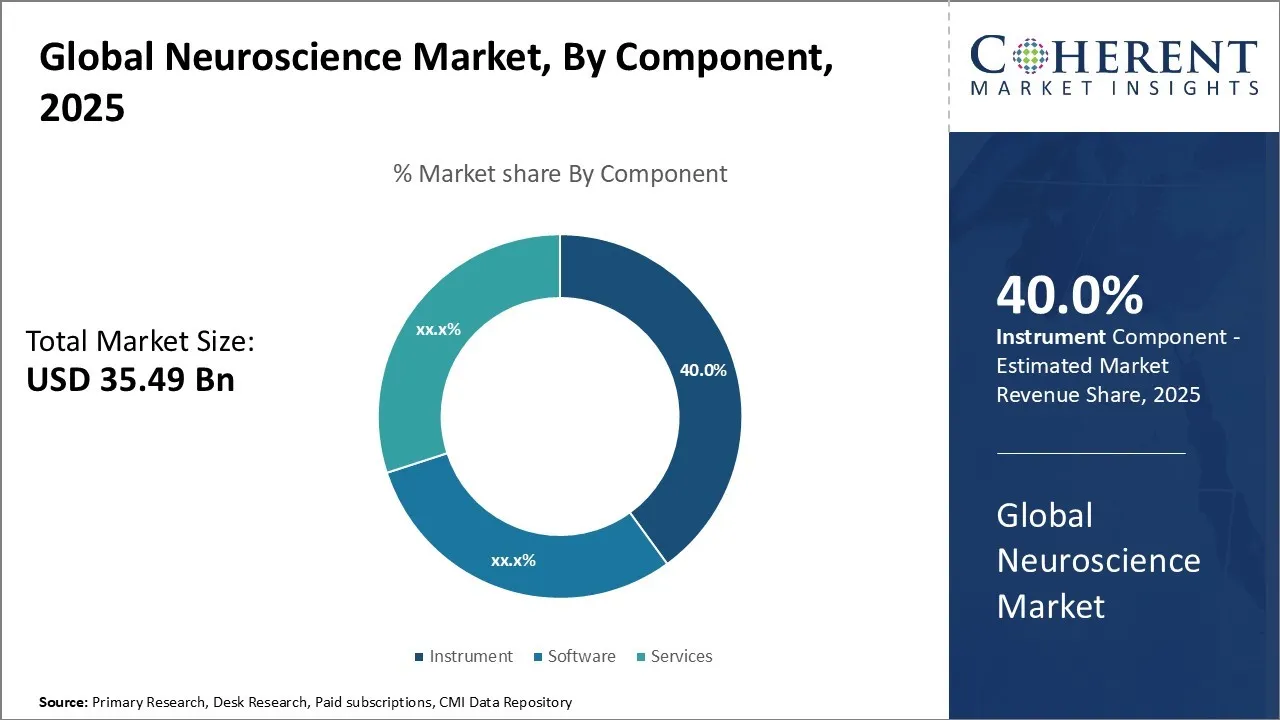
Neuroscience Market Insights, By Component - Instrument Segment dominates the market as they Are Vital for Both Clinical Care and Research Purpose
In terms of component, the instrument segment is expected to hold 41% share of the global neuroscience market in 2026, as it is vital for both clinical care and research. Rising neurological disorders drive demand for advanced imaging and electrophysiology systems such as MRI, PET, EEG, and MEG. Research institutions and pharma companies also rely on instruments for brain-computer interface development and drug discovery. Additionally, the shift toward precision medicine boosts the need for high-resolution, real-time neural monitoring tools, making instruments the most critical segment in neuroscience.
For instance, in April 2024, Soterix Medical unveiled the MxN-GO EEG, a groundbreaking wire-free, wearable system that combines High-Definition transcranial electrical stimulation (HD-tES) with EEG for use in mobile, natural-environment research. The lightweight device features 33 stimulation channels and 32 recording channels, delivering precise, application-specific targeting. Developed in collaboration with mBrainTrain, it redefines hybrid stimulation and monitoring.
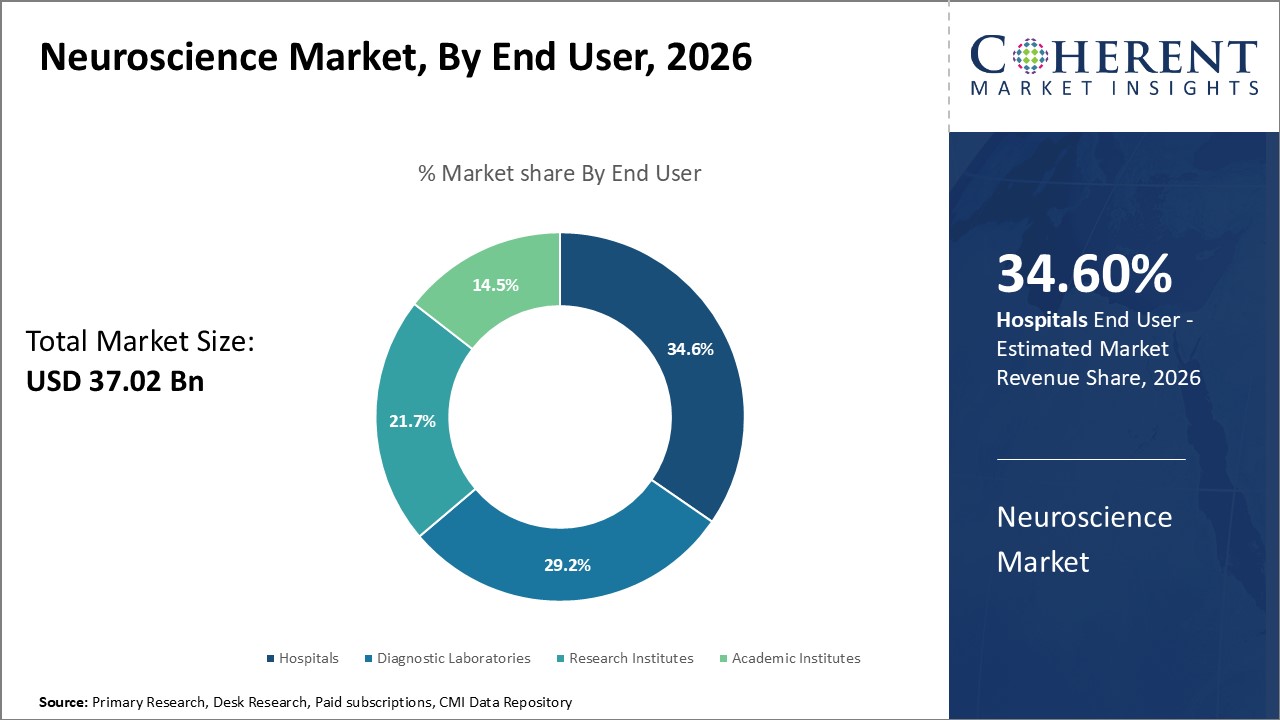
Neuroscience Market Insights, By End User - Hospital is Leading Due To Their Large Patient Base, Advanced Infrastructure, Integrated Care, And Strong Adoption of New Technologies.
In terms of end user, the hospital segment is expected to hold the largest share of the market in 2026, as they manage the largest patient base for neurological disorders and possess advanced imaging and diagnostic infrastructure often unavailable in smaller facilities. Their integrated care model—covering diagnostics, surgery, treatment, and rehabilitation—makes them central to neuroscience services. Hospitals also drive adoption of new neurotherapeutics and technologies through clinical trials, while rising neurosurgery volumes and strong government or private funding further boost demand.
For instance, in June 2025, KEM Hospital unveiled a Comprehensive Department of Neurosciences, consolidating neurology, neurosurgery, psychiatry, stroke care, and rehabilitation in one centralized hub for adults and children. The state-of-the-art, multidisciplinary unit promises streamlined diagnostics, treatment, and recovery, promising more efficient, coordinated neurological and mental health care across Pune.
Regional Insights
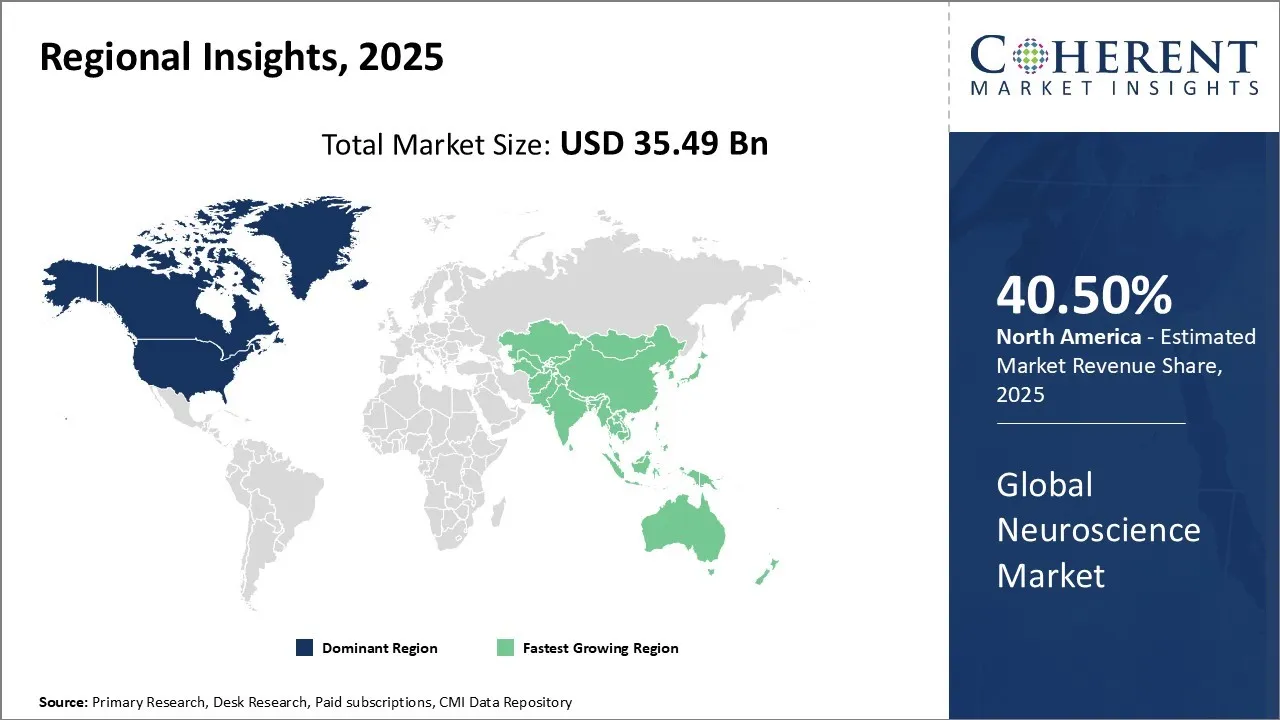
North America Neuroscience Market Analysis & Trends
North America region is expected to lead the market with a 40.5% share in 2026, driven by a high prevalence of neurological disorders, robust R&D and clinical infrastructure, and widespread adoption of advanced technologies like brain imaging and AI-assisted diagnostics. Strong government and private funding, coupled with an aging population, further boost the need for neurotherapeutics and research solutions, making North America the most demanding market globally.
For instance, in November 2024, Trace Neuroscience, a biopharmaceutical firm focused on genomic medicine for neurodegenerative diseases, has launched with a $101 million Series A funding round. Led by Third Rock Ventures and supported by Atlas Venture, GV, and RA Capital Management, the company aims to develop antisense oligonucleotide therapies targeting the UNC13A protein. This approach seeks to restore neuronal communication in conditions like amyotrophic lateral sclerosis (ALS), including its most common sporadic form.
Asia Pacific Neuroscience Market Analysis & Trends
Asia Pacific region is expected to exhibit the fastest growth in the neuroscience market due to rising neurological disorders, aging populations, and expanding healthcare infrastructure. Increasing R&D investments by pharmaceutical and biotech companies, adoption of advanced neuroimaging and AI-based diagnostics, and supportive government initiatives are driving demand. Rising patient awareness and healthcare spending further contribute to the market’s growth in the region.
For instance, in July 2026, Marengo Asia Hospitals inaugurated the Marengo Asia International Institute of Neuro & Spine (MAIINS) in Gurugram, aiming to revolutionize neurological and spine care. The institute offers a multidisciplinary approach, integrating neurology, spine surgery, psychiatry, psychology, pain management, and rehabilitation services. Equipped with robotic-assisted spine surgery systems, advanced neuro-monitoring, and dedicated neuro ICUs, MAIINS is committed to providing comprehensive, protocol-driven care for a wide range of neurological and spine conditions.
Neuroscience Market Outlook Country-Wise
The U.S. Neuroscience Market Trends
The United States is the largest neuroscience market globally, driven by advanced healthcare infrastructure, high R&D investment, and a rising prevalence of neurological disorders such as Alzheimer’s, Parkinson’s, and epilepsy. Strong government and private funding, along with high patient awareness and access to specialized care, further support demand for advanced neurodiagnostic and therapeutic solutions.
For instance, in April 2026, The Simons Foundation launched the Simons Collaboration on Ecological Neuroscience (SCENE), a 10-year initiative aimed at understanding how environmental opportunities for action influence brain representations. The program will fund six interdisciplinary research teams with over $8 million annually, focusing on sensorimotor interactions across species from rodents to humans.
South Korea Neuroscience Market Trends
The neuroscience market in South Korea is witnessing strong demand due to multiple factors. A rapidly aging population, with projections indicating that nearly 25% will be aged 65 or older by 2030, is driving an increase in age-related neurological disorders such as Alzheimer’s and Parkinson’s diseases, boosting the need for diagnostics, therapeutics, and research. Government initiatives, particularly through the Korea Brain Research Institute (KBRI), are fostering advancements in brain research, neural networks, and neurotechnology. South Korea is also at the forefront of adopting and developing advanced neurotechnology, including brain-computer interfaces and neurostimulation devices, with the neurology devices
For instance, in May 2026, Johnson & Johnson Innovation launched the Korea Innovation QuickFire Challenge, focusing on neuroscience. This initiative invites innovators to submit proposals addressing unmet needs in neuroscience, aiming to advance research and therapeutic development. Selected winners will receive funding and mentorship to accelerate their solutions in the field.
Market Report Scope
Neuroscience Market Report Coverage
| Report Coverage | Details | ||
|---|---|---|---|
| Base Year: | 2025 | Market Size in 2026: | USD 37.02 Bn |
| Historical Data for: | 2020 To 2024 | Forecast Period: | 2026 To 2033 |
| Forecast Period 2026 to 2033 CAGR: | 4.3% | 2033 Value Projection: | USD 49.70 Bn |
| Geographies covered: |
| ||
| Segments covered: |
| ||
| Companies covered: | Alpha Omega, Inc., GE Healthcare, Axion Biosystems, Inc., Siemens Healthineers, Scientifica Ltd., Blackrock Microsystems LLC, Femtonics Ltd., LaVision Biotec GmbH, Intan Technologies, NeuroNexus Technologies, Inc., Newport Corporation, Neuralynx Inc., Plexon Inc., Mediso Medical Imaging Systems, Noldus Information Technology, Sutter Instrument Corporation, Thomas Recording GmbH, Trifoil Imaging Inc. | ||
| Growth Drivers: |
| ||
| Restraints & Challenges: |
| ||
Neuroscience Market Driver
Increasing Research and development by key market players
In the neuroscience market, major pharmaceutical, biotech, and medical device companies are significantly ramping up research and development activities to address rising neurological disorders and unmet medical needs. Companies are focusing on developing advanced neurotherapeutics, innovative brain-computer interface technologies, and next-generation neurodiagnostic tools. This surge in R&D is driven by the growing neuroscience market size, which incentivizes investment in drug discovery, clinical trials, and AI-enabled diagnostics. Collaborative initiatives between academic institutions, hospitals, and industry players are further accelerating innovation, aiming to improve treatment efficacy, reduce disease burden, and capture a larger share of the expanding market.
Analyst Opinion (Expert Opinion)
The neuroscience market is undergoing a transformative phase, characterized by significant technological advancements and strategic consolidations.
A pivotal development in the neuroscience sector is the integration of artificial intelligence (AI) with traditional imaging modalities. Innovations in machine learning algorithms are enabling real-time analysis of complex neural data, unlocking new diagnostic pathways and personalized treatment strategies. This fusion is not merely a trend but a paradigm shift, enhancing the precision and speed of data interpretation in neurological diagnostics.
Furthermore, the adoption of advanced neuroimaging technologies, such as 7 Tesla (7T) magnetic resonance imaging (MRI), is revolutionizing the resolution and accuracy of brain scans. These advancements facilitate earlier detection and more precise monitoring of neurological disorders, thereby improving patient outcomes.
The neuroscience market is witnessing a surge in mergers and acquisitions, signaling a strategic consolidation aimed at bolstering research and development capabilities. Notably, Johnson & Johnson's acquisition of Intra-Cellular Therapies for $14.6 billion underscores the industry's commitment to expanding its neuroscience portfolio. This acquisition focuses on treatments for central nervous system disorders, including major depressive disorder, anxiety, and Parkinson's disease.
Speak to the analyst
Want personalized insights?
Take the findings above to one of our principal consultants, or have the report rebuilt around the segments, geographies and competitors you actually track.
Key Developments
- In August 2025, The Postgraduate Institute of Medical Education and Research (PGI) in Chandigarh launched its ₹490 crore Advanced Neuroscience Centre. It aims to address India's critical shortage of neurologists, with just one specialist per million people. The centre will integrate neurology and neurosurgery services under one roof, enhancing access to specialized brain and spine treatment.
- In July 2025, The University of Liverpool inaugurated the Liverpool Interdisciplinary Neuroscience Centre (LINC), a pioneering research hub aimed at advancing brain and mind sciences. LINC unites clinical, behavioural, and translational neuroscience researchers to develop innovative diagnostics and treatments for neurological conditions. Collaborating with NHS partners like the Walton Centre and Alder Hey, as well as global industry and policy stakeholders, LINC seeks to enhance health outcomes locally and globally.
- In May 2025, Sanofi announced its agreement to acquire Vigil Neuroscience, Inc., a clinical-stage biotechnology firm, to bolster its neurology pipeline. The acquisition includes VG-3927, an oral TREM2 agonist currently in Phase 2 trials for Alzheimer's disease.
Market Segmentation
- Global Neuroscience Market, Component
- Instrument
- Software
- Services
- Global Neuroscience Market, By End User (Revenue, USD Bn, 2021 - 2033)
- Hospitals
- Diagnostic Laboratories
- Research Institutes
- Academic Institutes
- Global Neuroscience Market, By Region (Revenue, USD Bn, 2021 - 2033)
- North America
- U.S.
- Canada
- Latin America
- Brazil
- Argentina
- Mexico
- Rest of Latin America
- Europe
- Germany
- U.K.
- Spain
- France
- Italy
- Russia
- Rest of Europe
- Asia Pacific
- China
- India
- Japan
- Australia
- South Korea
- ASEAN
- Rest of Asia Pacific
- Middle East
- GCC Countries
- Israel
- Rest of Middle East
- Africa
- South Africa
- North Africa
- Central Africa
- North America
- Company Profiles
- Alpha Omega, Inc.
- GE Healthcare
- Axion Biosystems, Inc.
- Siemens Healthineers
- Scientifica Ltd.
- Blackrock Microsystems LLC
- Femtonics Ltd.
- LaVision Biotec GmbH
- Intan Technologies
- NeuroNexus Technologies, Inc.
- Newport Corporation
- Neuralynx Inc.
- Plexon Inc.
- Mediso Medical Imaging Systems
- Noldus Information Technology
- Sutter Instrument Corporation
- Thomas Recording GmbH
- Trifoil Imaging Inc.
Sources
Primary Research — Interviews with the following stakeholders
- Clinical neurologists, neurosurgeons, and neuropsychiatrists across tertiary hospitals and specialty clinics.
- Hospital administrators, procurement heads and clinical engineering managers at major hospitals and health systems.
- Heads of neuroimaging and functional imaging centers (MRI, fMRI, PET, EEG/MEG labs).
- R&D and clinical leads at neurodevice and neurotech manufacturers (implantables, neuromodulation, neurostimulation, EEG hardware, brain–computer interface vendors).
- Pharmaceutical R&D and clinical development leads focused on CNS disorders (Alzheimer’s, Parkinson’s, epilepsy, stroke, MS, depression).
- Principal investigators and PIs at academic neuroscience labs and translational research centers.
- Heads of clinical trials units and CROs that run neurology/neurodegenerative disease trials.
- Neuroinformatics and data science leads at genome/neurodata repositories and AI-in-health startups.
- Payers, health economics leads and reimbursement specialists (public & private) involved in neurology therapies and devices.
- Regulatory affairs lead at agencies and device manufacturers (FDA/EMA/PMDA/CDSCO-facing).
- Care pathway managers, long-term care operators and patient advocacy group leaders (Alzheimer’s associations, epilepsy foundations).
Hospital IT and digital health leads managing neuro-telemedicine, remote monitoring and digital therapeutics.
• Biomedical engineering departments and integrators responsible for hospital deployment and maintenance of neuroequipment.
Specific stakeholders / example interview targets
- Neurology department chairs and stroke program leads at leading hospitals
- Heads of clinical neurophysiology and EEG/EMG labs at major teaching hospitals.
- Chief Medical Officers or Head of R&D at biopharma working on CNS
- Product and clinical teams at neuromodulation/device OEMs
- Principal investigators running neurodegenerative disease clinical trials listed on ClinicalTrials.gov.
- Technical leads at neurotech startups
- Heads of procurement and biomedical engineering at large hospital networks and diagnostic chains.
- Decision makers at private imaging chains and diagnostic centres that deploy PET/MRI/fMRI suites.
- Payor medical directors and HTA assessors in major markets
- Regulatory reviewers and policy lead at national agencies
- Representatives from large patient advocacy organizations
Databases & registries
- ClinicalTrials.gov (U.S.) — interventional and device trial listings.
- PubMed / MEDLINE (bibliographic database for medical literature).
- WHO Global Health Observatory & WHO R&D Observatory for neurological disease burden.
- OECD Health Statistics and OECD Neurology-related datasets.
- World Bank / World Development Indicators (healthcare spend, DALYs).
- National registries (e.g., UK National Hospital Episode Statistics, US Medicare claims datasets).
- FDA Device & MAUDE adverse events database; FDA clinical device approvals.
- EMA human medicines and device regulatory databases.
- OpenNeuro (open neuroimaging datasets) and NeuroMorpho.Org (neuronal morphology repository).
- Allen Brain Atlas, Human Connectome Project datasets.
- National disease registries (e.g., Indian stroke registries, national dementia registries where available).
- Specialty device-install base databases maintained by hospitals (anonymized) and proprietary hospital equipment inventories.
Trade & economic data sources
- World Health Organization / Global Burden of Disease (GBD) interactive data.
- World Trade Organization (WTO) trade statistics (medical devices, neuroequipment HS codes).
- UN Comtrade (trade flows for neurodevices and imaging equipment).
- National customs/statistics portals (U.S. Bureau of Economic Analysis; China Customs; Japan METI; Korea Customs).
- Eurostat (healthcare equipment trade and manufacturing statistics).
- National Ministries of Health / Finance (country-level expenditure on healthcare and capital equipment).
Magazines & industry outlets
- Neurology Today.
- The Scientist (neuroscience coverage).
- Neuroscience News.
- Neurotech Reports / Neurotech business newsletters.
- Scientific American — Mind & Brain sections.
- Imaging Technology magazines that cover MRI/PET hardware.
- Medical Device and Digital Health trade magazines (device deployment and hospital procurement features).
(Use these for practitioner interviews, product launches, and deployment case studies.)
Peer-Reviewed Journals
- Nature Neuroscience.
- Neuron.
- The Journal of Neuroscience.
- Brain.
- NeuroImage.
- Neurology (American Academy of Neurology journal).
- Alzheimer's & Dementia (Journal of the Alzheimer's Association).
- IEEE Transactions on Neural Systems and Rehabilitation Engineering.
- Journal of NeuroEngineering and Rehabilitation.
- Frontiers in Neuroscience / Frontiers in Neurology.
Newspapers & mainstream media
- The New York Times — Health & Science.
- The Wall Street Journal — Health/Technology sections.
- Financial Times — Life Sciences & Healthcare.
- The Guardian — Science/Health.
- The Hindu / The Indian Express — Health & science coverage (India).
- Nikkei Asia — Electronics, medtech & supply chain reporting.
- South China Morning Post — Healthcare & biotech in APAC.
Associations, Societies & Conferences
- Society for Neuroscience (SfN).
- American Academy of Neurology (AAN).
- European Academy of Neurology (EAN).
- International Neuroinformatics Coordinating Facility (INCF).
- International League Against Epilepsy (ILAE).
- Alzheimer’s Association (global & national chapters).
- Parkinson’s Foundation.
- Regulatory & standards bodies (IMDRF, ISO TC 229 where relevant, IEC medical device committees).
- Conference sources for primary contacts and abstracts: SfN Annual Meeting, AAN Annual Meeting, Human Brain Project conferences, Neurotech events.
Public domain (government & institutional) sources
- U.S. National Institutes of Health (NIH) — NINDS, NIMH program pages, funding & grant data.
- Centers for Disease Control and Prevention (CDC) — neurological disease surveillance and statistics.
- European Medicines Agency (EMA) clinical and regulatory reports.
- U.S. FDA device approvals, guidance documents and adverse event reports.
- Japan Ministry of Health, Labour and Welfare (MHLW) and METI for device/regulatory info.
- India: ICMR (Indian Council of Medical Research), Ministry of Health & Family Welfare, CDSCO (Central Drugs Standard Control Organization).
- WHO technical reports on neurological disorders and global action plans.
- National health technology assessment (HTA) agencies (NICE, CADTH, HITAP) — reimbursement and cost-effectiveness appraisals involving neuro interventions.
Proprietary / internal data elements
- CMI Data Analytics Tool, and Proprietary CMI Existing Repository of information for last 8 years
*Definition: Neuroscience is a multidisciplinary field that includes linguistics, computation, philosophy, psychology, and chemistry. The neurotic system’s cellular, operational, behavioral, molecular, evolutionary, and therapeutic features are all studied in neuroscience. Several tools for imaging the nervous system are available in the neuroscience sector. Neuroscience is the study of the nervous system, and it is concerned with analyzing and visualizing the activity of the human brain.
Get access to 250+ pages report
Every segment, forecast, competitor profile and data table behind the analysis above — available for instant download.
- ESOMAR Member
- ISO 9001:2015 Certified
- D-U-N-S Registered
- GDPR & CCPA Compliant
Missing comfort of reading report in your local language? Find your preferred language:
Transform your Strategy with Exclusive Trending Reports
Frequently Asked Questions
The Neuroscience Market is estimated to be valued at USD 37.02 Bn in 2026, and is expected to reach USD 49.70 Bn by 2033.
The CAGR of the Neuroscience Market is projected to be 4.3% from 2026 to 2033.
Increasing Research and development by key market players is expected to drive the market growth.
Instrument is the leading component in the market.
The major factors hampering growth of the global neuroscience market are high cost of equipment such as MRI that is used in diagnosis of neuro degenerative disease.
Key companies covered as a part of this study include Alpha Omega, Inc., GE Healthcare, Axion Biosystems, Inc., Siemens Healthineers, Scientifica Ltd., Blackrock Microsystems LLC, Femtonics Ltd., LaVision Biotec GmbH, Intan Technologies, NeuroNexus Technologies, Inc., Newport Corporation, Neuralynx Inc., Plexon Inc., Mediso Medical Imaging Systems, Noldus Information Technology, Sutter Instrument Corporation, Thomas Recording GmbH, Trifoil Imaging Inc.