

Global Ursolic Acid Market Size and Forecast – 2026 To 2033
The global ursolic acid market is expected to grow from USD 342.8 Mn in 2026 to USD 508.7 Mn by 2033, registering a compound annual growth rate (CAGR) of 5.8% from 2026 to 2033. The market for ursolic acid is poised for significant expansion, fueled by the surging demand for plant-based nutraceuticals and botanical bioactive ingredients.
According to the U.S. National Center for Complementary and Integrative Health (NCCIH), more than 30% of American adults and about 12% of children use complementary health approaches developed outside of mainstream conventional medicine, reflecting the growing acceptance of naturally-derived ingredients such as ursolic acid in preventive healthcare.
(Source: U.S. Department of Veterans Affairs)
Key Takeaways of the Global Ursolic Acid Market
- The plant-derived segment is projected to hold 92.4 % of the global ursolic acid market share in 2026, making it the dominant source segment across Asia Pacific due to the abundant availability of medicinal plants and well-established botanical extraction industry in the region. For instance, China continues to promote the modernization of Traditional Chinese Medicine (TCM) under the 14th Five-Year Plan (2021–2025), encouraging the utilization of medicinal plant resources and the development of botanical active ingredients for healthcare and pharmaceutical applications.
- The cosmetics and personal care segment is projected to hold 39.8 % of the global ursolic acid market share in 2026, making it the dominant application segment across Europe owing to the strong consumer preference for naturally-derived cosmetic ingredients and clean-label skincare formulations. For instance, the European Commission's Cosmetics Regulation (EC) No. 1223/2009 continues to promote the use of safe, scientifically evaluated cosmetic ingredients, encouraging manufacturers to incorporate plant-derived bioactives such as ursolic acid into skincare and anti-aging formulations.
- North America maintains its dominance with an estimated share of 34.1 % in 2026, bolstered by the strong demand for botanical nutraceuticals and a well-established dietary supplement industry. For instance, in January 2025, the U.S. Food and Drug Administration (FDA) updated its guidance on New Dietary Ingredient Notification Procedures and Timeframes, reinforcing the regulatory framework for botanical ingredients used in dietary supplements, including plant-derived bioactive compounds.
- Asia Pacific is expected to exhibit the fastest growth with an estimated contribution of 29.3 % share in 2026, driven by the growing demand for botanical extracts in nutraceuticals and functional foods. For instance, Japan's Consumer Affairs Agency (CAA) continues to expand the Foods with Function Claims (FFC) system, enabling scientifically substantiated plant-derived ingredients to be commercialized in functional food products, thereby supporting the demand for botanical bioactives such as ursolic acid.
- Expansion of Sports Nutrition and Healthy Aging Formulations: The growing use of ursolic acid in sports nutrition and healthy aging products presents a promising market opportunity. Owing to its potential role in supporting muscle protein synthesis, improving body composition, and preserving muscle mass, manufacturers are increasingly evaluating ursolic acid for active nutrition and age-related wellness formulations, particularly for the expanding elderly population.
- Development of Novel Delivery Technologies: The development of advanced delivery systems, including nano emulsions, liposomes, and solid lipid nanoparticles, is creating new opportunities for the ursolic acid market. These technologies improve the compound's poor water solubility and bioavailability, enabling its incorporation into high-value pharmaceutical, nutraceutical, and functional food formulations with enhanced therapeutic efficacy.
Segmental Insights
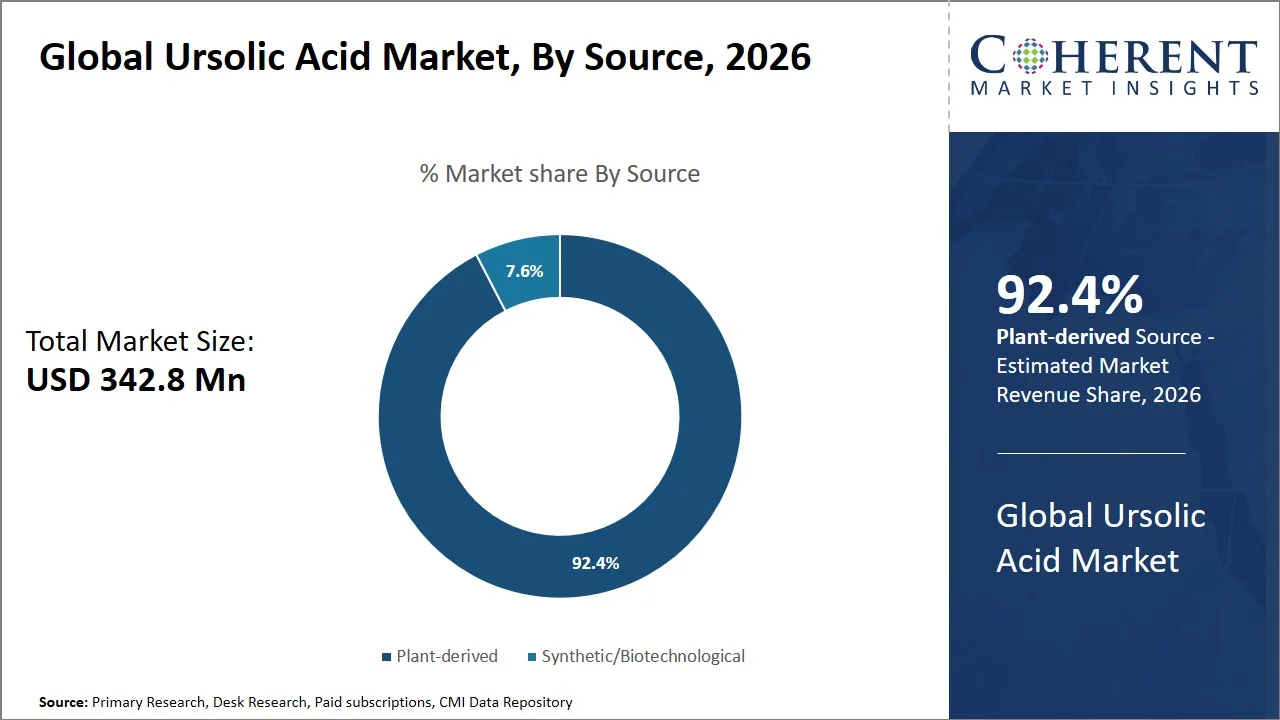
Why Does the Plant-derived Segment Dominate the Global Ursolic Acid Market?
The plant-derived segment is projected to hold a market share of 92.4% in 2026, driven by an escalating demand for plant-derived, clean-label ingredients in nutraceuticals, pharmaceuticals and cosmetic applications, and the development of efficient plant extraction techniques enhancing yield and purity of bioactive compounds. Supportive regulatory frameworks for botanical extracts, coupled with growing emphasis on environmentally sustainable manufacturing practices, are further driving market adoption. For instance, in June 2025, a study published by Frontiers reported an optimized microwave-assisted extraction method for isolating high-purity ursolic acid from apple pomace. The research highlights the industry's focus on developing cost-effective, sustainable, and high-efficiency extraction technologies to enhance the commercial production of plant-derived ursolic acid. (Source: Frontiers)
- Current Industry Events of 2026
- Market Size Estimation
- Regional Breakdown
- Competitive Landscape
- Customer Intelligence
- Segmental Analysis
- Pricing Analysis
- Key Market Drivers, Challenges & Future Trends
- Customized Insights Section
Why Does Cosmetics and Personal Care Represent the Largest Application Segment in the Ursolic Acid Market?
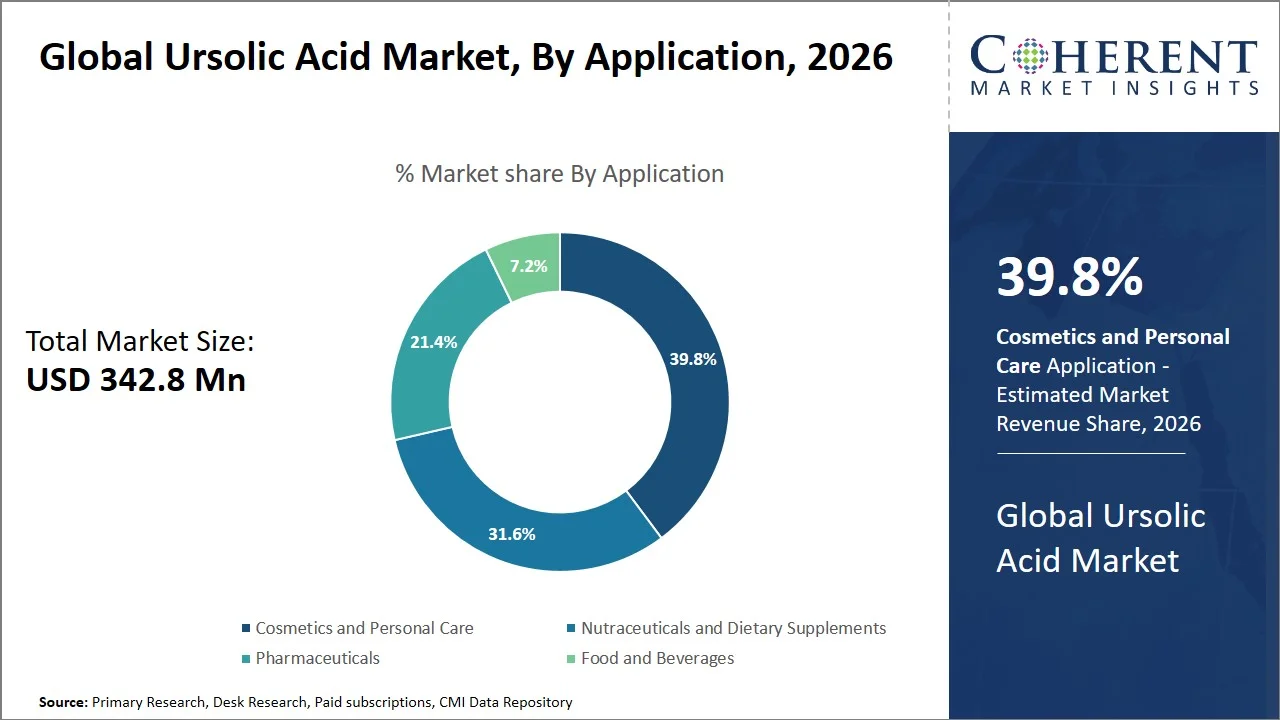
Cosmetics and personal care is projected to hold a market share of 39.8% in 2026, due to the growing preference among consumers for natural ingredients that can deliver multiple benefits such as anti-aging, skin repair, and premium cosmetic formulation. Escalating growth in the clean beauty sector coupled with improvements in delivery methods for enhancing stability and skin permeability of botanical active ingredients has driven an uptake of ursolic acid across the cosmetics sector. Also, increased interest in evidence-based, naturally-derived ingredients has triggered new innovations in the ursolic acid skincare formulation category. For instance, in March 2025, a study published by the National Library of Medicine demonstrated that nanotechnology-based delivery systems significantly improved dermal penetration, stability, and anti-aging efficacy of ursolic acid, highlighting its growing potential in next-generation skincare products. (Source: National Library of Medicine)
Currents Events and their Impact
Current Events | Description and its Impact |
EFSA Implemented Updated Novel Food Administrative Guidance (Effective February 2025) |
|
EMA Published the HMPC Work Plan 2025 to Strengthen Herbal Medicinal Product Regulation (January 2025) |
|
(Source: European Food Safety Authority)
Ursolic Acid Market Dynamics
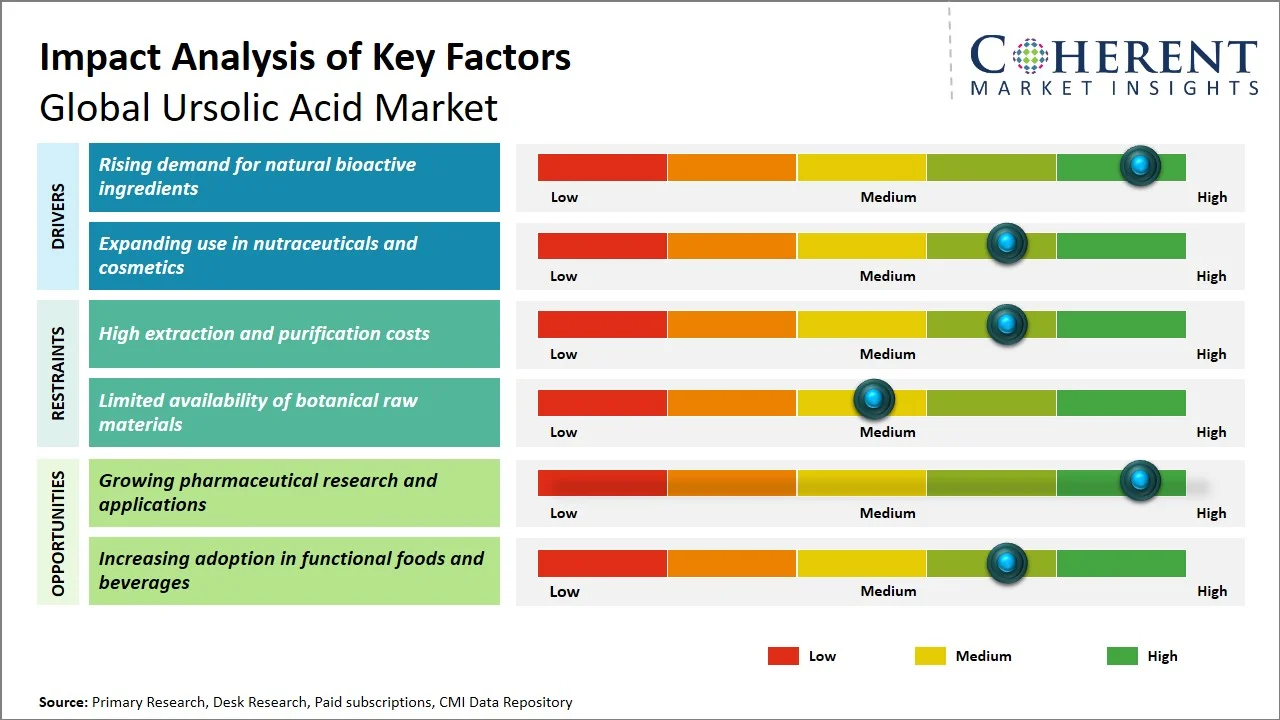
Market Drivers
- Rising demand for natural bioactive ingredients: Rising consumer trends towards natural and plant-based ingredients is a major factor fueling the global ursolic acid market, which is speeding up its use in nutraceutical, pharmaceutical, and cosmetic applications. With increasing demand for clean-label and naturally sourced bioactive components, manufacturers are expected to extend the range of botanical ingredients portfolio and incorporate novel formulations. For instance, in April 2025, Givaudan Active Beauty launched PrimalHyal UltraReverse, a 100% naturally-derived active ingredient formulated with botanical components for anti-aging skincare, reflecting the industry's growing shift toward plant-based bioactive ingredients in cosmetic formulations.
- Expanding use in nutraceuticals and cosmetics: Ursolic acid market is poised to experience robust growth fueled by the increasing use of the compound in the cosmetic and nutraceutical industries owing to the compound's anti-oxidative and anti-inflammatory properties. Rising consumption of dietary supplements and functional foods are prompting the integration of ursolic acid to deliver functional and nutritional benefits. For instance, Sabinsa Corporation offers high-purity ursolic acid as a botanical active ingredient for nutraceutical and cosmetic formulations, highlighting its applications in metabolic health, healthy aging, and skin wellness.
Emerging Trends
- Growing Adoption in Clean-Label Cosmetics: Cosmetic manufacturers are increasingly incorporating ursolic acid into premium skincare and anti-aging formulations due to its antioxidant, anti-inflammatory, and skin-conditioning properties. The shift toward clean-label and plant-based cosmetic ingredients is expanding its application across facial care, sun care, and dermo cosmetic products.
- Increasing Commercialization of Standardized Botanical Extracts: Manufacturers are focusing on producing high-purity, standardized ursolic acid extracts with consistent active content to meet stringent pharmaceutical and nutraceutical quality requirements. This trend is improving product differentiation, regulatory acceptance, and the use of ursolic acid in premium health and wellness formulations.
Regional Insights
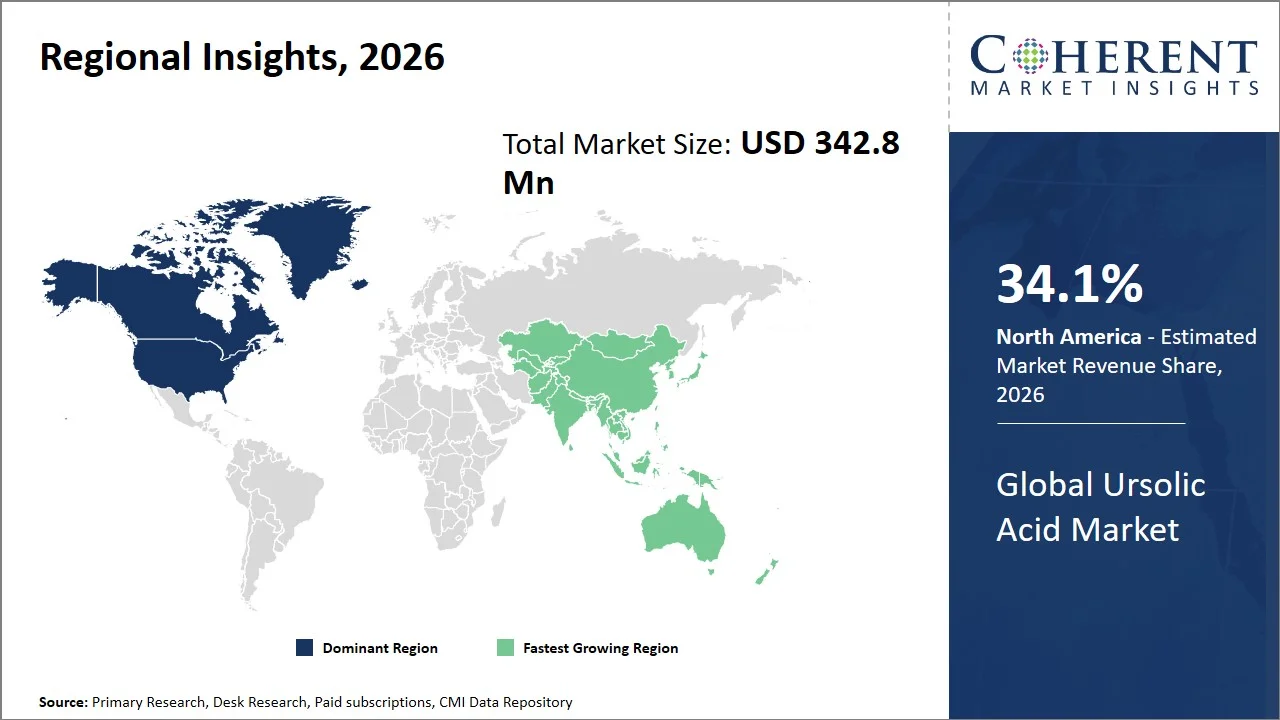
Why is North America a Strong Market for Ursolic Acid?
North America leads the global ursolic acid market, accounting for an estimated 34.1% share in 2026. The region’s thriving pharmaceutical and nutraceutical sectors coupled with robust research and development activities and escalating consumer interest in scientifically proven natural remedies have played a crucial role in establishing it as a market leader. The robust innovation ecosystem aids in formulating high-value botanical solutions for health and wellness and regulatory pathways in the U.S and Canada, thereby accelerating new product launches of botanical extracts and bioactive compounds. For instance, Botanical Drug Development guidance by the U.S FDA is designed for a regulatory approach tailored to botanical drugs that can simplify and optimize the development process and the marketing of compounds naturally derived from plants. (Source: Food and Drug Administration)
Why Does the Asia Pacific Ursolic Acid Market Exhibit High Growth?
The Asia Pacific ursolic acid market is expected to exhibit the fastest growth with an estimated contribution of 29.3% share to the global market in 2026, owing to the escalating demand for plant-based therapies, growing herbal supplements market, and increasing investments in pharma & biotechnology. Availability of abundant botanicals raw materials along with economic manufacturing units supports higher production and exports of the ingredient. Favorable policies supporting government’s plan to enhance traditional medicine, along with favorable export policies of these countries, are driving quick commercialization of botanicals in region. For instance, the government of India created the Ayush Export Promotion Council (AYUSHEXCIL), to act as the nodal agency for export promotion for the AYUSH sector for better access into global markets, enhanced regulatory understanding, and to help in the promotion of herbal & plant-based product exports and the commercialization of ingredients. (Source: Ministry of Commerce & Industry)
Global Ursolic Acid Market Outlook for Key Countries
Why is the U.S. Leading Innovation and Adoption in the Ursolic Acid Market?
The U.S. dominates the ursolic acid market due to robust botanical ingredient-centric innovation ecosystem and agile product formulation and plant-based bioactive commercialization. Robust demand for value-added products such as premium nutraceutical, cosmeceuticals, and functional foods is encouraging increased use of ursolic acid. Further, scientifically backed product formulations enable companies to gain a competitive edge over market rivals.
Is Japan a Favorable Market for Ursolic Acid?
Japan is one of the most promising markets for the ursolic acid market due to robust demand for highly functional ingredients within nutraceuticals, cosmeceuticals and health and wellness as well as the need for advanced ursolic acid-based solutions. Moreover, strong and increasing consumer demand for botanicals as well as products with clinical data continue to stimulate new product innovation and market commercialization in the sector. For instance, FANCL markets botanical nutraceutical supplements containing plant-derived ursolic acid to support muscle function, metabolic health, and healthy aging, reflecting the growing commercialization of ursolic acid-based ingredients in Japan's nutraceutical sector.
Is China Emerging as a Key Growth Hub for the Ursolic Acid Market?
China is positioned as a key growth hub in the global ursolic acid market due to the country’s vast supply of raw plant materials and advanced production infrastructure in manufacturing botanical extracts. The country has highly consolidated vertical integrated networks in the herbal extract supply chain that facilitates massive manufacturing at a lower cost and global distribution. In recent years, the ursolic acid industry is seeing growing sales in functional food, medicine and health supplement ingredients, and substantial investment in production process technologies, such as extraction and purification.
Why Does Germany Top the European Ursolic Acid Market?
Germany leads the Europe ursolic acid market driven by advanced botanical ingredient processing knowledge and value-added nutraceutical and cosmeceutical products development. The country’s robust industrial infrastructure in the production of superior plant-based active ingredients promotes their broad applicability across health, wellness, and personal care sectors. Moreover, close collaboration among the ingredient vendors, research institutions, and product formulators to enhance the commercial viability of unique ursolic acid derived products also bolster its growth. For instance, Germany-based, Martin Bauer Group develops high-quality botanical extracts and plant-based ingredients for the nutraceutical, food, and pharmaceutical industries, supporting the commercialization of ursolic acid-rich botanical formulations.
Is the Ursolic Acid Market Developing in India?
India is a high-potential market for ursolic acid attributed to the increasing production of plant-based extracts and utilization of plant based bioactives into the formulation of nutraceutical, personal care and ayurvedic products. Increased competence in the manufacturing of botanical ingredients, including contract extraction services, contribute to cost efficient manufacturing for local as well as export consumption. Furthermore, the increased need for natural based products, health supplements and health related functions, has fueled the expansion of ursolic acid containing product range by manufacturers.
Transformation of the Global Ursolic Acid Market (2020–2033)
Market Aspect | 2020 and Earlier | 2021–2025 | 2026–2033 Outlook |
Primary Demand | Traditional herbal medicines | Nutraceuticals and dietary supplements | Pharmaceuticals and precision nutraceuticals |
Product Focus | Conventional botanical extracts | Standardized ursolic acid extracts | High-purity (>98%) ursolic acid and specialty formulations |
Extraction Technology | Conventional solvent extraction | Improved purification and quality standardization | Green extraction and sustainable processing technologies |
Formulation Innovation | Basic capsules and herbal preparations | Functional foods, beverages, and skincare | Nano formulations, liposomal delivery, and enhanced bioavailability systems |
End-use Industries | Herbal medicine and food supplements | Nutraceuticals, cosmetics, and personal care | Pharmaceuticals, healthy aging, metabolic health, and sports nutrition |
Competitive Focus | Cost competitiveness | Product quality and regulatory compliance | Clinical validation, intellectual property, and formulation innovation |
How are growing pharmaceutical research and applications creating new growth opportunities in the ursolic acid market?
The increase in pharmaceutical studies exploring ursolic acid’s therapeutic benefits presents a considerable opportunity for the ursolic acid market. The increased focus of the research on the anti-inflammatory, metabolic, anti-cancer, and neuroprotective advantages of ursolic acid have led to more promising new drug candidates and enhanced the development of advanced formulations. For instance, in March 2025, Sabinsa Corporation reported preclinical data from its standardized ursolic acid ingredient, demonstrating reduction of inflammatory biomarkers, and enhancement of metabolic parameters in model studies which further supports the potential in future pharmaceutical drug development.
Market Players, Company Insights, and Competitive Landscape
Company Insights
- Sabinsa Corporation
- Company Overview
- Headquarters: New Jersey, U.S.
- Establishment Year: 1988
- Employee Strength: ~1,000–1,500 employees
- Leadership: Muhammed Majeed, Founder and Chairman
- Core Services/Products: Standardized botanical extracts, nutraceutical ingredients, herbal extracts, cosmeceutical ingredients, probiotics, minerals, specialty fine chemicals, and scientifically validated bioactive compounds for the pharmaceutical, nutraceutical, food & beverage, and personal care industries.
- SWOT Analysis
- Strengths
- Strong global reputation in standardized botanical extracts and scientifically validated nutraceutical ingredients.
- Robust R&D capabilities supported by an extensive portfolio of patents and proprietary herbal formulations.
- Weaknesses
- Premium pricing of specialized botanical ingredients may limit penetration in price-sensitive markets.
- Dependence on consistent availability and quality of botanical raw materials exposes the company to supply chain variability.
- Opportunities
- Growing global demand for plant-based nutraceuticals, functional foods, and clean-label ingredients.
- Increasing research on botanical bioactives such as ursolic acid for metabolic health, healthy aging, and pharmaceutical applications.
- Threats
- Stringent and evolving regulations governing botanical ingredients and dietary supplements across different countries.
- Intensifying competition from low-cost botanical extract manufacturers, particularly across Asia Pacific.
- Strengths
- Company Overview
- Geneham Pharmaceutical Co., Ltd.
- Company Overview
- Headquarters: Hunan Province, China
- Establishment Year: 2006
- Employee Strength: ~300–500 employees
- Leadership: James Huang, Founder and General Manager
- Core Services/Products: Botanical extracts, ursolic acid, rosemary extracts, stevia extracts, natural active pharmaceutical ingredients (APIs), nutraceutical ingredients, cosmetic ingredients, and functional food ingredients.
- SWOT Analysis
- Strengths
- Strong specialization in high-purity botanical extracts, particularly ursolic acid and rosemary-derived active ingredients.
- Integrated manufacturing capabilities with exports to pharmaceutical, nutraceutical, food, and cosmetic industries globally.
- Weaknesses
- Relatively limited global brand recognition compared to multinational botanical ingredient suppliers.
- Significant dependence on botanical raw material availability and agricultural supply chains.
- Opportunities
- Rising global demand for plant-based bioactive ingredients in nutraceuticals, functional foods, and clean-label cosmetics.
- Growing pharmaceutical research on ursolic acid for metabolic disorders, oncology, and anti-inflammatory applications.
- Threats
- Increasing regulatory scrutiny for botanical extracts and dietary ingredients across major international markets.
- Intense price competition from regional botanical extract manufacturers, particularly in China and Southeast Asia.
- Strengths
- Company Overview
Competitive Landscape
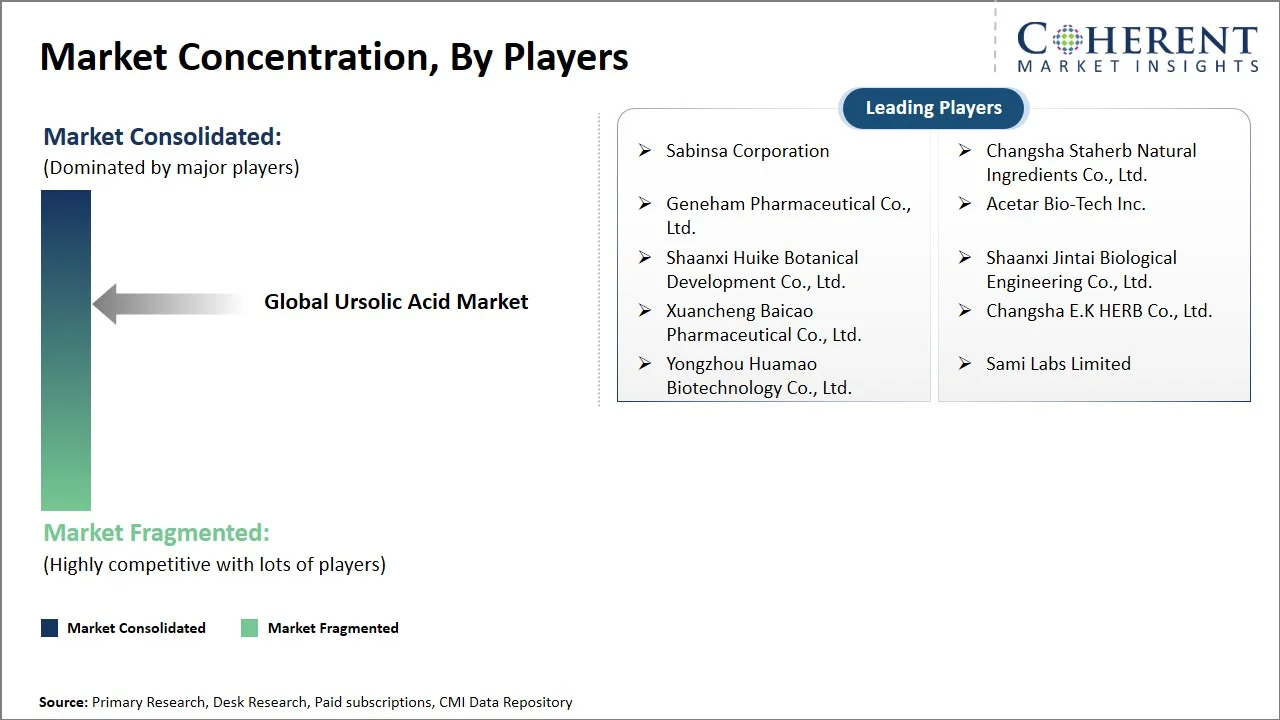
The global ursolic acid market is moderately fragmented, with competition centered on product purity, standardized botanical extraction, regulatory compliance, and application-specific ingredient development. Market participants are focusing on expanding production capacities, improving extraction efficiency, and developing high-purity ursolic acid for pharmaceutical, nutraceutical, and cosmetic applications. Strategic collaborations with dietary supplement, pharmaceutical, and personal care manufacturers are strengthening market presence and accelerating commercialization. Key focus areas include:
- Development of high-purity and standardized ursolic acid extracts for pharmaceutical and nutraceutical applications
- Adoption of advanced extraction and purification technologies to improve yield, quality, and sustainability
- Strategic partnerships with dietary supplement, cosmetic, and pharmaceutical manufacturers to expand commercial reach
- Expansion of clean-label, plant-based, and clinically validated botanical ingredient portfolios to meet evolving consumer demand
Market Report Scope
Ursolic Acid Market Report Coverage
| Report Coverage | Details | ||
|---|---|---|---|
| Base Year: | 2025 | Market Size in 2026: | USD 342.8 Mn |
| Historical Data for: | 2020 To 2024 | Forecast Period: | 2026 To 2033 |
| Forecast Period 2026 to 2033 CAGR: | 5.8% | 2033 Value Projection: | USD 508.7 Mn |
| Geographies covered: |
| ||
| Segments covered: |
| ||
| Companies covered: | Sabinsa Corporation, Changsha Staherb Natural Ingredients Co., Ltd., Geneham Pharmaceutical Co., Ltd., Acetar Bio-Tech Inc., Shaanxi Huike Botanical Development Co., Ltd., Shaanxi Jintai Biological Engineering Co., Ltd., Xuancheng Baicao Pharmaceutical Co., Ltd., Changsha E.K HERB Co., Ltd., Yongzhou Huamao Biotechnology Co., Ltd., Sami Labs Limited | ||
| Growth Drivers: |
| ||
| Restraints & Challenges: |
| ||
Analyst Opinion (Expert Opinion)
- The future outlook for the ursolic acid market will be shaped by the growing commercialization of scientifically validated botanical bioactives across pharmaceuticals, nutraceuticals, and functional cosmetics. Advancements in formulation technologies that improve ursolic acid's bioavailability and stability are expected to unlock new therapeutic applications and accelerate market adoption.
- The maximum opportunities will probably exist within high-purity (>98%) ursolic acid for nutraceutical and dietary supplement applications in the U.S., supported by strong consumer demand for plant-based wellness ingredients and preventive healthcare products. Expanding applications in healthy aging, metabolic health, and sports nutrition are expected to further strengthen demand.
- In order to obtain a competitive advantage, market participants should focus on developing high-purity, standardized ursolic acid ingredients, invest in clinically supported product validation, and adopt sustainable extraction technologies. Strengthening partnerships with dietary supplement, pharmaceutical, and cosmetic manufacturers while ensuring compliance with global quality and regulatory standards will be critical for long-term market differentiation.
Speak to the analyst
Want personalized insights?
Take the findings above to one of our principal consultants, or have the report rebuilt around the segments, geographies and competitors you actually track.
Market Segmentation
- Source Insights (Revenue, USD Mn, 2021 - 2033)
- Plant-derived
- Synthetic/Biotechnological
- Application Insights (Revenue, USD Mn, 2021 - 2033)
- Cosmetics and Personal Care
- Nutraceuticals and Dietary Supplements
- Pharmaceuticals
- Food and Beverages
- Regional Insights (Revenue, USD Mn, 2021 - 2033)
- North America
- U.S.
- Canada
- Latin America
- Brazil
- Argentina
- Mexico
- Rest of Latin America
- Europe
- Germany
- U.K.
- Spain
- France
- Italy
- Russia
- Rest of Europe
- Asia Pacific
- China
- India
- Japan
- Australia
- South Korea
- ASEAN
- Rest of Asia Pacific
- Middle East
- GCC Countries
- Israel
- Rest of Middle East
- Africa
- South Africa
- North Africa
- Central Africa
- North America
- Key Players Insights
- Sabinsa Corporation
- Changsha Staherb Natural Ingredients Co., Ltd.
- Geneham Pharmaceutical Co., Ltd.
- Acetar Bio-Tech Inc.
- Shaanxi Huike Botanical Development Co., Ltd.
- Shaanxi Jintai Biological Engineering Co., Ltd.
- Xuancheng Baicao Pharmaceutical Co., Ltd.
- Changsha E.K HERB Co., Ltd.
- Yongzhou Huamao Biotechnology Co., Ltd.
- Sami Labs Limited
Sources
Primary Research Interviews
- Ursolic acid manufacturers and botanical extract producers
- Nutraceutical and dietary supplement manufacturers
- Pharmaceutical formulation and drug development experts
- Cosmetic and personal care product manufacturers
- Functional food and beverage companies
- Contract research organizations (CROs) and botanical ingredient consultants
Stakeholders
- Botanical extract manufacturers
- Pharmaceutical and nutraceutical companies
- Cosmetic and personal care manufacturers
- Functional food and beverage companies
- Dietary supplement brands
- Contract manufacturing organizations (CMOs)
- End-use Sectors
- Pharmaceutical companies
- Nutraceutical and dietary supplement manufacturers
- Cosmetics and personal care companies
- Functional food & beverage manufacturers
- Research institutes and universities
- Regulatory & Health Bodies
- U.S. Food and Drug Administration (FDA)
- European Food Safety Authority (EFSA)
- European Medicines Agency (EMA)
- National Center for Complementary and Integrative Health (NCCIH), NIH
- Ministry of AYUSH, Government of India
- National Medical Products Administration (NMPA), China
Databases
- NIH National Library of Medicine (NLM)
- USDA FoodData Central
- FDA Food and Dietary Supplement Databases
- European Food Safety Authority (EFSA) Open Data Portal
- National Center for Biotechnology Information (NCBI)
Magazines
- Nutraceuticals World
- Natural Products INSIDER
- Nutrition Industry Executive
- Cosmetics & Toiletries
- Nutritional Outlook
Journals
- Journal of Ethnopharmacology
- Phytomedicine
- Journal of Agricultural and Food Chemistry
- Frontiers in Pharmacology
Newspapers
- The Wall Street Journal
- Financial Times
- China Daily
- The Economic Times
Associations
- American Herbal Products Association (AHPA)
- Council for Responsible Nutrition (CRN)
- International Alliance of Dietary/Food Supplement Associations (IADSA)
- American Botanical Council (ABC)
- United Natural Products Alliance (UNPA)
Public Domain Sources
- U.S. Food and Drug Administration (FDA)
- National Institutes of Health (NIH)
- National Center for Complementary and Integrative Health (NCCIH)
- European Food Safety Authority (EFSA)
- Ministry of AYUSH, Government of India
- National Medical Products Administration (NMPA), China
Proprietary Elements
- CMI Data Analytics Tool, Proprietary CMI Existing Repository of information for last 10 years.
Get access to 250+ pages report
Every segment, forecast, competitor profile and data table behind the analysis above — available for instant download.
- ESOMAR Member
- ISO 9001:2015 Certified
- D-U-N-S Registered
- GDPR & CCPA Compliant
Missing comfort of reading report in your local language? Find your preferred language:
Transform your Strategy with Exclusive Trending Reports
Frequently Asked Questions
The global ursolic acid market is estimated to be valued at USD 342.8 Mn in 2026 and is expected to reach USD 508.7 Mn by 2033.
Plant-derived dominates due to their abundant availability in medicinal plants and fruits, cost-effective extraction, and strong consumer preference for naturally sourced bioactive ingredients across pharmaceutical, nutraceutical, and cosmetic applications.
Ursolic acid is a naturally occurring pentacyclic triterpenoid found in various medicinal plants and fruits, known for its anti-inflammatory, antioxidant, and therapeutic properties.
The CAGR of the global ursolic acid market is projected to be 5.8% from 2026 to 2033.
High-purity ursolic acid offers better consistency, regulatory compliance, and formulation performance for pharmaceutical and nutraceutical products.
Ursolic acid has poor water solubility, which limits its oral bioavailability and often necessitates advanced delivery technologies such as nano formulations or lipid-based carriers.
Rising demand for natural bioactive ingredients, and expanding use in nutraceuticals and cosmetics are the major factors driving the growth of the global ursolic acid market.