

U.S. and Europe Industrial Hemp-Based Bioplastics Market Size and Forecast: 2026-2033
The U.S. and Europe industrial hemp-based bioplastics market is estimated to be valued at USD 140.0 Mn in 2026 and is expected to reach USD 303.7 Mn by 2033, exhibiting a compound annual growth rate (CAGR) of 11.7% from 2026 to 2033.
Key Takeaways of the U.S. and Europe Industrial Hemp-Based Bioplastics Market
- The Hemp Hurd (Shiv) segment is expected to capture a 35.7% share of the industrial hemp-based bioplastics market in 2026.
- The hemp-reinforced biocomposites segment is projected to hold a 39.8% share in 2026.
- The packaging segment is expected to represent a 31.7% share in 2026.
Market Overview
The market trend highlights a significant shift towards eco-friendly and renewable resources, with industrial hemp gaining traction due to its biodegradability, low carbon footprint, and cost-effectiveness. Additionally, increasing regulatory support and consumer awareness around plastic pollution are propelling demand for hemp-based bioplastics. The growing adoption of plastic waste to oil technologies, aimed at reducing plastic waste, further amplifies the demand for sustainable alternatives like hemp-based bioplastics. Innovations in processing technology and improved material properties are further facilitating market expansion, making hemp-based bioplastics a preferred choice in packaging, automotive, and consumer goods sectors.
Currents Events and their Impact
Current Events | Description and Its Impact |
Technological advancements in hemp bioplastic production, including processing infrastructure and material innovations |
|
Oversupply and volatility of hemp biomass due to the CBD market boom and changing incentives |
|
Segmental Insights
- Current Industry Events of 2026
- Market Size Estimation
- Regional Breakdown
- Competitive Landscape
- Customer Intelligence
- Segmental Analysis
- Pricing Analysis
- Key Market Drivers, Challenges & Future Trends
- Customized Insights Section
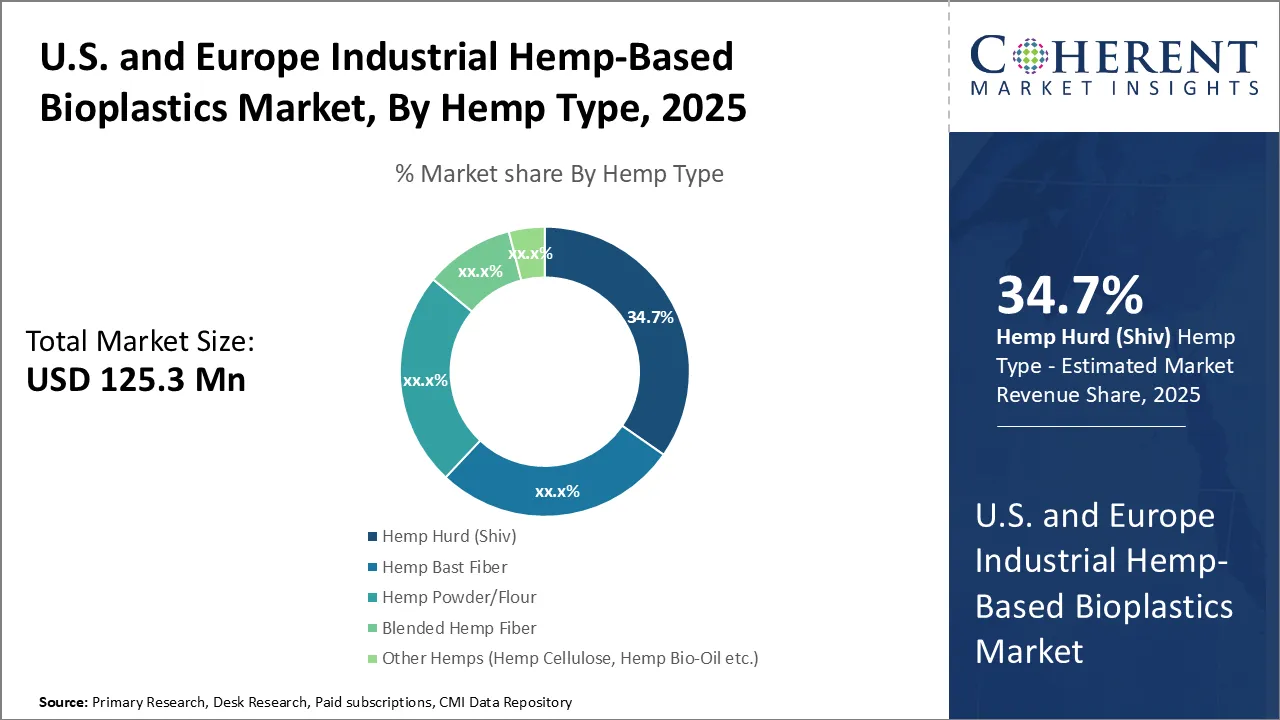
Industrial Hemp-Based Bioplastics Market Insights, By Hemp Type - Hemp Hurd (Shiv) Segment Dominates Due to its Superior Characteristics and Versatility for Bioplastic Production
Hemp Hurd (Shiv) segment is expected to hold 35.7% share in 2026, due to its unique structural properties. Its high cellulose content and relatively low lignin level make it an ideal raw material for bioplastic manufacturing. These attributes enable the production of bioplastics with enhanced mechanical strength and durability, which broadens their usability across multiple industries. The porous nature of hemp hurd also contributes to its excellent binding and compounding capabilities when integrated into biopolymer matrices.
For example, hemp hurd-based bioplastics are increasingly being utilized in the automotive industry for the production of interior components such as door panels and dashboards. This is due to their lightweight nature and high strength-to-weight ratio, which provide cost-effective and sustainable alternatives to traditional petroleum-based plastics.
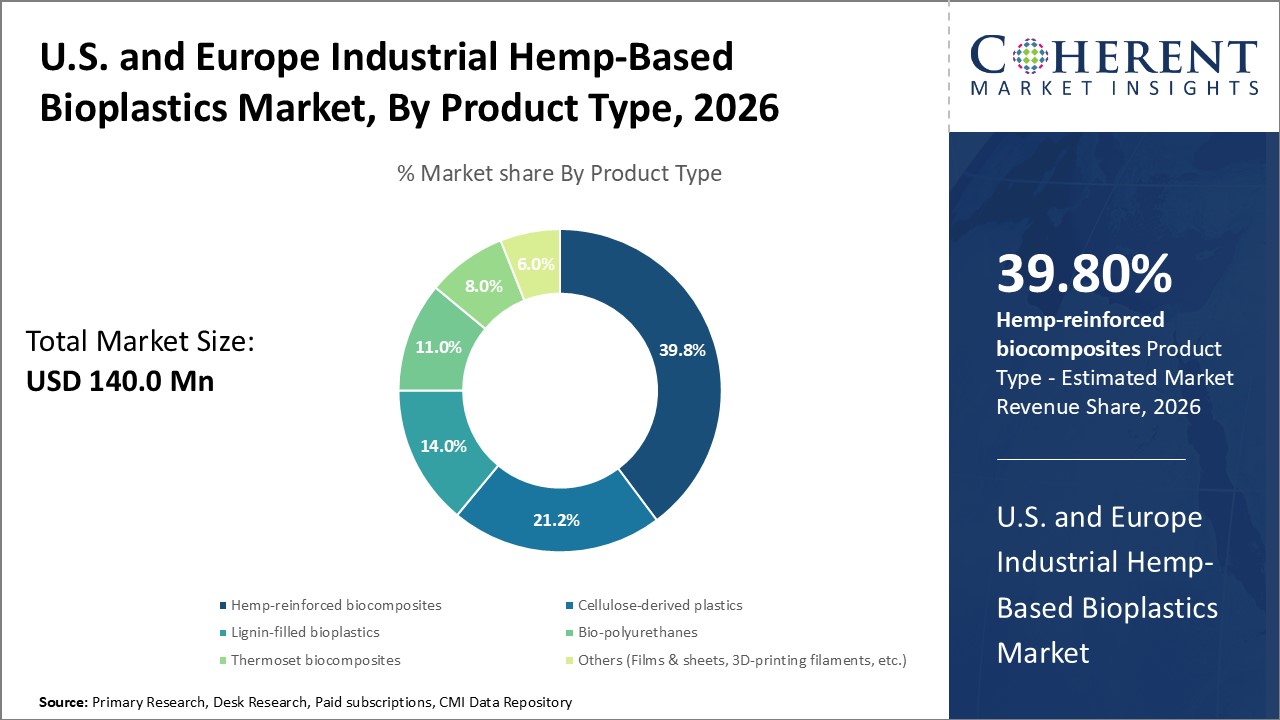
Industrial Hemp-Based Bioplastics Market Insights, By Product Type - Hemp-reinforced Biocomposites Segment Dominates Due to their Superior Performance and Environmental Appeal
The hemp-reinforced biocomposites segment is projected to hold a 39.8% share in 2026, reflecting a rising demand for materials that has high performance with sustainability. These composites integrate hemp fibers, often bast fibers or hurd particles, into biopolymer matrices to enhance mechanical properties such as strength, stiffness, and impact resistance, which are critical for industrial applications including automotive parts, consumer goods, and packaging components.
A key factor underpinning the growth of hemp-reinforced biocomposites is their ability to offer a lighter, stronger alternative to conventional plastic composites made from glass or carbon fibers. Hemp fibers are less energy-intensive to produce, absorb less carbon during cultivation, and contribute to lower overall environmental footprints. This positions hemp-reinforced composites as attractive materials for manufacturers who must comply with stringent emissions regulations and sustainability goals.
Industrial Hemp-Based Bioplastics Market Insights, By Application – Packaging Segment Dominates Due to Increasing Eco-Conscious Consumerism and Regulatory Pressures
The packaging segment is expected to represent a 32.7% share in 2026, driven by the escalating demand for sustainable packaging solutions. Consumers and brands alike are shifting toward biodegradable and compostable materials to replace single-use plastics, primarily due to heightened environmental awareness and mounting plastic waste concerns. Industrial hemp-based bioplastics provide packaging manufacturers with a renewable, eco-friendly resource that aligns seamlessly with this industry transformation.
Packaging applications benefit from the intrinsic properties of hemp bioplastics, such as biodegradability, strength, and flexibility. For instance, hemp hurd and bast fibers can be incorporated into biodegradable films, trays, boxes, and molded packaging materials, offering comparable performance to traditional petroleum-based plastics while significantly reducing environmental impact. Additionally, hemp components enhance the barrier properties and durability of bioplastic packaging, critical factors for preserving product integrity and shelf life.
Macro and Micro Economic Factors Impacting the U.S. and Europe Industrial Hemp-Based Bioplastics Market Growth
Macroeconomic Factors
- Regulatory and Policy Support: Both regions benefit from supportive regulatory environments that encourage sustainable agricultural practices and the adoption of eco-friendly materials. Europe has stringent regulations favoring sustainable products, supported by frameworks like the European Green Deal and policies promoting bioeconomy and circular economy principles. These policies provide a secure investment framework and incentivize hemp farming through subsidies and income support schemes in countries like France, Poland, and Romania.
- Environmental Awareness and Consumer Preferences: Increased environmental concerns about plastic pollution and climate change drive demand for biodegradable and sustainable alternatives like hemp bioplastics. Consumers in both regions show growing preferences for products with lower environmental footprints, which supports market expansion.
Microeconomic Factors
- Technological Innovations and Production Costs: Advancements in manufacturing and processing technologies improve the cost-efficiency and quality of hemp bioplastics. However, the technology remains relatively expensive compared to conventional bioplastics (like soy and corn-based), which may restrain rapid adoption.
- Market Competition and Industry Structure: The market is competitive with a mix of large and small players investing in product development across sectors such as packaging, automotive, textiles, and personal care. Strategic collaborations and product launches in both regions drive innovation and market penetration.
- Supply Chain and Raw Material Sourcing: Sustainable sourcing of hemp and improvements in supply chain transparency (e.g., blockchain technology) enhance production reliability and consumer trust. The fast growth rate of hemp and its efficient land use contribute positively to supply dynamics.
Market Players, Key Development, and Competitive Intelligence
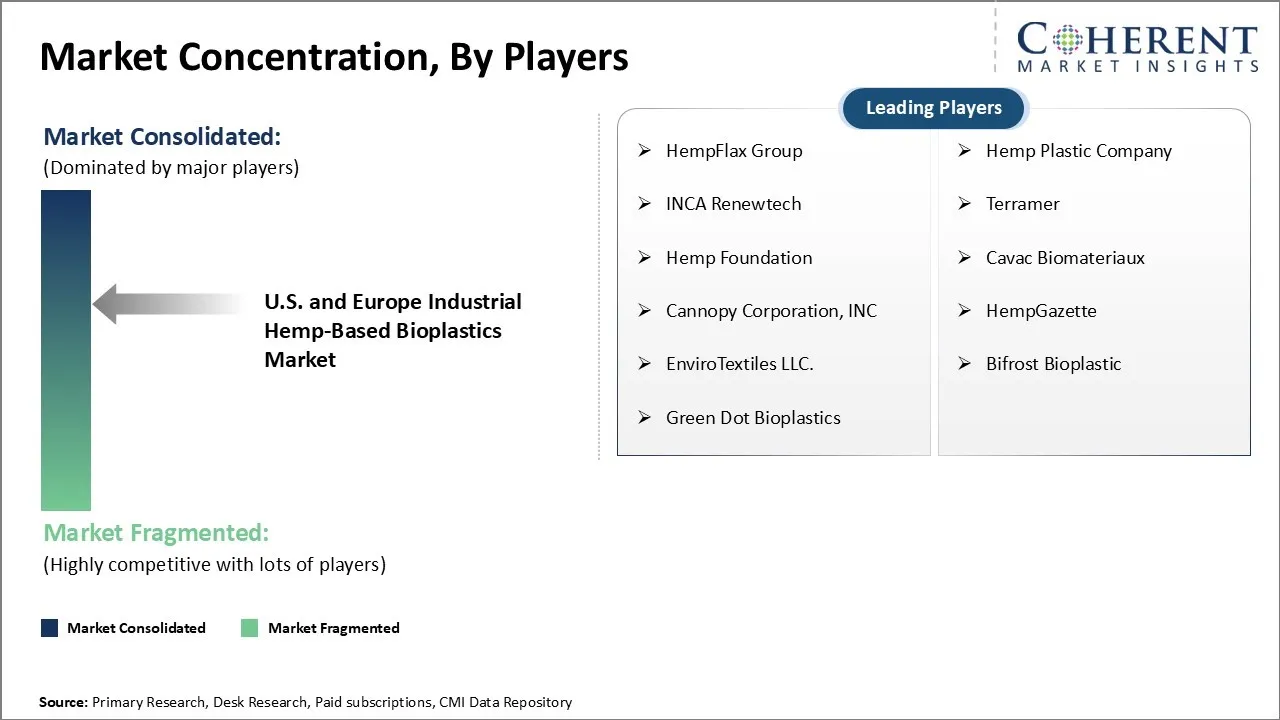
Key Development
- INCA Renewtech specializes in the development and production of hemp-based bioplastics and bio-composites. Its innovative materials aim to replace traditional petroleum-based products with sustainable, hemp-derived alternatives across various industries. INCA BioPlastics are injection- and extrusion-grade pellets made from refined hemp fiber. These pellets serve as direct replacements for Glass Fiber-Reinforced Plastics (GRP) and other petroleum-based composites. When compounded with recycled polypropylene, INCA BioPlastics can reduce carbon emissions by up to 91% and water consumption by 59% compared to GRP. Formulations with polylactic acid (PLA) resin offer additional benefits, including a 23% reduction in carbon emissions and a 68% decrease in waste production.
Top Strategies Followed by U.S. and Europe Industrial Hemp-Based Bioplastics Market Players
- Established companies dominate the sector through significant investments in research and development (R&D) to drive innovation in high-performance bioplastic products. These players prioritize developing materials that not only meet stringent sustainability standards but also rival conventional plastics in durability and usability. To capitalize on the burgeoning global demand for eco-friendly materials, these companies continuously expand their distribution networks across North America, Europe, and emerging markets worldwide, thus ensuring enhanced accessibility to their offerings and securing a competitive advantage on a global scale.
- For example, BASF, through its investment arm Chemovator, recently invested in Heartland, a startup focused on developing natural fiber additives, including from hemp, that align with BASF's sustainability goals. While BASF's core business in bioplastics focuses on renewable sources like sugar for PLA and bio-based fossil-free raw materials for ecoflex, this investment in Heartland signifies a strategic interest in emerging hemp-based technologies for future applications.
- Mid-level players in this market segment adopt a distinct approach focusing on providing cost-effective hemp-based bioplastics that strike a balance between quality and affordability. Targeting price-sensitive customer segments — including Small and Medium-Sized Enterprises (SMEs) and regional manufacturers — they emphasize scalability and efficiency in production to maintain competitive pricing without compromising product performance. To strengthen their market position, these companies often engage in collaborations with technology providers, supply chain partners, or other bioplastics firms to augment their production capabilities and technological know-how.
- For example, U.S.-based, The Hemp Plastic Company, has made significant strides in producing high-quality hemp-based bioplastics, targeting the automotive and packaging sectors. With large-scale manufacturing capabilities and extensive partnerships, Hemp, Inc. has been able to drive growth in sustainable packaging solutions globally.
- Small-scale players carve out their niche in the highly competitive industrial hemp bioplastics market by focusing on specialized features or innovative product offerings that differentiate them from larger competitors. These players often target specific applications requiring unique material properties, such as enhanced biodegradability, tailored mechanical strength, or aesthetic customization, which might be overlooked by mass-market producers.
Market Report Scope
U.S. and Europe Industrial Hemp-Based Bioplastics Market Report Coverage
| Report Coverage | Details | ||
|---|---|---|---|
| Base Year: | 2025 | Market Size in 2026: | USD 140.0 Mn |
| Historical Data for: | 2020 To 2024 | Forecast Period: | 2026 To 2033 |
| Forecast Period 2026 to 2033 CAGR: | 11.7% | 2033 Value Projection: | USD 303.7 Mn |
| Segments covered: |
| ||
| Companies covered: | HempFlax Group, Hemp Plastic Company, INCA Renewtech, Terramer, Hemp Foundation, Cavac Biomateriaux, Cannopy Corporation, INC, HempGazette, EnviroTextiles LLC., Bifrost Bioplastic, and Green Dot Bioplastics | ||
| Growth Drivers: |
| ||
| Restraints & Challenges: |
| ||
U.S. and Europe Industrial Hemp-Based Bioplastics Market Dynamics
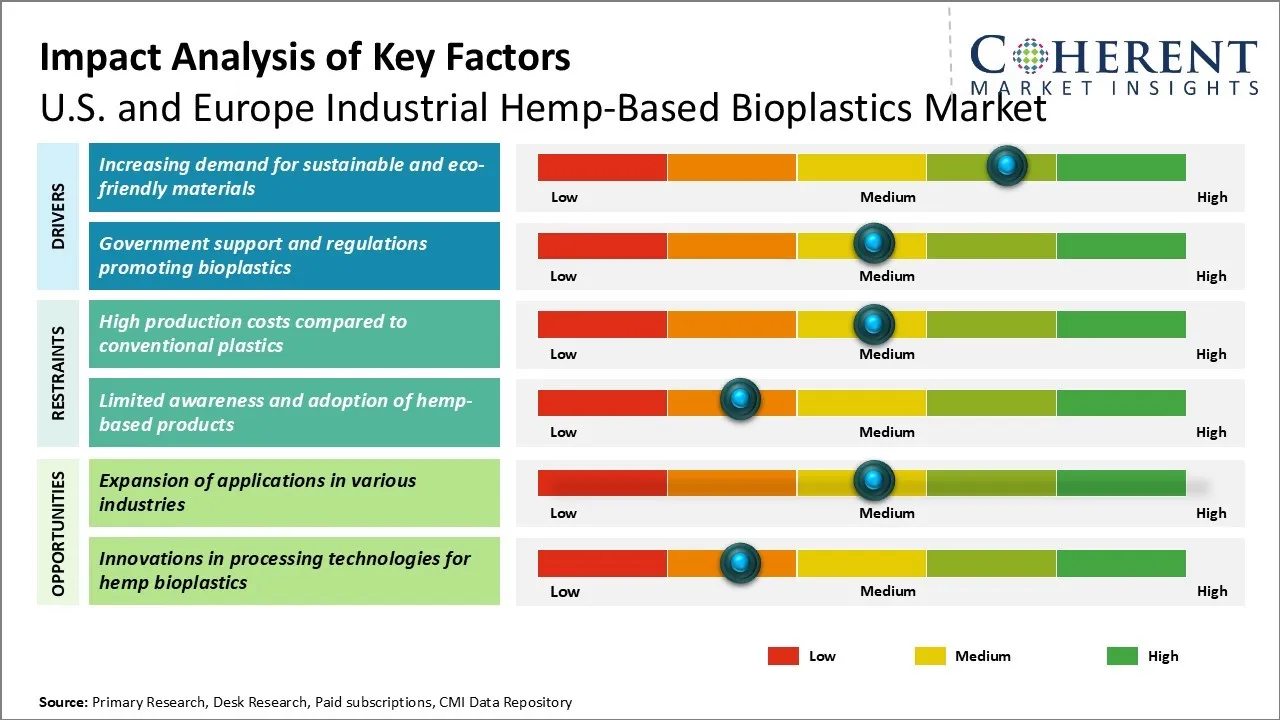
U.S. and Europe Industrial Hemp-Based Bioplastics Market Driver - Increasing Demand for Sustainable and Eco-Friendly Materials
The rising awareness about environmental degradation and the adverse effects of conventional plastics is significantly fueling the demand for sustainable and eco-friendly materials in both the U.S. and European industrial sectors. Consumers and manufacturers alike are increasingly prioritizing products that minimize carbon footprints and plastic waste management, driving the adoption of industrial hemp-based bioplastics as a viable alternative. Hemp, known for its rapid growth and minimal resource requirements, offers a renewable biomass source that supports circular economy principles. In addition, regulatory pressures and government initiatives aimed at reducing single-use plastics and promoting green manufacturing practices further accelerate the preference for bioplastics derived from hemp.
For instance, automotive manufacturers are integrating hemp-fiber composites into interior panels and structural components, while packaging companies are developing hemp-based films and containers that decompose naturally without leaving harmful residues. According to the United Nations Environment Programme's 2022 report on plastic pollution, over 11 million tons of plastic waste enter oceans annually, intensifying the urgency for biodegradable alternatives and accelerating hemp bioplastic adoption across diverse applications.
U.S. and Europe Industrial Hemp-Based Bioplastics Market Opportunity - Expansion of Applications in Various Industries
The U.S. and Europe industrial hemp-based bioplastics market presents a significant opportunity driven by the expanding applications across diverse industries. As sustainability becomes a critical focus, industries such as packaging, automotive, consumer goods, and agriculture are increasingly seeking eco-friendly alternatives to conventional plastics. Industrial hemp-based bioplastics offer enhanced biodegradability, lower carbon footprints, and superior flexibility, making them an attractive option for manufacturers aiming to meet stringent environmental regulations and consumer demand for green products. In packaging, hemp bioplastics are gaining traction due to their ability to decompose rapidly, addressing pollution concerns associated with single-use plastics.
For example, companies like Ford Motor Company have explored hemp-based biocomposites for car interiors, such as door panels and seat cushions. Ford’s use of hemp-based materials in their vehicles aims to reduce the carbon footprint of automotive manufacturing, align with environmental goals, and comply with regulatory pressures on sustainability.
Analyst Opinion (Expert Opinion)
- The U.S. and Europe industrial hemp-based bioplastics market is rapidly evolving, driven by increasing regulatory support for sustainable materials and growing consumer demand for eco-friendly products. Insights from the European Bioplastics Conference (2023) and the Hemp Innovation Expo (2022) highlighted key advancements, with companies like HempEco and BioStep emerging as frontrunners in developing innovative bioplastic solutions.
- HempEco's recent launch of a fully biodegradable hemp-based packaging material has garnered attention for its potential to reduce plastic waste significantly. Discussions at these conferences emphasized the importance of overcoming production scalability and cost challenges to compete with conventional plastics effectively. However, the growing interest from investors and the establishment of pilot projects indicates a positive trajectory for market growth.
- Companies that prioritize research and development, particularly in enhancing the mechanical properties of hemp bioplastics, will likely secure a competitive edge. The future of this market will hinge on its ability to innovate while aligning with stringent environmental regulations and capturing the attention of consumers increasingly focused on sustainability.
Speak to the analyst
Want personalized insights?
Take the findings above to one of our principal consultants, or have the report rebuilt around the segments, geographies and competitors you actually track.
Market Segmentation
- Hemp Type Insights (Revenue, USD Mn, 2021 - 2033)
- Hemp Hurd (Shiv)
- Hemp Bast Fiber
- Hemp Powder/Flour
- Blended Hemp Fiber
- Other Hemps (Hemp Cellulose, Hemp Bio-Oil, etc.)
- Product Type Insights (Revenue, USD Mn, 2021 - 2033)
- Hemp-reinforced biocomposites
- Cellulose-derived plastics
- Lignin-filled bioplastics
- Bio-polyurethanes
- Thermoset biocomposites
- Others (Films & sheets, 3D-printing filaments, etc.)
- Application Insights (Revenue, USD Mn, 2021 - 2033)
- Packaging
- Automotive & Transportation
- FMCG & Consumer Durables
- Industrial/Manufacturing
- Others (Agriculture & Landscaping, Textiles, Medical, etc.)
- Distribution Channel Insights (Revenue, USD Mn, 2021 - 2033)
- Direct-to-project Supply (B2B bulk sales)
- Distributors / Building Material Merchants
- Online B2B Platforms
- Key Players Insights
- HempFlax Group
- Hemp Plastic Company
- INCA Renewtech
- Terramer
- Hemp Foundation
- Cavac Biomateriaux
- Cannopy Corporation, INC.
- HempGazette
- EnviroTextiles LLC.
- Bifrost Bioplastic
- Green Dot Bioplastics
Sources
Primary Research Interviews
- R&D Director – Leading Bioplastics Manufacturer
- Procurement Manager – Major Plastic Alternatives Retailer
- Product Development Head – Hemp-Based Plastic Innovations
- Sustainability Manager – Bioplastics Certification Body
Stakeholders
- Manufacturers
- End-use Sectors
- Packaging (Biodegradable Packaging)
- Automotive (Interior Components, Lightweight Materials)
- Consumer Goods (Durable Goods, Electronics)
- Construction (Sustainable Building Materials)
- Regulatory & Certification Bodies
- E-commerce Platforms and Retailers
- Technology Integration Players Biopolymer technology providers for sustainable plastics
Databases
- USDA Agricultural Data
- European Union Trade Statistics
Magazines
- Bioplastics Magazine – Innovations in hemp-based bioplastics
- Plastics News – Developments in sustainable materials
- European Bioplastics News – Market trends in bioplastics
- Green Plastics Journal – Bioplastics in the automotive and packaging sectors
Journals
- Journal of Bioplastics and Biofuels – Advances in bioplastics from industrial hemp
- Polymer Engineering & Science – Research on the mechanical properties of hemp-based bioplastics
- Journal of Applied Polymer Science – Study of hemp as a sustainable material for plastic alternatives
- Journal of Cleaner Production – Environmental impact of bioplastics
- Resources, Conservation and Recycling – Circular economy models for hemp bioplastics
Newspapers
- The Financial Times – Investment trends in the hemp-based bioplastics industry
- The Guardian – Environmental impact and regulations on bioplastics
- European Business Review – Market developments in the European bioplastics sector
- U.S. News & World Report – Hemp’s role in reducing plastic waste in the U.S.
Associations
- European Bioplastics Association (EBA)
- U.S. Hemp Roundtable
- Hemp Industries Association (HIA)
- Bioplastics International Association
Public Domain Sources
- U.S. FDA – Guidelines for bioplastics in food contact materials
- European Commission – Regulations for biodegradable plastics
- U.S. Department of Energy – Biomass Program and Hemp Research
- OECD – Biodegradable Plastic Industry Safety Guidelines
Proprietary Elements
- CMI Data Analytics Tool, Proprietary CMI Existing Repository of information for last 8 years.
Get access to 250+ pages report
Every segment, forecast, competitor profile and data table behind the analysis above — available for instant download.
- ESOMAR Member
- ISO 9001:2015 Certified
- D-U-N-S Registered
- GDPR & CCPA Compliant
Missing comfort of reading report in your local language? Find your preferred language:
Transform your Strategy with Exclusive Trending Reports
Frequently Asked Questions
The U.S. and Europe industrial hemp-based bioplastics market is estimated to be valued at USD 140.0 Mn in 2026 and is expected to reach USD 303.7 Mn by 2033.
The CAGR of the U.S. and Europe industrial hemp-based bioplastics market is projected to be 11.7% from 2026 to 2033.
Bioplastics are environment-friendly alternatives to conventional plastics, derived from renewable sources, and play a key role in reducing plastic waste and carbon footprints.
Key market segments for hemp-based bioplastics include packaging, automotive, consumer goods, and construction materials.
Increasing demand for sustainable and eco-friendly materials and government support and regulations promoting bioplastics are the major factors driving the growth of the U.S. and Europe industrial hemp-based bioplastics market.
High production costs compared to conventional plastics and limited awareness and adoption of hemp-based products are the major factors hampering the growth of the U.S. and Europe industrial hemp-based bioplastics market.
In terms of hemp type, the Hemp Hurd (Shiv) segment is estimated to dominate the market revenue share in 2026.