

Plastic Waste Management Market Size and Forecast: 2026 to 2033
Plastic Waste Management Market is estimated to be valued at USD 40.75 Bn in 2026 and is expected to reach USD 51.84 Bn in 2033, exhibiting a compound annual growth rate (CAGR) of 3.5% from 2026 to 2033.
Key Takeaways
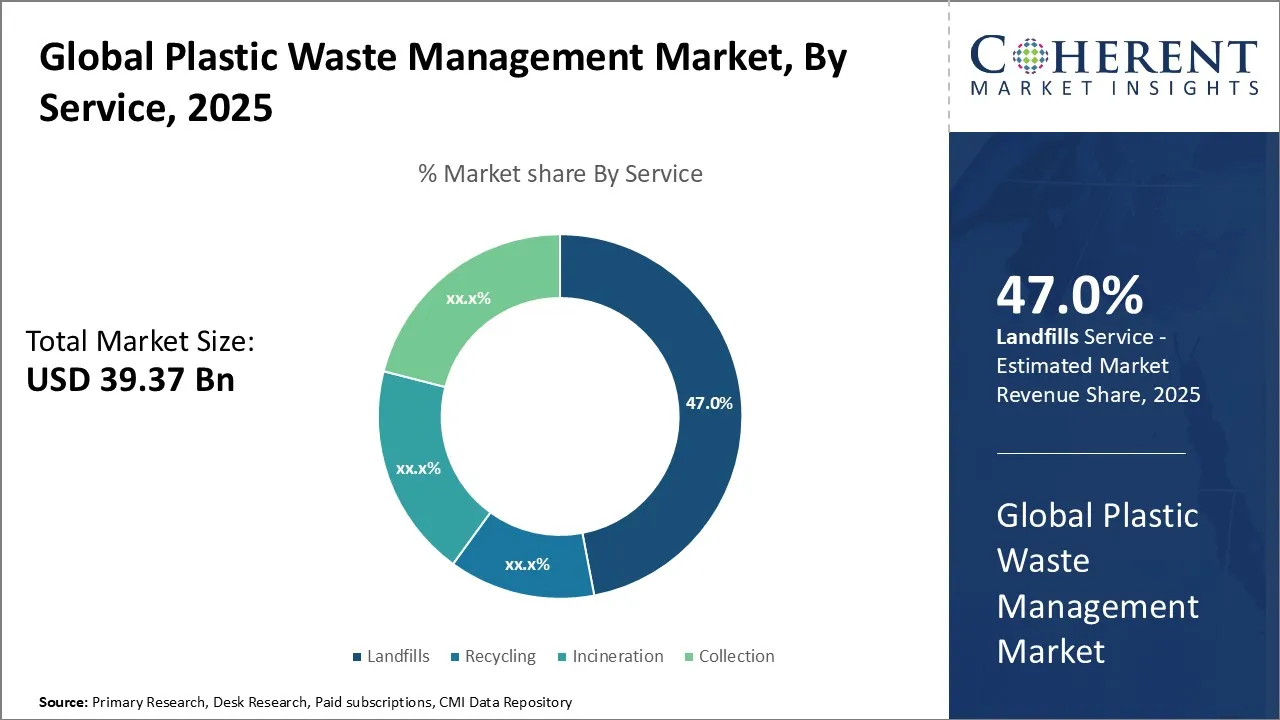
- By Service, Landfills hold the largest market share of 48% in 2026 owing to its lack of effective recycling or incineration infrastructure.
- By Polymer Type, Polypropylene (PP) expected to hold largest market share in 2026 owing to its widespread use of PP across many industries and applications.
- By Source, Residential acquired the prominent market share in 2026 owing to the high volume of plastic waste from households.
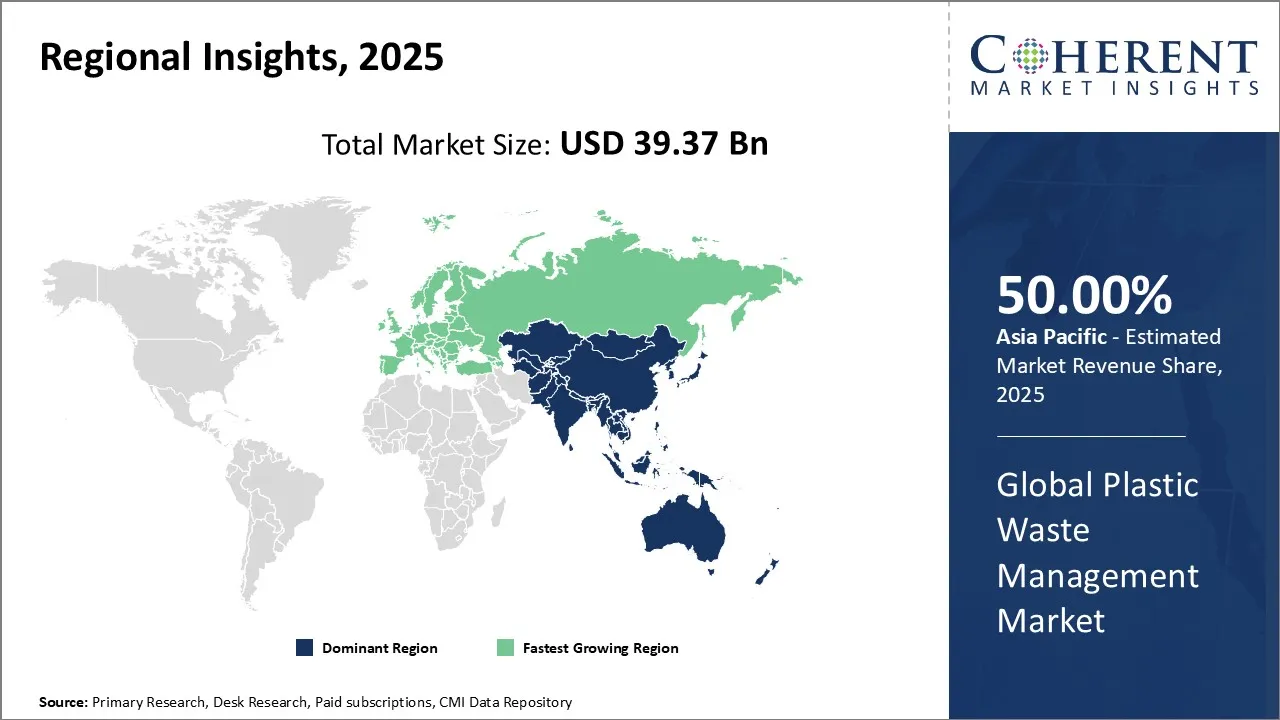
- By Region, Asia Pacific dominates the overall market with an estimated share of 50% in 2026 owing to the rapid urbanization, population growth & rising consumption.
Market Overview
The Plastic Waste Management Market actively addresses the collection, segregation, recycling, and disposal of plastic waste from residential, commercial, and industrial sources. Rising plastic consumption, urbanization, and environmental concerns are prompting demand for effective waste-management solutions. Companies implement mechanical and chemical recycling, operate landfills, and utilize waste-to-energy technologies, guided by government initiatives, regulations, and public awareness campaigns. Increased investments in infrastructure and technological innovations are driving the industry toward sustainability, promoting circular economy practices, and reducing the environmental impact of plastics.
Current Events and Its Impact on the Plastic Waste Management Market
Current Events | Description and its impact |
Regulatory and Policy Shifts |
|
Technological Innovations in Recycling |
|
Geopolitical and Trade Dynamics |
|
Segmental Insights
- Current Industry Events of 2026
- Market Size Estimation
- Regional Breakdown
- Competitive Landscape
- Customer Intelligence
- Segmental Analysis
- Pricing Analysis
- Key Market Drivers, Challenges & Future Trends
- Customized Insights Section
Plastic Waste Management Market Insights, By Service - Landfills contribute the highest share of the market owing to its insufficient or inconsistent waste‑segregation and collection systems
Landfills hold the largest market share of 48% in 2026. The Plastic Waste Management Market relies heavily on landfills as a primary disposal method because recycling infrastructure is limited, plastics are often non-recyclable or contaminated, and landfilling offers a cost-effective solution. Rapid urbanization and increasing plastic consumption generate more waste, while inadequate segregation and collection systems make landfilling a practical choice. Regulatory delays and underinvestment in alternative technologies further sustain landfill use. Despite environmental concerns, stakeholders continue to use landfills to manage large volumes of plastic waste efficiently across many regions. However, various countries across the globe are trying to reduce the burden on landfills. For example, in August 2025, the Navi Mumbai Municipal Corporation (NMMC) and Project Mumbai launched a plastic-recycling drive under the Independence Day campaign “Har Ghar Tiranga, Har Ghar Swachhata,” aiming to make the city zero plastic-landfill.
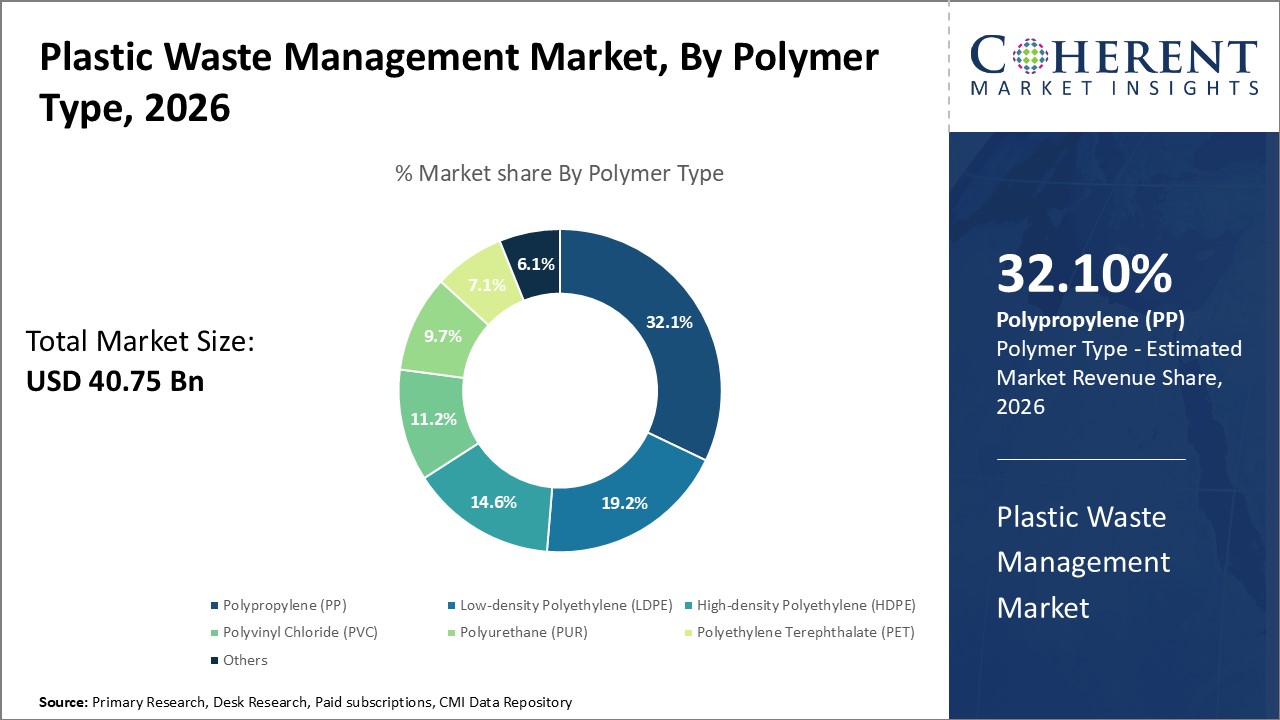
Plastic Waste Management Market Insights, By Polymer Type - Polypropylene (PP) contribute the highest share of the market owing to its advances in recycling technology and increasing infrastructure for pp waste recovery.
The Plastic Waste Management Market increasingly focuses on polypropylene (PP) because its extensive use in packaging, consumer goods, automotive, and medical applications generates substantial waste. Growing demand for recycled and sustainable materials drives the collection and recycling of PP. Advancements in sorting and recycling technologies, along with regulatory support and public awareness, enhance PP waste management. Companies actively pursue the economic benefits of recycled PP and adopt circular economy practices, making PP a central material for efficient recovery, processing, and reuse in the market. In June 2025, HMC Polymers, Channel 3, and Thailand Post launched the “PP Reborn: Turn PP Wastes to Children's Playgrounds” initiative to educate the public on proper PP plastic waste management.
Plastic Waste Management Market Insights, By Source - Residential contribute the highest share of the market owing to its growing public awareness and environmental/health concerns among households
Households actively drive the Plastic Waste Management Market by producing large volumes of plastic waste from packaging, food containers, bottles, and everyday products. Increasing urbanization and evolving consumption patterns generate more waste, while rising public awareness of environmental and health issues promotes improved segregation and recycling. Governments and municipalities implement regulations, collection programs, and awareness campaigns to support residential waste management. Investments in infrastructure and convenient collection systems allow efficient recovery and recycling, positioning residential waste as a central focus for sustainable plastic waste management. For instance, in June 2025, MAGGI has launched a World Environment Day campaign urging responsible plastic disposal. Using visuals of everyday items placed out of place—like shoes in a fridge or sunglasses in a microwave—the campaign highlights one clear message: everything, including waste, should go where it belongs.
Regional Insights
Asia Pacific Plastic Waste Management Market Trends
Asia Pacific dominates the overall market with an estimated share of 50% in 2026. The Asia‑Pacific region actively reshapes plastic waste management as rapid urban growth and increasing consumption of single‑use and packaged goods drive higher waste generation. Governments and businesses are expanding recycling and waste‑handling efforts, while stakeholders invest in advanced recycling facilities, chemical recycling, and automated sorting technologies to process mixed and contaminated waste. Meanwhile, extended‑producer‑responsibility (EPR) policies and circular‑economy initiatives are gaining momentum across the region, driving the shift toward more efficient, sustainable, and well-organized plastic waste-management systems. For instance, in January 2026, The Tamil Nadu Pollution Control Board (TNPCB) launched a year-long plastic waste collection drive across all districts and the Greater Chennai Corporation. With a ₹10 crore budget, the initiative aims to cut plastic use and boost environmental awareness.
Europe Plastic Waste Management Market Trends
Europe is actively transforming its plastic waste management, driven by stricter regulations, expanding recycling infrastructure, and growing public demand for sustainable practices. Governments enforce limits on single-use plastics and require higher recycled content in packaging. Companies and municipalities adopt chemical recycling and advanced sorting to reduce landfill use. Rising consumer awareness and corporate circular economy initiatives further promote efficient waste collection, segregation, and reuse, shifting Europe from traditional disposal toward a more organized, resource-efficient plastic waste management system. For instance, in March 2026, Platts, a division of S&P Global Commodity Insights, introduced independent price assessments for mixed plastic waste in the United States and Europe. The division delivers reliable data, analysis, benchmark pricing, and workflow solutions across the metals, commodities, chemicals, energy, and energy-transition sectors.
India Plastic Waste Management Market Trends
India is actively transforming its plastic waste management as rising plastic consumption, packaging waste, and urban growth generate increasing volumes of plastic waste. The government enforces stronger regulations — including bans on many single-use plastics, mandatory waste segregation, and the Extended Producer Responsibility (EPR) framework — prompting companies and municipalities to enhance collection and recycling systems. Innovative technologies, such as AI-enabled sorting, digital traceability with barcodes or QR codes, and chemical recycling plants, are enabling the efficient processing of mixed and hard-to-recycle plastics. For instance, in June 2026, For World Environment Day 2026, the United Nations in India launched a digital Plastic Pollution Literacy Kit to support national efforts to reduce plastic waste and encourage sustainable consumption, aligning with the theme of ending single-use plastic.
United Kingdom Plastic Waste Management Market Trends
The United Kingdom is rapidly transforming its plastic waste‑management sector. Policymakers and investors are driving domestic recycling efforts, while new laws make producers responsible for managing packaging at the end of its life. At the same time, improved sorting technologies and closed‑loop recycling systems are enabling the recovery of plastics into food‑grade or reusable materials. However, many flexible and informal plastic waste streams continue to escape recycling due to weak collection infrastructure. Overall, the market is moving actively toward circular‑economy practices, though structural and behavioral obstacles persist. For instance, in May 2026, the Department of Environment and Natural Resources, through the National Plastic Action Partnership (NPAP), launched the Working Group on Flexible Plastic Waste Recycling to accelerate the Philippines’ shift toward a circular economy.
End-user Feedback and Unmet Needs in the Plastic Waste Management Market
- Confusion Over What Can Be Recycled: Many end users say they don’t know which plastic packaging is recyclable. Surveys found a high share of people remain unsure about what’s accepted — some rarely read disposal instructions, and many find the instructions unclear or inconsistent.
- Demand for Reduced and Better Packaging: Consumers express frustration that retailers and brands still use excessive or difficult‑to‑recycle plastic packaging. They want more sustainable alternatives like paper-based or easily recyclable materials, rather than conventional plastics — especially single‑use items.
- Inconsistent Collection Services & Infrastructure Gaps: Users often face uneven or confusing plastic‑waste collection services, due to local‑authority differences in bins, recycling rules, and flexibility in handling films or flexible packaging. This leads to low participation or mis‑disposal.
Plastic Waste Management Market Trend
Technological Innovation and Smart Recycling
The market is embracing advanced technologies — from AI‑powered sorting systems to sophisticated chemical and mechanical recycling processes — to manage plastic waste more effectively. AI and sensor‑based sorting reduce contamination and improve recovery purity, while newer recycling methods enable challenging plastics (like printed films or mixed polymers) to be processed. These innovations boost efficiency, lower reliance on landfills, and expand the range of plastics that can be reused — paving the way for a more circular‑economy approach.
Regulatory Pressure and Producer Responsibility
Governments and regulators worldwide are tightening legislation around plastic waste, driving companies to adopt sustainable waste‑management practices. Rules such as extended‑producer responsibility and recycled‑content mandates push manufacturers and brands to redesign packaging, minimise single‑use plastics, and invest in recycling infrastructure. This shift encourages stakeholders across the value chain — from producers and retailers to waste handlers — to prioritise waste reduction, reuse and recycling over disposal.
Plastic Waste Management Market Opportunity
Advanced Recycling Technologies and Innovation
The development of next‑generation recycling methods — such as chemical recycling, improved sorting systems, and advanced mechanical reprocessing — opens up major opportunities. These technologies can handle mixed and hard-to-recycle plastics, produce high-quality recycled materials, and reduce reliance on landfills. Firms investing in such technologies can capture value from waste streams previously considered non‑recyclable, turning waste into feedstock for manufacturing or packaging industries.
Market Report Scope
Plastic Waste Management Market Report Coverage
| Report Coverage | Details | ||
|---|---|---|---|
| Base Year: | 2025 | Market Size in 2026: | USD 40.75 Bn |
| Historical Data for: | 2020 To 2024 | Forecast Period: | 2026 To 2033 |
| Forecast Period 2026 to 2033 CAGR: | 3.5% | 2033 Value Projection: | USD 51.84 Bn |
| Geographies covered: |
| ||
| Segments covered: |
| ||
| Companies covered: | Veolia, SUEZ Group, Waste Management, Waste Connections, CLEAN HARBORS INC., Biffa, Covanta Holding Corporation, Stericycle, REMONDIS SE & Co. KG, Republic Services, Inc., Cleanaway, Hawkvale Limited, FCC Environment, Rumpke, DS Smith, Hitachi Transport System, Ltd., Marius Pedersen a.s., Environmental Recovery Corporation of PA, Shell, Montello S.p.A., The Shakti Plastic Industries, Daya Charan Company, Thermowaste Solutions, Banyan Sustainable Waste Management Pvt. Ltd., Premium Recycled Plastics, VITAL WASTE, SAMKI GROUP, and 99P Recycling | ||
| Growth Drivers: |
| ||
| Restraints & Challenges: |
| ||
Plastic Waste Management Market News
- In November 2025, Bisleri International Pvt. Ltd., through its ‘Bottles for Change’ initiative, partnered with the Mira Bhayandar Municipal Corporation (MBMC) to open the city’s first Plastic Recovery Centre and Sustainability Inspiration Centre, strengthening plastic waste management and promoting responsible disposal.
- In November 2025, Residents of Chawnpui in Mizoram have launched an innovative ‘plastic waste buying’ drive as part of a cleanliness competition organized by local authorities and the Young Mizo Association, showcasing strong community-led environmental action.
Analyst Opinion (Expert Opinion)
- The plastic waste management landscape in the United Kingdom appears to be at a pivotal and uncertain stage, with recent trends signalling more risk than resilience. Defra data show that in 2024 the UK recycled only about half of its plastic packaging waste—approximately 1.15 million tonnes out of 2.15–2.27 million tonnes generated. This limited recycling performance falls well short of the requirements for a strong circular economy, leaving large volumes of plastic to be exported, landfilled, or incinerated.
- The Plastic Packaging Tax (PPT) demonstrates the government’s attempt to encourage the use of recycled content in packaging. In 2024–25, the tax generated £259 million, and around half of all liable packaging met the recycled-content threshold. Though this marks progress, it also exposes a structural fragility: the market’s reliance on regulatory pressure rather than organically driven demand for recycled materials.
- While the past decade has seen improvements—such as a doubling of recycling rates among major producers—household and municipal participation remains insufficient. Recent surveys show a decline in the collection and recycling of household plastic packaging for the first time, with film and flexible plastics performing particularly poorly, achieving collection rates of only about 7%.
Speak to the analyst
Want personalized insights?
Take the findings above to one of our principal consultants, or have the report rebuilt around the segments, geographies and competitors you actually track.
Market Segmentation
- Global Plastic Waste Management Market, By Service
- Collection
- Recycling
- Incineration
- Landfills
- Global Plastic Waste Management Market, By Polymer Type
- Polypropylene (PP)
- Low-density Polyethylene (LDPE)
- High-density Polyethylene (HDPE)
- Polyvinyl Chloride (PVC)
- Polyurethane (PUR)
- Polyethylene Terephthalate (PET)
- Others
- Global Plastic Waste Management Market, By Source
- Residential
- Commercial
- Industrial
- Regional Insights (Revenue, USD Bn, 2021 - 2033)
- North America
- U.S.
- Canada
- Latin America
- Brazil
- Argentina
- Mexico
- Rest of Latin America
- Europe
- Germany
- U.K.
- Spain
- France
- Italy
- Russia
- Rest of Europe
- Asia Pacific
- China
- India
- Japan
- Australia
- South Korea
- ASEAN
- Rest of Asia Pacific
- Middle East
- GCC Countries
- Israel
- Rest of Middle East
- Africa
- South Africa
- North Africa
- Central Africa
- North America
- Key Players Insights
- Veolia
- SUEZ Group
- Waste Management
- Waste Connections
- CLEAN HARBORS INC.
- Biffa
- Covanta Holding Corporation
- Stericycle
- REMONDIS SE & Co. KG
- Republic Services, Inc.
- Cleanaway
- Hawkvale Limited
- FCC Environment
- Rumpke
- DS Smith
- Hitachi Transport System, Ltd.
- Marius Pedersen a.s.
- Environmental Recovery Corporation of PA
- Shell
- Montello S.p.A
- The Shakti Plastic Industries
- Daya Charan Company
- Thermowaste Solutions
- Banyan Sustainable Waste Management Pvt. Ltd.
- Premium Recycled Plastics
- VITAL WASTE
- SAMKI GROUP
- 99P Recycling
Sources
Primary Research interviews
- Industry experts in waste management and recycling
- Municipal solid waste authorities and local government officials
- Representatives from plastic manufacturing companies
- Environmental NGOs working on plastic reduction and recycling
- Technology providers for waste treatment and recycling equipment
Databases
- UN Comtrade Database
- World Bank Open Data
- FAO (Food and Agriculture Organization) Statistical Database
- Eurostat Database
- Environmental Protection Agency (EPA) Data Portals
Magazines
- Waste Management World
- Plastics News
- Resource Recycling
- Environmental Leader
- Recycling Today
Journals:
- Journal of Material Cycles and Waste Management
- Waste Management Journal
- Environmental Science & Technology
- Journal of Cleaner Production
- Resources, Conservation & Recycling
Newspapers
- The Guardian – Environment Section
- The New York Times – Climate & Environment
- Financial Times – Sustainable Business
- The Hindu – Environment & Science
- Times of India – Environment Section
Associations
- Plastics Industry Association (PLASTICS)
- International Solid Waste Association (ISWA)
- Global Recycling Foundation
- American Chemistry Council – Plastics Division
- Indian Plastic Federation
Public Domain sources
- United Nations Environment Programme (UNEP) Reports
- World Bank Reports on Waste Management
- Government policy documents and national waste management strategies
- OECD Environmental Statistics
- FAO Reports on Packaging and Plastics
Proprietary Elements
- CMI Data Analytics Tool
- Proprietary CMI Existing Repository of information for last 8 years
Get access to 250+ pages report
Every segment, forecast, competitor profile and data table behind the analysis above — available for instant download.
- ESOMAR Member
- ISO 9001:2015 Certified
- D-U-N-S Registered
- GDPR & CCPA Compliant
Missing comfort of reading report in your local language? Find your preferred language:
Transform your Strategy with Exclusive Trending Reports
Frequently Asked Questions
The Plastic Waste Management Market is estimated to be valued at USD 40.75 Bn in 2026, and is expected to reach USD 51.84 Bn by 2033.
The CAGR of the Plastic Waste Management Market is projected to be 3.5% from 2026 to 2033.
Growing plastic production and pollution of plastics and increasing demand for plastic waste recycling infrastructure are fuelling growth of the market.
The Landfills segment is the leading service segment in the market.
Lack of proper waste management facility is the major factors restraining growth of the market.
Veolia, SUEZ Group, Waste Management, Waste Connections, CLEAN HARBORS INC., Biffa, Covanta Holding Corporation, Stericycle, REMONDIS SE & Co. KG, Republic Services, Inc., Cleanaway, Hawkvale Limited, FCC Environment, Rumpke, DS Smith, Hitachi Transport System, Ltd., Marius Pedersen a.s., Environmental Recovery Corporation of PA, Shell, Montello S.p.A., The Shakti Plastic Industries, Daya Charan Company, Thermowaste Solutions, Banyan Sustainable Waste Management Pvt. Ltd., Premium Recycled Plastics, VITAL WASTE, SAMKI GROUP, and 99P Recycling