

U.S. Compression Therapy Market Size and Forecast – 2026 To 2033
The U.S. compression therapy market is expected to grow from USD 1,629.2 Mn in 2026 to USD 2,685.4 Mn by 2033, registering a compound annual growth rate (CAGR) of 7.4% from 2026 to 2033. The U.S. compression therapy market is poised for significant expansion, fueled by the rising prevalence of venous disorders and diabetes-related complications requiring long-term edema and wound management.
According to the U.S. Centers for Disease Control and Prevention (CDC), up to 900,000 people in the U.S. are affected by venous thromboembolism (VTE) each year, while 40.1 million Americans were living with diabetes in 2023. Both conditions significantly increase the risk of chronic venous complications and lower-limb edema, reinforcing the growing need for compression therapy products.
Key Takeaways of the U.S. Compression Therapy Market
- Static compression therapy is projected to hold 63.9 % of the U.S. compression therapy market share in 2026, making it the dominant technology segment, owing to its established clinical effectiveness in managing chronic venous disorders and lymphedema. The segment continues to benefit from evidence-based clinical recommendations in the U.S. For instance, the Society for Vascular Surgery (SVS) and the American Venous Forum (AVF) recommend graduated compression therapy as the first-line conservative treatment for patients with symptomatic varicose veins and chronic venous disease before considering invasive interventions, reinforcing the widespread adoption of static compression therapy across U.S. healthcare settings.
- Compression garments are projected to hold 25.4 % of the U.S. compression therapy market share in 2026, making it the dominant product type segment, driven by expanding reimbursement support and improved patient access. For instance, the Centers for Medicare & Medicaid Services (CMS) implemented coverage for compression garments and related supplies under the Lymphedema Treatment Act, effective January 1, 2024, enabling Medicare beneficiaries to receive reimbursement for medically necessary compression treatment items and supporting greater adoption of compression garments across the U.S.
- Varicose Vein is projected to hold 39.9 % of the U.S. compression therapy market share in 2026, making it the dominant application segment, due to the high prevalence of chronic venous disease and established treatment guidelines. For instance, the National Heart, Lung, and Blood Institute (NHLBI) recommends compression stockings as a primary treatment to improve venous blood flow, relieve symptoms, and reduce swelling in patients with varicose veins, supporting the continued demand for compression therapy in the U.S. healthcare system.
Segmental Insights
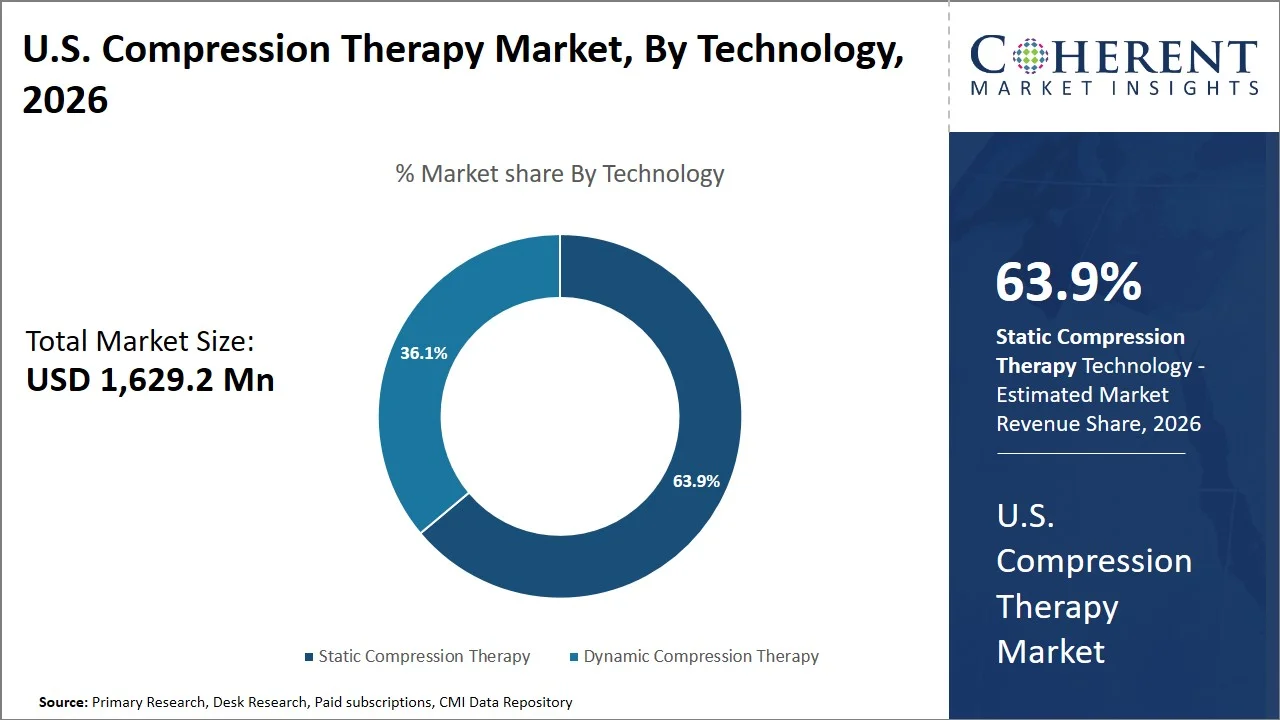
Why Do Static Compression Therapy Dominate the U.S. Compression Therapy Market?
Static compression therapy is projected to hold a market share of 63.9% in 2026, as it demonstrates significant clinical benefits and offers a convenient, cost-effective approach for the chronic management of venous and lymphatic diseases, and is easily usable as in clinics and at homes. The static compression therapy is non-mechanical design as this leads to higher patient adherence and lowers maintenance need. For instance, in June 2025, the Society for Cardiovascular Angiography and Intervention (SCAI), supported by the Society for Vascular Medicine (SVM), released revised clinical practice guidelines suggesting use and strongly suggesting treatment with compression in patients with symptomatic chronic venous disease and the management of venous ulcers. (Source: National Library of Medicine)
- Current Industry Events of 2026
- Market Size Estimation
- Regional Breakdown
- Competitive Landscape
- Customer Intelligence
- Segmental Analysis
- Pricing Analysis
- Key Market Drivers, Challenges & Future Trends
- Customized Insights Section
Why Does Compression Garments Represent the Product Type Segment in the U.S. Compression Therapy Market?
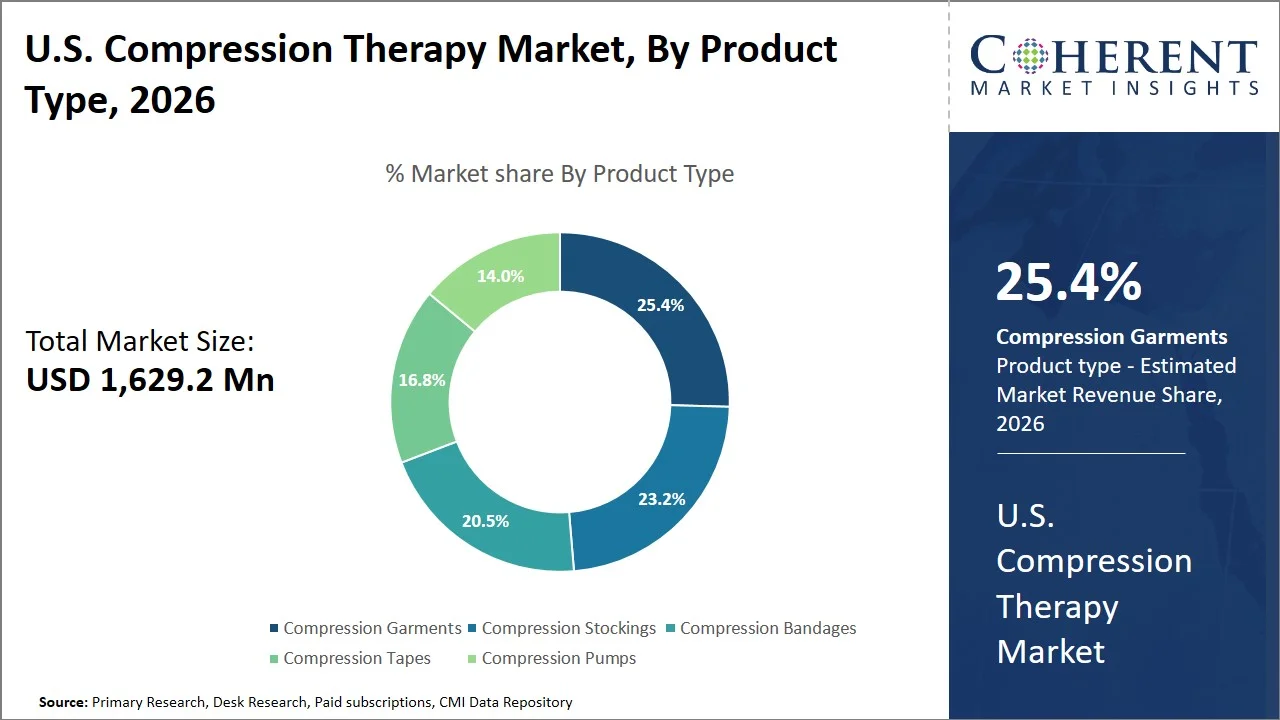
Compression garments are projected to hold 25.4% of the market share in 2026, because of their convenience, comfort, and sustained graduated compression support for treatment of chronic venous disease and lymphedema. Technological advances in garment design, fit, and patient-friendly design have only contributed to the increased compliance and success rates of long-term adherence and therapeutic outcomes. For instance, in September 2025, AIROS Medical launched additional sizing and anatomical modeling to their Truncal Compression Garment products to offer better fit and inclusivity to patients living with lymphedema, reinforcing the continued emphasis on the need for custom fits and personalized compression garments in the industry.
Varicose Vein Segment Dominates the U.S. Compression Therapy Market
The varicose vein segment is expected to hold 39.9% of the U.S. compression therapy market share in 2026, due to the rising prevalence of chronic venous disease coupled with the expanding demand for the non-invasive therapeutic treatments of varicose vein treatment. Compression therapy is considered a first line treatment for varicose vein treatment, to alleviate symptoms and to enhance venous circulation and support healing after minimal invasive vein treatments. For instance, in February 2025, Tactile Medical further broadened the U.S. Commercial availability of its Nimbl pneumatic compression platform to treat patients with the phlebolymphatic type of lower extremity lymphedema often seen with chronic venous insufficiency. The expansion represents an increased focus of the industry in advanced solutions for lower extremity venereal disorders and may potentially enhance use of compression therapy throughout the vascular care segment.
Current Events and their Impact
Current Events | Description and its Impact |
Centers for Medicare & Medicaid Services (CMS) Implementation of Expanded Medicare Coverage for Lymphedema Compression Treatment Items (April 2025) |
|
U.S. FDA Quality Management System Regulation (QMSR) Implementation (Effective February 2026) |
|
U.S. Compression Therapy Market Dynamics
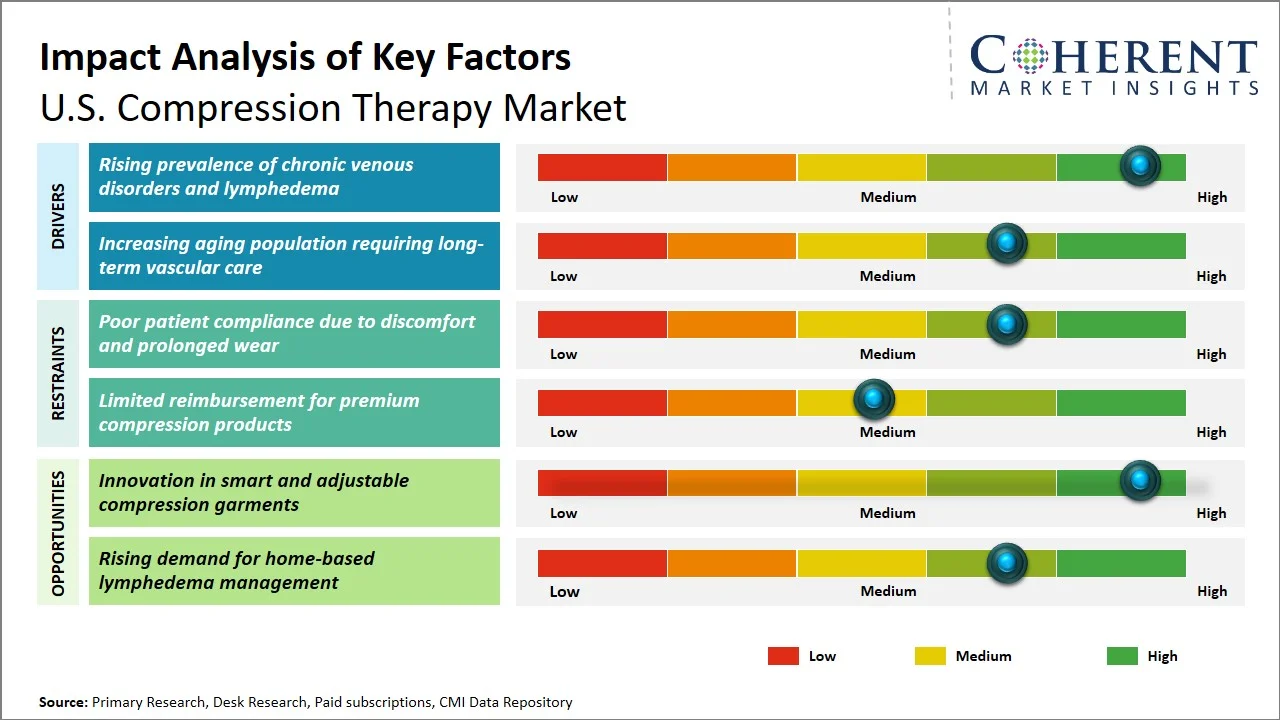
Market Drivers
- Rising prevalence of chronic venous disorders and lymphedema: The rising prevalence of chronic venous disorders (CVD) and lymphedema in the U.S. is driving sustained demand for compression therapy as a first-line conservative treatment to improve venous return, reduce edema, and support wound healing. Increasing clinical awareness, earlier diagnosis, and the growing shift toward long-term disease management in homecare settings are further strengthening product adoption. For instance, in December 2023, the International Society of Lymphology (ISL) published its updated Consensus Document reaffirming compression therapy, including compression garments and bandaging, as a cornerstone of lymphedema management to control limb volume and prevent disease progression.
- Increasing aging population requiring long-term vascular care: The rapidly growing elderly population in the U.S. is driving demand for compression therapy, as aging is associated with a higher incidence of chronic venous insufficiency, lymphedema, edema, and deep vein thrombosis (DVT), all of which require long-term vascular care. Older adults also experience reduced mobility and impaired venous function, increasing the need for compression garments and devices across both clinical and home healthcare settings. For instance, in May 2024, the U.S. Census Bureau projected that the U.S. population aged 65 years and older will increase from 61.2 million in 2023 to 77.0 million by 2035. This demographic shift is expected to significantly expand the patient pool requiring compression therapy over the forecast period.
- Expansion of Home Healthcare and Outpatient Care: The expansion of home healthcare and outpatient care in the U.S. is driving the adoption of compression therapy, as patients increasingly rely on non-invasive solutions to manage chronic venous disorders, lymphedema, and post-operative edema outside hospital settings. For instance, in November 2023, the Centers for Medicare & Medicaid Services (CMS) finalized the CY 2024 Home Health Prospective Payment System (HH PPS) rule, supporting continued growth in Medicare-funded home healthcare services. This shift is expected to accelerate the use of compression garments and portable compression devices in home-based care.
Emerging Trends
- Shift Toward Sustainable and Skin-Friendly Compression Materials: Manufacturers are increasingly incorporating breathable, latex-free, and recycled textile materials into compression garments to enhance patient comfort while aligning with sustainability goals. The use of hypoallergenic and moisture-wicking fabrics is also improving wearability, particularly among elderly patients requiring long-term compression therapy.
- Growing Adoption of Compression Therapy in Outpatient and Ambulatory Care: The increasing migration of vascular procedures and wound care services to ambulatory surgical centers (ASCs) and outpatient clinics is expanding demand for easy-to-use compression products. Healthcare providers are emphasizing early mobilization and post-procedural recovery protocols that rely on compression therapy outside traditional hospital settings.
- Expansion of Direct-to-Consumer (DTC) and E-commerce Distribution: Manufacturers are strengthening their digital sales channels by offering online fitting guides, virtual consultations, and subscription-based replenishment services for compression garments. This trend is improving product accessibility, particularly for patients managing chronic venous disorders and lymphedema through long-term home-based therapy.
Key Regulatory & Reimbursement Developments Impacting the U.S. Compression Therapy Market
Regulatory / Policy | Governing Body | Recent Development | Market Impact |
Medicare Coverage for Compression Garments | Centers for Medicare & Medicaid Services | Medicare reimbursement for compression garments under the Lymphedema Treatment Act (effective Jan 2024) | Expands patient access and increases demand for medical compression garments |
Medical Device Regulation | Food and Drug Administration | 510(k) clearance pathway for compression garments, IPC devices and related products | Supports faster commercialization while ensuring product safety and effectiveness |
Clinical Practice Guidelines | Society for Vascular Surgery (SVS) & American Venous Forum (AVF) | Compression therapy recommended as first-line treatment for chronic venous disease | Encourages physician adoption and sustained product utilization |
Infection Prevention Standards | Centers for Disease Control and Prevention | Guidance supporting IPC devices for VTE prevention in hospitalized patients | Encourages physician adoption and sustained product utilization |
Value-Based Care Initiatives | Centers for Medicare & Medicaid Services | Increasing focus on preventing chronic wounds and hospital readmissions | Favors clinically proven compression products with strong outcome data |
How are the innovation in smart and adjustable compression garments creating new growth opportunities in the U.S. compression therapy market?
The U.S. compression therapy market is anticipated to show robust expansion due to increasing demand for smart and customizable solutions in healthcare services to boost accuracy, comfort, and long-term compliance. The penetration of digital devices in compressing socks, custom adjustable pressure set-ups, and real-time pressure monitoring is facilitating more individualized solutions for the management of chronic venous disorders and lymphedema, thereby favoring home care solutions. For instance, in May 2023, Koya Medical obtained U.S. Food and Drug Administration (FDA) 510(k) clearance for its Dayspring Active Compression System, wearable, non-pneumatic compression therapy device with programmable compression and mobility capabilities indicated for use in lymphedema and venous diseases.
Market Players, Key Development, and Competitive Landscape
Key Developments
- In July 2026, Mölnlycke Health Care expanded its U.S. portfolio with the launch of Mepi Press 2 and Mepi Press 2 Lite Compression System, alongside two additional wound care innovations. The new multilayer compression system is designed to provide consistent compression therapy for patients with venous disease and edema, strengthening the company's position in the U.S. compression therapy and advanced wound care markets.
- In July 2026, Tactile Medical entered an exclusive U.S. distribution agreement with ElastiMed for the MyoSleeve Wearable Compression Device for Veterans Affairs (VA) and Department of Defense (DoD) patients. The partnership expands access to wearable compression therapy for upper extremity rehabilitation and supports broader adoption of advanced compression technologies across U.S. healthcare systems.
- In February 2026, AIROS Medical launched the ARTAIRA Compression Device in the U.S. for treating symptoms associated with peripheral arterial disease (PAD). The device is designed to improve lower-extremity blood flow through intermittent pneumatic compression, expanding therapeutic options for patients with PAD and reinforcing innovation in the U.S. compression therapy market.
Competitive Landscape
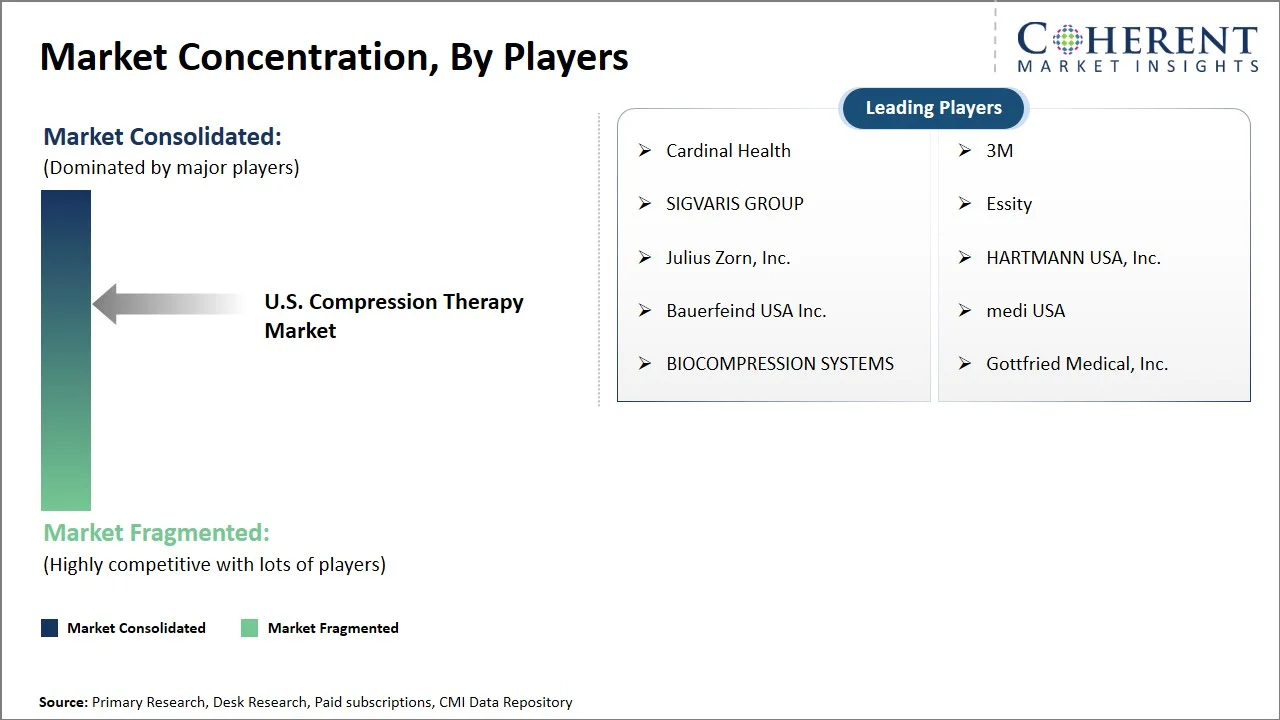
The U.S. compression therapy market is highly competitive, with leading manufacturers focusing on expanding clinically effective and patient-centric compression solutions for the management of chronic venous disorders, lymphedema, and diabetic wounds. Companies are investing in advanced compression garments and devices that enhance patient comfort, improve treatment adherence, and support home-based care. Key market participants are also strengthening reimbursement access, broadening distribution through hospitals and outpatient care settings, and introducing innovative materials and digital-enabled compression technologies. Key focus areas include:
- Development of advanced compression garments with improved comfort, breathability, and therapeutic efficacy
- Expansion of intermittent pneumatic compression (IPC) systems for home healthcare and post-operative recovery
- Innovation in smart and adjustable compression technologies to improve patient compliance
- Strengthening partnerships with hospitals, wound care centers, vascular clinics, and home healthcare providers
- Expanding Medicare and commercial reimbursement-supported compression therapy solutions
Market Report Scope
U.S. Compression Therapy Market Report Coverage
| Report Coverage | Details | ||
|---|---|---|---|
| Base Year: | 2025 | Market Size in 2026: | USD 1,629.2 Mn |
| Historical Data for: | 2020 To 2024 | Forecast Period: | 2026 To 2033 |
| Forecast Period 2026 to 2033 CAGR: | 7.4% | 2033 Value Projection: | USD 2,685.4 Mn |
| Segments covered: |
| ||
| Companies covered: | Cardinal Health, 3M, SIGVARIS GROUP, Essity, Julius Zorn, Inc., HARTMANN USA, Inc., Bauerfeind USA Inc., medi USA, BIOCOMPRESSION SYSTEMS, Gottfried Medical, Inc. | ||
| Growth Drivers: |
| ||
| Restraints & Challenges: |
| ||
Analyst Opinion (Expert Opinion)
- In the coming years, U.S. compression therapy market will be shaped by the rising burden of chronic venous disease, lymphedema, diabetes-related wounds, and an aging population, alongside the continued shift toward home-based and value-based healthcare. Demand is expected to move beyond conventional compression products toward smart, adjustable, and patient-centric solutions that improve compliance, enable remote monitoring, and deliver better clinical outcomes. Favorable reimbursement policies, including expanded Medicare coverage for compression garments, are likely to further accelerate market adoption.
- The maximum growth opportunity lies within compression garments for the varicose vein and chronic venous insufficiency (CVI) application segment in the United States, where increasing disease prevalence, growing awareness of early intervention, and expanded reimbursement are driving sustained demand. Additionally, intermittent pneumatic compression (IPC) devices for home healthcare and post-surgical venous thromboembolism (VTE) prevention represent a high-potential niche as healthcare delivery continues to shift outside acute care settings.
- In order to create an advantage for themselves, the competitors should prioritize the development of clinically validated, lightweight, and customizable compression products that enhance patient comfort and adherence. Companies should also strengthen collaborations with vascular specialists, wound care centers, and home healthcare providers, while leveraging digital health capabilities, reimbursement support programs, and real-world clinical evidence to differentiate their offerings and expand market penetration.
Speak to the analyst
Want personalized insights?
Take the findings above to one of our principal consultants, or have the report rebuilt around the segments, geographies and competitors you actually track.
Market Segmentation
- Technology Insights (Revenue, USD Mn, 2021 - 2033)
- Static Compression Therapy
- Dynamic Compression Therapy
- Product Type Insights (Revenue, USD Mn, 2021 - 2033)
- Compression Garments
- Compression Stockings
- Compression Bandages
- Compression Tapes
- Compression Pumps
- Application Insights (Revenue, USD Mn, 2021 - 2033)
- Varicose Vein
- Deep Vein Thrombosis
- Lymphedema
- Leg Ulcer
- Distribution Channel Insights (Revenue, USD Mn, 2021 - 2033)
- Pharmacies
- E-commerce
- Others
- Key Players Insights
- Cardinal Health
- 3M
- SIGVARIS GROUP
- Essity
- Julius Zorn, Inc.
- HARTMANN USA, Inc.
- Bauerfeind USA Inc.
- medi USA
- BIOCOMPRESSION SYSTEMS
- Gottfried Medical, Inc.
Sources
Primary Research Interviews
- Wound Care Specialists – use of compression therapy in venous leg ulcer (VLU) management
- Vascular Surgeons – compression therapy prescribing patterns for chronic venous insufficiency (CVI) and varicose veins
- Lymphedema Therapists – adoption trends for compression garments and bandaging systems
- Interventional Radiologists / Phlebologists – compression therapy utilization before and after venous procedures
- Hospital Procurement Managers – purchasing trends for compression garments, bandages, and IPC devices
- Home Healthcare Providers – patient adherence and home-based compression therapy adoption
- Outpatient Wound Care Center Directors – product preferences and reimbursement trends
- Medical Compression Product Distributors – demand trends across hospitals, clinics, and retail pharmacies
Stakeholders
- Compression Therapy Product Manufacturers (e.g., Essity, Medi GmbH, SIGVARIS Group, 3M, Cardinal Health, Arjo, Bio Compression Systems, AIROS Medical)
- End-use Sectors
- Hospitals
- Ambulatory Surgical Centers (ASCs)
- Wound Care Centers
- Vascular Clinics
- Home Healthcare Providers
- Regulatory & Health Bodies
- U.S. Food and Drug Administration (FDA)
- Centers for Medicare & Medicaid Services (CMS)
- Centers for Disease Control and Prevention (CDC)
- National Institutes of Health (NIH)
Databases
- U.S. FDA 510(k) Database – compression device approvals and classifications
- CMS Data Repository – Medicare reimbursement and utilization data
- CDC National Center for Health Statistics (NCHS) – chronic disease and hospitalization statistics
- NIH / National Library of Medicine – clinical evidence on compression therapy
- ClinicalTrials.gov – ongoing studies on compression garments and intermittent pneumatic compression (IPC)
Magazines
- Medical Design & Outsourcing – compression device innovations
- MedTech Dive – medical device launches and regulatory updates
- Wound Care Advisor – wound management and compression therapy trends
- OR Manager – hospital procurement and compression device adoption
- Healthcare Purchasing News – purchasing trends for compression therapy products
Journals
- Journal of Vascular Surgery: Venous and Lymphatic Disorders
- International Wound Journal
- Journal of Wound Care
- Phlebology
- Advances in Skin & Wound Care
- Journal of Vascular Nursing
Newspapers
- The Wall Street Journal (Health & Business Section) – medical device industry and reimbursement trends
- The New York Times (Health Section) – chronic disease management and healthcare innovation
- The Washington Post (Health & Science Section) – healthcare policy and medical technology
- USA Today (Health News) – healthcare delivery and chronic disease care
Associations
- American Venous Forum (AVF)
- Society for Vascular Surgery (SVS)
- American Vein & Lymphatic Society (AVLS)
- Wound Healing Society (WHS)
- Association for the Advancement of Wound Care (AAWC)
- Lymphology Association of North America (LANA)
- Advanced Medical Technology Association (AdvaMed)
Public Domain Sources
- U.S. Food and Drug Administration (FDA) – compression device approvals, recalls, and safety communications
- Centers for Medicare & Medicaid Services (CMS) – reimbursement policies for compression garments and devices
- Centers for Disease Control and Prevention (CDC) – chronic venous disease, diabetes, and lymphedema-related statistics
- National Institutes of Health (NIH) – clinical research and evidence on compression therapy
- National Library of Medicine (PubMed) – peer-reviewed literature on compression therapy
- Agency for Healthcare Research and Quality (AHRQ) – wound care quality and healthcare utilization
- Society for Vascular Surgery (SVS) – clinical practice guidelines for venous disease management
Proprietary Elements
- CMI Data Analytics Tool, Proprietary CMI Existing Repository of information for last 10 years.
Get access to 250+ pages report
Every segment, forecast, competitor profile and data table behind the analysis above — available for instant download.
- ESOMAR Member
- ISO 9001:2015 Certified
- D-U-N-S Registered
- GDPR & CCPA Compliant
Missing comfort of reading report in your local language? Find your preferred language:
Transform your Strategy with Exclusive Trending Reports
Frequently Asked Questions
The U.S. compression therapy market is estimated to be valued at USD 1,629.2 Mn in 2026 and is expected to reach USD 2,685.4by 2033.
Compression garments dominate due to their widespread use in the management of chronic venous disorders, lymphedema, and post-surgical edema, supported by expanding reimbursement coverage and strong patient preference for non-invasive treatment.
Compression therapy is a medical treatment that applies controlled pressure to the limbs using garments or devices to improve blood circulation, reduce swelling, and support venous and lymphatic function.
The CAGR of U.S. compression therapy market is projected to be 7.4% from 2026 to 2033.
Medical compression garments are typically classified by pressure levels measured in mmHg, with Class I (15–20 mmHg) for mild venous conditions and Class II–III (20–40 mmHg) for moderate-to-severe venous insufficiency and lymphedema under clinical supervision.
Static compression provides continuous external pressure through garments or bandages, whereas IPC uses an inflatable device that delivers cyclic pressure to enhance venous and lymphatic return.
Poor patient compliance due to discomfort and prolonged wear, and limited reimbursement for premium compression products are the major factors hampering the growth of the U.S. compression therapy market.