

Global Home Healthcare Services Market Size and Forecast – 2026 To 2033
The global home healthcare services market is expected to grow from USD 461.3 Bn in 2026 to USD 892.4 Bn by 2033, registering a compound annual growth rate (CAGR) of 9.9% from 2026 to 2033. The market for home healthcare services is poised for significant expansion, fueled by the soaring burden of aging population, and rising prevalence of chronic diseases that require continuous medical supervision, rehabilitation, and long-term care.
According to the World Health Organization, by 2030, 1 in 6 people in the world will be aged 60 years or over. By 2050, the world’s population of people aged 60 years and older will double (2.1 billion). The number of persons aged 80 years or older is expected to triple between 2020 and 2050 to reach 426 million.
(Source: World Health Organization)
Furthermore, according to the World Health Organization, noncommunicable diseases (NCDs), including heart disease, stroke, cancer, diabetes and chronic lung disease, are collectively responsible for 74% of all deaths globally. More than three-quarters of all NCD deaths, and 86% of the 17 million people who died prematurely, or before reaching 70 years of age, occur in low- and middle-income countries.
(Source: World Health Organization)
Key Takeaways of the Global Home Healthcare Services Market
- Skilled nursing services are projected to hold 34.2 % of the global home healthcare services market share in 2026, making it the dominant service type segment across North America due to the high prevalence of chronic diseases, growing elderly population, and favorable reimbursement policies for home-based clinical care in the region. For instance, the U.S. Centers for Medicare & Medicaid Services (CMS) has implemented the Expanded Home Health Value-Based Purchasing (HHVBP) Model nationwide, under which Medicare-certified home health agencies receive payment adjustments based on quality performance measures, encouraging the delivery of skilled nursing and other clinical services in home settings. (Source: CGS Administrators, LLC)
- The geriatric population segment is projected to hold 62.8 % of the global home healthcare services market share in 2026, making it the dominant end user segment across Europe due to the region's rapidly aging population and increasing emphasis on long-term care and aging-in-place initiatives. For instance, the European Commission's European Care Strategy supports the expansion of accessible, high-quality long-term and home-based care services, enabling older adults to maintain independence while receiving care in their homes. Such initiatives continue to strengthen the adoption of home healthcare services among the elderly population across the region. (Source: European Commission)
- North America maintains its dominance with an expected share of 41.2 % in 2026, bolstered by advanced healthcare infrastructure, favorable reimbursement policies, and increasing adoption of home-based care services. For instance, in November 2024, the U.S. Centers for Medicare & Medicaid Services (CMS) finalized updates to the Home Health Prospective Payment System (HH PPS), continuing reimbursement support for Medicare-certified home health agencies and expanding access to home-based healthcare services. (Source: American Speech-Language-Hearing Association)
- Asia Pacific is expected to exhibit the fastest growth with an estimated contribution of 23.8 % share in 2026, driven by rapid population aging, healthcare infrastructure expansion, and government initiatives aimed at strengthening home and community-based care. For instance, Japan's Ministry of Health, Labour and Welfare continues to advance its community-based Integrated Care System, which integrates healthcare, nursing care, and daily living support services for older adults within their homes and local communities. (Source: Japan International Cooperation Agency)
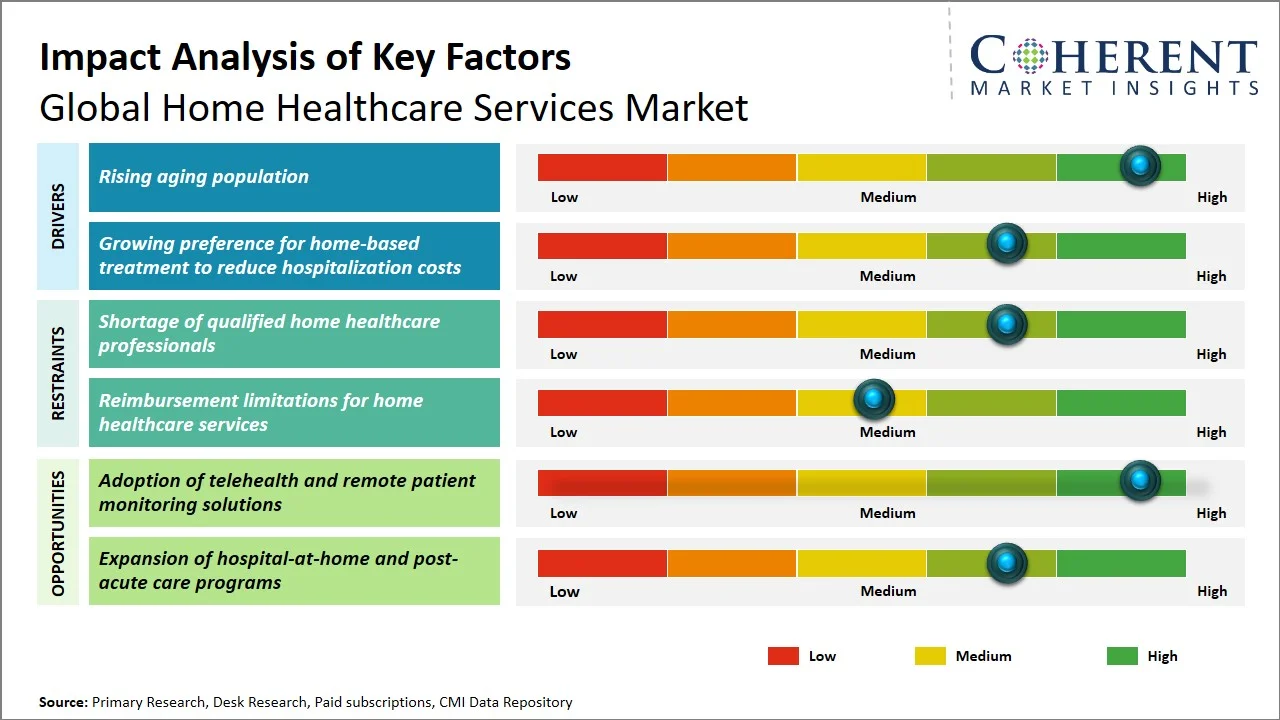
- Growing Aging Population and Chronic Disease Burden: The increase in elderly people across the globe as well as increase in the rate of chronic diseases, is contributing to increase in the growth of home healthcare services industry. Elderly people require round the clock monitoring and rehabilitation services along with professional nursing care and help with day-to-day activities. Many chronic illnesses, including cardiovascular diseases, diabetes, breathing complications and other nerve disorders, has increased need for prolonged care in home settings.
- Expansion of Digital Health and Remote Patient Monitoring: The increasing adoption of telehealth platforms, remote patient monitoring (RPM) solutions, and other connected health solutions will create new growth opportunities for the home healthcare services market in the coming years, as they are helping monitor patients in real time, providing timely interventions, facilitating better care coordination, lowering hospitalizations and healthcare costs. As healthcare systems increasingly embrace the concept of decentralized, patient-centric care, there is an increasing shift towards digital health integration and it will drive the home healthcare services market size globally.
Segmental Insights
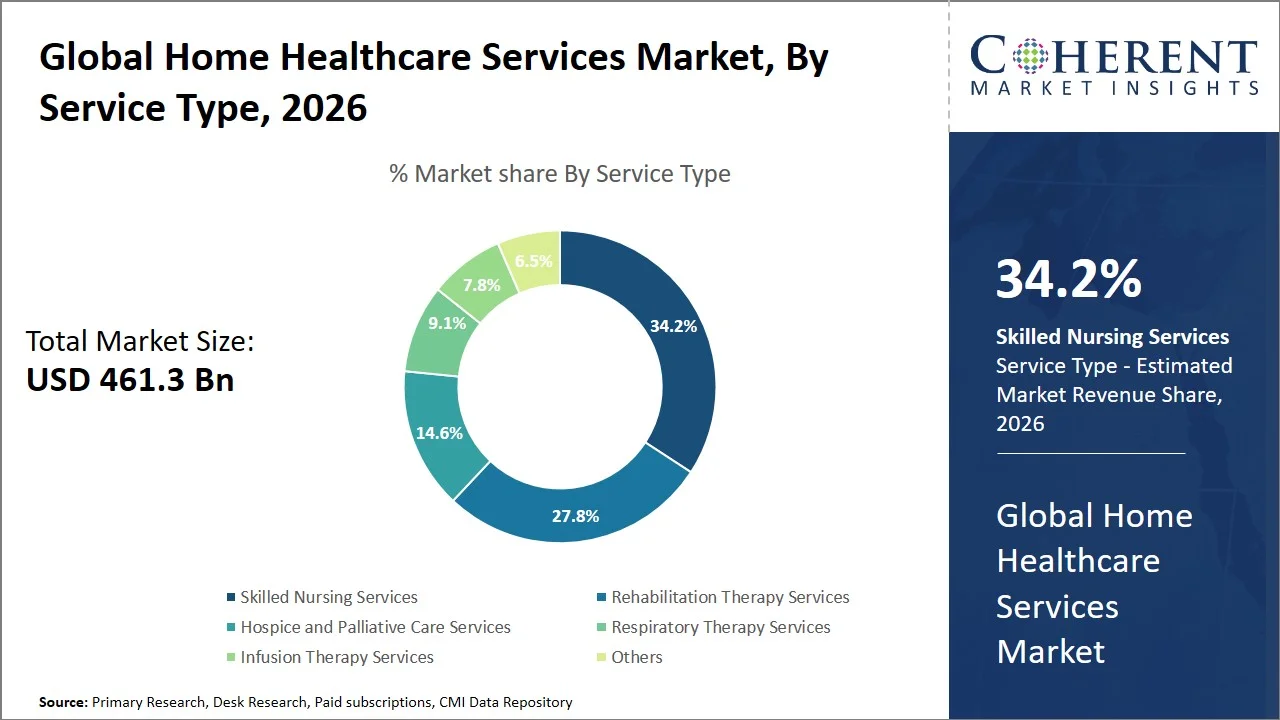
Why Do Skilled Nursing Services Dominate the Global Home Healthcare Services Market?
Skilled nursing services are projected to hold a market share of 34.2% in 2026, owing to the rising demand for quality healthcare support amongst elderly patients, and individuals suffering from chronic ailments demanding constant observation and recuperating care. The growing adoption of home-based healthcare services as a cost-effective alternative to prolonged hospitalization continues to drive demand for skilled nursing services. The development of home-based technology and advancements in medical care procedures can also play a significant role in this segment. For instance, the U.S. Centers for Medicare & Medicaid Services (CMS) has increased reimbursement for Remote Patient Monitoring (RPM) and Chronic Care Management (CCM), paving the way to incorporate a blend of highly skilled nursing care with digital health solutions in home settings. (Source: HealthArc)
- Current Industry Events of 2026
- Market Size Estimation
- Regional Breakdown
- Competitive Landscape
- Customer Intelligence
- Segmental Analysis
- Pricing Analysis
- Key Market Drivers, Challenges & Future Trends
- Customized Insights Section
Why Does the Geriatric Population Represent the Largest End User Segment in the Home Healthcare Services Market?
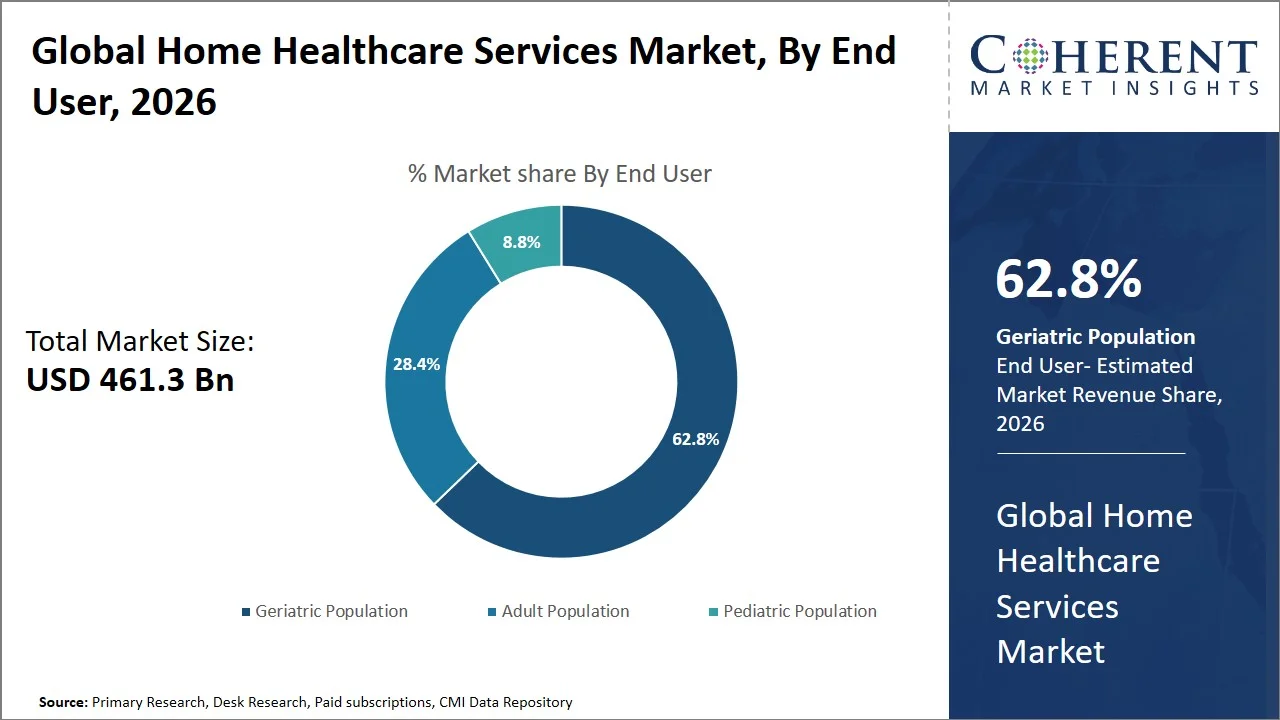
The geriatric population segment is projected to hold a market share of 62.8% in 2026, as they exhibit a larger proportion of chronic diseases and disorders, impaired mobility, and need for constant or ongoing care. The home healthcare solutions offer targeted care and assistance to geriatric patients who prefer to receive care and attention at the convenience of their home without having to admit themselves to long-term facilities. Furthermore, an increasing trend of aged-at-home model is also catering to the rise of geriatric care at home. For instance, the European Commission's Green Paper on Ageing underlines the need to create long-term sustainable care systems and support autonomy among the elderly thus indirectly stating the need of home care services. (Source: European Commission)
Currents Events and their Impact
Current Events | Description and its Impact |
Ireland Introduces Regulatory Framework for Home Support Providers (December 2025) |
|
Australia Implements New Aged Care Act and Support at Home Program (November 2025) |
|
(Source: Government of Ireland, Department of Health, Disability and Ageing)
Home Healthcare Services Market Dynamics
Market Drivers
- Rising aging population: Increased prevalence of long-term care requirements, chronic disease management and post-acute care rehabilitation amongst elderly patients is one of the most notable trends impacting the global home healthcare services market. The home care delivery system provides older people with consistent care including nursing services, assistance with personal care and rehabilitation in the comfortable surroundings of their own home, thereby diminishing reliance on hospitals and institutionalized care facilities. The shift towards aging at place and affordable cost of treatment also contributed to growth of the market. For instance, the U.K. government's Adult Social Care Reform program emphasizes supporting older adults to live independently at home for longer through improved access to community and domiciliary care services. (Source: Department of Health and Social Care)
- Growing preference for home-based treatment to reduce hospitalization costs: Increased shift towards home-based treatment and affordability are key factors boosting the market for home-based treatment. Being a less expensive option than inpatient hospitalization, home-based treatment has become increasingly popular. Home healthcare services reduce the need for hospitalization, decrease patient readmissions, and increase patient comfort and quality of life along with providing continuous care. Hence, healthcare organizations and payers are moving applicable care towards the homes to better utilize their resources and decrease healthcare costs. For instance, the UK's National Health Service (NHS) Hospital at Home program enables eligible patients to receive acute-level care in their homes, reducing the need for hospital admissions and supporting more efficient care delivery. (Source: Hospital at Home)
Emerging Trends
- AI-Enabled Remote Patient Monitoring and Predictive Care: Home healthcare providers are utilizing AI in conjunction with remote patient monitoring tools to monitor the patient in real time and detect complications before they become serious, so that preventive measures can be taken and care can be coordinated to avert preventable hospitalization in chronically ill patients.
- Hospital-at-Home Programs Expanding Beyond Acute Care: Healthcare systems are expanding Hospital-at-Home models-which bring hospital-level care, monitoring and recovery services to a patient’s house-from acute care treatment to post-operative management, management of chronic conditions and even end-of-life care.
Regional Insights
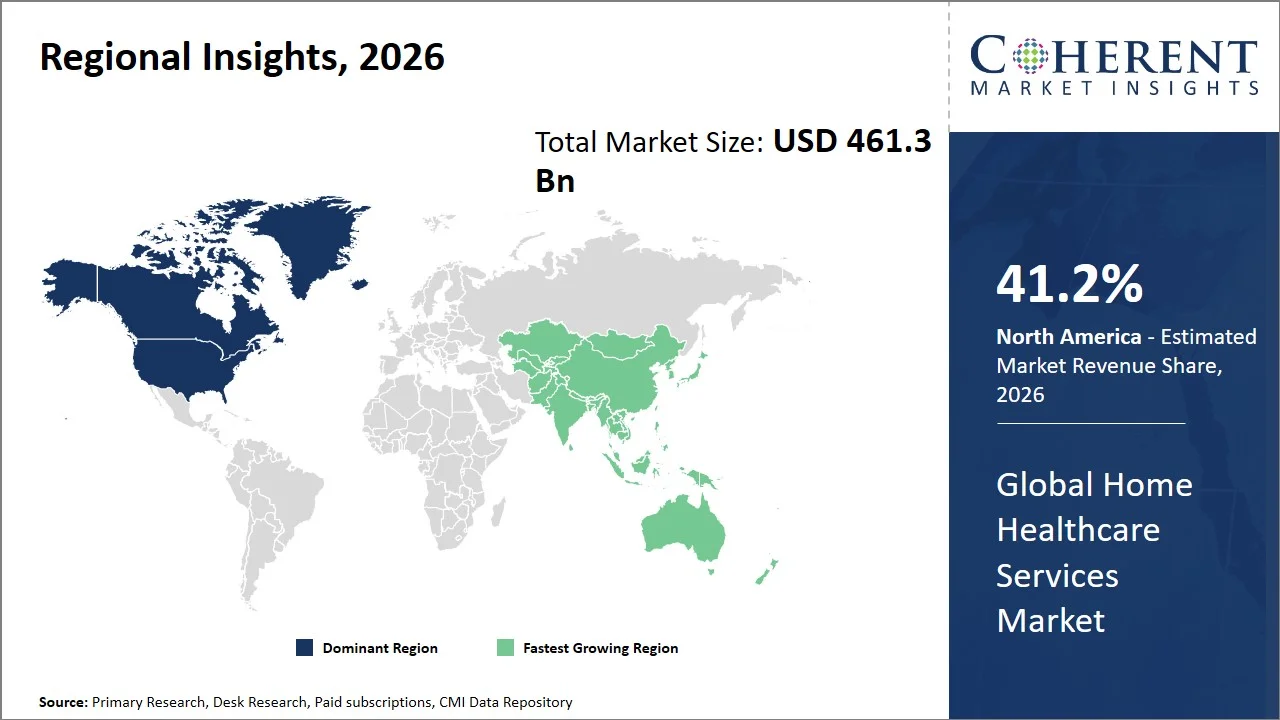
Why is North America a Strong Market for Home Healthcare Services?
North America leads the global home healthcare services market, accounting for an estimated 41.2% share in 2026, due to the presence of a strong healthcare infrastructure, high penetration of technologies and favorable government regulations focused on encouraging home-based care to lower the rate of hospital readmissions and manage healthcare costs. For instance, the Home-Based Primary Care (HBPC) program, operated by the U.S. Department of Veterans Affairs (VA), delivers a full spectrum of care to qualifying veterans within the privacy of their homes and can serve as a model for future expanded home-based care models in the region. (Source: Department of Veterans Affairs) In addition, trade agreements favor access to the latest medical devices, telehealth devices and other tools that support high-quality healthcare at home.
Why Does the Asia Pacific Home Healthcare Services Market Exhibit High Growth?
The Asia Pacific home healthcare services market is expected to exhibit the fastest growth with an estimated contribution of 23.8% share to the global market in 2026, due to rise in aging population, demand for health care services, medical service awareness and investments in health care infrastructure. Urbanization and disposable income in emerging countries like Japan, China and India are increasing leading to greater need for customized home healthcare services. New entry of private healthcare services in form of home care services providers and telemedical startups is extensively reshaping market ecosystem. Moreover, government programs and policies to strengthen health care and insurance services to rural areas are further driving market. For instance, India's Health and Wellness Centres (HWCs) under Ayushman Bharat serve to boost up the delivery of primary health services and facilitate the widespread accessibility of complete health services to the remote and rural communities and this helps in encouraging the usage of the home-based healthcare services. (Source: Ministry of Health and Family Welfare)
Global Home Healthcare Services Market Outlook for Key Countries
Why is the U.S. Leading Innovation and Adoption in the Home Healthcare Services Market?
The U.S. dominates the home healthcare services market driven by growing trends of post-acute care, chronic disease, and rehabilitation services that are transitioning from hospitals to home. The healthcare providers of the U.S. (such as Cleveland Clinic, Mayo Clinic, Kaiser Permanente, and Mount Sinai Health System) have been adopting remote monitoring and virtual care solutions to care for high-risk patients remotely and minimize unnecessary hospital readmissions. Home based infusion therapies, home based nursing and recovery solutions for surgical procedures have further bolstered home care to assume an integral role in the healthcare ecosystem.
Is Japan a Favorable Market for Home Healthcare Services?
Japan is one of the most promising markets for the home healthcare services market because of a high reliance on community-based care, great demand for long-term care, the widespread acceptance of home healthcare model. Japan's care system is based on integrated care model which allows the seamless delivery of all the necessary services – medical care, nursing, rehabilitation and living care services to patients at home, while home based chronic care models and telemedicine further reinforce the position of home healthcare in the Japanese healthcare market.
Is China Emerging as a Key Growth Hub for the Home Healthcare Services Market?
China is positioned as a key growth hub in the global home healthcare services market due to its faster pace in community healthcare services, faster acceptance of digital healthcare solutions, and demand for chronic care management outside the hospital’s environment. The country is going for the tier level system of diagnosis and treatment that the patient opts for follow up, rehabilitation or lifelong disease management outside the hospital environment, and the growing number of internet hospitals and remote services available across the globe that the market size of China home healthcare is also expected to boom in urban and semi-urban areas
Why Does Germany Top the European Home Healthcare Services Market?
Germany is the leader in the European market for home healthcare services driven by the country’s robust out-patient care services, broad home nursing provider network, and well-built framework that supports institutional-free, long-term care. The country possesses the established long-term care ecosystem where skilled nursing care services, rehab services and chronic disease management are regularly offered at patients’ respective homes that relieve stress from nursing homes and hospitals. Use of ambulatory care services and combined long-term care pathways supports its position too.
Is the Home Healthcare Services Market Developing in the U.K.?
The U.K. is a high-potential market for home healthcare services due to the continued trend towards transitioning care from hospital facilities to the community and home. Home care solutions for post-acute, chronic disease management, palliative and rehabilitation care are witnessing considerable uptake in the recent past. Availability of virtual wards and hospital-at-home setups, along with community care services to allow the health professionals to carry out clinical procedures in patients' residence is gaining momentum across the U.K.
Technology and Service Innovation Landscape in the Global Home Healthcare Services Market
Innovation Area | Key Innovation | Application in Home Healthcare | Market Impact |
Remote Patient Monitoring | Connected monitoring devices | Chronic disease management | Reduces hospital readmissions |
Virtual Care & Telehealth | Video consultations and telecare | Follow-up and routine care | Expands access to care |
Hospital-at-Home | Acute care delivery at home | Post-acute and complex care | Reduces hospitalization costs |
AI-Based Care Management | Predictive analytics and risk stratification | Early intervention and care planning | Improves patient outcomes |
Digital Medication Management | Smart medication adherence tools | Elderly and chronic care patients | Enhances treatment compliance |
How is the adoption of telehealth and remote patient monitoring solutions creating new growth opportunities in the home healthcare services market?
Use of telehealth and remote patient monitoring (RPM) solutions are redefining the global home healthcare services market by extending services outside the hospital walls with the support of innovative solutions to deliver care. The uptake of telehealth and remote patient monitoring (RPM) is providing support for ongoing patient monitoring, rapid response and treatment of patients, with chronic diseases and minimizing hospital admissions with connected health devices. Virtual care services are increasingly being implemented by the integration of connected health devices and digital solutions. For instance, the Ministry of Health in Singapore has enhanced its National Telemedicine Guidelines to enable safe and effective delivery of remote healthcare services, to accelerate the use of digital health services within home care. (Source: Government of Singapore)
Market Players, Key Development, and Competitive Intelligence
Key Developments
- In March 2026, Aveanna Healthcare announced an agreement to acquire Family First Homecare, a multi-state provider of pediatric home care and skilled private-duty nursing services. The acquisition expands Aveanna’s presence across seven U.S. states and strengthens its capabilities in caring for medically complex patients in home settings. The development highlights the ongoing consolidation trend within the home healthcare services market, as providers seek greater geographic reach, clinical specialization, and operational scale to meet the growing demand for home-based care.
- In May 2025, Air Liquide strengthened its home healthcare business through the acquisition of two home healthcare providers in Germany, expanding its footprint in home respiratory care and chronic disease management services. The acquisitions enhance the company's ability to deliver specialized medical care in home settings and strengthen its presence in one of Europe's largest healthcare markets. The development reflects the increasing consolidation of the home healthcare sector and growing investment in home-based care delivery across the region.
Competitive Landscape
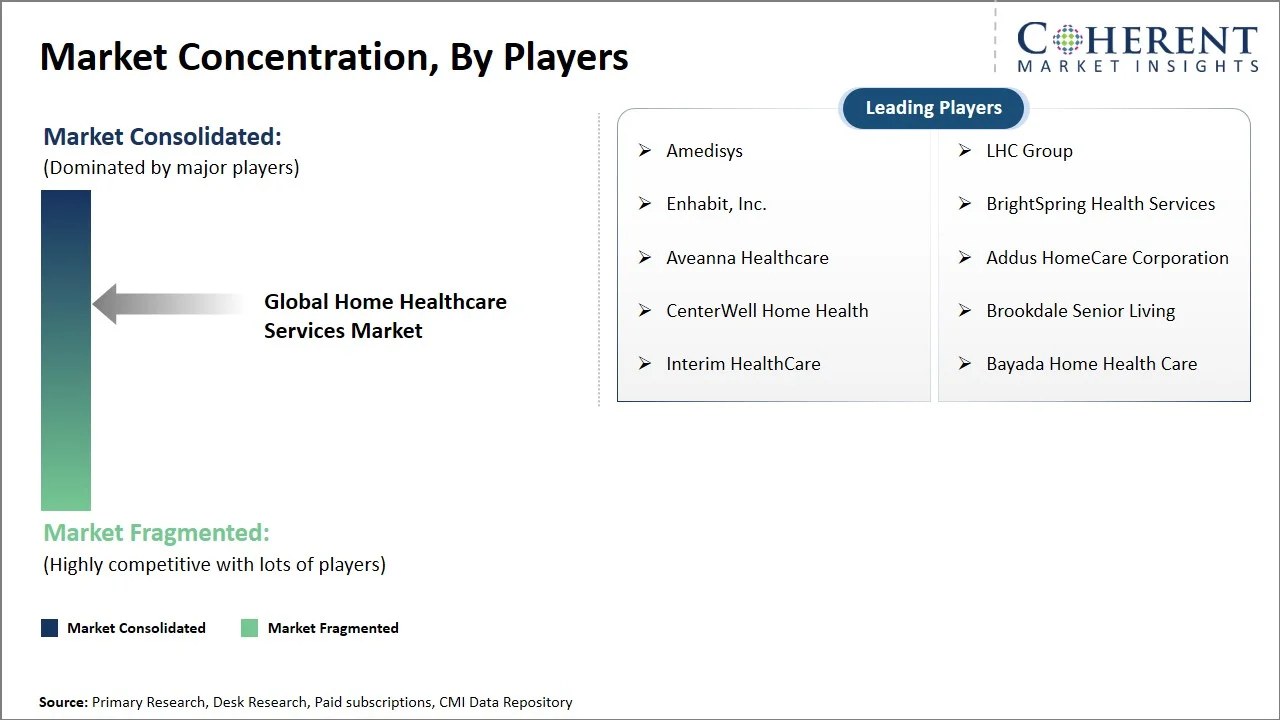
The global home healthcare services market is moderately fragmented, characterized by competition in broadening home-based clinical service offerings, adopting digital health tools, and enhancing care coordination throughout a patient's life cycle. The market is seeing a growing investment in home care telehealth delivery, remote patient monitoring, post-acute care services, and chronic condition management for the patients to improve the outcome of the treatments and decrease the number of usages of healthcare facility. Key focus areas include:
- Expansion of telehealth and remote patient monitoring platforms to support continuous patient care
- Strengthening post-acute care, rehabilitation, and chronic disease management service offerings
- Integration of digital health tools and data-driven care coordination solutions
- Geographic expansion and partnerships with hospitals, payers, and community healthcare networks
- Development of specialized home-based care programs for elderly, palliative, and high-acuity patients
Market Report Scope
Home Healthcare Services Market Report Coverage
| Report Coverage | Details | ||
|---|---|---|---|
| Base Year: | 2025 | Market Size in 2026: | USD 461.3 Bn |
| Historical Data for: | 2020 To 2024 | Forecast Period: | 2026 To 2033 |
| Forecast Period 2026 to 2033 CAGR: | 9.9% | 2033 Value Projection: | USD 892.4 Bn |
| Geographies covered: |
| ||
| Segments covered: |
| ||
| Companies covered: | Amedisys, LHC Group, Enhabit, Inc., BrightSpring Health Services, Aveanna Healthcare, Addus HomeCare Corporation, CenterWell Home Health, Brookdale Senior Living, Interim HealthCare, and Bayada Home Health Care | ||
| Growth Drivers: |
| ||
| Restraints & Challenges: |
| ||
Analyst Opinion (Expert Opinion)
- The growing trend toward de-institutionalizing healthcare and moving services from hospitals into patient's homes will continue to influence the future of the home healthcare services market. Growing trends toward telehealth, remote patient monitoring, and hospital-at-home are enabling more home care. Driven by the desire of healthcare providers to decrease costs and enhance quality of life of patients, care is likely to grow rapidly for chronic disease management, post-acute care, rehabilitation, and for aged people.
- The maximum potential for growth is likely to be in the U.S. specifically in the management of chronic diseases, as well as services for the elderly, where needs for aging population, post hospital care, and remote patient monitoring solutions are rising. Moreover, China and India are also predicted to be promising markets as a result of fast development in community-hospital services, increasing digital health adoption and high demand for home hospital care solutions.
- In order to obtain a competitive advantage, market participants should consider broadening technology-enabled care models, incorporate remote monitoring and virtual care functions into existing services and develop targeted care programs for chronic diseases, post-acute recovery and elderly populations. Developing strategic partnerships with hospitals, payers and digital health companies will be an important initiative as well to strengthen referrals, improve care transitions and boost patient engagement.
Speak to the analyst
Want personalized insights?
Take the findings above to one of our principal consultants, or have the report rebuilt around the segments, geographies and competitors you actually track.
Market Segmentation
- Service Type Insights (Revenue, USD Bn, 2021 - 2033)
- Skilled Nursing Services
- Rehabilitation Therapy Services
- Hospice and Palliative Care Services
- Respiratory Therapy Services
- Infusion Therapy Services
- Others
- End User Insights (Revenue, USD Bn, 2021 - 2033)
- Geriatric Population
- Adult Population
- Pediatric Population
- Regional Insights (Revenue, USD Bn, 2021 - 2033)
- North America
- U.S.
- Canada
- Latin America
- Brazil
- Argentina
- Mexico
- Rest of Latin America
- Europe
- Germany
- U.K.
- Spain
- France
- Italy
- Russia
- Rest of Europe
- Asia Pacific
- China
- India
- Japan
- Australia
- South Korea
- ASEAN
- Rest of Asia Pacific
- Middle East
- GCC Countries
- Israel
- Rest of Middle East
- Africa
- South Africa
- North Africa
- Central Africa
- North America
- Key Players Insights
- Amedisys
- LHC Group
- Enhabit, Inc.
- BrightSpring Health Services
- Aveanna Healthcare
- Addus HomeCare Corporation
- CenterWell Home Health
- Brookdale Senior Living
- Interim HealthCare
- Bayada Home Health Care
Sources
Primary Research Interviews
- Home healthcare agency executives and operations managers
- Skilled nursing professionals and home health nurses
- Physicians involved in post-acute and chronic care management
- Rehabilitation therapists (physical, occupational, and speech therapists)
- Telehealth and remote patient monitoring solution providers
- Care coordinators and case managers from home healthcare organizations
Stakeholders
- Home healthcare service providers
- Telehealth and remote patient monitoring companies
- Hospitals and integrated healthcare delivery networks
- Health insurance providers and managed care organizations
- Medical equipment and home healthcare device manufacturers
- End-use Sectors
- Home healthcare agencies
- Skilled nursing service providers
- Rehabilitation and therapy service providers
- Hospice and palliative care providers
- Chronic disease management programs
- Elderly and long-term care service providers
- Regulatory & Health Bodies
- U.S. Centers for Medicare & Medicaid Services (CMS)
- U.S. Department of Health and Human Services (HHS)
- National Health Service (NHS), UK
- European Commission – Directorate-General for Health and Food Safety (DG SANTE)
- Ministry of Health, Labour and Welfare (MHLW), Japan
- National Health Commission (NHC), China
Databases
- CMS Home Health Compare Database
- OECD Health Statistics Database
- World Bank Health Nutrition and Population Statistics
- WHO Global Health Observatory (GHO)
- National Center for Health Statistics (NCHS)
- Eurostat Health Database
Magazines
- Home Health Care News
- Healthcare Innovation
- Managed Healthcare Executive
- Healthcare IT News
- Modern Healthcare
Journals
- Journal of the American Medical Directors Association (JAMDA)
- Home Healthcare Now
- International Journal of Integrated Care
- BMC Health Services Research
- Journal of Telemedicine and Telecare
Newspapers
- The Wall Street Journal
- Financial Times
- USA Today
- The Guardian
Associations
- National Association for Home Care & Hospice (NAHC)
- International Home Care Nurses Organization (IHCNO)
- American Telemedicine Association (ATA)
- Aging Life Care Association (ALCA)
- European Health Management Association (EHMA)
- International Council of Nurses (ICN)
Public Domain Sources
- World Health Organization (WHO) – Healthy Ageing and Long-Term Care Resources
- Centers for Medicare & Medicaid Services (CMS) – Home Health Services Data and Policy Resources
- U.S. Centers for Disease Control and Prevention (CDC) – Chronic Disease and Aging Data
- European Commission – Health and Care Policy Resources
- National Institute on Aging (NIA) – Aging and Long-Term Care Research
- World Bank – Population Aging and Healthcare Expenditure Statistics
Proprietary Elements
- CMI Data Analytics Tool, Proprietary CMI Existing Repository of information for last 10 years.
Get access to 250+ pages report
Every segment, forecast, competitor profile and data table behind the analysis above — available for instant download.
- ESOMAR Member
- ISO 9001:2015 Certified
- D-U-N-S Registered
- GDPR & CCPA Compliant
Missing comfort of reading report in your local language? Find your preferred language:
Transform your Strategy with Exclusive Trending Reports
Frequently Asked Questions
The global home healthcare services market is estimated to be valued at USD 461.3 Bn in 2026 and is expected to reach USD 892.4 Bn by 2033.
Skilled nursing services dominate due to the growing demand for chronic disease management, post-acute care, wound care, medication administration, and clinical monitoring in home settings.
Home healthcare services are medical and supportive care services delivered to patients in their homes to manage illnesses, recover from injuries, and improve quality of life.
The CAGR of the global home healthcare services market is projected to be 9.9% from 2026 to 2033.
RPM enables continuous tracking of patient health data through connected devices, facilitating early intervention and improved chronic disease management.
Hospital-at-home programs deliver acute-level medical care in home settings, helping reduce hospitalization costs, improve patient satisfaction, and lower readmission rates.