

U.S., Europe and Asia Pacific Spinal Laminoplasty Market Size and Forecast – 2026 To 2033
The U.S., Europe and Asia Pacific spinal laminoplasty market is expected to grow from USD 186.6 Mn in 2026 to USD 272.2 Mn by 2033, registering a compound annual growth rate (CAGR) of 5.5% from 2026 to 2033. The U.S., Europe and Asia Pacific spinal laminoplasty market is poised for significant expansion, fueled by the rising prevalence of age-related cervical degenerative disorders requiring surgical decompression.
According to the clinical description published by Myelopathy.org, degenerative cervical myelopathy (DCM) is the most common cause of adult spinal cord impairment globally, and is estimated to affect up to 5% of individuals over 40 years (~2% of adults) and expected to rise as populations age, thereby driving the demand for spinal decompression procedures such as laminoplasty.
Key Takeaways of the U.S., Europe and Asia Pacific Spinal Laminoplasty Market
- Laminoplasty plates and screws are projected to hold 32.5 % of the U.S., Europe and Asia Pacific spinal laminoplasty market share in 2026, making it the dominant product type segment, driven by the increasing use of fixation implants to maintain spinal canal expansion and postoperative stability. For instance, in February 2023, the North American Spine Society (NASS) published Appropriate Use Criteria for Cervical Fusion, highlighting posterior cervical decompression procedures requiring instrumentation based on patient pathology and stability, reinforcing the clinical adoption of fixation systems in cervical spine surgery.
- Open door laminoplasty is projected to hold 37.7 % of the U.S., Europe and Asia Pacific spinal laminoplasty market share in 2026, making it the dominant procedure type segment, supported by its widespread use for treating multilevel cervical spondylotic myelopathy and ossification of the posterior longitudinal ligament (OPLL), particularly across Japan. For instance, the Japanese Orthopaedic Association (JOA) Clinical Practice Guidelines on the Management of Cervical Spondylotic Myelopathy (2020) recognizes laminoplasty as one of the standard posterior decompression procedures for appropriately selected patients with multilevel cervical myelopathy.
- Titanium is projected to hold 44.7 % of the U.S., Europe and Asia Pacific spinal laminoplasty market share in 2026, making it the dominant material type segment, owing to its excellent biocompatibility, corrosion resistance, and long-term mechanical strength. For instance, the European Union Medical Device Regulation (EU MDR 2017/745) requires implantable spinal devices, including titanium laminoplasty implants, to meet stringent clinical evaluation, safety, and performance requirements before commercialization across EU member states, reinforcing the widespread use of high-quality titanium implants.
- Rising Adoption of Motion-Preserving Cervical Spine Surgery: The rising preference for motion-preserving surgical techniques over fusion procedures is driving the adoption of laminoplasty for multilevel cervical myelopathy. By preserving cervical range of motion while effectively decompressing the spinal cord, spinal laminoplasty reduces the risk of adjacent segment degeneration, making it an increasingly preferred option among spine surgeons, particularly in Japan, the U.S., and Western Europe.
- Advancements in Patient-Specific Implants and 3D-Printed Laminoplasty Devices: Increasing research into patient-specific spinal implants and 3D-printed laminoplasty plates and spacers is creating significant growth opportunities. Customized implants improve anatomical fit, surgical precision, and postoperative stability while reducing operative time, supporting their future adoption in complex cervical spine procedures across advanced healthcare markets.
Segmental Insights
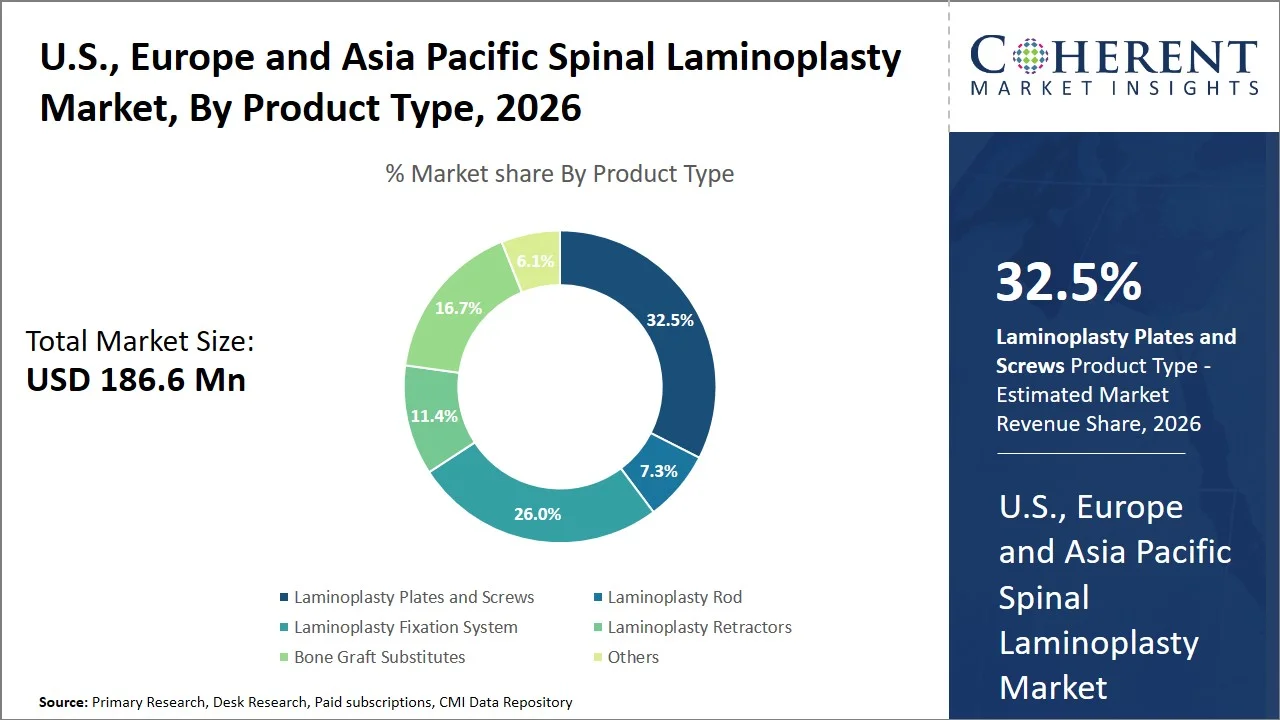
Why Do Laminoplasty Plates and Screws Dominate the U.S., Europe and Asia Pacific Spinal Laminoplasty Market?
Laminoplasty plates and screws are projected to hold a market share of 32.5% in 2026, as they are primarily used to maintain the expansion of the spinal canal and to stabilize the surgical site following spinal canal decompression procedures. Additionally, rigid fixations offered by the spinal laminoplasty plates and screws enable effective usage during minimally invasive surgeries further strengthening the segment's growth. For instance, in October 2023, DePuy Synthes received U.S. FDA clearance for the TriALTIS Spine System and Navigation-Enabled Instruments. These add to DePuy Synthes’ line-up of sophisticated spine fixation systems, reinforcing access to guided fixators for posterior cervical approaches such as laminoplasty to bolster adoption of modern laminoplasty plates and screws. (Source: Johnson & Johnson MedTech)
- Current Industry Events of 2026
- Market Size Estimation
- Regional Breakdown
- Competitive Landscape
- Customer Intelligence
- Segmental Analysis
- Pricing Analysis
- Key Market Drivers, Challenges & Future Trends
- Customized Insights Section
Why is Open Door Laminoplasty the Most Preferred Procedure Type in the U.S., Europe and Asia Pacific Spinal Laminoplasty Market?
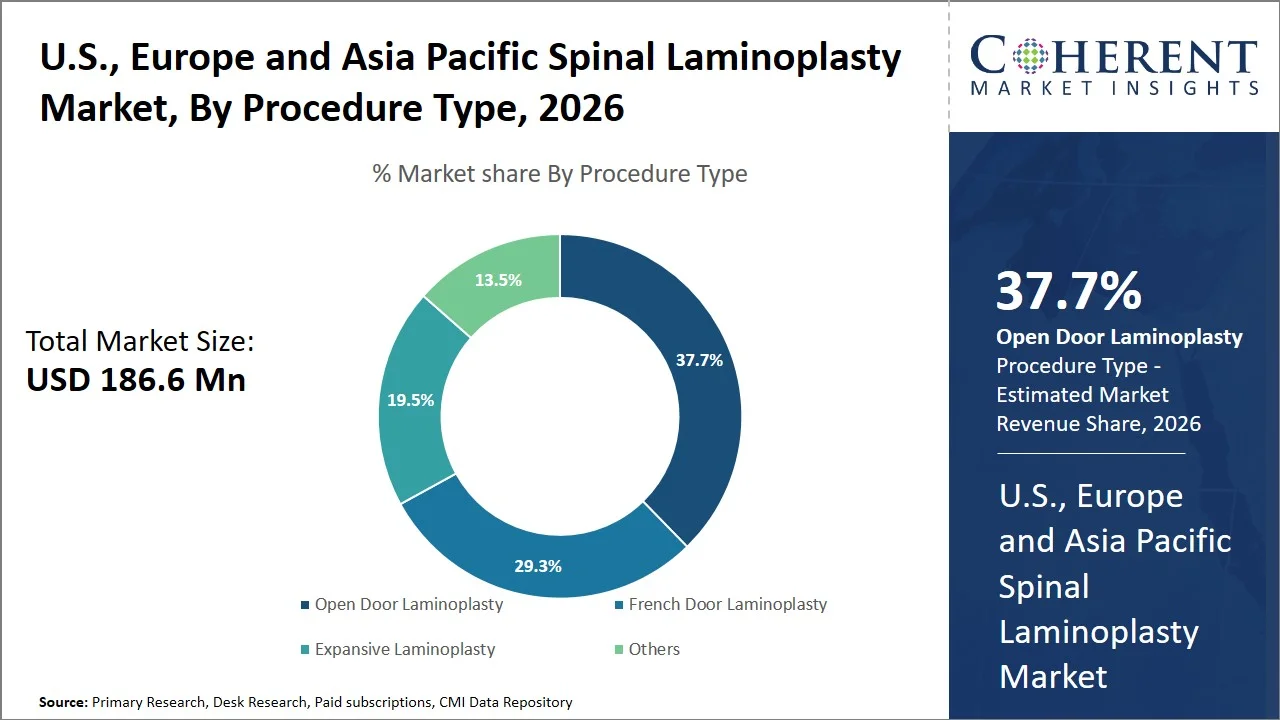
Open door laminoplasty is projected to hold 37.7% of the market share in 2026, due to its use in effectively decompressing the spinal cord at multi-levels while maintaining cervical spine stability and flexibility of the spine. This surgical procedure is largely utilized due to its simplicity, reduced operative time, and better neurological long-term outcomes compared with more invasive decompression procedures. For instance, in June 2026, a research article published by MDPI, demonstrated the feasibility of exoscopic minimally invasive open-door laminoplasty with pedicle screw fixation for cervical ossification of the posterior longitudinal ligament (OPLL), emphasizing ongoing advancements in minimally invasive laminoplasty techniques and improved surgical precision.
Titanium Segment Dominates the U.S., Europe and Asia Pacific Spinal Laminoplasty Market
Titanium segment is expected to hold 44.7% of the U.S., Europe and Asia Pacific spinal laminoplasty market share in 2026, due to high biocompatibility, mechanical strength, corrosion resistant and osseointegration properties, making it the most appropriate material for spinal fixation implants. Moreover, it is compatible with the newest manufacturing methods and postoperative imaging which helps facilitate broad adoption of the system for all cervical spine procedures. For instance, in January 2026, Spine Innovation, LLC had received U.S. FDA 510(k) clearance for its LOGIC Titanium Expandable Interbody System, highlighting the continued support by the regulatory bodies and ongoing innovations in titanium interbody products in the spine arena.
Currents Events and their Impact
Current Events | Description and its Impact |
European Commission Proposes Targeted Revision of EU Medical Device Regulations (December 2025) |
|
Growing Regulatory Framework for AI-Enabled Spine Surgery Technologies (March 2025) |
|
U.S., Europe and Asia Pacific Spinal Laminoplasty Market Dynamics
Market Drivers
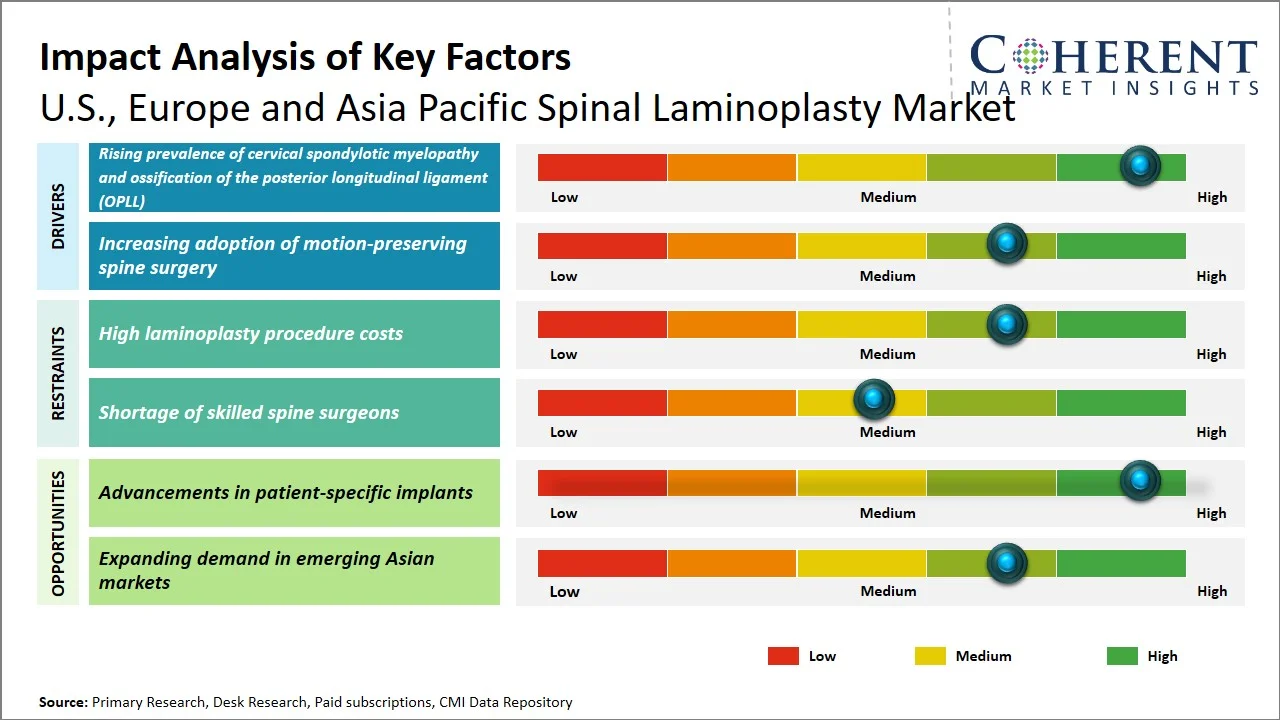
- Rising prevalence of cervical spondylotic myelopathy and ossification of the posterior longitudinal ligament (OPLL): The increasing clinical burden of cervical spinal cord compression, particularly from cervical spondylotic myelopathy (CSM) and ossification of the posterior longitudinal ligament (OPLL), is a driving factor in increasing adoption of cervical laminoplasty in the U.S., Europe, and Asia Pacific regions. For the decompression of multiple levels in the cervical spine, cervical laminoplasty has become the gold standard as the approach allows for the maintenance of cervical mobility while achieving reliable decompression of the cervical spinal cord. For instance, in November 2024, a review published by Springer Nature reported that ossification of the posterior longitudinal ligament (OPLL) prevalence is the highest in East Asia, reaching approximately 6.3% in Japan, 4.1% in China, and between 0.6% and 5.7% in South Korea, highlighting the substantial patient population requiring laminoplasty in the region.
- Increasing adoption of motion-preserving spine surgery: The increasing preference for posterior cervical decompression in patients with multilevel cervical spinal stenosis and myelopathy is supporting the adoption of spinal laminoplasty across the U.S., Europe, and Asia Pacific. Compared with anterior approaches, laminoplasty enables multilevel decompression while preserving spinal stability and cervical mobility, making it a preferred option for appropriately selected patients. For instance, in February 2024, AO Foundation published updated educational resources highlighting advancements in modern laminoplasty fixation techniques to improve spinal canal expansion and long-term stability.
Emerging Trends
- Increasing Adoption of Navigation- and Robotics-Assisted Spine Surgery: Intraoperative navigation combined with robotic-assisted platforms allow precise placement of the implants, leading to increased accuracy of the procedure for cervical laminoplasty and reduced procedural variability. These technologies are increasingly being adopted by advanced spine centers across the U.S., Europe, and developed Asia Pacific markets to enhance procedural efficiency and improve patient outcomes.
- Expansion of Enhanced Recovery After Surgery (ERAS) Protocols in Spine Care: Increased adoption of Enhanced Recovery After Surgery (ERAS) protocols for cervical spine operations, such as laminoplasty, to minimize hospital stays, improve analgesia management and improve functional recovery. The trend is prompting healthcare institutions to increasingly adopt a pathway-approach in perioperative care and has proven clinical and economic advantages among leading healthcare systems.
Preferred Laminoplasty Procedures by Clinical Indication
Clinical Condition | Preferred Surgical Approach | Why Laminoplasty is Preferred? |
Cervical Spondylotic Myelopathy | Open-door Laminoplasty | Preserves cervical motion while providing multilevel decompression |
OPLL | Open-door Laminoplasty | Effective decompression with lower risk of postoperative instability |
Multilevel Cervical Stenosis | Double-door/Open-door Laminoplasty | Maintains posterior spinal elements and spinal alignment |
Single-level Compression | ACDF/Laminectomy | Laminoplasty is generally less preferred for isolated lesions |
How are advancements in patient-specific implants creating new growth opportunities in the U.S., Europe and Asia Pacific spinal laminoplasty market?
The widespread adoption of patient-specific spinal implants, facilitated by advanced 3D printing and imaging capabilities, offers a significant growth avenue for the global spinal laminoplasty market. Patient-specific implants not only offer better anatomical fitting and precision in surgical performance but also better surgical outcomes, lower operating time, and lesser implant-related issues. The further infusion of artificial intelligence in implant designing adds to future spine care growth across the U.S., Europe and Asia Pacific region. For instance, in August 2024, a review published by the National Library of Medicine emphasized that 3D printing is revolutionizing the operating room, allowing surgeons to customize implants and perform personalized surgical planning prior to procedures, demonstrating the trend of patient-specific spine treatment.
Market Players, Key Development, and Competitive Landscape
Key Developments
- In June 2026, Amplio Spine acquired FloSpine's FDA-cleared KeyLift Expandable Interlaminar Stabilization System and initiated its nationwide commercialization. The minimally invasive expandable implant is designed to support supplemental spinal fusion through a less invasive approach, reflecting continued innovation in motion-preserving and minimally invasive spine surgery technologies.
- In July 2025, Osteotec entered into an exclusive U.K. distribution agreement with ulrich medical to expand access to advanced spinal implant technologies. The partnership broadens the availability of cervical, thoracolumbar fusion, vertebral body replacement, and dynamic stabilization systems across the U.K., strengthening the adoption of advanced spine surgery solutions.
Competitive Landscape
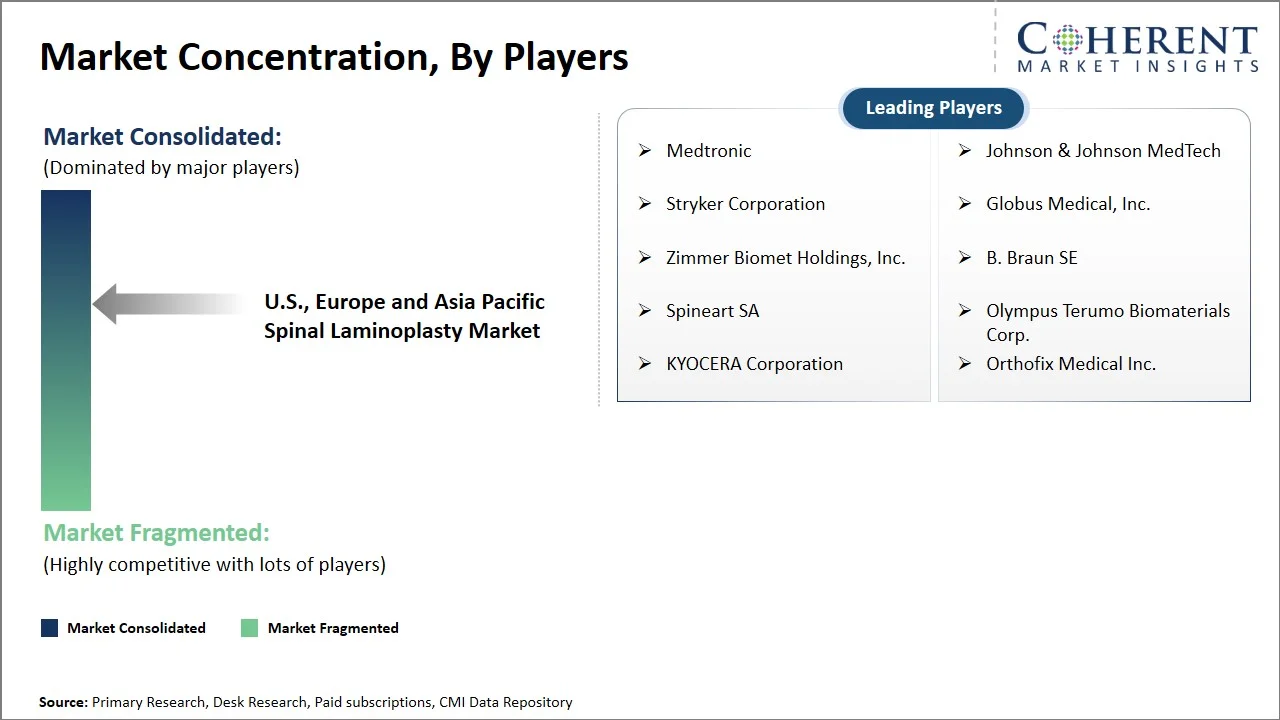
The U.S., Europe and Asia Pacific spinal laminoplasty market is moderately consolidated, with leading medical device manufacturers competing through continuous innovation in cervical fixation systems, biomaterials, and minimally invasive spine surgery solutions. Companies are strengthening their market presence through strategic collaborations with hospitals and spine centers, regulatory approvals, and investments in surgeon training programs to improve procedural adoption and clinical outcomes. Key focus areas include:
- Advanced Motion-Preserving Laminoplasty Fixation Systems
- Titanium & Patient-Specific Implant Innovation
- Regulatory Compliance, Clinical Evidence & Surgeon Training Programs
Market Report Scope
U.S., Europe and Asia Pacific Spinal Laminoplasty Market Report Coverage
| Report Coverage | Details | ||
|---|---|---|---|
| Base Year: | 2025 | Market Size in 2026: | USD 186.6 Mn |
| Historical Data for: | 2020 To 2024 | Forecast Period: | 2026 To 2033 |
| Forecast Period 2026 to 2033 CAGR: | 5.5% | 2033 Value Projection: | USD 272.2 Mn |
| Segments covered: |
| ||
| Companies covered: | Medtronic, Johnson & Johnson MedTech, Stryker Corporation, Globus Medical, Inc., Zimmer Biomet Holdings, Inc., B. Braun SE, Spineart SA, Olympus Terumo Biomaterials Corp., KYOCERA Corporation, and Orthofix Medical Inc. | ||
| Growth Drivers: |
| ||
| Restraints & Challenges: |
| ||
Analyst Opinion (Expert Opinion)
- In the coming years, the U.S., Europe and Asia Pacific spinal laminoplasty market will experience substantial growth aided by increasing burden of cervical degenerative disorders, expanding geriatric populations, and the growing preference for motion-preserving spinal procedures over fusion surgeries. Continuous advancements in fixation systems, biomaterials, and minimally invasive surgical techniques are expected to further improve clinical outcomes and accelerate procedure adoption.
- Most opportunities can be foreseen within open-door laminoplasty procedures in Japan and China, where the high prevalence of ossification of the posterior longitudinal ligament (OPLL) and cervical spondylotic myelopathy continues to drive the demand for posterior decompression surgeries. Additionally, increasing investments in specialized spine centers across China and South Korea are likely to create significant opportunities for advanced laminoplasty implants and instrumentation.
- To strengthen their competitive position, market players should focus on developing patient-specific and minimally invasive laminoplasty fixation systems, generate robust long-term clinical evidence demonstrating superior functional outcomes, and expand partnerships with leading spine societies and teaching hospitals to enhance surgeon training and product adoption. Securing timely regulatory approvals and expanding commercial presence in high-growth Asia Pacific markets will also be critical to gaining a competitive advantage.
Speak to the analyst
Want personalized insights?
Take the findings above to one of our principal consultants, or have the report rebuilt around the segments, geographies and competitors you actually track.
Market Segmentation
- Product Type Insights (Revenue, USD Mn, 2021 - 2033)
- Laminoplasty Plates and Screws
- Laminoplasty Rod
- Laminoplasty Fixation System
- Laminoplasty Retractors
- Bone Graft Substitutes
- Others
- Procedure Type Insights (Revenue, USD Mn, 2021 - 2033)
- Open Door Laminoplasty
- French Door Laminoplasty
- Expansive Laminoplasty
- Others
- Material Type Insights (Revenue, USD Mn, 2021 - 2033)
- Titanium
- Polyetheretherketone (PEEK)
- Tantalum
- End User Insights (Revenue, USD Mn, 2021 - 2033)
- Hospitals
- Ambulatory Surgery Centers
- Orthopedic Clinics
- Others
- Key Players Insights
- Medtronic
- Johnson & Johnson MedTech
- Stryker Corporation
- Globus Medical, Inc.
- Zimmer Biomet Holdings, Inc.
- Braun SE
- Spineart SA
- Olympus Terumo Biomaterials Corp.
- KYOCERA Corporation
- Orthofix Medical Inc.
Sources
Primary Research Interviews
- Spine surgeons specializing in cervical laminoplasty and cervical myelopathy
- Orthopedic and neurosurgical spine specialists from tertiary care hospitals
- Medical device engineers developing spinal fixation systems and laminoplasty implants
- Hospital procurement heads and spine center administrators
- Regulatory affairs experts for orthopedic and spinal implant devices (U.S., Europe & Asia Pacific)
Databases
- American College of Surgeons National Surgical Quality Improvement Program (ACS NSQIP) – Cervical spine surgery outcomes
- U.S. FDA – 510(k) Premarket Notification Database (spinal implants and fixation systems)
- ClinicalTrials.gov – Clinical trials on cervical laminoplasty and spinal implants
- European Database on Medical Devices (EUDAMED) – Medical device registrations (EU)
- Japan Medical Device Information Database (JAAME Search) – Approved spinal implants and orthopedic devices
Magazines
- Orthopedics This Week – Spine surgery and orthopedic device innovations
- Medical Device Network – Spine implant technology and regulatory updates
- Orthopedic Design & Technology (ODT) – Spinal implant design and manufacturing
- Becker's Spine Review – Spine surgery trends and hospital adoption
Journals
- The Spine Journal
- Global Spine Journal
- Journal of Neurosurgery: Spine
- European Spine Journal
- Spine (Lippincott Williams & Wilkins)
Newspapers
- MedTech Dive
- MedTech Insight
- Fierce Biotech
- Fierce Healthcare
Associations
- AO Spine – Global spine surgery education and clinical research
- North American Spine Society (NASS)
- EUROSPINE – The Spine Society of Europe
- Japanese Orthopaedic Association (JOA)
- Asia Pacific Spine Society (APSS)
Public Domain Sources
- U.S. Food and Drug Administration (FDA) – Orthopedic and spinal implant regulations
- European Commission – Medical Device Regulation (EU MDR 2017/745)
- National Institute for Health and Care Excellence (NICE) – Guidance on cervical myelopathy and spinal surgery
- Japan Ministry of Health, Labour and Welfare (MHLW) – Medical device approvals and reimbursement
- U.S. Centers for Medicare & Medicaid Services (CMS) – Coverage and reimbursement for spinal procedures
Proprietary Elements
- CMI Data Analytics Tool, Proprietary CMI Existing Repository of information for last 10 years.
Get access to 250+ pages report
Every segment, forecast, competitor profile and data table behind the analysis above — available for instant download.
- ESOMAR Member
- ISO 9001:2015 Certified
- D-U-N-S Registered
- GDPR & CCPA Compliant
Missing comfort of reading report in your local language? Find your preferred language:
Transform your Strategy with Exclusive Trending Reports
Frequently Asked Questions
The U.S., Europe and Asia Pacific spinal laminoplasty market is estimated to be valued at USD 186.6 Mn in 2026 and is expected to reach USD 272.2 Mn by 2033.
Laminoplasty plates and screws dominate due to their ability to provide stable fixation, maintain laminar opening, and improve postoperative spinal stability and clinical outcomes.
Spinal laminoplasty is a motion-preserving surgical procedure that decompresses the spinal cord by reconstructing and expanding the cervical spinal canal.
The CAGR of the U.S., Europe and Asia Pacific spinal laminoplasty market is projected to be 5.5% from 2026 to 2033.
It provides effective multilevel spinal cord decompression while preserving posterior spinal structures and cervical motion, reducing the need for fusion.
Titanium implants offer excellent biocompatibility, high mechanical strength, corrosion resistance, and compatibility with postoperative imaging, making them ideal for long-term spinal fixation.
High laminoplasty procedure costs, and shortage of skilled spine surgeons are the major factors hampering the growth of the U.S., Europe and Asia Pacific spinal laminoplasty market.