

Patient Warming Devices Market Size and Forecast — 2026-2033
The Patient Warming Devices Market size is estimated to be valued at USD 1.36 billion in 2026 and is expected to reach USD 2.40 billion by 2033, exhibiting a compound annual growth rate (CAGR) of 8.5% from 2026 to 2033.
Overview
Patient warming devices are used by healthcare professionals during surgeries and for intra-hospital patient transfer. Severely wounded patients may suffer or die from hypothermia and these patient warming devices have proven to be very effective in such cases. Physiological temperature often drops down during major operations such as cardiovascular and others, where rewarming becomes important so as to avoid any complications during the procedure. Patient warming devices can help to achieve normothermia by preventing any sudden body heat loss, leading to faster recovery.
Patient warming devices include catheters, temperature monitors, and cooling jackets. Hot intravenous fluid is introduced via catheter in the patient’s system, while monitoring the temperature between 50o C and 100o C, avoiding any tissue damage. To avoid any significant entry site and endothelial damage due to hot fluid, the catheter is surrounded by a cooling jacket, which carries unheated fluid between the gaps. Patient warming devices can substantially decrease chances of postoperative wound infection and myocardial infarctions, mortality rates, and ICU time, along with hospital stay. These factors are accelerating growth of the patient warming devices market.
Key Takeaways
The Surgical Procedures segment leads the market, accounting for over 59% of industry share, driven by expanding elective and emergency surgeries globally.
Hospitals dominate the end-user landscape with a 66% market share, bolstered by recent infrastructure investments and protocol adherence. Forced Air Warming Devices hold a controlling 56% industry share among device types, reflecting their established clinical efficacy and acceptance.
Regionally, North America holds the dominant position with approximately 40% of the market share, supported by advanced healthcare infrastructure and reimbursement frameworks. Simultaneously, Asia Pacific exhibits the fastest CAGR, driven by increasing healthcare access, government initiatives to enhance surgical care, and rising awareness in emerging economies like India and China. Europe maintains steady growth due to rising geriatric population and technological innovation adoption.
Patient Warming Devices Market – Segmentation Analysis
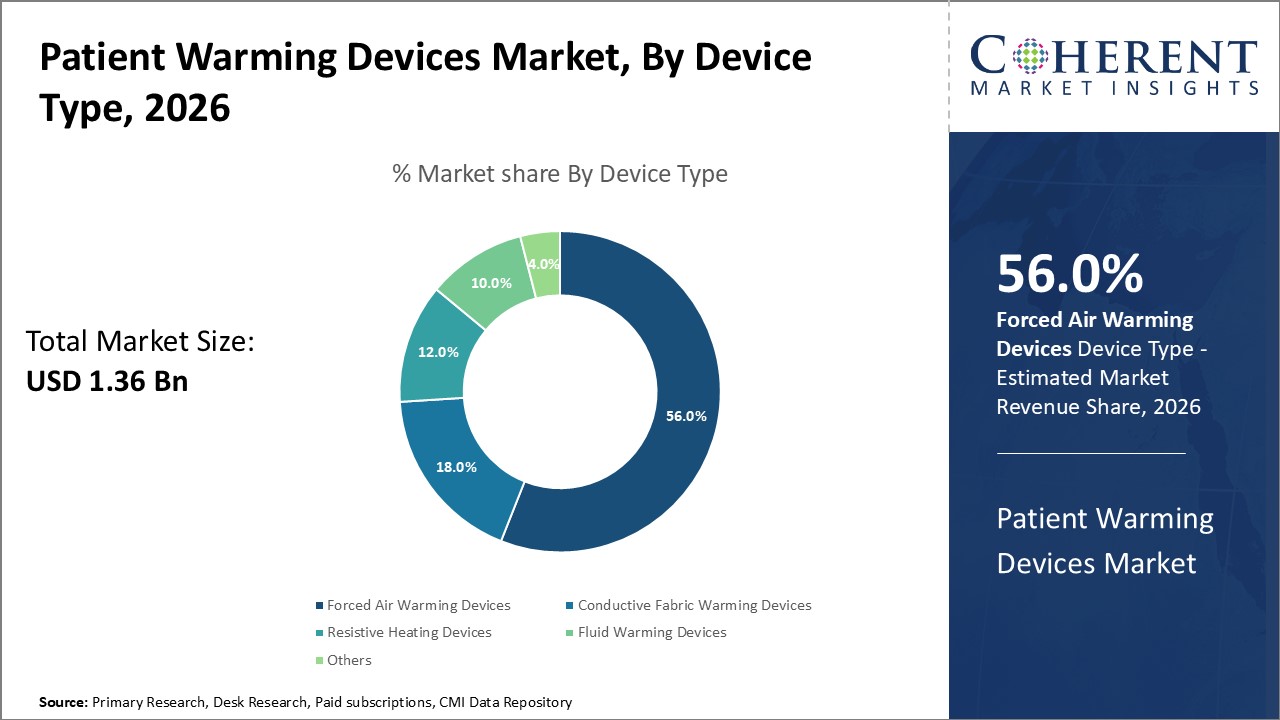
Patient Warming Devices Market Insights, By Device Type
In terms of device type, forced air warming devices dominate the market share with approximately 56%. These devices remain the front-runners due to their proven efficacy, ease of use, and extensive clinical validation in reducing perioperative hypothermia. Innovations focusing on quieter operation and disposable warming blankets have further boosted adoption across surgical units. These devices use forced air circulation to evenly distribute warm air over the patient’s body, providing controlled and consistent warming during medical procedures.
Patient Warming Devices Market Insights, By Application
Regarding applications, surgical procedures remain the commanding segment with roughly 59% market share due to high procedural volume globally and strong recommendations for active warming. The market is benefited by rising surgical volumes, particularly among high-risk and elderly patients, as well as the increasing use of robotic and minimally invasive procedures that call for exact temperature control. Portable, energy-efficient technologies that increase patient comfort and surgical safety are being purchased by hospitals and ambulatory surgical clinics.
Patient Warming Devices Market Insights, By End User
In the end-user market, hospitals dominating the patient warming devices landscape at 65% market share. Hospitals' comprehensive perioperative protocols and higher surgical volumes make them primary consumers. Technological compatibility and integration with existing operating room infrastructure support this dominance. Hospitals utilize these devices extensively in critical care, perioperative care, and emergency rooms to maintain patient body temperature during surgeries and critical treatments. This helps in preventing perioperative hypothermia, reducing complications such as surgical site infections, and improving patient outcomes.
Patient Warming Devices Market Trends
The patient warming devices market is witnessing a shift towards hybrid warming systems combining forced air with resistive elements, enhancing efficacy and reducing warming times. Recent studies in 2026 have shown these hybrid devices reduce postoperative complications by up to 30%, intensifying demand in advanced healthcare facilities.
Another trend includes integration of IoT-enabled warming devices providing real-time temperature monitoring and automated control features, improving clinical outcomes and operational workflows. Moreover, the rising trend of home healthcare has prompted the development of user-friendly, compact warming solutions that support remote patient temperature management, as showcased by pilot programs in the U.S. and Europe.
Patient Warming Devices Market Insights, By Geography
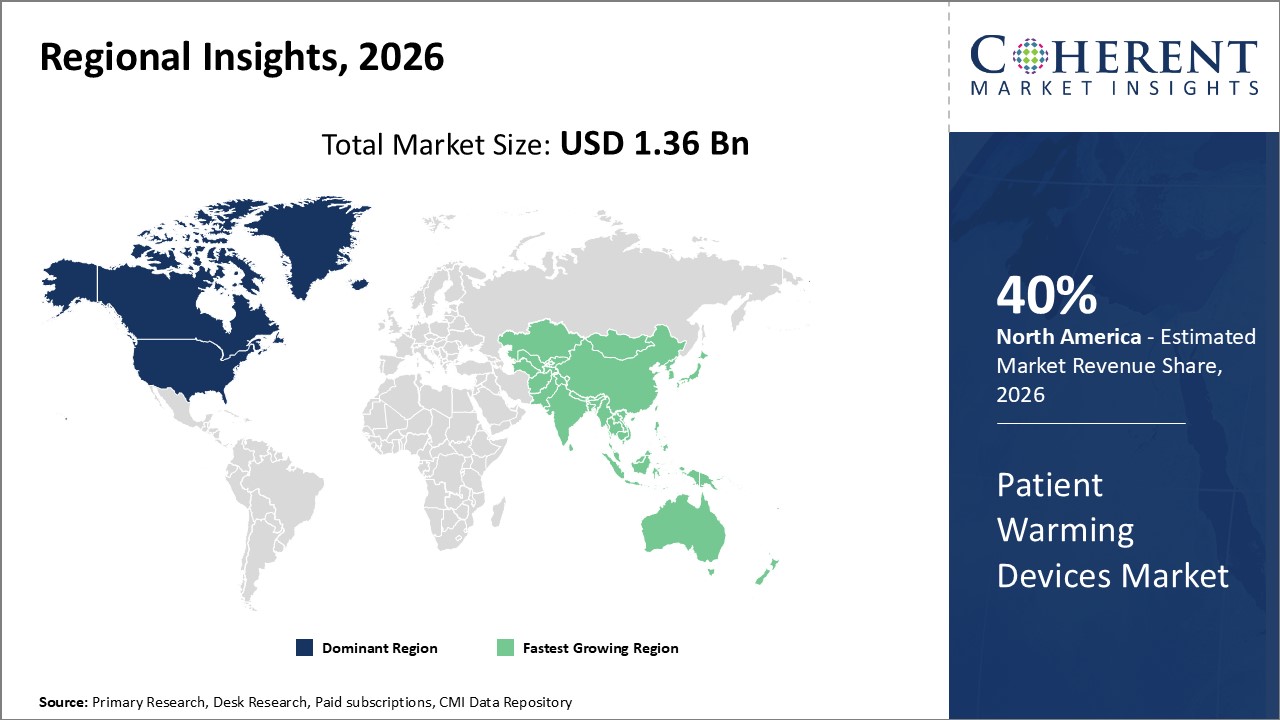
North America Patient Warming Devices Market Analysis and Trends
Strong healthcare infrastructure, established reimbursement practices, and strict regulations that promote patient safety are the main drivers of North America's market supremacy in patient warming devices. Approximately 40% of the market share is held by the region. With major device manufacturers based there, the United States propels this supremacy through innovation, widespread adoption of cutting-edge patient warming technologies, and high per capita healthcare spending.
Asia Pacific Patient Warming Devices Market Analysis and Trends
Asia Pacific, on the other hand, is growing at the quickest rate, with a CAGR of more than 9% over the course of the projection period. This quick expansion is fueled by growing access to healthcare, an increase in surgical operations, and more government initiatives in nations like China and India. This market momentum is further supported by rising urbanization, investments in healthcare infrastructure, and a youthful and changing patient base.
Patient Warming Devices Market Outlook for Key Countries
United States Patient Warming Devices Market Analysis and Trends
The U.S. market is propelled by the highest volume of surgical interventions worldwide, with over 20 million inpatient surgeries in 2025 alone. Leading companies such as Medtronic plc and 3M Company drive the market dynamics through continuous product innovation and strategic collaborations with healthcare providers.
The presence of well-established reimbursement frameworks by Medicare and private insurers sustains widespread adoption and steady market growth. Regulatory support from agencies like the FDA for advanced warming technologies has also enabled faster product approvals and clinical acceptance. Innovations such as battery-operated warming blankets and IoT-connected devices originating from U.S. manufacturers have garnered significant market revenue, underscoring robust business growth in this region.
Germany Patient Warming Devices Market Analysis and Trends
Germany's patient warming devices market benefits from a strong healthcare ecosystem featuring advanced hospital networks and government-driven safety regulations. The country is one of the largest markets in Europe, with growing adoption of hybrid warming systems and increasing investments in perioperative care enhancements.
Established medical device companies and regional distributors are focusing on product customization to meet demand from specialized surgical centers and neonatal care units. Additionally, strategic healthcare modernization plans and reimbursement policies facilitate technology penetration. Market players emphasizing R&D collaborations with German medical institutions have accelerated the launch of innovative warming solutions tailored to local clinical needs, further expanding market revenue.
Analyst Opinion
The supply-side dynamics of patient warming devices reveal a marked increase in production capacities, particularly in North America and Asia Pacific. In 2025, manufacturing facilities in the U.S. Pricing strategies have evolved, with mid-to-high-end devices commanding premium pricing while governments and healthcare institutions negotiate volume discounts to optimize procurement costs.
Demand-side indicators underscore diverse usage scenarios where patient warming devices extend beyond operating rooms. For instance, increased adoption in emergency transport and neonatal intensive care units has contributed 13% incremental market share in 2025, fundamentally altering the landscape of clinical temperature management. Additionally, emerging outpatient care trends amplify device penetration in ambulatory surgical centers, driving demand growth.
From a micro-level viewpoint, the surge in minimally invasive surgeries has escalated the requirement for precise temperature control, thereby boosting ventilated warming blankets and resistive fabric heaters sales. The shift towards customized warming solutions in 2026 reflects a strategic focus by manufacturers on niche medical specialties, with neonatal care warming devices recording a 21% year-over-year uptake in select geographies.
Nano-size indicators include enhanced innovation in battery-powered wearable warming devices, enabling increased mobility without compromising temperature maintenance. Recent developments in cordless range warming systems introduced in 2026 have reportedly improved patient compliance and healthcare staff efficiency by reducing cumbersome wiring and setup times.
- Current Industry Events of 2026
- Market Size Estimation
- Regional Breakdown
- Competitive Landscape
- Customer Intelligence
- Segmental Analysis
- Pricing Analysis
- Key Market Drivers, Challenges & Future Trends
- Customized Insights Section
Market Scope
| Report Coverage | Details | ||
|---|---|---|---|
| Base Year: | 2025 | Market Size in 2026: | USD 1.36 billion |
| Historical Data for: | 2020 To 2024 | Forecast Period: | 2026 To 2033 |
| Forecast Period 2026 to 2033 CAGR: | 8.5% | 2033 Value Projection: | USD 2.40 billion |
| Geographies covered: |
| ||
| Segments covered: |
| ||
| Companies covered: | Medtronic plc, 3M Company, Becton Dickinson and Company, Smiths Medical, Stryker Corporation, Arizant Healthcare Inc., GE Healthcare, Cardinal Health, Inc., Paragon Medical, Teleflex Incorporated | ||
| Growth Drivers: |
| ||
Patient Warming Devices Market Growth factors
The increased volume of surgical procedures remains a prime catalyst for market growth, with global surgeries reaching over 330 million annually as per 2025 healthcare data, directly boosting demand for patient warming devices.
Rising awareness and stringent guidelines from medical bodies, such as the American Society of Anesthesiologists, regarding perioperative hypothermia prevention have encouraged healthcare providers to prioritize these devices, enhancing the market footprint.
Technological advancements leading to portable, efficient, and customizable warming devices have addressed both hospital infrastructure limitations and patient comfort, helping penetrate under-served regions.
Expanded healthcare spending and reimbursement schemes across developed nations have further stimulated market expansion, making high-cost warming devices accessible to a broader patient base.
Patient Warming Devices Market Development
In July 2026, The ComfortTemp Patient Warming System, which includes disposable blankets and gowns, was introduced by Medline. It is intended to outperform comparable systems now available on the market and offer patients unmatched comfort and temperature control. The ComfortTemp blower and retractable hose are securely attached to ComfortTemp blankets and robes by the 510K Class 2 device's unique lock-in hose mechanism and rotating elbow connector.
In August 2026, Quality In Flow (QinFlow), a leading innovator in thermoregulation technology, unveiled the Warrior AC Station, its most recent blood and fluid warming solution designed to satisfy the rigorous requirements of intensive care units (ICUs) and operating rooms (ORs). The Warrior AC Station was designed specifically to meet the resuscitation and infusion requirements of hospitals.
Key Players
Medtronic plc
3M Company
Becton Dickinson and Company
Smiths Medical
Stryker Corporation
Arizant Healthcare Inc.
GE Healthcare
Cardinal Health, Inc.
Paragon Medical
Teleflex Incorporated
Several leading companies have adopted competitive strategies such as vertical integration, which has enhanced operational efficiency and increased market share.
For example, a leading U.S.-based market player leveraged acquisitions to expand its product portfolio and distribution network, resulting in a 10% uplift in 2025 revenues. Strategic partnerships between device manufacturers and hospital networks have optimized clinical integration, promoting faster adoption rates of innovative warming technologies.
Patient Warming Devices Market Future Outlook
The market for patient warming devices will grow significantly in the future due to rising surgery volume worldwide and growing awareness of perioperative hypothermia avoidance. More advanced, automated, and customized warming solutions that will be improved by artificial intelligence and intelligent monitoring systems offering real-time temperature control will be the main focus of market innovations. Wearable and portable warming devices will become increasingly popular as they will allow patients to move around more while they heal. As sustainability will gain traction, eco-friendly and energy-efficient heating solutions will be developed.
Additionally, expenditures in hospital renovation and the expansion of healthcare infrastructure, particularly in emerging nations, will fuel market growth. Adoption will be fuelled by a focus on patient-centric designs and enhanced comfort, while manufacturers will be compelled by regulations to meet stricter safety and efficacy requirements. Value-based care models and the expansion of outpatient treatment will align with the market's overall evolution, which will combine intelligent technology integration, patient safety, and convenience. It will be anticipated that this change will improve patient outcomes and will expedite healthcare procedures in a variety of medical settings.
Historical Development
According to Agency for Healthcare Research and Quality (AHRQ), 22 million surgeries were performed in 2014, which in turn, drove growth of the patient warming devices market. Asia Pacific was expected to witness the highest growth rate over the forecast period due to factors such as improving healthcare infrastructure, government efforts towards improving healthcare facilities, and increasing medical tourism. For instance, in 2014, Indonesia’s government launched Jaminan Kesehatan Nasional, a programme, which aimed to provide basic care to the entire country by 2019.
According to World Health Organization (WHO), around 300 million surgeries were performed in 2012, the number for which had increased exponentially over the recent past, in turn, boosting growth of the patient warming devices market.
According to American Society of Anesthesiologists (ASA), successful surgery outcomes were assured with the help of extensive perioperative temperature management within the normothermic range. Furthermore, ASA stated that around 51% of the U.S. surgical patients suffered from IPH, which could be reduced by using patient warming devices, in turn, fueled growth of the patient warming devices market.
Sources
Primary Research interviews:
Operating Room Nurses
Hospital Procurement Managers
Biomedical Engineers / Clinical Engineers
Databases:
ProQuest
SpringerLink
ScienceDirect
Magazines:
MedTech Insight
Fierce Medtech
MassDevice
Journals:
Anesthesiology Journal
Journal of Perioperative Practice
British Journal of Anaesthesia
Newspapers:
The Wall Street Journal (Health/Business)
The Economic Times (Healthcare)
The Hindu BusinessLine (Health/MedTech)
Associations:
European Society of Anaesthesiology and Intensive Care (ESAIC)
World Federation of Societies of Anaesthesiologists (WFSA)
Society for Technology in Anesthesia (STA)
Get access to 250+ pages report
Every segment, forecast, competitor profile and data table behind the analysis above — available for instant download.
- ESOMAR Member
- ISO 9001:2015 Certified
- D-U-N-S Registered
- GDPR & CCPA Compliant
Missing comfort of reading report in your local language? Find your preferred language:
Transform your Strategy with Exclusive Trending Reports
Frequently Asked Questions
Leading companies include Medtronic plc, 3M Company, Smiths Medical, and Stryker Corporation, who collectively capture significant market share due to diversified product portfolios and global presence.
The market size is projected to grow from USD 1.36 billion in 2026 to USD 2.40 billion by 2033, underscoring strong market growth fueled by rising surgical volumes and technological advancements.
Hospitals present the largest growth opportunity, currently holding 65% market share, driven largely by increased surgical procedures and perioperative care protocols.
Trends indicate a rising adoption of IoT-integrated warming devices and hybrid warming systems, focusing on enhanced precision, device portability, and patient-centered care.
The competitive landscape is characterized by innovation-driven strategies and collaborations, with challenges including cost containment and regulatory compliance in emerging markets.
Strategic partnerships with healthcare providers, expansion through mergers and acquisitions, and focused R&D investments to develop differentiated technologies are key go-to-market approaches.