

Patient Temperature Monitoring Market Size and Share Analysis - Growth Trends and Forecast (2026 - 2033)
The global patient temperature monitoring market size is expected to reach approximately USD 4,978.7 Mn in 2026 and is projected to grow at a compound annual growth rate (CAGR) of 7.8% during the forecast period (2026-2033), totaling USD 8,398.5 Mn by 2033. This is attributable to rising prevalence of chronic and infectious diseases and increasing adoption of remote patient monitoring technologies.
Key Takeaways from the Patient Temperature Monitoring Market Report
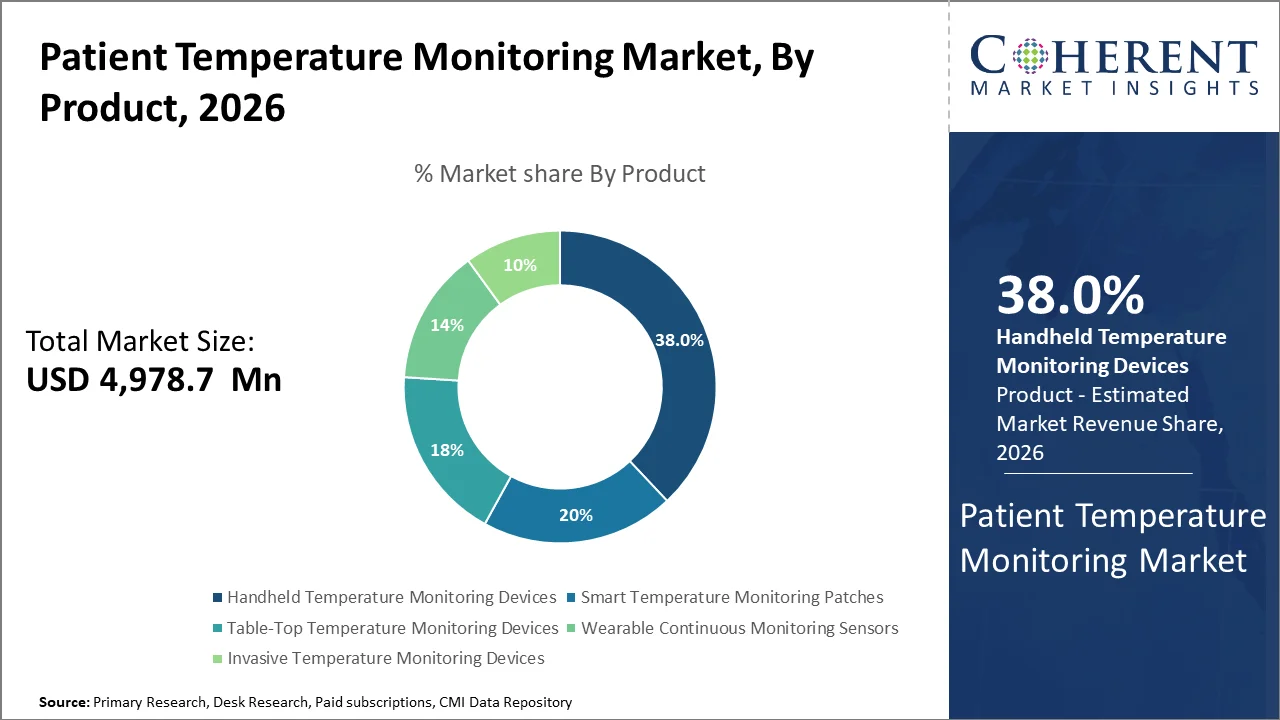
- Demand remains especially high for handheld temperature monitoring devices, with this segment expected to account for a revenue share of around 38% in 2026, owing to rising adoption of digital thermometers and infrared thermometers across clinical and home care applications.
- Non-invasive temperature monitoring is slated to dominate the market with a share of 62% in 2026, thanks to its comfort, ease of use, reduced risk of infection, and widespread adoption across hospitals and home care settings. For example, the U.S. FDA states that non-contact infrared thermometers (NCITs), a major category of non-invasive temperature monitoring devices, can reduce cross-contamination risk and minimize disease transmission because they do not require physical contact with patients.
- Pyrexia/fever is likely to remain the most lucrative application of patient temperature monitoring solutions, accounting for a share of nearly 36% in 2026, because of infection surveillance and routine clinical use.
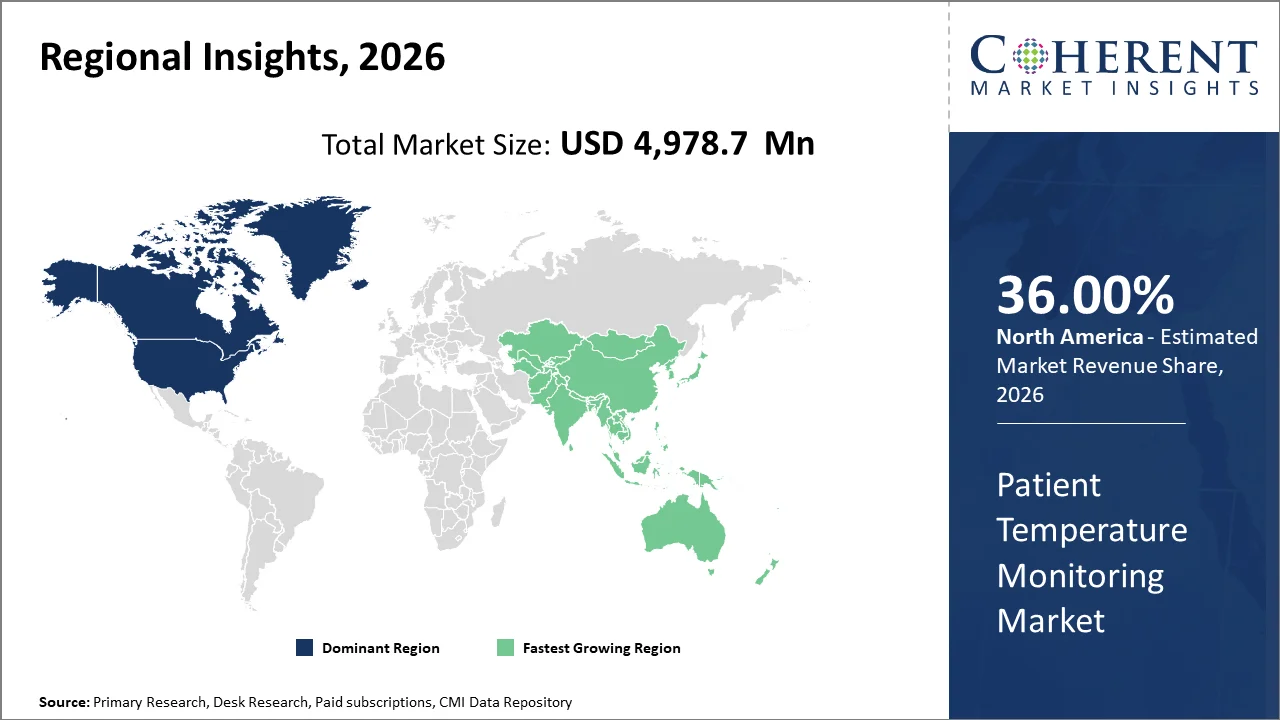
- North America is expected to retain its dominance over the global patient temperature monitoring industry, capturing a share of 36% in 2026. This is mostly due to advanced healthcare infrastructure and high adoption of digital monitoring. For instance, the U.S. had 6,093 hospitals in 2025, including 5,112 community hospitals, providing one of the world's largest healthcare delivery networks and a big installed base for patient monitoring technologies.
- Asia Pacific, with a share of 25% in 2026, is poised to emerge as the fastest-growing market for patient temperature monitoring products during the forecast period, driven by expanding healthcare systems and the growing adoption of remote care.
Patient Temperature Monitoring Market Overview
The global patient temperature monitoring market is poised to record steady growth during the forecast period. This is primarily due to rising incidence of infectious diseases, growing demand for continuous patient monitoring, and rising adoption of advanced medical technologies across hospitals and home care settings.
Temperature is one of the key vital signs that shows a person’s health condition. Monitoring and managing body temperature is an important part of standard patient care, especially for patients undergoing surgery or suffering from critical illness. Patient temperature monitoring systems are commonly used in preoperative warming, operating rooms, post-operative recovery, critical care units, intensive care units (ICUs), chemotherapy care, and emergency medical services.
There are four main types of temperature sensors commonly used in modern medical devices and electronics: resistance temperature detectors (RTDs), thermocouples, thermistors, and semiconductor-based integrated circuit (IC) sensors. Increasing need for temperature monitoring in managing chronic diseases, post-surgical care, and critical care settings is expected to boost demand for patient temperature monitoring products during the forthcoming period.
Increasing geriatric population is set to boost sales of patient temperature monitoring solutions during the forecast period. According to the World Health Organization, the global population aged 80 years and above is projected to reach 426 million by 2050. This is expected to drive demand for continuous health monitoring, including temperature tracking, because older people are more susceptible to chronic conditions and infections.
Growth of connected healthcare systems and product miniaturization are some emerging trends in the patient temperature monitoring market. Devices are increasingly being integrated with mobile apps, cloud platforms, and hospital information systems. This enables seamless data exchange and better clinical decision-making. Similarly, advances in sensor technology are leading to compact, accurate, and energy-efficient devices, supporting wearable and continuous monitoring applications. For example, the iThermonitor WT705 wearable device continuously tracks patient temperature and transmits data wirelessly to hospital systems for real-time monitoring.
Segmental Insights
Which is The Top-Selling Product in the Patient Temperature Monitoring Market?
Handheld Temperature Monitoring Devices Remain the Top-Selling Product Category
According to Coherent Market Insights, handheld temperature monitoring devices continue to dominate the market, accounting for 38% of the total revenue share in 2026. This is mostly due to increasing adoption of digital thermometers and infrared thermometers across clinical and home care applications because of their portability, ease of use, and quick measurement capabilities.
Healthcare professionals prefer handheld devices due to their cost-effectiveness and tendency to deliver accurate readings without requiring extensive training. Devices like infrared thermometers and digital handheld units offer non-invasive and rapid temperature assessment, which is crucial for infection control and routine patient screening.
Rising demand for point-of-care diagnostics and growing prevalence of infectious diseases are also boosting adoption of handheld temperature monitoring technologies. On the other hand, smart temperature monitoring patches segment is expected to grow at a higher CAGR during the forecast period. This is mostly due to increasing adoption of remote patient monitoring solutions.
- Current Industry Events of 2026
- Market Size Estimation
- Regional Breakdown
- Competitive Landscape
- Customer Intelligence
- Segmental Analysis
- Pricing Analysis
- Key Market Drivers, Challenges & Future Trends
- Customized Insights Section
What Is Driving the Rising Demand for Non-Invasive Patient Temperature Monitoring?
Comfort, Ease of Use, and Reduced Risk of Infection Fueling Adoption
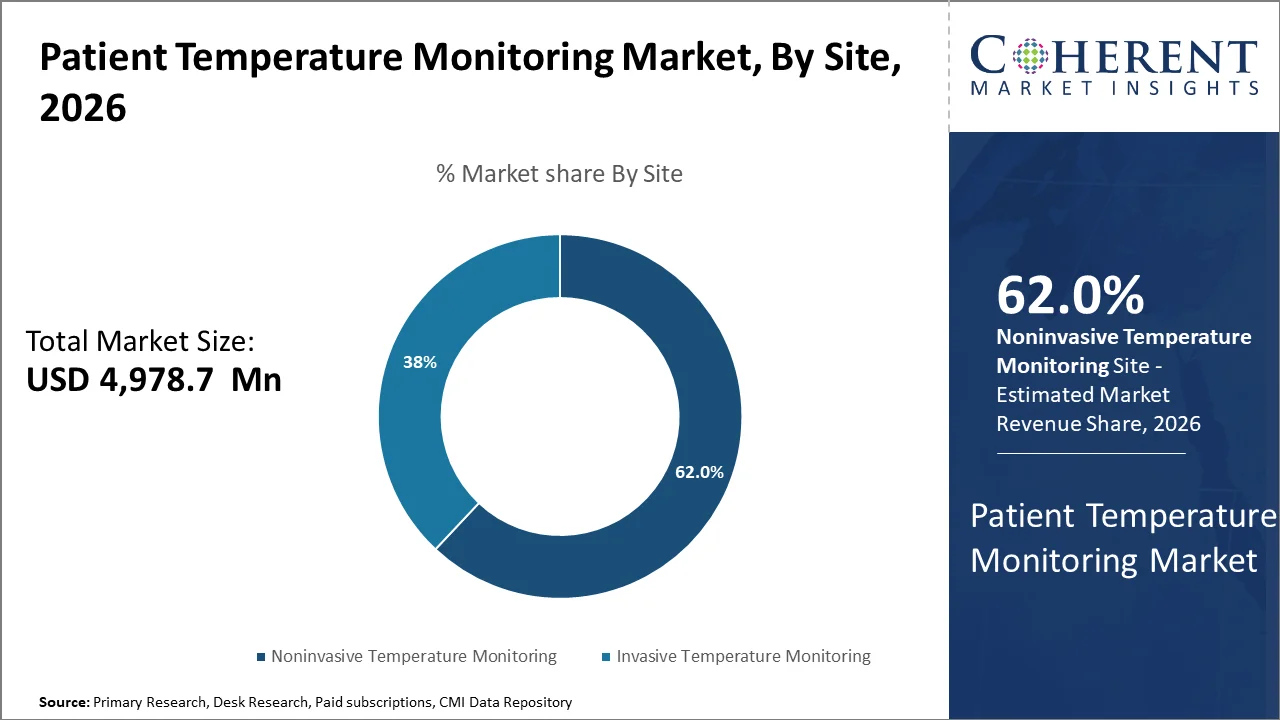
Coherent Market Insights’ latest patient temperature monitoring market analysis forecasts the non-invasive segment to account for 62% of the market share in 2026. Non-invasive patient temperature monitoring is becoming more popular because it offers greater comfort and easy-to-use designs, improving patient compliance, especially among children and the elderly. These solutions also lower the risk of cross-contamination and hospital-acquired infections, making them a safer option in both clinical and home care settings.
The ability to obtain quick and accurate readings without causing discomfort also supports their growing preference in modern healthcare.
Current Events and Their Impact
Current Event | Description and its Impact |
Growing Focus on Sepsis Surveillance and Early Detection Programs |
|
Expansion of Continuous Vital Sign Monitoring Technologies in Hospitals |
|
Market Dynamics
Patient Temperature Monitoring Market Drivers
- Rising Prevalence of Chronic and Infectious Diseases: Conditions such as viral infections (including influenza and dengue), cardiovascular diseases, and respiratory disorders are becoming increasingly prevalent worldwide. For instance, according to the World Health Organization (WHO), seasonal influenza infects up to 1 billion people annually. This growing disease burden is driving demand for reliable and rapid fever detection tools, such as thermometers, in both clinical and home settings. These conditions often require continuous or frequent temperature monitoring, as real-time temperature tracking plays a critical role in early diagnosis, patient monitoring, and effective disease management.
- Growing Adoption of Remote Patient Monitoring (RPM): Hospitals and healthcare providers in the contemporary era are increasingly using remote monitoring systems to track patient vitals outside clinical settings. For example, a national study of U.S. hospitals showed the number offering remote patient monitoring (RPM) services increased from 33.0% in 2018 to 46.3% in 2022, a 40.3% growth in RPM availability over five years. This increasing integration of real-time monitoring solutions into digital healthcare infrastructure is expected to boost growth of patient temperature monitoring market during the forecast period.
Patient Temperature Monitoring Market Trends
- Shift Towards Remote and Telehealth-Based Monitoring: An emerging trend in the patient temperature monitoring market is the increasing use of remote monitoring. Connecting temperature monitoring with telemedicine platforms allows patients to be continuously tracked without visiting hospitals. This trend supports decentralized, patient-centered healthcare delivery.
- Rise of Smart Wearable Temperature Monitoring Devices: Wearables like patches, wristbands, and smart thermometers are becoming increasingly popular. This is because these devices provide continuous, non-invasive monitoring and make it easier for patients to follow care plans. They let users and healthcare providers track vital signs such as heart rate, body temperature, oxygen levels, and sleep patterns outside traditional clinical settings. This supports early detection of health issues, better management of chronic diseases, preventive care, and empowers people to take proactive control of their health.
Patient Temperature Monitoring Market Opportunities
- Increasing Number of Surgical Procedures: The increasing number of surgeries performed worldwide is driving demand for patient temperature monitoring products. According to global health estimates using WHO data, about 234 million surgical procedures are performed each year. This growing number of surgeries emphasizes the need for continuous intraoperative and postoperative temperature monitoring, as proper temperature management helps reduce complications and improve recovery outcomes.
- Technological Advancements in Monitoring Devices: Innovations in IoT-enabled sensors, wireless connectivity, and smart thermometers are enhancing accuracy as well as usability. These technologies allow real-time data sharing and integration with electronic health records (EHRs). For example, Smart Meter recently launched iDigiTemp, a handheld thermometer that sends patient temperature readings in real time. This allows healthcare providers to monitor patients more easily as well as integrate the data directly with electronic health records. Such advancements are expected to create new growth opportunities for the patient temperature monitoring market during the assessment period.
Impact of AI on The Patient Temperature Monitoring Market
Artificial intelligence (AI) and predictive analytics are increasingly being incorporated into patient temperature monitoring systems. AI‑augmented platforms analyze continuous temperature and other vital sign data to identify patterns that may signal clinical abnormalities and help forecast potential deterioration.
These technologies support proactive care by helping clinicians recognize infections, sepsis risk, and post‑operative complications earlier, enabling timely intervention. For instance, in 2025 researchers developed AI‑powered wearable monitoring systems capable of continuously tracking body temperature and other vital signs, alerting clinicians to subtle physiological changes in real time.
Regional Insights
North America Leads with Strong Adoption of Connected Monitoring Technologies
The region is projected to hold around 36% share of the global market in 2026. North America is expected to maintain its leading position in the patient temperature monitoring market during the forecast period. This growth is mostly due to increasing adoption of connected healthcare technologies, including wireless and wearable temperature monitoring devices.
Hospitals across the United States and Canada are focusing on integrating smart monitoring systems with electronic health records (EHRs). This allows healthcare professionals to track patient temperature in real time and respond quickly to any abnormalities. In addition, strict clinical guidelines for continuous patient monitoring and early detection of infections are encouraging the use of advanced temperature monitoring solutions.
The growing use of remote patient monitoring, especially for post-discharge care and chronic disease management, is also supporting patient temperature monitoring market growth in the region. This trend is increasing demand for compact and easy-to-use temperature monitoring devices.
Asia Pacific Becoming a Central Hub for Industry Players
The region is set hold a global market share of 25% in 2026. Asia Pacific is anticipated to emerge as the most lucrative market for patient temperature monitoring product manufacturers during the forecast period. This can be attributed to rising prevalence of infectious diseases, improving access to healthcare services, and growing focus on early diagnosis in countries such as China, India, and Japan. Infectious diseases account for about 27% of India’s disease burden and cause millions of deaths each year.
Governments in the region are investing in public healthcare programs and upgrading hospital facilities, which is increasing the availability of basic monitoring equipment, including temperature monitoring devices. At the same time, the growing middle-class population is driving demand for better healthcare services. The global middle class now exceeds 4 billion people, accounting for more than 60% of the world’s population.
Another key factor is the rising use of home healthcare solutions. More patients are opting for home-based care, which is increasing the need for digital thermometers and wearable monitoring devices. In addition, the expansion of private hospitals and diagnostic centers is boosting sales of patient temperature monitoring systems in the region.
Patient Temperature Monitoring Market Outlook – Country-wise
U.S. Patient Temperature Monitoring Market Trends
The U.S. is expected to remain a leading market for patient temperature monitoring products during the forecast period. This is due to rising adoption of continuous and remote temperature monitoring devices, especially in intensive care units and post-surgical settings. Increasing cases of infectious diseases and strict hospital protocols for early fever detection are also boosting demand. About 1.2 million people in the United States are living with HIV. In addition, the integration of temperature monitoring systems with electronic health records (EHRs) is improving patient tracking and supporting market growth.
China Patient Temperature Monitoring Market Forecast
China is slated to emerge as a fast-growing market during the forecast period due to the increasing focus on public health surveillance and infection control. The nation is witnessing strong demand for non-contact and wearable temperature monitoring devices. Expansion of digital healthcare platforms and growing use of smart hospitals are further supporting adoption. In addition, rising awareness about continuous patient monitoring in both hospitals and home care settings is contributing to market growth.
Who are the Major Companies in the Patient Temperature Monitoring Market?
Some of the major players in Halitosis Treatment Market are Medtronic, Cardinal Health, 3M, Becton, Dickinson and Company, Geratherm Medical AG, A&D Medical, Braun, Paul Hartmann AG, Nureca, Koninklijke Philips N.V., Masimo, Dongguan Actherm Medical Corp, Microlife Corporation, DeltaTrack Inc., Steadysense Gmbh, IWEECARE Co., Ltd, Recon Health Inc., VivaLNk, Inc., Celsium, and GreenTeg AG
Key Strategies Adopted by Industry Players
Top halitosis treatment companies are adopting various organic and inorganic strategies to boost their revenue as well as gain a competitive edge over the industry. These include new product launches and approvals, investments in R&D, partnerships, mergers, acquisitions, and distribution agreements. For instance,
- In January 2026, Exergen announced it would showcase its FDA‑ and CE‑approved Temporal Artery Thermometers (TATs) at the World Health Expo. These thermometers are widely used in hospitals and clinics for quick and accurate temperature measurement.
- In January 2026, NexTemp offers single-use thermometers and a smart tracking app that allows users to log and monitor temperature readings. The thermometers are designed for quick, hygienic, and accurate temperature measurement.
- In June 2025, Cardinal Health launched the Kendall DL Multi System in the United States. The new solution enables continuous monitoring of three essential vital signs: cardiac activity, blood oxygen level, and temperature.
- In January 2024, Blue Spark Technologies launched VitalTraq, an innovative multi-vital remote patient monitoring platform. VitalTraq allows healthcare providers to monitor patients’ heart rate, temperature, and other vital signs remotely.
Market Report Scope
Patient Temperature Monitoring Market Report Coverage
| Report Coverage | Details | ||
|---|---|---|---|
| Base Year: | 2025 | Market Size in 2026: | USD 4,978.7 Mn |
| Historical Data for: | 2020 To 2024 | Forecast Period: | 2026 To 2033 |
| Forecast Period 2026 to 2033 CAGR: | 7.8% | 2033 Value Projection: | USD 8,398.5 Mn |
| Geographies covered: |
| ||
| Segments covered: |
| ||
| Companies covered: | Medtronic, Cardinal Health, 3M, Becton, Dickinson and Company, Geratherm Medical AG, A&D Medical, Braun, Paul Hartmann AG, Nureca, Koninklijke Philips N.V., Masimo, Dongguan Actherm Medical Corp, Microlife Corporation, DeltaTrack Inc., Steadysense Gmbh, IWEECARE Co., Ltd, Recon Health Inc., VivaLNk, Inc., Celsium, and GreenTeg AG | ||
| Growth Drivers: |
| ||
| Restraints & Challenges: |
| ||
Analyst Opinion (Expert Opinion)
- Continuous monitoring is overtaking spot-check thermometry in clinical priority. Intermittent temperature checks miss up to 50% of fever episodes in ICU patients, according to observational hospital audits, which is pushing clinicians toward continuous wearable and indwelling sensors. In high-risk settings like post-surgical recovery and sepsis management, even a 1°C deviation can alter clinical decisions, making real-time data a necessity rather than an upgrade.
- Device choice is now driven more by accuracy than brand loyalty. Research comparing peripheral thermometers (like temporal or ear thermometers) with core methods shows differences of ±0.5°C to 1.0°C—big enough to matter in newborns and critical care patients. That’s why more precise options, such as esophageal, bladder, and advanced wearable core-temperature sensors, are becoming popular, even though they cost more. Hospitals are increasingly buying devices based on accuracy, not convenience, meaning cheaper, less accurate thermometers may become less important in high-level care.
- Infection control is quietly driving innovation in non-contact and disposable formats. Hospital-acquired infections (HAIs) affect roughly 7–10% of hospitalized patients globally, and shared temperature probes are a known contamination vector when not properly sanitized. This has accelerated demand for single-use probes and infrared non-contact devices, where some facilities reported 2–3× higher adoption of non-contact thermometry. The implication is clear: infection risk mitigation is no longer optional — it is influencing procurement committees as strongly as performance metrics.
Speak to the analyst
Want personalized insights?
Take the findings above to one of our principal consultants, or have the report rebuilt around the segments, geographies and competitors you actually track.
Market Segmentation
- By Product Insights ( Revenue, US$ Mn, 2021 - 2033)
- Smart Temperature Monitoring Patches
- Table-Top Temperature Monitoring Devices
- Wearable Continuous Monitoring Sensors
- Handheld Temperature Monitoring Devices
- Mercury Thermometers
- Digital Thermometer
- Infrared Thermometer
- Invasive Temperature Monitoring Devices
- By Site Insights ( Revenue, US$ Mn, 2021 - 2033)
- Noninvasive Temperature Monitoring
- Tympanic Membrane Temperature Monitoring
- Oral Temperature Monitoring
- Axillary and Temporal Artery Temperature Monitoring
- Invasive Temperature Monitoring
- Rectal Temperature Monitoring
- Esophageal Temperature Monitoring
- Nasopharynx Temperature Monitoring
- Urinary Bladder Temperature Monitoring
- Noninvasive Temperature Monitoring
- By Application Insights ( Revenue, US$ Mn, 2021 - 2033)
- Blood Transfusion
- Hypothermia
- Anesthesia
- Pyrexia/Fever
- Others
- By End Users ( Revenue, US$ Mn, 2021 - 2033)
- Hospitals
- Emergency Rooms
- Intensive Care Units
- Ambulatory Care Centers
- Nursing Facilities
- Home Care Settings
- Hospitals
- By Region Insights ( Revenue, US$ Mn, 2021 - 2033)
- North America
- U.S.
- Canada
- Latin America
- Brazil
- Argentina
- Mexico
- Rest of Latin America
- Europe
- Germany
- U.K.
- Spain
- France
- Italy
- Russia
- Rest of Europe
- Asia Pacific
- China
- India
- Japan
- Australia
- South Korea
- ASEAN
- Rest of Asia Pacific
- Middle East
- GCC Countries
- Israel
- Rest of Middle East
- Africa
- South Africa
- North Africa
- Central Africa
- North America
- Key Players in the Patient Temperature Monitoring Market
- Medtronic
- Cardinal Health
- 3M
- Becton, Dickinson and Company
- Geratherm Medical AG
- A&D Medical
- Braun
- Paul Hartmann AG
- Nureca
- Koninklijke Philips N.V.
- Masimo
- Dongguan Actherm Medical Corp
- Microlife Corporation
- DeltaTrack Inc.
- Steadysense Gmbh
- IWEECARE Co., Ltd
- Recon Health Inc.
- VivaLNk, Inc.
- Celsium
- GreenTeg AG
Sources
Primary Research interviews
- Interviews with hospital administrators
- ICU physicians
- Biomedical engineers
- Procurement managers
- Clinical researchers
- Medical device distributors
Databases
- World Health Organization (WHO) database
- Centers for Disease Control and Prevention (CDC)
- National Center for Biotechnology Information (NCBI)
- PubMed
- Eurostat
- Organisation for Economic Co-operation and Development (OECD)
Magazines
- Medical Device and Diagnostic Industry (MD+DI)
- Healthcare IT News
- MedTech Dive
- Infection Control Today
Journals’
- The Lancet
- Journal of Clinical Monitoring and Computing
- American Journal of Infection Control
- BMJ Open
- Nature Medicine
Newspapers
- The New York Times
- The Guardian
- The Wall Street Journal
- The Times of India
- Hindustan Times
Associations
- American Hospital Association (AHA)
- Infectious Diseases Society of America (IDSA)
- Healthcare Information and Management Systems Society (HIMSS)
- International Federation of Medical and Biological Engineering (IFMBE)
- Association for the Advancement of Medical Instrumentation (AAMI)
Public Domain sources
- Government health ministry publications
- Hospital annual reports
- Clinical trial registries
- Regulatory authority publications such as S. Food and Drug Administration (FDA) and European Medicines Agency (EMA)
- Company annual reports
- Investor presentations
- White papers
Proprietary Elements
- CMI Data Analytics Tool
- Proprietary CMI Existing Repository of information for last 8 years
Get access to 250+ pages report
Every segment, forecast, competitor profile and data table behind the analysis above — available for instant download.
- ESOMAR Member
- ISO 9001:2015 Certified
- D-U-N-S Registered
- GDPR & CCPA Compliant
Missing comfort of reading report in your local language? Find your preferred language:
Transform your Strategy with Exclusive Trending Reports
Frequently Asked Questions
The global market is estimated to be valued at US$ 4,978.7 Mn in 2026.
The global Patient Temperature Monitoring Market value is expected to reach US$ 8,398.5 Mn by 2033.
The global market is poised to exhibit a CAGR of 7.8% from 2026 to 2033.
Major growth factors include increasing prevalence of chronic and infectious diseases and continuous new product launches.
Increasing product recalls are slowing down market growth.
Handheld temperature monitoring devices, with about 38% market share in 2026, remain the top-selling product category.
North America, with 36% share in 2026, is expected to lead the market during the forecast period.