

U.S. Pharmaceutical Copayment Assistance Market Size and Forecast – 2026 To 2033
The U.S. pharmaceutical copayment assistance market is expected to grow from USD 3,001.8 Mn in 2026 to USD 6,071.8 Mn by 2033, registering a compound annual growth rate (CAGR) of 10.6% from 2026 to 2033. The U.S. pharmaceutical copayment assistance market is poised for significant expansion, fueled by the soaring burden of burden of prescription drug costs and patient cost sharing.
In 2026, U.S. Centers for Medicare & Medicaid Services (CMS) increased the Medicare Part D annual out-of-pocket threshold to USD 2,100, up from USD 2,000 in 2025. The higher cost-sharing threshold highlighted the continued need for financial assistance programs to improve prescription medication affordability. CMS – CY 2026 Part D Benefit Redesign
Key Takeaways of the U.S. Pharmaceutical Copayment Assistance Market
- Drug discounts cards are projected to hold 49.4 % of the U.S. pharmaceutical copayment assistance market share in 2026, making it the dominant type segment, owing to their ability to reduce patients’ prescription drug costs. For instance, in 2026, U.S. Centers for Medicare & Medicaid Services (CMS) required participating pharmaceutical manufacturers to provide discounts on applicable Medicare Part D drugs under the Medicare Part D Manufacturer Discount Program.
- Specialty pharmaceuticals are projected to hold 87.2 % of the U.S. pharmaceutical copayment assistance market share in 2026, making it the dominant category segment, owing to their high treatment costs and complex treatment requirements. For instance, U.S. Centers for Medicare & Medicaid Services (CMS) implemented the 2026 Part D benefit redesign under the Inflation Reduction Act, including new cost-sharing provisions for prescription drugs, strengthening affordability measures for high-cost therapies.
- Oncology is projected to hold 29.1 % of the U.S. pharmaceutical copayment assistance market share in 2026, making it the dominant therapeutic category segment, supported by continued regulatory approvals of advanced cancer therapies. For instance, in July 2026, the U.S. FDA approved gedatolisib with fulvestrant, with or without palbociclib, for adults with HR-positive, HER2-negative locally advanced or metastatic breast cancer.
Segmental Insights
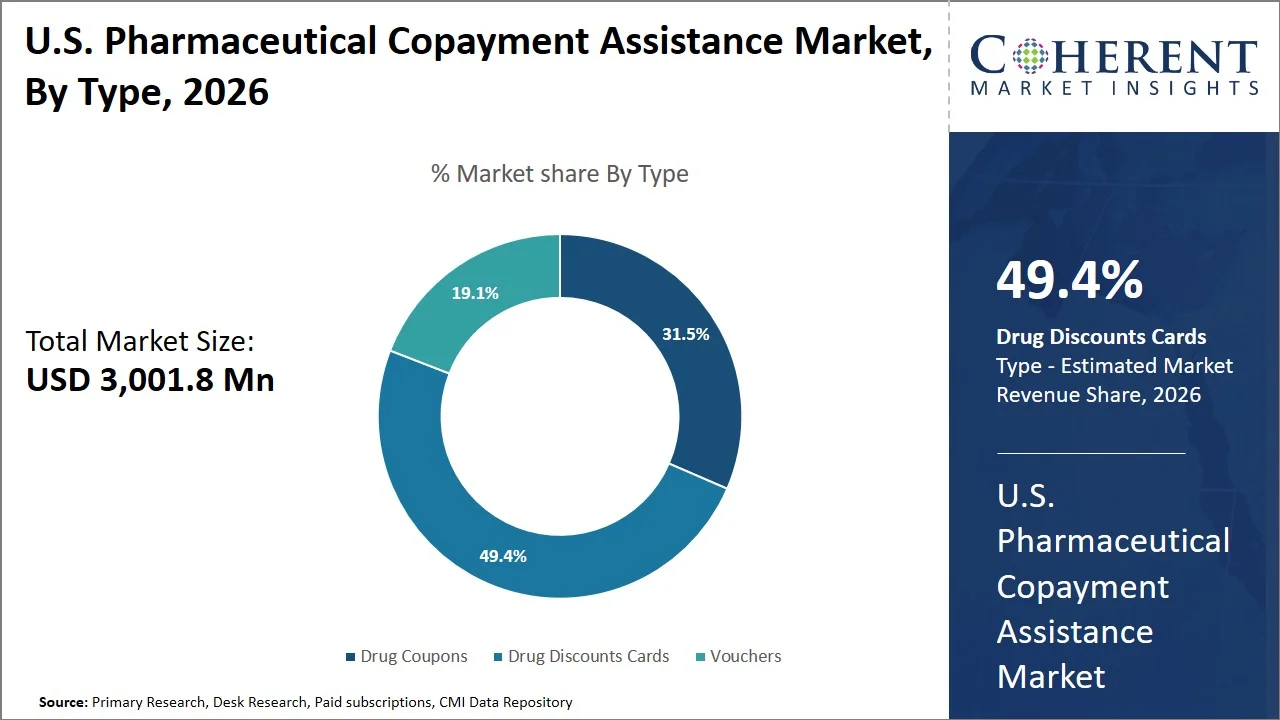
Why Do Drug Discounts Cards Dominate the U.S. Pharmaceutical Copayment Assistance Market?
Drug discounts cards are projected to hold a market share of 49.4% in 2026, as these cards are easily- accessible, user-friendly, and offer immediate savings at the point-of-sale. These cards are extremely valuable to patients struggling with out-of-pocket expenses or those whose insurance does not provide substantial coverage for branded drug prescriptions. For instance, GoodRx, Inc.'s prescription savings card reduces the cost of all prescription medications at over 70,000 pharmacies across U.S, enabling patients to access lower prices at participating pharmacies.
- Current Industry Events of 2026
- Market Size Estimation
- Regional Breakdown
- Competitive Landscape
- Customer Intelligence
- Segmental Analysis
- Pricing Analysis
- Key Market Drivers, Challenges & Future Trends
- Customized Insights Section
Why Does Specialty Pharmaceuticals Represent the Largest Category Segment in the U.S. Pharmaceutical Copayment Assistance Market?
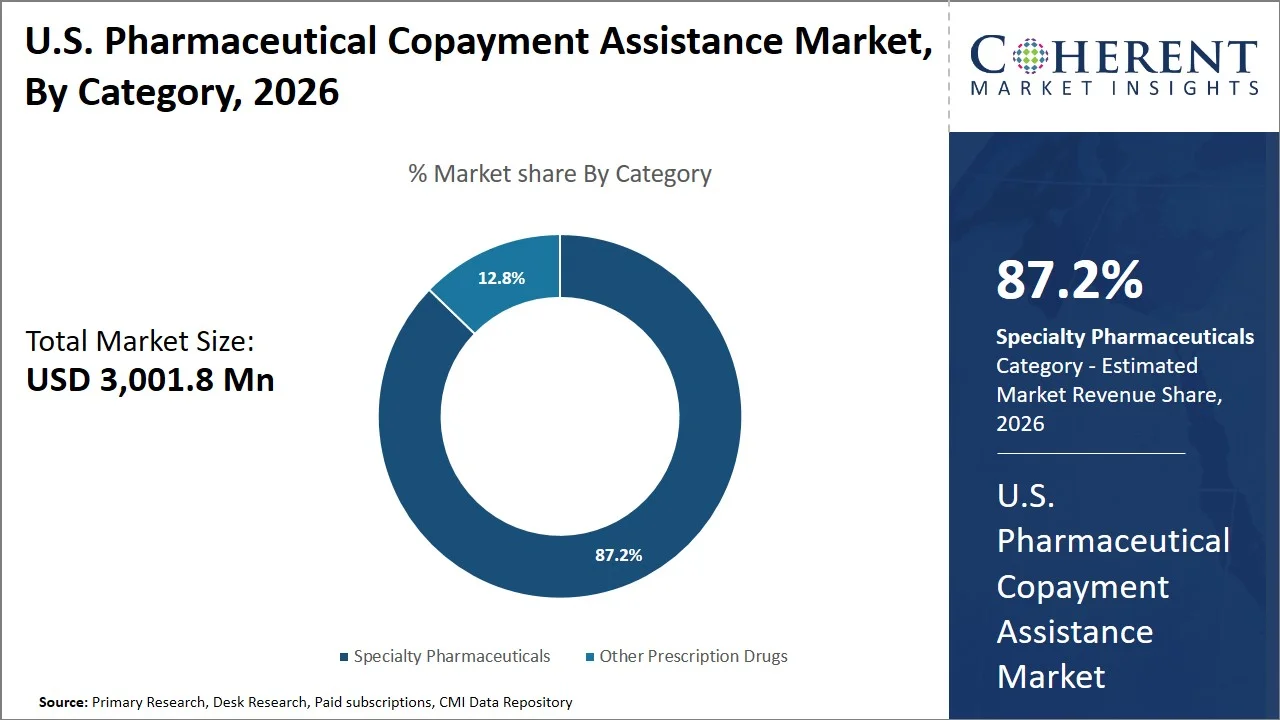
Specialty pharmaceuticals are projected to hold 87.2% of the market share in 2026, due to the high costs and complexities of treatment, and substantial patient cost-sharing requirements. Increased adoption of biologic therapies and other targeted drugs to treat chronic and rare diseases has led to an increasing requirement for assistance for copayments. For instance, the DUPIXENT MyWay program offers copay assistance for DUPIXENT (dupilumab) in commercially insured, eligible patients, with eligible patients potentially paying as little as USD 0 per fill. (Source: Sanofi and Regeneron Pharmaceuticals, Inc.)
Oncology Segment Dominates the U.S. Pharmaceutical Copayment Assistance Market
The oncology segment is expected to hold 29.1% of the U.S. pharmaceutical copayment assistance market share in 2026, due to the exorbitant costs associated with cancer treatments, elaborate treatment regimens, and significant cost sharing at the patient level. New developments with innovative targeted therapies and immunotherapies tend to fuel demand for such support solutions that help in ensuring treatment continuity for patients. For instance, the Merck Access Program offers eligible uninsured or underinsured patients free access to certain Merck medicines including oncology therapies. The program assists in removing financial hurdles to cancer treatment for eligible patients. (Source: Merck & Co., Inc.)
Current Events and their Impact
Current Events | Description and its Impact |
U.S. Centers for Medicare & Medicaid Services (CMS) Launched Medicare GLP-1 Bridge with USD 50 Copay (July 2026) |
|
U.S. Centers for Medicare & Medicaid Services (CMS) Clarified Treatment of Manufacturer Copayment Assistance (April 2026) |
|
U.S. Department of Health and Human Services Office of Inspector General (HHS-OIG) Issued Guidance on Manufacturer Drug Discounts (January 2026) |
|
U.S. Pharmaceutical Copayment Assistance Market Dynamics
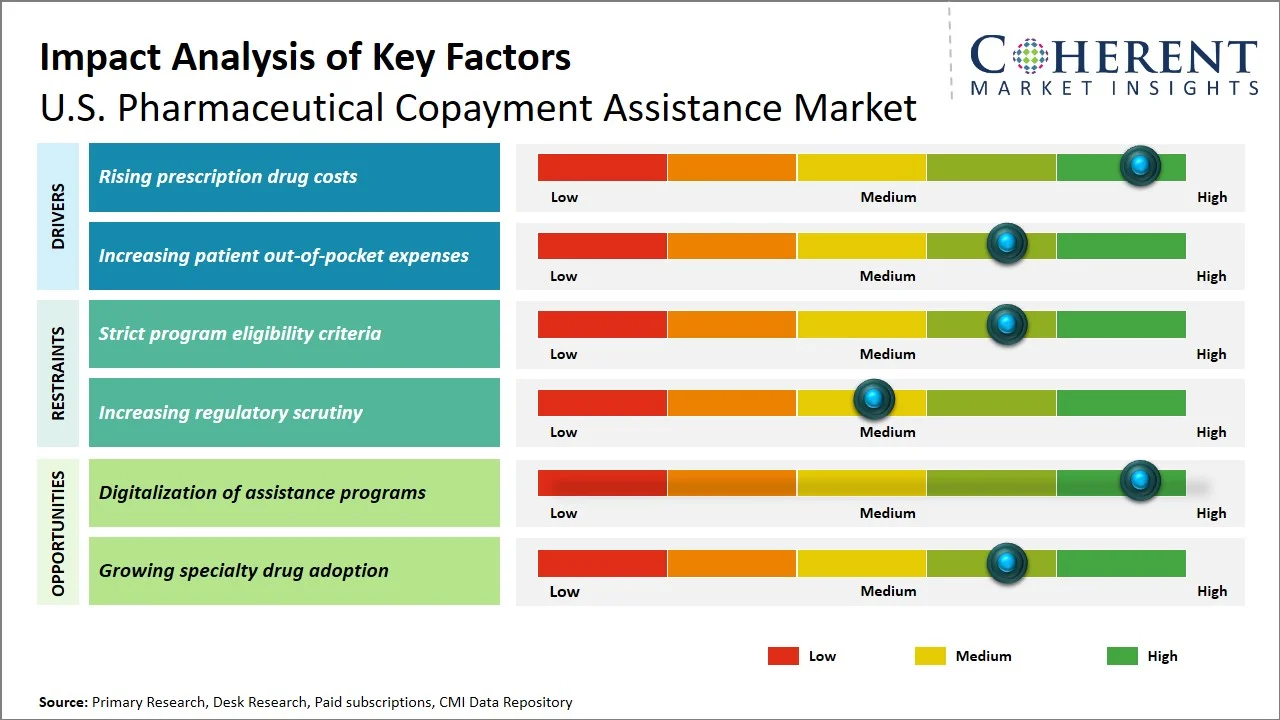
Market Drivers
- Rising prescription drug costs: The continuous rise in prescription drug spending is increasing affordability pressures for U.S. patients, particularly those using costly therapies. Higher drug expenditure can increase reliance on financial support programs that help patients manage copayments and maintain treatment continuity. For instance, U.S. Centers for Medicare & Medicaid Services (CMS) projected retail prescription drug spending to grow 7.0% in 2025, reflecting continued upward pressure on pharmaceutical expenditure. The agency also noted that new drug introductions, particularly in oncology, immunology, and diabetes, would continue to influence drug-spending growth.
- Increasing patient out-of-pocket expenses: The increasing burden of patient out-of-pocket expenses is driving demand for financial support as prescription drug spending and beneficiary cost exposure remain substantial. Higher medication costs can increase affordability pressures and create greater reliance on copayment assistance to maintain treatment continuity. For instance, in 2024, U.S. prescription drug spending increased 7.9% to USD 467.0 billion, while total out-of-pocket healthcare spending increased 5.9% to USD 556.6 billion, according to Centers for Medicare & Medicaid Services (CMS). The sustained growth in prescription and out-of-pocket spending reinforces the need for patient affordability mechanisms.
- Growing Specialty and High-Cost Therapy Adoption: The increasing adoption of specialty and advanced therapies is driving demand for pharmaceutical copayment assistance, as patients receiving complex treatments often face substantial medication costs and cost-sharing requirements. The expanding pipeline of therapies for rare and serious conditions is further increasing the need for affordability support. For instance, in 2025, U.S. FDA approved 46 novel drugs, of which 23 received orphan-drug designation for rare diseases, demonstrating continued expansion of specialized therapies requiring patient access and affordability support.
Emerging Trends
- Real-Time Cost Transparency at the Point of Prescribing: Healthcare stakeholders are increasingly integrating real-time benefit tools to provide patients with personalized out-of-pocket cost information before prescriptions are filled. U.S. Centers for Medicare & Medicaid Services (CMS) is promoting standardized APIs that enable providers and patients to compare expected costs and lower-cost alternatives.
- Digital Integration of Patient Assistance Programs: Copayment assistance is increasingly shifting toward digitally integrated workflows that connect patients, providers, pharmacies, and payers. This trend is reducing reliance on manual enrollment, telephone support, and separate assistance portals while streamlining access to financial support.
- Data-Driven Personalization of Cost Support: Advanced healthcare data systems are enabling assistance and affordability solutions to use patient-specific coverage, benefit, and cost-sharing information. CMS’s emphasis on patient-specific cost estimates reflects the broader shift toward more targeted and personalized affordability support.
U.S. Prescription Drug Spending and Out-of-Pocket Spending, 2020–2025
Year | Prescription Drug Spending (USD Billion) | Y-O-Y Growth | Out-of-Pocket Spending (USD Billion) | Y-O-Y Growth |
2020 | 348.4 | 3.0% | 388.6 | -3.7% |
2021 | 366.8 | 5.3% | 433.2 | 11.5% |
2022 | 406.2 | 10.7% | 471.4 | 8.8% |
2023 | 433.2 | 6.6% | 525.4 | 11.5% |
2024 | 467.0 | 7.9% | 556.6 | 5.9% |
2025 | 499.7 | 7.0% | 579.4 | 4.1% |
How is the digitalization of assistance programs creating new growth opportunities in the U.S. pharmaceutical copayment assistance market?
Digitalization of pharmaceutical copayment assistance programs present an opportunity to improve and streamline patient eligibility, out of pocket costs calculations, enrollment process by simplifying and decreasing administrative requirements. Increased interconnectivity of provider, payer, pharmacy, digital platforms may enhance patients to obtain customized affordability information, as well as reduce reliance on manual processes. For instance, in April 2026, U.S. Centers for Medicare & Medicaid Services (CMS) released its HealthTech Ecosystem including a new Real-Time Benefits use case aiming to offer prescription and medical benefit costs specific to a patient via standardized interoperable APIs, increasing digital transparency of medication pricing and affordability.
Market Players, Key Development, and Competitive Landscape
Key Developments
- In July 2026, Evernorth Health Services launched Pharmacy Forward, an AI-powered specialty pharmacy program designed to improve prescription access for patients with complex conditions. The program used AI to identify copayment assistance eligibility and streamline prior authorization processes. It was expected to reduce prescription processing times and improve access to specialty medicines.
- In March 2026, NATCO Pharma Limited, in partnership with Breckenridge Pharmaceutical, launched generic Pomalidomide capsules in the U.S. for blood and bone marrow cancers. The affordable generic was supported by copay assistance for eligible patients, helping reduce treatment delays and improve continuity of care.
- In February 2026, Pfizer Inc. launched a cost savings program through TrumpRx to reduce prescription drug costs for U.S. patients. The program offered discounts on more than 30 medicines, with savings of up to 85% for eligible patients. The initiative helped lower out-of-pocket costs and improve access to affordable medicines.
Competitive Landscape
The U.S. pharmaceutical copayment assistance market is highly competitive, with leading players focusing on expanding patient affordability programs, strengthening digital enrollment and support platforms, and improving coordination across manufacturers, pharmacies, providers, and payers. Companies are differentiating through integrated copay-card administration, patient assistance programs, affordability navigation, and data-driven support services. Key focus areas include:
- Expansion of manufacturer-sponsored copay cards and patient assistance programs for high-cost and specialty medicines
- Integration of digital enrollment, eligibility verification, and patient-support platforms
- Development of automated copay adjudication and payment-processing solutions
- Strategic partnerships with pharmaceutical manufacturers, specialty pharmacies, healthcare providers, and payers
- Expansion of affordability navigation and alternative funding solutions to address changing payer and PBM benefit designs
Market Report Scope
U.S. Pharmaceutical Copayment Assistance Market Report Coverage
| Report Coverage | Details | ||
|---|---|---|---|
| Base Year: | 2025 | Market Size in 2026: | USD 3,001.8 Mn |
| Historical Data for: | 2020 To 2024 | Forecast Period: | 2026 To 2033 |
| Forecast Period 2026 to 2033 CAGR: | 10.6% | 2033 Value Projection: | USD 6,071.8 Mn |
| Segments covered: |
| ||
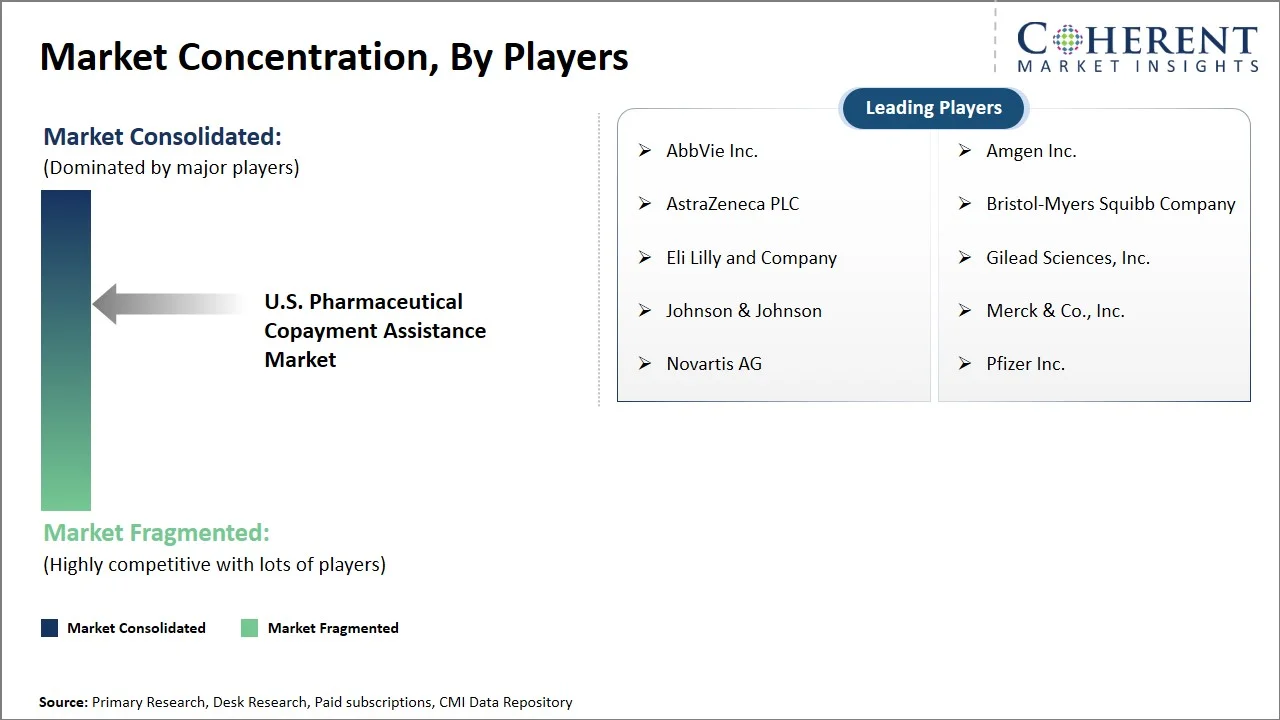
| Companies covered: | AbbVie Inc., Amgen Inc., AstraZeneca PLC, Bristol-Myers Squibb Company, Eli Lilly and Company, Gilead Sciences, Inc., Johnson & Johnson, Merck & Co., Inc., Novartis AG, Pfizer Inc. | ||
| Growth Drivers: |
| ||
| Restraints & Challenges: |
| ||
Analyst Opinion (Expert Opinion)
- In the coming years, U.S. pharmaceutical copayment assistance market is expected to shift toward more targeted, digitally managed, and patient-specific affordability solutions. As specialty therapies and complex benefit designs expand, assistance providers are likely to focus on faster eligibility assessment, personalized support, and flexible program structures that adapt to changing payer and pharmacy benefit managers (PBMs) policies.
- The maximum growth opportunity lies within drug discount cards for specialty pharmaceuticals, particularly oncology in the U.S. High treatment costs, complex reimbursement structures, and substantial patient cost-sharing requirements make specialty oncology therapies a high-priority area for copayment support. Players can also expand into other high-cost specialty categories such as rare diseases and immunology.
- In order to create an advantage for themselves, the competitors should build end-to-end digital affordability platforms that combine eligibility verification, enrolment, benefit validation, copay processing, and patient support in a single workflow. Differentiation will increasingly depend on the ability to respond quickly to payer/PBM benefit changes while offering manufacturers data-driven insights into program utilization, patient access, and support effectiveness.
Speak to the analyst
Want personalized insights?
Take the findings above to one of our principal consultants, or have the report rebuilt around the segments, geographies and competitors you actually track.
Market Segmentation
- Type Insights (Revenue, USD Mn, 2021 - 2033)
- Drug Coupons
- Drug Discounts Cards
- Vouchers
- Category Insights (Revenue, USD Mn, 2021 - 2033)
- Specialty Pharmaceuticals
- Other Prescription Drugs
- Therapeutic Category Insights (Revenue, USD Mn, 2021 - 2033)
- Oncology
- Rare Disease
- Cardiology
- Neurology
- Others
- Key Players Insights
- AbbVie Inc.
- Amgen Inc.
- AstraZeneca PLC
- Bristol-Myers Squibb Company
- Eli Lilly and Company
- Gilead Sciences, Inc.
- Johnson & Johnson
- Merck & Co., Inc.
- Novartis AG
- Pfizer Inc.
Sources
Primary Research Interviews
- Pharmaceutical Patient Access Directors – copay assistance program design, eligibility, and patient enrollment
- Market Access and Reimbursement Managers – payer coverage, benefit design, and affordability strategies
- Specialty Pharmacy Managers – copay processing, benefits verification, and patient-support services
- Pharmacy Benefit Managers (PBM) Executives – formulary management, copay accumulator policies, and manufacturer assistance
- Healthcare Providers and Pharmacists – patient affordability challenges and utilization of assistance programs
Stakeholders
- Pharmaceutical Manufacturers – manufacturer-sponsored copay cards, vouchers, and patient assistance programs.
- Pharmacy Benefit Managers (PBMs) – formulary management, claims processing, and copay benefit design.
- Health Insurers and Health Plans – prescription coverage, cost-sharing structures, and reimbursement
- Specialty Pharmacies – benefits verification, copay processing, dispensing, and patient-support services.
- Retail and Community Pharmacies – prescription dispensing and application of copay assistance at the point of sale
- Healthcare Providers – prescription decisions, patient enrollment, and assistance-program referrals
- Patient Assistance Foundations and Nonprofit Organizations – financial assistance and medication-access support
- Patients – recipients of copayment, deductible, and coinsurance assistance
- End-use Sectors
- Pharmaceutical and Biotechnology Companies
- Health Insurance Companies and Health Plans
- Pharmacy Benefit Managers
- Specialty and Retail Pharmacies
- Hospitals and Healthcare Providers
- Patient Assistance and Nonprofit Organizations
- Patients and Caregivers
- Regulatory & Health Bodies
- Centers for Medicare & Medicaid Services (CMS) – Medicare Part D, patient assistance programs, and prescription drug benefit coordination
- U.S. Department of Health and Human Services Office of Inspector General (HHS OIG) – copayment coupons, manufacturer assistance, and Anti-Kickback Statute guidance
- U.S. Food and Drug Administration (FDA) – prescription drug regulation, labeling, and drug approval information
- Federal Trade Commission (FTC) – pharmaceutical pricing, pharmacy benefit management, and competition-related information
Databases
- CMS Medicare Coverage Database – Medicare coverage and reimbursement policies
- Medicaid.gov – Medicaid prescription drug coverage and reimbursement information
- NeedyMeds – patient assistance programs, coupons, rebates, and copay resources
- Drugs@FDA – FDA-approved prescription drug information
- ClinicalTrials.gov – clinical studies and investigational therapies relevant to future affordability needs
Journals
- Journal of Managed Care & Specialty Pharmacy – specialty pharmacy, reimbursement, and medication affordability research
- Health Affairs – healthcare costs, prescription drug pricing, and access research
- JAMA Health Forum – prescription drug spending, affordability, and healthcare policy research
- The American Journal of Managed Care – managed care, payer policies, and pharmaceutical access research
- Research in Social and Administrative Pharmacy – medication access, adherence, and pharmacy-related economic research
Associations
- Pharmaceutical Research and Manufacturers of America (PhRMA) – pharmaceutical affordability, patient assistance, and market access
- Academy of Managed Care Pharmacy (AMCP) – managed care, formulary management, and medication access
- National Association of Chain Drug Stores (NACDS) – pharmacy access, prescription drug costs, and dispensing
- National Community Pharmacists Association (NCPA) – community pharmacy economics and prescription affordability
- American Pharmacists Association (APhA) – pharmacy practice, medication access, and patient care
Public Domain Sources
- Centers for Medicare & Medicaid Services (CMS) – Part D benefits, prescription drug assistance, and out-of-pocket costs
- HHS Office of Inspector General (HHS OIG) – manufacturer copayment coupons and compliance guidance
- U.S. Food and Drug Administration (FDA) – approved medicines and prescription drug regulatory information
- Federal Trade Commission (FTC) – PBM practices, pharmaceutical competition, and drug pricing
- Medicaid.gov – Medicaid prescription drug coverage and reimbursement policies
Proprietary Elements
- CMI Data Analytics Tool, Proprietary CMI Existing Repository of information for last 10 years.
Get access to 250+ pages report
Every segment, forecast, competitor profile and data table behind the analysis above — available for instant download.
- ESOMAR Member
- ISO 9001:2015 Certified
- D-U-N-S Registered
- GDPR & CCPA Compliant
Missing comfort of reading report in your local language? Find your preferred language:
Transform your Strategy with Exclusive Trending Reports
Frequently Asked Questions
The U.S. pharmaceutical copayment assistance market is estimated to be valued at USD 3,001.8 Mn in 2026 and is expected to reach USD 6,071.8 Mn by 2033.
Drug discounts cards dominate due to their widespread use in reducing patients’ out-of-pocket prescription costs.
Pharmaceutical copayment assistance is financial support that helps patients reduce their out-of-pocket costs for prescription medications, including copayments, coinsurance, and deductibles.
The CAGR of U.S. pharmaceutical copayment assistance market is projected to be 10.6% from 2026 to 2033.
Pharmaceutical copayment assistance reduces eligible patients’ out-of-pocket costs for covered prescription medicines through manufacturer-sponsored financial support programs.
Copay cards generally reduce cost sharing for commercially insured patients, while patient assistance programs may provide financial assistance or medicines to qualifying patients.
Higher prescription drug costs increase patients’ financial burden, strengthening demand for programs that reduce out-of-pocket medication expenses.