

Global Wearable Adhesives Market Size and Forecast: 2026-2033
The global wearable adhesives market is expected to grow from USD 620 Mn in 2026 to USD 1,120 Mn by 2033, registering a compound annual growth rate (CAGR) of 8.8% from 2026 to 2033. The market for wearable adhesives is poised for significant expansion, fueled by growing penetration of wearable medical devices, particularly continuous glucose monitoring (CGM) systems used for diabetes management.
According to the National Library of Medicine, the adoption rate for wearable devices grew from almost 28%-30% in 2019 to 36.36% in 2022, demonstrating growing consumer and clinical acceptance for wearable devices.
(Source: National Library of Medicine)
Key Takeaways of the Global Wearable Adhesives Market
- Acrylic-based adhesives are projected to hold 38.7 % of the global wearable adhesives market share in 2026, making it the dominant product type segment across North America due to stringent regulatory approvals and the growing commercialization of wearable medical technologies. For instance, the U.S. FDA recommends biological evaluation and biocompatibility assessment for medical devices having direct or prolonged skin contact under ISO 10993-1 standards, supporting adoption of acrylic-based medical adhesives in approved wearable healthcare products. (Source: Food and Drug Administration)
- Monitoring devices are projected to hold 36.2 % of the global wearable adhesives market share in 2026, making it the dominant application segment across Europe due to expansion of national continuous glucose monitoring adoption programs. For instance, the U.K.’s National Health Service (NHS) recommended nationwide rollout of continuous glucose monitoring devices for individuals with Type 1 diabetes under updated reimbursement guidance, increasing the adoption of adhesive-backed wearable monitoring systems across the region. (Source: NHS England)
- Medical device manufacturers are projected to hold 44.8 % of the global wearable adhesives market share in 2026, making it the dominant end user segment across Asia Pacific due to fast-paced growth in regional medical device manufacturers as well as growing investments in healthcare technology, and extensive government incentives policies that encourage domestic manufacturing in China, Japan, South Korea and India. For instance, Japan's Medical Device Industry Policy advocates innovation, domestic production and high-tech manufacturing investment in Japanese medical device industry. This policy helps fund expansion of micro business manufacturing technology and high-precision manufacturing of healthcare components throughout Japanese medical device industry. (Source: Ministry of Economy, Trade and Industry (METI))
- North America maintains its dominance with an expected share of 39.1 % in 2026, bolstered by mature medical manufacturing infrastructure, robust regulation, and emerging investment in precision healthcare fields across the U.S. and Canada. The region remains a focus for modernized regulation, supporting quality-oriented medical component manufacturing. For instance, Health Canada - Medical Devices Regulations (SOR/98-282) promote stricter compliance for the safety, traceability and quality of manufacturing of medical devices, leading Canadian industries to adopt advanced wearable medical technologies and high-performance adhesive materials. (Source: Government of Canada)
- Asia Pacific is expected to exhibit the fastest growth with an estimated contribution of 24.2 % share in 2026, driven by increasing government investment in domestic medical manufacturing, growing localization of medical device production, and developing mature precision engineering capabilities across the key economies. The region is under a significant policy framework to foster manufacturing of advanced medical technology and its competitiveness. For instance, "Made in China 2025" strategy considers high quality healthcare equipment the core field and advocates domestic innovation while developing corresponding industries and new production capacity, thus facilitating the market demand for power wear medical components and adhesive material. (Source: Chin Briefing)
- Growing Adoption of Disposable Biosensor Patches: Increasing adoption of disposable wearables in biosensors for glucose monitoring, cardiac rhythm diagnosis, and temperature measurement is providing niche expansion avenues in the wearable adhesives industry. Healthcare facilities are advancing their feasibility for home-care environment through single-use wearable to avoid infections and cater efficiently to massive patient influx in critical-care. This is accelerating the need for breathable, allergen and deposit -free adhesive components to allow for functional skin contact over extended periods.
- Advancements in Sweat-Resistant Adhesive Technologies: Manufacturers are developing next-generation adhesive materials, that provide secure, predictable skin adhesion even in extremely moist and volatile environments. It can be expected that the growing adoption of fitness wearables, remote health monitoring biosensors, and continuous monitor patches will further promote advancements in flexible, skin-friendly adhesive formulations.
Segmental Insights
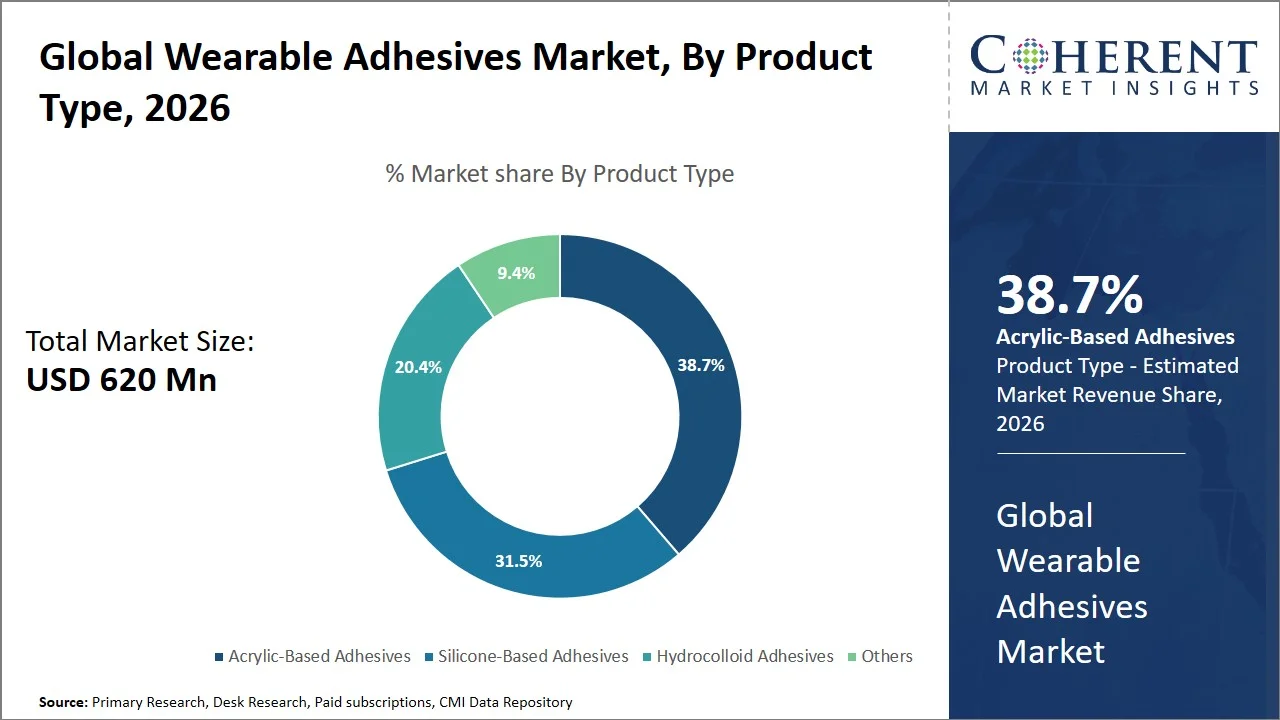
Why Do Acrylic-Based Adhesives Dominate the Global Wearable Adhesives Market?
Acrylic-based adhesives are projected to hold a market share of 38.7% in 2026, owing to their strong bonding properties, compatibility with skin and durability under prolonged wear conditions. They ensure good adhesion with low skin problem which has led to higher demand for such adhesives in wearable applications like continuous glucose monitors, biosensors, ECG patches and fitness wearables. Their ability to resist sweat, water and higher temperatures makes them reliable for long-duration healthcare and wellness applications. Moreover, ability to tailor tack, breathability and peel features is a promising factor further fueling acrylate-based wearable adhesive technologies globally. For instance, in April 2025, Tex Year launched R3220 bio-based PUR hot melt adhesive for electronic devices and wearable device applications, illustrating the increasing sector emphasis on sustainable adhesive technologies. (Source: Tex Year)
- Current Industry Events of 2026
- Market Size Estimation
- Regional Breakdown
- Competitive Landscape
- Customer Intelligence
- Segmental Analysis
- Pricing Analysis
- Key Market Drivers, Challenges & Future Trends
- Customized Insights Section
Why Do Monitoring Devices Represent the Largest Application Segment in the Wearable Adhesives Market?
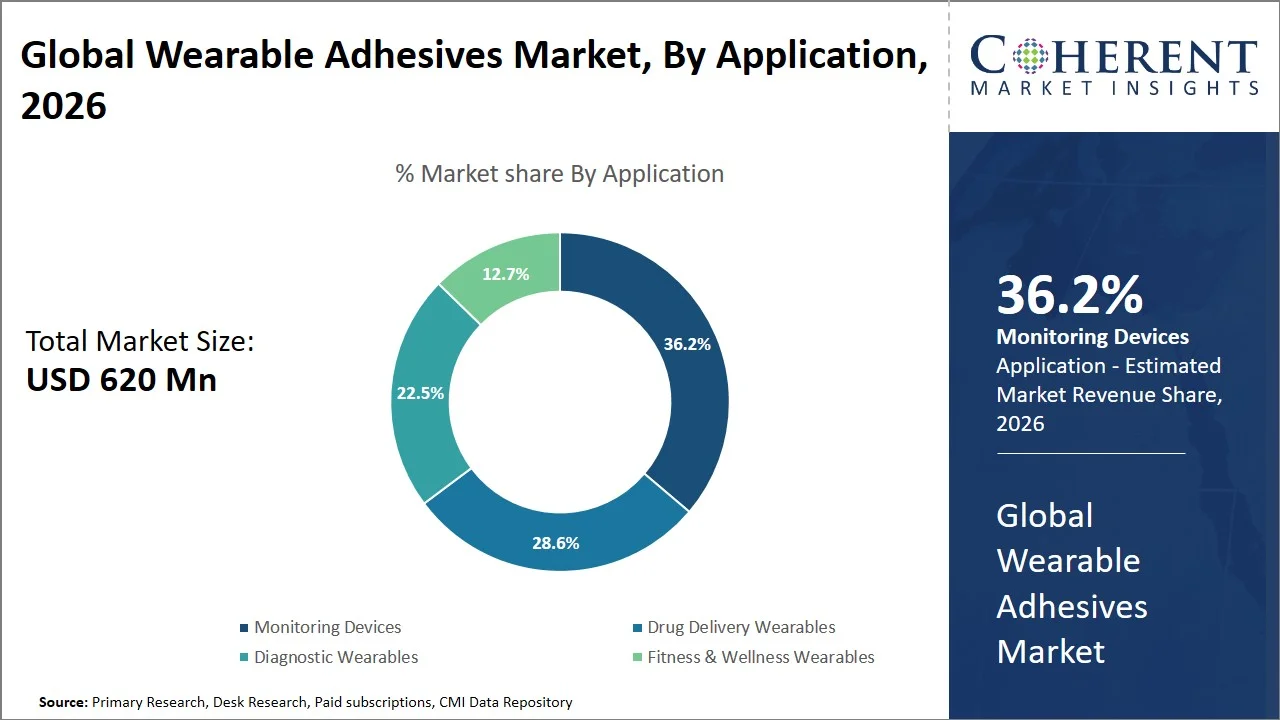
Monitoring devices are projected to hold a market share of 36.2% in 2026, owing to the high adoption of continuous monitoring and remote patient care technologies. Monitoring devices including continuous glucose monitors (CGMs), ECG patches, and biosensor/heart rate monitors are reliant on high-quality, skin-safe adhesives that support reliable long-term adherence for extended periods of time for precise data collection. The increasing incidence of chronic ailments and rising focus on personalized health care are key catalysts driving high-performance wearable adhesive solutions demand. Moreover, emerging innovations in flexible electronics and miniature biosensors are resulting in the increased use of monitoring devices at homes and hospitals. For instance, in September 2025, Vivalink launched double-sided adhesive for wearable ECG monitoring applications to enhance ambulatory cardiac monitoring performance as well as reliable wearable ECG device use in clinical research applications. (Source: Vivalink)
Medical Device Manufacturers Segment Dominates the Global Wearable Adhesives Market
The medical device manufacturers segment is projected to hold a market share of 44.8% in 2026 on account of the increasing manufacturing of wearable health care technologies including continuous glucose monitors (CGMs), wearable ECG monitors, biosensors and remote patient monitoring devices. These manufacturers demand for high performing adhesive materials that offer high skin adhesion, biocompatibility, breathability and breath-ability for long duration of wear for their device reliability and for consumer comfort. With increasing interest towards miniaturized portable devices, continuous monitoring systems and home healthcare products, the edge in wearable adhesive materials is paving way for high-end wearable adhesives. Additionally, as the industry begins to witness larger embedded flexible electronics and wireless monitoring integration, medical device manufacturers will invest further in advanced skin friendly adhesive technologies. For instance, on May 25, 2026, wearable health-tech startup, Gabit received USD 4.3 million (INR 36.2 Crores) investment to expand its portfolio of wearable healthcare devices. This latest funding by investors is indicative of the rising investments in wearable monitoring devices and connected healthcare ecosystems which inevitably demand better quality skin-friendly adhesive patches for long duration usage of wearable devices. (Source: Digital Health News)
Currents Events and their Impact
Current Events | Description and its Impact |
U.S. FDA Releases Draft Guidance for AI-Enabled Medical Devices (January 2025) |
|
U.S. FDA Finalizes Cybersecurity Guidance for Connected Medical Devices (February 2026) |
|
(Source: Food and Drug Administration, Food and Drug Administration
Wearable Adhesives Market Dynamics
Market Drivers
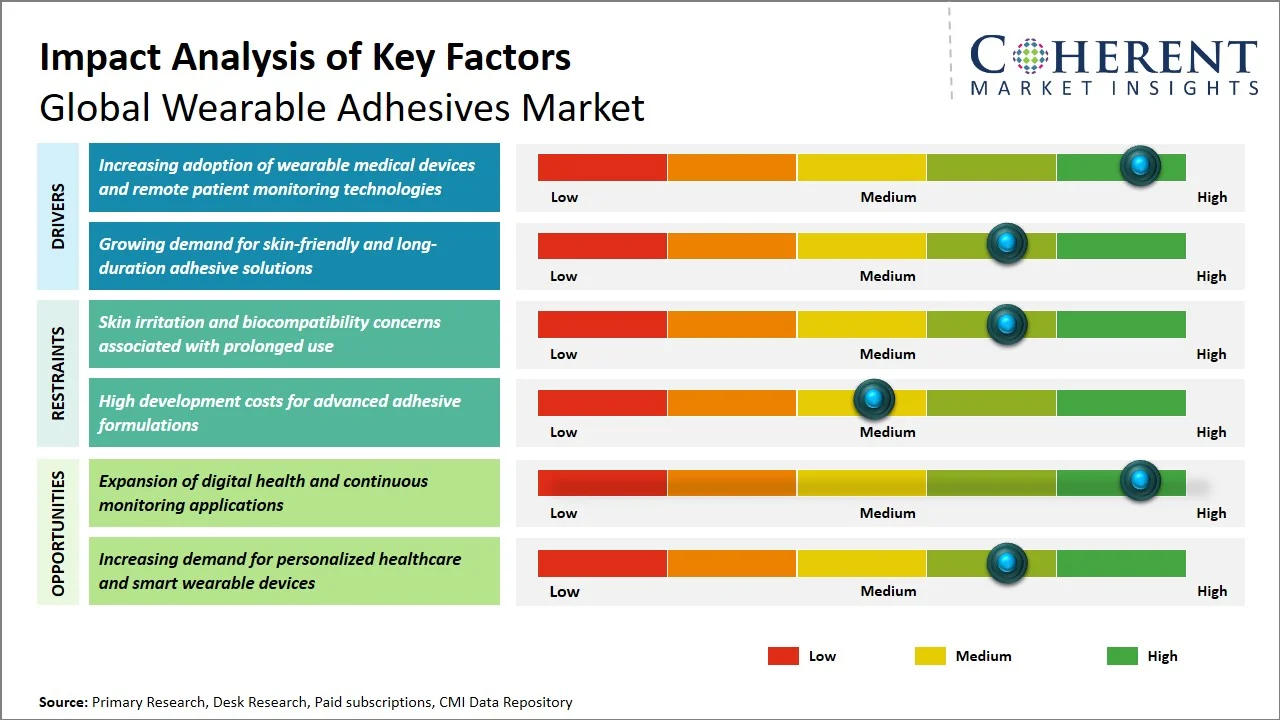
- Increasing adoption of wearable medical devices and remote patient monitoring technologies: Long-term wearable medical devices including continuous glucose monitors (CGMs), wearable ECG patch/ biosensors/ remote patient monitoring systems demand skin adhesiveness that can withstand prolonged wear and capture dependable physiologic signals. The increasing prevalence of chronic diseases as well as the growing trend towards home-oriented care is bolstering the increasing adoption of wearable monitoring devices globally. These circumstances are spurring development of breathable, hypoallergenic and long-lasting adhesive products to improve the comfort of wear and performance of these devices under high demand conditions. For instance, in August 2024, Medtronic received the U.S. FDA approval for its Simplera continuous glucose monitor (CGM) and entered into collaboration with Abbott to expand CGM accessibility. The move exemplifies the wider commercialization of wearable tracking technologies, evidenced by demand for durable, stable skin adhesives capable of providing for uninterrupted monitoring of the individual. (Source: Medtronic)
- Growing demand for skin-friendly and long-duration adhesive solutions: Biosensors, continuous glucose monitors (CGMs), ECG patches and remote monitoring systems are some of the wearable healthcare devices that require adhesives that stick well and are skin friendly for prolonged periods of time. The rising demand for obese and home care treatment and monitoring is fueling the need for and development of breathable, hypoallergenic, water resistant, and repositionable adhesive technologies leading to enhanced patient comfort and device efficiency. Besides this, manufactures also prefer state-of-the-art hospital level adhesives material that can sustain adhesion when encountering sweat, shear, and change in environmental factors. For instance, in October 2023, DuPont launched a high-adhesion low-cyclics silicone soft skin adhesive, offering enhanced adhesion, better skin compatibility and longer wear life for wearable medical device applications. (Source: DuPont)
Emerging Trends
- Integration of ultra-thin and breathable adhesive technologies for next-generation wearables: Manufacturers are innovating ultra-thin, flexible, breathable adhesives systems adapted to ultralight wearables biosensors, smart patches and continuous monitoring platforms. These developments contribute to enhanced comfort over long-term wear, breathability of the skin, conformability with the wearables and ultra miniature health monitoring electronics.
- Rising development of sustainable and low-irritation wearable adhesive materials: The increasing focus on patient comfort and the use of bio-based, environment-friendly materials in healthcare is leading towards innovations involving new hypoallergenic formulation of adhesives-base such as silicone-based, low cyclic and bio-based adhesives. This is an area of growing interest whereby companies are now designing and offering skin-safe/environment friendly adhesives to be used in the application of accessories and extended use of wearable devices.
Regional Insights
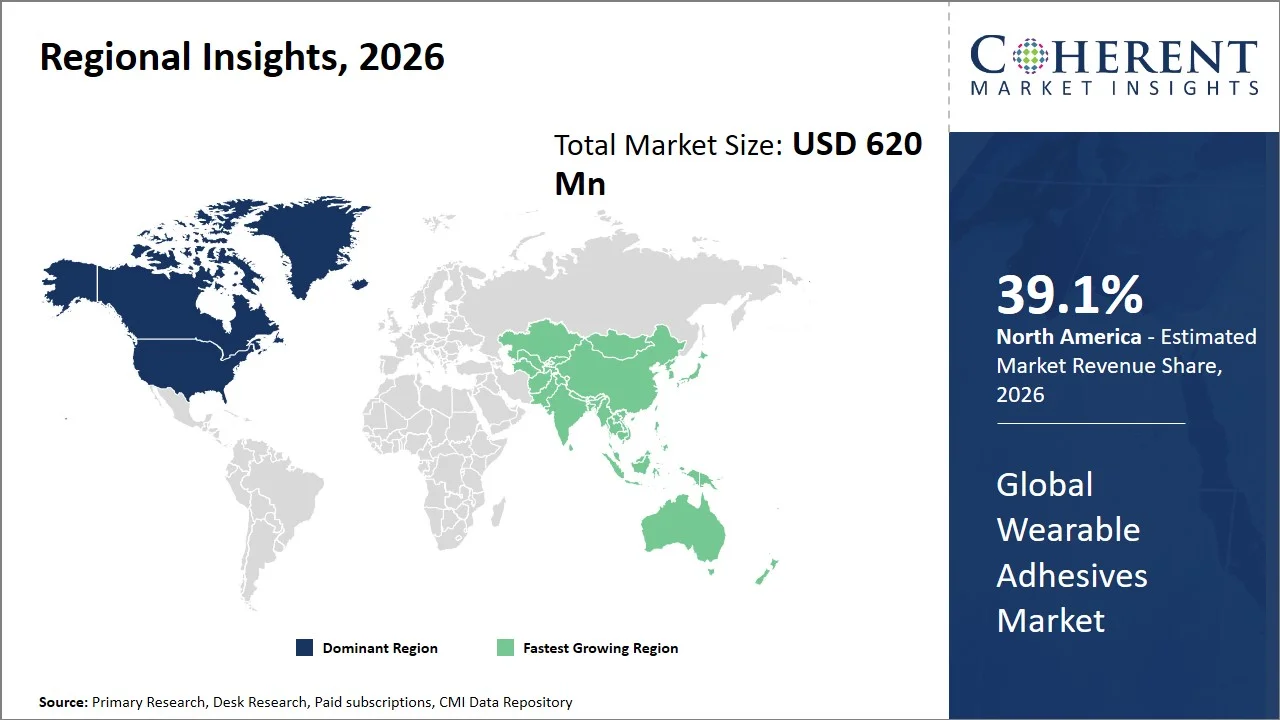
Why is North America a Strong Market for Wearable Adhesives?
North America leads the global wearable adhesives market, accounting for an estimated 39.1% share in 2026, due to the region’s advanced research facilities, well-developed healthcare infrastructure and presence of matured adhesive manufacturers. Rapid technological advancements and widespread utilization of wearable adhesives in the production of medical bandages, wound care and wearable health monitoring devices have fueled the market in this region owing to the surging population of geriatrics and rising prevalence of chronic diseases.
Moreover, government run healthcare programs that focus on improving healthcare services and utilizing novel medical devices have also contributed to its rapid rise. For instance, U.S. Centers for Medicare & Medicaid Services (CMS) endorses reimbursements for remote patient monitoring, promoting broader implementation of wearable health devices and connected monitoring solutions that also depend on high-end wearable adhesive technologies for prolonged applications. (Source: Centers for Medicare & Medicaid Services)
Why Does the Asia Pacific Wearable Adhesives Market Exhibit High Growth?
The Asia Pacific wearable adhesives market is expected to exhibit the fastest growth with an estimated contribution of 24.2% share to the global market in 2026, attributed to rapid industrialization, expanding healthcare consciousness and increasing disposable income. Rising number of electronics manufacturing centers across China, India, South Korea, and Japan spur the demand for durable, hypo-allergenic adhesives suitable for wearable electronics and medical appliances. The governments of developing countries are actively encouraging manufacturing activities using smart policies and incentives, providing a favorable platform for both global and local adhesive brands.
For instance, South Korea’s "Digital Bio Healthcare Innovation Strategy" is boosting the commercialization of wearable medical devices, biosensors, and connected healthcare tools through facilitative regulation, expansion of infrastructure for digital healthcare, and innovation-driven manufacturing projects. It is spurring manufacturing and consumption of high-end skin-friendly and long-lasting wearable adhesive for wearable healthcare devices nationwide. (Source: OECD) Furthermore, thriving healthcare spending and digital health buying trend in developing countries increase the demand for wearable devices, thus boosting the wearable adhesives market.
Global Wearable Adhesives Market Outlook for Key Countries
Why is the U.S. Leading Innovation and Adoption in the Wearable Adhesives Market?
The U.S. is at the forefront of innovation and adoption in the wearable adhesives market driven by the large number of active wearables healthcare technology brands, digital health startups, and market-leading medical device manufacturers focused on the commercialization of continuous monitoring systems and connected healthcare devices. The market has a sophisticated ecosystem of wearable ECG monitors, continuous glucose monitors (CGMs), biosensors and remote-patient-monitoring technologies optimized by long-lasting skin-friendly adhesive materials. Active integration of AI-powered healthcare platforms, flexible electronics and wireless monitoring solutions, will further boost high strength silicone and acrylic wearable adhesives, to keep up pace with the evolution of the market.
Is Japan a Favorable Market for the Wearable Adhesives Market?
Japan is one of the most promising markets for wearable adhesives due to the country’s well-established wearable healthcare product development, miniaturized biosensors and targeted precision medical electronics. Increasing sales of home healthcare monitoring gadgets and electronic equipment for aged care wearables are expanding the market for breathable, hypo-allergenic, long lasting and high-performance adhesive solutions. Furthermore, Japan's proficiency in miniaturized electronics technology and advanced medical materials is further stimulating the development of high-performance silicone and acrylic based wearable adhesives.
Is China Emerging as a Key Growth Hub for the Wearable Adhesives Market?
China is positioned as a key growth hub in the global wearable adhesives market driven by the tremendous growth in wearable healthcare manufacturing, connected medical device manufacturing and digital health technology sectors. Growing commercialization of biosensors, smart health patches, continuous glucose monitors, and remote monitoring devices is pushing up demand for high performance, skin friendly adhesive materials. Furthermore, China's extensive electronics manufacturing infrastructure and fast developing flexible wearables-based technologies industry is encouraging the development of sophisticated silicone and acrylic based wearable adhesives in China.
Why Does Germany Top the European Wearable Adhesives Market?
Germany is the leader in the European market for wearable adhesives owing to the country's well established manufacturing base for medical devices, innovative healthcare technology ecosystem and increasing penetration of wearable monitoring systems into clinical and home care environments. With a large number of medical electronics, biosensors, and connected healthcare device manufacturers, the demand for durable and skin-friendly adhesive materials for extended-duration applications is increasing significantly. Additionally, the growing focus on precision engineering and advanced healthcare materials is paving the way for the commercialization of high-performance silicone- and acrylic-based wearable adhesives.
Is the Wearable Adhesives Market Developing in South Korea?
South Korea is emerging as a lucrative market for wearable adhesives due to the proliferation of digital healthcare technologies, wearable biosensors and connected medical devices. South Korea's robust electronics and semiconductor industry is encouraging the creation of miniature wearable healthcare products that need innovative skin-friendly adhesive solutions. Furthermore, the increase in usage of AI-enabled health/fitness devices and flexible electronics is further stimulating progress in long-lasting, breathable silicone and acrylic wearable adhesives.
Regulatory Landscape Governing the Global Wearable Adhesives Market
Region
| Authority & Classification | Approval Pathway | Key Regulatory Insight |
North America | U.S. Food and Drug Administration (FDA) regulate wearable adhesives used in medical wearables under medical device material and biocompatibility standards. | FDA 510(k), PMA, ISO 10993 biocompatibility testing, and Quality System Regulation (QSR/QMSR) compliance for wearable medical devices and adhesive materials. | Strong emphasis on skin safety, cybersecurity for connected wearables, long-duration wear validation, and material biocompatibility for wearable monitoring systems. |
Europe | European Medicines Agency (EMA) and European Commission regulate wearable medical devices under EU MDR 2017/745 and CE marking requirements. | CE marking through conformity assessment, clinical evaluation, ISO 13485 compliance, and REACH chemical safety standards. | Regulatory focus remains on patient safety, sustainable chemical composition, skin sensitization testing, and post-market surveillance for wearable healthcare devices. |
Asia Pacific | China NMPA, Japan PMDA, and South Korea MFDS regulate wearable healthcare devices and adhesive materials under medical device frameworks. | Country-specific medical device registration, local clinical validation, biocompatibility testing, and GMP compliance. | Increasing regulatory support for digital health, remote patient monitoring, and AI-enabled wearable technologies is accelerating commercialization across Asia Pacific. |
Latin America | Brazil ANVISA and COFEPRIS (Mexico) regulate wearable healthcare devices and associated adhesive materials. | Medical device registration, Good Manufacturing Practice (GMP) certification, and local safety evaluation requirements. | Rising adoption of wearable healthcare technologies is encouraging regulatory harmonization and stronger quality compliance for imported wearable medical products. |
Middle East & Africa | Saudi FDA (SFDA), UAE Ministry of Health, and South African Health Products Regulatory Authority (SAHPRA) oversee wearable healthcare devices. | Import licensing, medical device registration, GCC conformity pathways, and ISO-based quality compliance requirements. | Growing investment in digital healthcare infrastructure and remote patient monitoring is supporting demand for internationally compliant wearable medical adhesive technologies. |
How is the expansion of digital health and continuous monitoring applications creating new growth opportunities in the wearable adhesives market?
The adoption of a wide range of digital health and remote monitoring interventions will create significant growth opportunities for the wearable adhesives market, as connected care and diagnostic devices gain adoption, they would require reliable and durable attachment to the skin. Technologies such as wearable biosensors, smart patches, remote cardiac monitors, and mobile health devices rely on novel adhesive formulations capable of achieving secure skin contact, while remaining breathable and comfortable during non-invasive data collection and transmission sessions. Shifting emphasis toward ubiquitous connection, AI-based caregiver oversight, and home health has amplified demand levels for durable skin compatible wearable adhesive matter.
Furthermore, emphasis is being laid upon providing hygienic and moisture-resistant systems that form hetero-harmonic integration with wearable healthcare accessories of the future. For instance, in October 2024, BioIntelliSense was granted U.S. FDA approval for its BioButton Multi-patient Wearable and BioDashboard platform for use in continuous patient monitoring applications, which highlights the increasing commercialization of connected wearable healthcare devices with sophisticated long duration adhesives. (Source: BioIntelliSense)
Market Players, Key Development, and Competitive Intelligence
Key Developments
- In April 2026, DELO introduced five new IBOA- and TPO-free adhesives for use in wearable and medical devices. The new offerings are intended to improve biocompatibility and minimize skin sensitization, which can pose difficulties with extended wearables.
- In December 2024, B. Fuller made strategic acquisitions of the European operations of GEM S.r.l. in an effort to expand its European presence within the key growth markets of medical adhesives. The acquisition has helped to improve production capacities for medical adhesives and healthcare packaging technologies used in wearables and skin-to-skin healthcare applications.
Competitive Landscape
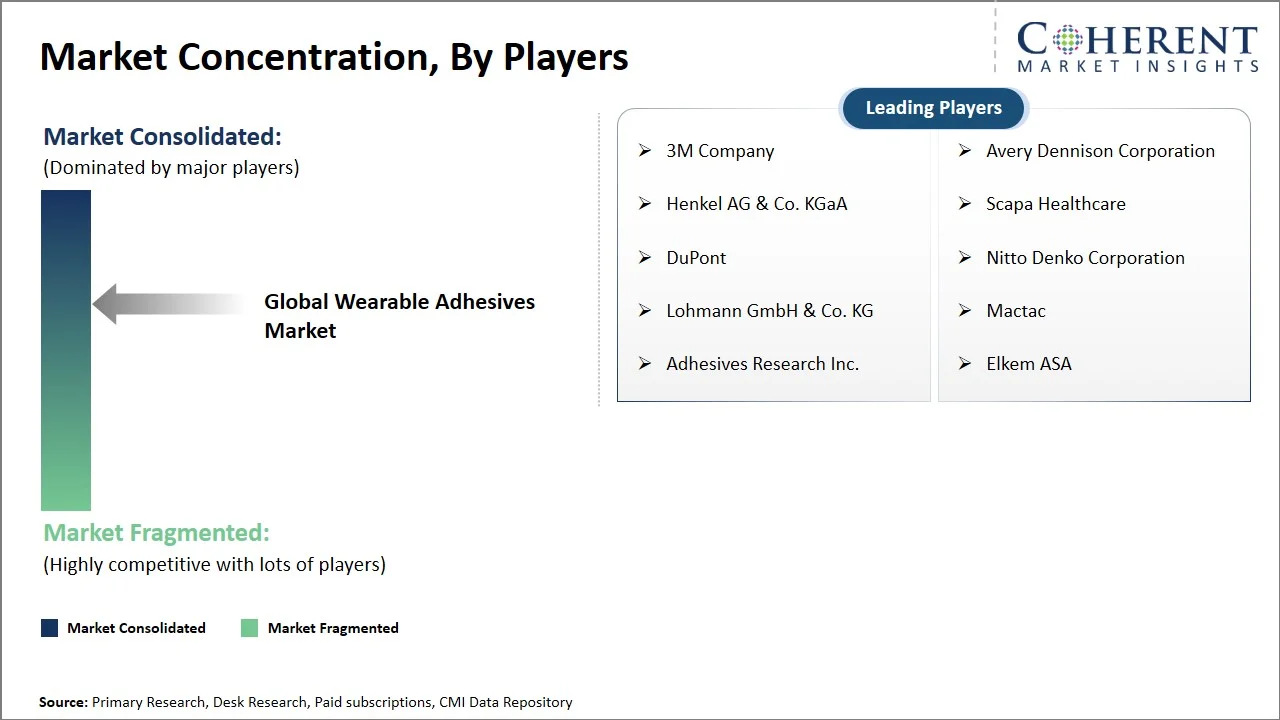
The global wearable adhesives market is moderately competitive, with medical adhesive producers, specialty material suppliers, wearable medical component developers, and wearable device technology industries pursuing innovations in long-term skin adhesion and biocompatible adhesive solutions. Industry players are adding new investment and innovation into breathability, hypo allergenicity, silicone-based and high-performance acrylic-based adhesives to meet the rising demand for wearable monitoring systems and remote health management. Fostering business alliances between wearable medical device producers and adhesive solution providers and broadening medical-grade manufacturing capacity will further accelerate the competition in the market. Key focus areas include:
- Development of skin-friendly, breathable, and long-duration adhesive technologies for wearable healthcare devices
- Innovation in silicone-based and low-irritation medical adhesive formulations
- Expansion of adhesive compatibility with flexible electronics and biosensor-integrated wearable systems
- Strengthening regulatory compliance and biocompatibility standards for connected medical wearables
Market Report Scope
Wearable Adhesives Market Report Coverage
| Report Coverage | Details | ||
|---|---|---|---|
| Base Year: | 2025 | Market Size in 2026: | USD 620 Mn |
| Historical Data for: | 2020 To 2024 | Forecast Period: | 2026 To 2033 |
| Forecast Period 2026 to 2033 CAGR: | 8.8% | 2033 Value Projection: | USD 1,120 Mn |
| Geographies covered: |
| ||
| Segments covered: |
| ||
| Companies covered: | 3M Company, Avery Dennison Corporation, Henkel AG & Co. KGaA, Scapa Healthcare, DuPont, Nitto Denko Corporation, Lohmann GmbH & Co. KG, Mactac, Adhesives Research Inc., and Elkem ASA | ||
| Growth Drivers: |
| ||
| Restraints & Challenges: |
| ||
Analyst Opinion (Expert Opinion)
- The future outlook for the global market for wearable adhesives is projected to be influenced by the proliferation of connected healthcare ecosystems, detection and monitoring devices and the development of future-generation wearable medical devices. Advancements and diffusion of wearable biosensors, smart patches, artificial intelligence-enabled home healthcare monitoring systems and ubiquitous healthcare solutions are likely to create increased demand for skin-friendly, breathable, and long-lasting based adhesives designed for nomadic use (long duration applications).
- The maximum opportunities will probably exist within silicone and advanced acrylic adhesive technologies for continuous glucose monitoring (CGM), wearable cardiac monitoring and biosensor patch applications, especially in the U.S., China, Japan and South Korea. Digital health technology, remote monitoring, and miniaturized wearable health devices are gaining traction in hospital, homecare and telehealth settings.
- In order to obtain a competitive advantage, market participants should seek innovation into hypoallergenic, ultra-thin, breathable, sustainable adhesive formulas (adept of printing microtextures and physical surface energies) suitable for flexible electronics and long telemetry duration sensors. In addition, selective approach in strengthening strategic alliance with wearable medical device companies, augmenting the manufacturing infrastructure along with certifications (conforming to Medicinal Grade) targeting regulatory filing and a proactive approach to invest in R&D towards biocompatibility, moisture resistant, ease of use and comfort for next-generation wearables has to be adopted
Speak to the analyst
Want personalized insights?
Take the findings above to one of our principal consultants, or have the report rebuilt around the segments, geographies and competitors you actually track.
Market Segmentation
- Product Type Insights (Revenue, USD Mn, 2021 - 2033)
- Acrylic-Based Adhesives
- Silicone-Based Adhesives
- Hydrocolloid Adhesives
- Others
- Application Insights (Revenue, USD Mn, 2021 - 2033)
- Monitoring Devices
- Drug Delivery Wearables
- Diagnostic Wearables
- Fitness and Wellness Wearables
- End User Insights (Revenue, USD Mn, 2021 - 2033)
- Hospitals and Clinics
- Home Healthcare Settings
- Medical Device Manufacturers
- Research Institutes
- Others
- Regional Insights (Revenue, USD Mn, 2021 - 2033)
- North America
- U.S.
- Canada
- Latin America
- Brazil
- Argentina
- Mexico
- Rest of Latin America
- Europe
- Germany
- U.K.
- Spain
- France
- Italy
- Russia
- Rest of Europe
- Asia Pacific
- China
- India
- Japan
- Australia
- South Korea
- ASEAN
- Rest of Asia Pacific
- Middle East
- GCC Countries
- Israel
- Rest of Middle East
- Africa
- South Africa
- North Africa
- Central Africa
- North America
- Key Players Insights
- 3M Company
- Avery Dennison Corporation
- Henkel AG & Co. KGaA
- Scapa Healthcare
- DuPont
- Nitto Denko Corporation
- Lohmann GmbH & Co. KG
- Mactac
- Adhesives Research Inc.
- Elkem ASA
Sources
Primary Research Interviews
- Wearable medical device manufacturers and biomedical engineers involved in development of wearable biosensors, CGMs, ECG patches, and remote patient monitoring systems
- Medical adhesive material specialists and polymer scientists focused on skin-compatible silicone, acrylic, and hydrocolloid adhesive technologies
- Healthcare OEMs and contract manufacturing organizations (CMOs) managing wearable healthcare device assembly and adhesive integration processes
- Researchers and digital healthcare professionals evaluating flexible electronics, continuous monitoring technologies, and connected wearable healthcare systems
Stakeholders
- Wearable adhesives manufacturers and medical-grade adhesive solution providers
- End-use Sectors:
- Wearable healthcare and remote patient monitoring device manufacturers
- Medical device and biosensor technology companies
- Hospitals, ambulatory care centers, and home healthcare providers
- Pharmaceutical and digital therapeutics companies
- Sports, fitness, and wellness wearable technology companies
- Regulatory & Health Bodies: U.S. Food and Drug Administration (FDA) – wearable medical device regulations and biocompatibility standards, European Medicines Agency (EMA) – healthcare device and skin-contact material safety guidelines, International Organization for Standardization (ISO) – medical adhesive and wearable device quality standards, World Health Organization (WHO) – digital health and chronic disease monitoring initiatives
Databases
- WHO Global Health Observatory – chronic disease prevalence and digital healthcare adoption statistics
- OECD Health Statistics – remote patient monitoring and healthcare technology utilization trends
- CDC National Center for Health Statistics – chronic disease monitoring and wearable healthcare usage data
- World Bank Health Database – healthcare expenditure and medical technology infrastructure indicators
- UN Comtrade Database – medical adhesive materials and wearable healthcare device trade statistics
- Global Burden of Disease (GBD) Database – prevalence of chronic diseases requiring continuous monitoring technologies
Magazines
- Medical Design & Outsourcing – wearable medical device manufacturing and adhesive technology trends
- Plastics Technology – polymer processing and medical adhesive material innovations
- Medical Product Outsourcing (MPO) – wearable healthcare manufacturing and supply chain developments
- Adhesives & Sealants Industry (ASI) – medical adhesive and skin-contact material advancements
- MedTech Dive – wearable healthcare technology and connected device industry developments
Journals
- Journal of Medical Devices
- International Journal of Adhesion and Adhesives
- Journal of Biomedical Materials Research
- Medical Engineering & Physics
- IEEE Journal of Translational Engineering in Health and Medicine
- Microsystems & Nanoengineering
Newspapers
- Financial Times – healthcare technology and wearable medical device market developments
- The Wall Street Journal – digital health and connected healthcare investment trends
- The New York Times (Health Section) – wearable healthcare innovation and consumer health technology trend
Associations
- Medical Device Manufacturers Association (MDMA)
- Advanced Medical Technology Association (AdvaMed)
- Society of Plastics Engineers (SPE)
- Adhesive and Sealant Council (ASC)
- Digital Medicine Society (DiMe)
Public Domain Sources
- World Health Organization (WHO) – digital healthcare and chronic disease statistics
- U.S. Food and Drug Administration (FDA) – wearable medical device approvals and regulations
- National Institutes of Health (NIH) – wearable biosensor and digital health research publications
- International Organization for Standardization (ISO) – medical adhesive and wearable device standards
- Centers for Disease Control and Prevention (CDC) – chronic disease monitoring and healthcare technology adoption data
Proprietary Elements
- CMI Data Analytics Tool
- Proprietary CMI Existing Repository of information for last 10 years.
Get access to 250+ pages report
Every segment, forecast, competitor profile and data table behind the analysis above — available for instant download.
- ESOMAR Member
- ISO 9001:2015 Certified
- D-U-N-S Registered
- GDPR & CCPA Compliant
Missing comfort of reading report in your local language? Find your preferred language:
Transform your Strategy with Exclusive Trending Reports
Frequently Asked Questions
The global wearable adhesives market is estimated to be valued at USD 620 Mn in 2026 and is expected to reach USD 1,120 Mn by 2033.
Acrylic-based adhesives dominate due to their strong skin adhesion, excellent moisture resistance, durability under prolonged wear conditions, and compatibility with a wide range of wearable medical and fitness devices.
The CAGR of the global wearable adhesives market is projected to be 8.8% from 2026 to 2033.
Increasing adoption of wearable medical devices and remote patient monitoring technologies and growing demand for skin-friendly and long-duration adhesive solutions are the major factors driving the growth of the global wearable adhesives market.
Skin irritation and biocompatibility concerns associated with prolonged use and high development costs for advanced adhesive formulations are the major factors hampering the growth of the global wearable adhesives market.
3M Company, Avery Dennison Corporation, Henkel AG & Co. KGaA, Scapa Healthcare, DuPont, Nitto Denko Corporation, Lohmann GmbH & Co. KG, Mactac, Adhesives Research Inc., and Elkem ASA are the major players.
North America is expected to lead the global wearable adhesives market in 2026.