

Global Wood Pellet Fuel Market Size and Forecast – 2026-2033
The Global Wood Pellet Fuel Market is estimated to be valued at USD 15.35 Bn in 2026 and is expected to reach USD 24.66 Bn by 2033, exhibiting a compound annual growth rate (CAGR) of 7.0% from 2026 to 2033.
Key Takeaways of the Wood Pellet Fuel Market
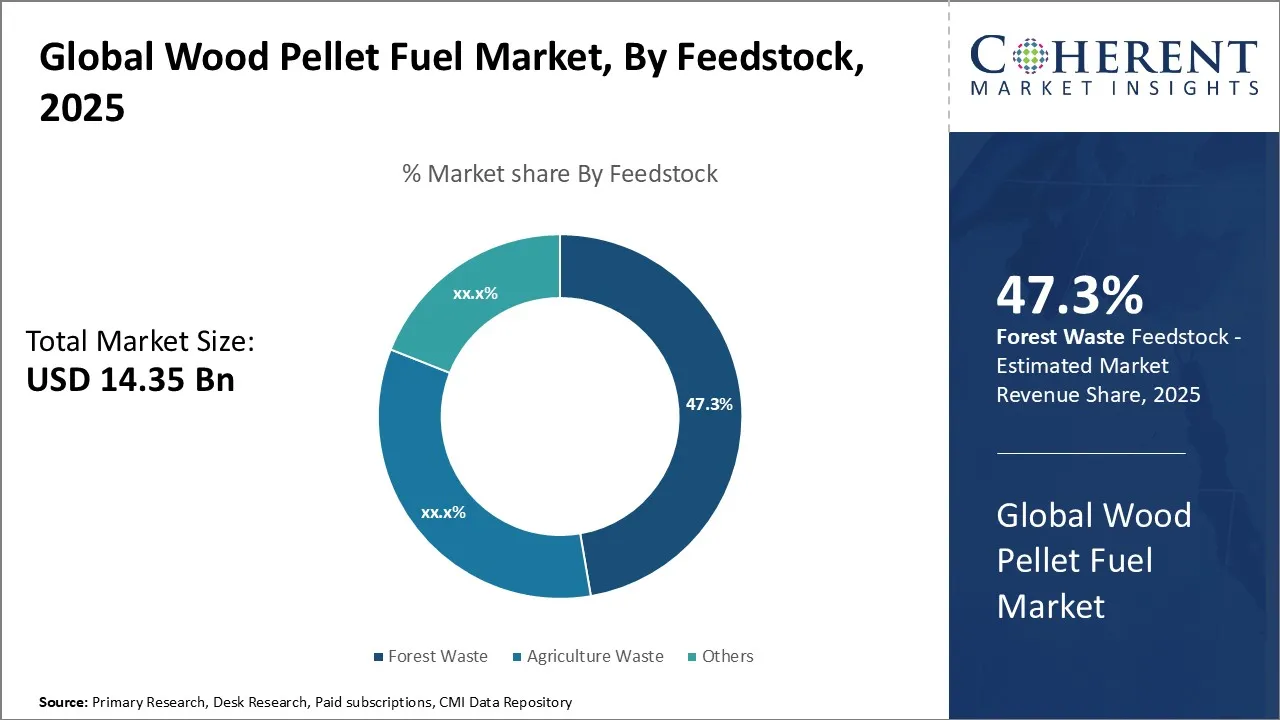
- Forest waste segment is expected to account for 48.3 % of the global wood pellet fuel market in 2026.
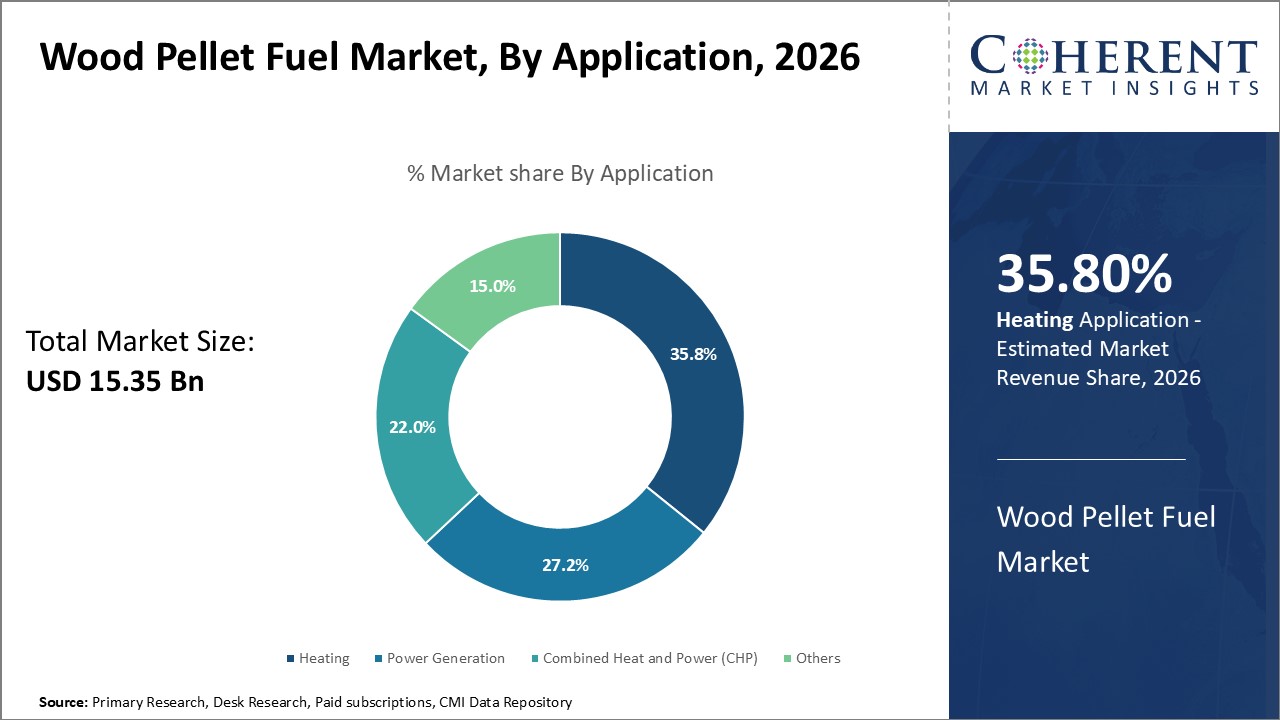
- The heating segment is projected to hold a 35.8 % share of the market in 2026.
- The residential segment is estimated to capture 46.7 % of the market in 2026.
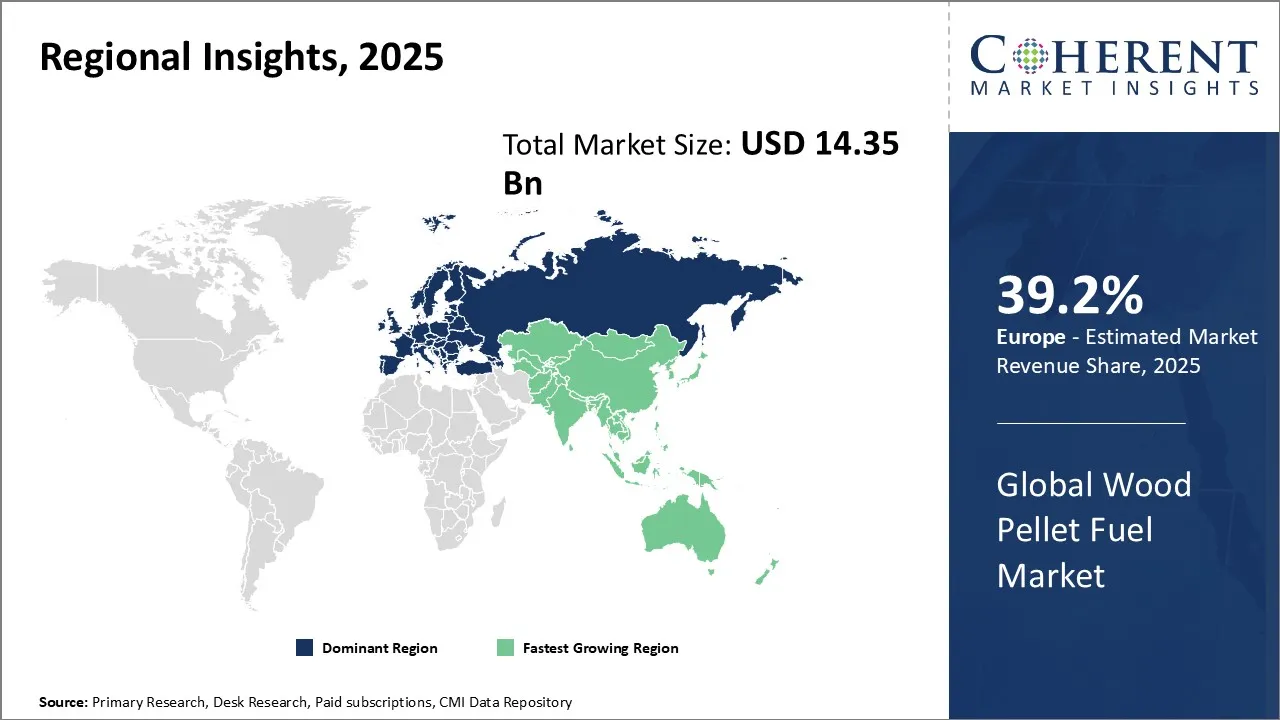
- Europe is set to lead the global wood pellet fuel market in 2026 with a 39.2 % share. Asia Pacific, with a 24.8% share, will be the fastest-growing region.
Market Overview
Market trends indicate a significant shift towards eco-friendly and carbon-neutral energy solutions, with wood pellets gaining prominence as a viable alternative to fossil fuels. Innovations in pelletizing technology have improved fuel efficiency and reduced emissions, attracting industrial and residential users alike. Additionally, rising awareness about climate change, stricter emission regulations, and the growing role of carbon credit mechanisms are encouraging the higher adoption of wood pellet fuels globally, reinforcing the market’s positive trajectory in the coming years.
Current Events and Its Impact
Current Events | Description and its impact |
Japan & South Korea’s Biomass Imports Surge (2024–2025) |
|
U.S. Inflation Reduction Act (IRA) Incentives (2024–2025) |
|
Segmental Insights
- Current Industry Events of 2026
- Market Size Estimation
- Regional Breakdown
- Competitive Landscape
- Customer Intelligence
- Segmental Analysis
- Pricing Analysis
- Key Market Drivers, Challenges & Future Trends
- Customized Insights Section
Wood Pellet Fuel Market Insights, By Feedstock - Forest Waste Segment Dominates Due to Its Abundant Availability and Sustainability Benefits
Forest Waste segment is expected to hold 48.3% share of the global wood pellet fuel market in 2026, largely stemming from the extensive availability of forest residues generated from timber harvesting, thinning operations, and sawmill by-products. Forest waste serves as an efficient raw material because it effectively utilizes biomass that would otherwise be discarded or left to decompose, thus enhancing resource efficiency and minimizing waste. The strong preference for forest waste feedstock also aligns with increasing environmental regulations and initiatives aimed at promoting sustainable forest management, which encourages the collection and usage of residual biomass without compromising forest health.
Wood Pellet Fuel Market Insights, By Application – Heating Segment Dominates Driven by Rising Residential Energy Demand and Favorable Heating Technology Adoption
Heating segment represents the dominant segment with an estimated 35.8% share of the market in 2026, due to increasing reliance on biomass pellets as a sustainable and cost-effective heating solution. The residential heating sector, especially in colder climates, benefits significantly from wood pellets as a substitute for conventional fossil fuels like oil, coal, and natural gas. Their high energy density, cleanliness of combustion, and ease of storage make them an attractive option for home heating systems such as pellet stoves and central heating boilers.
The expanding consumer awareness regarding environmental concerns and the desire to reduce household carbon footprints accelerates the adoption of wood pellet heating systems. Many governments support this transition through subsidies, incentives, and favorable policies aimed at encouraging homeowners to switch to renewable heating sources, which directly boosts demand for wood pellets used in heating. This policy support often lowers the initial investment barriers associated with pellet heating equipment, further driving market penetration.
Wood Pellet Fuel Market Insights, By End-use Industry – Residential Segment Dominates Due to Increasing Consumer Preference for Sustainable, Efficient Home Heating Solutions
The residential segment is projected to hold 46.7% share of the market in 2026, because of the growing demand for environmentally friendly heating options at the household level. As individuals become more conscious of climate change and energy costs, wood pellet fuel offers an effective means to reduce reliance on fossil fuels while maintaining thermal comfort in homes. Wood pellet heating systems provide a cleaner-burning alternative to traditional wood or coal, producing less particulate matter and greenhouse gas emissions, which resonates with eco-conscious consumers.
Regional Insights
Europe Wood Pellet Fuel Market Analysis and Trends
The Europe region is projected to lead the market with a 39.2% share in 2026, driven by a well-established market ecosystem supported by stringent government policies focused on renewable energy adoption and carbon emission reduction. European nations have implemented robust subsidies and incentives to promote biomass energy; alongside ambitious renewable energy targets embedded within the EU Green Deal.
Key countries like Germany, Sweden, and the U.K. have significant industrial usage and residential heating applications consuming wood pellets. Trade dynamics are favorable owing to the proximity of pellet producers to large consumer markets, along with established export channels to other regions. Notable companies such as Enviva (operating production sites in multiple European countries), Drax Group (U.K.-based, focusing on biomass power generation), and German-based companies like Graanul Invest contribute substantially to the European market, driving innovation and supply chain efficiencies.
Asia Pacific Wood Pellet Fuel Market Analysis and Trends
The Asia Pacific region is expected to exhibit the fastest growth in the market contributing 24.8% share in 2026, due to rapid industrialization, increasing energy demand, and heightened environmental awareness are primary factors propelling this expansion. Governments across Asia Pacific are gradually implementing policies to diversify energy sources and reduce reliance on coal, creating new opportunities for biomass fuels, including wood pellets. Supportive regulations and incentives, particularly in countries like Japan, South Korea, and China, are fostering the market development.
The Asia Pacific market is witnessing increased investments in pellet manufacturing infrastructure and biomass power plants, fueled by both local companies and international partnerships. Trade dynamics are evolving with increased wood pellet imports from Europe and North America to satisfy domestic energy needs. Key companies such as Sumitomo Forestry (Japan), Korea Pellets, and major Chinese biomass firms are instrumental in advancing the supply-side capabilities and expanding consumption in the region.
Global Wood Pellet Fuel Market Outlook for Key Countries
Germany Wood Pellet Fuel Market Trends
Germany’s wood pellet fuel market is strongly influenced by the country’s Energiewende policy, which aggressively promotes renewable energy sources for heating and power generation. The high adoption of residential pellet stoves and biomass district heating systems underpins steady demand. German companies like Graanul Invest and German Pellets have contributed to establishing a robust production base, while government subsidies for renewable heating bolster consumption. Germany’s emphasis on sustainable forestry also ensures a steady supply of raw materials.
U.K. Wood Pellet Fuel Market Trends
The U.K. continues to lead the European biomass sector, particularly through large-scale power generation using wood pellets in converted coal power plants like Drax Power Station. The government’s Renewable Heat Incentive and biomass sustainability criteria have been pivotal in sustaining demand. Drax Group’s vertically integrated operations—from pellet sourcing to power generation—highlight the synergy local industry players create within this ecosystem.
Japan Wood Pellet Fuel Market Trends
Japan's wood pellet fuel market is shaped by the country’s policy shift towards renewable energy after the Fukushima nuclear disaster. Biomass, specifically wood pellets, is increasingly integrated into the nation’s energy mix. Favorable feed-in tariffs for biomass power plants and ongoing efforts to reduce carbon footprint have attracted investments from companies like Sumitomo Forestry and Oji Holdings. Japan also relies heavily on pellet imports, mainly sourced from Southeast Asia and North America.
U.S. Wood Pellet Fuel Market Trends
The U.S. wood pellet fuel market features a strong industrial demand, primarily from biomass power plants and pellet exports. Regions like the Southeast are rich in forestry resources, supporting a large pellet manufacturing industry led by companies such as Enviva and Pinnacle Renewable Energy. Federal and state-level renewable energy incentives and sustainability initiatives underpin market growth, while trade dynamics favor pellet exports to European and Asian markets.
South Korea Wood Pellet Fuel Market Trends
South Korea is rapidly expanding its biomass energy capacity to meet its renewable portfolio standards. Strong government policies incentivizing biomass power generation and co-firing of wood pellets in coal plants drive local demand. Korean companies, supported by government programs, are actively developing domestic pellet production, even as imports primarily come from North America and Southeast Asia. The interplay between clean energy targets and industrial investment is a key characteristic of this market.
Macroeconomic Factors Impacting Wood Pellet Fuel Market Growth
- Increasing Demand for Renewable Energy: Global efforts to reduce carbon emissions and shift toward cleaner energy sources strongly drive the demand for renewable fuels like wood pellets. Governments worldwide are implementing policies to promote renewable energy adoption, boosting the market growth.
- Government Policy and Support: Incentives such as tax reliefs, subsidies, grants, and regulatory frameworks supporting biomass and renewable energy stimulate wood pellet production and consumption. Countries with strong biomass energy policies, like Germany, the U.S., and Japan, see significant market growth.
- Global Energy Transition and Decarbonization: The growing global emphasis on replacing fossil fuels with sustainable alternatives due to climate change concerns creates long-term demand for wood pellets as a renewable energy carrier.
- Technological Advancements: Improved pellet production technology increases manufacturing efficiency, reduces costs, and enhances product quality, making wood pellets more competitive with traditional fuels.
Microeconomic Factors Impacting Wood Pellet Fuel Market Growth
- Supply Chain Efficiencies and Challenges: The logistics of sourcing raw materials, transportation, and storage affect costs and market reliability. Efficient supply chain management is vital, especially considering seasonal fluctuations in raw material availability.
- Quality Standards and Product Differentiation: Advancements in pellet quality and strict industry standards can influence consumer confidence and market acceptance.
- Inventory and Stock Management: Effective management of pellet stockpiles during low-demand seasons ensures a stable supply during peak demand, influencing market prices and growth continuity.
Market Players, Key Development, and Competitive Intelligence
Key Developments
- In April 2025, IIT Guwahati, in partnership with HDFC Parivartan, introduced a project to convert crop waste into fuel pellets as part of efforts to reduce reliance on wood and coal. The initiative focuses on sustainable rural development through three technology-driven interventions designed to strengthen food and energy security, boost farmers' incomes, and build capacity among thousands of farmers across Assam and Meghalaya.
- In January 2025, Drax, the U.K.-based power generator, announced plans to expand its U.S. presence by securing a long-term supply agreement with Texas-based sustainable aviation fuel (SAF) startup Pathway Energy. Under the deal, Drax will provide more than 1 million tons of wood pellets annually to support Pathway Energy’s SAF production facility in Port Arthur, Texas. Construction of the facility is scheduled to begin in 2026, with operations expected to launch in 2029. Drax sources its wood pellets primarily from the southern U.S., alongside Europe, Canada, and South America, underscoring its global supply chain integration.
- In December 2024, Drax Group signed heads of terms with Pathway Energy LLC, a carbon negative energy company, on a multi-year sustainable biomass deal. Under the agreement, Drax could supply over 1 million tons of sustainable biomass pellets annually to Pathway’s proposed sustainable aviation fuel (SAF) plant on the US Gulf Coast.
Top Strategies Followed by Global Wood Pellet Fuel Market Players
- Established market leaders heavily invest in research and development (R&D) to drive innovation in high-performance wood pellet products that meet evolving environmental standards and consumer demands. These companies often develop advanced pellet formulations that enhance energy efficiency and reduce emissions, giving them a competitive edge. By entering emerging markets across Asia, Latin America, and Eastern Europe through strategic alliances and localized operations, they tap into growing demand for renewable and sustainable heating solutions worldwide.
- For instance, Pure Biofuel Ltd. provides premium-grade wood pellets to both retail and wholesale markets across the U.K. and parts of Europe. Their products include ENplus A1–certified wood pellets made from sawmill waste—ensuring high quality and sustainability—plus retail options like animal bedding, cat litter, and wood fuel in custom-branded packaging.
- Mid-level players in the wood pellet fuel market tailor their strategies to balance quality and cost, targeting price-sensitive consumers who seek reliable yet affordable alternatives to conventional fuels. These companies prioritize delivering cost-effective pellet products that maintain essential quality standards, enabling them to appeal to a broad customer base without compromising performance. To strengthen their market foothold, mid-tier players engage in collaborations that enhance their production capabilities and technological expertise.
- For example, Green Circle produces and supplies wood pellets specifically designed for industrial-scale power generation, particularly for facilities that retrofit coal-fired systems to co‑burn biomass pellets. Their pellets are used by power companies and Combined Heat and Power (CHP) operations seeking renewable energy alternatives.
- Small-scale players in the global wood pellet fuel market adopt a more specialized and innovative approach to carve out distinct niches within the competitive environment. These players concentrate on developing wood pellet products with specialized features—such as organic or ultra-low ash content pellets—that cater to specific consumer needs or industrial applications. Embracing cutting-edge technologies like automation and digital monitoring systems is another strategy they use to enhance product quality and operational efficiency, enabling them to compete despite limited resources.
Market Report Scope
Wood Pellet Fuel Market Report Coverage
| Report Coverage | Details | ||
|---|---|---|---|
| Base Year: | 2025 | Market Size in 2026: | USD 15.35 Bn |
| Historical Data for: | 2020 To 2024 | Forecast Period: | 2026 To 2033 |
| Forecast Period 2026 to 2033 CAGR: | 7.0% | 2033 Value Projection: | USD 24.66 Bn |
| Geographies covered: |
| ||
| Segments covered: |
| ||
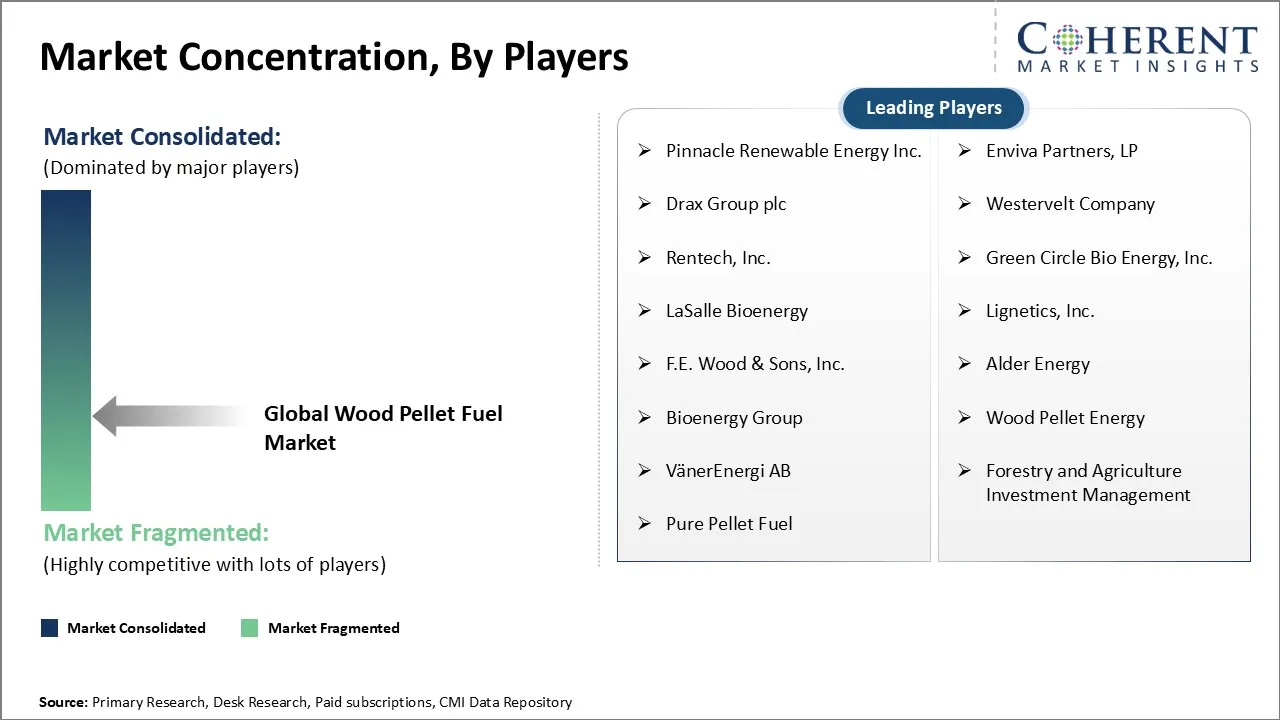
| Companies covered: | Pinnacle Renewable Energy Inc., Enviva Partners, LP, Drax Group plc, Westervelt Company, Rentech, Inc., Green Circle Bio Energy, Inc., LaSalle Bioenergy, Lignetics, Inc., F.E. Wood & Sons, Inc., Alder Energy, Bioenergy Group, Wood Pellet Energy, VänerEnergi AB, Forestry and Agriculture Investment Management, and Pure Pellet Fuel | ||
| Growth Drivers: |
| ||
| Restraints & Challenges: |
| ||
Wood Pellet Fuel Market Dynamics
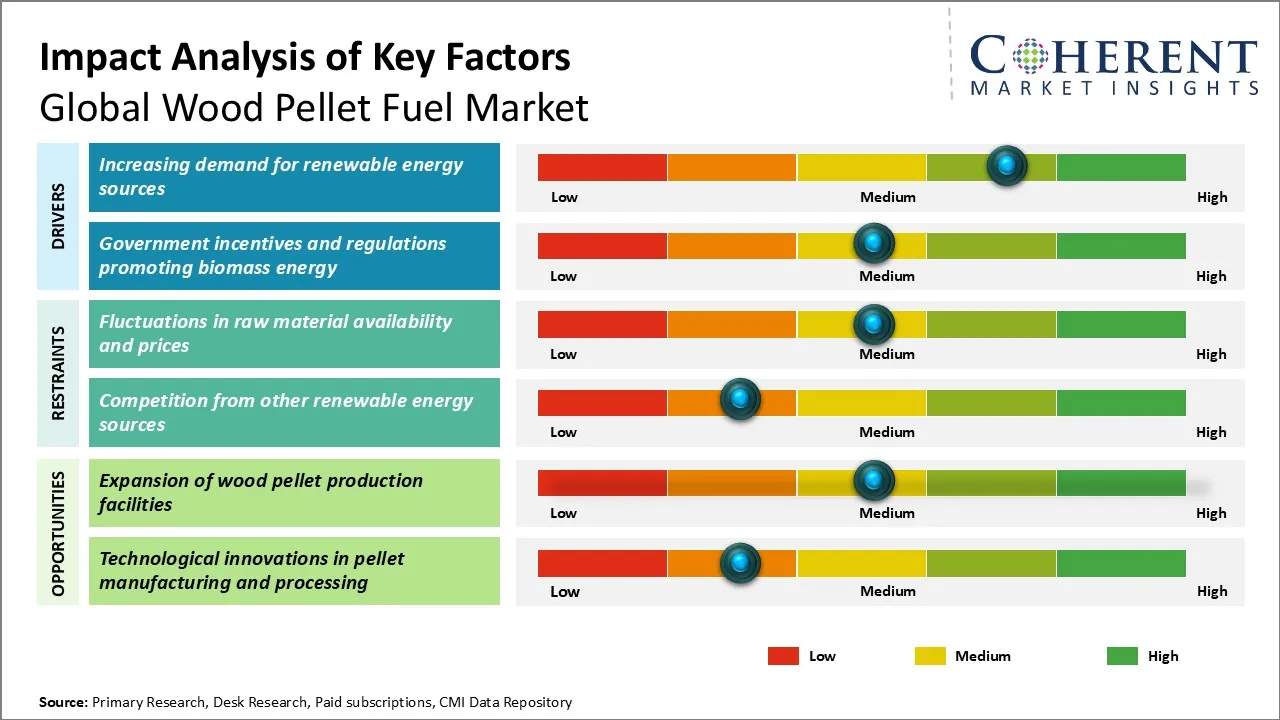
Wood Pellet Fuel Market Driver - Increasing Demand for Renewable Energy Sources
The global shift toward renewable energy sources has positioned wood pellet fuel as a critical component in the energy transition strategy, fundamentally transforming the biomass power landscape. As governments worldwide implement stringent carbon reduction policies and phase out fossil fuel dependencies, wood pellets have emerged as a viable alternative that bridges the gap between traditional energy systems and cleaner alternatives.
For example, according to the International Energy Agency (IEA), renewable energy capacity additions reached a record 295 gigawatts in 2022, with bioenergy including wood pellets contributing significantly to this expansion. This surge is driven by wood pellets' carbon-neutral characteristics when sourced sustainably, their compatibility with existing coal-fired power plants through co-firing or conversion, and their role in helping nations meet their commitments under the Paris Climate Agreement.
Major economies like the European Union have accelerated their renewable energy mandates, with the Renewable Energy Directive requiring member states to achieve specific biomass energy targets, directly boosting wood pellet consumption in power generation and industrial heating applications.
Wood Pellet Fuel Market Opportunity - Expansion of Wood Pellet Production Facilities
The global wood pellet fuel market presents a significant opportunity through the expansion of wood pellet production facilities. With rising environmental concerns and increasing adoption of renewable energy sources, the demand for sustainable and carbon-neutral fuels like wood pellets is surging across residential, commercial, and industrial sectors. Governments worldwide are introducing stringent regulations and incentives to reduce greenhouse gas emissions, further propelling the adoption of biomass energy. This regulatory environment, combined with growing awareness among end-users, encourages manufacturers and investors to scale up production capacity.
For example, in 2024, Enviva Inc., the world’s largest producer of industrial wood pellets, announced the expansion of its production facilities in the U.S. Southeast to meet growing demand from European and Asian energy companies. Similarly, in 2025, Drax Group signed a long-term supply deal with Pathway Energy in Texas, committing to deliver over approx. 1 million tons of pellets annually for sustainable aviation fuel production, highlighting the market’s strong growth potential.
Analyst Opinion (Expert Opinion)
- The global wood pellet fuel market is positioned for robust growth, driven by increasing energy demands and a global shift towards renewable energy sources. Insights from the International Biomass Conference (2023) and the Wood Pellet Association of Canada Conference (2022) underscored the market's potential, with companies like Drax Group and Enviva expanding their production capabilities to meet rising demand.
- For instance, Drax's recent investments in new pellet production facilities signal a strategic move to capitalize on the growing interest in biomass as a carbon-neutral energy source. Additionally, discussions at these conferences highlighted the importance of sustainability certifications and quality standards to enhance market credibility and consumer trust. However, challenges such as supply chain volatility and competition from other renewable sources were noted, emphasizing the need for strategic planning.
- Companies that focus on operational efficiency and sustainable sourcing of raw materials will likely lead the market. Ultimately, the future of the wood pellet fuel market will hinge on its ability to navigate these challenges while reinforcing its role in the global transition to sustainable energy solutions.
Speak to the analyst
Want personalized insights?
Take the findings above to one of our principal consultants, or have the report rebuilt around the segments, geographies and competitors you actually track.
Market Segmentation
- Feedstock Insights (Revenue, USD Bn, 2021 - 2033)
- Forest Waste
- Agriculture Waste
- Others
- Application Insights (Revenue, USD Bn, 2021 - 2033)
- Heating
- Power Generation
- Combined Heat and Power (CHP)
- Others
- End-use Industry Insights (Revenue, USD Bn, 2021 - 2033)
- Residential
- Commercial
- Industrial
- Regional Insights (Revenue, USD Bn, 2021 - 2033)
- North America
- U.S.
- Canada
- Latin America
- Brazil
- Argentina
- Mexico
- Rest of Latin America
- Europe
- Germany
- U.K.
- Spain
- France
- Italy
- Russia
- Rest of Europe
- Asia Pacific
- China
- India
- Japan
- Australia
- South Korea
- ASEAN
- Rest of Asia Pacific
- Middle East
- GCC Countries
- Israel
- Rest of Middle East
- Africa
- South Africa
- North Africa
- Central Africa
- North America
- Key Players Insights
- Pinnacle Renewable Energy Inc.
- Enviva Partners, LP
- Drax Group plc
- Westervelt Company
- Rentech, Inc.
- Green Circle Bio Energy, Inc.
- LaSalle Bioenergy
- Lignetics, Inc.
- E. Wood & Sons, Inc.
- Alder Energy
- Bioenergy Group
- Wood Pellet Energy
- VänerEnergi AB
- Forestry and Agriculture Investment Management
- Pure Pellet Fuel
Sources
Primary Research Interviews
- R&D Director – Leading Wood Pellet Manufacturer
- Procurement Manager – Major Bioenergy Distributor
- Product Development Head – Well-Known Biomass Energy Brand
- Sustainability Manager – Renewable Energy Certification Body
Stakeholders
- Manufacturers
- End-use Sectors:
- Power Generation (utilities, co-firing plants)
- Industrial Heating (factories, process industries)
- Residential Heating (pellet stoves, boilers)
- Commercial Heating (district heating, institutional facilities)
- Regulatory & Certification Bodies
- E-commerce Platforms and Retailers
- Technology Integration Players: AI-based personalization providers for nutritional products
Databases
- UN Comtrade Database
- International Energy Agency (IEA) Bioenergy Statistics
- India Import Export (EXIM) Database
- FAOSTAT — Forestry Database
Magazines
- Pellet Mill Magazine – Trends and innovations in wood pellet fuels
- Biomass Magazine – News and technology in pellet and biomass energy
- Bioenergy Insight – Industry insights into biomass and pellet markets
- Wood Pellet Review – Market updates and growth in pellets
Journals
- Biomass & Bioenergy – Science, economics of wood pellets
- Renewable & Sustainable Energy Reviews – Technology reviews for pellet energy
- Journal of Cleaner Production – Sustainability of pellet fuel supply chain
- Forest Products Journal – Production and logistics of wood pellets
- Energy Policy – Policy analysis in wood pellet and biomass trade
Newspapers
- The Financial Times – Market shifts in global pellet trade
- The Guardian – Policy, sustainability discussions on wood pellets
- Asia Energy Journal – Wood pellet consumption and trade in Asia-Pacific
- European Energy News – Regulations, market updates in European pellet sector
- The New York Times – Features on clean energy transitions and pellet use
Associations
- European Pellet Council (EPC)
- United States Industrial Pellet Association (USIPA)
- World Bioenergy Association
- Bioenergy Europe
- Clean Energy Council
- Sustainable Biomass Program (SBP)
Public Domain Sources
- US Department of Energy – Wood Pellet Fuel Guidelines
- European Commission – Renewable Energy Directives, pellet standards
- International Renewable Energy Agency (IRENA) – Bioenergy reports
- World Health Organization – Air quality studies and pellet emissions
Proprietary Elements
- CMI Data Analytics Tool, Proprietary CMI Existing Repository of information for last 8 years
Get access to 250+ pages report
Every segment, forecast, competitor profile and data table behind the analysis above — available for instant download.
- ESOMAR Member
- ISO 9001:2015 Certified
- D-U-N-S Registered
- GDPR & CCPA Compliant
Missing comfort of reading report in your local language? Find your preferred language:
Transform your Strategy with Exclusive Trending Reports
Frequently Asked Questions
The global wood pellet fuel market is estimated to be valued at USD 15.35 Bn in 2026 and is expected to reach USD 24.66 Bn by 2033.
The CAGR of global wood pellet fuel market is projected to be 7.0% from 2026 to 2033.
Wood pellets are used as a renewable, carbon-neutral fuel for heating, power generation, and as a feedstock in sustainable bioenergy applications.
Increasing demand for renewable energy sources and government incentives and regulations promoting biomass energy are the major factors driving the growth of the global wood pellet fuel market.
Fluctuations in raw material availability and prices and competition from other renewable energy sources are the major factors hampering the growth of the global wood pellet fuel market.
In terms of Feedstock, Forest Waste segment is estimated to dominate the market revenue share in 2026.
Pinnacle Renewable Energy Inc., Enviva Partners, LP, Drax Group plc, Westervelt Company, Rentech, Inc., Green Circle Bio Energy, Inc., LaSalle Bioenergy, Lignetics, Inc., F.E. Wood & Sons, Inc., Alder Energy, Bioenergy Group, Wood Pellet Energy, VänerEnergi AB, Forestry and Agriculture Investment Management, and Pure Pellet Fuel are the major players.