

Global Zero Trust Security Market Size and Forecast – 2026-2033
The Global Zero Trust Security Market is estimated to be valued at USD 42.39 Bn in 2026 and is expected to reach USD 122.73 Bn by 2033, exhibiting a compound annual growth rate (CAGR) of 16.4% from 2026 to 2033.
Key Takeaways of the Zero Trust Security Market
- The network security segment leads the market holding an estimated share of 35.7 % in 2026.
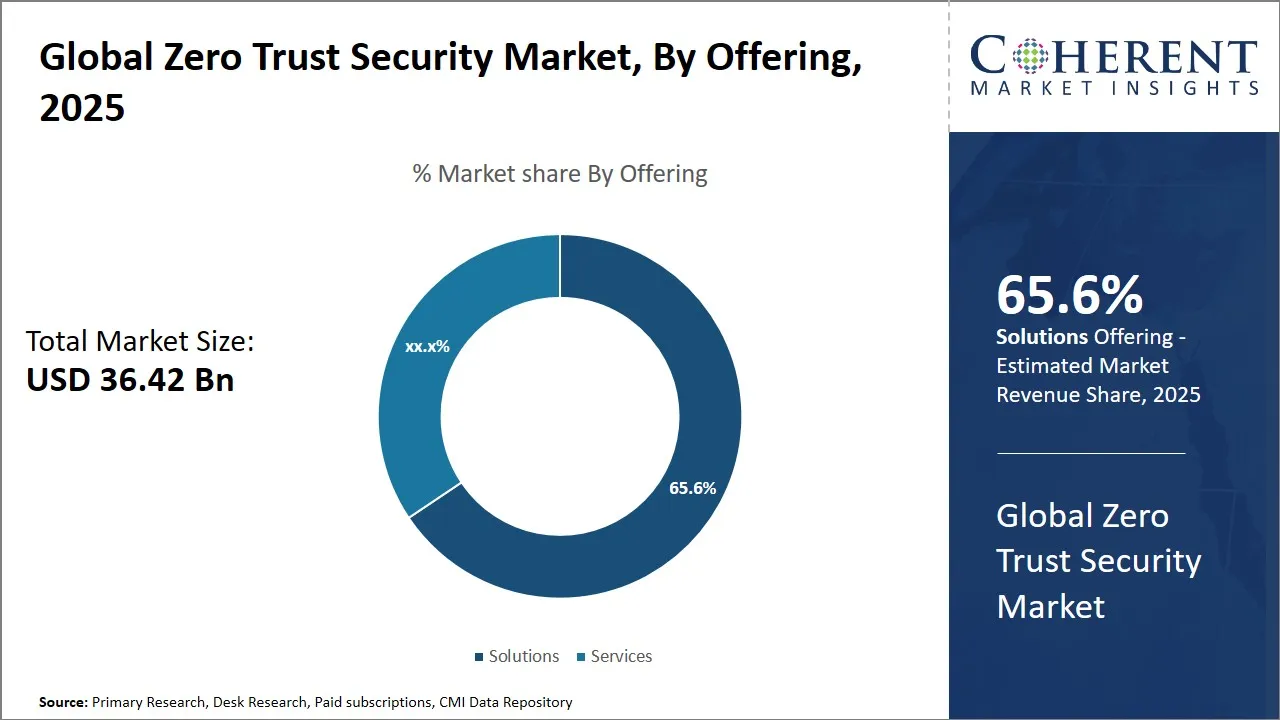
- The solutions segment leads the market holding an estimated share of 66.6 % in 2026.
- North America is estimated to lead the market with a share of 38.2 % in 2026.
- Asia Pacific, holding a share of 19.7 % in 2026, is projected to be the fastest growing region.
Market Overview
The market is seeing growth because of heightened focus on identity verification, micro-segmentation, and continuous monitoring to mitigate insider and external threats. Also, the rising integration of AI and machine learning within Zero Trust architectures is improving threat detection and response capabilities, creating demand. Cloud migration and the rise in remote working environments are also adding to the shift towards zero trust security models globally.
Current Events and Its Impact
Current Events | Description and its impact |
Palo Alto Networks acquisition of CyberArk |
|
Okta–Palo Alto Networks partnership expansion |
|
Zscaler launches new Zero Trust suite |
|
Segmental Insights
- Current Industry Events of 2026
- Market Size Estimation
- Regional Breakdown
- Competitive Landscape
- Customer Intelligence
- Segmental Analysis
- Pricing Analysis
- Key Market Drivers, Challenges & Future Trends
- Customized Insights Section
Global Zero Trust Security Market Insights, by Offering – Solutions Lead Owing to Comprehensive Protection And Scalability
The solutions segment, holding a share of 66.6% in 2026, is expected to dominate the global zero trust security market. Organizations today look for adaptive and holistic security strategies, and zero trust solutions offer that by putting strict access controls and continuous verification at every access point. Traditional perimeter-based security models are becoming obsolete as organizations move towards cloud environments, remote work, and digital transformation initiatives. Zero trust solutions are designed to operate in these decentralized settings by ensuring that no user or device is trusted by default—even those inside the network perimeter.
Also, the scalability and customization options offered by zero trust security solutions improve their appeal. Enterprises can tailor these solutions according to their specific infrastructure, regulatory requirements, and risk profiles. For instance, solutions integrating multi-factor authentication, identity and access management (IAM), micro-segmentation, and encryption allow organizations to create security environments that dynamically adapt to changing conditions, thereby minimizing potential attack vectors.
Another critical driver is increasing regulatory pressure to protect sensitive data and comply with data privacy laws. Zero trust solutions provide powerful tools that help organizations implement granular access policies and maintain comprehensive logs and audits.
Moreover, the rapid adoption of cloud services adds to the growth of zero trust solutions. Cloud environments lack the traditional security perimeter, making zero trust a suited alternative framework. The solutions segment caters directly to these needs with specialized offerings for cloud-native security, identity-centric controls, and continuous monitoring.
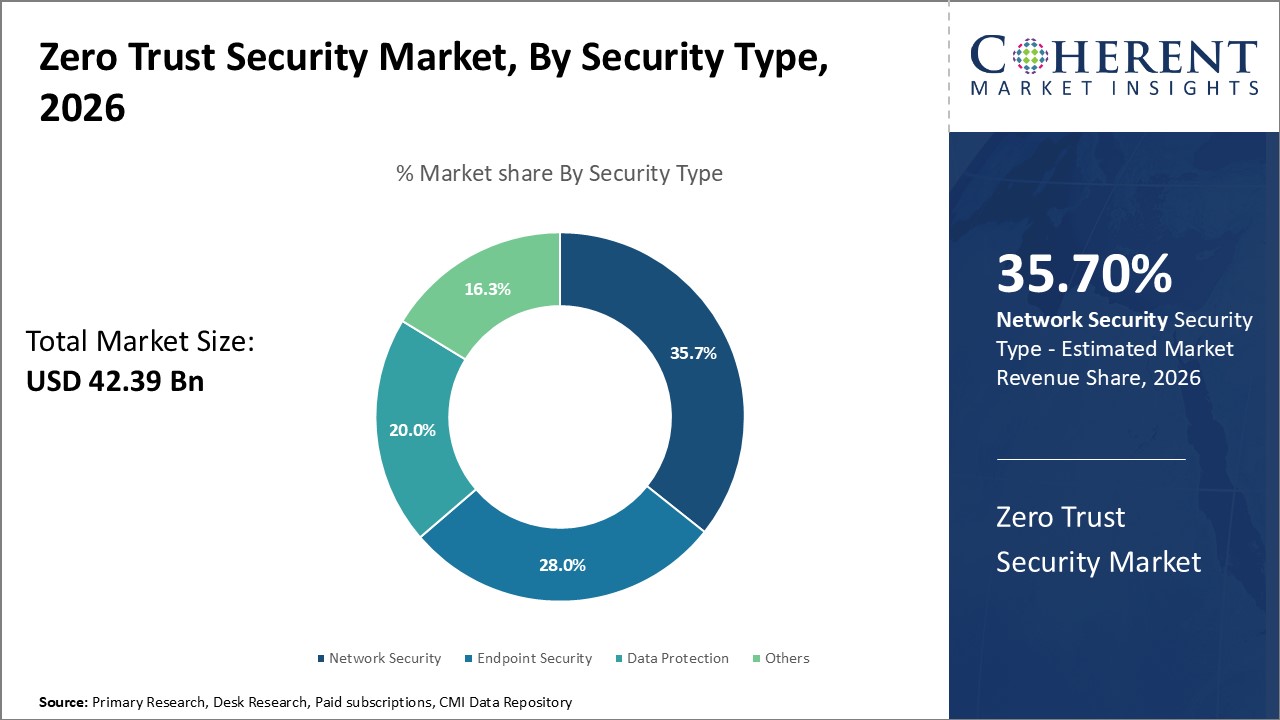
Global Zero Trust Security Market Insights, by Security Type - Network Security Leads Driven by Elevated Threat Landscape and Increased Network Penetration
The network security segment, holding an estimated share of 35.7% in 2026, leads as the most significant contributor due to the central role networks play in business operations and their vulnerability as primary attack vectors. Modern enterprises rely heavily on interconnected systems, cloud platforms, and IoT devices, which greatly increase network exposure and potential breach points.
Attackers increasingly leverage advanced persistent threats, ransomware, and lateral movement techniques that exploit network gaps to infiltrate critical assets. The expansion of remote work and mobile workforce models further intensifies the need for network-centric zero trust security. As employees access corporate resources from diverse locations and devices, protecting the network’s integrity becomes paramount. Zero trust network security solutions enforce strict segmentation, least privilege access, and real-time monitoring, limiting potential damage caused by compromised endpoints.
Also, the rise of cloud adoption has changed traditional network architectures, making hybrid and multi-cloud environments increasingly common. These environments introduce network complexity and new security challenges such as securing east-west traffic inside clouds. The zero trust model, centered on securing network flows and data access at granular levels, aligns well with these changing architectures, enhancing its appeal in the network security domain.
Another important factor is regulatory compliance demanding robust network controls to prevent data breaches, especially in sectors like finance, healthcare, and government. Zero trust network security solutions help enterprises maintain continuous vigilance and audit trails, ensuring adherence to these standards.
Impact of AI on the Zero Trust Security Market
Artificial Intelligence (AI) is significantly reshaping the zero trust security landscape by enabling faster, more adaptive threat detection and response. Traditional security models often struggle to keep pace with evolving threats, especially in complex, distributed environments. AI enhances zero trust by automating behavioral analysis, continuously monitoring identity and access patterns, and instantly flagging anomalies. For example, AI-driven analytics can identify subtle deviations in user behavior—like irregular login times or unusual data transfers—triggering adaptive policies or revoking access in real time, thereby minimizing dwell time for attackers.
A real-world instance of this is the Okta–Palo Alto Networks integration, where AI from Palo Alto's Cortex XSIAM platform is used to correlate identity behavior (from Okta) with real-time network telemetry. This fusion allows automated detection and remediation of threats such as compromised user credentials or insider risks, without manual intervention.
Regional Insights
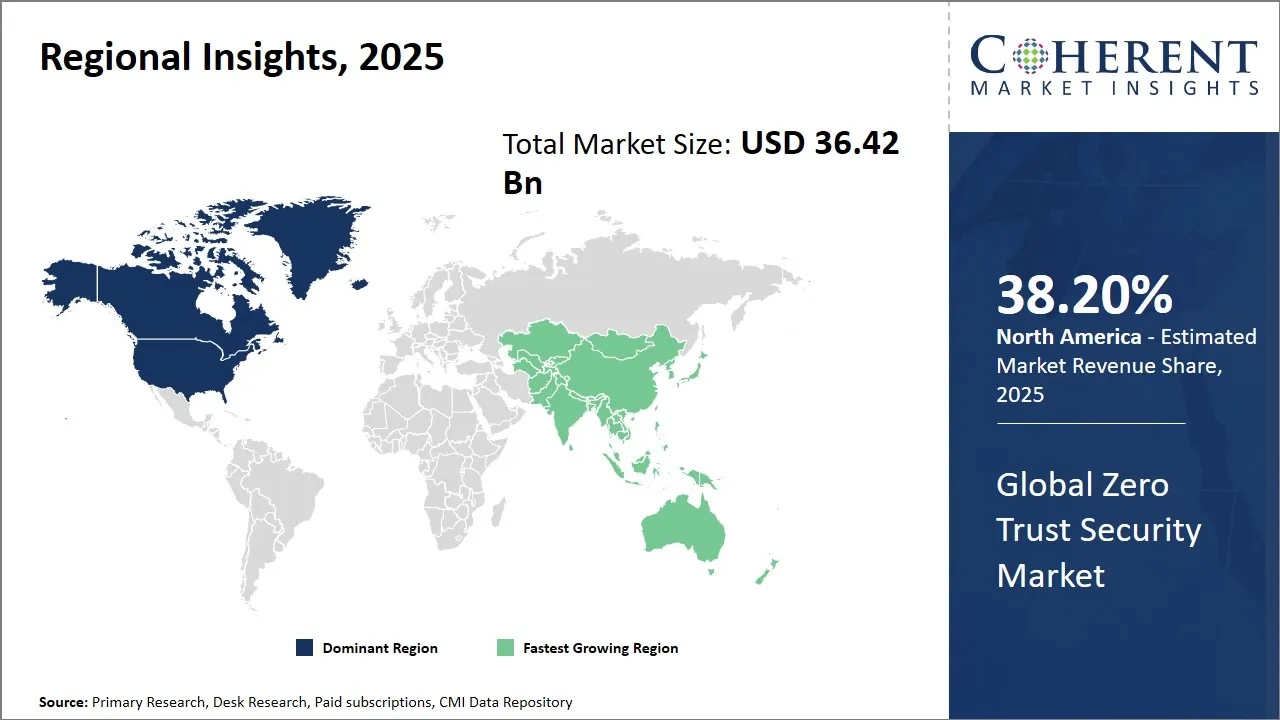
North America Zero Trust Security Market Analysis and Trends
North America, holding a share of 38.2% in 2026, is expected to dominate the global zero trust security market. This stems from a mature technology ecosystem, robust government support for cybersecurity initiatives, and the presence of leading technology enterprises fostering innovation in security frameworks. The region benefits from stringent compliance regulations such as HIPAA, FISMA, and the NIST Cybersecurity Framework, encouraging widespread adoption of Zero Trust architectures across enterprises and government agencies.
Moreover, the intense cyber threat landscape in North America motivates continuous investments in advanced security solutions. Prominent companies such as Palo Alto Networks, Cisco Systems, and Microsoft have been pivotal, offering comprehensive Zero Trust platforms and driving market-wide awareness. Additionally, various collaborations between private and public sectors accelerate solution deployments, enhancing network visibility and access controls.
Asia Pacific Zero Trust Security Market Analysis and Trends
The Asia Pacific region, holding a share of 19.7% in 2026, is expected to exhibit the fastest growth in the zero trust security market due to rapid digital transformation across multiple industries, increasing cloud adoption, and expanding internet penetration. Governments in countries like India, China, Australia, and Japan are actively promoting cybersecurity frameworks to protect critical infrastructure and support their evolving digital economies. The diverse market ecosystem, including emerging startups and established IT service providers, fosters innovation tailored to local needs.
Trade dynamics, such as growing cross-border data flows and heightened regional cybersecurity threats, amplify the urgency for Zero Trust implementations. Companies such as Huawei, Trend Micro, and CyberArk are significantly contributing by adapting global solutions to regional compliance requirements and language preferences, increasing market traction.
Zero Trust Security Market Outlook for Key Countries
U.S. Zero Trust Security Market Analysis and Trends
The U.S. is characterized by early adoption of Zero Trust Security models, driven by strong legislative frameworks and extensive collaboration between government and private sectors. Major organizations are continually investing in upgrading legacy security infrastructures to Zero Trust architectures. Industry giants like Microsoft, Palo Alto Networks, and Okta play a dominant role by offering scalable, integrated solutions across cloud and on-premise environments. U.S. federal initiatives and frameworks consistently promote Zero Trust as a security standard, further solidifying the country’s leadership position.
China Zero Trust Security Market Analysis and Trends
China is distinguished by significant government initiatives focusing on cybersecurity resilience and digital sovereignty. The country integrates Zero Trust principles to secure its expanding digital infrastructure amid increased cyber threats and geopolitical considerations. Domestic companies such as Huawei and Qihoo 360 lead development and deployment of locally compliant security solutions, with strong support from state policies advocating for secure cloud and network environments. Cybersecurity law compliance drives enterprises to adopt Zero Trust frameworks to ensure data protection and internal visibility.
India Zero Trust Security Market Analysis and Trends
India is rapidly expanding due to government programs emphasizing digital inclusion and cybersecurity enhancement, such as the National Cyber Security Strategy. The growing number of SMEs and enterprises adopting cloud and IoT technologies fuel demand for Zero Trust solutions. Companies like Quick Heal Technologies and Lucideus are innovating with AI-driven security platforms to address scalable Zero Trust demands across sectors like BFSI, IT, and government. Additionally, partnerships with global firms bring advanced capabilities adapted to the Indian market environment.
Germany Zero Trust Security Market Analysis and Trends
Germany continues to lead the Europe in adopting Zero Trust Security, motivated by stringent data protection regulations such as GDPR and rising cyber awareness among industrial and manufacturing sectors. The country’s strong industrial base demands sophisticated security to protect operational technology (OT) alongside IT systems. Firms including Siemens and Deutsche Telekom are actively integrating Zero Trust principles into their security infrastructure, supporting secure Industry 4.0 transformations and enabling resilient supply chain management.
Australia Zero Trust Security Market Analysis and Trends
Australia gains momentum through government-led cybersecurity strategies and increasing digital enterprise growth. With proactive regulatory frameworks and collaboration with international cybersecurity alliances, Australian organizations prioritize Zero Trust to mitigate risks associated with cloud migration and remote work trends. Key players like Telstra and CyberCX contribute by delivering custom Zero Trust services and consulting, helping businesses across finance, healthcare, and infrastructure sectors strengthen their cybersecurity posture.
Market Players, Key Development, and Competitive Intelligence
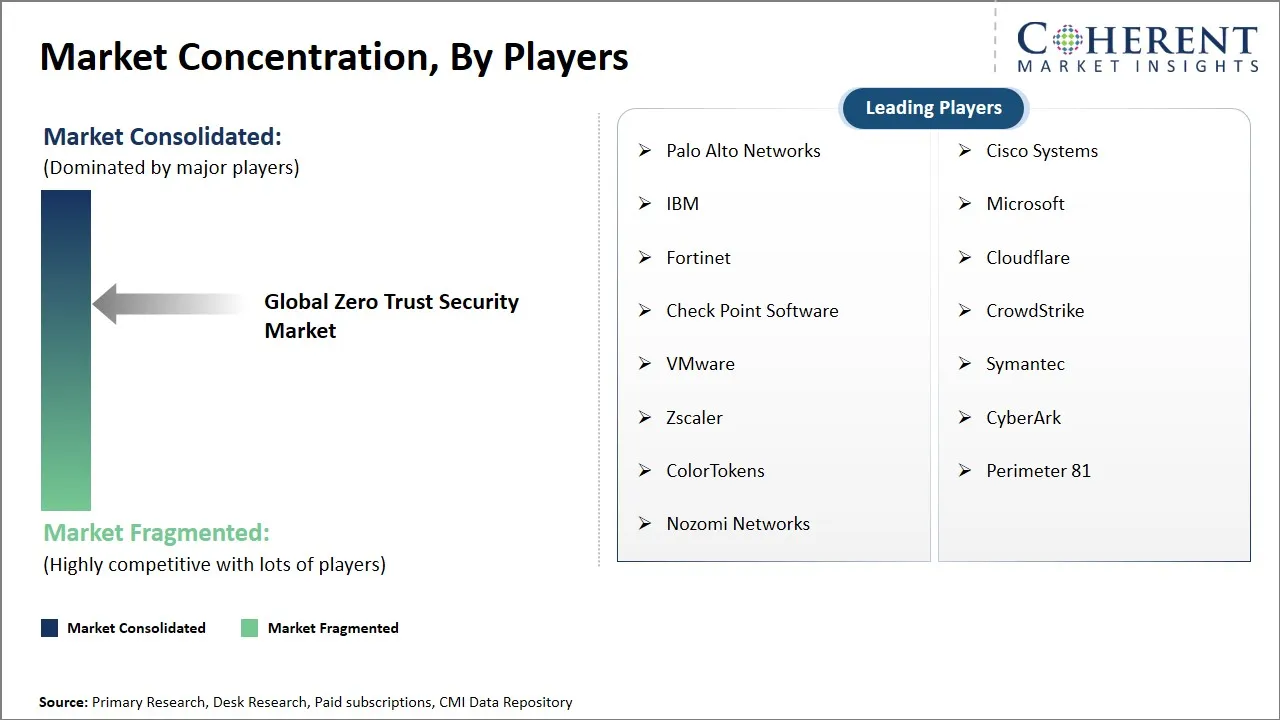
Key Developments
- On July 30, 2025, Palo Alto Networks, the global cybersecurity leader, and CyberArk, the global leader in Identity Security, announced that they have entered into a definitive agreement under which Palo Alto Networks will acquire CyberArk. This strategic combination will mark Palo Alto Networks' formal entry into Identity Security, establishing it as a core pillar of the company's multi-platform strategy.
- In June 2025, Zscaler, Inc., the leader in cloud security, announced a new suite of solutions that enable customers to quickly adopt Zero Trust Everywhere. These innovations extend the reach of true Zero Trust and enable businesses to modernize and scale securely by providing end-to-end segmentation between and inside branches and enhance security across multi-cloud environments.
- In May 2025, ColorTokens Inc., a leader in zero trust microsegmentation, announced a new integration with Nozomi Networks, the leader in OT and IoT cybersecurity. This collaboration delivers unparalleled visibility and protection across operational environments - seamlessly uniting Nozomi Networks' AI-powered threat monitoring with ColorTokens' breach-ready microsegmentation.
- In April 2024, Tektronix, Inc., a provider in test and measurement solutions, acquired EA Elektro-Automatik (EA), a principal supplier of high-power electronic test solutions for energy storage, mobility, hydrogen, and renewable energy applications. The introduction of EA to the Tektronix team provides the company with expanded solutions, leveraging Tektronix’s industry-leading oscilloscopes and isolated probes, EA’s high-efficiency power supplies and electronic loads, and Keithley’s high-precision source meters and instrumentation.
Top Strategies Followed by Zero Trust Security Market Players
- Established market leaders emphasize heavy investments in research and development to continuously innovate and enhance the performance of their security solutions.
- Palo Alto Networks continues to invest heavily in R&D, evident in its 2025 launch of AI-powered enhancements in its Cortex XSIAM platform.
- Mid-level players in the Zero Trust Security market adopt a different but equally effective approach, concentrating on delivering cost-effective solutions that strike a balance between quality and affordability.
- Perimeter 81, now a part of Check Point Software, focuses on delivering affordable, cloud-native zero trust network access (ZTNA) for SMEs.
- Small-scale players in the market adopt niche strategies to survive and thrive amidst intense competition. These companies focus on developing specialized features or innovative solutions that differentiate them from larger competitors.
- ColorTokens targets niche markets like healthcare and industrial OT environments with microsegmentation and workload protection tailored to non-traditional IT environments.
Market Report Scope
Zero Trust Security Market Report Coverage
| Report Coverage | Details | ||
|---|---|---|---|
| Base Year: | 2025 | Market Size in 2026: | USD 42.39 Bn |
| Historical Data for: | 2020 To 2024 | Forecast Period: | 2026 To 2033 |
| Forecast Period 2026 to 2033 CAGR: | 16.4% | 2033 Value Projection: | USD 122.73 Bn |
| Geographies covered: |
| ||
| Segments covered: |
| ||
| Companies covered: | Palo Alto Networks, Cisco Systems, IBM, Microsoft, Fortinet, Cloudflare, Check Point Software, CrowdStrike, VMware, Symantec, Zscaler, CyberArk, ColorTokens, Perimeter 81, and Nozomi Networks | ||
| Growth Drivers: |
| ||
| Restraints & Challenges: |
| ||
Market Dynamics
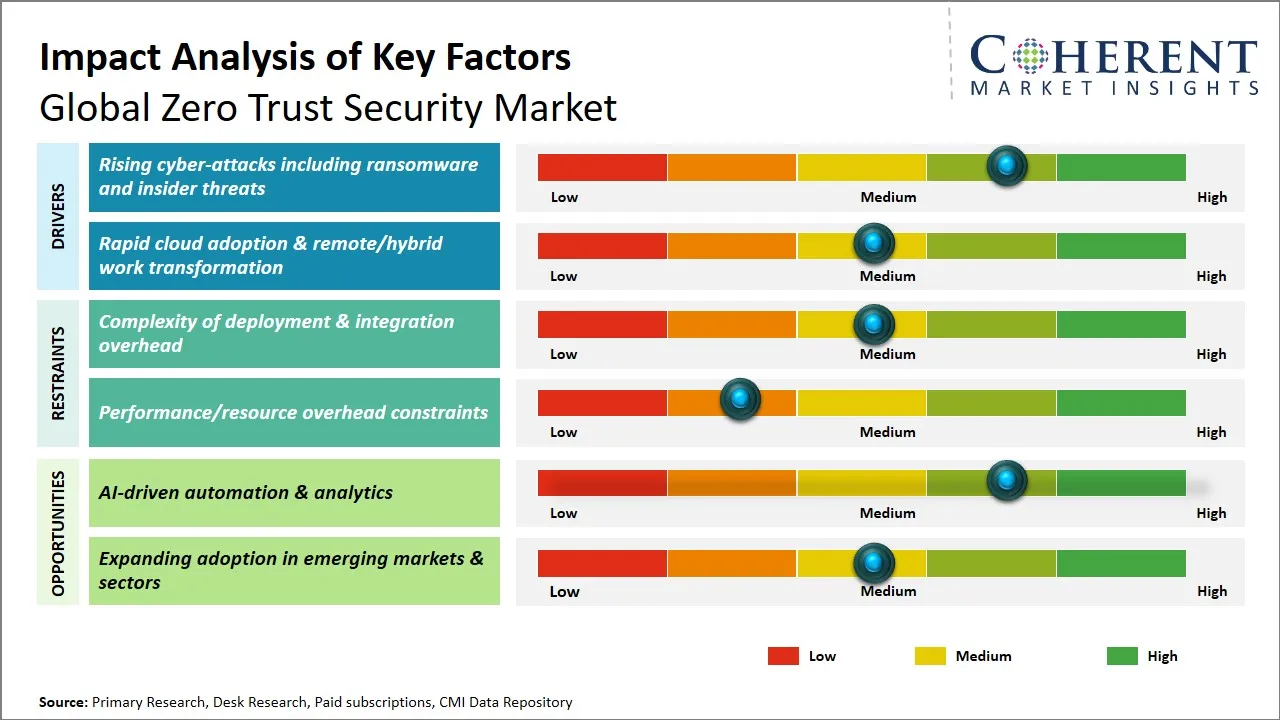
Global Zero Trust Security Market Driver – Rising Cyber ‑ Attacks Including Ransomware and Insider Threats
Organizations across various sectors face increasing challenges in protecting sensitive data and critical infrastructure from malicious actors who exploit traditional perimeter-based defenses. Ransomware attacks have evolved to not only encrypt data but also exfiltrate information, amplifying the potential damage and financial repercussions. In February 2025, Singapore’s Ministry of Health (MOH) reported a major attempted ransomware breach targeting its HealthHub portal.
At the same time, insider threats—whether intentional or accidental—pose a persistent risk that is difficult to detect with conventional security models. Zero Trust Security, with its principle of “never trust, always verify,” ensures continuous authentication and strict access controls, effectively mitigating these risks by limiting lateral movement within networks.
Global Zero Trust Security Market Opportunity – AI-Driven Automation & Analytics in the Global Zero Trust Security Market
As cyber threats become increasingly sophisticated, organizations demand more proactive, intelligent solutions that can provide real-time threat detection and response. AI technologies enable the automation of routine security tasks such as identity verification, anomaly detection, and access management, thereby reducing human error and operational costs while enhancing overall security posture. Zscaler has integrated AI-based microsegmentation into its Zero Trust Exchange platform, enabling dynamic policy enforcement based on user behavior and workload telemetry.
Moreover, AI-powered analytics offer deep insights into user behavior, network traffic, and potential vulnerabilities, facilitating a more granular implementation of Zero Trust principles. This capability allows for continuous monitoring and dynamic access control, which adapts instantly to emerging threats or changes in user context. Enterprises are also leveraging machine learning algorithms to predict attack patterns and identify zero-day vulnerabilities before they can be exploited.
Analyst Opinion (Expert Opinion)
- With the explosion of cloud workloads and remote endpoints, AI is enabling real-time behavioral analytics, automated threat hunting, and adaptive access policies. Vendors like Palo Alto Networks and Zscaler are leading this shift by embedding machine learning into their platforms, making zero trust architectures smarter, faster, and more resilient.
- Traditionally focused on IT, zero trust is now being extended to critical infrastructure—especially in manufacturing, energy, and healthcare. Companies like ColorTokens and Nozomi Networks are delivering tailored solutions that microsegment and secure industrial networks where legacy systems lack modern protections.
- Emerging technologies such as biometric-backed identity, passwordless authentication, and decentralized identity (DID) systems are transforming how trust is established. These are critical for securing hybrid workforces and third-party access, as seen in partnerships like Okta and Palo Alto’s AI-integrated zero trust identity framework.
Speak to the analyst
Want personalized insights?
Take the findings above to one of our principal consultants, or have the report rebuilt around the segments, geographies and competitors you actually track.
Market Segmentation
- Offering Insights (Revenue, USD Bn, 2021 - 2033)
- Solutions
- Services
- Security Type Insights (Revenue, USD Bn, 2021 - 2033)
- Network Security
- Endpoint Security
- Data Protection
- Others
- Regional Insights (Revenue, USD Bn, 2021 - 2033)
- North America
- U.S.
- Canada
- Latin America
- Brazil
- Argentina
- Mexico
- Rest of Latin America
- Europe
- Germany
- U.K.
- Spain
- France
- Italy
- Russia
- Rest of Europe
- Asia Pacific
- China
- India
- Japan
- Australia
- South Korea
- ASEAN
- Rest of Asia Pacific
- Middle East
- GCC Countries
- Israel
- Rest of Middle East
- Africa
- South Africa
- North Africa
- Central Africa
- North America
- Key Players Insights
- Palo Alto Networks
- Cisco Systems
- IBM
- Microsoft
- Fortinet
- Cloudflare
- Check Point Software
- CrowdStrike
- VMware
- Symantec
- Zscaler
- CyberArk
- ColorTokens
- Perimeter 81
- Nozomi Networks
Sources
Primary Research Interviews
Stakeholders
- CISOs and IT Security Managers at Fortune 500 Enterprises
- Zero Trust Solution Architects and Network Engineers
- Cybersecurity Vendors (e.g., Zscaler, Palo Alto Networks, Fortinet, etc.)
- Cloud Service Providers (e.g., AWS, Azure, GCP Security Teams)
- Managed Security Service Providers (MSSPs)
- Government Cybersecurity Policy Advisors and Compliance Officers
- Security Analysts at Financial Institutions and Healthcare Networks
Databases
- U.S. Cybersecurity Infrastructure Security Agency (CISA) Reports
- National Cyber Security Centre (NCSC) UK
- Department of Homeland Security Cyber Statistics
- Asia Pacific CERT Reports Database
- European Union Agency for Cybersecurity (ENISA) Metrics Archive
Magazines
- CSO Magazine (Cybersecurity Strategy & Operations)
- SC Media: Cybersecurity News & Trends
- Cyber Defense Magazine
- Network Security Monthly
- Enterprise Security Weekly
Journals
- International Journal of Information Security
- Journal of Cybersecurity & Digital Trust
- IEEE Transactions on Dependable and Secure Computing
- Journal of Information Security and Applications
- Computers & Security (Elsevier)
Newspapers
- The Cyberwire Daily Brief
- TechCrunch Security Section
- The Register (UK Tech & Security News)
- Business Standard – Cybersecurity Column (India)
- The Wall Street Journal – Cyber Risk Section
Associations
- Cloud Security Alliance (CSA)
- ISACA – Information Systems Audit and Control Association
- International Association for Privacy Professionals (IAPP)
- National Cybersecurity Alliance (USA)
- Asia Pacific Cyber Security Council
- Zero Trust Security Forum (ZTSF), Singapore
Public Domain Sources
- U.S. National Institute of Standards and Technology (NIST) – Zero Trust Architecture Guidelines
- European Union Agency for Cybersecurity (ENISA)
- UNCTAD – United Nations Cybersecurity Reports
- World Bank Cybersecurity Capacity Database
- OECD Digital Economy Outlook
- ResearchGate (Zero Trust Security Publications)
Proprietary Elements
- CMI Data Analytics Tool, Proprietary CMI Existing Repository of information for last 8 years
Get access to 250+ pages report
Every segment, forecast, competitor profile and data table behind the analysis above — available for instant download.
- ESOMAR Member
- ISO 9001:2015 Certified
- D-U-N-S Registered
- GDPR & CCPA Compliant
Missing comfort of reading report in your local language? Find your preferred language:
Transform your Strategy with Exclusive Trending Reports
Frequently Asked Questions
The global zero trust security market is estimated to be valued at USD 42.39 billion in 2026 and is expected to reach USD 122.73 billion by 2033.
The CAGR of global zero trust security market is projected to be 16.4% from 2026 to 2033.
Rising cyber‑attacks including ransomware and insider threats and rapid cloud adoption & remote/hybrid work transformation are the major factors driving the growth of the global zero trust security market.
Complexity of deployment & integration overhead and performance/resource overhead constraints are the major factors hampering the growth of the global zero trust security market.
In terms of offering, solutions is estimated to dominate the market revenue share in 2026.
Zero Trust is a security framework that assumes no user or device is trustworthy by default, requiring continuous verification of identity and access at every stage.
AI enables real-time threat detection, automated access control, and behavioral analytics, improving the scalability and intelligence of zero trust frameworks.