Blister Packaging Market Analysis & Forecast: 2026-2033
The blister packaging market is estimated to be valued at USD 36.79 Bn in 2026 and is expected to reach USD 61.43 Bn by 2033, growing at a compound annual growth rate (CAGR) of 7.6% from 2026 to 2033.
The blister packaging market is expanding quickly as pharmaceuticals, consumer goods, and food industries increasingly demand it. Manufacturers provide secure, tamper-evident, and convenient packaging solutions that improve product protection and ensure consumer safety. Innovations in smart packaging and the use of sustainable materials drive higher adoption rates. Advances in manufacturing technologies like thermoforming support the needs of e-commerce and retail sectors. Stricter regulatory requirements and growing consumer preference for eco-friendly packaging also actively contribute to the market’s growth.
|
Current Events |
Description and its impact |
|
Global Supply Chain Disruptions Due to Ongoing Geopolitical Tensions |
|
|
Rising Environmental Regulations and Sustainability Initiatives |
|
|
Regional Economic Fluctuations and Market Dynamics |
|
Uncover macros and micros vetted on 75+ parameters: Get instant access to report
The eco-friendly blister packaging industry is transforming traditional pharmaceutical and consumer goods packaging by introducing sustainable alternatives to conventional plastic-aluminum combinations. Traditionally difficult to recycle, blister packs are now being reengineered using recyclable materials like polyethylene terephthalate (PET), which significantly reduce environmental impact. These innovations aim to lower carbon footprints, eliminate harmful materials like polyvinyl chloride (PVC), and improve recyclability.
In October 2024, Bayer, in collaboration with Liveo Research, introduced the healthcare industry's first polyethylene terephthalate (PET) blister packaging for its Aleve brand. This innovation eliminates polyvinyl chloride (PVC) and cuts the packaging’s carbon footprint by 38%. Blister packs, commonly used in over-the-counter products, are typically hard to recycle due to their mixed materials. Launching initially in the Netherlands, Bayer plans to expand this sustainable packaging across its entire product line in the coming years.
Blister Cards hold the largest market share of 38.6% in 2026. Blister cards are rigid, environmentally friendly plastic containers that are thermoformed around a product or portions of a product. Products are shielded from damage during storage and transportation by the stiff blister section, while the paper backing offers stability and openability. Blister cards offer a strong defense against oxygen, moisture, and other environmental contaminants, extending the shelf life of medications, medical supplies, and small gadgets. Furthermore, their own chambers are designed to avoid the friction and damage that unsecured products can experience during shipping.
To learn more about this report, Download Free Sample
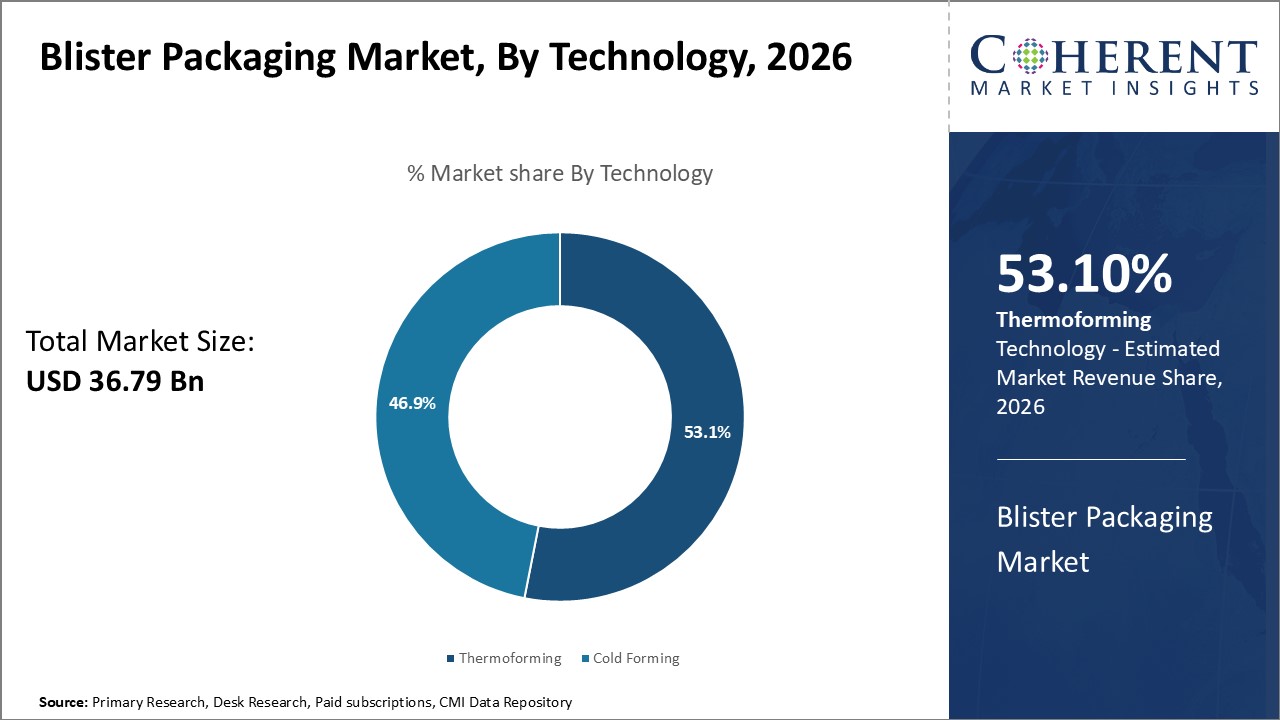
Thermoforming expected to hold the largest blister packaging market share of 43.1% in 2026. Pressure and heat are used to thermoform plastic sheets into precisely shaped cavities that fit objects. It may produce intricate blister forms around irregularly shaped items, including pharmaceutical capsules, without compromising product safety, unlike cold forming. This prevents damage to delicate items during storage and distribution. Thermoforming significantly cuts waste throughout the production process when compared to other manufacturing methods, which further lowers the quantity of plastic utilized. Blister manufacturers also find the automation benefits of thermoforming technology appealing. On an assembly line, thermoforming allows for the rapid and continuous production of several identical blister packs with minimal human intervention.
For instance, in October 2024, ExxonMobil has launched its Signature Polymers portfolio to enhance service and partnerships in the polymers industry, and, with key partners, developed a fully recyclable thermoformed packaging with 95% polyethylene content.
Plastic acquired the prominent market share of 42.7% in 2026. PVC, PVDC, and PET are among the plastics that exhibit exceptional stability and resilience to distribution circumstances. They provide a barrier around products to protect them from external elements like humidity, extending their shelf life. Furthermore, food and drugs are shielded from deterioration caused by oxygen and carbon dioxide penetration by plastic blister packaging. The impermeable quality of polymers such as polyvinyl chloride (PVC) and polyethylene terephthalate (PET) is a crucial component in prolonging the shelf life of products. They function as effective barriers against the moisture and gases that lead to reactions that compromise the quality of medicinal and food compositions.
For instance, in November 2024, Switzerland-based Bayer has launched PET blister packaging for its Aleve brand, calling it a healthcare industry first and a sustainable alternative to traditional plastic-aluminum blister packs.
The pharmaceutical industry's blister packaging market is driven by the requirement for patient-friendly, tamper-evident, and safe packaging that ensures drug safety and accurate dose. Blister packs help patients comply with regulations by providing convenient unit-dose formats and protecting sensitive drugs from environmental damage. Regulations that enforce traceability and safety promote greater use. The demand for effective drug delivery is increased by an aging population and an increase in chronic illnesses, while advancements in smart packaging improve supply chain efficiency and product authentication.
For instance, in May 2025, Aptar CSP Technologies expanded its services by launching a cGMP-compliant manufacturing facility in New Jersey to support clinical packaging for OSD and capsule-based DPI drugs using its Activ-Polymer and Activ-Blister solutions
To learn more about this report, Download Free Sample
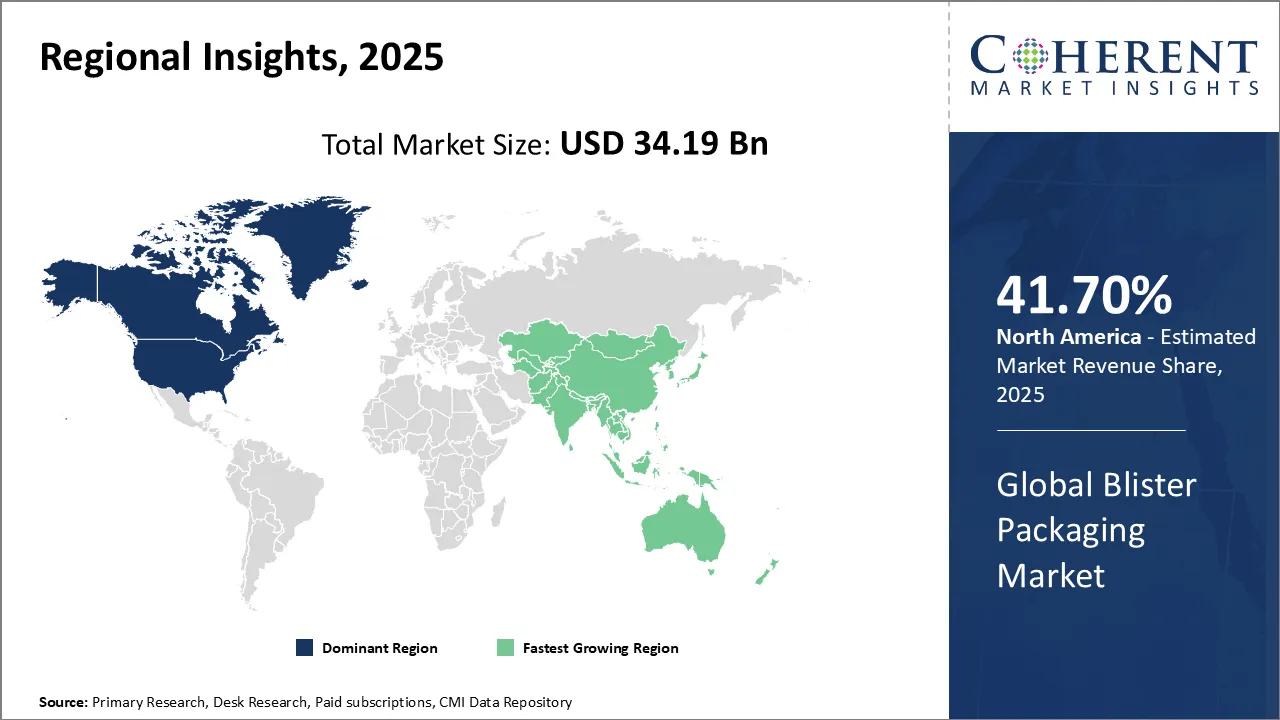
North America dominates the overall market with an estimated share of 41.7% in 2026. The need for safe, tamper-evident, and patient-friendly packaging that guarantees medication safety and precise dosage is what propels the blister packaging market in the pharmaceutical sector. By offering simple unit-dose formats and shielding delicate medications from environmental harm, blister packs assist patients in adhering to laws. More use is encouraged by laws that enforce safety and traceability. An aging population and a rise in chronic illnesses raise the need for efficient drug delivery, while developments in smart packaging enhance product identification and supply chain efficiency.
For instance, in January 2024, TekniPlex Healthcare, based in Wayne, Pennsylvania, partnered with Alpek Polyester to launch a pharmaceutical-grade PET blister film containing 30% post-consumer recycled (PCR) monomers.
The growth of the pharmaceutical business and increased awareness of healthcare issues are driving the blister packaging industry's rapid expansion in the Asia Pacific region. Manufacturers focus on offering cost-effective packaging solutions that ensure product safety and extend shelf life. They are investing more in automation and advanced manufacturing technology to boost production efficiency. The growing need for tamper-evident and easy packaging in emerging economies has an impact on market trends. Environmental concerns also motivate companies to employ sustainable materials in compliance with regional regulations and consumer preferences.
For instance, Catalent has expanded its primary packaging capabilities at its Shiga, Japan, clinical supply facility by adding a high-speed blister packaging line to complement its existing automated bottling line.
US companies are advancing the blister packaging sector by combining state-of-the-art technology with strict regulatory compliance. They prioritize tamper-evident and kid-resistant features in order to meet safety laws and protect consumers. The growing focus on sustainable packaging encourages the use of recyclable and eco-friendly materials. The rise of tailored medicine is also driving the need for customizable blister packs. Furthermore, robust, lightweight packaging that attracts customers and preserves product integrity throughout shipping is essential in the expanding e-commerce sector.
For instance, in February 2024, ViiV Healthcare, a global HIV-focused company, has announced the launch of Dovato in a new blister pack format in the US. This is further accelerating the blister packaging market revenue.
China's blister packaging market is expanding rapidly as a result of the nation's thriving pharmaceutical and consumer products sectors. Manufacturers focus on offering high-quality, cost-effective packaging that protects products and extends shelf life. They are investing in automation and advanced production technology to boost output and efficiency. Growing health concerns and stricter regulations are driving up demand for safe, tamper-evident packaging. At the same time, as consumer preferences shift toward greener products, companies are being compelled by national rules to employ sustainable materials.
The blister packaging market is evolving with smart packaging technologies integrating QR codes, NFC tags, and sensors. These innovations enhance product traceability, combat counterfeiting, and provide real-time information to consumers. Brands are leveraging this trend to improve consumer engagement and build transparency across the supply chain, transforming traditional packaging into interactive platforms.
Eco-consciousness is reshaping blister packaging choices, with a growing emphasis on biodegradable films, recycled plastics, and compostable laminates. Manufacturers are innovating to balance environmental impact and product protection. This trend reflects both regulatory pressures and consumer demand for greener packaging solutions that reduce landfill waste without compromising safety or shelf life.
The surge in self-medication and OTC drug consumption presents an opportunity for blister packaging innovations. Consumers prefer easy-to-carry, single-dose formats that enhance convenience and compliance. Packaging designs that combine safety with portability and clear dosage instructions appeal strongly to this segment, driving demand for versatile blister solutions tailored to OTC products.
| Report Coverage | Details | ||
|---|---|---|---|
| Base Year: | 2025 | Market Size in 2026: | USD 36.79 Bn |
| Historical Data for: | 2020 To 2024 | Forecast Period: | 2026 To 2033 |
| Forecast Period 2026 to 2033 CAGR: | 7.6% | 2033 Value Projection: | USD 61.43 Bn |
| Geographies covered: |
|
||
| Segments covered: |
|
||
| Companies covered: |
Amcor PLC, Blisters Inc., Honeywell International Inc., Blisterpak Inc., VisiPak, Sonoco Products Company, Powerpak Industries L.L.C., Clearwater Packaging Inc., Constantia Flexibles GmbH, Westrock Company, Algus Packaging Inc., Abhinav Enterprises, Uno Plast, Nithiya Enterprises, Thermopack, VisiPak, Sudham Packaging Industries, Entek Corporation, Grotal, and Nirmala Industries |
||
| Growth Drivers: |
|
||
| Restraints & Challenges: |
|
||
Uncover macros and micros vetted on 75+ parameters: Get instant access to report
Share
Share
Shivam Bhutani has 6 years of experience in market research and strategy consulting. He is a Market Research Consultant with strong analytical background. He is currently an MBA candidate specializing in Business Analytics from BITS Pilani.
He is adept at navigating diverse roles from sales and marketing to research and strategy consulting. He excels in market estimation, competitive intelligence, pricing strategy, and primary research. He is skilled at analysing large datasets to provide precise insights, helping clients in achieving strategic transformation across various industries. He is skilled in leveraging data visualization techniques to drive innovation and enhance business processes.
Joining thousands of companies around the world committed to making the Excellent Business Solutions.
View All Our Clients