

Acne Therapeutics Market Analysis & Forecast: 2026-2033
Acne Therapeutics Market is estimated to be valued at USD 7,493.8 Mn in 2026 and is expected to reach USD 10,130.0 Mn in 2033, exhibiting a compound annual growth rate (CAGR) of 4.4% from 2026 to 2033.
Key Takeaways
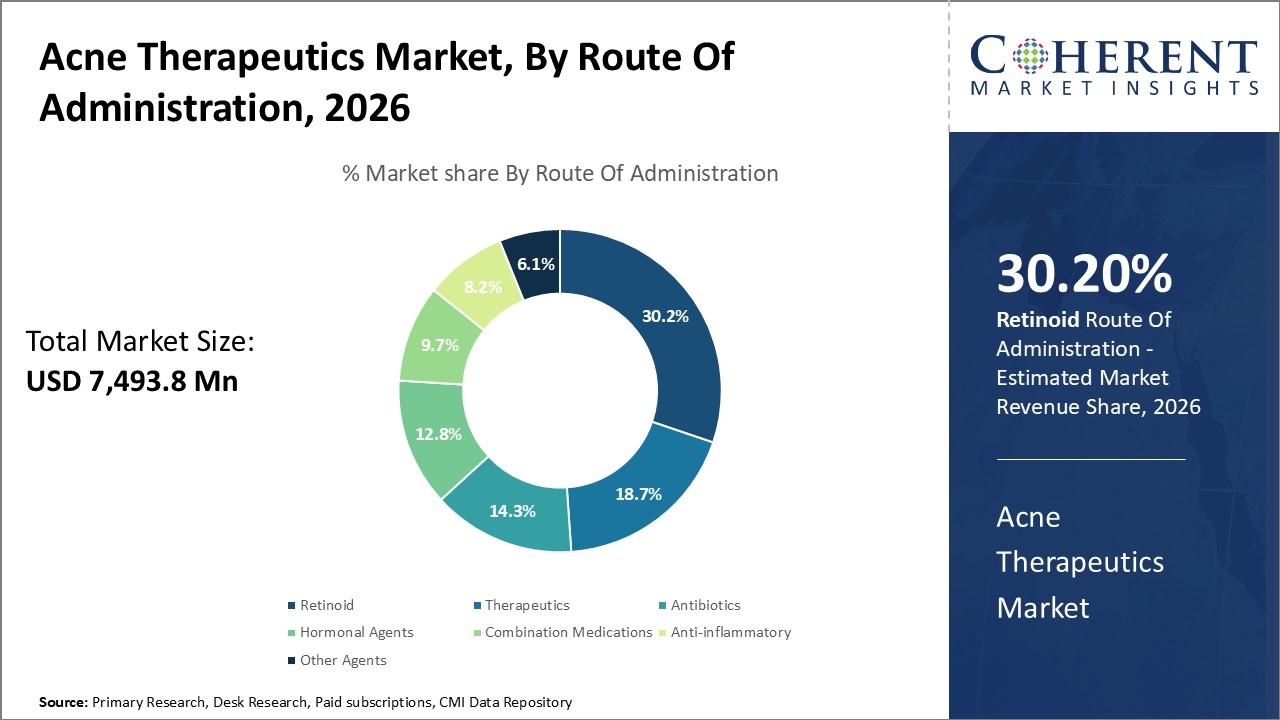
- Based on Treatment, the Retinoid segment is expected to capture the largest share of the market in 2026, due to their proven efficacy, versatility, and enhanced tolerability.
- Based on Route of Administration, the Topical segment is expected to hold 62% share of the market in 2026, driven by convenience and consumer preference.
- Based on Region, North America is set to lead the market with 46.5% share in 2026. While, Asia Pacific is anticipated to be the fastest growing region.
Market Overview
The global acne therapeutics market is experiencing strong growth due to the growing prevalence of acne and high demand for safe and effective acne therapeutics. Moreover, increasing research and development and growing awareness among people about available treatment options is expected to propel the growth of the market. However, factors such as high demand for generic drugs and safety issues regarding acne products are expected to hamper the market growth.
Current Event and their Impact on the Acne Therapeutics Market
Current Event | Description and its Impact |
Advanced AI-Driven Personalized Treatment Development |
|
Regulatory Harmonization and Approval Pathway Changes |
|
Role of Artificial Intelligence (AI) in Acne Therapeutics Market
AI is changing the market for acne therapeutics by offering care faster, more personalized, and easier to get. AI-powered platforms examine pictures of skin to figure out the severity of the acne is, keep track of how it gets better, and suggest treatments that are right for you. These systems cut down on the need for in-person dermatology visits, which can be hard to get and take a long time. AI also speeds up the process of finding new drugs by finding promising compounds and predicting how well they will work.
Companies like Nolla Health are combining AI with telemedicine and personalized medication delivery to make complete digital dermatology solutions. As the need for effective acne treatment grows, AI is ready to lead the way in new ideas, better results, and wider reach in both clinical and consumer markets.
For instance, in September 2025, Nolla Health, a Norwegian startup, launched its AI-powered acne treatment app in the U.S. It offers personalized skin scans, plans reviewed by doctors, and medications made just for you. The company wants to change how dermatology is accessed in more than 40 states, with the help of a $4.5 million seed round and a new headquarters in New York City. They have already treated over 50,000 patients around the world.
- Current Industry Events of 2026
- Market Size Estimation
- Regional Breakdown
- Competitive Landscape
- Customer Intelligence
- Segmental Analysis
- Pricing Analysis
- Key Market Drivers, Challenges & Future Trends
- Customized Insights Section
Segmental Insights
Acne Therapeutics Market Insights, By Treatment: Retinoids Lead Is Due to Their Proven Efficacy, Versatility, And Enhanced Tolerability
In terms of treatment, the retinoid segment is projected to account the largest share of the market in 2026. These vitamin A derivatives are widely recognized for their ability to normalize skin cell turnover, reduce inflammation, and prevent the formation of comedones (clogged pores).
Their effectiveness in treating both inflammatory and non-inflammatory acne makes them a cornerstone in dermatological prescriptions. Retinoids are available in both topical and oral forms, offering flexibility in treatment plans depending on acne severity.
Moreover, the introduction of newer-generation retinoids with improved tolerability and reduced irritation has expanded their appeal among patients. Their inclusion in combination therapies, often paired with antibiotics or benzoyl peroxide is further enhances their efficacy and market share.
For instance, in August 2025, the USFDA approved Alembic Pharmaceuticals' Tretinoin Cream USP, a topical retinoid that is used to treat acne vulgaris. The product offers in strengths of 0.025%, 0.05%, and 0.1% and adds to Alembic's dermatology portfolio. It also shows that retinoids are a vital form of medicine for treating acne.
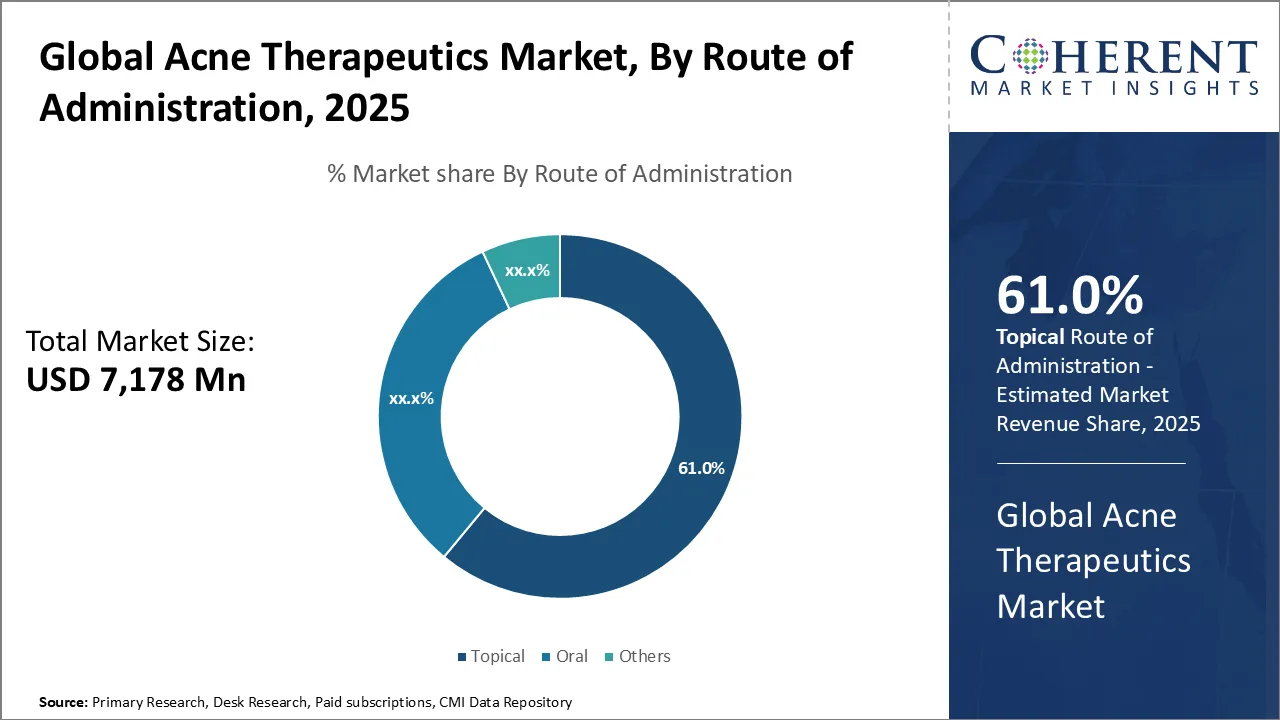
Acne Therapeutics Market Insights, By Route of Administration: Topical Treatments Dominance Is Driven by Convenience and Consumer Preference
In terms of route of administration, the topical segment is expected to lead the market with 62% share in 2026. This preference is largely due to the convenience, localized action, and minimal systemic side effects associated with topical products.
Creams, gels, lotions, and foams containing active ingredients like retinoids, benzoyl peroxide, salicylic acid, and antibiotics are widely used for mild to moderate acne. The rise of over-the-counter (OTC) formulations and the increasing popularity of skincare brands offering dermatologist-recommended products have significantly contributed to the growth of this segment.
Additionally, the trend toward self-care and the influence of social media on skincare awareness have led to a surge in demand for topical solutions. These products are often the first line of defense against acne and are favored for their accessibility and affordability.
Innovations in drug delivery systems, such as microencapsulation and nanotechnology, are also enhancing the efficacy and user experience of topical treatments, reinforcing their market dominance.
For instance, in November 2025, Brazil approved Winlevi (clascoterone) cream 1%, making this new topical acne treatment available to more people around the world. Winlevi is safe for people 12 and older. It works by blocking androgen receptors in the skin, which lowers inflammation and sebum production. Its new way of working adds to the growing importance of new topical treatments for acne.
Regional Insights
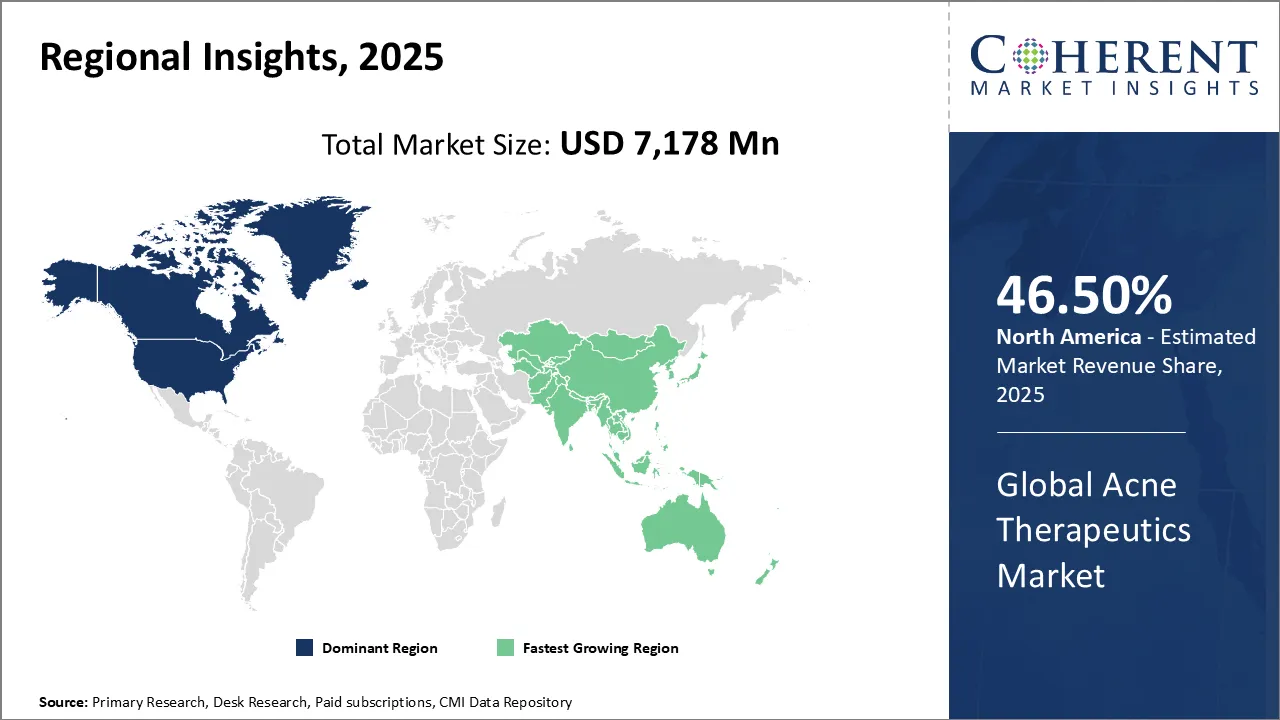
North America Acne Therapeutics Market Analysis & Trends
Among regions, North America is expected to gain highest share of 46.50% in the market during the forecast period due to the growing burden of acne, increasing awareness among the population, increasing demand for safe and effective acne therapeutics, and introduction of novel products in the region. For instance, according to the American Academy of Dermatology (AAD), acne is a most common skin condition in the United States, affecting up to 50 million people annually. Acne usually begins in puberty and affects many adolescents and young adults. More than 85 percent of people between the ages of 12 and 24 experience at least minor acne.
For instance, in October 2026, Sunshine Biopharma added generic doxycycline to its line of antibiotics in Canada. The broad-spectrum antibiotic is an inexpensive method to treat a number of infections, including acne. This launch makes Sunshine a bigger player in the Canadian pharmaceutical market and helps meet the growing need for effective, easy-to-get acne treatments in North America.
Asia Pacific Acne Therapeutics Market Analysis & Trends
Asia Pacific is anticipated to be the fastest growing region, due to the presence of young population in large quantity, acne is becoming more common, and people are becoming more mindful of skin care. Urbanization, higher disposable income, and better access to dermatological care are factors that help the market grow even further. Consumers are also interested in effective topical and prescription treatments owing to the popularity of K-beauty trends and the power of social media. According to the report Published via Great Eastern Medical School and Hospital, in Asian countries, the rate of acne is 33% in China, 34% in Malaysia, and 56% in Saudi Arabia.
For instance, in July 2026, Hyphens Pharma launched Winlevi (clascoterone cream 1%) in Singapore and Malaysia, bringing a new topical acne treatment to Southeast Asia. Winlevi is approved for people 12 and older. It works by blocking androgen receptors in the skin, which is a new way to lower sebum and inflammation. The business wants to grow further in the area.
Acne Therapeutics Market Outlook Country-Wise
The U.S. Acne Therapeutics Market Trends
In 2026, the U.S. Acne Therapeutics Market will continue to be extremely active as acne is common in people of all ages, consumers are becoming more aware of skincare, and getting advanced dermatological treatments. The market is growing due to more people are using topical retinoids, hormonal agents, and combination therapies, and more individuals prefer over-the-counter (OTC) solutions. This takes place at the same time as cosmetic and wellness trends are growing.
For instance, in October 2026, Indomo, a company based in San Francisco, has raised $25 million to make an injectable acne treatment for home use. The goal is to change the acne treating way with a solution that is minimally invasive and easy to use. The funding is expected to assist with clinical development and getting regulatory approvals.
China Acne Therapeutics Market Trends
The acne therapeutics market in China is doing well in 2026 as there is an abundance of teenagers, pollution in cities is getting worse, and people are becoming more aware of skin care. The rise in demand is due to the popularity of beauty and wellness trends, as well as easier access to dermatological care and online shopping sites. Government support for new ideas in healthcare also helps spread the use of advanced acne treatments across the country.
For instance, in August 2026, Kintor Pharmaceutical stated that the Phase II trial results for GT20029 gel in China were acceptable. The gel is meant to treat moderate to severe acne vulgaris. The topical AR-PROTAC compound met its main goal, showing that it was very effective, safe, and had good pharmacokinetics. This milestone makes GT20029 a promising next-generation acne treatment and moves Kintor's dermatology pipeline forward in the Asia Pacific region.
Market Report Scope
Acne Therapeutics Market Report Coverage
| Report Coverage | Details | ||
|---|---|---|---|
| Base Year: | 2025 | Market Size in 2026: | USD 7,493.8 Mn |
| Historical Data for: | 2020 To 2024 | Forecast Period: | 2026 To 2033 |
| Forecast Period 2026 to 2033 CAGR: | 4.4% | 2033 Value Projection: | USD 10,130.0 Mn |
| Geographies covered: |
| ||
| Segments covered: |
| ||
| Companies covered: | Allergan, Ranbaxy, Bayer Ag, Johnson & Johnson, Nestlé SA (Galderma), Glaxosmithkline Plc, Teva Pharmaceuticals, Cipher Pharmaceuticals, Valeant Pharmaceuticals International Inc., and F. Hoffmann-la Roche Ltd., among others. | ||
| Growth Drivers: |
| ||
| Restraints & Challenges: |
| ||
Global Acne Therapeutics Market Drivers
Growing burden of acne to augment market growth
One of the key factors expected to augment the growth of the global acne therapeutics market over the forecast period is the growing prevalence of acne across the world. For instance, acne is a skin condition that occurs when hair follicles become plugged with oil and dead skin cells. It is most common among teenagers, though it affects people of all ages. According to the National Institutes of Health (NIH), acne affect more than 9.4% of the global population, making it one of the most prevalent diseases worldwide. This in turn increase the demand for safe/effective acne therapeutics, driving the growth of the global acne therapeutics market.
High demand for acne therapeutics to drive market growth
The Acne Therapeutics Market size is projected to grow significantly, driven by rising global demand for effective acne treatments. This rise is caused by a greater number of individuals getting acne and more individuals being aware of the importance to take care of their skin and look good. New topical and oral treatments, such as retinoids, antibiotics, and hormonal agents, are making more treatment options available. Also, the fact that over-the-counter products and teledermatology services are becoming increasingly common makes them even easier to gain access to. Urbanization and changes in lifestyle are making it easier for people in Asia-Pacific and Latin America to adopt new technologies. This ongoing demand is likely to push the size of the Acne Therapeutics Market to new heights in the next few years.
Global Acne Therapeutics Market Opportunities
Increasing research and development (R&D) is expected to offer significant growth opportunities for players in the acne therapeutics market. Growing awareness among people about acne products and available treatment options is expected to offer significant growth opportunities for players in the acne therapeutics market. For instance, acne is one of the most common skin conditions, and despite its prevalence, few people around the world know that June is acne awareness month. Acne Awareness Month is celebrated every June to discuss treatments and reduce stigma associated with the condition. Therefore, it is important to ensure that individuals suffering from acne are aware of its impact or effects and seek appropriate medical intervention. This in turn is expected to drive market growth.
Global Acne Therapeutics Market Trends
High demand for creams and gels is a recent trend
The Acne Therapeutics Market demand is increasingly driven by the rising popularity of topical formulations such as creams and gels. These products are very popular with consumers as they provide targeted treatment with few side effects on the whole body. New developments in formulation technology have made these treatments more effective and better for the skin, making them more appealing. The fact that they are easy to find and that more people are learning about skincare routines also makes them more popular.
Also, the rise in cosmetic concerns and the power of social media have made more people use quick, non-invasive acne treatments. In 2025, this trend is likely to have a big impact on how the market works.
Introduction of novel drugs is another trend
The acne therapeutics market growth is increasingly fueled by the introduction of novel drugs that offer improved efficacy and safety profiles. New treatments such as androgen receptor inhibitors, FASN inhibitors, and AR-PROTAC compounds are changing the way we treat moderate to severe acne. These new therapies work on the biological processes that cause disease, lower the risk of resistance, and give patients that want something other than traditional antibiotics and retinoids options. Regulatory approvals and successful clinical trials are speeding up market entry, and rising consumer demand for advanced, science-based solutions is helping them spread. As drug companies spend funds on research and development, new drugs are expected to greatly increase the growth of the acne therapeutics market.
Analyst Opinion (Expert Opinion)
Acne remains a highly prevalent dermatological condition, affecting approximately 9.4% of the global population. Incidence is especially high among adolescents, with up to 85% affected, while adult acne impacts around 40% of adults. Moderate to severe cases account for roughly 20% of patients, highlighting a significant demand for effective therapeutics.
Psychosocial impacts, including anxiety and reduced self-esteem, support the importance of effective treatment. North America leads due to high skin-care awareness and established healthcare infrastructure, while Asia-Pacific shows strong growth potential driven by rising incomes and dermatology adoption.
Challenges include patient adherence, side effects, regulatory constraints, and competition from over-the-counter solutions. Strategic opportunities exist in developing safer, more effective therapies, leveraging real-world evidence, and expanding into emerging markets. The market’s growth is underpinned by sustained disease prevalence and increasing demand for solutions that address both clinical and psychosocial outcomes, positioning acne therapeutics as a high-value, long-term healthcare segment.
Speak to the analyst
Want personalized insights?
Take the findings above to one of our principal consultants, or have the report rebuilt around the segments, geographies and competitors you actually track.
Global Acne Therapeutics Market: Key Developments
- In November 2025, Winlevi (clascoterone) cream 1% is the first topical androgen receptor inhibitor for acne treatment to get European approval from Glenmark Pharmaceuticals.
- In September 2025, Dermata Therapeutics recently announced that it is changing its strategy from making prescription drugs to making over-the-counter dermatology products, such as acne treatments. The company plans to release an over-the-counter acne kit in the second half of 2026 after getting good results in Phase 3 for XYNGARI™. This change uses Dermata's own Spongilla technology to reach more customers and grow its dermatology portfolio.
- In April 2025, Sonoma Pharmaceuticals registered its acne products that contain hypochlorous acid in the UK. This is a big step toward expanding into other countries. The Microcyn® technology-based toner and serum are available in 1,200 stores of a major pharmacy chain. They are a gentle alternative to traditional acne treatments that are aimed at consumers seeking effective, non-irritating skincare solutions.
- In May 2023, Crown Therapeutics, a division of Crown Laboratories, announced that PanOxyl is expanding its award-winning portfolio with PM Balancing Repair Moisturizer and reformulating the existing AM Oil Control Moisturizer.
Market Segmentation
- Global Acne Therapeutics Market, By Treatment (Revenue, USD Mn, 2021 - 2033)
- Therapeutics
- Retinoid
- Antibiotics
- Hormonal Agents, Combination Medications, Anti-inflammatory
- Other Agents
- Global Acne Therapeutics Market, By Route of Administration (Revenue, USD Mn, 2021 - 2033)
- Oral
- Topical
- Others
- Global Acne Therapeutics Market, By Geography (Revenue, USD Mn, 2021 - 2033)
- North America
- U.S.
- Canada
- Latin America
- Brazil
- Argentina
- Mexico
- Rest of Latin America
- Europe
- Germany
- U.K.
- Spain
- France
- Italy
- Russia
- Rest of Europe
- Asia Pacific
- China
- India
- Japan
- Australia
- South Korea
- ASEAN
- Rest of Asia Pacific
- Middle East
- GCC Countries
- Israel
- Rest of Middle East
- Africa
- South Africa
- North Africa
- Central Africa
- North America
- Company Profiles
- Allergan
- Ranbaxy
- Bayer Ag
- Johnson & Johnson
- Nestlé SA (Galderma)
- Glaxosmithkline Plc
- Teva Pharmaceuticals
- Cipher Pharmaceuticals
- F.Hoffmann-la Roche Ltd.
- Valeant Pharmaceuticals International Inc.
Sources
Primary Research Interviews
- Dermatologists / Acne Treatment Physicians
- Pharmaceutical R&D Teams
- Dermatology Product Managers / Marketing Leads
- Tele‑dermatology Providers
- Clinical Trial Investigators
Databases
- Bloomberg Terminal
- Thomson Reuters Eikon
- IHS Markit
- Evaluate Pharma
- gov
Magazines
- Dermatology Times
- Dermatology World
- New Derm magazine
- Skin Inc. magazine
Journals
- Journal of Drugs in Dermatology
- Journal of Investigative Dermatology
- International Journal of Women’s Dermatology
- Clinical & Experimental Dermatology
Newspapers / News
- Financial Times
- The Wall Street Journal
- Reuters Health
- Bloomberg News
Associations
- American Academy of Dermatology (AAD)
- International League of Dermatological Societies (ILDS)
- Indian Association of Dermatologists, Venereologists & Leprologists (IADVL)
- Women’s Dermatologic Society (WDS)
Public Domain Sources
- World Health Organization (WHO) – skin disease burden data
- U.S. National Institutes of Health (NIH) – dermatology research
- PubMed / MEDLINE (open access articles)
- World Bank Open Data (population demographics, healthcare metrics)
Proprietary Elements
- CMI Data Analytics Tool
- Proprietary repository of past acne‑therapeutics market data (sales, pipeline, clinical trials)
Get access to 250+ pages report
Every segment, forecast, competitor profile and data table behind the analysis above — available for instant download.
- ESOMAR Member
- ISO 9001:2015 Certified
- D-U-N-S Registered
- GDPR & CCPA Compliant
Missing comfort of reading report in your local language? Find your preferred language:
Transform your Strategy with Exclusive Trending Reports
Frequently Asked Questions
The Acne Therapeutics Market is estimated to be valued at USD 7,493.8 Mn in 2026, and is expected to reach USD 10,130.0 Mn by 2033.
The CAGR of the Acne Therapeutics Market is projected to be 4.4% from 2026 to 2033.
Growing prevalence of acne and increasing demand for safe/effective acne therapeutics is fueling the growth of the market.
The therapeutics segment is the leading component segment in the market.
Increasing demand for generic drugs and safety issues regarding acne products are major factors restraining growth of the market.
Major players operating in the market are Allergan, Ranbaxy, Bayer Ag, Johnson & Johnson, Nestlé SA (Galderma), Glaxosmithkline Plc, Teva Pharmaceuticals, Cipher Pharmaceuticals, F. Hoffmann-la Roche Ltd., and Valeant Pharmaceuticals International Inc.