

Anesthesia Gas Scavenging System Market Size and Forecast — 2026 - 2033
The global anesthesia gas scavenging system market size is estimated to be valued at USD 3.6 billion in 2026 and is expected to reach USD 6.1 billion by 2033, exhibiting a compound annual growth rate (CAGR) of 8.2% from 2026 to 2033.
Overview
The Anesthesia Gas Scavenging System market is driven by rising surgical volumes worldwide, increasing awareness of occupational exposure risks to waste anesthetic gases, and stricter regulatory guidelines from bodies like the Occupational Safety and Health Administration and World Health Organization. Growing adoption of advanced healthcare infrastructure, particularly in emerging economies, is boosting demand. Technological advancements in efficient gas collection and disposal systems, along with integration into modern anesthesia workstations, further support growth. Additionally, the rising prevalence of chronic diseases requiring surgical intervention and heightened focus on healthcare worker safety are key factors propelling market expansion.
Key Takeaways
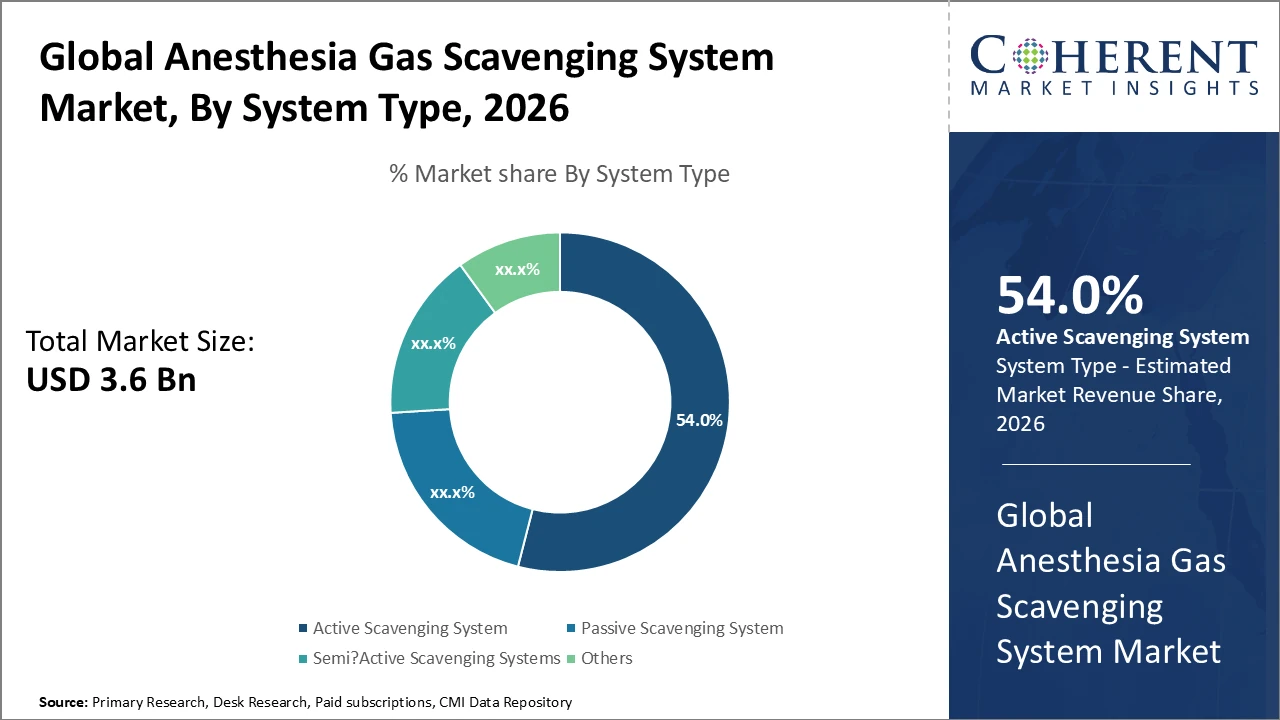
The active scavenging system dominates market share, driven by superior efficiency and regulatory compliance, accounting for 54% of market revenue.
Hospitals are the largest end-user segment, supported by increasing surgical volumes and adherence to safety standards.
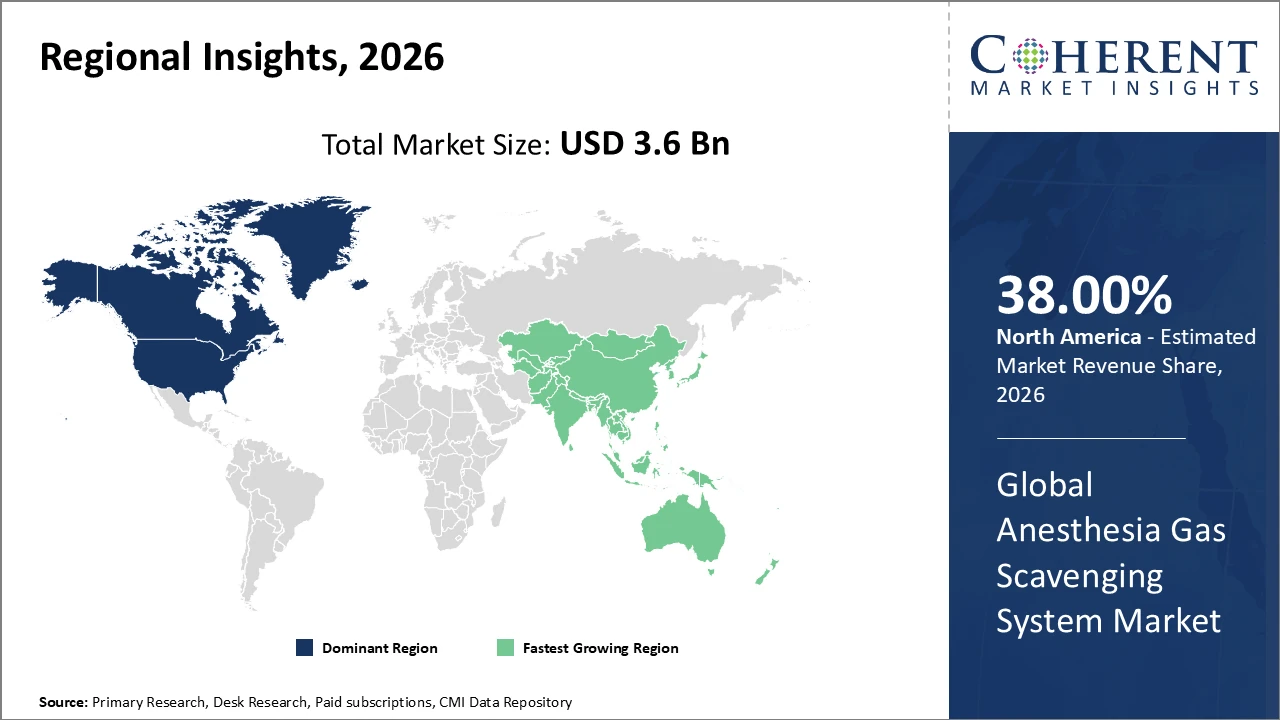
North America leads the regional market, attributed to advanced healthcare infrastructure and strict occupational safety regulations.
Asia Pacific is the fastest-growing region, fueled by rising healthcare investments and increasing surgical procedures, with a CAGR exceeding 10% from 2026 to 2033.
Anesthesia Gas Scavenging System Market Segmentation Analysis
Anesthesia Gas Scavenging System Market Insights, By System Type
The active scavenging system dominates the market with a 54% share, driven by its superior efficiency in removing anesthetic gases and compliance with strict environmental and occupational safety standards. Its adaptability to high-volume surgical settings enables widespread use in hospitals and large clinics worldwide. The fastest-growing subsegment, semi-active scavenging systems, combines operational efficiency with cost-effectiveness, gaining popularity in emerging markets with budget constraints. Passive systems remain relevant in smaller clinics due to their simplicity, despite limited control.
Anesthesia Gas Scavenging System Market Insights, By Technology
Mechanical scavenging leads the market due to its reliability and long-established use in surgical settings, forming the core of most anesthesia gas scavenging units. Electronic monitoring systems are the fastest-growing subsegment, offering real-time gas detection that improves safety, regulatory compliance, and operational performance, with adoption increasing over 20% annually from 2024 to 2026. Hybrid systems, combining mechanical and electronic features, are gaining traction in hospitals seeking enhanced flexibility and efficiency.
Anesthesia Gas Scavenging System Market Insights, By End User
Hospitals dominate the end-user segment, accounting for over 60% of market revenue, driven by growing surgical volumes and strict infection and anesthetic gas safety regulations. Ambulatory surgical centers represent the fastest-growing subsegment, with adoption rates rising 18% year-over-year between 2024 and 2026, fueled by the increasing prevalence of outpatient procedures. Dental clinics utilize smaller capacity systems designed for volatile anesthetic agents in sedation, while veterinary clinics adopt compact scavenging solutions for animal surgeries, reflecting a developing niche.
Anesthesia Gas Scavenging System Market Trends
The market is trending toward system digitization and environmental sustainability, with real-time gas leak detection and IoT-enabled monitoring becoming more prevalent.
Predictive analytics from these technologies help healthcare providers reduce equipment downtime and minimize occupational hazards.
In 2026, several hospitals in Germany reported a 15% reduction in maintenance costs by implementing digitized scavenging systems.
Growing awareness of the environmental impact of anesthetic gases has driven adoption of low-emission scavenging systems.
Hospitals in Scandinavia and the UK are increasingly using eco-friendly systems, supporting global carbon neutrality initiatives.
Anesthesia Gas Scavenging System Market Insights, By Geography
North America Anesthesia Gas Scavenging System Market Analysis and Trends
In North America, the anesthesia gas scavenging system market benefits from a mature healthcare ecosystem and stringent regulatory frameworks enforcing occupational safety standards. The region holds over 38% of the global market share, supported by advanced hospital infrastructure and ongoing innovation from leading manufacturers. The U.S. serves as a key driver, with hospitals upgrading operating rooms with modern scavenging systems to reduce anesthetic gas exposure and ensure staff safety. Continuous investment in research and development, coupled with early adoption of digital monitoring and eco-friendly technologies, reinforces North America’s leadership position and sustains steady growth in the regional anesthesia gas scavenging system market.
Asia Pacific Anesthesia Gas Scavenging System Market Analysis and Trends
Asia Pacific is the fastest-growing region in the anesthesia gas scavenging system market, with a CAGR exceeding 10%, driven by increasing healthcare investments, expanding hospital networks, and rising surgical volumes in countries such as China and India. Government initiatives aimed at improving healthcare quality and the growing presence of private healthcare providers further support market expansion. Key companies, including Mindray and GE Healthcare, have strategically increased production capacity and strengthened regional operations, boosting market penetration. Combined with rising awareness of occupational safety and adoption of advanced technologies, these factors position Asia Pacific as a major contributor to future market growth.
Anesthesia Gas Scavenging System Market Outlook for Key Countries
USA Anesthesia Gas Scavenging System Market Analysis and Trends
he U.S. anesthesia gas scavenging system market demonstrates advanced adoption, driven by regulatory mandates from OSHA and EPA reporting requirements. By 2025, around 70% of hospitals had implemented active scavenging solutions, reflecting strong market penetration. Leading manufacturers, including Medtronic and Draegerwerk, continue to invest heavily in R&D for IoT-enabled systems, improving operational efficiency and safety while boosting market revenues. Additionally, the increasing prevalence of outpatient surgical centers and ambulatory clinics contributes to market expansion. These trends, combined with sustainable hospital design initiatives and the adoption of low-emission technologies, are shaping industrial growth and driving the U.S. market forward.
Germany Anesthesia Gas Scavenging System Market Analysis and Trends
Germany holds a significant share in the anesthesia gas scavenging system market, supported by advanced healthcare infrastructure, stringent occupational safety regulations, and high adoption of modern surgical technologies. Hospitals and ambulatory surgical centers lead end-user demand, driven by rising surgical volumes and emphasis on staff safety. Active and semi-active scavenging systems are increasingly preferred due to efficiency and compliance with environmental standards. Technological trends include integration of IoT monitoring, real-time leak detection, and energy-efficient designs. Government initiatives promoting sustainable healthcare practices and investment in hospital modernization further support market growth, positioning Germany as a key contributor in Europe’s anesthesia gas scavenging system landscape..
Analyst Opinion
Supply chain dynamics impacted market expansion, with manufacturers increasing production capacity by about 15% in 2025 to meet rising hospital demand, improving system availability in emerging economies by 10%.
Demand-side trends show diverse usage across specialties, including general surgery, dentistry, and veterinary medicine; ambulatory surgical centers employing advanced scavenging systems grew 18% in 2024, boosting market revenue.
Pricing strategies reflect raw material costs and competitive innovation, with cost-efficient component refinements reducing average system prices by 6% in 2026, supporting adoption in price-sensitive regions like Asia Pacific.
Retrofitting existing anesthetic machines with scavenging attachments increased 22% in North American hospitals in 2026, driving compliance with regulatory standards and influencing market growth strategies.
- Current Industry Events of 2026
- Market Size Estimation
- Regional Breakdown
- Competitive Landscape
- Customer Intelligence
- Segmental Analysis
- Pricing Analysis
- Key Market Drivers, Challenges & Future Trends
- Customized Insights Section
Market Scope
| Report Coverage | Details | ||
|---|---|---|---|
| Base Year: | 2025 | Market Size in 2026: | USD 3.6 billion |
| Historical Data for: | 2020 To 2024 | Forecast Period: | 2026 To 2033 |
| Forecast Period 2026 to 2033 CAGR: | 8.2% | 2033 Value Projection: | USD 6.1 billion |
| Geographies covered: |
| ||
| Segments covered: |
| ||
| Companies covered: | Medtronic plc, GE Healthcare, CONMED Corporation, Ambu A/S, 3M Company, Cardinal Health Inc., ResMed Inc., Philips Healthcare, Smith Medical, Teleflex Incorporated | ||
| Growth Drivers: |
| ||
Anesthesia Gas Scavenging System Market Growth Factors
Several factors are driving growth in the anesthesia gas scavenging system market. Regulatory pressure from agencies like OSHA and the FDA compels hospitals to implement advanced systems to ensure environmental and occupational safety. The global rise in surgical procedures, particularly minimally invasive techniques, increases demand for efficient anesthetic gas management to protect patients and staff. Technological innovations, including real-time monitoring and eco-friendly systems, enhance efficiency, reliability, and compliance, encouraging adoption. Additionally, rising healthcare expenditures and infrastructure development in emerging markets such as India and Brazil expand the market, as modern hospitals invest in upgraded equipment to meet safety and operational standards.
Anesthesia Gas Scavenging System Market Development
In 2025, GE Healthcare launched an upgraded active anesthesia gas scavenging system featuring enhanced suction control and real-time gas monitoring. This system improved occupational safety in operating rooms by reducing exposure to trace anesthetic gases and optimizing workflow efficiency. The introduction of integrated digital alerts and automated maintenance reminders also increased adoption in large hospital networks across North America and Europe, supporting market growth and technological advancement.
Medtronic introduced a portable, compact scavenging system in 2025 designed for outpatient surgical centers and mobile operating units. Its lightweight design, low noise operation, and compatibility with various anesthesia machines enabled wider deployment in smaller facilities. The system’s affordability and ease of installation accelerated adoption, expanding the market presence in emerging regions while promoting safer perioperative environments.
Key Players
Leading Companies of the Market
Medtronic plc
Smith Medical
GE Healthcare
Philips Healthcare
3M Company
CONMED Corporation
Cardinal Health Inc.
ResMed Inc.
Teleflex Incorporated
Ambu A/S
Leading companies in the anesthesia gas scavenging system market have pursued aggressive growth strategies, focusing on product portfolio expansion and regional collaborations. Draegerwerk recently introduced a next-generation active scavenging system featuring IoT-enabled real-time gas monitoring, which boosted market revenue by 12% through improved customer retention and operational efficiency. Similarly, Medtronic executed strategic acquisitions in 2025, enhancing its market presence in the Asia Pacific region and increasing regional share. These initiatives have strengthened competitive positioning, accelerated technology adoption, and contributed significantly to overall market growth, demonstrating the impact of innovation and strategic partnerships in expanding global anesthesia gas scavenging system demand.
Anesthesia Gas Scavenging System Market Future Outlook
The anesthesia gas scavenging system market is expected to experience steady growth, driven by increasing awareness of occupational safety and stringent regulatory standards in healthcare settings. Advancements in smart and integrated scavenging technologies, including real-time monitoring, automated alerts, and energy-efficient designs, are likely to enhance operational efficiency and adoption. Growing surgical volumes, expansion of outpatient and ambulatory surgical centers, and rising investments in hospital infrastructure further support market demand. Additionally, emerging economies are expected to witness higher uptake due to improving healthcare facilities and safety compliance. Continuous innovation and regulatory support will shape the market’s future trajectory, fostering safer anesthesia practices globally.
Anesthesia Gas Scavenging System Market Historical Analysis
The anesthesia gas scavenging system market has grown steadily over the past decade, driven by increasing recognition of occupational hazards associated with anesthetic gas exposure. Initially, adoption was limited to large hospitals and surgical centers, with passive systems dominating due to lower cost and simpler design. Over time, active and central scavenging systems were introduced, offering higher efficiency and compliance with stricter safety regulations. Technological innovations, including noise reduction, enhanced filtration, and integration with anesthesia machines, further boosted adoption. Investments in healthcare infrastructure, rising surgical volumes, and regulatory mandates for staff safety have collectively shaped the market, laying the foundation for continued growth and innovation.
Sources
Primary Research Interviews:
Anesthesiologists, biomedical engineers, and operating room technicians involved in anesthetic gas management and safety optimization.
Procurement managers, hospital administrators, and surgical department heads in hospitals, ambulatory surgical centers, and outpatient clinics using scavenging systems.
Product managers, R&D specialists, and clinical application experts from companies manufacturing active, passive, and semi-active anesthesia gas scavenging systems.
Magazines:
Anesthesiology News – Market trends, clinical adoption, and new scavenging technologies.
HealthTech Magazine – Innovations in medical device integration, digital monitoring, and safety improvements.
MedTech Dive – Product launches, regulatory updates, and technological advancements in anesthesia equipment.
Journals:
Anesthesia & Analgesia – Research on anesthetic gas exposure, scavenging efficiency, and safety outcomes.
Journal of Clinical Monitoring and Computing – Innovations in real-time gas monitoring and IoT-enabled systems.
British Journal of Anaesthesia – Studies on perioperative anesthetic management and occupational health.
Newspapers:
The Wall Street Journal – Market investments, mergers, and acquisitions in anesthesia equipment sectors.
Financial Times – Global healthcare technology developments and regulatory changes.
Reuters Health – Product approvals, clinical studies, and commercialization news.
Bloomberg Healthcare – Market performance, adoption trends, and competitive landscape for anesthesia systems.
Associations:
American Society of Anesthesiologists (ASA) – Guidelines for safe anesthetic gas management and occupational safety.
Association of periOperative Registered Nurses (AORN) – Protocols for operating room safety and gas scavenging practices
European Society of Anaesthesiology and Intensive Care (ESAIC) – Standards, recommendations, and best practices for anesthesia safety.
Get access to 250+ pages report
Every segment, forecast, competitor profile and data table behind the analysis above — available for instant download.
- ESOMAR Member
- ISO 9001:2015 Certified
- D-U-N-S Registered
- GDPR & CCPA Compliant
Missing comfort of reading report in your local language? Find your preferred language:
Transform your Strategy with Exclusive Trending Reports
Frequently Asked Questions
The market is led by key companies including Ambu A/S, Medtronic plc, and GE Healthcare, with significant contributions from Philips Healthcare, CONMED Corporation, and Smiths Medical.
The market is projected to grow from USD 3.6 billion in 2026 to approximately USD 6.1 billion by 2033, reflecting a CAGR of 8.2%.
Hospitals represent the largest and most lucrative end-user segment, driven by rising surgical procedures and compliance with safety standards.
Advances in smart technologies and eco-friendly systems are expected to drive market growth, improving operational efficiency and regulatory compliance.
The market is moderately consolidated, with competition focused on innovation, product differentiation, and regional expansion. Challenges include cost pressures and raw material price volatility.
Key strategies include strategic partnerships, technological integration, and targeted regional expansion to access new markets and improve customer retention.