

Vaginal Slings Market Size and Forecast — 2026-2033
The Global Vaginal Slings Market size is estimated to be valued at USD 1.30 billion in 2026 and is expected to reach USD 2.1 billion by 2033, exhibiting a compound annual growth rate (CAGR) of 8.5% from 2026 to 2033.
Overview
Vaginal slings are medical implants designed to treat stress urinary incontinence (SUI) in women by providing support to the urethra or bladder neck. These slings are typically made from synthetic mesh materials such as polypropylene or from biological grafts like autologous or allograft tissues. They work by creating a hammock-like structure that restores normal urethral positioning and improves closure during physical strain. Vaginal slings are available in various types, including mid-urethral slings, pubovaginal slings, and transobturator slings, each offering different surgical approaches and recovery profiles. Their minimally invasive design, high long-term success rates, and low complication levels have made them a widely adopted solution for female pelvic floor disorders.
Key Takeaways
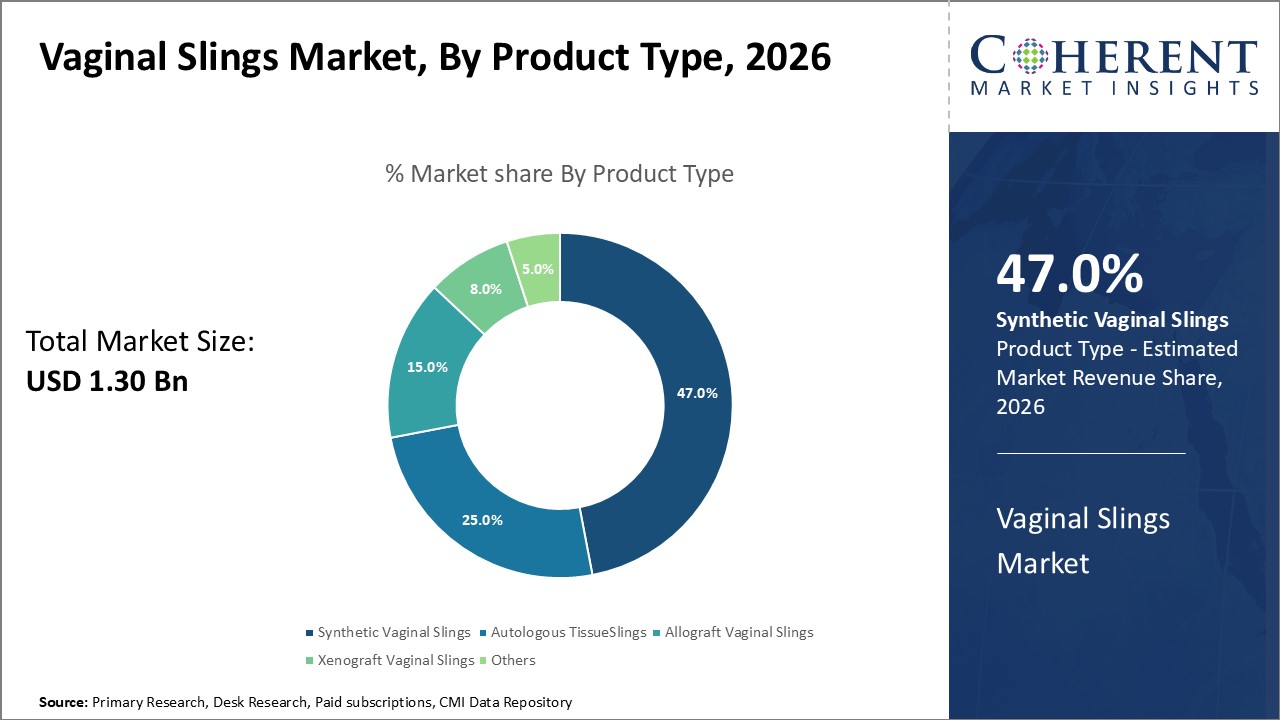
Synthetic vaginal slings hold a dominant market share of 47%, driven by their effectiveness and cost-efficiency in treating stress urinary incontinence.
Stress urinary incontinence remains the leading application segment, accounting for the majority of market revenue, fueled by increasing diagnosis rates.
Hospitals continue to be the primary end users, holding a significant industry share due to the prevalence of surgeries in clinical settings.
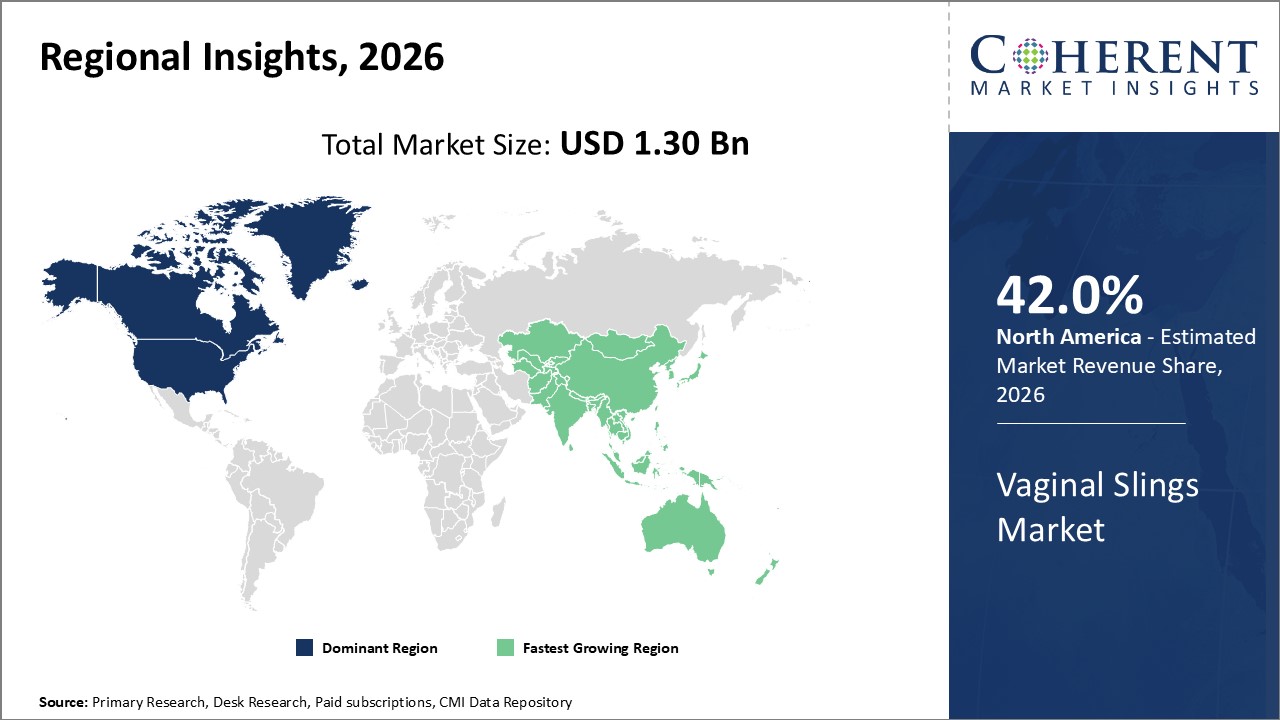
North America commands significant market revenue, supported by advanced healthcare infrastructure and high procedural volumes.
Asia Pacific emerges as the fastest-growing region, exhibiting double-digit CAGR driven by increasing healthcare investments and rising awareness.
Europe maintains steady growth, propelled by innovative product launches and robust reimbursement frameworks.
Vaginal Slings Market Segmentation Analysis
Vaginal Slings Market Insights, By Product Type
Synthetic Vaginal Slings dominate the market share, holding 47%. Synthetic slings are favored due to their standardized manufacturing, ease of use, and consistent clinical outcomes. Their dominance is supported by ongoing innovations in polypropylene meshes and absorbable polymers that address prior complications such as erosion and infection. The fastest growing subsegment is Autologous Tissue Slings, gaining traction for patients seeking biologically compatible options despite longer surgery times. Autologous slings utilize the patient’s own tissue, reducing foreign-body reactions and immune concerns.
Vaginal Slings Market Insights, By Application
Stress Urinary Incontinence dominates market share. The prevalence of SUI as a chronic condition affecting millions of women worldwide underpins its position as the largest application. The market sees sustained demand for slings in SUI due to clinical efficacy backed by patient outcome data, explaining the segment's revenue leadership. Pelvic Organ Prolapse is the fastest-growing application, as advanced sling designs address both support and repair, thereby expanding treatment options. Recent clinical adoption in 2025 rose 11% year-on-year, driven by patient demand for minimally invasive correction of prolapse along with incontinence. Other Urological Disorders and Others represent smaller segments that include niche uses such as urethral obstruction and fistula repairs, contributing to the market’s scope for innovation and incremental growth.
Vaginal Slings Market Insights, By End-User
Hospitals dominate the market share. Hospitals remain the primary centers for vaginal sling procedures due to advanced surgical facilities, availability of trained specialists, and reimbursement accessibility. Their dominance is reinforced by integrated post-surgical care and higher patient throughput. Ambulatory Surgical Centers are the fastest growing end-user segment, reflecting a trend towards outpatient minimally invasive procedures, improved patient convenience, and cost reduction. The shift towards ASCs is notable in North America and Europe, where approximately 18% annual growth in sling procedures in ASCs was observed in 2025.
Vaginal Slings Market Trends
Recent market trends reveal an increasing focus on patient-centric sling designs and the integration of digital technologies in surgical planning to enhance precision.
For example, U.S. healthcare providers adopted image-guided sling implantation techniques in 2025, improving surgical success rates by 16%.
Additionally, there's a growing emphasis on developing biodegradable materials to reduce complications and regulatory hurdles.
The market also reflects a shift toward minimally invasive procedures, supported by cost-effective reimbursement policies in developed economies.
Vaginal Slings Market Insights, By Geography
North America Vaginal Slings Market Analysis and Trends
In North America, the dominance in the Vaginal Slings market is driven by advanced healthcare infrastructure, high procedural volumes, and favorable reimbursement frameworks. The U.S. accounts for approximately 42% of the global market share, supported by major players like Boston Scientific and Coloplast. The region’s mature healthcare ecosystem encourages rapid adoption of innovative sling devices and contributes significantly to market revenue.
Asia Pacific Vaginal Slings Market Analysis and Trends
The Asia Pacific exhibits the fastest growth with an estimated CAGR exceeding 12% from 2026 to 2033, fueled by expanding healthcare access, rising awareness of pelvic floor disorders, and favorable government initiatives promoting women’s health. Countries like China and India are witnessing a surge in sling procedures due to increasing disposable incomes and enhanced surgical infrastructure, expanding the market ecosystem in the region.
Vaginal Slings Market Outlook for Key Countries
USA Vaginal Slings Market Analysis and Trends
The USA market is a pivotal contributor to the vaginal slings industry, with procedural volume growing steadily due to the rising prevalence of stress urinary incontinence in aging women. In 2025, data from major hospital networks indicated a 9% year-over-year increase in sling surgeries. Leading firms such as Boston Scientific and C.R. Bard have heavily invested in product innovation and surgeon training programs in the U.S., translating to expanded market share and robust revenue growth. Furthermore, reimbursement strategies under CMS continue to support sling procedures, facilitating business growth and technological advancements.
Germany Vaginal Slings Market Analysis and Trends
Germany's vaginal slings market is marked by advanced surgical infrastructure and strong healthcare funding, driving consistent industry growth. Robust R&D activities by European-based companies and increasing awareness of pelvic floor dysfunction have promoted the adoption of innovative sling solutions. For instance, a clinical trial performed in 2026 demonstrated superior outcomes with synthetic slings incorporating novel biocompatible coatings, contributing to rising market revenues. The country’s emphasis on minimally invasive surgical techniques and supportive regulations further enhances its market prospects.
Analyst Opinion
Advanced Material Innovation Spurs Market Size: The growing integration of biocompatible and absorbable materials in vaginal sling manufacturing has driven product adoption. For example, in 2025, the introduction of a novel polypropylene mesh lining by a leading manufacturer resulted in a 12% increase in procedure acceptance in North America. Market revenue correlates strongly with material innovation cycles, highlighting the importance of R&D in expanding market share.
Increasing Surgical Interventions Drive Industry Share: The rise in female pelvic floor disorders, particularly stress urinary incontinence cases, has led to a surge in surgical interventions using vaginal slings. Between 2023 and 2026, hospital records from the U.S. reflected a 10% annual rise in sling-related procedures, reinforcing the market's growth and demand volumes.
Regional Export Dynamics Favor Asia Pacific Growth: Export statistics from 2025 indicate that Asia Pacific received a 15% increase in vaginal sling imports, reflecting growing surgical infrastructure and awareness. This demand-side indicator highlights the regional growth opportunity and supply chain expansion for market players targeting emerging economies.
Pricing Strategy Impact on Market Revenue: Price competition among market players has influenced the overall revenue trajectory. The average unit price for mid-range vaginal slings declined by approximately 6% in 2026 due to raw material cost optimization, balancing affordability and profitability, and driving broader market penetration.
- Current Industry Events of 2026
- Market Size Estimation
- Regional Breakdown
- Competitive Landscape
- Customer Intelligence
- Segmental Analysis
- Pricing Analysis
- Key Market Drivers, Challenges & Future Trends
- Customized Insights Section
Market Scope
| Report Coverage | Details | ||
|---|---|---|---|
| Base Year: | 2025 | Market Size in 2026: | USD 1.30 billion |
| Historical Data for: | 2020 To 2024 | Forecast Period: | 2026 To 2033 |
| Forecast Period 2026 to 2033 CAGR: | 8.5% | 2033 Value Projection: | USD 2.1 billion |
| Geographies covered: |
| ||
| Segments covered: |
| ||
| Companies covered: | Neomedic International Pvt. Ltd., Confluent Surgical Inc., Cook Biotech Inc., Astra Tech AB, American Medical Systems (AMS), Organogenesis Inc., Analogic Corporation, EuroMed S.p.A, Promedon S.A., Applied Medical Resources Corporation | ||
| Growth Drivers: |
| ||
Vaginal Slings Market Growth Factors
Market growth is primarily driven by the rising prevalence of female pelvic floor disorders globally, with stress urinary incontinence affecting approximately 25% of women aged 40 and above in 2025 alone. Technological advancements in sling devices, primarily the increasing use of synthetic biomaterials, bolster efficacy and reduce surgery time, boosting adoption rates. The expanding geriatric population, expected to reach over 1 billion globally by 2030, fuels demand for less invasive and effective treatment modalities like vaginal slings. Additionally, growing healthcare expenditure in emerging economies and favorable reimbursement policies in developed regions are significant catalysts for market expansion.
Vaginal Slings Market Development
In March 2022, Caldera Medical launched its Desara TVez system in the U.S. after receiving FDA clearance in late 2021, introducing a next-generation minimally invasive solution for stress urinary incontinence (SUI). The system features an optimized delivery design aimed at improving procedural ease, sling placement accuracy, and long-term pelvic floor support.
In 2021, C.R. Bard (BD) introduced the Align™ transobturator sling system, developed to treat stress urinary incontinence with a refined mesh configuration and transobturator delivery pathway. The launch strengthened BD’s pelvic health portfolio by offering surgeons enhanced control, reduced insertion complexity, and reliable urethral support.
In 2021, Cook Medical debuted the Resonance® hybrid sling system, integrating biological and synthetic materials to deliver balanced pelvic support for women with SUI. The hybrid design aimed to improve biocompatibility, reduce postoperative complications, and provide long-term mechanical strength in pelvic floor reconstruction.
Key Players
Leading Companies of the Market
Neomedic International Pvt. Ltd.
Confluent Surgical Inc.
Cook Biotech Inc.
Astra Tech AB
American Medical Systems (AMS)
Organogenesis Inc.
Analogic Corporation
EuroMed S.p.A
Promedon S.A.
Applied Medical Resources Corporation
Competitive strategies among key market players include portfolio diversification and strategic acquisitions. For example, Boston Scientific’s acquisition of an endourological device manufacturer in 2025 enhanced its vaginal sling product offerings, leading to a 8% increase in its market revenue. Similarly, Coloplast’s investment in innovative sling materials enabled entry into emerging markets, improving its global market share by 5% in 2026.
Vaginal Slings Market Future Outlook
Looking ahead, the market is expected to benefit from continued advancements in biocompatible sling materials, personalized surgical planning, and improved diagnostic pathways for early SUI detection. Manufacturers are increasingly investing in lightweight mesh technologies and biologics that reduce postoperative complications and recovery times. Rising healthcare spending in emerging economies and the expansion of gynecology specialty centers will further support demand. Regulatory frameworks are also expected to stabilize, enabling safer product innovation and broader patient acceptance. Long-term growth will also be supported by the increasing prevalence of obesity and childbirth-related pelvic floor disorders, as well as ongoing awareness campaigns promoting early intervention.
Vaginal Slings Market Historical Analysis
The Vaginal Slings market has evolved steadily over the past decade, driven by growing awareness of stress urinary incontinence (SUI) and increased adoption of minimally invasive treatment options. Historically, demand rose as aging populations expanded across North America, Europe, and parts of Asia, where higher rates of pelvic floor disorders were observed. Early-generation slings relied on synthetic mesh, but rising concerns and litigations surrounding mesh complications led to regulatory scrutiny and a gradual shift toward biologically derived and autologous tissue options. During the late 2010s and early 2020s, technological refinements in sling materials, improved anchoring systems, and enhanced surgical training protocols contributed to better clinical outcomes and renewed clinician confidence. The market also benefited from the expansion of women’s health programs and increased insurance coverage for pelvic reconstructive procedures.
Sources
Primary Research Interviews:
Urologists
Gynecologic Surgeons
Pelvic Health Specialists
Medical Device Distributors
Clinical Researchers
Databases:
GlobalData Medical Devices
WHO Health Data
FDA MAUDE
ClinicalTrials.gov
Magazines:
Medical Device Network
Women’s Health Magazine
MedTech Insight
DeviceTalks
HealthCare Business News
Journals:
Journal of Urology
International Urogynecology Journal
Obstetrics & Gynecology
Urology Journal
Newspapers:
The New York Times (Health)
The Guardian (Health)
Hindustan Times (Healthcare)
The Washington Post (Medical)
The Economic Times (Health)
Associations:
American Urological Association (AUA)
International Urogynecological Association (IUGA)
ACOG
FDA CDRH
European Association of Urology (EAU)
Get access to 250+ pages report
Every segment, forecast, competitor profile and data table behind the analysis above — available for instant download.
- ESOMAR Member
- ISO 9001:2015 Certified
- D-U-N-S Registered
- GDPR & CCPA Compliant
Missing comfort of reading report in your local language? Find your preferred language:
Transform your Strategy with Exclusive Trending Reports
Frequently Asked Questions
The dominant players include Boston Scientific Corporation, C.R. Bard (BD), Coloplast A/S, and Cook Medical, who lead through innovation and strategic market expansion.
The market size is expected to reach USD 2.1 billion by 2033, growing at a CAGR of 8.5% from 2026 to 2033, fueled by increased surgical interventions and technological advancements.
Hospitals dominate the end-user segment, offering the largest growth opportunity due to the rising number of sling-based surgeries performed in these facilities.
Emerging trends include the advancement of absorbable synthetic slings and the incorporation of digital surgical tools, enhancing patient outcomes and market growth potential.
The competitive landscape is marked by strategic acquisitions and product innovation, with challenges including stringent regulatory approvals and raw material price fluctuations.
Market players commonly adopt strategies such as product portfolio diversification, R&D investments to innovate sling materials, and targeted geographic expansion to tap into emerging markets.