

Large Volume Wearable Injectors Market Size and Forecast — 2026 - 2033
The Global Large Volume Wearable Injectors Market size is estimated to be valued at USD 2.9 billion in 2026 and is expected to reach USD 6.5 billion by 2033, exhibiting a compound annual growth rate (CAGR) of 11.2% from 2026 to 2033.
Overview
The large volume wearable injectors market is driven by the rising prevalence of chronic diseases such as diabetes, cancer, and autoimmune disorders that require frequent or long-duration drug delivery. Growing demand for self-administration and home-based care is increasing adoption of patient-friendly injectable devices. Advancements in drug formulation, biologics, and subcutaneous therapies are further supporting market growth. Healthcare systems are also focusing on reducing hospital visits and treatment costs, boosting use of wearable delivery systems. Technological improvements in device design, connectivity, and safety features enhance patient compliance. Increasing clinical trials for biologics and biosimilars further strengthen market expansion globally.
Key Takeaways
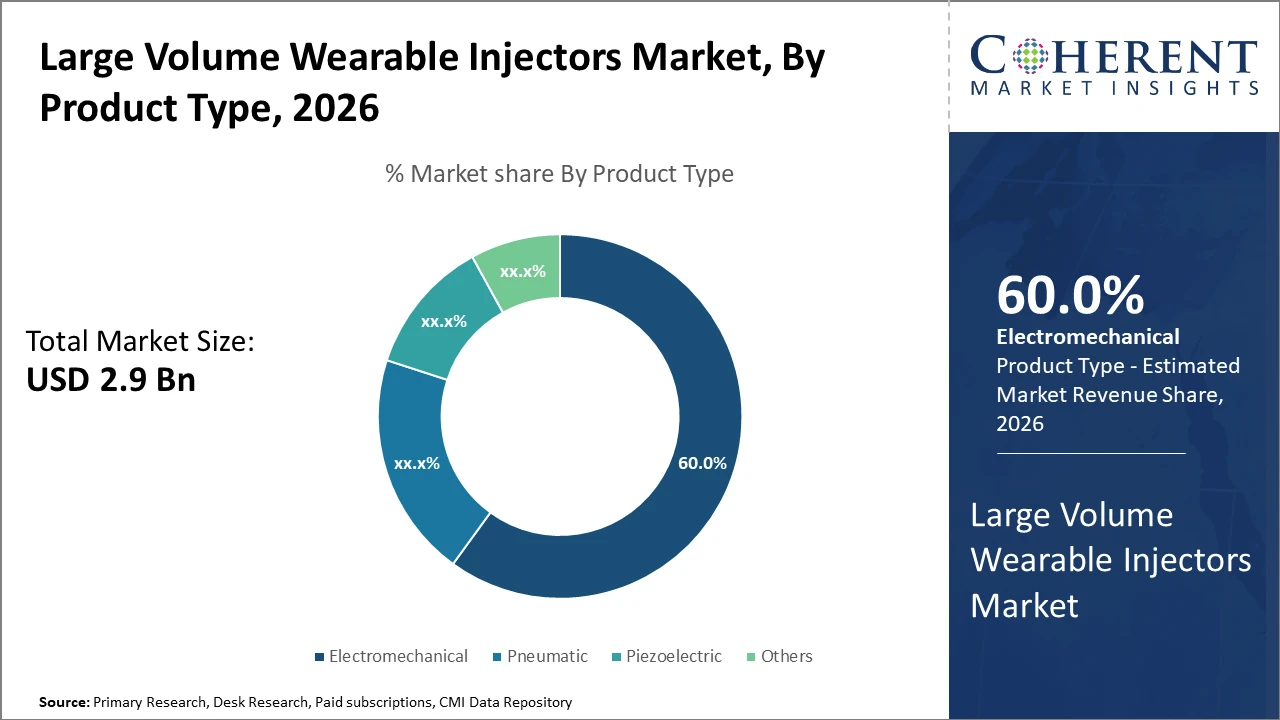
Electromechanical injectors dominate the product segment with a 60% market share, offering enhanced dosing accuracy and improved patient convenience.
Biologics represent the leading drug type segment, contributing the highest revenue and growth due to new drug approvals requiring large-volume delivery.
The Home Healthcare end-user segment is gaining traction as self-administration and at-home therapy trends increase.
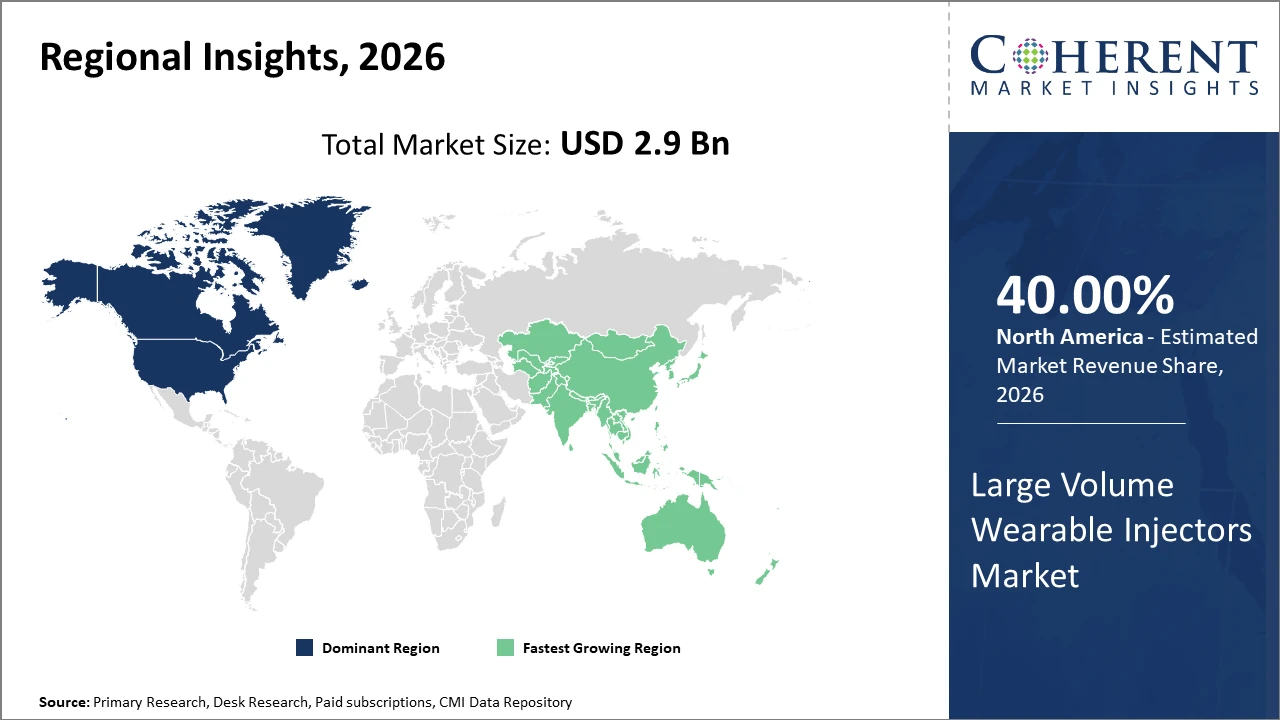
North America holds the largest regional market share due to advanced healthcare infrastructure and favorable reimbursement frameworks.
Asia Pacific exhibits the fastest CAGR, supported by rising chronic disease prevalence and expanding healthcare access.
Europe maintains steady growth through regulatory incentives and market maturity.
Middle East & Africa offer emerging opportunities linked to healthcare modernization initiatives.
Large Volume Wearable Injectors Market Segmentation Analysis
Large Volume Wearable Injectors Market Insights, By Product Type
Electromechanical injectors dominate the Large Volume Wearable Injectors Market with a 60% share, offering precise control over drug delivery rates and volumes, improving patient comfort, and reducing injection site reactions. Their integration with digital adherence monitoring is a rapidly growing trend, supported by 2025 clinical validation in oncology showing a 28% improvement in dosing accuracy. Pneumatic injectors, valued for simplicity and lower costs, are expanding in emerging markets due to easy scalability and maintenance. Piezoelectric injectors, preferred for compact design and low power use, occupy a smaller share due to technical complexity. Others include hybrid systems under development, expanding innovation potential.
Large Volume Wearable Injectors Market Insights, By Drug Type
Biologics dominate the Large Volume Wearable Injectors Market, driven by rising use of monoclonal antibodies and enzyme replacement therapies that require large-volume subcutaneous delivery. Their complex structure and high viscosity demand advanced injector technologies, supporting market growth. Combination drugs represent the fastest-growing subsegment, fueled by increasing demand for integrated therapies that enhance patient compliance, such as biologic–small molecule cocktails approved in immunology in late 2025. Small molecules maintain a steady presence due to conventional injectable forms.
Large Volume Wearable Injectors Market Insights, By End User
Hospitals maintain the largest market share in the Large Volume Wearable Injectors Market, supported by established clinical infrastructure for biologic administration and complex therapies. Home Healthcare is the fastest-growing subsegment, fueled by patient preference for at-home treatment, advancements in remote training, and telemedicine support. Growth is further encouraged by payer incentives promoting outpatient care to reduce healthcare system burdens. Ambulatory Care Centers address mid-complexity cases but contribute less to overall volume compared to hospitals and home care.
Large Volume Wearable Injectors Market Trends
Electromechanical large volume wearable injectors are increasingly favored for precise, customizable dosing of complex biologic therapies.
A 2026 study showed a 35% reduction in drug wastage with electromechanical devices compared to traditional syringes, lowering overall treatment costs.
IoT integration enables real-time adherence monitoring, enhancing chronic disease management and patient outcomes.
Adoption is growing in emerging economies due to rising disease prevalence and expanding healthcare infrastructure.
Government initiatives, such as India’s National Digital Health Mission launched in 2024, support the integration of wearable injectors into patient care pathways.
Large Volume Wearable Injectors Market Insights, By Geography
North America Large Volume Wearable Injectors Market Analysis and Trends
In North America, the Large Volume Wearable Injectors Market is dominated by well-established pharmaceutical industries and a supportive reimbursement environment. The region accounted for over 40% of the market share in 2026, driven by early adoption of electromechanical injectors and robust regulatory frameworks provided by the FDA. U.S.-based leading companies have heavily invested in R&D, resulting in product innovations and extensive clinical trial networks. Additionally, the consolidation of major healthcare providers and the rise of remote patient monitoring platforms have strengthened market penetration, enabling broader adoption of wearable injectors for chronic disease management and at-home biologic therapy administration.
Asia Pacific Large Volume Wearable Injectors Market Analysis and Trends
The Asia Pacific Large Volume Wearable Injectors Market is projected to experience the fastest growth, with a CAGR exceeding 13% through 2033. Growth is driven by rising chronic disease prevalence, expanding healthcare infrastructure, and increasing patient awareness of at-home therapy options. Supportive government policies promoting digital health adoption and localized manufacturing partnerships further enhance market penetration. China and India lead regional expansion, with companies accelerating facility development and collaborating with local pharmaceutical firms to broaden access. Despite challenges related to price sensitivity, these strategic initiatives enable increased adoption of wearable injectors, positioning Asia Pacific as a high-growth market for the foreseeable future.
Neurostimulation Devices Market Outlook for Key Countries
USA Neurostimulation Devices Market Analysis and Trends
The USA market is a key contributor to global Large Volume Wearable Injectors revenue, supported by robust healthcare infrastructure and a growing trend toward self-administration of biologics. In 2026, approximately 65% of hospital discharges involving biologics utilized wearable injectors, aided by reimbursement policies favoring home care. Leading companies, including West Pharmaceutical Services and SHL Medical, introduced advanced electromechanical platforms delivering over 10 mL with digital feedback, securing major pharmaceutical contracts. Additionally, IoT-enabled adherence tools have enhanced telehealth services, improving patient monitoring and outcomes while reducing hospital readmissions by up to 20% among chronic disease patients, reflecting the market’s innovation-driven growth.
Germany Large Volume Wearable Injectors Market Analysis and Trends
Germany’s Large Volume Wearable Injectors Market is characterized by steady growth, driven by advanced healthcare infrastructure, strong adoption of biologics, and supportive reimbursement frameworks. The market benefits from increasing prevalence of chronic diseases and rising demand for patient-centric, at-home therapies. Electromechanical injectors dominate due to their precision and integration with digital adherence monitoring, while pneumatic devices gain traction in cost-sensitive segments. Ongoing R&D and collaboration between local device manufacturers and pharmaceutical companies enhance innovation and product availability. Trends include miniaturization, connectivity-enabled monitoring, and combination therapy delivery, positioning Germany as a mature and innovation-driven market within Europe’s wearable injector landscape.
Analyst Opinion
The surge in biologic drugs requiring subcutaneous delivery drives demand, with over 70% of newly approved biologics in 2025 utilizing wearable injectors, and increasing patient preference for at-home administration, particularly in oncology and immunology therapies.
Manufacturing capacity expansion by key OEMs in 2024 accelerated supply-side growth, with production volumes rising 18% year-over-year due to investments in automation and lean manufacturing, enabling responsiveness to demand without major price increases.
Pricing strategies align with value-based care, with higher initial device costs offset by overall treatment cost reductions; a 2026 U.S. study reported 23% lower total care costs.
Asia Pacific import volumes grew 22% in 2026, driven by demand in India, Japan, and China, supported by regulatory harmonization and partnerships with domestic pharmaceutical firms.
- Current Industry Events of 2026
- Market Size Estimation
- Regional Breakdown
- Competitive Landscape
- Customer Intelligence
- Segmental Analysis
- Pricing Analysis
- Key Market Drivers, Challenges & Future Trends
- Customized Insights Section
Market Scope
| Report Coverage | Details | ||
|---|---|---|---|
| Base Year: | 2025 | Market Size in 2026: | USD 2.9 billion |
| Historical Data for: | 2020 To 2024 | Forecast Period: | 2026 To 2033 |
| Forecast Period 2026 to 2033 CAGR: | 11.2% | 2033 Value Projection: | USD 6.5 billion |
| Geographies covered: |
| ||
| Segments covered: |
| ||
| Companies covered: | SHL Medical AG, Nemera, Medtronic PLC, West Pharma, Ypsomed AG, Enable Injections, Philips-Medisize, Unilife Corporation, The Medicom Group, BD | ||
| Growth Drivers: |
| ||
Large Volume Wearable Injectors Market Growth Factors
The rising prevalence of chronic diseases such as rheumatoid arthritis and multiple sclerosis drives demand for long-duration therapies suitable for large volume wearable injectors, with patients favoring minimally invasive delivery. Advances in drug formulation allow higher viscosity biologics to be effectively administered, as demonstrated by 2025 approvals showing a 28% increase in injection volume per dose. Regulatory support for self-administration through expedited pathways in developed markets has facilitated device approvals and reimbursement. Innovations in user interface design and IoT-enabled adherence tracking enhance patient compliance, with 2026 clinical data reporting 19% improved outcomes when digital monitoring systems were employed alongside wearable injectors.
Large Volume Wearable Injectors Market Development
In July 2025, BD (Becton, Dickinson and Company) announced the first pharma-sponsored combination product clinical trial using its BD Libertas™ Wearable Injector for subcutaneous delivery of complex biologics.
Key Players
Leading Companies of the Market
SHL Medical AG
West Pharma
Medtronic Plc
Ypsomed AG
BD
The Medicom Group
Enable Injections
Philips-Medisize
Unilife Corporation
Nemera
Several leading companies have pursued strategic joint ventures to strengthen market presence and accelerate innovation. In 2025, SHL Medical AG partnered with a major biopharmaceutical firm to enable integrated device-drug development, reducing time-to-market by 15%. Similarly, West Pharmaceutical Services expanded its electromechanical product portfolio through acquisitions in 2024, resulting in an 11% increase in market share in North America. These strategic collaborations and acquisitions highlight industry efforts to combine technological expertise with pharmaceutical capabilities, streamline product development, and enhance competitive positioning in the rapidly growing Large Volume Wearable Injectors Market.
Large Volume Wearable Injectors Market Future Outlook
The future of the Large Volume Wearable Injectors Market is poised for robust growth, driven by rising demand for at-home administration of biologics, increasing prevalence of chronic diseases, and advancements in patient-centric drug delivery technologies. Innovations in automated infusion systems, connectivity-enabled monitoring, and ergonomic designs are expected to enhance adherence, safety, and therapeutic outcomes. Market expansion will be fueled by collaborations between pharmaceutical and device manufacturers to develop combination products and digital health integration. Additionally, regulatory support for self-administration and the shift toward decentralized healthcare models will accelerate adoption, particularly in North America, Europe, and the rapidly growing Asia Pacific region.
Large Volume Wearable Injectors Market Historical Analysis
The Large Volume Wearable Injectors Market has experienced steady historical growth over the past decade, primarily driven by the increasing adoption of biologics and specialty therapies requiring high-volume subcutaneous administration. From 2015 to 2024, advancements in device engineering, such as automated flow control, prefilled cartridges, and patient-friendly designs, expanded clinical acceptance. Rising patient preference for self-administration and home-based therapy, coupled with the growth of chronic disease prevalence, contributed to market expansion. Early adoption was concentrated in North America and Europe, supported by strong healthcare infrastructure, favorable reimbursement policies, and proactive regulatory frameworks, while emerging markets gradually gained traction through partnerships and localized device manufacturing.
Sources
Primary Research Interviews:
Biomedical engineers, product developers, and clinical specialists working on wearable injector design, drug delivery optimization, and device usability
Procurement managers, hospital administrators, and home healthcare coordinators using wearable injectors for biologics and chronic disease therapies
R&D managers, regulatory affairs specialists, and clinical application experts from medical device and pharmaceutical companies developing large-volume injectable platforms
Magazines:
Medical Design & Outsourcing – Innovations in wearable injector engineering and connected drug delivery
MedTech Dive – Market developments, regulatory updates, and technological advancements in high-volume injectors
Pharmaceutical Technology – Biologics delivery trends, device-drug combinations, and adoption patterns
Healthcare Technology Report – Integration of IoT, digital adherence tools, and remote monitoring in wearable injectors
Journals:
Journal of Controlled Release – Research on drug delivery mechanisms and device efficacy
Drug Delivery and Translational Research – Studies on injectable biologics and high-volume subcutaneous administration
Frontiers in Pharmacology – Clinical applications and optimization of wearable injectors
Newspapers:
The Wall Street Journal – Market trends, investments, and company mergers in drug delivery devices
Financial Times – Global healthcare technology developments and regulatory updates
Reuters Health – Product approvals, clinical trials, and commercialization of wearable injectors
Bloomberg Healthcare – Market analysis, company performance, and adoption trends
Associations:
Parenteral Drug Association (PDA) – Standards and best practices for injectable device development
International Society for Pharmaceutical Engineering (ISPE) – Guidelines on biologics manufacturing and delivery systems
European Federation of Pharmaceutical Industries and Associations (EFPIA) – Device-drug combination standards and policy insights
Get access to 250+ pages report
Every segment, forecast, competitor profile and data table behind the analysis above — available for instant download.
- ESOMAR Member
- ISO 9001:2015 Certified
- D-U-N-S Registered
- GDPR & CCPA Compliant
Missing comfort of reading report in your local language? Find your preferred language:
Transform your Strategy with Exclusive Trending Reports
Frequently Asked Questions
The market is led by SHL Medical AG, West Pharma, and Philips-Medisize, driven by innovations in electromechanical injector systems and strategic partnerships with pharmaceutical companies.
The market is projected to reach USD 6.5 billion by 2033, growing at a CAGR of 11.2% from 2026, reflecting sustained demand across biologics, combination therapies, and patient-centric delivery solutions.
Hospitals is the fastest-growing segment, fueled by patient preference for self-administration, telemedicine integration, and remote monitoring of chronic therapies.
Electromechanical injectors with digital adherence tracking, connected health capabilities, and combination drug-device products will dominate, emphasizing patient-centric care and improved therapy compliance.
Competition focuses on dosing precision, usability, and digital integration, while challenges include regulatory hurdles, high device costs, and market access in emerging economies.
Key strategies include collaborations between device and pharmaceutical companies, expansion of manufacturing capabilities, product portfolio diversification, and integration of digital monitoring solutions to enhance market reach and adoption.