

Global Aramid Fibers Market Size and Share Analysis – 2026 to 2033
The global aramid fibers market is estimated to be valued at USD 4.53 Bn in 2026 and is expected to reach USD 8.56 Bn by 2033, growing at a compound annual growth rate (CAGR) of 9.5% from 2026 to 2033.
Key Takeaways
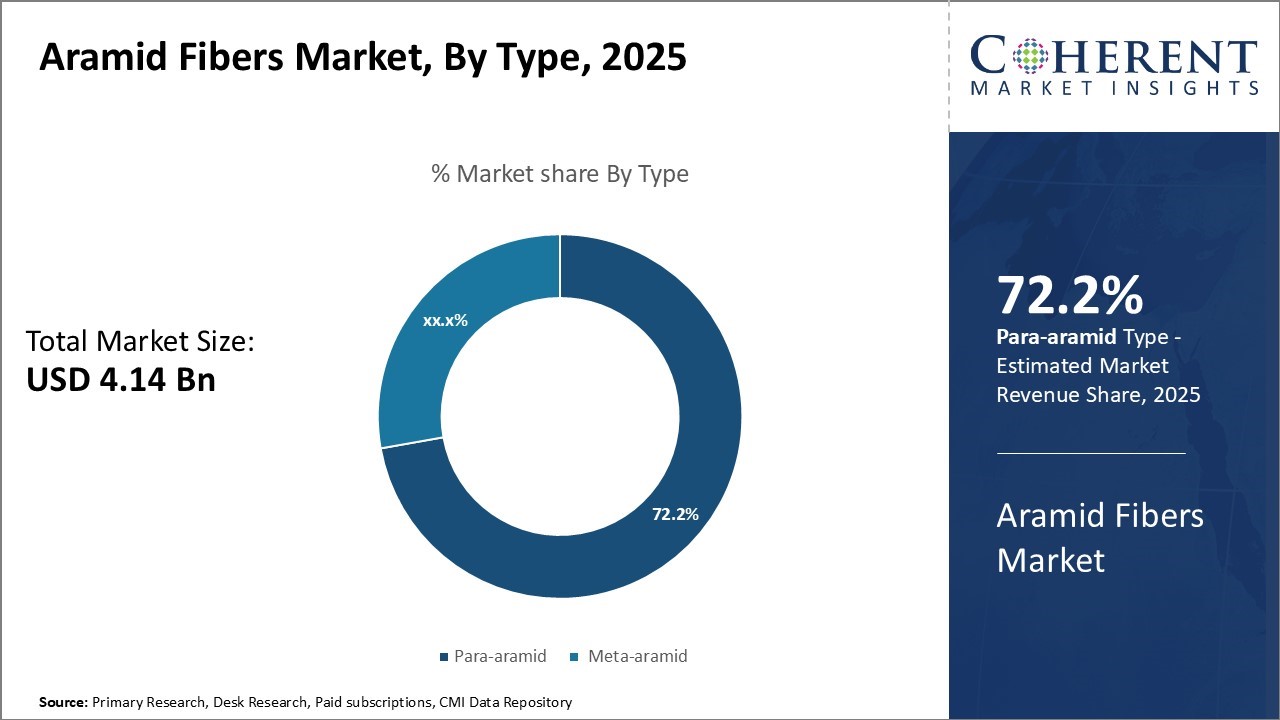
- Based on Type, Para-Aramid Fibers Segment it is expected to account for 73.2% of the market share in 2026. This is due to their exceptional ballistic resistance.
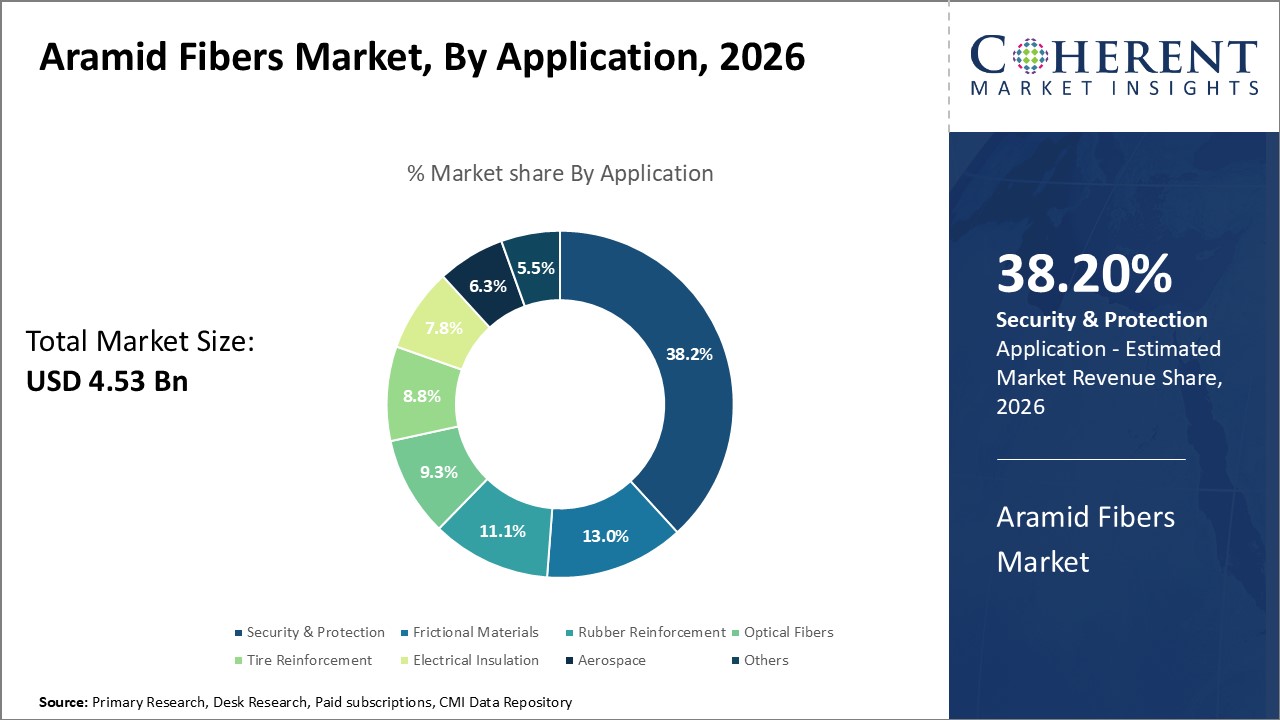
- Based on Application, Security and Protection Segment is projected to hold 38.2% of the market share in 2026. This is due to the vital role aramid fibers play in manufacturing body armor, bullet-resistant equipment, and infrastructure protection products.
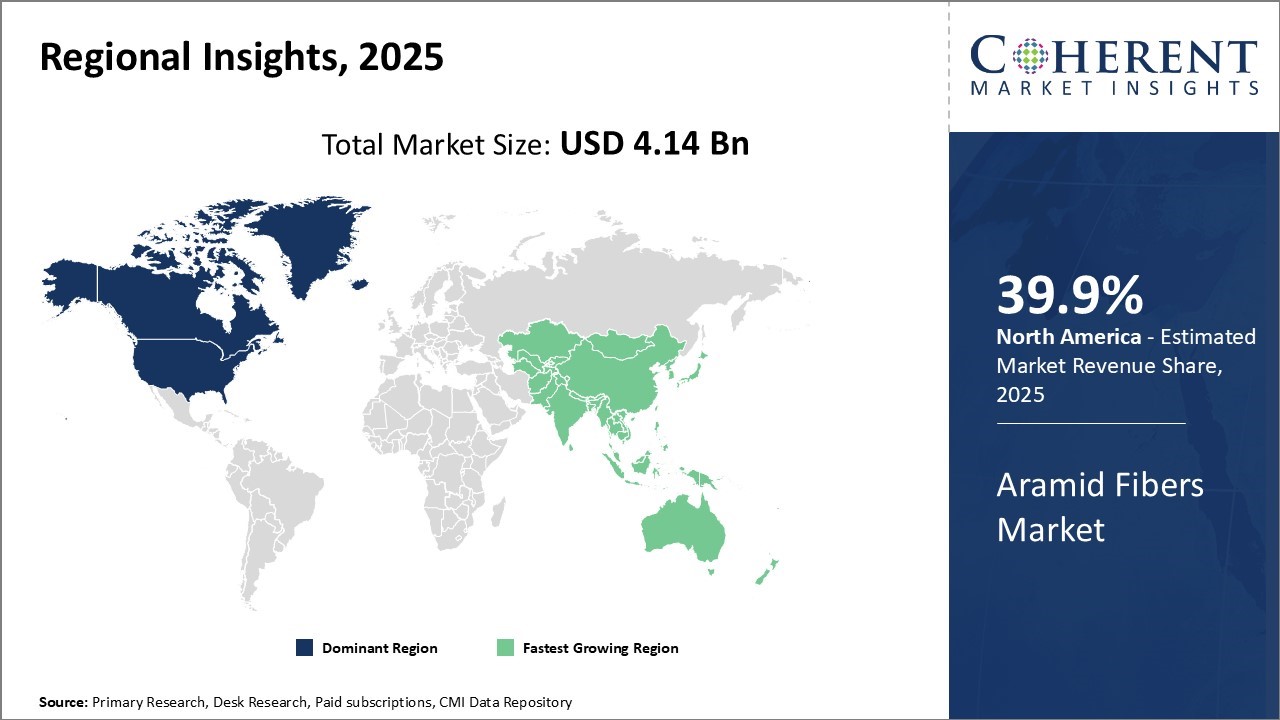
- North America dominates in the global aramid fibers market with 39.9% of the market share in 2026. This is due to large automobile, aerospace, and defense industries, the region sees significant demand for aramid fibers which find key applications in these end-use industries.
Market Overview
The market is witnessing positive trends due to increase in demand from the automotive and ballistic protection sectors. Aramid fibers are increasingly being used in automotive applications such as tires, airbags, hoses, etc. due to their high strength to weight ratio property. There has also been a rise in the usage of aramid fabrics for ballistic protection equipment such as bulletproof vests, helmets, and armor plates for military and law enforcement agencies. Additionally, growing infrastructure development activities are also driving demand for aramid fibers which are used for the manufacture of construction materials, optical fiber cables, and other industrial applications.
Current Events and Its Impacts on Aramid Fibers Market
Current Events | Description and its impact |
Growing Application of Aramid Fibers in Automotive and Ballistic Industry |
|
Integration of Aramid Fibers in Future-Generation Optical Fiber Cables and Infrastructure Projects |
|
Role of Emerging Technologies
New technologies are having a revolutionary impact upon the development and innovation of the aramid fibers market. Aramid fibers, originally used in ballistic body armor and fire-resistant garments, are being further developed with advancements in nanotechnology, materials science, and smart manufacturing. Applications involving nanomaterials such as graphene and carbon nanotubes, for example, are facilitating the creation of next-generation aramid composites that are stronger, lighter, and more durable and resistant to environmental exposure. These hybrid composites are creating new applications in aerospace, electronics, and high-performance sports gear.
Meanwhile, new digital manufacturing technologies like 3D weaving and automated fiber placement are enhancing aramid fiber processing precision and efficiency. The technologies minimize waste, accelerate production, and allow for custom tailoring of fiber structure to performance requirements. Sustainable chemistry advances are also contributing to advances in cleaner aramid production processes, such as the use of bio-based solvents and recyclable composites, that are at the heart of the achievement of global sustainability objectives.
In addition, the development of intelligent textile is opening up great potential for aramid fibers to be embedded with sensors and conductive materials—providing protection and feedback information in real time. This is especially useful for defense, firefighting, and industrial applications where situational awareness is key. In general, emerging technologies are not only adding to the attributes of aramid fibers but expanding their applicability to more sectors of advanced, technology-based industries.
- Current Industry Events of 2026
- Market Size Estimation
- Regional Breakdown
- Competitive Landscape
- Customer Intelligence
- Segmental Analysis
- Pricing Analysis
- Key Market Drivers, Challenges & Future Trends
- Customized Insights Section
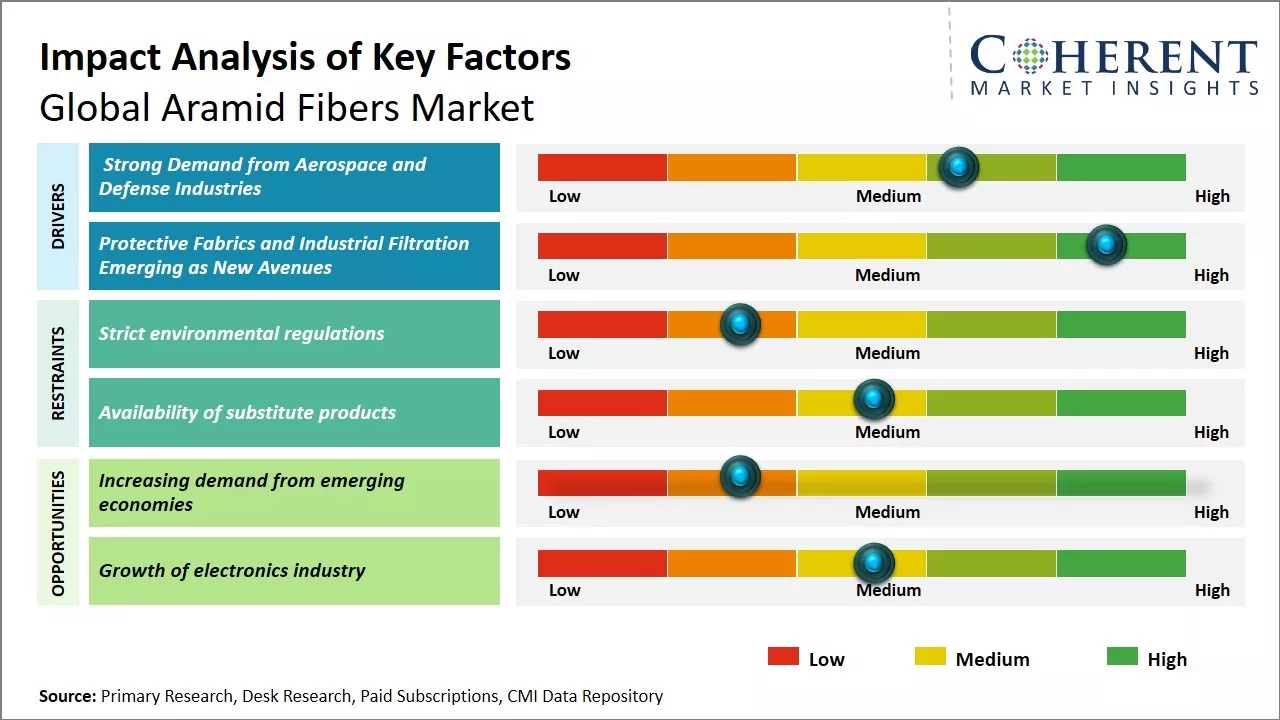
Aramid Fibers Market Driver
- Strong Demand from Aerospace and Defense Industries
The aerospace and defense industries have always pushed the boundaries of innovation and are early adopters of advanced materials that can deliver strength, stiffness and heat resistance. Aramid fibers have found widespread usage in these industries due to their high tensile strength and heat resistance properties. They are used to manufacture various components such as aircraft fuselages, engine mounts, rotor blades, radar domes and more.
With rising global defense budgets and increasing passenger and cargo traffic worldwide, demand from the commercial aviation sector as well as the defense sector continues to grow steadily. Many new aircraft programs are ongoing or have been announced recently which will fuel the increasing usage of composites containing aramid fibers. Military agencies across countries are procuring new fighter jets, transport aircraft, helicopters and missiles. Composite materials allow manufacturers to build lighter yet stronger structures, enabling these aircraft and platforms to travel farther distances or carry heavier payloads.
In 2025, Airbus expanded its use of aramid fiber composites in the production of next-generation aircraft, particularly within the A320neo and A350 XWB programs, to enhance fuel efficiency and reduce structural weight. The aramid materials—mainly Kevlar and Twaron—are used in aircraft cargo linings, cabin interiors, and radomes due to their superior strength-to-weight ratio and thermal resistance.
- Protective Fabrics and Industrial Filtration Emerging as New Avenues
While aramid fibers have long been valued for their use in technical textiles and composites, new application areas are opening up as material properties are better explored. Their high strength and heat resistance makes aramid an ideal candidate for protective clothing, often combined with other fibers. Industries like oil & gas, manufacturing and fire-fighting require durable and heat-shielding garments and equipment to safeguard workers from hazards.
Stringent safety regulations and awareness about personnel protection are driving demand from this sector. Industrial processes also seek filtration media that can operate at high temperatures and resist abrasion. Aramid fiber filters are gaining preference for collecting fine dust particles as well as removing oil and liquid contaminants. Areas such as coal power generation and metal processing require filters that can withstand demanding conditions for long useful lives.
Aramid fibers effectively meet the performance needs of these applications compared to alternatives. With emerging economies industrializing rapidly, there will be growing need for advanced technical textiles and high-filtration nonwovens duly complemented by aramid.
Aramid Fibers Market Opportunities: Increasing demand from emerging economies
Demand is increasing from emerging economies due to economic development. Applications in ballistic protection and nanocomposites are driving new product innovation. The automotive and aerospace industries continuously seek lightweight high-strength materials. Additionally, stable relationships with raw material suppliers ensure availability. Additionally, market players can target replacements for asbestos and other hazardous materials.
Segmental Insights
Aramid fibers market Insights, By Type
Para-aramid fibers have gained widespread adoption in the security and protection due to their exceptional ballistic resistance. It is expected to account for 73.2% of the market share in 2026. These fibers are able to effectively stop projectiles like bullets, shards of glass, and other damaging debris. The chemical structure of para-aramid fibers allows for extremely strong intermolecular bonds between polymer chains, resulting in an ultra-high tensile strength that makes it very difficult for high-velocity projectiles to penetrate.
Para-aramid is commonly used in the fabrication of bulletproof vests, ballistic panels, and other personal protective equipment. Its lightweight yet robust ballistic resistance has made it an indispensable component in protecting law enforcement, military personnel, and private security guards. The functionality it provides in preventing lethal injuries from firearms is unmatched by other fiber materials. Recent advancements have improved para-aramid fibers' comfort and breathability as well, addressing prior limitations and expanding its use in protective apparel.
Another major driver of para-aramid demand is its use in friction material applications such as brake linings and clutches. Its high thermal conductivity helps dissipate heat generated during heavy braking or clutch engagement. The outstanding heat resistance of para-aramid prevents brake pads and clutch facings from deteriorating prematurely due to excessive heat. This maintains consistent braking and clutch performance over the lifetime of the part. Its use enhances safety and reduces maintenance and replacement costs in applications ranging from aircraft and vehicles to industrial machinery.
Aramid fibers market Insights, By Application
The security and protection sub-segment in the application segment currently dominates the global aramid fiber demand, and it is projected to hold 38.2% of the market share in 2026. This is due to the vital role aramid fibers play in manufacturing body armor, bullet-resistant equipment, and infrastructure protection products. Government spending on military, law enforcement, and first responder safety equipment has contributed significantly to the segment's growth.
In recent years, there has been an increased emphasis on providing reliable ballistic protection across high-risk professions and regions in response to escalating geopolitical threats and violent incidents. Another major factor is the surge in demand for bulletproof materials in the private security industry. Wealthy individuals, VIPs, cash-in-transit companies, and organizations operating in unstable areas are allocating greater budgets to protective gear.
Aramid fibers allow manufacturers to develop lighter, more wearable solutions that meet rigorous ballistic standards without compromising mobility or durability. Infrastructure protection has also seen rising aramid fiber consumption. Applications include reinforced building panels, barriers, and shields deployed at government facilities, border checkpoints, and public event venues. Here, aramid's unique ability to withstand repeated impacts from explosives, projectiles, and other dangerous forces without degrading makes it the material of choice.
Regional Insights
North America Aramid Fibers Market Analysis and Trends
North America has established itself as the dominant region in the global aramid fibers market. The region is expected to account for 39.9% of the market share in 2026. With large automobile, aerospace, and defense industries, the region sees significant demand for aramid fibers which find key applications in these end-use industries.
The presence of leading aramid fiber manufacturers such as DuPont and Teijin further strengthens the supply chain network in the region. The strong production capabilities and advantages of economies of scale allow North American manufacturers to consistently meet the bulk of regional demand in a cost-effective manner while also exporting to other parts of the world.
Asia Pacific Aramid Fibers Market Analysis and Trends
The Asia Pacific region has emerged as the fastest growing market for aramid fibers in recent years. Countries such as China, India, Japan, and South Korea are actively promoting their manufacturing sectors which has fueled the growth of end-use industries for aramid fibers. The expanding automotive production and rising aircraft demand from China has particularly boosted the Asia Pacific market.
The numerous protection standards in the region regarding human safety have also increased the adoption of aramid fiber-based protective clothing and equipment. Additionally, several international aramid fiber producers are setting up local manufacturing plants in Asia Pacific to capitalize on the market potential as well as hedge risks from wage inflation and trade barriers in their home markets.
Aramid Fibers Market Dominating Countries
United States Aramid Fibers Market Analysis and Trend
The U.S. dominates the aramid fibers industry because of its robust defense, aerospace, and automobile sectors. Companies such as DuPont (which manufactures Kevlar and Nomex) spearhead technology and mass production and are backed by consistent military orders and high demand for protective equipment and lightweight materials.
China Aramid Fibers Market Analysis and Trend
China is aggressively increasing its aramid fiber manufacturing capacity, supported by the government and growing local demand in construction, electronics, and transportation. Chinese producers are gaining competitiveness in overseas markets through enhanced quality and more affordable substitutes.
Japan Aramid Fibers Market Analysis and Trend
Japan is very strong in the aramid market, particularly in high-tech areas such as optical fibers, automobile parts, and advanced composites. Teijin (the company that produces Twaron and Technora) is an example of firms with high-quality fiber production and excellent R&D capabilities.
Germany Aramid Fibers Market Analysis and Trend
Germany is a key player in the European aramid market, driven by its advanced automotive and industrial sectors. The country focuses on innovation in composite materials and sustainability, often incorporating aramid fibers into high-performance components and safety products.
South Korea Aramid Fibers Market Analysis and Trend
South Korea is becoming a competitive force, spending on local manufacturing and technology creation to supplement its robust electronics and industrial base. The nation is increasingly adopting aramid fibers in telecommunications, battery insulation, and lightweight protective equipment.
Market Report Scope
Aramid Fibers Market Report Coverage
| Report Coverage | Details | ||
|---|---|---|---|
| Base Year: | 2025 | Market Size in 2026: | USD 4.53 Bn |
| Historical Data for: | 2020 To 2024 | Forecast Period: | 2026 To 2033 |
| Forecast Period 2026 to 2033 CAGR: | 9.5% | 2033 Value Projection: | USD 8.56 Bn |
| Geographies covered: |
| ||
| Segments covered: |
| ||
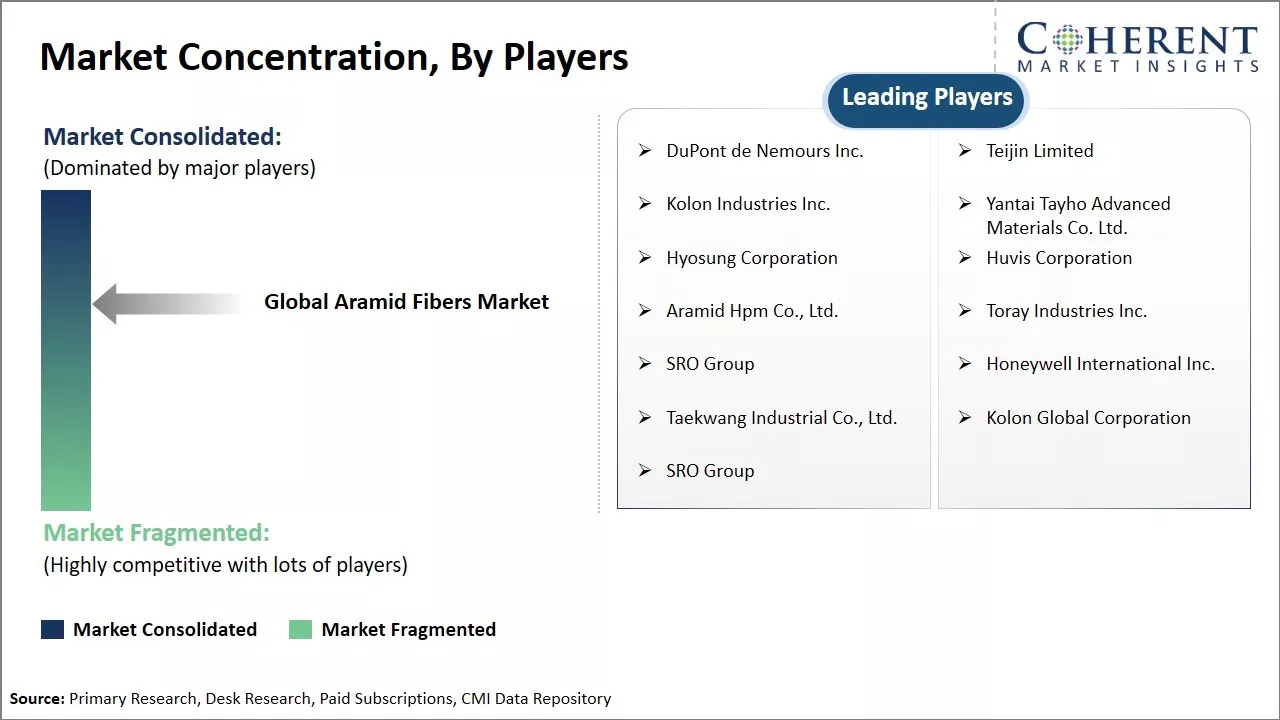
| Companies covered: | DuPont de Nemours Inc., Teijin Limited, Kolon Industries Inc., Yantai Tayho Advanced Materials Co. Ltd., Hyosung Corporation, Huvis Corporation, Aramid Hpm Co., Ltd., Toray Industries Inc., SRO Group, Honeywell International Inc., Taekwang Industrial Co., Ltd., Kolon Global Corporation, and SRO Group | ||
| Growth Drivers: |
| ||
| Restraints & Challenges: |
| ||
Market Concentration and Competitive Landscape
Aramid Fibers Industry News
- In 2025, DuPont's new-generation Kevlar EXO™ aramid fiber was awarded a Gold Edison Award for safety material innovation of critical importance, celebrating its unprecedented harmony of flexibility, lightness, and ballistic protection.
- In 2024, Teijin Aramid was awarded the Tire Technology International Materials Innovation of the Year Award for its innovation in recycling aramid fibers to produce Twaron®, a technological innovation in sustainable high-performance reinforcement for tire production.
Analyst View
- The market for aramid fibers illustrates strong momentum underpinned by rising demand from aerospace, automotive, and defense industries in search of light yet high-strength materials. Increasing focus on fuel efficiency and emission control specifically in automotive use is driving the adoption of aramid fiber-reinforced composites to replace steel components. The widening defense budgets across the world, combined with increased security threats, are increasingly driving demand for ballistic protective gear using aramid fibers.
- Nonetheless, the market is subjected to significant restraints such as expensive production and intricate manufacturing procedures that limit mass consumption for price-sensitive applications. The presence of alternatives in high-performance fibers like carbon fiber and UHMWPE also poses continued threats to market penetration in some segments.
- In spite of these limitations, huge opportunities arise from the growth of the renewable energy market, especially in wind turbine blade applications where aramid fibers exhibit superior endurance to fatigue. The expanding electronics industry is a second lucrative area, with a growing need for heat-resistance and electrically insulating materials in consumer electronics as well as telecommunications infrastructure.
- North America is the leader in the aramid fibers market today, powered by high aerospace and defense spending and sophisticated automotive manufacturing capacity. The Asia-Pacific region, however, is the fastest-growing market, powered by intensive industrialization, rising automotive production, and growing infrastructure development activities. China and India are of particular interest, with huge potential arising from the growth of their manufacturing base and improved investment in advanced materials technology, setting the stage for continued leadership in the years to come.
Speak to the analyst
Want personalized insights?
Take the findings above to one of our principal consultants, or have the report rebuilt around the segments, geographies and competitors you actually track.
Market Segmentation
- Type Insights (Revenue, USD Bn & KT, 2021 - 2033)
- Para-aramid
- Meta-aramid
- Application Insights (Revenue, USD Bn & KT, 2021 - 2033)
- Security & Protection
- Frictional Materials
- Rubber Reinforcement
- Optical Fibers
- Tire Reinforcement
- Electrical Insulation
- Aerospace
- Others
- Regional Insights (Revenue, USD Bn & KT, 2021 - 2033)
- North America
- U.S.
- Canada
- Latin America
- Brazil
- Argentina
- Mexico
- Rest of Latin America
- Europe
- Germany
- U.K.
- Spain
- France
- Italy
- Russia
- Rest of Europe
- Asia Pacific
- China
- India
- Japan
- Australia
- South Korea
- ASEAN
- Rest of Asia Pacific
- Middle East & Africa
- GCC Countries
- Israel
- Rest of Middle East & Africa
- Key Players Insights
- DuPont de Nemours Inc.
- Teijin Limited
- Kolon Industries Inc.
- Yantai Tayho Advanced Materials Co. Ltd.
- Hyosung Corporation
- Huvis Corporation
- Aramid Hpm Co., Ltd.
- Toray Industries Inc.
- SRO Group
- Honeywell International Inc.
- Taekwang Industrial Co., Ltd.
- Kolon Global Corporation
Sources
Primary Research Interviews
- Aramid fiber manufacturers and suppliers
- Automotive and aerospace industry executives
- Defense and military equipment procurement managers
- Industrial textile and composite material distributors
- Others
Databases
- Chemical Economics Handbook (CEH)
- Global Trade Atlas
- Platts Chemical Market Analytics
- ICIS Database
- Others
Magazines
- Composites Manufacturing Magazine
- Technical Textiles International
- Advanced Materials & Processes
- Reinforced Plastics Magazine
- Textile World Magazine
- Others
Journals
- Journal of Materials Science
- Composites Science and Technology
- Textile Research Journal
- Others
Newspapers
- Chemical Week
- Plastics News
- Fiber2Fashion News
- Just Style Industry News
- Chemical & Engineering News
- Others
Associations
- American Composites Manufacturers Association (ACMA)
- Textile Research Institute (TRI)
- Society of Plastics Engineers (SPE)
- International Association of Advanced Materials (IAAM)
- Carbon Fiber Industry Association
- Others
Public Domain Sources
- U.S. Bureau of Labor Statistics
- European Chemicals Agency (ECHA)
- Ministry of Textiles, Government of India
- Japan Chemical Fibers Association reports
- China National Textile and Apparel Council publications
- Others
Proprietary Elements
- CMI Data Analytics Tool
- Proprietary CMI Existing Repository of information for last 8 years
Get access to 250+ pages report
Every segment, forecast, competitor profile and data table behind the analysis above — available for instant download.
- ESOMAR Member
- ISO 9001:2015 Certified
- D-U-N-S Registered
- GDPR & CCPA Compliant
Missing comfort of reading report in your local language? Find your preferred language:
Transform your Strategy with Exclusive Trending Reports
Frequently Asked Questions
The Aramid Fibers Market size is estimated to be valued at USD 4.53 Bn in 2026, and is expected to reach USD 8.56 Bn by 2033.
The CAGR of the global Market is projected to be 9.5% from 2026 to 2033.
Strong demand from aerospace and defense industries and protective fabrics and industrial filtration emerging as new avenues are the major factors driving the growth of the global market.
Strict environmental regulations and availability of substitute products are the major factors hampering the growth of the global aramid fibers industry.
North America is expected to lead the global Market due to its strong aerospace, defense, and automotive industries driving demand.
The leading raw material in the Aramid Fibers Market is poly-paraphenylene terephthalamide, commonly used to produce para-aramid fibers like Kevlar.
The aramid paper market is growing steadily as it is widely used for electrical insulation in transformers, cables, and automotive components due to its excellent thermal and mechanical properties.