

Automotive Interior Leather Market Analysis & Forecast: 2026-2033
The Global Automotive Interior Leather Market size is estimated to be valued at USD 39.03 Bn in 2026 and is expected to reach USD 62.68 Bn by 2033, exhibiting a compound annual growth rate (CAGR) of 7.0% from 2026 to 2033.
Key Takeaways
- By Material, the Genuine Leather segment is expected to dominate the global automotive interior leather market outlook with a 66.2% share in 2026.
- By Vehicle Type, the Passenger Car segment is expected to retain the top position with a 41.8% share in 2026.
- By Application, the Seats and Center Stack segment is projected to capture 35.3% market share in 2026 as manufacturers shift their attention to more ergonomic and comfort-centric design features in heavily used interior surfaces.
- By Region, North America is expected to dominate with a 40.0% market share in 2026 because of the advanced high-end interiors and technology used.
Market Overview
Vehicle owners enjoy the comfort, style, and premium appeal provided by leather upholstery. Customers are now buying luxury vehicles with leather interiors because of increased disposable income. In order to meet distinct market segments, manufacturers are offering polyurethane leather and synthetic leather, but they also have to consider the stringent vehicle emission regulations which may slow the demand for leather interiors in the future.
Current Events and Its Impact on the Automotive Interior Leather Market
Event | Description and Impact |
Geopolitical Trade Policy Changes |
|
Environmental Compliance Mandates |
|
Supply Chain Reconfiguration |
|
Development of Bio-based Automotive Interior Leather
The development of bio-based automotive interior leather is gaining momentum as the auto industry shifts toward sustainable materials. Made from renewable resources like industrial hemp, mycelium, or plant oils, these alternatives aim to reduce reliance on animal leather and synthetic plastics.
In September 2024, Volkswagen partnered with German start-up Revoltech GmbH to develop LOVR, a 100% bio-based leather alternative made from industrial hemp. Fully recyclable and compostable, LOVR is designed for car interiors and could appear in Volkswagen models by 2028. The material is compatible with existing manufacturing processes, allowing for scalable production.
- Current Industry Events of 2026
- Market Size Estimation
- Regional Breakdown
- Competitive Landscape
- Customer Intelligence
- Segmental Analysis
- Pricing Analysis
- Key Market Drivers, Challenges & Future Trends
- Customized Insights Section
Segmental Insights
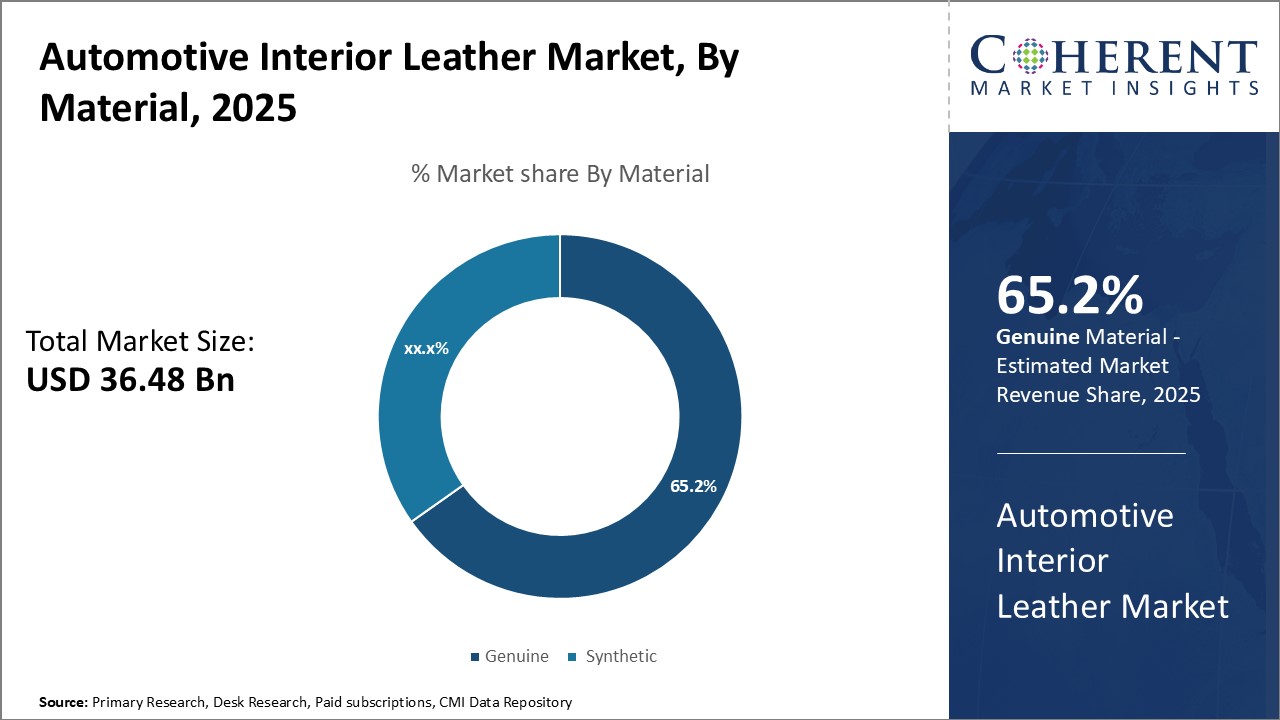
Automotive Interior Leather Market Insights, By Material: Genuine Leather Dominates Market Share Driven by Cost-Effectiveness and Low Maintenance
In terms of material, the genuine segment is estimated to hold 66.2% share in 2026 of the global automotive interior leather market demand due to its cost-effectiveness and easy maintenance qualities compared to synthetic leather.
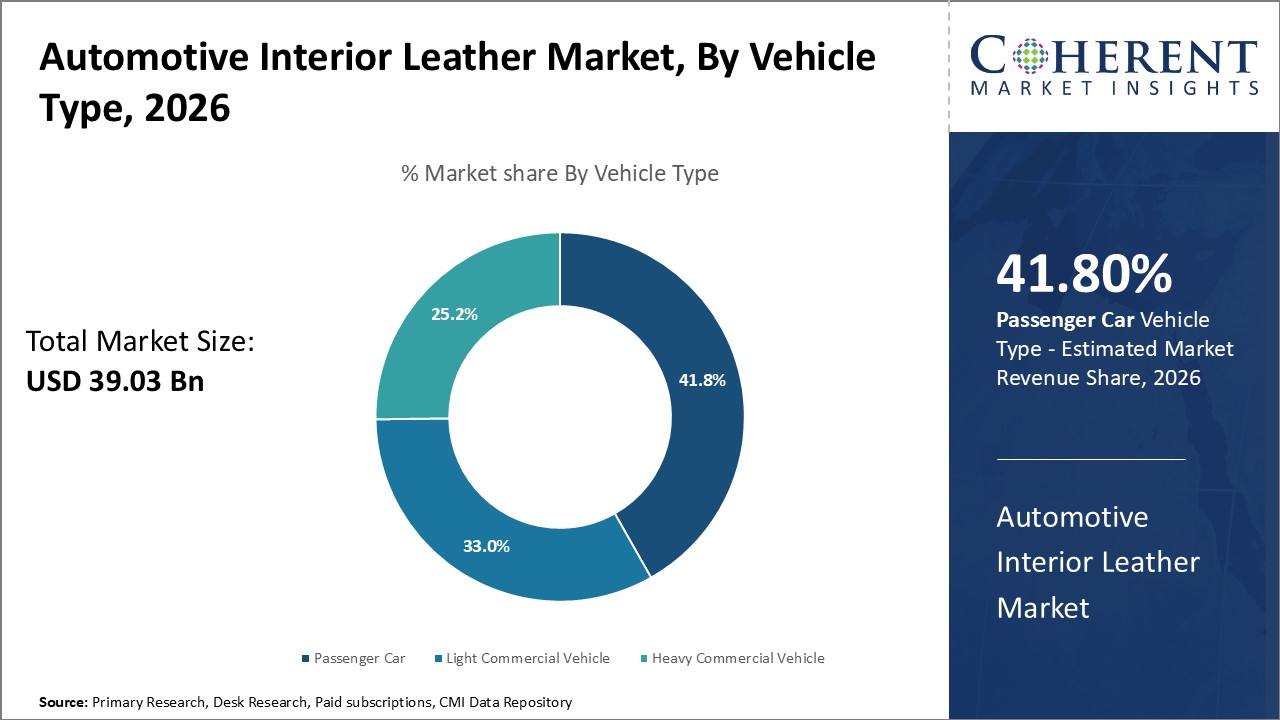
Automotive Interior Leather Market Insights By Vehicle Type: Passenger Cars Lead Demand, Boosted by Comfort and Premium Onboard Experience
Among vehicle types, the passenger car segment is estimated to hold 41.8% share in 2026 of the automotive interior leather market due to higher unit volumes and priority on onboard experience. The automotive interior leather market is a key differentiator for both mass-market and premium vehicle segments globally. Leather upholstery provides superior comfort, support, and breathability, enhancing the driving experience
Automotive Interior Leather Market Insights By Application: Center Consoles Draw Designer Attention
Among applications, the seats and center stack segment is estimated to hold the 35.3% share in 2026 of the automotive leather market. This is because drivers and passengers interact most directly with these surfaces on a regular basis. Automakers prioritize innovative leather-based solutions for high-touch areas of the vehicle interior, as they significantly influence perceived quality and luxury. Leather-wrapped seats provide superior ergonomics, support, and aesthetics, enhancing the overall in-cabin experience.
Regional Insights
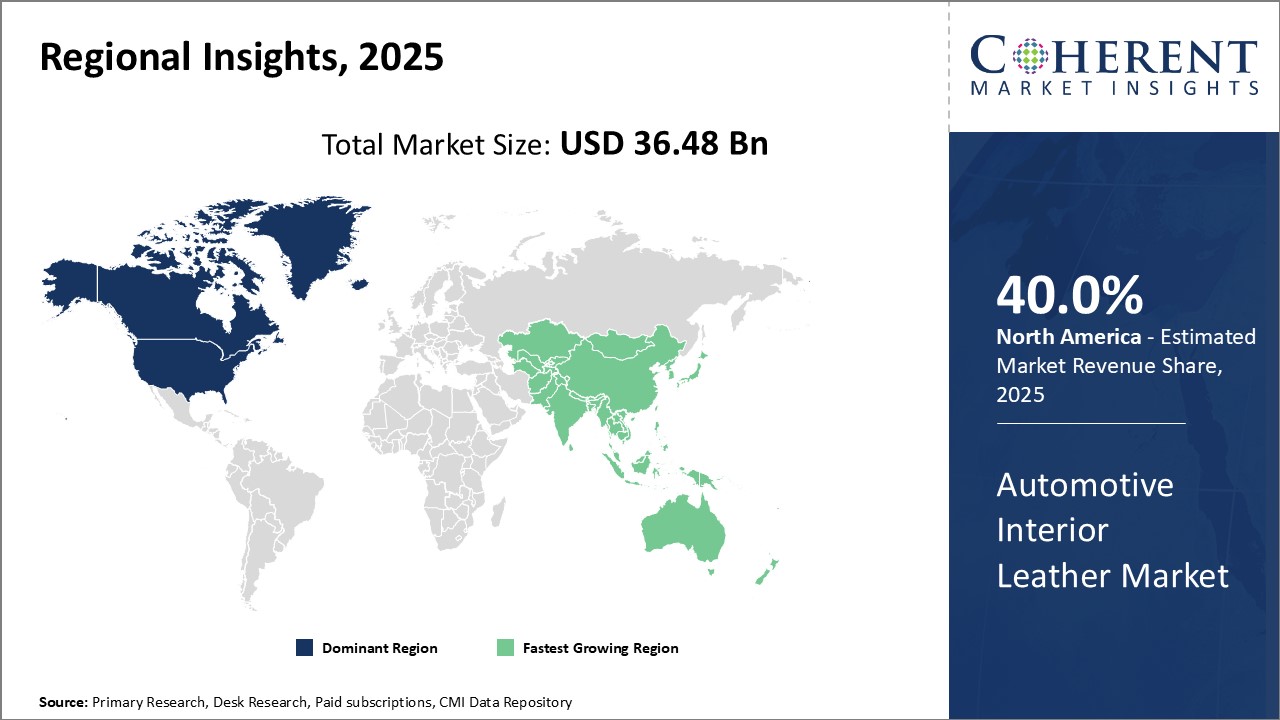
North America Automotive Interior Leather Market Analysis and Trends
North America is estimated to dominate the global automotive interior leather market trend with 40.0% share in 2026. The large-scale automotive production that takes place in countries like U.S. and Canada has ensured there is huge demand for leather. Major automakers in North America prefer using high quality leather upholstery for most premium and luxury vehicles.
Asia Pacific Automotive Interior Leather Market
One region that has been witnessing astonishing growth is Asia Pacific. Especially countries like China, India and Malaysia have seen huge automotive production ramp-ups in recent years. Rising disposable incomes are pushing more consumers to buy cars with premium interiors. While these nations had largely imported automotive leather earlier, their domestic industries are fast catching up.
Market Report Scope
Automotive Interior Leather Market Report Coverage
| Report Coverage | Details | ||
|---|---|---|---|
| Base Year: | 2025 | Market Size in 2026: | USD 39.03 Bn |
| Historical Data for: | 2020 To 2024 | Forecast Period: | 2026 To 2033 |
| Forecast Period 2026 to 2033 CAGR: | 7.0% | 2033 Value Projection: | USD 62.68 Bn |
| Geographies covered: |
| ||
| Segments covered: |
| ||
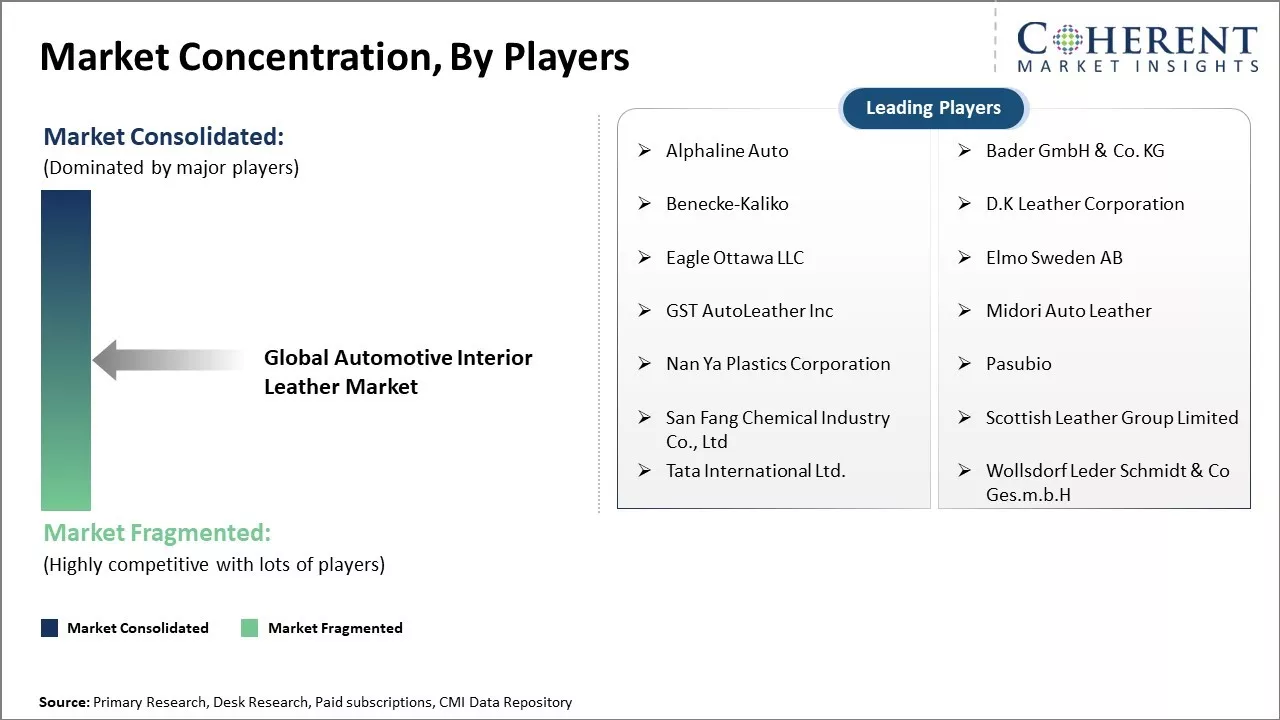
| Companies covered: | Alphaline Auto, Bader GmbH & Co. KG, Benecke-Kaliko, D.K Leather Corporation, Eagle Ottawa LLC, Elmo Sweden AB, GST AutoLeather Inc, Midori Auto Leather, Nan Ya Plastics Corporation, Pasubio, San Fang Chemical Industry Co., Ltd, Scottish Leather Group Limited, Tata International Ltd., and Wollsdorf Leder Schmidt & Co Ges.m.b.H | ||
| Growth Drivers: |
| ||
| Restraints & Challenges: |
| ||
Market Concentration and Competitive Landscape
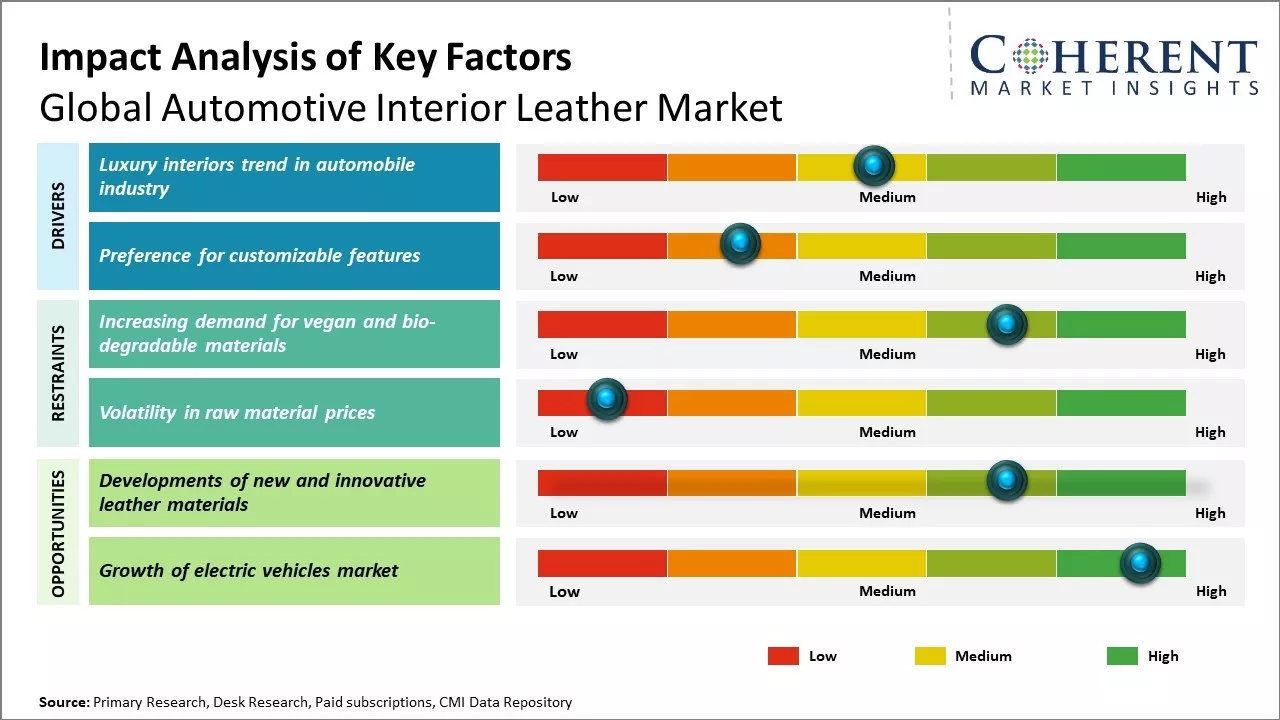
Luxury automobile interiors trends
The automobile sector has seen prominent growth in demand for luxury automobiles in all major markets during the past few years. Customers purchasing automobiles pay more attention to features and are ready to pay a premium for better design, comfort, and overall experience. Leather as an interior surface has practically become a hallmark of luxury and sophisticated design in mid to upper range vehicles. Leather seats is regarded as a status symbol and its light fluffy texture accentuates the feeling of luxury. Even entry level models from most luxury brands are now outfitted with fully leather-covered interiors as standard.
For example, in July 2022 Sage-ONF, a synthetic leather supplier with 29 years’ experience in design and development, manufacturing and selling, announced the start of serial production of their innovative silicone synthetic leather for automotive interiors.
Preference for custom selectable options
Customers nowadays want their vehicles to represent their personalities; hence they look for configurable options which allow personalization at the design level. The automobile interior industry has experienced a significant change in the direction of offering customers a wide range of options regarding materials, such as constituent parts, textiles, colors, graphics, and treatment designs.
Automotive Interior Leather Market Opportunities: Developments of new and innovative leather materials
The development of new innovative leather materials offers a great opportunity to drive growth in the global automotive interior leather market forecast. Automotive interiors are increasingly demanding high quality, sustainable and technologically advanced leather materials.
For example, MuSkin - a leather-like material created from food waste by Anthropic using AI-tools, is 100% compostable and uses byproducts rather than animal skins. Such innovations cater to consumers who prefer sustainable interior décor.
Automotive Interior Leather Market Key Developments
- In March 2025, Lear Corporation launched its new sustainable leather series, “EvoEco,” made from 70% recycled materials. This product line aims to meet growing consumer demand for eco-friendly automotive interiors while maintaining premium quality and durability.
- In February 2025, Adient partnered with a biotech startup to develop microbial-based leather alternatives designed specifically for automotive seating. This collaboration highlights the industry’s shift toward innovative, sustainable materials that reduce reliance on traditional animal leather.
- In December 2024, GST AutoLeather invested $25 million to expand its synthetic leather production capacity in Vietnam, aiming to capitalize on rising demand for cost-effective and environmentally conscious interior materials in the Asia Pacific region.
Analyst Viewpoint
- Rising automobile production and sales across major markets will drive higher demand for interior leather. Additionally, increasing preference of OEMs and consumers for premium and luxury interiors will boost leather adoption. Leather provides superior aesthetic appeal, durability and comfort in automotive cabins.
- Growth in electric vehicles may limit leather usage to some extent. EVs have simpler interiors with reduced focus on luxury features. Moreover, ethical and environmental concerns around leather production may encourage buyers to opt for synthetic and faux materials. High raw material prices can also pressure OEM margins, thereby impacting the market. For instance, in January 2025, Toyota announced plans to phase out genuine leather interiors in all hybrid and electric vehicles by 2027. This strategic decision reflects Toyota’s commitment to sustainability and aligns with broader industry trends toward vegan and synthetic materials.
- The Asia Pacific region, led by China and India, offers lucrative opportunities due growing middle class population and sales of affordable luxury vehicles. European nations like Germany and UK also account for a notable share owing to strong premium vehicle manufacturing base. However, North America is expected to emerge as the fastest growing regional market propelled by favorable demographics and rising focus on infotainment and comfort inside cars.
- In summary, while the automotive interior leather market is set for steady expansion, OEMs need to cautious of technological shifts and sustainability aspects that can influence material preferences over the long term.
Market Segmentation
- Material Insights (Revenue, US$ Bn, 2021 - 2033)
- Genuine
- Synthetic
- PU
- PVC
- Others
- Vehicle Type Insights (Revenue, US$ Bn, 2021 - 2033)
- Passenger Car
- Light Commercial Vehicle
- Heavy Commercial Vehicle
- Application Insights (Revenue, US$ Bn, 2021 - 2033)
- Seats & Center Stack
- Carpets
- Headliners
- Upholstery
- Seat Belt
- Door Panels
- Others
- Regional Insights (Revenue, US$ Bn, 2021 - 2033)
- North America
- U.S.
- Canada
- Latin America
- Brazil
- Argentina
- Mexico
- Rest of Latin America
- Europe
- Germany
- U.K.
- Spain
- France
- Italy
- Russia
- Rest of Europe
- Asia Pacific
- China
- India
- Japan
- Australia
- South Korea
- ASEAN
- Rest of Asia Pacific
- Middle East & Africa
- GCC Countries
- Israel
- South Africa
- Rest of Middle East & Africa
- Key Players Insights
- Alphaline Auto
- Bader GmbH & Co. KG
- Benecke-Kaliko
- D.K Leather Corporation
- Eagle Ottawa LLC
- Elmo Sweden AB
- GST AutoLeather Inc
- Midori Auto Leather
- Nan Ya Plastics Corporation
- Pasubio
- San Fang Chemical Industry Co., Ltd
- Scottish Leather Group Limited
- Tata International Ltd.
- Wollsdorf Leder Schmidt & Co Ges.m.b.H
Sources
Primary Research interviews
- Automotive interior leather suppliers
- Luxury vehicle OEMs
- Automotive design specialists
- Sustainability consultants focusing on eco-friendly materials
- Others
Databases
- Coherent Market Insights Proprietary Database
- Others
Magazines
- Automotive News Europe
- Auto Interiors International
- Luxury Car Magazine
- Others
Journals
- Journal of Automotive Engineering
- International Journal of Vehicle Design
- Leather Science and Technology Journal
- Others
Newspapers
- The Wall Street Journal (Automotive Section)
- Financial Times (Transport & Logistics)
- Automotive World
- Others
Associations
- Leather Working Group (LWG)
- Society of Automotive Engineers (SAE International)
- International Organization of Motor Vehicle Manufacturers (OICA)
- Others
Public Domain sources
- U.S. Department of Commerce Automotive Trade Data
- European Automobile Manufacturers’ Association (ACEA) Reports
- National Highway Traffic Safety Administration (NHTSA) Guidelines
Others
- Proprietary Elements:
- CMI Data Analytics Tool
- Proprietary CMI Existing Repository of information for last 8 years
*Definition: The global automotive interior leather market includes leather products used for interior automotive components like seats, door panels, instrument panels, headliners, and other interior trims. Leather is a popular material for vehicle interiors due to its premium and luxurious aesthetic appeal. The global market covers suppliers of automotive leather and tanned hides that are purchased by automakers and used in the manufacturing of various interior parts. Key players in this market focus on developing innovative and stylish leather materials to enhance the comfort, appearance, and value of vehicle cabins
Get access to 250+ pages report
Every segment, forecast, competitor profile and data table behind the analysis above — available for instant download.
- ESOMAR Member
- ISO 9001:2015 Certified
- D-U-N-S Registered
- GDPR & CCPA Compliant
Missing comfort of reading report in your local language? Find your preferred language:
Transform your Strategy with Exclusive Trending Reports
Frequently Asked Questions
The Automotive Interior Leather Market size is estimated to be valued at USD 39.03 Bn in 2026, and is expected to reach USD 62.68 Bn by 2033.
The CAGR of the Automotive Interior Leather Market is projected to be 7.0% from 2026 to 2033.
Luxury interiors trend in automobile industry and Preference for customizable features are the major factors driving the growth of Global Automotive Interior Leather Market.
Increasing demand for vegan and bio-degradable materials and Volatility in raw material prices are the major factors hampering the growth of Global Automotive Interior Leather Market.
In terms of Material, Genuine is estimated to dominate the market revenue share in 2026.
Alphaline Auto, Bader GmbH & Co. KG, Benecke-Kaliko, D.K Leather Corporation, Eagle Ottawa LLC, Elmo Sweden AB, GST AutoLeather Inc, Midori Auto Leather, Nan Ya Plastics Corporation, Pasubio, San Fang Chemical Industry Co., Ltd, Scottish Leather Group Limited, Tata International Ltd., and Wollsdorf Leder Schmidt & Co Ges.m.b.H are the major players.
North America is expected to lead the Global Automotive Interior Leather Market.