

Bioelectric Medicine Market Size and Forecast – 2026 to 2033
Global bioelectric medicine market was valued USD 25.46 Bn in 2026 and is expected to reach USD 47.75 Bn by 2033 exhibiting a compound annual growth rate (CAGR) of 9.4% from 2026 to 2033.
Key Takeaways
- By Product Type, Implantable Device hold the largest market share of 56.8% in 2026 owing to its rising prevalence of chronic diseases.
- By Application, Cardiovascular Disorders expected to hold the largest market share in 2026 owing to its technological advancements in bioelectric devices.
- By End Use, Hospitals acquired the prominent market share in 2026 owing to the integration with artificial intelligence and wearable technology.
- By Region, North America dominates the overall market with an estimated share of 43.7% in 2026 owing to the advanced healthcare infrastructure.
Market Overview
The bioelectric medicine market is rapidly evolving as researchers and companies develop advanced electroceutical therapies that target specific nerves to treat chronic diseases. These therapies address a wide range of conditions, including cardiovascular, neurological, and metabolic disorders, providing non-pharmacological alternatives with fewer side effects. Rising chronic disease prevalence, innovations in implantable and wearable devices, and expanding use in hospitals and clinics actively drive market growth. Increased patient awareness and supportive regulatory frameworks further accelerate adoption, establishing bioelectric medicine as a transformative healthcare solution.
Current Events and their Impact on the Bioelectric Medicine Market
Current Events | Description and its impact |
Technological Advancements in Bioelectronic Devices |
|
Regulatory and Reimbursement Landscape Changes |
|
Clinical Research and Market Adoption Trends |
|
Role of AI (Artificial Intelligence) in Bioelectric Medicine Industry
Artificial intelligence (AI) plays a transformative role in bioelectronic medicine by enabling precise, personalized modulation of neural activity. Through advanced algorithms, AI analyzes vast streams of bioelectrical data to identify abnormal signaling patterns and optimize stimulation parameters in real time. This enhances the efficacy and safety of treatments for neurological and chronic conditions, such as tremors, epilepsy, or pain disorders. AI-driven adaptive systems can learn individual patient responses, allowing for dynamic adjustments without manual intervention. By integrating data analytics, machine learning, and neural interface technologies, AI accelerates innovation and paves the way for smarter, more effective bioelectronic therapies.
In July 2025, Fasikl, a leading neuro-AI company merging bioelectronic medicine with artificial intelligence, announced that the FDA has granted 510(k) clearance for its Felix™ NeuroAI™ Wristband — the first device of its kind designed to address tremor-related upper limb limitations in adults with essential tremor.
- Current Industry Events of 2026
- Market Size Estimation
- Regional Breakdown
- Competitive Landscape
- Customer Intelligence
- Segmental Analysis
- Pricing Analysis
- Key Market Drivers, Challenges & Future Trends
- Customized Insights Section
Segmental Insights
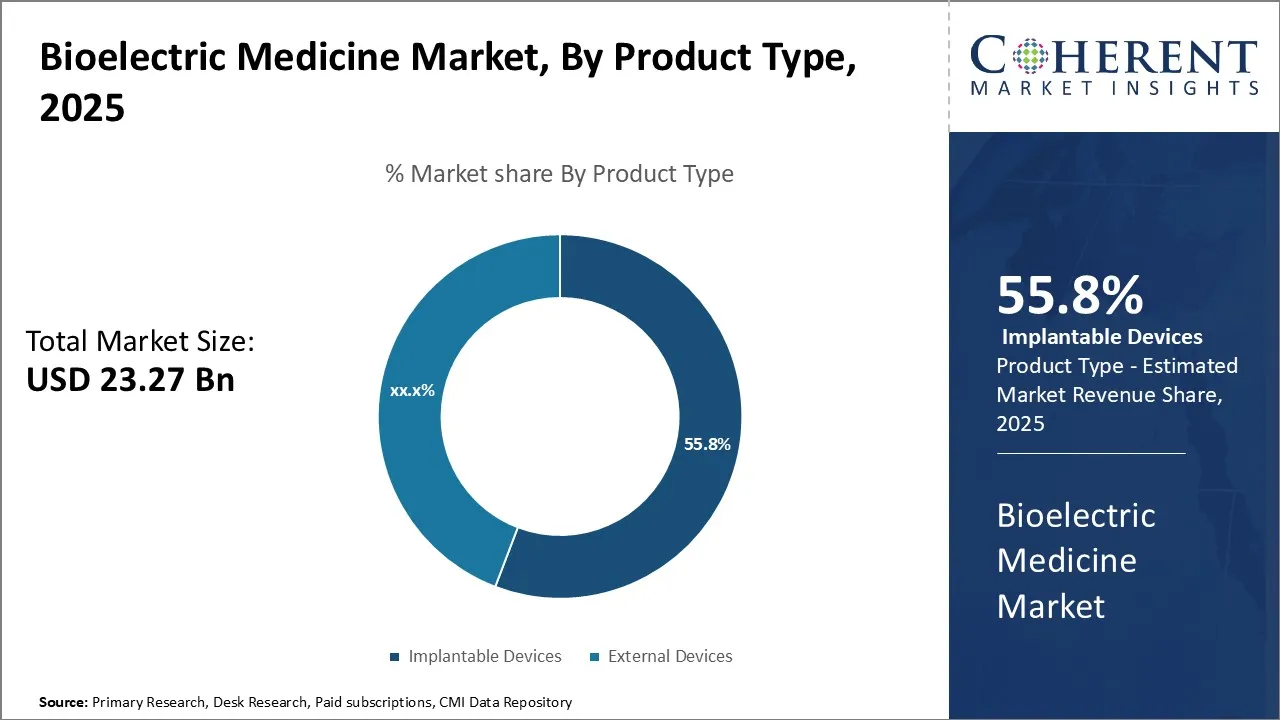
Bioelectric Medicine Market Insights, by Product Type: Implantable Device contribute the highest share of the market owing to its preference for non-pharmacological treatments.
Implantable Device hold the largest market share of 56.8% in 2026. The implantable device segment in the bioelectric medicine market is growing rapidly as it delivers precise, long-term therapies for chronic diseases. Researchers and manufacturers continue to improve device performance and patient comfort through innovations in miniaturization, wireless communication, and biocompatible materials. The rising prevalence of neurological and cardiovascular disorders fuels demand for these targeted solutions. Moreover, strong clinical validation and supportive healthcare policies drive broader adoption, establishing implantable devices as a vital component of modern bioelectric treatments. For instance, in May 2025, Moximed treated the first patients in its MOTION RCT, a randomized controlled trial comparing outcomes for medial knee osteoarthritis patients receiving the MISHA Knee System implant versus non-surgical treatment.
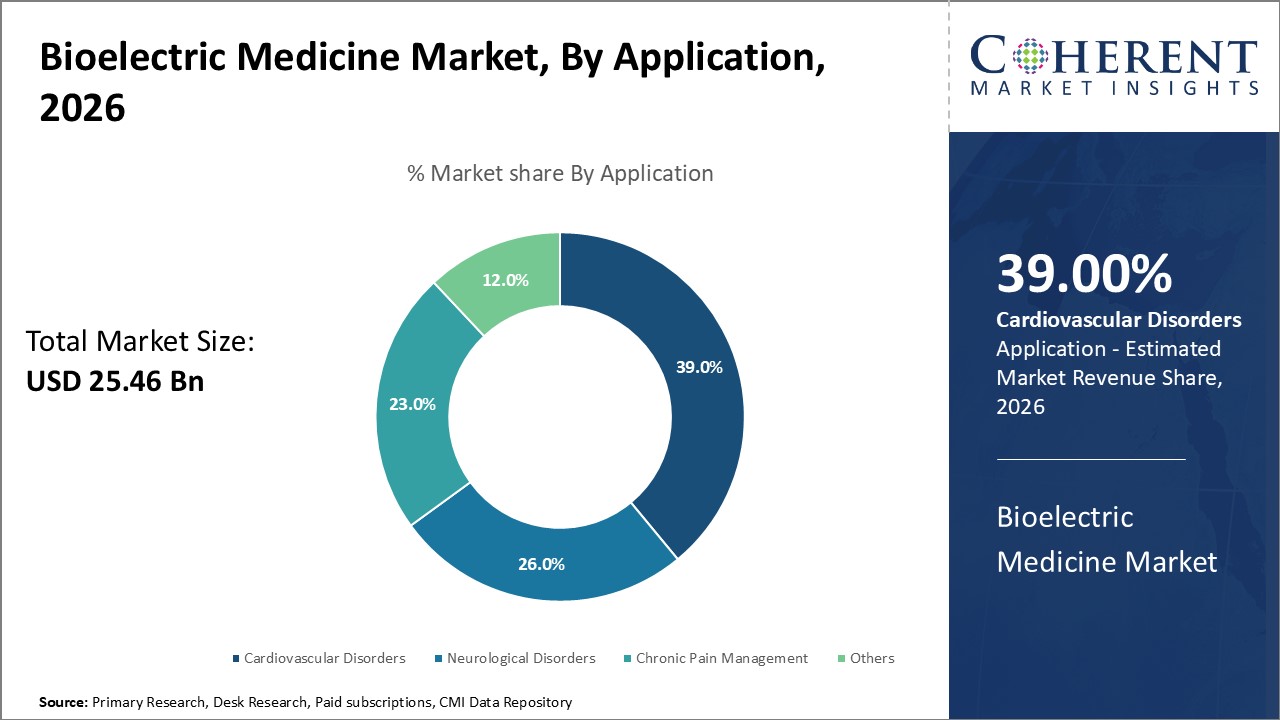
Bioelectric Medicine Market Insights, by Application: Cardiovascular Disorders contribute the highest share of the market owing to its aging global population.
Bioelectric medicine for cardiovascular disorders is expanding as heart-related conditions such as arrhythmia and heart failure continue to rise. Manufacturers are developing advanced implantable devices like pacemakers and defibrillators to provide effective, drug-free management of these diseases. Innovations in leadless technology and remote monitoring improve treatment precision and patient safety. Growing awareness of minimally invasive options, combined with strong healthcare infrastructure and favorable reimbursement policies, drives wider adoption of bioelectric therapies in cardiovascular treatment.
Bioelectric Medicine Market Insights, by End Use: Hospitals contribute the highest share of the market owing to its integration with artificial intelligence and wearable technology.
Hospitals are driving growth in the bioelectric medicine market by actively integrating advanced electroceutical therapies into patient care. As chronic diseases become more prevalent, healthcare providers are seeking innovative, non-drug treatment options. Hospitals are adopting modern bioelectric devices and upgrading infrastructure to deliver precise and personalized therapies. Continuous technological innovation, skilled medical staff, and favorable reimbursement policies are accelerating this adoption, enabling hospitals to improve treatment outcomes and provide more efficient, patient-focused healthcare services. For instance, in April 2024, Vomaris, a leader in bioelectric wound care, launched its FDA-cleared PowerHeal™ bioelectric bandage for over-the-counter (OTC) use, advancing consumer wound care.
Regional Insights
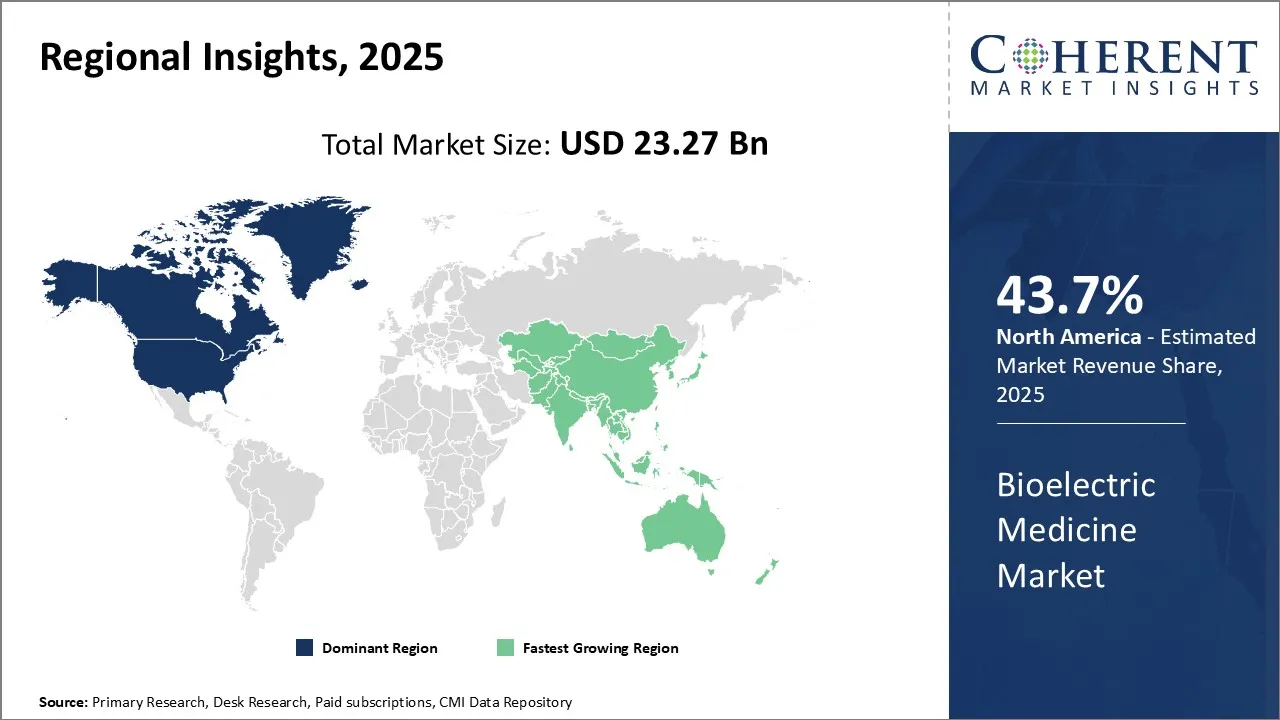
North America Bioelectric Medicine Market Trends
North America dominates the overall market with an estimated share of 43.7% in 2026. The bioelectric medicine market in North America is expanding as healthcare providers leverage advanced infrastructure and adopt cutting-edge medical technologies. Rising incidences of chronic diseases, including neurological and cardiovascular disorders, are driving demand for electroceutical therapies. Key manufacturers and research institutions in the region are actively developing next-generation implantable and wearable devices. Favorable regulatory support, robust reimbursement frameworks, and increasing patient awareness are strengthening North America’s position as a leader in bioelectric healthcare innovation. For instance, Pulse Biosciences, Inc., a bioelectric medicine company advancing Nano-Pulse Stimulation™ (NPS™) technology, has treated the first clinic patients with its CellFX® System.
Asia Pacific Bioelectric Medicine Market Trends
Countries across Asia Pacific are accelerating the growth of the bioelectric medicine market by investing in advanced healthcare technologies and expanding access to modern therapies. The rising prevalence of chronic and age-related diseases is driving the demand for electroceutical treatments. Governments and private organizations are actively funding research and forming partnerships to foster innovation in bioelectric devices. Strengthening healthcare infrastructure, a vast patient population, and growing awareness of non-invasive options are positioning the region as a major hub for bioelectric medicine.
United States Bioelectric Medicine Market Trends
The United States leads the bioelectric medicine market as healthcare providers adopt advanced technologies and modern medical infrastructure. Rising rates of chronic diseases, such as cardiovascular and neurological disorders, are driving strong demand for electroceutical therapies. Top medical device manufacturers and research institutions are actively developing next-generation implantable and wearable devices. Supportive regulatory policies, robust reimbursement systems, and increasing patient awareness are accelerating adoption, establishing the U.S. as a major innovator in bioelectric healthcare and a hub for transformative therapeutic solutions. For instance, in April 2024, electroCore, Inc., a bioelectronic medicine and wellness company, has launched Truvaga Plus, its direct-to-consumer mobile app-enabled product for general wellness.
Japan Bioelectric Medicine Market Trends
Japan is strengthening its role in the bioelectric medicine market by leveraging an advanced healthcare system and driving technological innovation. The growing elderly population and rising prevalence of chronic diseases are increasing demand for non-invasive electroceutical therapies. Japanese medical device companies and research institutions are actively creating next-generation implantable and wearable devices. Government initiatives, robust healthcare infrastructure, and rising patient awareness are accelerating adoption, establishing Japan as a major contributor to the development and advancement of bioelectric medicine.
End-user Feedback and Unmet Needs in the Bioelectric Medicine Market
- Patient Comfort and Convenience: Patients often highlight the need for smaller, less invasive devices that minimize discomfort during implantation and daily use. Portability, ease of maintenance, and discreet designs remain critical concerns. Improving ergonomics and user-friendly interfaces can enhance long-term adherence and satisfaction with bioelectric therapies.
- Effectiveness Across Conditions: End-users report variability in therapeutic outcomes, especially for complex neurological or cardiovascular disorders. Many patients and clinicians seek more consistent, reliable results. Research into personalized stimulation protocols and adaptive devices could address these gaps and improve overall efficacy across diverse patient populations.
- Access and Affordability: High device costs and limited insurance coverage restrict patient access to bioelectric therapies. Hospitals and clinics emphasize the need for broader reimbursement policies and cost-effective solutions. Making therapies financially accessible is essential to ensure wider adoption and equitable healthcare delivery.
Bioelectric Medicine Market Trend
Expansion of Electroceutical Applications
Bioelectric medicine is rapidly expanding beyond traditional cardiovascular and neurological uses. Researchers are exploring therapies for metabolic, inflammatory, and autoimmune disorders, broadening the scope of electroceutical interventions. Hospitals and clinics increasingly integrate these treatments to provide non-drug alternatives, reducing side effects. The trend emphasizes targeted nerve stimulation and personalized therapy protocols, enabling precise treatment delivery. This expansion is driving innovation in device design, treatment strategies, and clinical adoption worldwide.
Advancements in Implantable and Wearable Devices
Technological innovation is reshaping bioelectric medicine through smaller, smarter, and more efficient implantable and wearable devices. Miniaturized components, wireless connectivity, and real-time monitoring capabilities improve patient comfort, compliance, and outcomes. Devices are becoming increasingly adaptive, adjusting therapy based on patient condition and feedback. This trend supports home-based care and remote patient monitoring, increasing accessibility and encouraging broader adoption in hospitals, clinics, and specialized care centers.
Bioelectric Medicine Market Opportunity
Expansion into Chronic Disease Management
Bioelectric medicine presents significant opportunities in managing chronic conditions such as diabetes, cardiovascular disorders, and neurological diseases. Unlike traditional pharmacological treatments, electroceutical therapies offer precise, targeted interventions that reduce side effects. Hospitals and clinics are increasingly exploring these options to improve patient outcomes. Companies can capitalize on this demand by developing specialized devices and therapy protocols tailored to different chronic conditions, thereby broadening their product portfolio and addressing unmet clinical needs.
Market Report Scope
Bioelectric Medicine Market Report Coverage
| Report Coverage | Details | ||
|---|---|---|---|
| Base Year: | 2025 | Market Size in 2026: | USD 25.46 Bn |
| Historical Data for: | 2020 To 2024 | Forecast Period: | 2026 To 2033 |
| Forecast Period 2026 to 2033 CAGR: | 9.4% | 2033 Value Projection: | USD 47.75 Bn |
| Geographies covered: |
| ||
| Segments covered: |
| ||
| Companies covered: | Medtronic plc., Boston Scientific Corporation, Cochlear Limited, Axonics Modulation Technologies, LivaNova PLC, MED-EL, MicroTransponder, Abbott Laboratories, Nevro Corp, ElectroCore LLC, BioElectronics, Bioventus Rehab Company, NeuroMetrix, Inc., Stimwave LLC, Soterix Medical Inc. and Other Prominent Players | ||
| Growth Drivers: |
| ||
| Restraints & Challenges: | High cost of bioelectric medicine devices | ||
Bioelectric Medicine Market News
- In June 2023, Cala Health, a California-based bioelectronic medicine company, commercially launched the Cala kIQ system, the FDA-cleared, first noninvasive wearable device to temporarily relieve tremors in ET and Parkinson’s patients.
- In September 2024, Spark Biomedical, a leader in wearable neurostimulation, has launched the Spark Biomedical Innovation Fellowship, a year-long program offering resident clinicians hands-on opportunities in medical device innovation and entrepreneurship.
Analyst Opinion (Expert Opinion)
- The bioelectric medicine market stands at a pivotal juncture, poised to redefine therapeutic paradigms. Advancements in implantable devices, particularly cardiac pacemakers, have led to a significant surge in adoption rates.
- Technological innovations are propelling the field forward. The integration of artificial intelligence with bioelectric devices enables real-time, adaptive therapy adjustments, enhancing treatment efficacy. This convergence of AI and bioelectric medicine is particularly evident in neuromodulation therapies, where AI-driven algorithms optimize stimulation parameters for conditions like epilepsy and depression.
- Moreover, the shift towards non-invasive treatments is gaining momentum. Non-invasive electroceutical devices are experiencing rapid growth, driven by patient preference for treatments that minimize discomfort and risk. This trend is particularly pronounced in emerging markets, where accessibility and affordability are paramount.
Speak to the analyst
Want personalized insights?
Take the findings above to one of our principal consultants, or have the report rebuilt around the segments, geographies and competitors you actually track.
Market Segmentation
- By Product Type
- Implantable Devices
- External Devices
- By Application
- Chronic Pain Management
- Neurological Disorders
- Cardiovascular Disorders
- Others (Gastrointestinal Disorders, etc.)
- By End User
- Hospitals
- Ambulatory Surgical Centers
- Specialty Clinics
- Others (Research Institutes and Academic Centers, etc.)
- Regional Insights (Revenue, USD Mn, 2021 - 2033)
- North America
- U.S.
- Canada
- Latin America
- Brazil
- Argentina
- Mexico
- Rest of Latin America
- Europe
- Germany
- U.K.
- Spain
- France
- Italy
- Russia
- Rest of Europe
- Asia Pacific
- China
- India
- Japan
- Australia
- South Korea
- ASEAN
- Rest of Asia Pacific
- Middle East
- GCC Countries
- Israel
- Rest of Middle East
- Africa
- South Africa
- North Africa
- Central Africa
- North America
- Key Players Insights
- Medtronic plc.
- Boston Scientific Corporation
- Cochlear Limited
- Axonics Modulation Technologies
- LivaNova PLC
- MED-EL
- MicroTransponder
- Abbott Laboratories
- Nevro Corp
- ElectroCore LLC
- BioElectronics
- Bioventus Rehab Company
- NeuroMetrix, Inc.
- Stimwave LLC
- Soterix Medical Inc.
Sources
Primary Research Interviews
- Conducted interviews with key opinion leaders (KOLs), including clinicians, medical device manufacturers, and regulatory experts, to gain insights into market dynamics and emerging trends.
- Engaged with healthcare administrators and procurement officers to understand adoption barriers and purchasing decisions related to bioelectric medicine technologies.
- Consulted with patients and caregivers to assess satisfaction levels, unmet needs, and preferences regarding bioelectric therapies.
Databases
- PubMed and Scopus for accessing peer-reviewed articles and clinical studies on bioelectric medicine applications and outcomes.
- ClinicalTrials.gov to identify ongoing and completed clinical trials evaluating bioelectric devices and therapies.
- FDA and EMA databases for regulatory approvals and safety information on bioelectric medical devices.
Magazines
- BioSpectrum India: Provides industry news, product launches, and regulatory updates pertinent to the bioelectric medicine sector. Wikipedia
- Medical Device and Diagnostic Industry (MD+DI): Covers trends, innovations, and market analyses related to medical devices, including bioelectric technologies.
Journals
- Bioelectromagnetics: Publishes research on the biological effects and medical applications of electromagnetic fields, relevant to bioelectric medicine. Wikipedia
- IEEE Journal of Electromagnetics, RF and Microwaves in Medicine and Biology: Focuses on the use of electromagnetic fields in medical applications, including bioelectric therapies. Wikipedia
Newspapers
- The New York Times and The Wall Street Journal: Feature articles on healthcare innovations, regulatory changes, and market trends impacting the bioelectric medicine industry.
- Financial Times: Provides insights into investment activities, mergers, and acquisitions within the bioelectric medicine sector.
Associations
- The Bioelectromagnetics Society: Offers resources, conferences, and publications on the science and application of bioelectromagnetic technologies.
- The International Neuromodulation Society: Provides information on neuromodulation therapies, including bioelectric medicine applications.
Public Domain Sources
- World Health Organization (WHO): Provides global health statistics and reports on the prevalence of conditions treatable with bioelectric medicine.
- Centers for Disease Control and Prevention (CDC): Offers data on chronic diseases and neurological disorders relevant to bioelectric therapies.
- National Institutes of Health (NIH): Publishes research findings and funding opportunities related to bioelectric medicine.
Proprietary Elements
- CMI Data Analytics Tool
- Proprietary CMI Existing Repository of information for last 8 years
Get access to 250+ pages report
Every segment, forecast, competitor profile and data table behind the analysis above — available for instant download.
- ESOMAR Member
- ISO 9001:2015 Certified
- D-U-N-S Registered
- GDPR & CCPA Compliant
Missing comfort of reading report in your local language? Find your preferred language:
Transform your Strategy with Exclusive Trending Reports
Frequently Asked Questions
The Bioelectric Medicine Market is estimated to be valued at USD 25.46 Bn in 2026, and is expected to reach USD 47.75 Bn by 2033.
High cost of bioelectric medicine devices is the key factor hampering the growth of the global bioelectric medicine market.
Growing prevalence of chronic diseases and increasing product approvals are the major factors driving the global bioelectric medicine market.
The implantable devices segment is the leading product type segment in the global bioelectric medicine market.
The major players operating in the global bioelectric medicine market are Medtronic plc. Boston Scientific Corporation, Cochlear Limited, Axonics Modulation Technologies, LivaNova PLC, MED-EL, MicroTransponder, Abbott Laboratories, Nevro Corp, ElectroCore LLC, BioElectronics, Bioventus Rehab Company, NeuroMetrix, Inc., Stimwave LLC, Soterix Medical Inc. and Other Prominent Players
North America leads the global bioelectric medicine market.
The CAGR of the Bioelectric Medicine Market is projected to be 9.4% from 2026 to 2033.