

Bleeding Disorders Treatment Market Size and Forecast — 2026 - 2033
The Global Bleeding Disorders Treatment Market size is estimated to be valued at USD 12.3 billion in 2026 and is expected to reach USD 22.1 billion by 2033, exhibiting a compound annual growth rate (CAGR) of 8.6% from 2026 to 2033.
Overview
The bleeding disorders treatment market is driven by rising prevalence of conditions such as hemophilia and von Willebrand disease, along with increasing awareness and early diagnosis. Advancements in biotechnology, including recombinant therapies and gene therapy, are improving treatment outcomes and expanding options. Growing healthcare expenditure and better access to specialized care, especially in emerging economies, further support market growth. Government initiatives and support from patient advocacy groups also play a key role. Additionally, increased research and development investments, coupled with the adoption of prophylactic treatment approaches, are boosting demand for effective and long-term therapies.
Key Takeaways
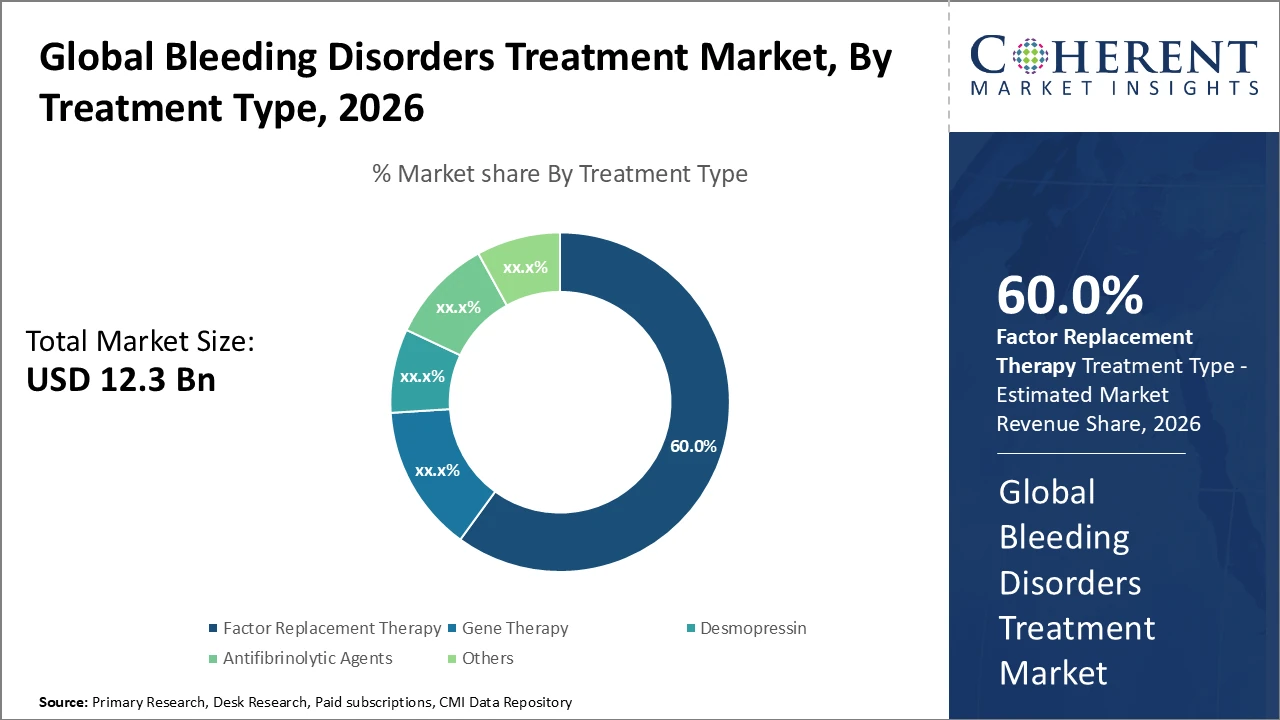
The Factor Replacement Therapy segment dominates the bleeding disorders treatment market, commanding over 60% industry share owing to its established efficacy and vast patient base.
Hemophilia A represents the fastest-growing disorder segment, with accelerated adoption of innovative therapies marked by a 12% CAGR observed during 2024-2026.
Hospitals and Specialty Clinics lead as end users due to infrastructure readiness and comprehensive care delivery models, accounting for nearly 59% market revenue.
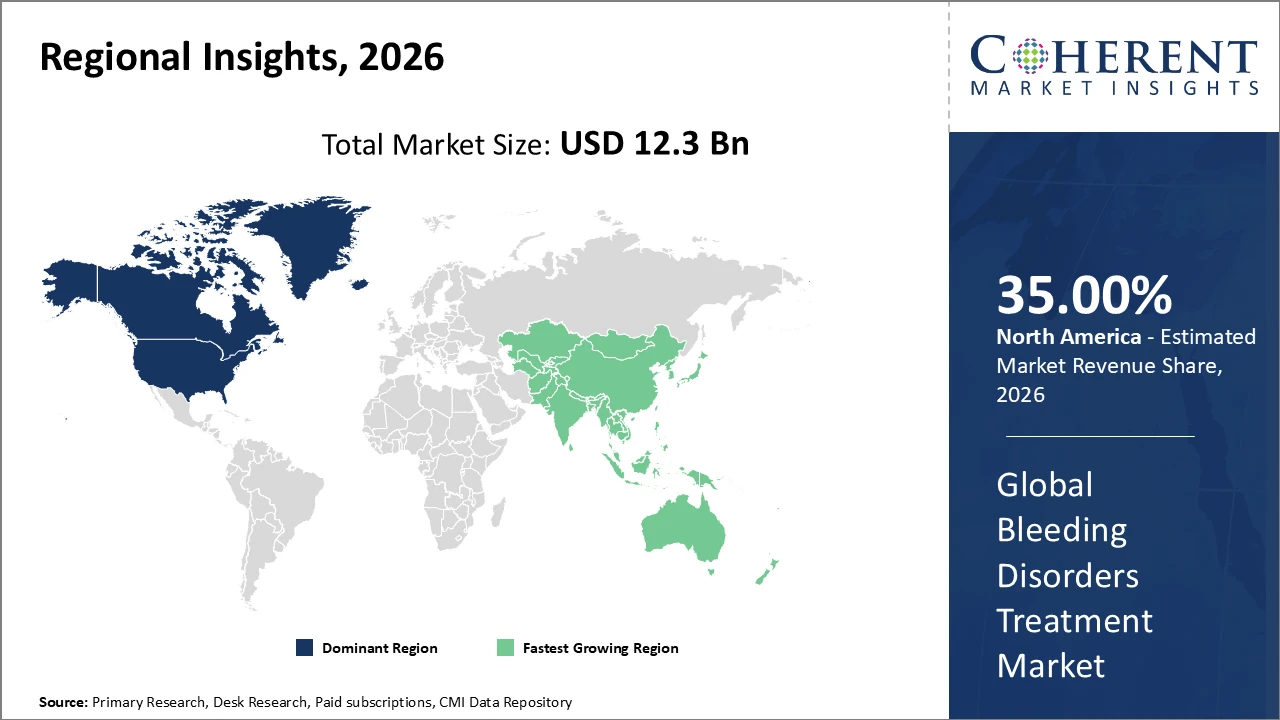
North America retains dominance in the bleeding disorders treatment market, supported by robust healthcare expenditure and advanced treatment accessibility, holding a market share surpassing 35%.
Asia Pacific emerges as the fastest-growing regional market with a CAGR exceeding 10%, propelled by rising patient awareness, government initiatives, and expanding healthcare infrastructure.
Bleeding Disorders Treatment Market Segmentation Analysis
Bleeding Disorders Treatment Market Insights, By Treatment Type
Factor Replacement Therapy dominates the bleeding disorders treatment market, driven by its proven clinical efficacy, established protocols, and widespread patient familiarity. This segment accounts for over 60% of market revenue, remaining the standard of care for hemophilia and related disorders. Gene Therapy is the fastest-growing subsegment, fueled by recent FDA approvals and promising clinical trial outcomes showing sustained factor expression and potential curative benefits. Desmopressin and Antifibrinolytic Agents serve as supportive treatments, primarily for mild cases or adjunct therapy.
Bleeding Disorders Treatment Market Insights, By Disorder Type
Hemophilia A leads the bleeding disorders treatment market, driven by higher patient prevalence and a strong therapy pipeline, capturing the largest segment share. It is also the fastest-growing segment, reflecting rapid adoption of novel therapies, including gene therapy and gene editing approaches. Hemophilia B shows steady growth, supported by incremental product launches and ongoing clinical developments. Von Willebrand Disease remains a notable segment, with continued innovations in replacement therapies enhancing patient outcomes.
Bleeding Disorders Treatment Market Insights, By End User
Hospitals and Specialty Clinics dominate the bleeding disorders treatment market, holding the largest share due to their capacity to deliver complex therapies and multidisciplinary care. Home Healthcare is the fastest-growing segment, driven by trends toward decentralized treatment, patient convenience, and the adoption of remote monitoring technologies. Hemophilia Treatment Centers maintain steady growth, particularly in developed regions with established care networks and specialized expertise.
Bleeding Disorders Treatment Market Trends
Gene therapies are gradually becoming dominant in bleeding disorders treatment, significantly enhancing patient outcomes and contributing to market revenue growth since 2024.
Increased adoption of biosimilars has promoted competitive pricing, improving global treatment accessibility.
Integration of digital therapeutics is emerging as a key trend, supporting better patient adherence and enabling personalized care approaches.
Bleeding Disorders Treatment Market Insights, By Geography
North America Bleeding Disorders Treatment Market Analysis and Trends
In North America, the bleeding disorders treatment market is dominated by high healthcare expenditure, advanced medical infrastructure, and supportive reimbursement policies. The United States, in particular, holds over 30% of the market share, driven by substantial investments in research and development and the rapid adoption of innovative therapies, including gene and recombinant treatments. Leading market players concentrate their efforts in this region, utilizing extensive clinical trial networks, patient registries, and specialized treatment centers to optimize therapy delivery. Strong regulatory support and a well-established healthcare ecosystem further reinforce North America’s position as the largest and most influential market globally.
Asia Pacific Bleeding Disorders Treatment Market Analysis and Trends
The Asia Pacific region is the fastest-growing market for bleeding disorders treatment, with a CAGR exceeding 10%, driven by expanding healthcare access, rising patient awareness, and supportive government initiatives targeting hemophilia and other rare bleeding disorders. Countries like India and China have seen significant increases in treatment adoption, fueled by growing investments in healthcare infrastructure and the introduction of innovative therapies. Emerging market players, along with global collaborations and partnerships, are enhancing the availability and affordability of treatments. These factors collectively contribute to the region’s rapid market expansion, positioning Asia Pacific as a key growth frontier in the global bleeding disorders treatment landscape.
Bleeding Disorders Treatment Market Outlook for Key Countries
USA Bleeding Disorders Treatment Market Analysis and Trends
The U.S. bleeding disorders treatment market is distinguished by early adoption of gene therapies and a well-established healthcare ecosystem. Regulatory approvals accelerated notably in 2025, with approximately 50% of global clinical trials conducted in the country, reflecting its central role in innovation. Leading companies, including BioHemix Therapeutics and Synovia Pharma, have headquartered major research and development facilities in the U.S., driving advancements in novel therapies. Their initiatives encompass clinical trials, patient registries, and extensive support programs, enhancing treatment accessibility and outcomes. These factors collectively reinforce the U.S. as a global leader in bleeding disorders treatment, combining innovation, infrastructure, and patient-centric care.
Germany Bleeding Disorders Treatment Market Analysis and Trends
Germany’s bleeding disorders treatment market is characterized by advanced healthcare infrastructure, high patient awareness, and strong reimbursement frameworks. Factor replacement therapies remain the dominant treatment, while gene therapies are gaining traction due to recent clinical advancements and regulatory support. Hospitals and specialized clinics lead in therapy administration, supported by well-established hemophilia treatment centers. The market benefits from robust R&D activities, with both domestic and multinational companies conducting clinical trials and launching innovative therapies. Increasing adoption of biosimilars is improving treatment affordability, while government initiatives and patient advocacy programs enhance disease awareness and early diagnosis, collectively driving steady market growth and improved patient outcomes.
Analyst Opinion
A critical supply-side indicator is the rising production capacity of gene therapies, with global output increasing by ~15% in 2025, supporting wider accessibility. Gene therapy approvals grew 25% year-over-year in 2026.
Demand-side trends show growing adoption of personalized treatment regimens, especially for hemophilia A and B, with individualized therapies commanding a 10% premium over conventional factor replacement in North America in 2024.
Micro-indicators include rising import volumes of recombinant clotting factors in emerging economies like India and Brazil, which increased by 12% in 2025 due to improved healthcare infrastructure and insurance coverage.
Nano-scale trends reflect increased clinical trial activity for subcutaneous administration, with enrolment rising 30% from 2024 to 2026, highlighting patient preference for convenience and adherence.
- Current Industry Events of 2026
- Market Size Estimation
- Regional Breakdown
- Competitive Landscape
- Customer Intelligence
- Segmental Analysis
- Pricing Analysis
- Key Market Drivers, Challenges & Future Trends
- Customized Insights Section
Market Scope
| Report Coverage | Details | ||
|---|---|---|---|
| Base Year: | 2025 | Market Size in 2026: | USD 12.3 million |
| Historical Data for: | 2020 To 2024 | Forecast Period: | 2026 To 2033 |
| Forecast Period 2026 to 2033 CAGR: | 8.6% | 2033 Value Projection: | USD 22.1 million |
| Geographies covered: |
| ||
| Segments covered: |
| ||
| Companies covered: | BioHemix Therapeutics, Synovia Pharma, Hemocare Biologics, Novalys Pharma, ViroGene Therapeutics, PlasmaTech Inc., Regenera Life Sciences, Clotrix Medical, AngioMed, CryoHeal Pharmaceuticals | ||
| Growth Drivers: |
| ||
Bleeding Disorders Treatment Market Growth Factors
The bleeding disorders treatment market is driven by rising patient prevalence and improved diagnostic capabilities, enabling earlier detection and timely therapy initiation. Awareness programs funded by government and non-government organizations have expanded patient outreach, particularly in North America and Europe. The emergence of gene therapy as a potentially curative approach has created new revenue opportunities, with 2025 clinical trials demonstrating a 40% improvement in patient outcomes over traditional treatments. Additionally, increased investments in healthcare infrastructure across the Asia Pacific region, coupled with supportive regulatory frameworks, have enhanced treatment accessibility and adoption, collectively fueling robust market growth and improved patient care worldwide.
Bleeding Disorders Treatment Market Development
In April 2025, the U.S. FDA approved Qfitlia (fitusiran), the first antithrombin-lowering therapy for routine prophylaxis to reduce bleeding episodes in patients aged 12 and older with hemophilia A or B, with or without inhibitors. The approval was supported by Phase 3 ATLAS trial data showing significant reductions in annualized bleeding rates.
Source: Sanofi
Key Players
Leading Companies of the Market
BioHemix Therapeutics
Synovia Pharma
Hemocare Biologics
Novalys Pharma
ViroGene Therapeutics
PlasmaTech Inc.
Rgenera Life Sciences
Clotrix Medical
AngioMed
CryoHeal Pharmaceuticals
Competitive strategies in the bleeding disorders treatment market focus on expansion, partnerships, and innovation. BioHemix Therapeutics enhanced its manufacturing capacity by 20% in 2026, enabling faster market penetration and improved supply of gene therapies. Synovia Pharma pursued aggressive licensing agreements in 2025, securing access to emerging markets in Asia Pacific and Latin America, which contributed to an 18% revenue growth in those regions. Novalys Pharma emphasized research and development investments, resulting in the launch of two gene therapy products in 2024, reinforcing its position as an innovation-driven leader. These strategies collectively strengthen market presence and drive growth across regions.
Bleeding Disorders Treatment Market Future Outlook
The future of the bleeding disorders treatment market is poised for robust growth, driven by advances in gene therapy, personalized medicine, and next-generation biologics. Adoption of curative therapies is expected to expand globally, supported by increasing patient awareness, early diagnosis, and enhanced healthcare infrastructure. Emerging markets in Asia Pacific and Latin America present significant opportunities due to rising treatment accessibility and government initiatives. Digital therapeutics and remote patient monitoring are likely to improve adherence and outcomes. Continued R&D, strategic collaborations, and biosimilar adoption will further enhance market competitiveness, positioning the sector for sustained innovation, improved patient care, and strong revenue growth over the coming decade.
Bleeding Disorders Treatment Market Historical Analysis
The bleeding disorders treatment market has experienced steady growth over the past decade, primarily driven by the prevalence of hemophilia and other coagulation disorders. Historically, factor replacement therapies dominated the market, providing reliable and standardized treatment options. Advances in recombinant technology and plasma-derived products improved safety and efficacy, while awareness programs and patient registries facilitated early diagnosis and treatment initiation. Gradual adoption of innovative therapies, including gene therapy and non-factor alternatives, began gaining traction in the late 2010s. Rising healthcare expenditure in developed regions and expanding access in emerging economies laid the foundation for the market’s continued expansion and increasing therapeutic diversification.
Sources
Primary Research Interviews:
Executives and operations managers at pharmaceutical and biotech companies specializing in clotting factor therapies and gene therapy development
Hematologists, hospital pharmacy directors, and procurement officers overseeing bleeding disorders treatment administration
Technology providers for gene therapy delivery systems, recombinant factor production, and supportive treatment solutions
Magazines:
Clinical Hematology News – Innovations in Bleeding Disorders Therapies
Medical Device & Pharma News – Advances in Gene and Factor Replacement Therapies
Hemophilia Today – Trends in Patient Care and Therapy Management
Healthcare Technology Review – Updates on Treatment Delivery Systems
Journals:
Journal of Thrombosis and Haemostasis – Hemophilia and Rare Bleeding Disorder Research
Haematologica – Advances in Factor Replacement and Gene Therapy
Blood Reviews – Clinical Applications of Emerging Bleeding Disorder Treatments
Orphanet Journal of Rare Diseases – Innovative Therapies for Coagulation Disorders
Newspapers:
The Wall Street Journal – Biopharma and Hematology Market Developments
Financial Times – Global Trends in Rare Disease Treatments and Investments
Medical Device News – Gene Therapy and Clotting Factor Innovations
Healthcare Innovation – Patient Safety, Access, and Treatment Adoption
Associations:
World Federation of Hemophilia (WFH) – Guidelines and Standards for Bleeding Disorder Management
International Society on Thrombosis and Haemostasis (ISTH) – Research and Therapy Standards
American Society of Hematology (ASH) – Hemophilia and Coagulation Disorder Guidelines
European Haemophilia Consortium (EHC) – Best Practices in Bleeding Disorders Care
Get access to 250+ pages report
Every segment, forecast, competitor profile and data table behind the analysis above — available for instant download.
- ESOMAR Member
- ISO 9001:2015 Certified
- D-U-N-S Registered
- GDPR & CCPA Compliant
Missing comfort of reading report in your local language? Find your preferred language:
Transform your Strategy with Exclusive Trending Reports
Frequently Asked Questions
The market is primarily led by companies such as BioHemix Therapeutics, Synovia Pharma, and Hemocare Biologics, whose strategic expansions and innovation pipelines significantly influence the market share.
The market size is projected to increase from USD 12.3 billion in 2026 to USD 22.1 billion by 2033, reflecting robust market growth and expanding treatment adoption.
Hospitals and Specialty Clinics hold the largest growth opportunity due to their capacity to provide comprehensive bleeding disorders care and access advanced therapeutics.
The market will experience a definitive shift towards gene therapies and digital treatment solutions, which are expected to disrupt conventional treatment models substantially.
While the competitive landscape is marked by technological innovation and strategic partnerships, challenges include high treatment costs and regulatory complexities across diverse geographies.
Leading companies adopt strategies such as regional manufacturing expansions, licensing agreements, aggressive R&D investments, and collaborations with healthcare providers to enhance market penetration.