

Blood Dialyzer Market Size and Forecast: 2026-2033
The Blood Dialyzer Market is estimated to be valued at USD 6.2 Bn in 2026 and is expected to reach USD 9.2 Bn by 2033, exhibiting a compound annual growth rate (CAGR) of 7.9% from 2026 to 2033.
Key Takeaways
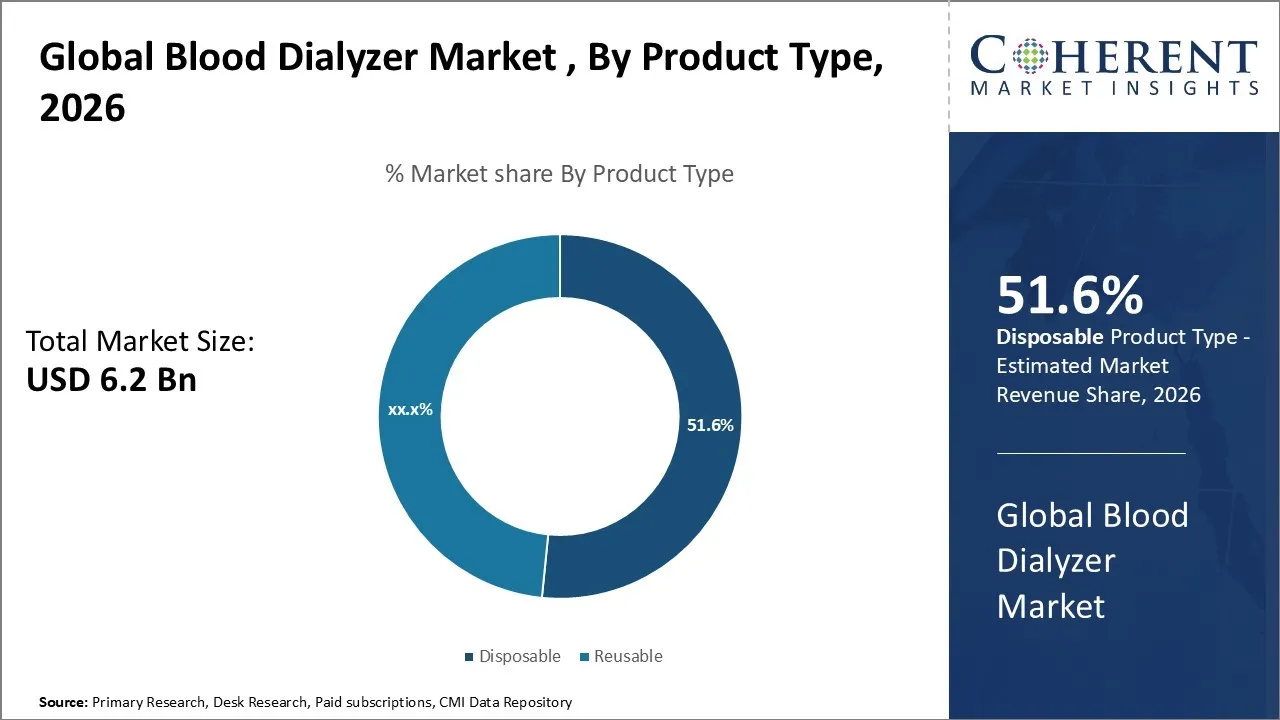
- By Product Type, Disposable hold the largest market share of 51.6% in 2026 owing to the rising prevalence of chronic kidney disease (CKD) and ESRD.
- By Dialysis Membrane Material, Cellulose Membrane expected to hold largest market share of 53.3% in 2026 owing to its established clinical track record & proven efficacy.
- By End User, Hospitals acquired the prominent market share of 36.6% in 2026 owing to the comprehensive treatment infrastructure.
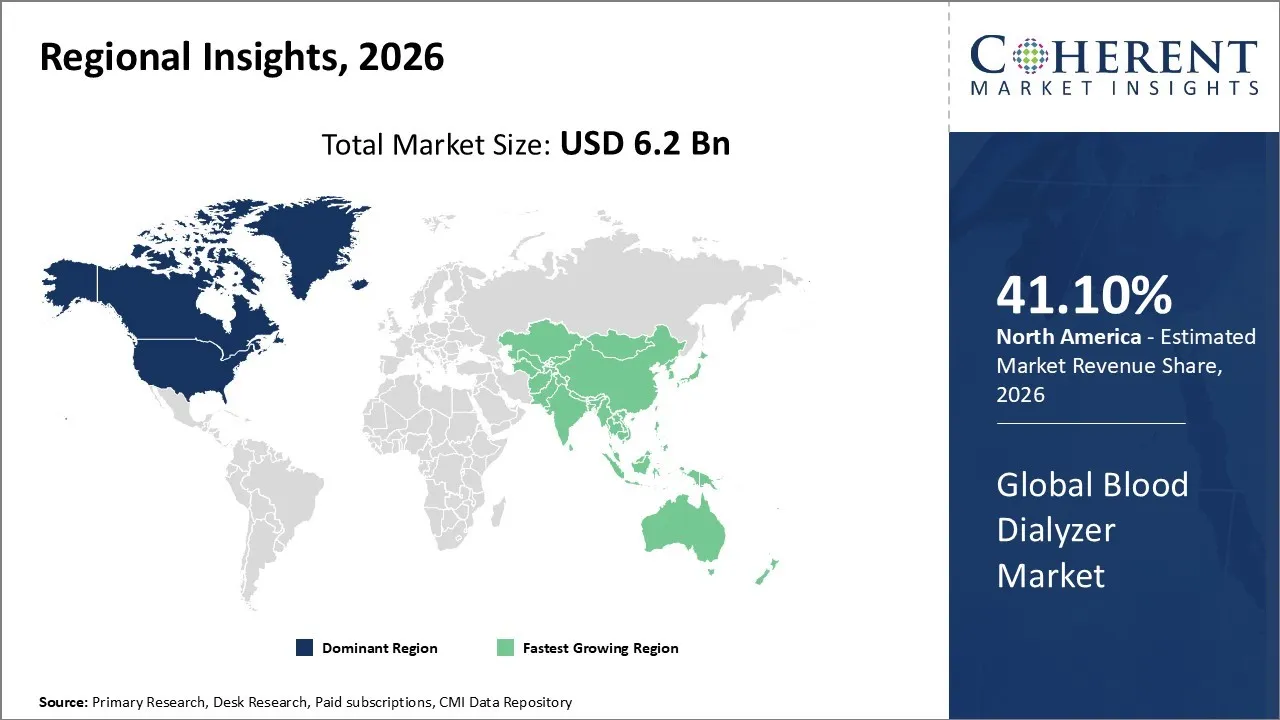
- By Region, North America dominates the overall market with an estimated share of 41.1% in 2026 owing to the aging population.
Market Overview
The rising global burden of chronic kidney disease and end-stage renal disease, mainly caused by diabetes, hypertension, and aging populations, drives the Blood Dialyzer Market. Healthcare providers increase demand for hemodialysis treatments across hospitals, dialysis centers, and home care settings, supporting consistent product consumption. Manufacturers enhance treatment efficiency and patient safety by developing advanced membrane materials and high-flux dialyzers. Governments and private insurers strengthen the market by expanding healthcare infrastructure, offering favorable reimbursement policies, and promoting greater awareness of renal health worldwide.
Current Events and their Impact on the Blood Dialyzer Market
Current Events | Description and its impact |
Technological Advancements in Dialysis and Blood Filtration |
|
Regulatory and Healthcare Policy Changes |
|
Geopolitical and Trade Developments |
|
Segmental Insights
- Current Industry Events of 2026
- Market Size Estimation
- Regional Breakdown
- Competitive Landscape
- Customer Intelligence
- Segmental Analysis
- Pricing Analysis
- Key Market Drivers, Challenges & Future Trends
- Customized Insights Section
Blood Dialyzer Market Insights, By Product Type - Disposable contribute the highest share of the market owing to its shift toward outpatient & home dialysis settings
Disposable hold the largest market share of 51.6% in 2026. Rising concerns about infection prevention, operational efficiency, and patient safety drive growth in the disposable segment of the Blood Dialyzer Market. Healthcare facilities choose single-use dialyzers to avoid the risks and expenses linked to reprocessing and cross-contamination. The growing number of dialysis sessions worldwide, fueled by increasing cases of kidney failure, generates consistent demand for disposable products. Regulatory authorities also promote strict sterilization standards, while providers value the convenience of ready-to-use dialyzers, accelerating adoption across hospitals and dialysis centers. For instance, B. Braun Medical started offering its Xevonta kidney dialyzer in the U.S. The company also produces hemodialysis equipment and supplies, including Diacap Polysulfone dialyzers and Streamline Bloodlines from Medisystems.
Blood Dialyzer Market Insights, By Dialysis Membrane Material - Cellulose Membrane contribute the highest share of the market owing to its ongoing improvements in cellulosic membrane technology
Cellulose Membrane expected to hold largest market share of 53.3% in 2026. Cost-sensitive healthcare systems and public hospitals increase demand for cellulose membrane dialyzers by prioritizing affordability while maintaining essential treatment performance. Manufacturers strengthen this segment by developing modified cellulose variants that improve biocompatibility and minimize adverse reactions during dialysis. Providers in emerging economies expand dialysis services and select reliable, cost-effective membrane options to manage growing patient volumes. Clinicians continue to use cellulose-based dialyzers due to their long-standing familiarity, especially in standard hemodialysis procedures were controlling costs and ensuring consistent outcomes remain critical priorities. For instance, Nipro Medical Corporation launched the single-use Cellentia -H cellulose triacetate (CTA) dialyzer at the ASN Kidney Week Conference. The Cellentia-H, the latest in Nipro’s high-performance dialyzer line, is designed for all hemodialysis patients, particularly when conservative therapy falls short.
Blood Dialyzer Market Insights, By End User - Hospitals contribute the highest share of the market owing to its in-patient and out-patient dialysis services
Hospitals acquired the prominent market share of 36.6% in 2026. Hospitals increase demand in the Blood Dialyzer Market by providing both routine and complex dialysis treatments. High patient volumes, including individuals with chronic and acute kidney conditions, generate steady and recurring use of dialyzers. Specialized nephrology teams, advanced infrastructure, and intensive care capabilities enable hospitals to manage complicated cases that require high-performance or specialized dialyzers. By offering integrated outpatient and inpatient services and coordinating multidisciplinary care, hospitals actively promote adoption and consistent utilization of blood dialyzers throughout their facilities.
Regional Insights
North America Blood Dialyzer Market Trends
North America dominates the overall market with an estimated share of 41.10% in 2026. Healthcare providers in North America drive the Blood Dialyzer Market by adopting advanced dialysis technologies, such as high-flux and biocompatible membranes, to improve patient outcomes. They expand home dialysis programs and outpatient services to enhance convenience and accessibility. Government support and reimbursement frameworks encourage consistent dialysis treatments, while hospitals and specialized centers invest in modern equipment. Increasing cases of chronic kidney disease, an aging population, and greater awareness of renal health actively boost market activity, establishing North America as a leading region in blood dialyzer use. For instance, Fresenius Medical Care has surpassed 14,000 U.S. patients using its NxStage systems for Home Hemodialysis through Fresenius Kidney Care clinics and other providers.
Asia Pacific Blood Dialyzer Market Trends
Healthcare providers in the Asia Pacific actively expand dialysis infrastructure to meet the growing demand from chronic kidney disease patients. Governments invest in modern hospitals and dialysis centers, increasing access to advanced treatment options. Rising awareness of renal health and the adoption of high-performance, cost-effective dialyzers drive widespread use. The increasing prevalence of diabetes and hypertension, along with growing urban populations, motivates public and private facilities to upgrade dialysis services, establishing Asia Pacific as a rapidly developing market for blood dialyzers.
United States Blood Dialyzer Market Trends
Hospitals and dialysis centers in the United States drive the Blood Dialyzer Market by adopting innovative technologies, such as high-flux and biocompatible membranes, to improve patient care. Providers expand home dialysis programs and outpatient services to increase convenience and treatment accessibility. Government initiatives and Medicare reimbursement policies support consistent dialysis therapy across the population. Rising chronic kidney disease cases and an aging population fuel continuous demand, while healthcare facilities invest in modern equipment and staff training, establishing the U.S. as a mature, technology-focused market for blood dialyzers. For instance, Medtronic plc launched the Carpediem™ Cardio-Renal Pediatric Dialysis Emergency Machine in the U.S. After FDA approval, the first units were installed and are now in use at Cincinnati Children's Hospital Medical Center.
India Blood Dialyzer Market Trends
Hospitals and dialysis centers in India drive the Blood Dialyzer Market by expanding services to meet the growing demand from chronic kidney disease patients. Healthcare providers adopt cost-effective and efficient dialyzers to treat a large and diverse population. Government initiatives and public health programs enhance access to renal care, while increasing awareness of kidney health encourages early diagnosis and treatment. Rising diabetes and hypertension rates, along with urbanization, motivate healthcare facilities to upgrade dialysis infrastructure, establishing India as a rapidly developing market for blood dialyzers.
Role of AI (Artificial Intelligence) in Blood Dialyzer Industry
Artificial Intelligence (AI) plays a transformative role in modern blood dialyzers by enhancing precision, safety, and efficiency in hemodialysis treatment. AI algorithms continuously monitor vital parameters such as blood flow rate, dialysate composition, pressure levels, and fluid removal, enabling real-time adjustments tailored to each patient’s condition. Predictive analytics help detect potential complications like hypotension, clotting, or filter malfunction before they become critical. AI also supports personalized treatment planning by analyzing historical patient data and optimizing dialysis dosage. With cloud connectivity and remote monitoring, clinicians can track sessions from a distance, improving clinical decision-making and expanding access to quality renal care in underserved regions.
In June 2025, Renalyx Health Systems Pvt. Ltd. introduced RENALYX – RxT 21, the world’s first fully indigenous, AI- and cloud-enabled smart hemodialysis machine with real-time remote monitoring and clinical connectivity. Priced from INR 6.70 lakh—substantially lower than imported alternatives—the system aims to make dialysis more affordable and accessible, particularly in semi-urban and rural areas, helping bridge the renal care demand–supply gap.
End-user Feedback and Unmet Needs in the Blood Dialyzer Market
- Safety and Infection Control: End-users emphasize the need for dialyzers that minimize the risk of infections and cross-contamination. Hospitals and dialysis centers seek single-use products with robust sterilization and biocompatible membranes, but concerns remain about consistent safety standards and occasional adverse reactions in sensitive patients.
- Treatment Efficiency and Performance: Clinicians report the need for dialyzers that optimize toxin removal, reduce treatment time, and improve patient comfort. While high-flux membranes help, some users note variability in performance across brands, highlighting the demand for more consistent and reliable dialyzer efficiency.
- Cost and Affordability: End-users in emerging markets highlight affordability as a major concern. Hospitals and clinics require cost-effective dialyzers without compromising quality, especially for high patient volumes, yet budget constraints often limit access to advanced or specialized membrane technologies.
Blood Dialyzer Market Trend
Shift Toward High-Performance Membranes
The market trends toward high-flux and biocompatible membranes that enhance toxin removal and reduce immune reactions. Healthcare providers increasingly prefer advanced dialyzers that improve patient outcomes, particularly for critical or long-term dialysis treatments. Continuous innovation in membrane technology drives adoption globally.
Growth of Home and Outpatient Dialysis
Patients and providers increasingly adopt home-based and outpatient dialysis programs for convenience and flexibility. This trend encourages compact, easy-to-use, and disposable dialyzers, allowing treatment outside hospitals while maintaining clinical safety and monitoring standards.
Blood Dialyzer Market Opportunity
Adoption of Advanced Membrane Technologies
Opportunities exist in developing high-flux, biocompatible, and hybrid membranes that improve toxin clearance, reduce immune reactions, and enhance patient comfort. Dialyzer manufacturers can differentiate products by focusing on performance, durability, and compatibility with various dialysis machines, catering to both acute and chronic treatment needs.
Market Report Scope
Blood Dialyzer Market Report Coverage
| Report Coverage | Details | ||
|---|---|---|---|
| Base Year: | 2025 | Market Size in 2026: | USD 6.2 Bn |
| Historical Data for: | 2020 To 2024 | Forecast Period: | 2026 To 2033 |
| Forecast Period 2026 to 2033 CAGR: | 7.9% | 2033 Value Projection: | USD 9.2 Bn |
| Geographies covered: |
| ||
| Segments covered: |
| ||
| Companies covered: | Baxter International, Inc.,Nikkiso Co. Ltd.,B. Braun SE,CVS Health,Nipro Corporation,Diaverum Deutschland GmbH,NxStage Medical, Inc.,Fresenius Medical Care AG & Co. KGaA, DaVita Healthcare Partners, Inc.,Asahi Kasei Medical Co., Ltd,Browndove Healthcare (F) Ltd, BAIN MEDICAL EQUIPMENT(GUANGZHOU)CO.,LTD,SB-KAWASUMI LABORATORIES, INC, Medtronic,Jihua Medical Apparatus and Instruments Co., Ltd.,Allmed Medical Care Holdings Limited, and JMS Medical Co., Ltd. | ||
| Growth Drivers: |
| ||
| Restraints & Challenges: |
| ||
Blood Dialyzer Market News
- In June 2024, Baxter Korea launched MyPD, a peritoneal dialysis management app that lets patients track treatment data and connects with Sharesource to support their care.
Analyst Opinion (Expert Opinion)
- The Blood Dialyzer Market reflects deeper clinical and structural realities rather than superficial growth narratives. In the United States alone, more than 560,000 patients undergo regular dialysis across over 7,500 clinics with over 93 million sessions performed annually, illustrating the sheer dependency on artificial filtration systems for renal failure management. High‑flux dialyzers, preferred in over 70% of hemodialysis procedures globally, have become a de facto standard because clinical evidence shows significantly better toxin clearance and clinical outcomes compared with older low‑flux versions.
- A notable trend is the shift towards patient‑centred treatment models. Interviews with major dialysis providers indicate that roughly one in four facilities now offers home‑based dialysis kits, and this segment has surged by more than 30% in recent years as patients demand flexibility and reduced hospital visits. This movement is not merely cosmetic: compact dialyzers and integrated remote monitoring tools are now required components of growth strategies at leading manufacturers, reinforcing the view that the future of dialysis will be decentralized rather than clinic‑centric.
- Despite technological progress, market dynamics underscore persistent structural challenges. Cost pressure remains acute in low‑resource settings where reusable dialyzers still account for a significant percentage of usage due to budget constraints a reality that undermines broader adoption of advanced disposable technologies despite superior clinical profiles. Furthermore, the growing prevalence of diabetes and hypertension the primary drivers of chronic kidney disease guarantees that dialyzer demand will remain high, yet it simultaneously intensifies pressure on healthcare systems to balance cost, access, and quality of care.
- In synthesis, the market is shaped by clinical performance imperatives, operational shifts toward home‑based care, and economic constraints that vary starkly between high‑income and emerging economies. This duality should inform any strategic positioning, investment thesis, or technology development agenda for stakeholders aiming to lead rather than follow in this vital segment of renal care.
Speak to the analyst
Want personalized insights?
Take the findings above to one of our principal consultants, or have the report rebuilt around the segments, geographies and competitors you actually track.
Market Segmentation
- By Product Type
- Reusable
- Disposable
- By Dialysis Membrane Material
- Cellulose Membranes
- Synthetic Membranes
- By End User
- Hospitals
- Ambulatory Surgical Centers
- Home Care Settings
- Specialty Clinics
- By Regional Insights
- North America
- U.S.
- Canada
- Latin America
- Brazil
- Argentina
- Mexico
- Rest of Latin America
- Europe
- Germany
- U.K.
- Spain
- France
- Italy
- Russia
- Rest of Europe
- Asia Pacific
- China
- India
- Japan
- Australia
- South Korea
- ASEAN
- Rest of Asia Pacific
- Middle East
- GCC Countries
- Israel
- Rest of Middle East
- Africa
- South Africa
- North Africa
- Central Africa
- North America
- Key Players Insights
- Baxter International, Inc.
- Nikkiso Co. Ltd.
- Braun SE
- CVS Health
- Nipro Corporation
- Diaverum Deutschland GmbH
- NxStage Medical, Inc.
- Fresenius Medical Care AG & Co. KGaA
- DaVita Healthcare Partners, Inc.
- Asahi Kasei Medical Co., Ltd
- Browndove Healthcare (F) Ltd
- BAIN MEDICAL EQUIPMENT(GUANGZHOU)CO. LTD
- SB-KAWASUMI LABORATORIES, INC
- Medtronic
- Jihua Medical Apparatus and Instruments Co., Ltd.
- Allmed Medical Care Holdings Limited
- JMS Medical Co., Ltd.
Sources
Primary Research interviews
- Interviews with nephrologists and dialysis specialists
- Interviews with hospital procurement managers
- Discussions with biomedical engineers in dialysis device manufacturing
Databases
- U.S. Food and Drug Administration (FDA) device registration database
- European Database on Medical Devices (EUDAMED)
- ClinicalTrials.gov for ongoing clinical trials on blood dialyzers
Magazines
- Renal & Urology News
- Nephrology News & Issues
- Medical Device & Diagnostic Industry
Journals
- Journal of Nephrology
- American Journal of Kidney Diseases
- Kidney International
- Blood Purification
Newspapers
- The New York Times – Health Section
- The Guardian – Health
- The Wall Street Journal – Healthcare
Associations
- National Kidney Foundation (NKF)
- International Society of Nephrology (ISN)
- American Society of Nephrology (ASN)
Public Domain sources
- World Health Organization (WHO) reports on kidney disease
- Centers for Disease Control and Prevention (CDC) publications
- Government health ministry reports from major countries
Proprietary Elements
- CMI Data Analytics Tool
- Proprietary CMI Existing Repository of information for last 8 years
Get access to 250+ pages report
Every segment, forecast, competitor profile and data table behind the analysis above — available for instant download.
- ESOMAR Member
- ISO 9001:2015 Certified
- D-U-N-S Registered
- GDPR & CCPA Compliant
Missing comfort of reading report in your local language? Find your preferred language:
Transform your Strategy with Exclusive Trending Reports
Frequently Asked Questions
The Blood Dialyzer Market is estimated to be valued at USD 6.2 Bn in 2026 and is expected to reach USD 9.2 Bn by 2033.
Major players operating in the market include Baxter International, Inc.,Nikkiso Co. Ltd.,B. Braun SE,CVS Health,Nipro Corporation,Diaverum Deutschland GmbH,NxStage Medical, Inc.,Fresenius Medical Care AG & Co. KGaA, DaVita Healthcare Partners, Inc.,Asahi Kasei Medical Co., Ltd,Browndove Healthcare (F) Ltd, BAIN MEDICAL EQUIPMENT(GUANGZHOU)CO.,LTD,SB-KAWASUMI LABORATORIES, INC, Medtronic,Jihua Medical Apparatus and Instruments Co., Ltd.,Allmed Medical Care Holdings Limited, and JMS Medical Co., Ltd
Among dialysis membrane material, cellulose membrane segment is expected to dominate market, owing to increasing use of cellulose membrane due to its compatibility.
Increasing prevalence of kidney disorders and diseases is expected to drive the market growth over the forecast period
The market is estimated to exhibit a CAGR of 7.9% over the forecast period.
Among regions, North America is expected to witness significant growth over the forecast period, owing to increasing product launches by key players in the market.