

Bovine Respiratory Disease Treatment Market Size and Forecast — 2026-2033
The Global Bovine Respiratory Disease Treatment Market size is estimated to be valued at USD 2.31 billion in 2026 and is expected to reach USD 3.86 billion by 2033, exhibiting a compound annual growth rate (CAGR) of 7.6% from 2026 to 2033.
Overview
Bovine respiratory disease (BRD) treatments encompass a range of veterinary products designed to prevent, manage, and treat respiratory infections in cattle. These infections are commonly caused by a combination of viral and bacterial pathogens, often worsened by stress factors such as transportation or environmental changes.
Available products include vaccines that protect against viral and bacterial agents, antimicrobial therapies used to control bacterial infections, and anti-inflammatory drugs that help reduce fever and lung inflammation. Supportive care products, such as immune modulators and nutritional supplements, are also used to strengthen cattle health and recovery. Collectively, these treatments aim to reduce morbidity and mortality, improve animal welfare, and sustain productivity in livestock herds.
Key Takeaways
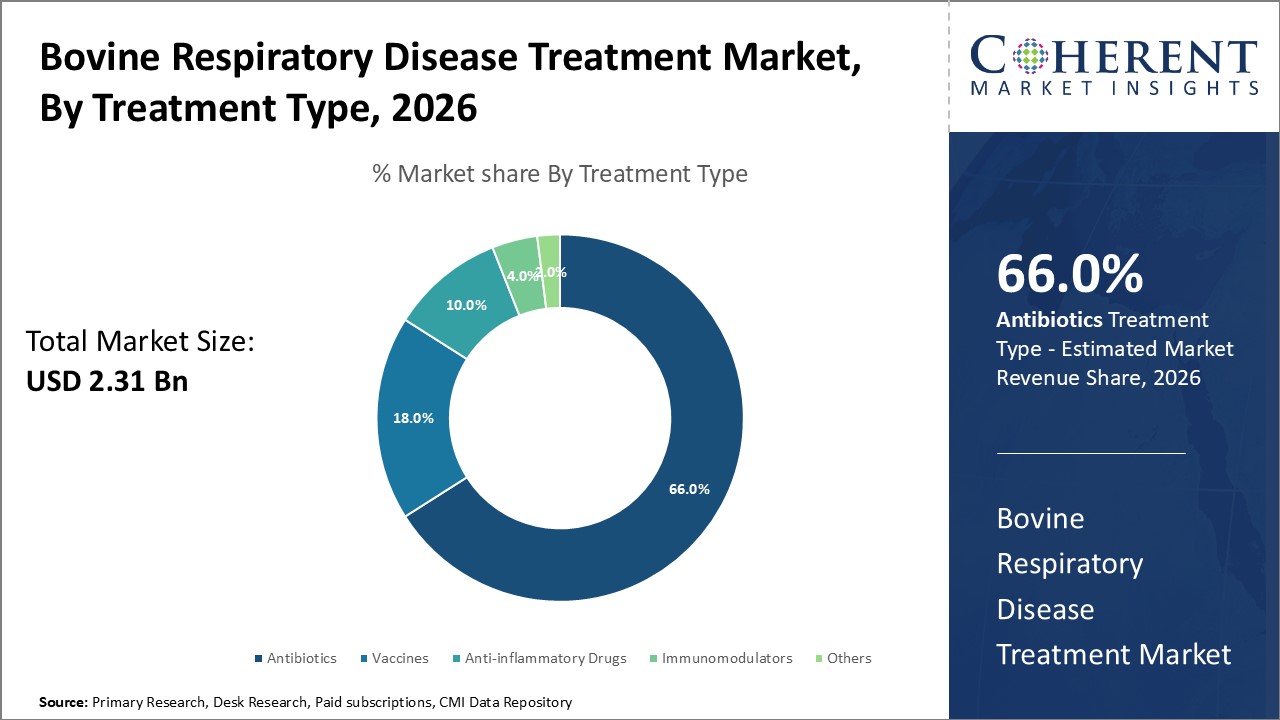
The antibiotics segment dominates the Bovine Respiratory Disease Treatment market, holding a market share of 66%, driven by broad-spectrum efficacies and established supply chains.
Injectable administration leads with 59% market share, favored for its rapid bioavailability and compliance in large-scale farms.
Beef cattle represent the dominating application subsegment due to expanding beef production and higher BRD susceptibility in feedlot conditions.
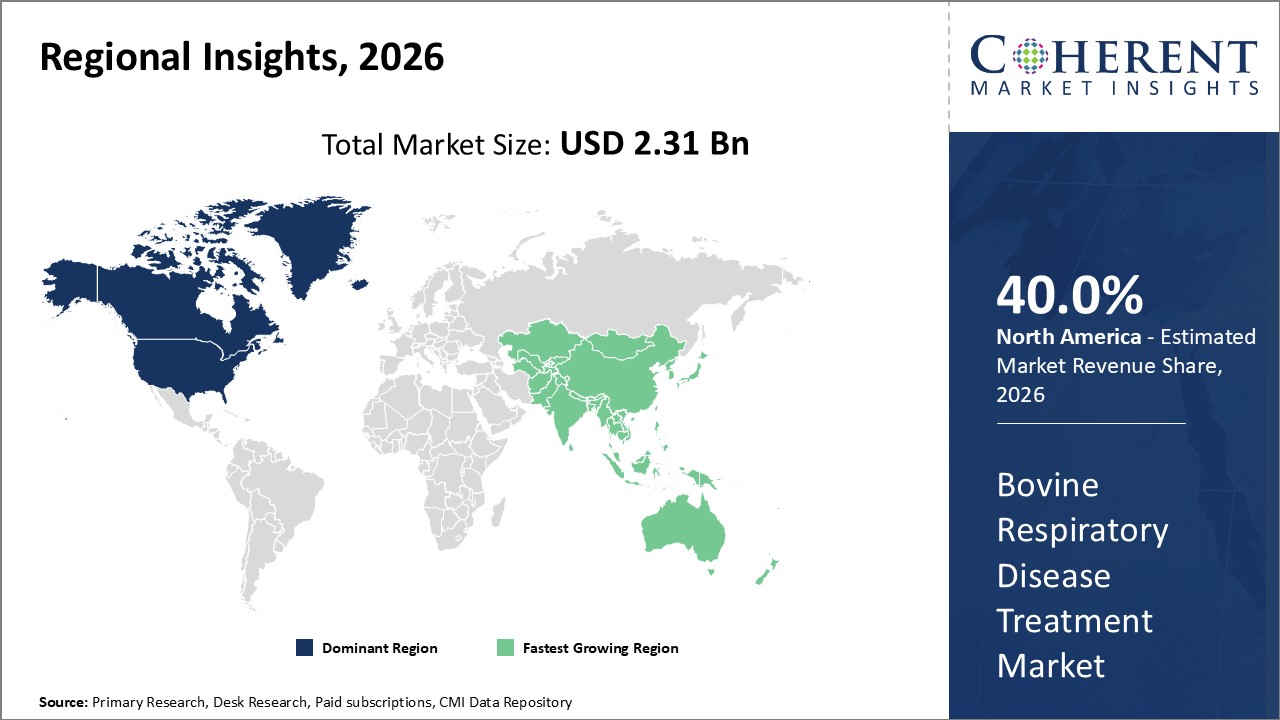
Regionally, North America commands considerable market revenue owing to advanced veterinary infrastructure and stringent animal health policies.
Meanwhile, the Asia Pacific exhibits the highest CAGR, driven by rapid farm mechanization and regulatory encouragements for disease control.
Bovine Respiratory Disease Treatment Market Segmentation Analysis
Bovine Respiratory Disease Treatment Market Insights, By Treatment Type
In terms of treatment type, the Antibiotics dominate the market share at 66%. This dominance is attributed to their broad-spectrum efficacy against bacterial pathogens responsible for BRD, and well-established administration protocols widely accepted by feedlots and dairy farms. Injectable antibiotics constitute the majority due to their rapid systemic action and ease of dosage control.
Bovine Respiratory Disease Treatment Market Insights, By Application
The Beef cattle dominate this segment owing to the intensive feedlot conditions that predispose animals to respiratory infections; this segment captures a majority share propelled by rising beef consumption and export demands. Dairy cattle, although currently smaller in market share, emerge as the fastest-growing subsegment due to the increasing concern for milk yield losses attributable to BRD and growing mechanized dairy husbandry.
Bovine Respiratory Disease Treatment Market Insights, By Route of Administration
Injectable treatments lead with a 58% market share, favored for their precision dosing and immediate therapeutic effects in severe BRD cases. Oral administration is the fastest-growing subsegment, driven by improved formulation technologies enabling ease of use and reduced handling stress, making it preferable in large herds with milder disease presentations. Inhalation therapies remain niche but hold potential due to targeted pulmonary delivery, offering localized, rapid relief with fewer systemic side effects.
Bovine Respiratory Disease Treatment Market Trends
Market trend analysis reveals that the integration of digital health analytics and IoT-enabled monitoring devices is significantly augmenting treatment effectiveness.
For example, pilot programs in 2025 incorporating wearable biosensors for early respiratory distress detection demonstrated a 21% reduction in treatment initiation delay.
Sustainable BRD treatment methodologies, especially plant-based immunomodulators, have also gained traction, supported by a 25% rise in demand reported in Asia Pacific markets.
Bovine Respiratory Disease Treatment Market Insights, By Geography
North America Bovine Respiratory Disease Treatment Market Analysis and Trends
In the North American region, the BRD treatment dominance is sustained by strong veterinary healthcare infrastructure, stringent disease control policies, and proactive disease surveillance systems. North America accounts for over 40% of the regional market share, with companies like Zoetis and Merck spearheading research initiatives and introducing advanced therapeutic options valued highly by feedlots and dairy producers.
Asia Pacific Bovine Respiratory Disease Treatment Market Analysis and Trends
Meanwhile, the Asia Pacific region exhibits the fastest growth, with a CAGR surpassing 9%, owing to government support for livestock health improvement, increasing industrial-scale farming, and rising disposable income among farmers. China and India, in particular, have manifested significant increases in veterinary drug imports and R&D investments, fostering a competitive and rapidly expanding market landscape.
Bovine Respiratory Disease Treatment Market Outlook for Key Countries
USA Bovine Respiratory Disease Treatment Market Analysis and Trends
The U.S. represents a critical hub for the Bovine Respiratory Disease Treatment market, with a mature livestock healthcare ecosystem. Key players, including Boehringer Ingelheim and Zoetis, actively engage in extensive clinical trials to introduce next-generation antimicrobials and vaccines. USDA data from 2025 show that approximately 75% of large cattle operations have adopted novel injectable therapies, reducing BRD-related mortality by 18%. Furthermore, government emphasis on antibiotic stewardship programs reinforces the shift towards sustainable treatment solutions, further stabilizing market revenue streams.
Brazil Bovine Respiratory Disease Treatment Market Analysis and Trends
Brazil’s expanding beef cattle industry strongly influences its growing Bovine Respiratory Disease Treatment market, driven by rising demand for meat exports and improved veterinary infrastructure. Initiatives to integrate vaccination and antibiotic protocols have led to a 15% decrease in BRD-associated losses reported in 2025 livestock surveys. Leading companies such as Elanco and Merck Animal Health have bolstered their presence through partnerships with local distributors, supplementing government campaigns aimed at reducing disease incidence. This strategic alignment is pivotal to Brazil’s market dynamics and revenue prospects.
Analyst Opinion
The rising adoption of precision veterinary medicine has substantially influenced market size expansion. Recent data from the USDA in 2025 highlights a 13% increase in treatment efficiency due to precise dosing and monitoring, directly boosting the demand for targeted BRD therapies.
Demand-side indicators point to growing preferences for combination antibiotic regimens, recognized for reducing treatment failure rates. Between 2023 and 2026, the average treatment success rate improved by 9%, supported by real-world data from high-volume feedlots in the U.S. Midwest.
Regional production capacity surges have contributed to reducing treatment costs and expanding accessibility. Production capacity for key antimicrobials increased by 16% globally from 2023 to 2025, according to reported manufacturing outputs, thus enabling broader penetration in emerging markets.
Market revenue is further accelerated by increasing imports of novel immunomodulatory supplements, particularly in the Asia Pacific, where a 2025 import growth of 18% in veterinary nutritional products was recorded. These products complement primary BRD treatments and enhance therapeutic outcomes.
- Current Industry Events of 2026
- Market Size Estimation
- Regional Breakdown
- Competitive Landscape
- Customer Intelligence
- Segmental Analysis
- Pricing Analysis
- Key Market Drivers, Challenges & Future Trends
- Customized Insights Section
Market Scope
| Report Coverage | Details | ||
|---|---|---|---|
| Base Year: | 2025 | Market Size in 2026: | USD 2.31 billion |
| Historical Data for: | 2020 To 2024 | Forecast Period: | 2026 To 2033 |
| Forecast Period 2026 to 2033 CAGR: | 7.6% | 2033 Value Projection: | USD 3.86 billion |
| Geographies covered: |
| ||
| Segments covered: |
| ||
| Companies covered: | Zoetis Inc., Boehringer Ingelheim Vetmedica GmbH, Elanco Animal Health, Merck Animal Health, Bayer AG, Ceva Santé Animale, Virbac S.A., Ceva-Phylaxia, Phibro Animal Health Corporation, Vetoquinol S.A., Neogen Corporation, Norbrook Laboratories Limited, IDEXX Laboratories Inc. | ||
| Growth Drivers: |
| ||
Bovine Respiratory Disease Treatment Market Growth Factors
The increasing cattle population and intensified farming practices are the prime catalysts driving market growth, as they elevate the risk and incidence of BRD outbreaks. For example, data from the FAO show a 6.5% rise in cattle farming density in key regions during 2025, necessitating more effective treatments. Additionally, technological advancements in drug delivery such as long-acting injectables, have improved treatment adherence, with a 2025 study reporting a 21% better recovery timeline. Furthermore, strict regulatory policies targeting antibiotic stewardship encourage the adoption of novel vaccines and immunomodulators, promoting sustainable disease management. Lastly, escalating costs linked to BRD-related productivity losses propel industry stakeholders to invest heavily in innovative treatment modalities, which in 2025 accounted for nearly 19% of total veterinary pharmaceutical R&D budgets globally.
Bovine Respiratory Disease Treatment Market Development
In August 2026, the U.S. FDA approved a generic injectable form of gamithromycin (branded “Gamrozyne”) for use in treating BRD in beef and nonlactating dairy cattle. The approval was seen as a significant step, as it provides a lower-cost alternative to existing branded therapies.
In February 2026, Elanco introduced Pradalex (pradofloxacin injection), a novel antibiotic treatment for respiratory diseases in cattle and swine. It is the first new molecule approved for those indications in many years.
In July 2026, a review published in Applied Animal Science highlighted that the timing of pre-feedlot respiratory vaccination in calves could enhance disease resistance and support better growth outcomes, especially if vaccination is coordinated during key stress events like weaning and transport.
Key Players
Leading Companies of the Market
Boehringer Ingelheim Vetmedica GmbH
Elanco Animal Health
Merck Animal Health
Bayer AG
Ceva Santé Animale
Virbac S.A.
Ceva-Phylaxia
Phibro Animal Health Corporation
Vetoquinol S.A.
Neogen Corporation
Norbrook Laboratories Limited
IDEXX Laboratories, Inc.
Some leading market companies have recently adopted strategic partnerships and product pipeline expansions. For instance, Zoetis Inc. launched a novel anti-inflammatory injectable that demonstrated a 15% reduction in BRD recurrence rates within 2025 feedlot trials. Boehringer Ingelheim's collaborations with regional distributors in Asia Pacific improved market penetration by 22% last year through tailored vaccination campaigns.
Bovine Respiratory Disease Treatment Market Future Outlook
The bovine respiratory disease management is expected to focus strongly on prevention, precision treatment, and sustainability. Continued advancements in vaccine technology, rapid diagnostic tools, and herd-monitoring systems are likely to enable earlier intervention and more targeted therapeutic decisions. At the same time, there is growing emphasis on antimicrobial stewardship, with veterinary professionals and producers adopting practices that minimize unnecessary antibiotic use while maintaining animal health and productivity. Innovations such as long-acting therapeutic formulations, immune-supportive products, and data-driven health platforms are anticipated to enhance disease prevention and treatment.
Bovine Respiratory Disease Treatment Market Historical Analysis
Bovine respiratory disease has long been one of the most significant health challenges in cattle, particularly in young stock and feedlot animals. In the past, treatment practices largely relied on broad use of antimicrobials and supportive care, with vaccines gradually introduced to provide protection against key viral and bacterial pathogens. Over the years, progress in veterinary science has shifted approaches toward more refined and evidence-based strategies, combining pathogen-specific vaccination programs with better diagnostic methods and herd management practices. Increasing recognition of the role of stress factors such as transport, weaning, and environmental changes has also encouraged preventive measures and improved biosecurity, making disease control more structured and comprehensive.
Sources
Primary Research Interviews
Veterinary Practitioners (Large Animal Vets)
Livestock Farmers & Cattle Ranchers
Veterinary Pharmacologists
Animal Health Product Distributors
Databases:
World Health Organization (WHO) Database
Food and Agriculture Organization (FAO) Database
U.S. Food and Drug Administration (FDA) – Center for Veterinary Medicine (CVM)
European Medicines Agency (EMA) – Veterinary Medicines Directorate
Magazines:
Bovine Veterinarian
CattleFax Trends
Dairy Herd Management
Beef Magazine
Journals:
Journal of Veterinary Internal Medicine
Veterinary Microbiology
Preventive Veterinary Medicine
Journal of Animal Science
Newspapers:
The Hindu (Agriculture & Veterinary Health)
Times of India (Animal Health)
The Guardian (Global Agriculture & Health)
The New York Times (Science & Health)
Associations:
American Association of Bovine Practitioners (AABP)
World Organization for Animal Health (WOAH – formerly OIE)
Veterinary Council of India (VCI)
British Cattle Veterinary Association (BCVA)
Get access to 250+ pages report
Every segment, forecast, competitor profile and data table behind the analysis above — available for instant download.
- ESOMAR Member
- ISO 9001:2015 Certified
- D-U-N-S Registered
- GDPR & CCPA Compliant
Missing comfort of reading report in your local language? Find your preferred language:
Transform your Strategy with Exclusive Trending Reports
Frequently Asked Questions
Leading companies include Zoetis Inc., Boehringer Ingelheim Vetmedica GmbH, and Merck Animal Health, which have leveraged product innovation and strategic expansions to maintain sizeable market shares.
The market is projected to grow from USD 2.31 billion in 2026 to USD 3.86 billion by 2033 with a CAGR of 7.6%, reflecting robust demand and growing industry investments.
The beef cattle segment holds the fastest growth opportunity due to intensified feedlot farming and higher BRD prevalence in beef production systems.
Emerging trends include increased adoption of precision medicine, integrative therapies, and natural immunomodulators, expected to redefine treatment paradigms and market revenues.
The competitive landscape is driven by innovation, regulatory compliance, and partnerships, with challenges related to antibiotic resistance and cost pressures shaping market strategies.
Companies focus on strategic partnerships, expansion of product portfolios, and targeted regional marketing to enhance market penetration and business growth.