all report title image

Chagas Disease Treatment Market Analysis & Forecast: 2026-2033
Chagas Disease Treatment Market, By Product Type (Benznidazole, Nifurtimox), By Distribution Channel (Hospitals, Retail Pharmacies, Online Pharmacies), By Geography (North America, Latin America, Europe, Asia Pacific, Middle East & Africa)

  • Published In : 25 May, 2026
  • Code : CMI934
  • Page number :259
  • Formats :
      Excel and PDF :
  • Industry : Pharmaceutical
  • Historical Range : 2020 - 2024
  • Forecast Period : 2026 - 2033

Chagas Disease Treatment Market Size and Share Analysis - 2026 To 2033

The Chagas Disease Treatment Market is anticipated to grow at a CAGR of 7.3% with USD 11.4 Mn in 2026 and is expected to reach USD 18.7 Mn in 2033. The Chagas Disease Treatment Market is supported by persistent disease burden, rising diagnosis efforts, and widening treatment access in endemic and non-endemic countries. For instance, according to the WHO’s 2026 World Chagas Disease Day page reported 8 Mn infected people globally, more than 10,000 deaths annually, and over 100 Mn people at risk, reinforcing sustained need for benznidazole and nifurtimox. PAHO’s 2026 update reported about 7.5 Mn infections across 21 endemic American countries, 30,000 new cases yearly, and nearly US$500 Mn annual economic burden.

Key Takeaways

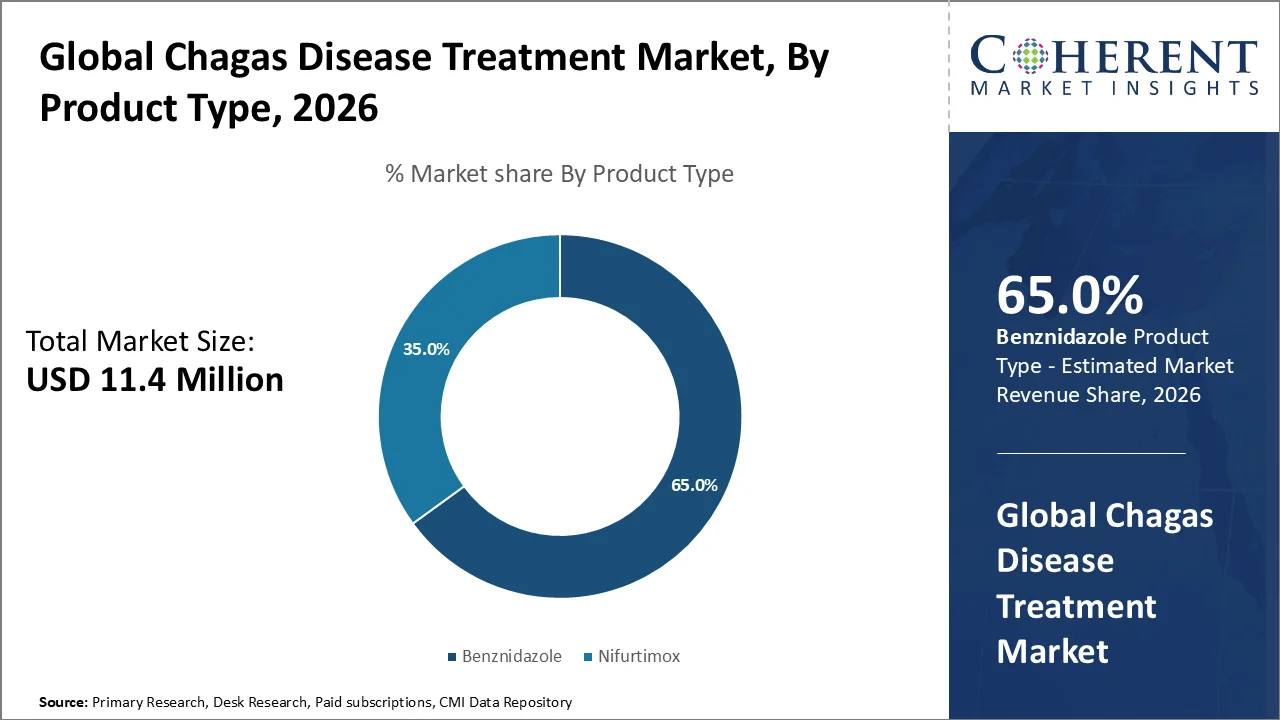
  • Benznidazole is expected to account the largest share of 65.0% in 2026, due to its status as the first-line therapy recommended by the WHO, high efficacy in both acute and pediatric cases, and widespread availability in endemic regions. For instance, according to the World Health Organization’s World Chagas Disease Day 2026 announcement, an estimated 8 Mn people are infected with Trypanosoma cruzi globally, and over 100 Mn people are at risk of infection as of 2026.
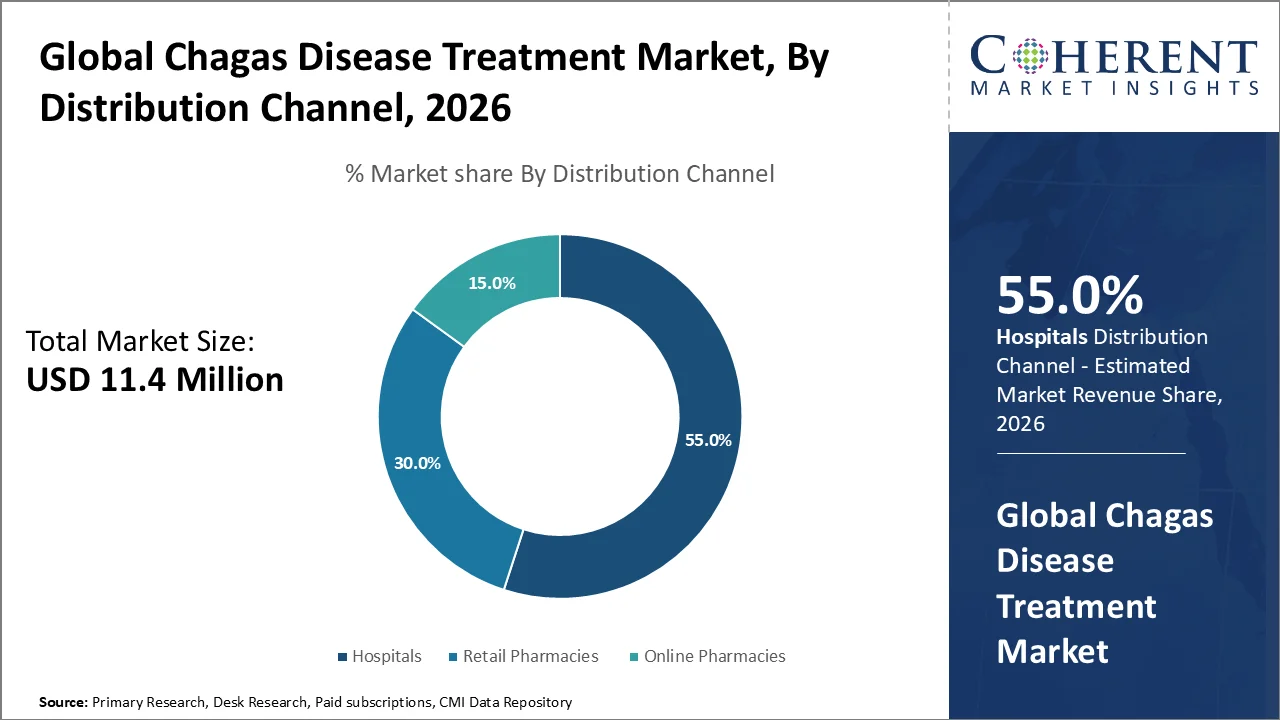
  • Hospitals will dominate with 55.0% in 2026, supported by rigorous clinical diagnosis and care in hospital settings remain essential due to the disease’s complexity. In 2026, WHO reported 8 Mn people infected globally, with up to 30% developing cardiac issues without early care, underscoring hospitals’ critical role in comprehensive diagnosis, antiparasitic treatment initiation, monitoring, and follow‑up care.
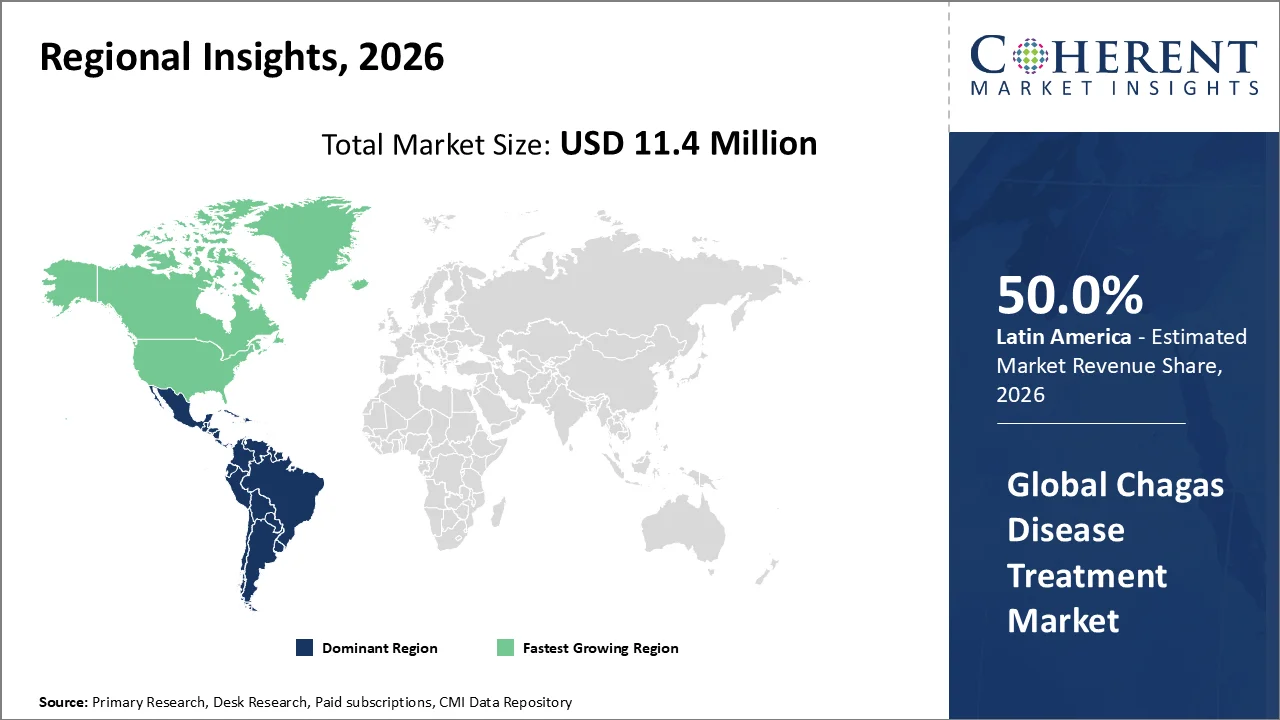
  • Latin America is expected to acquire the dominant share of 50.0% in 2026, owing to high disease prevalence, large at-risk population, government-supported programs, and historical focus of international aid and NGOs. For instance, WHO 2026 data reports over 100 Mn people at risk in Latin America. The region is endemic for Chagas disease, with countries like Brazil, Argentina, Mexico, and Bolivia accounting for the majority of global cases.

Segmental Insights 

Chagas Disease Treatment Market By Product Type

To learn more about this report, Request Free Sample

Why is Benznidazole Acquiring the Largest Market Share?

Benznidazole is projected to account for the largest share of chagas disease treatment market in 2026, representing approximately 65.0% of the total volume. Benznidazole remains the dominant therapeutic segment in the global Chagas disease treatment landscape due to its status as a primary antiparasitic agent recommended by WHO and widespread use in endemic and non‑endemic settings. As of 2026, WHO estimates about 8 million people worldwide are infected with Trypanosoma cruzi, and early antiparasitic treatment with benznidazole can cure the disease when given during the acute phase, including congenital cases. In the United States, benznidazole is FDA‑approved for pediatric patients aged 2–12, making it accessible for clinical use beyond investigational protocols. This combination of high clinical efficacy, global guidance, and regulatory approvals reinforces benznidazole’s dominant role.
Source: WHO; CDC.gov

Hospitals hold the Largest Market Share

Chagas Disease Treatment Market By Distribution Channel

To learn more about this report, Request Free Sample

Based on distribution channel, hospitals dominate the market, accounting for a significant 55.0% share in 2026. Hospitals dominate the Chagas Disease Treatment Market because diagnosis, prescription initiation, adverse-event monitoring, and complication management require clinical supervision. WHO’s 2026 fact sheet states that Chagas disease affects about 6–7 million people globally, and 20–30% of chronically infected patients may develop cardiac, digestive, or neurological complications. Treatment with benznidazole or nifurtimox can last up to 2 months, with adverse reactions reported in up to 40% of adults, making hospital-led diagnosis, treatment monitoring, and follow-up essential for safe therapy delivery.

Market Drivers

Rising Awareness and Screening Programs

Increasing awareness and screening programs significantly bolster the chagas disease treatment market growth by enhancing early detection and linkage to care. As of 2026, WHO reports 8 million people infected globally with Trypanosoma cruzi, yet many remain undiagnosed due to low awareness. Targeted education and screening such as maternal and newborn testing protocols improve case identification, expanding the pool of treated patients. WHO’s continued communication, information, and surveillance initiatives reduce barriers to diagnosis and treatment access, particularly in endemic regions, thereby increasing uptake of antiparasitic therapies and improving health outcomes

Source: WHO

New Drug Launches Set to Redefine the Chagas Disease Treatment Market

New drug launches are set to redefine the Global Chagas Disease Treatment Market by expanding therapeutic options, improving efficacy, and enhancing patient compliance. Traditional treatments like benznidazole and nifurtimox have limitations, including side effects and long treatment durations, which constrain uptake. Emerging therapies and pediatric formulations, expected to gain approvals in 2026, address these gaps with shorter regimens, reduced toxicity, and broader age applicability. Regulatory support from organizations like the FDA, EMA, and PAHO is facilitating faster market entry, while clinical trials demonstrate promising results in both acute and chronic cases. These innovations enable hospitals, clinics, and specialized treatment centers to treat more patients safely and effectively. Moreover, new drugs stimulate awareness campaigns and screening initiatives, further increasing diagnosis and treatment rates globally. Collectively, these developments accelerate adoption, expand patient reach, and significantly drive market growth.

For instance, in 2025, AN2 Therapeutics, Inc., a clinical stage biopharmaceutical company and the Drugs for Neglected Diseases initiative (DNDi) advanced a novel oral candidate, AN2‑502998, into first‑in‑human clinical trials for chronic Chagas disease. The collaboration plans to initiate a Phase II proof‑of‑concept study in 2026 after completing Phase I dosing, marking one of the first oral treatment candidates aimed at potentially curing chronic Chagas beyond existing therapies.

Source: AN2 Therapeutics, Inc.; DNDi

Current Events and Their Impact on the Chagas Disease Treatment Market

Current Event

Description and its Impact

PAHO’s 2026 Women-Centered Chagas Elimination Push

  • Description: In April 2026, PAHO and the Global Chagas Coalition highlighted women, pregnancy screening, and newborn treatment as central to Chagas elimination. PAHO reported around 7.5 million infected people, 30,000 new cases, and 10,000 deaths annually in the Americas, with 2%–8% mother-to-child transmission among infected pregnant women.
  • Impact: This increases the need for prenatal screening, early diagnosis, and timely treatment with benznidazole and nifurtimox, especially among newborns and women of reproductive age. It supports higher public-sector treatment uptake and strengthens demand through maternal and child health programs.

PAHO Disease Elimination Initiative Targets Chagas by 2030

  • Description: PAHO’s regional elimination initiative includes Chagas disease among more than 30 communicable diseases and related conditions targeted for elimination by 2030, including mother-to-child transmission of Chagas disease.
  • Impact: Government-backed elimination targets encourage countries to integrate Chagas screening into primary care, prenatal care, blood screening, and public health surveillance. This improves patient identification and expands the treatment-eligible population.

WHO-Backed Access to Donated and No-Profit Chagas Medicines

  • Description: WHO states that nifurtimox for all ages and pediatric benznidazole for patients under 19 are donated through WHO, while benznidazole can also be procured at a no-profit price through PAHO’s Revolving Fund and other access channels.
  • Impact: Free and low-cost access reduces affordability barriers in endemic countries, supporting wider use of standard antiparasitic therapies. This benefits public procurement programs and improves treatment reach among low-income and rural populations.

CDC 2025 Chagas Disease Surveillance Case Definition

  • Description: The CDC’s 2025 case definition classifies Chagas disease into acute, chronic, and congenital subtypes and standardizes public health surveillance criteria. It also notes vertical, blood, organ, and vector-related transmission risks in the U.S.
  • Impact: Stronger surveillance can improve case recognition in non-endemic countries such as the U.S., where many infections remain undiagnosed. Better reporting may increase physician awareness, confirmatory testing, and referrals for antiparasitic treatment.

NIH Funding for Chagas Detection and Treatment Research

  • Description: In June 2025, the U.S. NIH funded a US$3 million grant to researchers at the University of Georgia and Texas A&M to study improved detection and treatment methods for Chagas disease under a One Health model.
  • Impact: Government-funded research strengthens the evidence base for diagnosis and treatment pathways. Improved detection methods can increase the number of diagnosed patients, indirectly driving demand for approved Chagas therapies.

DNDi–Public Health Access Projects Scale Test-and-Treat Models

  • Description: DNDi’s Chagas Access Project, implemented with public health partners such as Colombia’s Ministry of Health, increased annual testing nearly five-fold from 426 to 2,427, increased detected cases from 37 to 262, and reduced the average wait from confirmed diagnosis to treatment from 354 days to 135 days.
  • Impact: Decentralized testing and treatment models make care available closer to patients, improving treatment initiation rates. Such models can be replicated in endemic regions, supporting stronger utilization of benznidazole and nifurtimox.

Shorter Benznidazole Regimen Trial Advances Treatment Optimization

  • Description: In 2025, the NuestroBen study began testing whether the standard 8-week benznidazole course can be reduced to 2 or 4 weeks in a randomized trial with 540 participants in Argentina and Bolivia.
  • Impact: A shorter regimen could improve adherence, tolerability, and completion rates, especially in adult chronic Chagas patients. If successful, it may support future guideline updates and expand the treatable patient pool.

Uncover macros and micros vetted on 75+ parameters: Get instant access to report

Chagas Disease Treatment Market Trends

  • Expansion of screening and early treatment programs driving therapy uptake – Governments and public health agencies are increasing investments in systematic Chagas screening, particularly among pregnant women, blood donors, and at-risk populations. For instance, in 2026, PAHO’s elimination initiative targeted over 30 endemic countries in Latin America, aiming for universal prenatal screening to prevent congenital transmission. Such programs directly boost the demand for benznidazole and nifurtimox therapies.

Sources: PAHO, 2026

  • Regulatory approvals and pediatric-friendly formulations accelerating treatment adoption – The USFDA and European Medicines Agency continue to approve pediatric formulations of benznidazole and facilitate expanded access programs. In 2026, the USFDA reaffirmed pediatric benznidazole use for patients under 19, while the EMA expanded its labeling to support shorter course regimens under clinical trial oversight, enabling wider adoption among children and adolescents.
    Sources:
    USFDA Clinical Trials, EMA, 2026
  • Shorter treatment regimens and improved tolerability driving adherence – Clinical trials are testing 2–4-week benznidazole courses instead of the standard 8-week regimen to improve patient adherence. For instance, the 2026 NuestroBen trial in Argentina and Bolivia included 540 participants, aiming to reduce side effects and dropouts. Improved regimens are expected to increase overall treatment volumes and market uptake.
  • Integration of digital health and telemedicine for remote treatment management – Telemedicine platforms now enable rural and remote patients to receive diagnosis, prescription, and adherence monitoring without frequent hospital visits. In 2026, Brazil’s Ministry of Health reported that over 12,000 patients received remote follow-up for Chagas disease, improving completion rates for benznidazole therapy and supporting government elimination targets.

Regional Insights 

Chagas Disease Treatment Market By Regional Insights

To learn more about this report, Request Free Sample

Latin America dominates owing to High Disease Prevalence

Latin America account 50.0% market share in 2026, supported by high endemic prevalence, government-led screening and elimination programs, strong hospital and primary healthcare infrastructure for treatment distribution and regulatory approvals and pediatric-friendly formulations. For instance, Latin America remains the core endemic region for Chagas disease, with over 7.5 million people infected in 2026. Countries such as Brazil, Argentina, Bolivia, and Colombia account for the majority of cases, which naturally drives the demand for antiparasitic treatments like benznidazole and nifurtimox. Moreover, national health ministries, supported by PAHO and WHO, are integrating Chagas disease testing into prenatal care, blood donation programs, and primary healthcare systems. In 2026, maternal screening programs in Latin America covered over 2.5 million pregnant women, ensuring early detection and treatment uptake.

Additionally, public hospitals and clinics are the primary channels for delivering benznidazole and nifurtimox. In 2026, the DNDi Chagas Access Project in Colombia reduced the average time from diagnosis to treatment from 354 days to 135 days, demonstrating the efficiency of organized healthcare systems in scaling treatment.

Source: PAHO; DNDi; EMA

North America Chagas Disease Treatment Market Trends

The North America region is poised to be as the fastest-growing region through 2026-2033, owing to increasing recognition of imported and locally acquired cases. As of 2026, the WHO estimates about 8 million people globally are infected with Trypanosoma cruzi, and migration from endemic regions has brought a significant case load to the U.S. and Canada. CDC data indicate approximately 280,000 people in the United States are living with Chagas disease, including an estimated 40,000 women of childbearing age, highlighting growing screening and treatment needs. These trends combined with enhanced screening of blood donors and high‑risk populations are driving demand for diagnosis and treatment in North America, expanding market growth beyond historical endemic regions.

Growing Investment & Innovation is Accelerating the Chagas Disease Treatment Market Demand in Brazil

The Brazil country dominates the Latin America chagas disease treatment market. Brazil remains one of the most affected countries in Latin America, with over 1.9 million people infected in 2026, making it a core market for antiparasitic therapies like benznidazole and nifurtimox. The Brazilian Ministry of Health integrates Chagas screening into prenatal care, blood banks, and primary healthcare centers. In 2026, more than 800,000 pregnant women were screened for Chagas, ensuring early diagnosis and treatment in newborns. National programs ensure widespread availability of benznidazole and nifurtimox. Brazil’s public health system (SUS) provides subsidized access, making hospitals and primary healthcare centers the main treatment channels. National campaigns educate citizens about triatomine bug exposure, congenital transmission, and the importance of early treatment, improving diagnosis rates and treatment initiation.

U.S. Chagas Disease Treatment Market Trends

The U.S. country dominates the North America Chagas disease treatment market owing to large undiagnosed migrant-linked patient pool, rising surveillance and formal case classification, FDA-approved treatment availability supports market access, research funding strengthens future treatment and diagnostic innovation and growing recognition of local transmission risk. The U.S. is not the dominant market like Latin America, but it is an important emerging treatment market due to imported and underdiagnosed cases. CDC estimates around 280,000 people in the U.S. have Chagas disease, often without knowing it. This creates a strong need for screening, diagnosis, and treatment with benznidazole and nifurtimox. The U.S. has approved treatment options for pediatric Chagas disease. Benznidazole is FDA-approved for children aged 2–12 years, while Lampit / nifurtimox is indicated for pediatric patients from birth to under 18 years weighing at least 2.5 kg. This supports structured treatment use in hospitals and infectious disease clinics. In 2025, researchers from the University of Georgia and Texas A&M University received more than US$4 million in federal and non-governmental funding, including a US$3 million NIH grant, to study Chagas disease detection, treatment, and treatment outcomes using a One Health model. This supports long-term innovation in diagnosis and therapy monitoring.

Who are the Major Companies in Chagas Disease Treatment Market

Some of the major key players in Chagas Disease Treatment Market are Nortec Quimica SA, Bayer AG, Laboratorio Elea Phoenix SA, Maprimed S.A., and Laboratório Farmacêutico de Pernambuco S/A.

Key News

  • In February 2026, DNDi, a collaborative, patients' needs-driven, non-profit drug research and development organization and Eisai Co., Ltd. (Japan) received new funding to accelerate Chagas disease drug discovery. The Global Health Innovative Technology (GHIT) Fund awarded a USD 1.1 million grant to support a lead identification project on novel chemical compounds targeting Trypanosoma cruzi. The initiative, led by Eisai, Universidad Nacional de La Plata, INGEBI, and IMPaM, aims to progress promising compounds toward new short‑course treatments with improved efficacy over current options.

Source: DNDi & GHIT Fund Project Announcement

  • In 2026 clinical trial published in JAMA evaluated heart failure treatments in Chagas disease patients. The PARACHUTE‑HF trial compared sacubitril/valsartan versus enalapril for patients with Chagas‑related cardiomyopathy. While not a direct antiparasitic therapy, the study is significant for managing clinical outcomes associated with chronic Chagas infection, helping refine supportive care protocols under expert cardiology research frameworks.
  • In May 2026, researchers at the University of Kent developed a computational drug discovery protocol relevant to Chagas disease. This research, published in ChemistryOpen, uses advanced computational methods to accelerate identification of treatment candidates by reducing trial‑and‑error in early drug design potentially speeding preclinical development of future therapeutics.

Source: Medical Xpress report on Chagas drug research

Market Report Scope 

Chagas Disease Treatment Market Report Coverage

Report Coverage Details
Base Year: 2025 Market Size in 2026: USD 11.4 Mn
Historical Data for: 2020 To 2024 Forecast Period: 2026 To 2033
Forecast Period 2026 to 2033 CAGR: 7.3% 2033 Value Projection: USD 18.7 Mn
Geographies covered:
  • North America: U.S., Canada
  • Latin America: Brazil, Argentina, Mexico, Rest of Latin America
  • Europe: Germany, U.K., Spain, France, Italy, Russia, Rest of Europe
  • Asia Pacific: China, India, Japan, Australia, South Korea, ASEAN, Rest of Asia Pacific
  • Middle East: GCC Countries, Israel, Rest of Middle East
  • Africa: South Africa, North Africa, Central Africa
Segments covered:
  • By Product Type: Benznidazole, Nifurtimox.
  • By Distribution Channel: Hospitals, Retail Pharmacies, Online Pharmacies.
Companies covered:

Nortec Quimica SA, Bayer AG, Laboratorio Elea Phoenix SA, Maprimed S.A., and Laboratório Farmacêutico de Pernambuco S/A.

Uncover macros and micros vetted on 75+ parameters: Get instant access to report

Analyst Opinion

  • The Chagas disease treatment market is moving beyond a niche therapy segment to a critical public health priority in endemic regions. Governments, health agencies, and NGOs are increasingly integrating screening, early diagnosis, and treatment into national health programs. For instance, in 2026, PAHO reported that over 7.5 million people in Latin America are infected, with maternal screening programs covering more than 2.5 million pregnant women annually, highlighting the expanding scale and importance of Chagas therapy deployment.
  • Hospital and primary healthcare channels are driving the majority of treatment administration. Public hospitals and clinics dominate benznidazole and nifurtimox distribution due to government funding and regulatory mandates. In 2026, the DNDi Chagas Access Project in Colombia reduced the average time from diagnosis to treatment from 354 days to 135 days, demonstrating that organized healthcare infrastructure significantly increases treatment uptake and adherence.
  • Regulatory approvals and pediatric-friendly formulations are accelerating market growth. The USFDA approved pediatric benznidazole for patients under 19 years in 2026, while the EMA expanded indications to support shorter course regimens under controlled clinical settings. These regulatory moves enhance patient access, particularly for children and adolescents, and reinforce confidence in standardized therapy protocols.
  • Clinical research and innovation in treatment regimens are enhancing adherence and market penetration. Trials like the NuestroBen 2026 study in Argentina and Bolivia, with 540 participants, are testing 2–4-week benznidazole regimens to reduce side effects and improve completion rates. This demonstrates a growing focus on optimizing therapies for real-world usage, further expanding the treatable patient population.
  • Latin America remains the dominant regional market, but non-endemic countries are emerging markets due to migration and enhanced surveillance. CDC 2025–2026 case definition updates and improved public awareness in the U.S. and Europe are increasing diagnosis rates among migrant populations, indirectly driving demand for treatment in hospital and private clinic channels. The combination of endemic prevalence and growing awareness makes Latin America the core revenue contributor while highlighting future expansion potential in North America and Europe.
  • Public-private partnerships and funding initiatives are strengthening treatment access and program sustainability. For example, government-backed projects in Colombia and Brazil, along with DNDi and WHO support, ensure subsidized or donated medicines reach rural and low-income populations. In 2026, these collaborations led to a five-fold increase in annual testing in targeted regions, directly boosting therapy usage.

Market Segmentation

  • By Product Type (Revenue, USD Mn, 2021-2033)
    • Benznidazole
    • Nifurtimox
  • By Distribution Channel (Revenue, USD Mn, 2021-2033)
    • Hospitals
    • Retail Pharmacies
    • Online Pharmacies
  • By Region (Revenue, USD Mn, 2021-2033)
    • North America
      • U.S.
      • Canada
    • Latin America
      • Brazil
      • Mexico
      • Argentina
      • Rest of Latin America
    • Europe
      • Germany
      • U.K.
      • France
      • Italy
      • Spain
      • Russia
      • Rest of Europe
    • Asia Pacific
      • China
      • India
      • Japan
      • Australia
      • South Korea
      • ASEAN
      • Rest of Asia Pacific
    • Middle East
      • GCC
      • Israel
      • Rest of Middle East
    • Africa
      • South Africa
      • Central Africa
      • North Africa

Sources

Primary Research Interviews

  • Interviews with healthcare leaders, hospital directors, and infectious disease specialists – To understand treatment adoption challenges, patient adherence barriers, drug availability, and integration of Chagas therapy into hospital and primary care protocols.
  • Insights from pharmaceutical companies, clinical researchers, and drug developers – To gather information on new formulations, pediatric-friendly therapies, shortened treatment regimens, clinical trials, and regulatory pathways impacting market growth.
  • Discussions with public health policymakers, NGOs, and consultants – To evaluate regional program effectiveness, funding priorities, public-private partnerships, awareness campaigns, and strategies for expanding access in endemic and non-endemic areas.
  • Conversations with decision-makers in government healthcare programs and diagnostic labs – To assess procurement policies, program implementation challenges, screening infrastructure, supply chain constraints, and monitoring of treatment outcomes.
  • Engagement with patient advocacy groups and community health organizations – To gather insights on treatment awareness, barriers to early diagnosis, congenital screening uptake, and adherence support programs.

Databases

  • World Health Organization Global Health Observatory (WHO GHO)
  • Pan American Health Organization (PAHO) Health Information Platform
  • U.S. Centers for Disease Control and Prevention (CDC) NNDSS
  • ClinicalTrials.gov
  • PubMed / NCBI

Magazines

  • Infectious Disease News
  • PLoS Neglected Tropical Diseases
  • Global Health Magazine
  • PharmaVOICE
  • The Lancet Global Health Magazine

Journals

  • PLoS Neglected Tropical Diseases (Public Library of Science)
  • The American Journal of Tropical Medicine and Hygiene (ASTMH)
  • Journal of Infectious Diseases (Oxford Academic)
  • Transactions of the Royal Society of Tropical Medicine and Hygiene
  • Memorias do Instituto Oswaldo Cruz (Brazil)

Newspapers

  • The New York Times (Health Section)
  • The Guardian (Global Health Section)
  • Reuters Health
  • Financial Times (Healthcare Section)
  • BBC News (Health Section)

Associations

  • Drugs for Neglected Diseases initiative (DNDi)
  • Pan American Health Organization (PAHO)
  • American Society of Tropical Medicine and Hygiene (ASTMH)
  • World Health Organization (WHO)
  • Latin American Society for Infectious Diseases (SLAM)

Public Domain Sources

  • WHO Chagas Disease Fact Sheets and Reports (who.int)
  • PAHO Regional Health Reports and Bulletins (paho.org)
  • CDC Chagas Disease Surveillance and Case Definition Documents (cdc.gov)
  • ClinicalTrials.gov Chagas Disease Trial Listings (clinicaltrials.gov)
  • NIH Research Grants and Publications on Chagas Disease (nih.gov)

Proprietary Elements

  • CMI Data Analytics Tool
  • Proprietary CMI Existing Repository of information for last 10 years

Share

Share

About Author

Ghanshyam Shrivastava - With over 20 years of experience in the management consulting and research, Ghanshyam Shrivastava serves as a Principal Consultant, bringing extensive expertise in biologics and biosimilars. His primary expertise lies in areas such as market entry and expansion strategy, competitive intelligence, and strategic transformation across diversified portfolio of various drugs used for different therapeutic category and APIs. He excels at identifying key challenges faced by clients and providing robust solutions to enhance their strategic decision-making capabilities. His comprehensive understanding of the market ensures valuable contributions to research reports and business decisions.

Ghanshyam is a sought-after speaker at industry conferences and contributes to various publications on pharma industry.

Missing comfort of reading report in your local language? Find your preferred language :

Frequently Asked Questions

The Chagas Disease Treatment Market is expected to reach USD 18.7 Mn in 2033.

Major players operating in the global Chagas Disease Treatment Market include Nortec Quimica SA, Bayer AG, Laboratorio Elea Phoenix SA, Maprimed S.A., and Laboratório Farmacêutico de Pernambuco S/A.

Limited awareness in rural and underserved areas and stringent regulatory approvals are the major factors hampering the growth of the chagas disease treatment market.

Global migration and imported cases and rising awareness and screening programs are the key factors driving the growth of the chagas disease treatment market.

The Chagas Disease Treatment Market is anticipated to grow at a CAGR of 7.3% between 2026 and 2033.

Among regions, North America is expected to account for a largest market share in the global Chagas Disease Treatment Market over the forecast period.

Benznidazole and nifurtimox are the main antiparasitic treatments approved globally. Benznidazole is preferred for pediatric and adult patients due to its better safety profile, while nifurtimox is often used as an alternative or in combination protocols, especially in Latin America.

Select a License Type

EXISTING CLIENTELE

Joining thousands of companies around the world committed to making the Excellent Business Solutions.

View All Our Clients
trusted clients logo

© 2026 Coherent Market Insights Pvt Ltd. All Rights Reserved.