

China Baby Diapers Market Size and Forecast — 2026-2033
China baby diapers market is estimated to be valued at USD 11.61 Bn in 2026 and is expected to reach USD 17.57 Bn by 2033, exhibiting a compound annual growth rate (CAGR) of 6.1% from 2026 to 2033. The increasing working women population in China coupled with rising disposable incomes have been driving the sales of baby diapers in China.
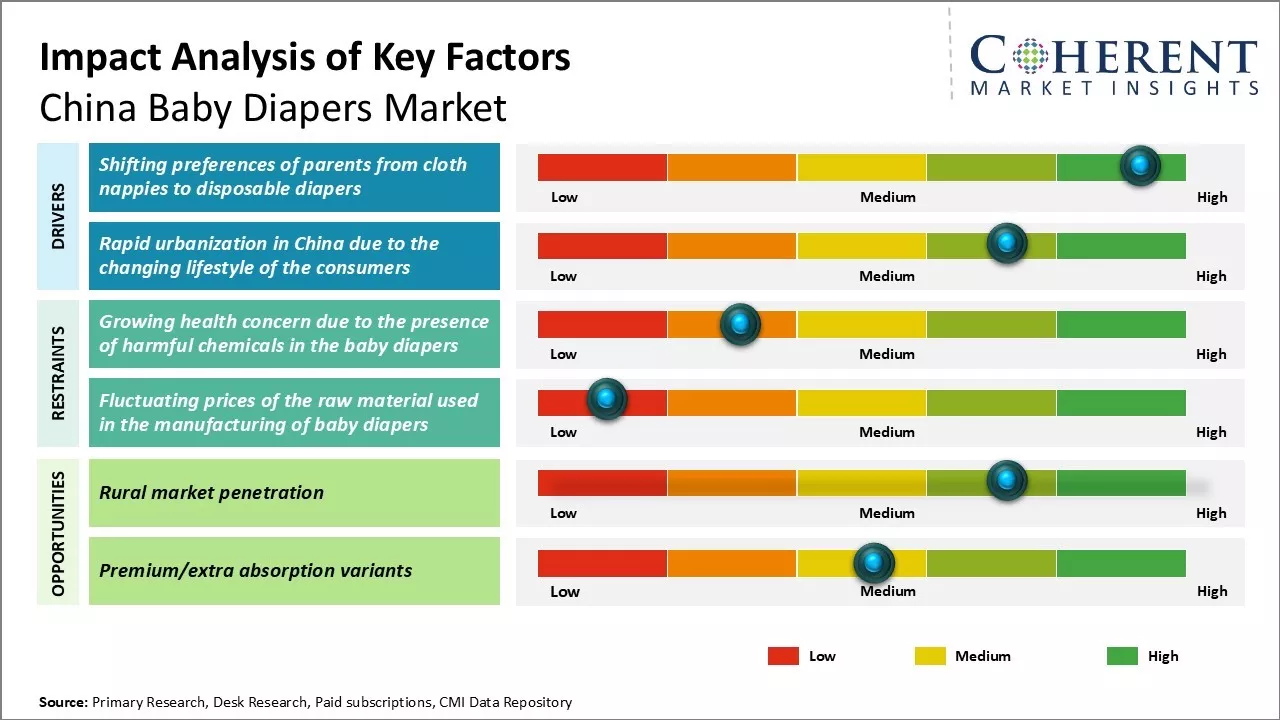
Moreover, growing awareness among Chinese parents about hygiene and childcare is further supporting the growth of the market. Various factors such as rapid urbanization, growing baby care industry and introduction of innovative products by leading brands such as pampers, re expected to present lucrative opportunities for the China baby diapers market during the forecast period.
Insights, By Product Type
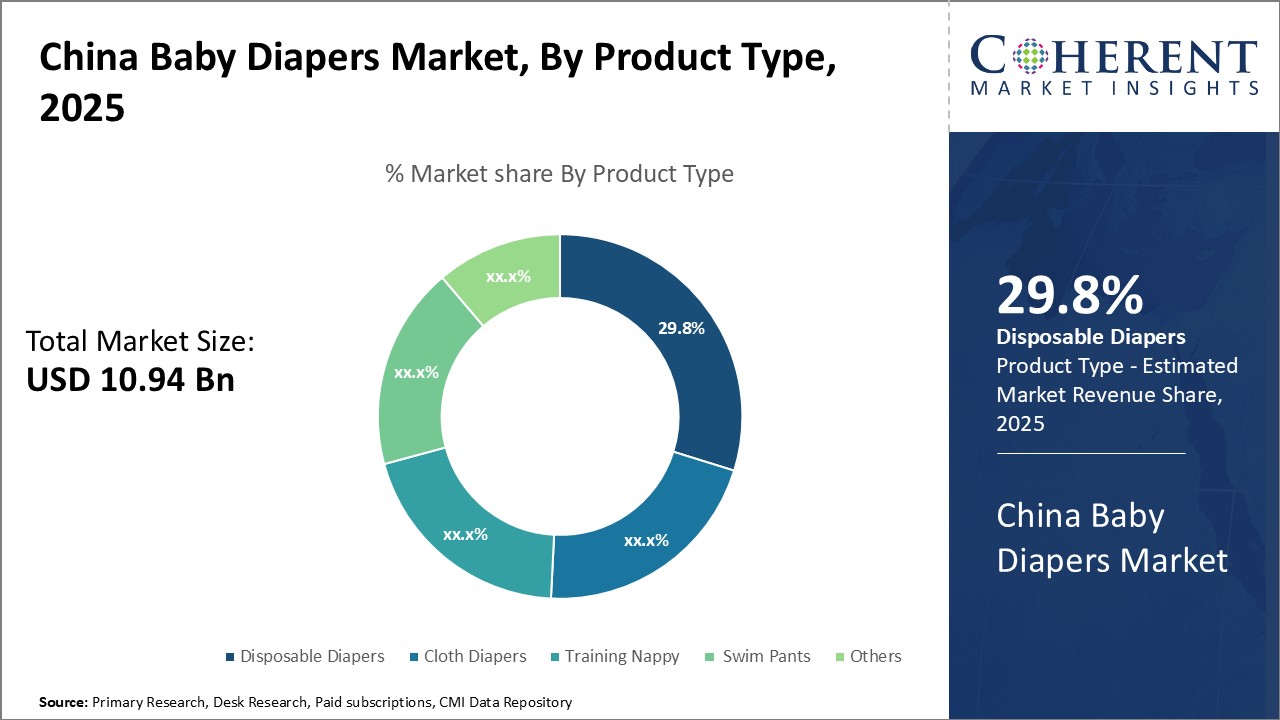
Insights, By Product Type - Convenience and cost-effectiveness fuel the prevalence of disposable diapers
In terms of product type, the disposable diapers segment is estimated to contribute the highest market share of 30.8% in 2026, owing to the convenience and affordability they offer parents. Disposable diapers are very easy to use - parents simply place the diaper under the baby, fasten the sides and dispose it off after use without any cleaning. This saves parents a substantial amount of time compared to cloth diapers which require washing, drying and folding after every use. The disposable format is also hassle-free when traveling or going out, as parents don't have to carry extra diapers or worry about washing facilities.
Insights, By Age Group
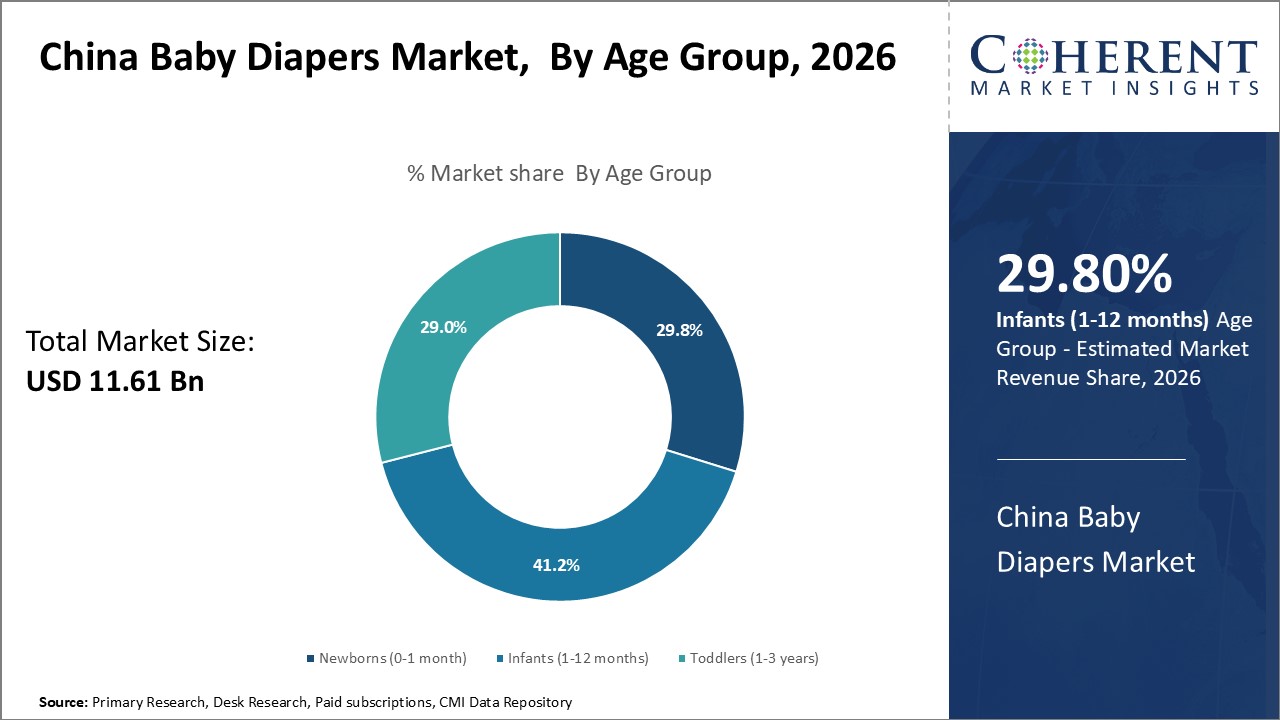
Insights, By Age Group - Newborns influence the demand for products as parents prioritize safety and cleanliness
In terms of age group, the newborns (0-1 month) segment is estimated to contribute the highest market share of 29.8% in 2026. This can be attributed to parents' heightened focus on safety, comfort and hygiene for their newborn babies. Newborn babies require frequent diaper changes every 2-3 hours and the usage is quite high during this delicate stage. Parents thus prioritize diapers that are ultra-absorbent, breathable, and help prevent diaper rash - features usually available in premium newborn diapers. They are also willing to pay more for newborn diapers seeing them as an investment in their baby's health and well-being in the early months. The high usage and replenishment needs of newborns result in this segment dominating diaper volumes sold in China.
Insights, By Distribution Channel
Insights, By Distribution Channel - Established retail chains drive in-store diaper sales
In terms of distribution channel, the offline segment is estimated to contribute the highest market share of 56% in 2026. This is due to China's extensive network of well-organized retail chains for baby products. Major supermarket and convenience store brands in China have dedicated baby aisles stocking all leading local and global diaper brands. State-run stores and specialty baby shops are also prevalent where customers can conveniently source supplies while shopping for other baby/parenting items. The availability, wide assortment and ability to physically inspect products give offline channels an edge, allowing customers - especially in lower-tier cities - to purchase trusted brands with confidence. This reliable access through China's retail juggernaut drives steady offline sales of diapers against rising but fragmented online competition.
Market Players, Key Development, and Competitive Intelligence
Top Strategies Followed by China Baby Diapers Market Players
- Established Players: The major players focus heavily on research and development to launch innovative products in the market. Companies like Procter & Gamble invest over US$ 1 Bn annually in R&D to develop high-quality and high-performance diapers. They also form strategic global partnerships with local manufacturers to expand their reach. For example, P&G has partnered with multiple Chinese manufacturers to produce Pampers and establish global supply chains.
- Mid-Level Players: Mid-sized players targeting the budget segment adopt cost-effective manufacturing techniques. They ensure affordable prices without compromising on quality. These companies also collaborate with materials suppliers and distributors to improve production capabilities at lower costs. For example, Bella Baby partners with local suppliers in Guangdong to source materials at wholesale prices.
- Small-Scale Players: Emerging small brands, such as Beaba, focus on specialized niche products. Companies like Mama Koala specialize in cloth diapers, which are gaining popularity among health-conscious parents. They leverage online marketing to create brand awareness. Some startups adopt new technologies like plant-based materials and biodegradable tapes to differentiate their products. They form local partnerships for market access and promotion.
- Emerging Startups in the China Baby Diapers Market
- Innovative Technologies: Startups are introducing smart solutions like PigeonTree's diapers embedded with sensors to alert caregivers. The sensors detect wetness and send notifications to parents' smartphones using an app. Such innovations will transform market trends by enhancing convenience.
- Sustainable Solutions: Eco-friendly startups like Little seeds Baby focus on sustainability. They manufacture diapers using organic cotton and plant-based materials that decompose quickly. These startups are helping reduce plastic waste from diapers. Their contributions are important given China generates over 25 million tons of diaper waste annually.
- Market Contribution: Some startups identify unique niches like reusable swim diapers. Tiny Cottons works with swim schools and baby product stores to supply eco-friendly swimwear.
Key Developments
- In 2020, Procter & Gamble Co launched a new device called Lumi by Pampers at the Consumer Electronics Show in Las Vegas. The device adopts Pampers sensor technology that sends a notification when the diaper becomes dirty. Procter & Gamble (P&G) is a leading American multinational consumer goods corporation headquartered in Cincinnati, Ohio. Established in 1837 by William Procter and James Gamble, the company initially focused on soap and candle production. Over the years, it has diversified its product offerings to include a wide range of personal health, hygiene, and household products.
- Current Industry Events of 2026
- Market Size Estimation
- Regional Breakdown
- Competitive Landscape
- Customer Intelligence
- Segmental Analysis
- Pricing Analysis
- Key Market Drivers, Challenges & Future Trends
- Customized Insights Section
Market Report Scope
China Baby Diapers Market Report Coverage
| Report Coverage | Details | ||
|---|---|---|---|
| Base Year: | 2025 | Market Size in 2026: | USD 11.61 Bn |
| Historical Data for: | 2020 To 2024 | Forecast Period: | 2026 To 2033 |
| Forecast Period 2026 to 2033 CAGR: | 6.1% | 2033 Value Projection: | USD 17.57 Bn |
| Segments covered: |
| ||
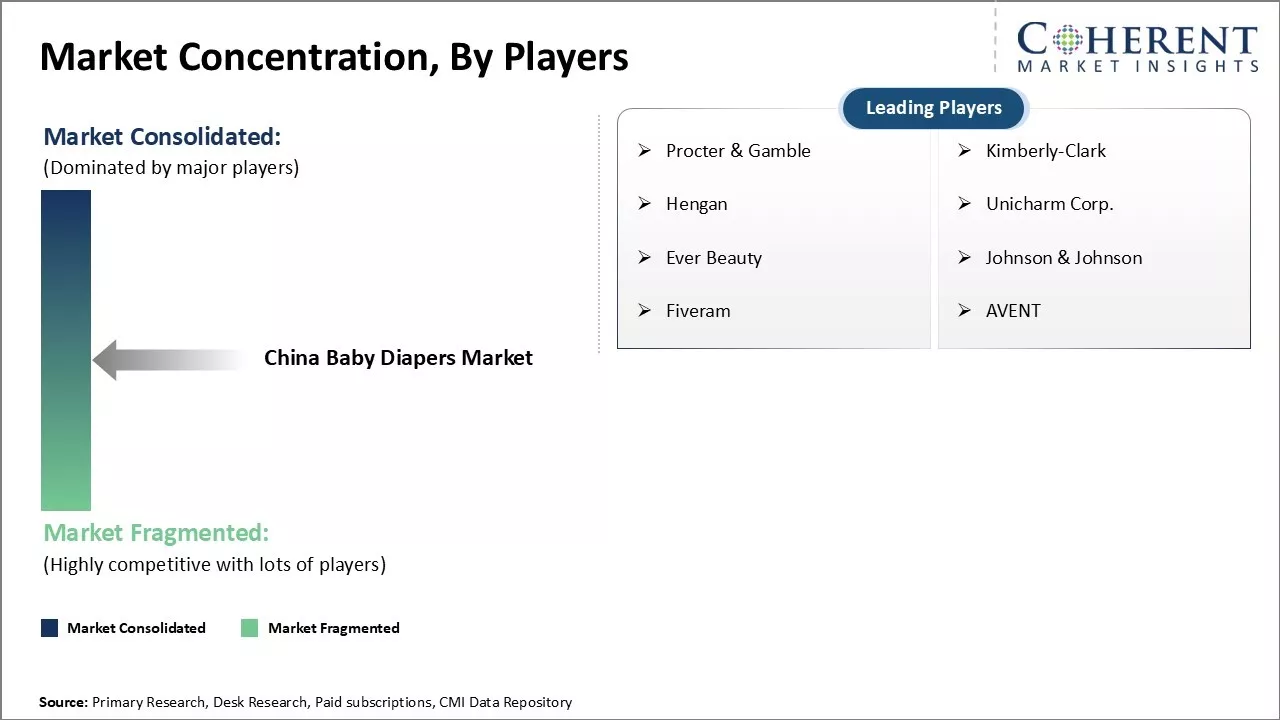
| Companies covered: | Procter & Gamble, Kimberly-Clark, Hengan, Unipharm Corp., Ever Beauty, Johnson & Johnson, Fiveram, and AVENT | ||
| Growth Drivers: |
| ||
| Restraints & Challenges: |
| ||
Market Dynamics
Market Driver - Shifting preferences of parents from cloth nappies to disposable diapers
In recent times, there has been a noticeable shift in the preferences of Chinese parents away from traditional cloth nappies towards modern disposable diapers. With increasing exposure to western cultures through various media platforms, Chinese parents are becoming more aware of the convenience offered by disposable diapers compared to the hassle of cleaning and maintaining cloth nappies. For instance, as per data released in 2021 by United Nations Children's Fund (UNICEF), the per capita annual income of Chinese urban residents grew from US$ 3,500 in 2015 to over US$ 10,000 in 2020. This rise in disposable income enables more parents to opt for higher-priced premium diapers without second thoughts.
Market Challenge - Growing health concern due to the presence of harmful chemicals in the baby diapers
There is a growing concern among Chinese parents about the presence of harmful chemicals in baby diapers. Several studies have found traces of phthalates and volatile organic compounds in commercially available diapers that can potentially harm the health of babies. Parents are increasingly becoming aware of the ill-effects of these chemicals through online research and word-of-mouth. This is negatively impacting the sales and future growth prospects of several major brands. Local manufacturers are facing backlash over the non-disclosure of chemicals used in their products. Foreign brands are also scrutinized more closely. For example, a 2020 National Institutes of Health (NIH) study published in the journal, Environmental Health, found associations between higher phthalate metabolite levels in children's urine samples and developmental delays. This study examined over 1000 children in China ages 3-5 years old. As parents become more aware of these potential links through health organizations and social media, they are increasingly hesitant to use diapers with questionable chemicals.
Market Opportunity: Rural market penetration
China has a large rural population which still remains relatively untapped in terms of demand for modern baby care products such as disposable diapers. While tier 1 and tier 2 cities are primarily driving current sales, rural villages and towns offer huge potential for future growth. A 2021 UNICEF report noted rising rural birth rates in China after a decline, indicating a growing rural baby population. Hence tapping this burgeoning rural demand early ensures capturing a major share of the overall future of the China baby diapers market growth. The rural China baby diapers market thus holds immense untapped opportunities if reached strategically. Local manufacturing and partnerships with rural retailers can help boost supply chain efficiency. Additionally, companies can promote affordable pricing tiers and educate rural consumers about modern childcare practices to drive higher penetration. Thus, the rural market presents significant headroom for sales expansion in the coming years.
Analyst Opinion (Expert Opinion)
Key Takeaways from Analyst
The China baby diapers market is experiencing significant growth, driven by increasing birth rates and rising disposable incomes. Health consciousness among parents is also pushing demand for high-quality, safe, and environmentally friendly products. Major players, such as P&G, are focusing on innovation, introducing advanced features such as enhanced absorption and breathability.
The shift towards premium diaper products is evident, with parents willing to invest more for superior comfort and performance. E-commerce platforms are playing a crucial role in distribution, making products more accessible to a broader audience.
Additionally, urbanization and changing lifestyles are influencing purchasing patterns, with parents preferring convenient options. However, the market faces challenges such as intense competition and price sensitivity among consumers. Regulatory factors regarding product safety and environmental impacts further complicate the landscape. Overall, the market outlook remains positive, with sustained growth expected as manufacturers adapt to evolving consumer preferences and invest in sustainable practices.
Speak to the analyst
Want personalized insights?
Take the findings above to one of our principal consultants, or have the report rebuilt around the segments, geographies and competitors you actually track.
Market Segmentation
- By Product Type Insights (Revenue, USD, 2021 - 2033)
- Disposable Diapers
- Cloth Diapers
- Training Nappy
- Swim Pants
- Others
- By Age Group Insights (Revenue, USD, 2021 - 2033)
- Newborns (0-1 month)
- Infants (1-12 months)
- Toddlers (1-3 years)
- By Distribution Channel Insights (Revenue, USD, 2021 - 2033)
- Offline
- Online
- Key Players Insights
- Procter & Gamble
- Kimberly-Clark
- Hengan
- Unicharm Corp.
- Ever Beauty
- Johnson & Johnson
- Fiveram
- AVENT
Get access to 250+ pages report
Every segment, forecast, competitor profile and data table behind the analysis above — available for instant download.
- ESOMAR Member
- ISO 9001:2015 Certified
- D-U-N-S Registered
- GDPR & CCPA Compliant
Missing comfort of reading report in your local language? Find your preferred language:
Transform your Strategy with Exclusive Trending Reports
Frequently Asked Questions
The China Baby Diapers Market is estimated to be valued at USD 11.61 Bn in 2026, and is expected to reach USD 17.57 Bn by 2033.
The CAGR of the China Baby Diapers Market is projected to be 6.1% from 2026 to 2033.
Shifting preferences of parents from cloth nappies to disposable diapers and Rapid urbanization in China due to the changing lifestyle of the consumers are the major factors driving the growth of China baby diapers market.
Growing health concern due to the presence of harmful chemicals in the baby diapers and Fluctuating prices of the raw material used in the manufacturing of baby diapers are the major factors hampering the growth of China baby diapers market.
In terms of product type, the disposable diapers segment is estimated to dominate the market revenue share in 2026.
Procter & Gamble, Kimberly-Clark, Hengan, Unicharm Corp., Ever Beauty, Johnson & Johnson, Fiveram and AVENT are the major players.