

Cyromazine Market Size and Trends: 2026-2033
The Cyromazine Market is estimated to be valued at USD 1.9 Bn in 2026 and is expected to reach USD 2.81 Bn by 2033, growing at a compound annual growth rate (CAGR) of 5.8% from 2026 to 2033.
Key Takeaways
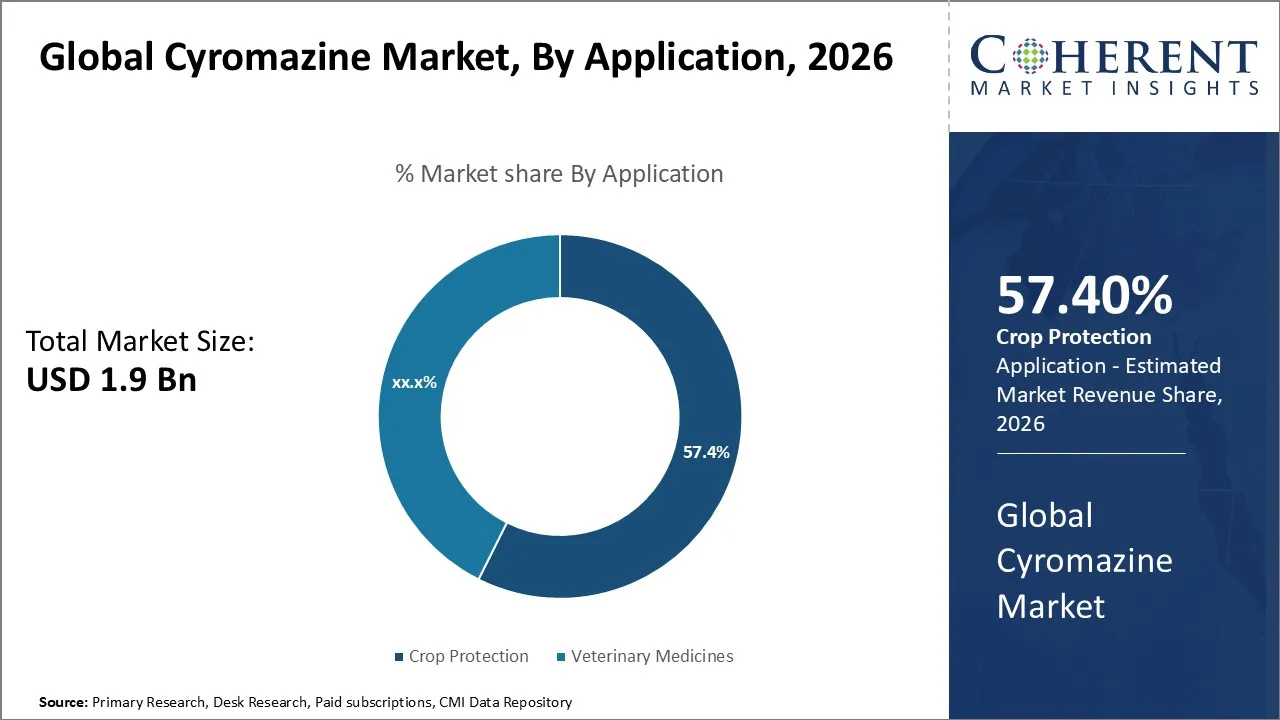
- Based on Application, the Crop Protection segment is expected to lead the market with 57.40 % share in 2026, due to high need for food security.
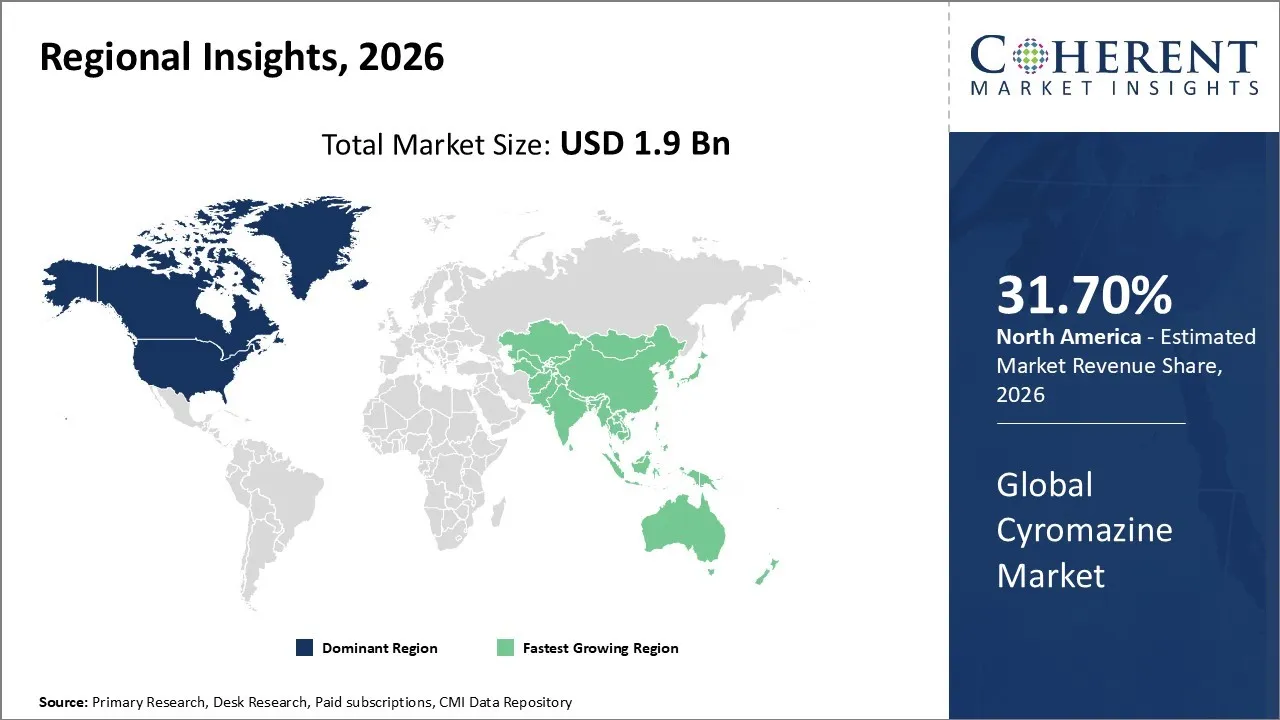
- Based on Region, North America is set to lead the market with 31.70 % share in 2026. While, Asia Pacific is anticipated to be the fastest growing region.
Market Overview
The cyromazine market is advancing significantly with the rising applications in integrated pest management (IPM) and sustainable farming. Moreover, the expanding livestock production and tightening food safety standards are expected to drive market growth over the forecast period. The cyromazine is a specialized insect growth regulator (IGR) that specifically targets the larval stages of dipteran pests. It is commonly used as a targeted intervention in both high-value crop cultivation and intensive animal husbandry to ensure high productivity and yield quality.
The cyromazine industry is experiencing a transformative period driven by the implementation of advanced feed-through delivery systems and a growing demand for precise pest control in various sectors like poultry, cattle, and horticulture. These developments have expanded the capabilities of cyromazine formulations, enhancing their residual efficacy and safety profiles while minimizing impact on beneficial insects. As global food security remains a top priority, targeted chemical interventions are integrated into the global supply chain.
Current Events and Its Impacts on the Cyromazine Market
Current Event | Description and the Impact |
Technological Advancements in Agrochemical Formulations |
|
Climate Change and Pest Population Dynamics |
|
Agricultural Sector Economic Trends
|
|
Segmental Analysis
- Current Industry Events of 2026
- Market Size Estimation
- Regional Breakdown
- Competitive Landscape
- Customer Intelligence
- Segmental Analysis
- Pricing Analysis
- Key Market Drivers, Challenges & Future Trends
- Customized Insights Section
Cyromazine Market Insights, By Application – Crop Protection Leads Due to Rising Agricultural Pest Management Needs
In terms of application, the crop protection segment contributes the highest share of 57.40% in 2026 of the market. The growth is owing to the escalating need for food security and the chemical's unique efficacy as a selective insect growth regulator (IGR). Cyromazine offers a specialized mode of action that targets the larval stages of dipterous pests, such as leafminers, which are notorious for destroying high-value vegetable and ornamental crops. As global agricultural practices shift toward intensification to feed a growing population, farmers are relying on Cyromazine to safeguard yields in leafy greens, tomatoes, and melons. Its systemic properties allow it to be absorbed by plants, providing long-lasting protection that is essential for maintaining the aesthetic and nutritional quality required by modern supply chains.
The segment's leadership is also associated with the global shift toward Integrated Pest Management (IPM) strategies. Cyromazine is preferred because it tends to be less harmful to beneficial insects and natural predators compared to traditional neurotoxic pesticides. This compatibility with sustainable farming makes it a staple for growers who must comply with stringent environmental regulations and maximum residue limits (MRLs) in regions like the European Union and North America. The rapid expansion of commercial horticulture in emerging economies in Asia Pacific and Latin America has resulted in a substantial increase in demand. In these regions, the necessity to meet international export standards has made high-quality crop protection chemicals an essential investment. The crop protection application continues to surpass other sectors like animal feed additives strengthening its role as the key driver of growth for the cyromazine market.
Regional Insights
North America Cyromazine Market Analysis & Trends
North America has emerged as the leader in the global market and accounts for a higher share of 31.70% in 2026. The growth is due to the increasing demand for specialized insect growth regulators (IGRs) in the agricultural and veterinary sectors. The market is characterized by strict environmental rules that promote the use of safe, targeted insecticides like cyromazine. The drivers propelling the industry encompass the increasing demand for sustainable farming practices and a strong consumer willingness to adopt innovative agricultural technologies. In addition, there is a necessity to adhere to stringent food safety standards for both domestic and international markets. The market offers a variety of formulations like wettable powders, emulsifiable concentrates, and granules, which cater to diverse application needs.
The technological breakthroughs, such as the creation of precise application methods and advancements in low-toxicity formulations, are leading to increased adoption rates. There is a notable shift towards sustainable and environmentally friendly pest control. The market is expanding, highlighting the need for improved crop yields and the maintenance of high animal welfare standards. The firms are responding to this demand by expanding their product offerings, focusing on market penetration, and adhering to strict environmental and regulatory requirements.
Asia Pacific Cyromazine Market Analysis & Trends
The Asia Pacific region is the fastest growing region in the global cyromazine market. The growth is owing to the massive agricultural output and its booming livestock sector, particularly in China, India, and Southeast Asia. In the agricultural domain, cyromazine is essential for protecting high-value horticultural crops and vegetables like brassicas in Vietnam. Simultaneously, the region's expanding poultry and swine industries use cyromazine as an essential feed additive to control fly larvae in manure. This enhances biosecurity and animal welfare in high-density farming environments.
The market dynamics are influenced by a shift toward innovative and sustainable formulations, such as wettable powders and slow-release variants, thereby aiming to reduce chemical runoff while ensuring long-term efficacy. The companies, including Syngenta AG, Bayer AG, and ADAMA Agricultural Solutions, are concentrating on backward integration and research and development to stabilize their supply chains and ensure compliance with export quality standards. China stands as the world's leading producer, boasting manufacturing facilities in regions like Shandong. India is becoming a competitive manufacturing hub owing to the government initiatives like the Production Linked Incentive (PLI) schemes.
Cyromazine Market Outlook Country-Wise
The US Cyromazine Market Trends
The U.S. is the most profitable market for cyromazine globally. This growth is attributed to the rising use of selective insect growth regulators (IGRs) in large-scale poultry and horticultural operations. In the livestock sector, cyromazine is essential as a feed-through larvicide for managing fly populations in manure, a vital practice for ensuring biosecurity and adhering to local environmental health standards. At the same time, the agricultural sector relies on this compound to control leafminers in high-value vegetable crops like lettuce and celery. The market is experiencing a notable shift toward precision application and sustainable formulations. The technological breakthroughs like nano-formulations and slow-release delivery systems, are improving product effectiveness while decreasing the frequency of application and minimizing chemical runoff. The country has a presence of leading firms like Syngenta, Bayer AG, and Elanco Animal Health. They are investing in digital agronomy tools like drone-based precision spraying to fine-tune dosages in compliance with stringent U.S. EPA regulatory guidelines.
China Cyromazine Market Trends
China is the fastest growing market for cyromazine owing to the extensive integrated supply chains and low-cost raw material advantages, which have allowed Chinese generic manufacturers to rapidly gain international share even as the industry navigates overcapacity and tightening environmental regulations. The market is primarily driven by intensive demand from both the agricultural and livestock sectors. In agriculture, cyromazine is widely used to manage leafminers in leafy vegetables and brassicas, while the livestock segment, especially poultry and swine, depends on as an efficient larvicide in manure handling to limit fly problems.
The trends indicate a strategic shift among leading Chinese enterprises like Nanjing Essence Fine-Chemical and Hebei Enge Biotech toward high-value branded formulations and export-only registrations to bypass cooling domestic demand and leverage global expansion opportunities. In addition, the market is adapting to carbon reduction goals and stricter regulatory monitoring, pushing manufacturers to invest in more sustainable, green chemistry-based production methods to maintain their global competitiveness.
Market Report Scope
Cyromazine Market Report Coverage
| Report Coverage | Details | ||
|---|---|---|---|
| Base Year: | 2025 | Market Size in 2026: | USD 1.9 Bn |
| Historical Data for: | 2020 To 2024 | Forecast Period: | 2026 To 2033 |
| Forecast Period 2026 to 2033 CAGR: | 5.8% | 2033 Value Projection: | USD 2.81 Bn |
| Geographies covered: |
| ||
| Segments covered: |
| ||
| Companies covered: | Syngenta AG, ADAMA Agricultural Solutions Ltd., Elanco Animal Health Inc., Jurox Pty Limited., Arysta LifeScience Corporation, Lasa Supergenerics Limited, Orion AgriScience Limited, Topsen Biotech Co. Ltd., Shandong Luxi Animal Medicine Share Co., Ltd., Bayer AG, and Toronto Research Chemicals Inc. | ||
| Growth Drivers: |
| ||
| Restraints & Challenges: |
| ||
Cyromazine Market Drivers
Rising demand for high yield agriculture
The rising demand for high-yield agriculture and healthy livestock is accelerating the growth of the cyromazine market as producers prioritize specialized solutions to ensure maximum productivity. This is because this insect growth regulator specifically targets the larval stages of pests like leaf miners and flies. In the livestock sector, its use in feed products significantly reduces the fly populations in poultry and cattle environments, which minimizes disease transmission and stress. Furthermore, the global shift toward sustainable farming practices favors cyromazine due to its compatibility with integrated pest management programs and its lower impact on beneficial organisms. The reliance on such targeted chemical interventions continues to expand in the global supply chain, with food security being a central concern.
Analyst Opinion (Expert Opinion)
- The Cyromazine Market is experiencing steady growth due to the rising demand for effective pest control solutions in agriculture. Cyromazine, an insect growth regulator primarily targeting dipteran larvae, has demonstrated high efficacy across crops such as fruits, vegetables, and ornamentals, supporting its widespread adoption among commercial and small-scale farmers.
- Regional data indicates strong demand in Asia Pacific, where intensive horticulture drives significant consumption. Field studies show that applications in fruit crops account for a substantial portion of total cyromazine usage globally. Its selective mode of action and low mammalian toxicity align with sustainable pest management strategies, making it a preferred choice for integrated pest management (IPM) programs.
- In North America and Europe, regulatory compliance and field trial performance shape market dynamics. Studies report that cyromazine treatments can reduce target larval populations by up to 90%, highlighting reliability in pest control. Emerging granular and water-dispersible formulations enhance application efficiency and field effectiveness, while distribution through specialized agrochemical distributors and digital platforms expands accessibility in Southeast Asia and Latin America.
- The focus on improving crop yield quality and minimizing losses continues to drive adoption. With proven performance, regulatory alignment, and growing agricultural intensification in key regions, cyromazine remains a vital component of modern pest management portfolios, supporting consistent and predictable crop protection outcomes.
Speak to the analyst
Want personalized insights?
Take the findings above to one of our principal consultants, or have the report rebuilt around the segments, geographies and competitors you actually track.
Cyromazine Industry News
- In September 2025, Elanco has developed a specialized jet fluid that serves various purposes. It prevents blowfly bites, treats existing bites, and eliminates lice. This product, known as CyrexPS Liquid, contains 12.5 g/L of spinosad and 500 g/L of cyromazine.
- In January 2024, Syngenta Crop Protection AG and Gowan Crop Protection Limited have agreed that Gowan Crop Protection Limited will buy the rights to use the active ingredient cyromazine all over the world. This purchase includes trademarks and product registrations for brands like TRIGARD® and LEPICRON®.
Market Segmentation
- Application Insights (Revenue, USD Bn, 2026 - 2033)
- Crop Protection
- Veterinary Medicines
- Regional Insights (Revenue, USD Bn, 2026 - 2033)
- North America
- U.S.
- Canada
- Latin America
- Brazil
- Argentina
- Mexico
- Rest of Latin America
- Europe
- Germany
- U.K.
- France
- Italy
- Russia
- Rest of Europe
- Asia Pacific
- China
- India
- Japan
- Australia
- South Korea
- ASEAN
- Rest of Asia Pacific
- Middle East
- GCC Countries
- Israel
- Rest of Middle East
- Africa
- North Africa
- Central Africa
- South Africa
- Key Players Insights
- Syngenta AG
- ADAMA Agricultural Solutions Ltd.
- Elanco Animal Health Inc.,
- Jurox Pty Limited.
- Arysta LifeScience Corporation
- Lasa Supergenerics Limited
- Orion AgriScience Limited,
- Topsen Biotech Co. Ltd.
- Shandong Luxi Animal Medicine Share Co., Ltd.
- Bayer AG
- Toronto Research Chemicals Inc.
Sources
Primary Research Interviews
- Primary Research Interviews
- Crop Protection & Pesticide Manufacturers
- Agrochemical Formulation Companies
- Agricultural Input Distributors
- Pest Management Solution Providers
- Agrochemical Regulatory & Compliance Consultants
- Others
Databases
- Bloomberg Terminal
- Thomson Reuters Eikon
- Others
Magazines
- Pesticide & Agrochemical Industry Magazine
- CropLife Magazine
- AgriBusiness Global
- AgroPages
- Others
Journals
- Pest Management Science
- Journal of Agricultural and Food Chemistry
- Crop Protection Journal
- Journal of Pesticide Science
- Others
Newspapers
- Financial Times
- The Wall Street Journal
- Reuters
- Bloomberg News
- Others
Associations
- CropLife International
- International Pesticide Association (IPA)
- European Crop Protection Association (ECPA)
- Food and Agriculture Organization (FAO) – Pesticide Division
- Others
Public Domain Sources
- U.S. Environmental Protection Agency (EPA) – Pesticides Program
- Food and Agriculture Organization (FAO) – Agrochemical Data
- European Food Safety Authority (EFSA) – Pesticide Database
- World Bank Open Data – Agriculture & Crop Protection
- Others
Proprietary Elements
- CMI Data Analytics Tool
- Proprietary CMI Existing Repository of Information for the Last 8 Years
Definition: The Cyromazine Market comprises the global trade, production, and distribution of cyromazine, a specialized triazine insect growth regulator (IGR). Unlike traditional nerve-acting pesticides, cyromazine works by affecting the molting process and growth-stage development of dipteran insects, especially flies and leafminers. This market is mainly driven by the livestock and poultry industries, where the chemical is used as a feed trough additive or surface treatment to control manure-breeding flies. It also plays an important role in agriculture, protecting crops like vegetables and ornamental plants from leafminer infestations. The market’s growth is influenced by the demand for integrated pest management (IPM) solutions, regulatory changes toward safer pesticides, and the expansion of commercial animal farming.
Get access to 250+ pages report
Every segment, forecast, competitor profile and data table behind the analysis above — available for instant download.
- ESOMAR Member
- ISO 9001:2015 Certified
- D-U-N-S Registered
- GDPR & CCPA Compliant
Missing comfort of reading report in your local language? Find your preferred language:
Transform your Strategy with Exclusive Trending Reports
Frequently Asked Questions
The Cyromazine Market is estimated to be valued at USD 1.90 Bn in 2026, and is expected to reach USD 2.81 Bn by 2033.
The CAGR of the Cyromazine Market is projected to be 5.8% from 2026 to 2033.
Increasing population, rising demand for food and agriculture products are some of the major factors driving the growth of the Cyromazine Market.
Slow-acting impact of cyromazine and availability of substitutes to cyromazine such as methopreneare are the major factors hampering the growth of the Cyromazine Market
In terms of application, the crop protection segment is estimated to dominate the market revenue share in 2026.
Syngenta AG, ADAMA Agricultural Solutions Ltd., Elanco Animal Health Inc., Jurox Pty Limited., Arysta LifeScience Corporation, Lasa Supergenerics Limited, Orion AgriScience Limited, Topsen Biotech Co. Ltd., Shandong Luxi Animal Medicine Share Co., Ltd., Bayer AG, and Toronto Research Chemicals Inc. are the major players.
North America is expected to lead the Cyromazine Market in 2026.