

Desmoid Tumors Market Size and Share Analysis - Growth Trends and Forecast (2026 - 2033)
The global desmoid tumors market size is estimated to be valued at USD 3,306.1 Mn in 2026 and is projected to grow at a CAGR of 7.3% during the forecast period, reaching approximately USD 5,413.9 Mn by 2033. This growth is mostly due to increasing prevalence of desmoid tumors, rising awareness and early diagnosis of rare cancers, and advancements in targeted therapies.
Key Takeaways from the Desmoid Tumors Market Report
- Targeted therapy is expected to lead the market with a share of 37.0% in 2026 due to superior efficacy and adoption of gamma-secretase inhibitors. For example, in the Phase III DeFi trial (NEJM), nirogacestat reduced disease progression risk by 71% (HR 0.29) and showed a 41% response vs 8% with placebo, supporting its clinical advantage over conventional therapies.
- Hospital pharmacies are set to account for the largest market share of 60.0% in 2026 because most patients receive treatment through hospital-based oncology and specialty centers. A 2024 Indian multicenter real-world study confirmed that desmoid tumor patients are managed in tertiary cancer hospitals with multidisciplinary oncology teams.
- North America is projected to dominate the global desmoid tumors industry with a share of 42.0 0% in 2026 due to high awareness, new drug launches and approvals, favorable reimbursement policies, and early adoption of innovative therapies. For example, the U.S. FDA recently approved nirogacestat for desmoid tumors.
- Asia Pacific, recording a CAGR of around 9%, is poised to emerge as a hotbed for desmoid tumor manufacturers during the forecast period, thanks to improving oncology infrastructure, rising awareness of rare cancers, increasing diagnosis rates, and expanding access to targeted therapies across nations like China, Japan, and India.
Desmoid Tumors Market Overview
The global desmoid tumors market is expected to register steady growth during the forecast period. This is primarily due to increasing awareness and improved diagnosis of rare soft tissue tumors, rising adoption of targeted therapies such as tyrosine kinase inhibitors, and growing research activities focused on rare oncology indications. In addition, advancements in molecular profiling and expanding access to specialized oncology care centers are supporting early and accurate detection, thereby driving treatment uptake and market expansion.
Desmoid tumors are benign connective tissue growths. They typically develop in the arms, legs, and abdomen. Desmoid tumors are also known as aggressive fibromatosis. Some grow slowly and may not require immediate treatment, while others can grow more aggressively and are treated with surgery, radiation therapy, chemotherapy, or other medications. Increasing diagnostic rates and improved detection of these rare tumors are expected to support growth in the desmoid tumors market during the forecast period.
A rapidly expanding clinical pipeline with drugs targeting Notch and β-catenin signaling pathways is also fueling desmoid tumors market growth. Multiple late-stage candidates and orphan-designated drugs are increasing treatment options and investor interest. Similarly, approvals of desmoid tumor drugs like nirogacestat (Ogsiveo) are validating targeted approaches and creating a commercial treatment standard.
Segmental Insights
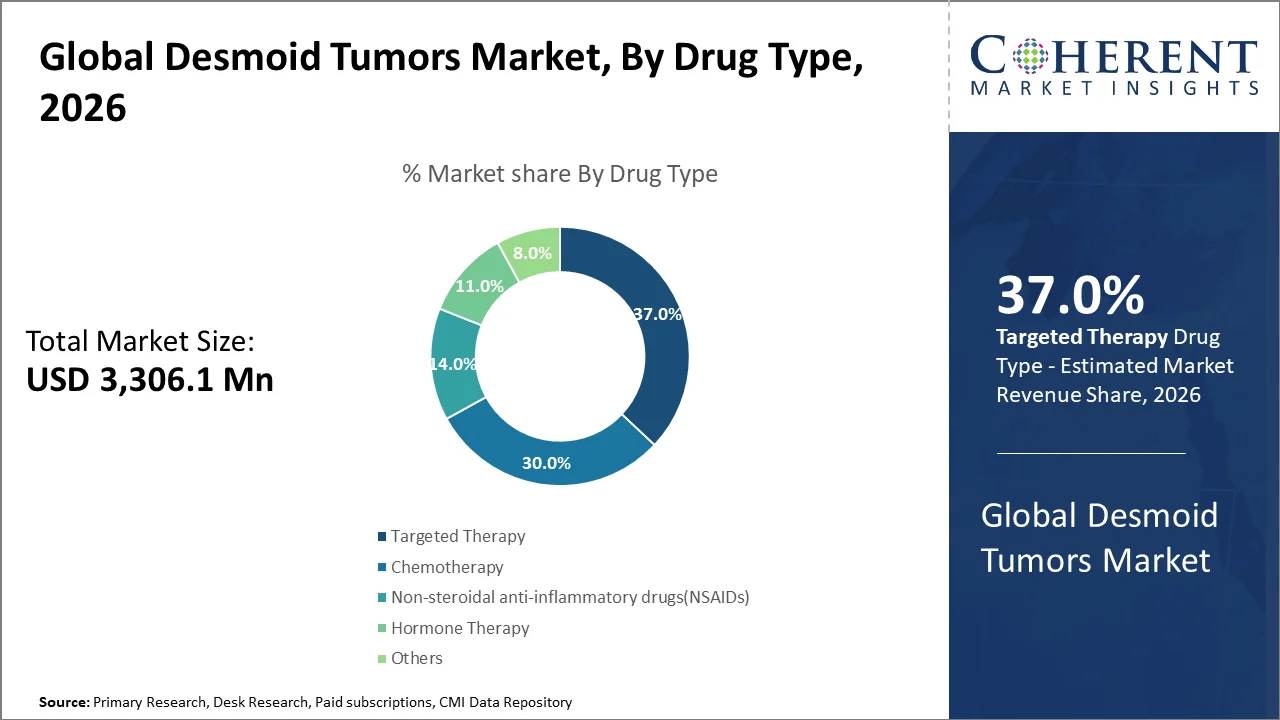
Which Drug Type Dominates the Desmoid Tumors Market?
Targeted Therapy Leads the Desmoid Tumors Industry Due to Superior Efficacy
According to Coherent Market Insights’ latest desmoid tumors market analysis, targeted therapy segment is set to lead the market, accounting for a revenue share of 37.0% in 2026. This dominance can be attributed to increasing adoption of targeted therapies such as tyrosine kinase inhibitors and gamma-secretase inhibitors because they offer improved progression-free survival, better tumor control, and a more favorable safety profile compared to conventional chemotherapy.
For example, tyrosine kinase inhibitors like sorafenib have shown about an 89% 1-year progression-free survival rate in clinical studies, along with long-lasting disease control. This makes them preferred over conventional chemotherapy because they work better and are easier for patients to tolerate over time. In addition, recent regulatory approvals, such as newer oral targeted agents for progressive desmoid tumor and growing preference for precision oncology approaches in rare soft tissue tumors are boosting segment growth.
- Current Industry Events of 2026
- Market Size Estimation
- Regional Breakdown
- Competitive Landscape
- Customer Intelligence
- Segmental Analysis
- Pricing Analysis
- Key Market Drivers, Challenges & Future Trends
- Customized Insights Section
Which Distribution Channel Accounts for the Largest Desmoid Tumors Market Share?
Hospital Pharmacies Account for the Largest Market Share
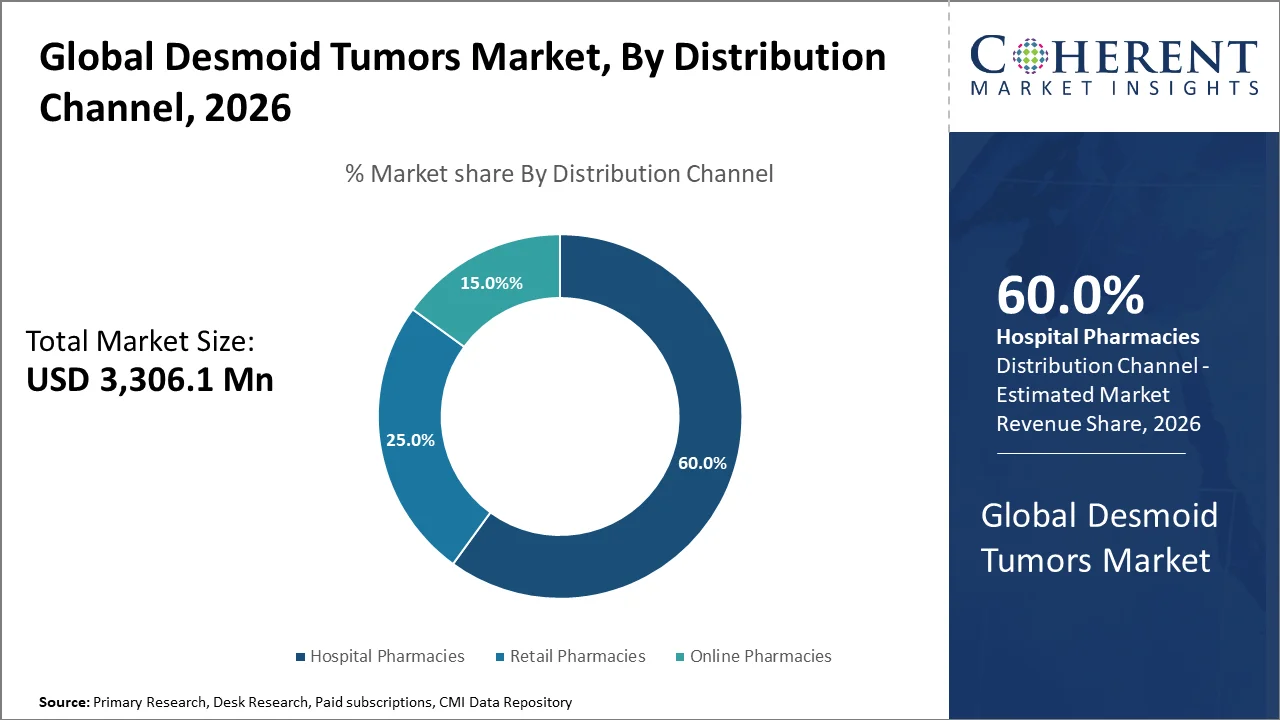
Based on distribution channel, hospital pharmacies segment is projected to account for the largest market share of 60.0% in 2026. This is mostly due to the centralized management of Desmoid Tumors treatment within hospital-based oncology settings, where patients typically receive specialist-supervised care and prescription-only targeted therapies.
The clinical practice guidelines further endorse this approach towards managing patients. According to the NCCN Clinical Practice Guidelines in Oncology (Soft Tissue Sarcoma, 2024), patients suffering from desmoid tumors should undergo multidisciplinary assessment and treatment in centers with experience, especially where systemic treatments like tyrosine kinase inhibitor and gamma-secretase inhibitor are considered for management.
Desmoid Tumors Market Growth Drivers
Rising Adoption of Targeted Therapies
Increasing adoption of targeted therapies is driving the growth of the desmoid tumors market. There is a rising shift from surgery and chemotherapy toward molecularly targeted agents like γ-secretase inhibitors and tyrosine kinase inhibitors. These therapies offer improved disease control, lower recurrence rates, and better tolerability, thereby supporting their increasing clinical adoption.
Investments in R&D are being made aggressively by companies in the development of new drug therapies for desmoid tumors. An example of that is the reporting by Immunome in December 2025, of topline results from its Phase 3 trial of varegacestat, previously called AL102, in patients with desmoid tumors that were progressive. This was characterized by a reduced risk of progression or death by 84%, and an objective response rate of 56%.
Desmoid Tumors Market Opportunities
Advancements in Tumor Diagnostic Technologies
Advancements in diagnostic technologies are expected to create lucrative growth opportunities in the desmoid tumors market during the forecast period. The increasing use of MRI, CT imaging, and molecular/genetic testing is improving early and more accurate tumor detection, enabling better treatment planning and patient stratification. This is likely to support earlier intervention and subsequently drive demand for desmoid tumor therapeutics during the forthcoming period.
Desmoid Tumors Market Trends
Shift from Surgery to Systemic Therapy
Desmoid tumor treatment is increasingly shifting from aggressive surgical intervention toward active surveillance and systemic therapy, helping reduce recurrence risk and treatment-related complications. Surgery is now less preferred due to high recurrence rates of ~40–70%, while targeted therapies such as tyrosine kinase inhibitors have demonstrated disease control with ~80%+ 2-year progression-free survival in clinical trials, supporting a broader move toward non-surgical management.
Current Events and Their Impact on the Desmoid Tumors Market
Current Event | Description and its Impact |
European Commission Approval of OGSIVEO in 2025 |
|
NICE Reimbursement Appraisal for Nirogacestat in the U.K. |
|
Regional Insights
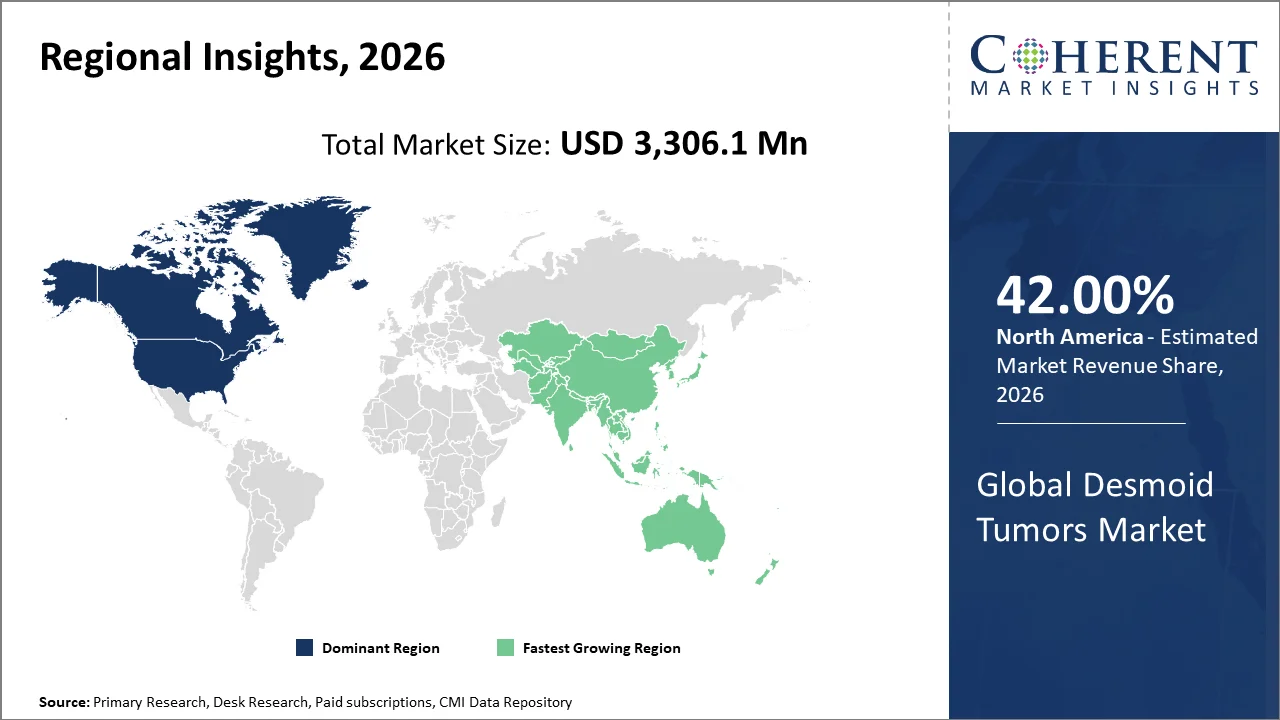
North America Dominates Remains the Most Dominant Desmoid Tumors Market
North America is expected to lead the global desmoid tumors market, accounting for a share of 42.00% in 2026. This is attributable to availability of advanced oncology infrastructure, rising adoption of targeted therapies, and high disease awareness supported by specialized cancer centers. Increasing shift toward non-surgical management and rapid regulatory approvals of novel drugs are also fueling market growth in the region.
Rising use of targeted therapies such as γ-secretase inhibitors and tyrosine kinase inhibitors is acting as a catalyst triggering growth of North America desmoid tumors market. In January 2025, Ostro partnered with the Desmoid Tumor Research Foundation to improve patient access to critical resources. The AI-driven engagement solution enhances digital support for desmoid tumor patients and caregivers, strengthening awareness, information delivery, and community education.
Asia Pacific to Emerge as the Fastest-Growing Market for Desmoid Tumor Treatments
Asia Pacific is anticipated to emerge as a highly lucrative market for desmoid tumor drug companies, registering a CAGR of 9.0% during the forecast period. This is mostly due to improving rare disease diagnosis rates, expanding oncology hospital networks, and increasing access to advanced cancer therapies in nations like China, India, Japan, and South Korea. Rising awareness of soft tissue tumors and the gradual adoption of targeted therapies are also supporting regional expansion.
Improved treatment access through the clinical adoption of novel drugs is further fostering growth in the Asia Pacific desmoid tumors market. Similarly, pharmaceutical companies and biotechnology firms across the region are increasing investments in rare tumor research, supported by orphan drug incentives, grants, and faster regulatory pathways. This is expected to boost desmoid tumor market revenue in the region during the forecast period.
Desmoid Tumors Market Outlook – Country-wise
U.S. Desmoid Tumors Market Trends
The United States is expected to hold a leading position in the desmoid tumors market, supported by advanced oncology care systems, high diagnosis rates, and rapid adoption of targeted therapies. Increasing regulatory support for rare disease drug approvals and rising shift toward non-surgical treatment approaches in specialized cancer centers are also boosting desmoid tumors market growth in the U.S.
China Desmoid Tumors Market Forecast
The desmoid tumors market in China is projected to exhibit strong growth throughout the forecast period. This is due to improving rare disease diagnosis, expanding oncology infrastructure, and increasing access to advanced cancer treatments in major hospitals. Rising awareness among clinicians and gradual adoption of targeted therapies are also supporting market development in the country.
Who are the Major Companies in the Desmoid Tumors Market?
Some of the major players in desmoid tumors market are Horizon Therapeutics Plc, Strides Pharma Science Limited, Teva Pharmaceutical Industries Ltd., Amneal Pharmaceuticals LLC, Hikma Pharmaceuticals PLC, Natco Pharma Ltd, Lupin, Zydus Lifesciences, Mylan N.V., Assertio Holdings, Inc., Mayne Pharma Group Limited, Alembic Pharmaceuticals Limited, Aprazer, Ayala Pharmaceuticals, SpringWorks Therapeutics, Inc., Iterion Therapeutics, Novartis AG, Apotex Inc., Bayer AG., Sun Pharmaceutical Industries Ltd, Dr. Reddy’s Laboratories Ltd., Endo International plc, Abbott, and Getwell Pharmaceuticals.
Key Strategies Adopted by Industry Players
Top manufacturers of desmoid tumor drugs are adopting various organic and inorganic strategies to boost their revenue as well as gain a competitive edge over the industry. For instance, they are increasingly investing in research and development (R&D) activities to create novel desmoid tumor treatments. Similarly, new product launches and approvals, partnerships, mergers, acquisitions, collaborations, and distribution agreements are becoming popular in the market.
- In April 2026, Immunome submitted new drug application to the U.S. FDA for Varegacestat in desmoid tumours. It is an investigational oral once-daily gamma secretase inhibitor intended for the treatment of adults with desmoid tumors.
- In July 2025, Merck KGaA completed its acquisition of SpringWorks Therapeutics, Inc. This deal strengthens Merck’s rare cancer portfolio by adding SpringWorks’ desmoid tumor therapy, OGSIVEO (nirogacestat).
Market Report Scope
Desmoid Tumors Market Report Coverage
| Report Coverage | Details | ||
|---|---|---|---|
| Base Year: | 2025 | Market Size in 2026: | USD 3,306.1 Mn |
| Historical Data for: | 2020 To 2024 | Forecast Period: | 2026 To 2033 |
| Forecast Period 2026 to 2033 CAGR: | 7.3% | 2033 Value Projection: | USD 5,413.9 Mn |
| Geographies covered: |
| ||
| Segments covered: |
| ||
| Companies covered: | Horizon Therapeutics Plc, Strides Pharma Science Limited, Teva Pharmaceutical Industries Ltd., Amneal Pharmaceuticals LLC, Hikma Pharmaceuticals PLC, Natco Pharma Ltd, Lupin, Zydus Lifesciences, Mylan N.V., Assertio Holdings, Inc., Mayne Pharma Group Limited, Alembic Pharmaceuticals Limited, Aprazer, Ayala Pharmaceuticals, SpringWorks Therapeutics, Inc., Iterion Therapeutics, Novartis AG, Apotex Inc., Bayer AG., Sun Pharmaceutical Industries Ltd, Dr. Reddy’s Laboratories Ltd., Endo International plc, Abbott, and Getwell Pharmaceuticals | ||
| Growth Drivers: |
| ||
| Restraints & Challenges: |
| ||
Analyst Opinion (Expert Opinion)
- Very low incidence supports orphan-drug driven market growth. Desmoid tumors are extremely rare, with an estimated ~2–4 cases per million people per year (NCI), which qualifies them for orphan disease incentives and encourages pharma investment in targeted therapies.
- Shift toward targeted therapies is reshaping treatment demand. Drugs like tyrosine kinase inhibitors and pathway-specific treatments are increasingly preferred over traditional chemotherapy, improving disease control and boosting long-term drug adoption in oncology centers.
- Treatment is concentrated in specialty cancer hospitals. Because management requires multidisciplinary expertise (surgery, oncology, radiology), most patients are treated in tertiary care hospitals, which strengthens the role of hospital-based drug distribution and specialty pharmacies.
- Genetic mutation-driven understanding is improving diagnosis and drug development. Identification of CTNNB1 and APC gene mutations is helping in more accurate diagnosis and targeted drug research, which is expected to expand precision medicine approaches and pipeline activity in this market.
Speak to the analyst
Want personalized insights?
Take the findings above to one of our principal consultants, or have the report rebuilt around the segments, geographies and competitors you actually track.
Market Segmentation
- By Drug Type ( Revenue, USD Mn, 2021 - 2033)
- Non-steroidal anti-inflammatory drugs (NSAIDs)
- Targeted Therapy
- Chemotherapy
- Hormone Therapy
- Others
- By Distribution Channel ( Revenue, USD Mn, 2021 - 2033)
- Hospital Pharmacies
- Retail Pharmacies
- Online Pharmacies
- By Region ( Revenue, USD Mn, 2021 - 2033)
- North America
- U.S.
- Canada
- Latin America
- Brazil
- Argentina
- Mexico
- Rest of Latin America
- Europe
- Germany
- U.K.
- Spain
- France
- Italy
- Russia
- Rest of Europe
- Asia Pacific
- China
- India
- Japan
- Australia
- South Korea
- ASEAN
- Rest of Asia Pacific
- Middle East
- GCC
- Israel
- Rest of Middle East
- Africa
- North Africa
- Central Africa
- South Africa
- North America
Sources
Primary Research interviews
- Key opinion leaders (KOLs)
- Oncologists
- Surgical oncologists
- Radiation oncologists
- Hospital pharmacists
- Healthcare professionals involved in desmoid tumor management across specialty and tertiary care hospitals
Databases
- PubMed
- ClinicalTrials.gov
- National Center for Biotechnology Information (NCBI)
- SEER (Surveillance, Epidemiology, and End Results Program)
- WHO Global Health Observatory
- European Medicines Agency (EMA) clinical data repository
Magazines
- Oncology Times
- Cancer Therapy Advisor
- Medscape Oncology
- The Lancet Oncology News
- Nature Reviews Clinical Oncology
Journals
- The Lancet Oncology
- Journal of Clinical Oncology
- Cancer Research
- Annals of Oncology
- European Journal of Cancer
- Clinical Cancer Research
Newspapers
- The New York Times (Health section)
- The Guardian (Science/Health)
- The Hindu (Science & Health)
- Reuters Health News
- Bloomberg Health
Associations
- American Cancer Society (ACS)
- National Comprehensive Cancer Network (NCCN)
- European Society for Medical Oncology (ESMO)
- American Society of Clinical Oncology (ASCO)
- World Health Organization (WHO)-related oncology programs
Public Domain sources
- Government health portals
- FDA drug labels and approvals database
- NIH publications
- Open-access clinical guidelines
- Publicly available hospital registry data
Proprietary Elements
- CMI Data Analytics Tool
- Proprietary CMI Existing Repository of information for last 8 years.
Get access to 250+ pages report
Every segment, forecast, competitor profile and data table behind the analysis above — available for instant download.
- ESOMAR Member
- ISO 9001:2015 Certified
- D-U-N-S Registered
- GDPR & CCPA Compliant
Missing comfort of reading report in your local language? Find your preferred language:
Transform your Strategy with Exclusive Trending Reports
Frequently Asked Questions
The global Desmoid Tumors Market is estimated to be valued at USD 3,306.1 Mn in 2026.
The global Desmoid Tumors Market value is expected to reach USD 5,413.9 Mn by 2033.
The global Desmoid Tumors Market is poised to exhibit a CAGR of 7.3% from 2026 to 2033.
Major growth factors include increasing development of targeted therapies and novel treatment options for desmoid tumors and growing adoption of precision medicine and improved molecular understanding of rare tumors.
Targeted therapy is set to lead the market with a revenue share of 37.0% in 2026.
Some major companies in the desmoid tumors market include Horizon Therapeutics Plc, Strides Pharma Science Limited, Teva Pharmaceutical Industries Ltd., Amneal Pharmaceuticals LLC, Hikma Pharmaceuticals PLC, Natco Pharma Ltd, Lupin, Zydus Lifesciences, Mylan N.V., Assertio Holdings, Inc., Mayne Pharma Group Limited, Alembic Pharmaceuticals Limited, Aprazer, Ayala Pharmaceuticals, SpringWorks Therapeutics, Inc., Iterion Therapeutics, Novartis AG, Apotex Inc., Bayer AG., Sun Pharmaceutical Industries Ltd, Dr. Reddy’s Laboratories Ltd., Endo International plc, Abbott, and Getwell Pharmaceuticals.
North America, with 42.00% share in 2026, is set to lead the market during the forecast period.