

Digestive Health Products Market Size and Trends
Global digestive health products market size is estimated to be valued at USD 70.96 Bn in 2026 and is projected to reach USD 128.06 Bn by 2033, exhibiting a compound annual growth rate (CAGR) of 8.8% during the forecast period 2026-2033.
Key Takeaways
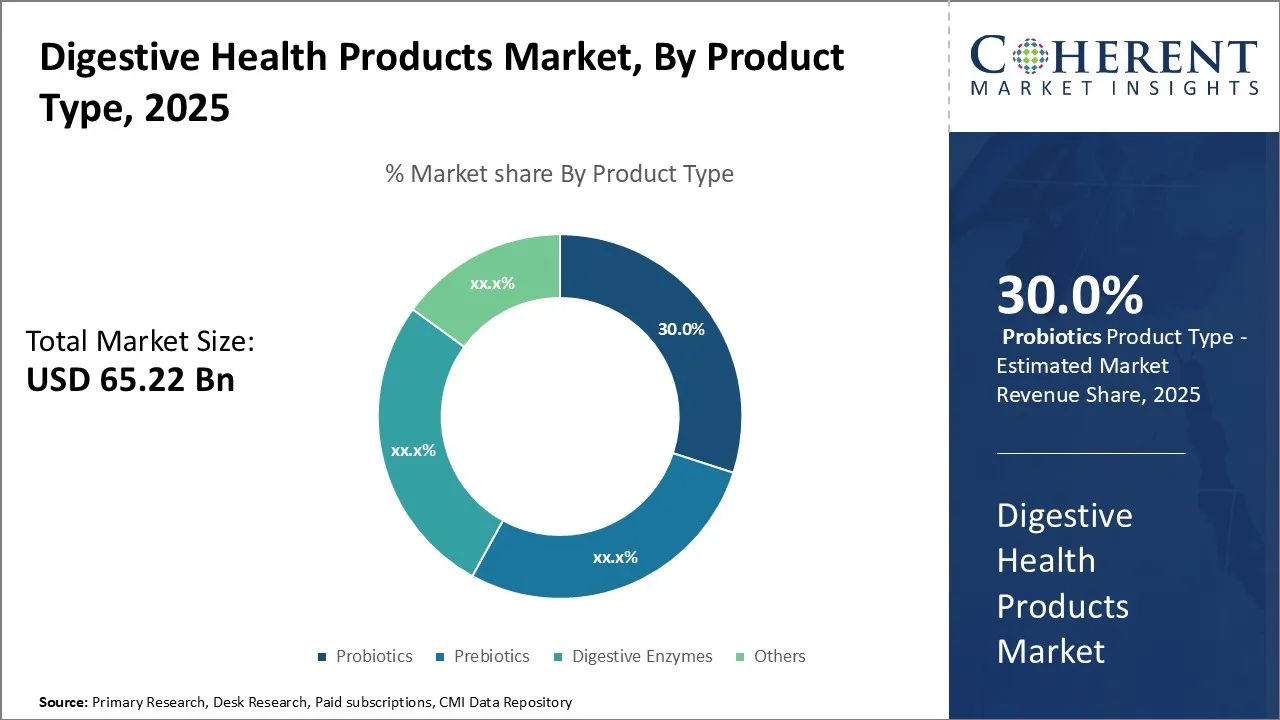
- Based on Product Type, the Probiotic segment is expected to hold a dominant 31% share of the global digestive health products market in 2026, due to their proven role in maintaining and restoring gut microbiota balance.
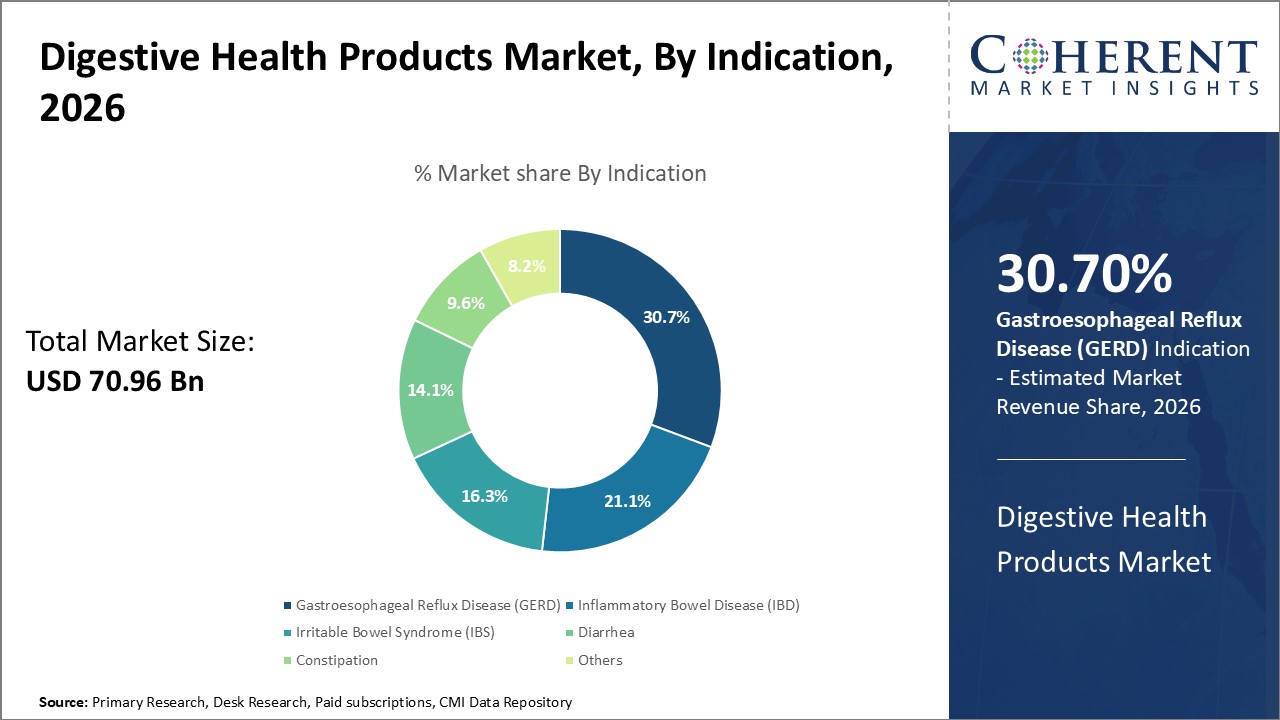
- Based on Indication, the Gastroesophageal Reflux Disease (GERD) segment is expected to account for the largest share of the market in 2026, due to its high global prevalence, lifestyle-related risk factors, and rising awareness.
- Based on Age Group, the Adult segment holds the highest market share in 2026, due to rising awareness of gut health.
- Based on Distribution Channel, the Supermarkets and Hypermarkets segment is expected to lead the market with an enormous share in 2026, driven by convenience shopping and several consumer and retail-driven trends.
- Based on End User, the Hospital and Clinics segment is expected to dominate, holding the maximum share in 2026, due to the rising prevalence of gastrointestinal disorders.
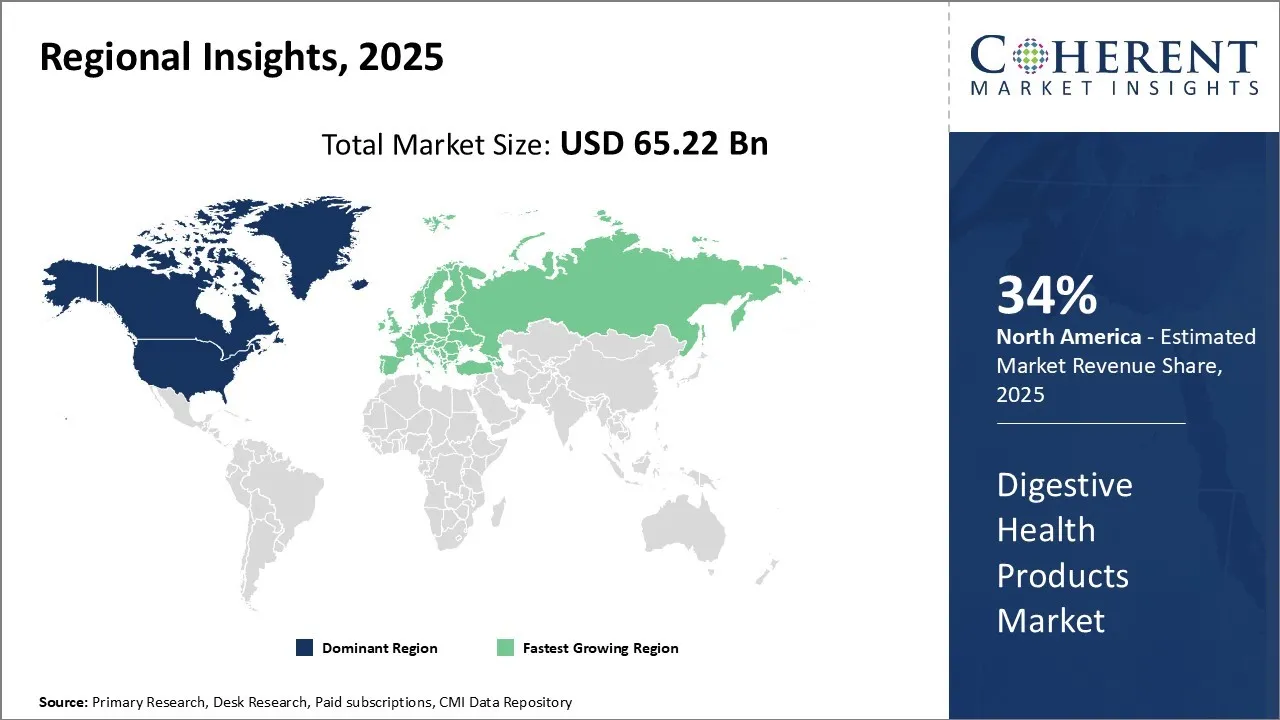
- Based on Region, North America is estimated to lead the market with a share of 34% in 2026. While, Europe, holding a share of 20% in 2026, is projected to be the fastest-growing region.
Market Overview
The digestive health products market is expanding rapidly due to growing awareness of gut health and overall well-being. Rising cases of IBS, IBD, and colorectal cancer, along with poor diets and stress, are driving consumers toward probiotics, supplements, and functional foods. This surge in the digestive health products market demand is further supported by innovations in strain-specific probiotics and fortified foods. As more people seek natural, preventive solutions, the market continues to grow across both healthcare and food sectors.
Current Events and their Impact on the Digestive Health Products Market
Current Event | Description and its Impact |
Regulatory Policy Changes in Key Markets |
|
Microbiome Investment and Innovation |
|
Export Analysis of Digestive Enzyme Supplements
Between September 2023 and August 2024 (TTM), the global export of Digestive Enzyme Supplements totaled 301 shipments. These exports were carried out by 45 exporters to 69 buyers, reflecting a decline of 9% compared to the previous twelve months.
In August 2024 alone, there were 39 shipments of Digestive Enzyme Supplements exported worldwide. This represents a 30% increase year-on-year from August 2023, as well as a 5% increase compared to July 2024.
- Current Industry Events of 2026
- Market Size Estimation
- Regional Breakdown
- Competitive Landscape
- Customer Intelligence
- Segmental Analysis
- Pricing Analysis
- Key Market Drivers, Challenges & Future Trends
- Customized Insights Section
Segmental Insights
Digestive Health Products Market Insights, By Product Type
Probiotics Segment Dominates the Overall market as it Maintain and Restore Gut Microbiota Balance
In terms of product type, the probiotics segment is expected to dominate with a 31.0% share of the global digestive health products market in 2026, due to their proven role in maintaining and restoring gut microbiota balance. They help manage a range of gastrointestinal conditions such as irritable bowel syndrome (IBS), inflammatory bowel disease (IBD), diarrhea, and constipation by promoting beneficial bacteria in the gut. Increasing awareness among consumers about the link between gut health and overall well-being, especially immunity and mental health, has further driven demand. Moreover, the availability of probiotics in various forms like yogurts, supplements, and functional foods makes them accessible and popular across age groups. The demand is also supported by clinical studies showing their efficacy in reducing antibiotic-associated side effects and enhancing digestion.
In December 2024, Swedish biotech firm BioGaia launched Gastrus PURE ACTION, a double‑strength, clean‑ingredient probiotic tailored to adults with sensitive digestive systems. The vegan, gluten‑ and lactose‑free capsules contain patented strains L. reuteri DSM 17938 and ATCC PTA 6475. Such developments are proliferating the digestive health market revenue.
Digestive Health Products Market Insights, By Indication
Gastroesophageal Reflux Disease (GERD) Holds the Dominant Share owing to High Global Prevalence
In terms of indication, the gastroesophageal reflux disease (GERD) segment account for the largest share of the market in 2026, due to its high global prevalence, lifestyle-related risk factors, and rising awareness. Increasing consumption of processed foods, obesity, sedentary habits, and stress are key contributors to GERD, especially in urban populations. As a chronic condition, GERD often requires long-term treatment and lifestyle management, which sustains ongoing demand for antacids, proton pump inhibitors, dietary supplements, and diagnostic tools like endoscopy. Additionally, rising awareness about the complications of untreated GERD, such as esophagitis and Barrett’s esophagus, encourages early diagnosis and regular monitoring, further fueling market growth.
A new awareness campaign, “Relief Starts with Awareness,” launched during GERD Awareness Week by the International Foundation for Gastrointestinal Disorders (IFFGD), aims to educate the public on recognizing and managing gastroesophageal reflux disease (GERD). With 18–28 % of Americans affected, persistent heartburn or acid reflux is not normal and can lead to complications like Barrett’s esophagus.
Digestive Health Products Market Insights, By Age Group
Adults Acquires the Dominant Share owing to the Rising Awareness for Gut Health
In terms of age group, the adult segment dominates the global digestive health products market with the highest share in 2026, primarily due to the rising awareness of the connection between gut health and overall well-being. Factors such as poor diets, stress, sedentary lifestyles, and frequent use of antibiotics disrupt gut microbiota, leading to issues like bloating, constipation, acid reflux, and irritable bowel syndrome. Additionally, growing digestive health products market research on the gut-brain axis and immunity has encouraged adults to seek probiotics, fiber-rich foods, and digestive supplements. With aging, enzyme production and gastrointestinal motility decline, further driving demand for products that support digestion and nutrient absorption. This shift toward preventive care and functional foods is fueling adult interest in digestive health.
In October 2024, Zydus Wellness expanded its Complan brand into adult nutrition with the launch of Complan VieMax. Formulated with protein, prebiotics, and 2.6 billion probiotics per serving, the drink supports muscle health and gut wellness. Available in Vanilla and Chocolate flavors, VieMax is sold exclusively at pharmacies and contains 9% prebiotics to aid digestion and gut health.
Digestive Health Products Market Insights, By Distribution Channel
Supermarkets and Hypermarkets Dominates the Market owing to Convenience shopping
In terms of distribution channel, the supermarkets and hypermarkets segment is expected to hold the greatest share of the market, driven by convenience shopping and several consumer and retail-driven trends. With rising awareness around gut health and immunity, more consumers are seeking probiotic-rich foods, fiber supplements, and functional beverages. Supermarkets respond to this demand by expanding their digestive health product offerings in visible, convenient sections. These large-format stores allow consumers to access food, supplements, and over-the-counter digestive aids in one location, making them ideal retail channels for busy households looking for daily digestive support. Supermarkets and hypermarkets are now positioning themselves as wellness destinations. For instance, retail chains like Walmart and Tesco have increased shelf space for functional foods, including yogurt, kombucha, and fiber-enriched products, to meet consumer expectations for healthier lifestyles, further proliferating the digestive health market revenue.
In November 2024, Tesco, the UK supermarket giant, introduced “Gut Sense”, a new own-label gut health range in early 2025. The range will feature probiotic-rich products such as kefir drinks, cereal bars, nuts, and vitamin-infused beverages, all aimed at supporting digestive wellness.
Digestive Health Products Market Insights, By End User
Hospital and Clinics Acquires the Dominant share owing to the Rising Prevalence of Gastrointestinal Disorder
In terms of end users, the hospital and clinics segment is estimated to hold the maximum share in 2026, due to the rising prevalence of gastrointestinal disorders such as irritable bowel syndrome (IBS), gastroesophageal reflux disease (GERD), and inflammatory bowel diseases like Crohn’s and ulcerative colitis. These conditions often require advanced diagnostic procedures such as endoscopy, colonoscopy, and imaging, all of which are primarily performed in clinical settings. Additionally, hospitals manage severe and chronic cases that need multidisciplinary care, including gastroenterologists, dietitians, and surgeons. The availability of comprehensive testing, emergency services, and access to prescription therapies further reinforces hospitals and clinics as the primary centers for managing digestive health issues.
Regional Insights
North America Digestive Health Products Market Analysis & Trends
North America is the largest market for digestive health products, accounting for 34% of the global market share in 2026. The region covers a large and affluent population with increasing awareness of the importance of digestive health. Poor dietary habits, high consumption of processed foods, sedentary lifestyles, and stress contribute significantly to gastrointestinal issues such as acid reflux, bloating, constipation, and irritable bowel syndrome (IBS). In addition, the region has a large aging population, more prone to digestive disorders and nutrient malabsorption.
Additionally, increased awareness about the gut microbiome’s role in immunity and mental health has boosted sales of functional foods and supplements across the U.S. and Canada. Moreover, a well-established healthcare infrastructure allows for widespread diagnostic testing and treatment access, making hospitals, clinics, and pharmacies key distribution points. For instance, Megalabs USA, a subsidiary of Megalabs Inc., has launched Glutapak R, a probiotic and glutamine supplement designed to support gut health and promote intestinal healing across the Americas.
Europe Digestive Health Products Market Analysis & Trends
The Europe region is expected to exhibit the fastest growth, with 20% of the global market share in 2026. The region covers a large and aging population, which is at an increased risk of developing digestive disorders. Older adults are also more likely to use medications that can disrupt gut health, such as NSAIDs and antibiotics, increasing their vulnerability to gastrointestinal side effects. Additionally, age-related diseases like Parkinson’s and diabetes often have digestive symptoms, requiring specialized care. In countries like Germany, France, and Italy, where over 20% of the population is over 65, healthcare systems are seeing a rise in hospital visits for digestive disorders, endoscopic procedures, and demand for probiotics and digestive enzyme supplements.
Governments and healthcare providers are responding by increasing funding for geriatric gastroenterology services and promoting nutrition-focused interventions that support gut health. This demographic trend is playing a central role in shaping the digestive health products market landscape across Europe, with tailored solutions and preventive care becoming essential for aging populations. The region has a strong regulatory environment and a well-established healthcare infrastructure, which is conducive to the growth of the digestive health products market.
Digestive Health Products Market Outlook Country-Wise
The U.S. Digestive Health Products Market Trends
The U.S. digestive health products market is characterized by high prevalence of digestive disorders, over 70 million Americans suffer from gastrointestinal conditions such as acid reflux, irritable bowel syndrome (IBS), constipation, and bloating. These issues are often linked to poor dietary habits, stress, sedentary lifestyles, and widespread use of medications like NSAIDs and antibiotics that can disrupt gut flora. American consumers are highly engaged with health trends. The market for probiotic yogurts, kombucha, digestive enzyme capsules, and fortified snacks has grown rapidly, especially via e-commerce and health retailers.
For instance, in March 2026, Nature Made, launched clinically studied innovations and new formulations within its Digestive portfolio to deliver a range of probiotic, prebiotic, and fiber supplements for daily gut health support and benefits based on specific wellness needs. These additions come at a time when over 70% of U.S. adults prioritize gut wellness, reflecting consumer demand for scientifically backed products. This is further proliferating the digestive health market demand.
Germany Digestive Health Products Market Trends
Germany’s market for digestive health products is supported by the increasing health awareness, and a cultural emphasis on gut wellness and preventive care. With over 22% of its population aged 65 and above, age-related gastrointestinal issues such as constipation, acid reflux, and food intolerance are becoming more common. This has led to rising consumption of digestive aids, including probiotics, fiber supplements, and herbal remedies. Additionally, recent trends show increased interest in the gut-brain connection, with German consumers actively seeking products that improve digestion and overall well-being.
In April 2026, at Infarma 2026, Europe’s leading pharmacy trade event held in Pritzwalk, German pharmacists noted a surge in popularity for synbiotic gummies products that combine probiotics and prebiotics underscoring a consumer shift toward smart digestive health solutions.
Market Report Scope
Digestive Health Products Market Report Coverage
| Report Coverage | Details | ||
|---|---|---|---|
| Base Year: | 2025 | Market Size in 2026: | USD 70.96 Bn |
| Historical Data for: | 2020 To 2024 | Forecast Period: | 2026 To 2033 |
| Forecast Period 2026 to 2033 CAGR: | 8.8% | 2033 Value Projection: | USD 128.06 Bn |
| Geographies covered: |
| ||
| Segments covered: |
| ||
| Companies covered: | Nestlé SA, Danone SA, Procter & Gamble Co., The Kraft Heinz Company, Bayer AG, Yakult Honsha Co., Ltd., Chr. Hansen Holding A/S, Align Technology, Inc., Sanofi SA, Pfizer Inc., The Clorox Company, Reckitt Benckiser Group plc., DSM Nutritional Products Ltd., Church & Dwight Co., Inc., and The Nature's Bounty Co. | ||
| Growth Drivers: |
| ||
| Restraints & Challenges: |
| ||
Global Digestive Health Products Market Drivers
- Increasing prevalence of digestive disorders: Digestive disorders such as irritable bowel syndrome (IBS), Crohn's disease, ulcerative colitis, and gastroesophageal reflux disease (GERD) are becoming increasingly common. Rising prevalence of these disorders is driving the demand for digestive health products and services. For instance, according to National Centre of Biotechnology Information, the prevalence of digestive disorders like irritable bowel syndrome (IBS) increases with age, particularly between the third and fifth decades of life.
- Increasing awareness of digestive health: There is a growing awareness among individuals regarding the importance of digestive health for overall well-being. People are becoming more proactive in managing their digestive health, thus seeking preventive measures and early treatment. This increased awareness and interest drive the demand for digestive health products and services. For instance, in May 2025, ASSSA joined global efforts to observe World Digestive Health Day, emphasizing prevention and treatment of digestive disorders. The insurer highlighted the digestive system’s key role in nutrient absorption, energy production, and supporting overall bodily systems. ASSSA encouraged a balanced diet, a healthy lifestyle, and avoidance of known risk factors.
Global Digestive Health Products Market Opportunities
- Personalized nutrition and therapeutics: There is a growing focus on personalized medicine and nutrition, which presents opportunities for tailored digestive health solutions. Advancements in genetic testing, microbiome analysis and data analytics allow for personalized diagnostics, treatment plans, and dietary recommendations that are based on an individual's unique digestive profile. This customized approach not only improves outcomes but also increases consumer engagement and trust in health solutions. As a result, the digestive health products market forecast points toward increased demand for personalized probiotics, enzyme supplements, and gut-specific diets, especially in regions investing in precision health technologies and consumer-driven wellness models.
- Integration of digital health technologies: Digital health technologies, such as mobile health apps, wearable devices, and telemedicine platforms, offer opportunities to improve digestive health management. These technologies can enable remote monitoring of symptoms, provide real-time feedback, offer personalized recommendations, and thereby enhance patient engagement. Integrating digital health solutions into the global digestive health products market can improve convenience, accessibility, and patient outcomes.
- Expansion of digestive health services: The demand for comprehensive digestive health services is growing. This includes specialized clinics, diagnostic centers, and rehabilitation facilities dedicated to digestive disorders. Opportunities exist to expand these services, thus ensuring better access to diagnostics, treatment options, and ongoing care for patients with digestive health conditions.
Global Digestive Health Products Market Trends
- Increasing focus on gut microbiome: The role of the gut microbiome in digestive health has gained significant attention. Research continues to uncover the intricate relationship between gut bacteria, digestive disorders, and overall well-being. There is a growing emphasis on developing products and therapies that target the gut microbiome to promote a healthy digestive system.
- Demand for natural and clean label products: Consumers are increasingly seeking natural and clean label products in the digestive health products market. They prefer products that are free from artificial additives, preservatives, and genetically modified ingredients. Manufacturers are responding to this demand by offering natural and organic digestive health products that align with clean label trends.
- Rising interest in plant-based diets: Plant-based diets are becoming increasingly popular due to their perceived health and environmental benefits. These diets, rich in fruits, vegetables, legumes, and whole grains, offer fiber and phytonutrients that promote digestive health. As a result, there is a growing market for plant-based digestive health products, including supplements, functional foods, and beverages.
Analyst Opinion (Expert Opinion)
The digestive health products market value is at a crucial inflection point, with its trajectory increasingly shaped by a convergence of consumer behavior shifts, scientific validation, and regulatory alignment. The most significant value in this market lies not in its breadth of products but in the growing demand for mechanistic efficacy consumers and healthcare professionals alike are no longer satisfied with generic formulations and umbrella claims.
One cannot overlook the rising sophistication of probiotics, which have moved beyond traditional Lactobacillus and Bifidobacterium strains. Advanced formulations such as Clostridium butyricum, known for its butyrate-producing capacity and modulation of gut-brain signaling, are gaining clinical relevance. In fact, multiple double-blind RCTs from Europe have demonstrated a 40–60% improvement in IBS-D (Irritable Bowel Syndrome with Diarrhea) symptoms using strain-specific probiotics, suggesting a decisive shift from general digestive aids to targeted microbiome interventions.
Moreover, the segment of digestive enzymes is witnessing renewed credibility, particularly in pancreatic enzyme replacement therapy (PERT) and gluten-degrading enzymes. For example, Aspergillus niger-derived enzymes have shown enzymatic activity levels 3–4 times higher than older porcine-based analogs, aligning with rising vegan formulations without sacrificing clinical utility.
Equally critical is the functional fiber category, which has been underestimated in the past. Ingredients such as PHGG (Partially Hydrolyzed Guar Gum) and inulin are now receiving formulation prioritization due to their prebiotic index, fermentation efficiency, and low FODMAP status. With over 65% of gastroenterologists in a 2024 US-based poll stating they now recommend prebiotic fibers in chronic constipation management, this category is poised for a deeper clinical integration.
From a regulatory standpoint, EFSA’s tightening of health claim approvals in Europe and the FDA’s increased scrutiny of structure-function claims are inadvertently filtering the market for high-integrity players. Brands investing in biomarker-backed trials, such as measuring zonulin levels for gut permeability or CRP for systemic inflammation, will hold a lasting competitive edge. In my view, this bifurcation will intensify over the next 2–3 years, marginalizing commoditized products in favor of evidence-driven portfolios.
Speak to the analyst
Want personalized insights?
Take the findings above to one of our principal consultants, or have the report rebuilt around the segments, geographies and competitors you actually track.
Recent Developments
- In July 2025, BP Nutriscience launched Enescene Probio 3+, a new synbiotic powder in Malaysia, combining NutriLeads’ precision prebiotic Benicaros®, patented HOWARU® probiotics (200 billion CFU from seven strains), and heat-treated postbiotics. It is designed for daily gut and immune support while minimizing digestive discomfort.
- In July 2025, Austin-based wellness brand Bloom Nutrition launched Bloom Pop, a low‑calorie, low‑sugar prebiotic soda now hitting shelves in over 3,000 Walmart stores nationwide. The soda contains just 20 calories, 3–4 g of sugar, no artificial ingredients, and features 1 g of PreticX™, a clinically backed prebiotic supporting gut health.
- In June 2025, Indian wellness brand Cureveda launched Weight‑Gut, a plant‑based supplement designed to support digestion, curb cravings, and reduce bloating and stubborn fat. The formula features a patented Slim‑Pur™ enzyme blend including proteases, lipase, amylase, cellulase, and lactase, alongside herbal actives like Garcinia Cambogia, Berberine, and Turmeric.
- In June 2025, Bioma Probiotics launched a comprehensive gut-health supplement designed to enhance digestion, immunity, and metabolic wellness. The plant-based formula blends probiotics, prebiotics, and postbiotics, including clinically studied strains like Bifidobacterium breve, lactis, and longum, alongside xylooligosaccharides and tributyrin.
Market Segmentation
- Global Digestive Health Products Market, By Product Type (Revenue, USD Bn, 2021 - 2033)
- Probiotics
- Prebiotics
- Digestive Enzymes
- Others
- Global Digestive Health Products Market, By Indication (Revenue, USD Bn, 2021 - 2033)
- Irritable Bowel Syndrome (IBS)
- Inflammatory Bowel Disease (IBD)
- Gastroesophageal Reflux Disease (GERD)
- Diarrhea and Constipation
- Other
- Global Digestive Health Products Market, By Age Group (Revenue, USD Bn, 2021 - 2033)
- Adults
- Children
- Elderly
- Global Digestive Health Products Market, By Distribution Channel (Revenue, USD Bn, 2021 - 2033)
- Retail Pharmacies
- Hospital Pharmacies
- Online Pharmacies
- Supermarkets and Hypermarkets
- Global Digestive Health Products Market, By End User (Revenue, USD Bn, 2021 - 2033)
- Hospitals and Clinics
- Homecare Settings
- Research Institutes and Laboratories
- Global Digestive Health Products Market, By Region (Revenue, USD Bn, 2021 - 2033)
- North America
- U.S.
- Canada
- Latin America
- Brazil
- Argentina
- Mexico
- Rest of Latin America
- Europe
- Germany
- U.K.
- Spain
- France
- Italy
- Russia
- Rest of Europe
- Asia Pacific
- China
- India
- Japan
- Australia
- South Korea
- ASEAN
- Rest of Asia Pacific
- Middle East
- GCC Countries
- Israel
- Rest of Middle East
- Africa
- South Africa
- North Africa
- Central Africa
- North America
- Top Companies in Global Digestive Health Products Market
- Nestlé SA
- Danone SA
- Procter & Gamble Co.
- The Kraft Heinz Company
- Bayer AG
- Yakult Honsha Co., Ltd.
- Chr. Hansen Holding A/S
- Align Technology, Inc.
- Sanofi SA
- Pfizer Inc.
- The Clorox Company
- Reckitt Benckiser Group plc.
- DSM Nutritional Products Ltd.
- Church & Dwight Co., Inc.
- The Nature's Bounty Co.
Sources
Primary Research Interviews from the following stakeholders
Stakeholders
- Interviews with digestive health product manufacturers, clinical nutritionists, gastroenterologists, pharmacists, FMCG distributors, health supplement retailers, procurement managers, and hospital administrators across key global regions.
Databases
- World Health Organization (WHO) Global Health Observatory
- UN Comtrade Database – Dietary Supplements and Medicinal Products Trade Codes
- Food and Agriculture Organization (FAO) Food Balance Sheets
- Central Drugs Standard Control Organization (CDSCO), India
- European Food Safety Authority (EFSA) – Probiotic Health Claims
- U.S. Food and Drug Administration (FDA) – Dietary Supplement Label Database
- Ministry of Health, Labour and Welfare (Japan) – FOSHU approvals
- Health Canada – Licensed Natural Health Products Database
- China National Medical Products Administration (NMPA)
Magazines
- Nutrition Insight
- Nutraceutical Business Review
- Functional Ingredients
- WholeFoods Magazine
- Food Navigator
- Today’s Dietitian
- Probiotic Review
- NutraIngredients
Journals
- Gut (BMJ)
- Journal of Gastroenterology and Hepatology
- Clinical Nutrition (Elsevier)
- World Journal of Gastroenterology
- Current Opinion in Clinical Nutrition and Metabolic Care
- Trends in Food Science & Technology
- Journal of Functional Foods
- Journal of Applied Microbiology
Newspapers
- The Economic Times – Healthcare and Wellness
- The Hindu Business Line – Nutraceuticals and Pharma
- Financial Times – Health Tech & Supplements
- The Wall Street Journal – Wellness and Health Business
- Nikkei Asia – Functional Food & Health Innovation
- South China Morning Post – Biotech and Consumer Health
Associations
- International Probiotics Association (IPA)
- American Gastroenterological Association (AGA)
- European Society for Clinical Nutrition and Metabolism (ESPEN)
- Global Alliance for Probiotics and Prebiotics (GAPP)
- Indian Dietetic Association (IDA)
- Japan Health and Nutrition Food Association (JHNFA)
- Council for Responsible Nutrition (CRN)
- International Scientific Association for Probiotics and Prebiotics (ISAPP)
Public Domain Sources
- Ministry of AYUSH (Government of India)
- Centers for Disease Control and Prevention (CDC) – Digestive Health Insights
- Department of Biotechnology (DBT), India – Human Microbiome Program
- National Institutes of Health (NIH) – Human Microbiome Project
- World Gastroenterology Organisation (WGO) Practice Guidelines
- NITI Aayog – Nutraceutical Sector Reports
- Reserve Bank of India (RBI) – Healthcare and Wellness Sector Overview
- European Commission – Functional Foods and Food Supplements Reports
Proprietary Elements
- CMI Data Analytics Tool, and Proprietary CMI Existing Repository of information for last 8 years
*Definition: Global digestive health products market refers to the commercial sector encompassing products, services, and treatments focused on promoting and maintaining a healthy digestive system. It includes a wide range of products such as probiotics, prebiotics, digestive supplements, digestive enzymes, fiber-based products, and diagnostic tests for various digestive disorders. The market also includes healthcare services provided by healthcare professionals specializing in gastroenterology and related fields, as well as pharmaceuticals and therapeutic interventions targeted at digestive health conditions. The primary goal of the global digestive health products market is to support optimal digestive function, alleviate digestive disorders, and improve overall gastrointestinal well-being.
Get access to 250+ pages report
Every segment, forecast, competitor profile and data table behind the analysis above — available for instant download.
- ESOMAR Member
- ISO 9001:2015 Certified
- D-U-N-S Registered
- GDPR & CCPA Compliant
Missing comfort of reading report in your local language? Find your preferred language:
Transform your Strategy with Exclusive Trending Reports
Frequently Asked Questions
The Digestive Health Products Market is estimated to be valued at USD 70.96 Bn in 2026, and is expected to reach USD 128.06 Bn by 2033.
Lack of awareness and understanding, limited reimbursement coverage, and side effects and safety concerns are the key factors hampering growth of the global digestive health products market.
Increasing prevalence of digestive disorders, increasing aging population, changing lifestyle and dietary patterns, and increasing awareness of digestive health are the major factors driving the global digestive health products market growth.
Probiotics is the leading product type segment in the global digestive health products market.
The major players operating in the global digestive health products market are Nestlé S.A., Danone S.A., Procter & Gamble Co., The Kraft Heinz Company, Bayer AG, Yakult Honsha Co., Ltd., Chr. Hansen Holding A/S, Pfizer Inc., Align Technology, Inc., Sanofi SA, The Clorox Company, Reckitt Benckiser Group plc., DSM Nutritional Products Ltd., Church & Dwight Co., Inc., and The Nature's Bounty Co.
North America leads the global digestive health products market.
The CAGR of the Digestive Health Products Market is projected to be 8.8% from 2026 to 2033.