

Digital Door Lock System Market Size and Trends
Global digital door lock system market is estimated to be valued at USD 14.04 Bn in 2026 and is expected to reach USD 30.85 Bn by 2033, exhibiting a compound annual growth rate (CAGR) of 11.9% from 2026 to 2033.
Key Takeaways
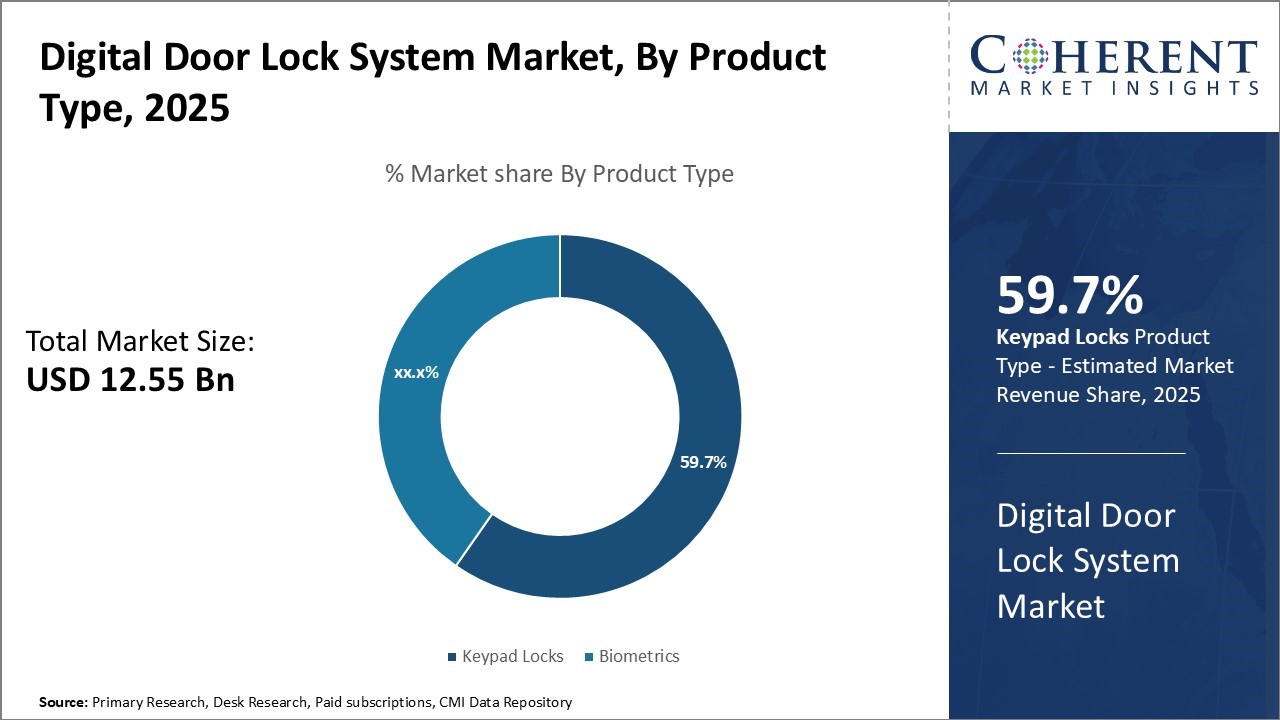
- Based on Product Type, the Keypad Locks segment leads the market holding an estimated share of 60.7% in 2026, owing to its affordability and easy accessibility.
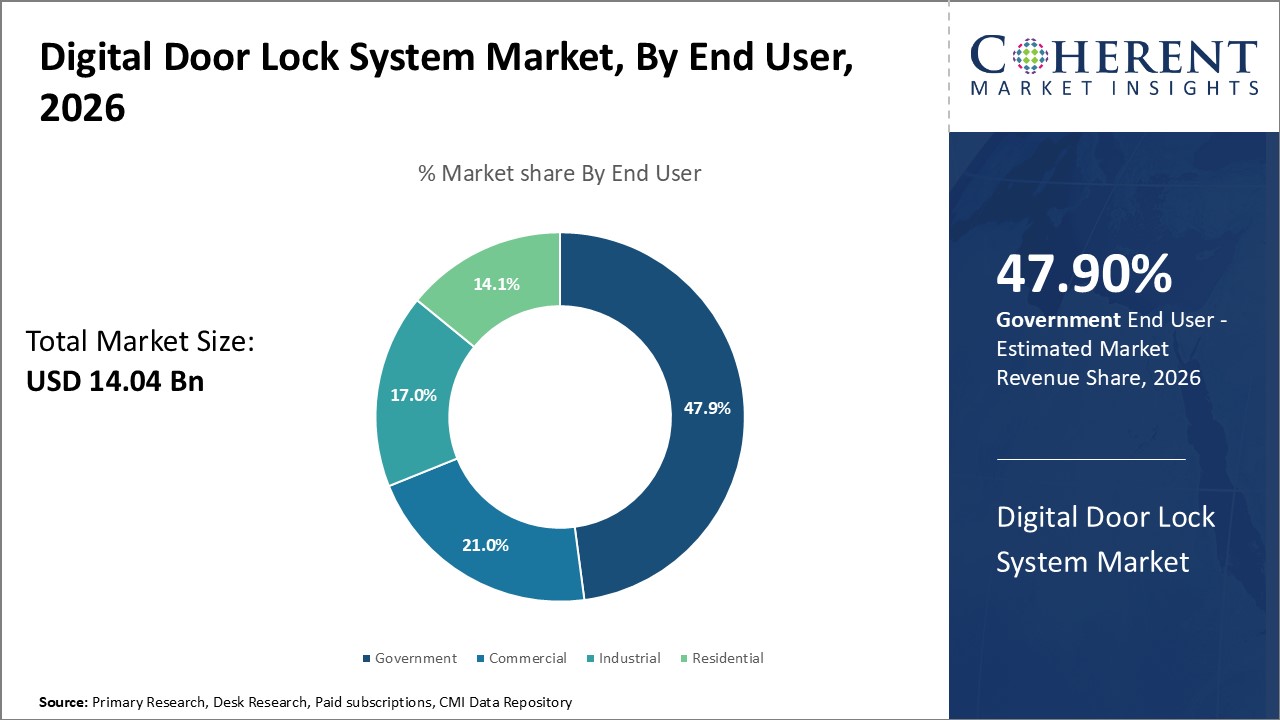
- Based on End User, the Government segment is projected to dominate with a share of 47.0% in 2026, supported by stringent security mandates.
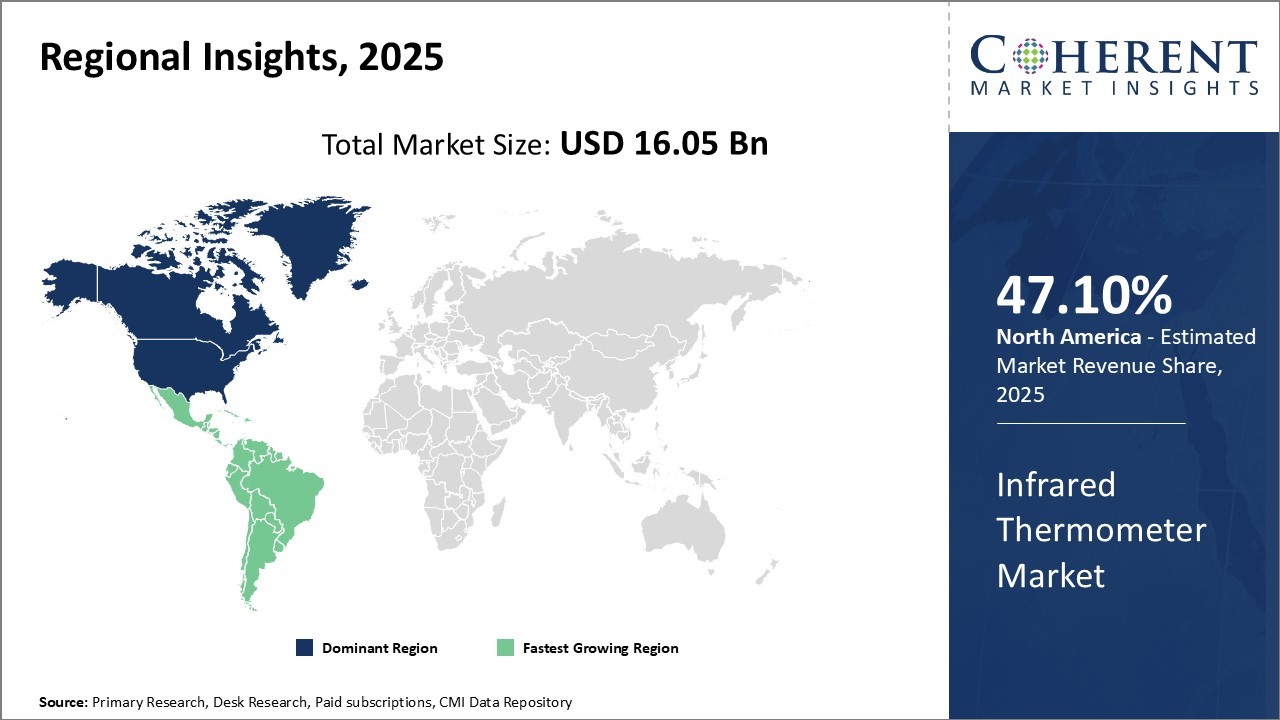
- Based on Region, North America is estimated to lead the market with a share of 42.0% in 2026 due to highest penetration of automated access control system. While, Asia Pacific is projected to be the fastest growing region during the forecast period due to the growing real estate sector.
Market Overview
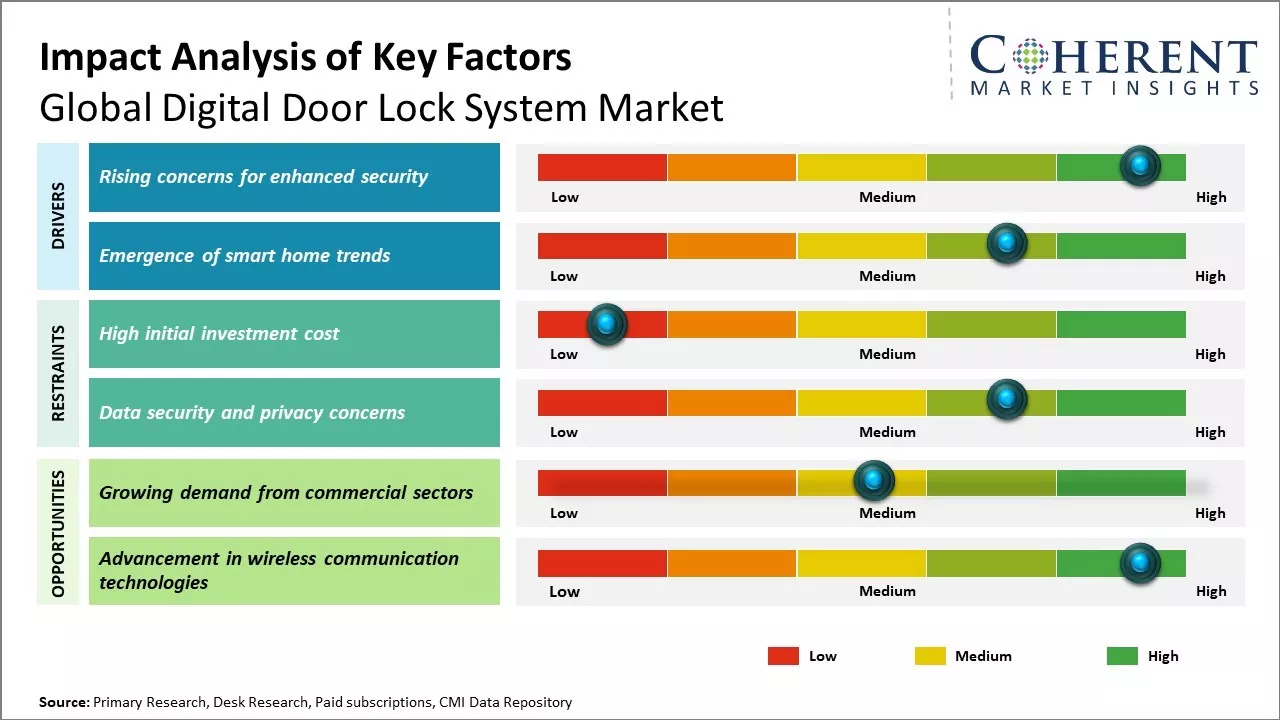
Rising security concerns across both residential and commercial sector can boost digital door lock system market demand. These locks provide advanced features like remote access, door status monitoring, and data analytics which assist in enhancing security. Furthermore, growing real estate and construction industries can also drive the market growth. Rapid urbanization coupled with rising spending capacity of consumers has increased the installation of digital door locks in developed as well as developing regions. Key market players are investing heavily in research and development to introduce innovative products with advanced technologies like facial recognition, and this can offer new business opportunities for the vendors. However, requirement of regular maintenance and high initial costs associated with digital locks can hamper the market growth over the forecast period.
Current Event and their Impact on Digital Door Lock System Market
Current Events | Description and its Impact |
Global Semiconductor Supply Chain Stabilization |
|
Smart Lock Technology Innovation Race |
|
Role of Artificial Intelligence (AI) in Digital Door Lock System Market
Integration of artificial intelligence into digital door lock system is revolutionizing the lives of people through innovative solutions offering security at their homes and vehicles which ensures enhanced convenience, efficiency and peace of mind. Smart locks are in-build with AI algorithms which has the ability to detect and respond to potential security threats in real time. This system also utilizes machine learning algorithms to analyze patterns and detect suspicious activities, providing an added layer of security which is not available with traditional locks and keys.
In April 2025, Huawei launched the smart door lock 2 series with amazing specs and features. The company has upgraded its door lock lineup with top AI enhancement. The new launch consists of features such as AI palm vein recognition, emergency little red button, cross-screen connectivity, harmonyOS support, voice message + door opening reminder. It uses infrared scanning, high computing power chip, and ultrasonic monitoring to collect deep palm vein images.
- Current Industry Events of 2026
- Market Size Estimation
- Regional Breakdown
- Competitive Landscape
- Customer Intelligence
- Segmental Analysis
- Pricing Analysis
- Key Market Drivers, Challenges & Future Trends
- Customized Insights Section
Segmental Insights
Digital Door Lock System Market Insights, By Product Type: Affordability and accessibility boosts demand for keypad locks segment
In terms of product type, keypad locks segment is estimated to contribute the highest market share of 60.7% in 2026, owing to its affordable price point and easy accessibility as compared to other alternatives like biometrics. Keypad locks offer a balanced solution between security and cost for various end users. Homeowners and property managers especially favor keypad locks as these provide a secure means to grant access to maintenance staff, cleaning crews, friends and family without having to distribute or track physical keys. Keypads can be installed easily and programmable codes allow flexible access control as needed.
Keypad locks are also a popular choice for commercial and government buildings where managing large numbers of physical keys would be cumbersome and expensive. Keypads make it straightforward to configure temporary access codes for visitors or vendors without issuing them key cards. For multi-tenant properties, individual keypad codes at unit entry doors enhance security over conventional door locks while avoiding the high set-up cost of full electronic access systems. Furthermore, keypad locks maintain the traditional look of regular door locks without appearing conspicuous like some biometric solutions, making them suitable for heritage buildings that value appearance.
In July 2024, Idlespace technology, under the brand license agreement in North America, launched Philips Hone Access 5000 Series Palm Recognition Smart Lock, 3000 Series Wi-Fi Retrofit lock with its Wireless Keypad and the 7000 Series Video Doorbell. This is further accelerating the digital door lock system market share.
Digital Door Lock System Market Insights, By End User: Security needs boosts demand from government agencies
In terms of end user, government segment is estimated to contribute the highest market share of 47.9%, due to stringent security mandates. Digital door locks enable centralized security configuration and monitoring important for government facilities housing sensitive operations and documents. Biometric options facilitate robust access control and reporting of employee/visitor movements required to comply with institutional security policies. Network connectivity of these systems simplifies remote administration and coordination between multiple departments and agencies.
Digital locks also meet security perimeter hardening needs of critical infrastructure like military bases, courthouses and data centers. Their programmable features allow flexible yet rigorous access zones controlled in line with an organization's security clearance levels. Advanced functionalities like remote locking/unlocking and real-time alarm integration assist effective emergency response.
For instance, ABLOY electric locks have been installed worldwide, in commercial and government buildings, at critical infrastructure, protecting hospital and many more promises.
Regional Insights
North America Digital Door Lock System Market Analysis and Trends
North America dominates the global digital door lock system market with an estimated market share of 42.0% in 2026. The region has the highest penetration of automated access control systems across both commercial as well as residential sectors. With increasing construction of smart homes in the U.S. and Canada, there has been huge demand for digital locks integrated with smart home features like remote access control via smartphones. In June 2024, Schneider Electric, a global leader in digital energy management and automation, announced the transformation of its Digital Buildings business in Canada with the introduction of the SMART Buildings Division. This strategic shift aims to provide integrated solutions and services that help building owners and operators meet their sustainability and decarbonization objectives. Many leading global manufacturers have their headquarters in America and cater to the large regional demand.
Asai Pacific Digital Door Lock System Market Analysis and Trends
Asia Pacific has emerged as the fastest growing regional market for digital door lock system globally. Rapid urbanization and growing real estate sector have boosted demand for smarter access control solutions from both property developers as well as homeowners. Countries like China, India, Japan and South Korea are driving significant growth. In May 2026, Qubo, a division of the Hero Group, broadened its Smart Home product range in India with the release of five new smart door locks. The launch features the newest Smart Door Lock models—Nova, Alpha, and Optima—alongside the 2026 editions of its popular Select and Essential locks. Cheaper manufacturing costs have also attracted many global players to set up local production facilities in various APAC countries or outsource production from local manufacturers. This has made digital locks more affordable for mass adoption, further accelerating the digital door lock system market revenue.
Digital Door Lock System Market Outlook Country-wise
The United States Digital Door Lock System Market
The United States is the leading region in the digital door lock market, driven by the high adoption of smart home technologies, increasing demand for home automation and integration with AI and voice assistants (such as Alexa and Google Assistant). The United States is experiencing a shift towards biometric and wireless locks. There is a gradual increase in the replacement of traditional locks in hospitality and multifamily housing. In July 2026, Nuki, a smart access provider, introduced the latest version of its flagship Smart Lock in the United States. Featuring seamless integration, an intuitive app, and user-focused design, Nuki aims to set a new standard in smart home security for American consumers, thereby proliferating the digital door lock system market growth.
The United Kingdom Digital Door Lock System Market
The United Kingdom holds a significant share in the market, owing it is smart city initiatives, insurance premium discounts for smart security systems. The UK has a strong demand in student housing and private rentals, integrated with building management systems. For instance, in October 2024, Abloy UK launched its new Primo electronic access control solution, created in partnership with its sister company Impro Technologies. The system features a modern, user-friendly graphical interface designed to improve the overall user experience. Such developments are accelerating the digital door lock system market demand.
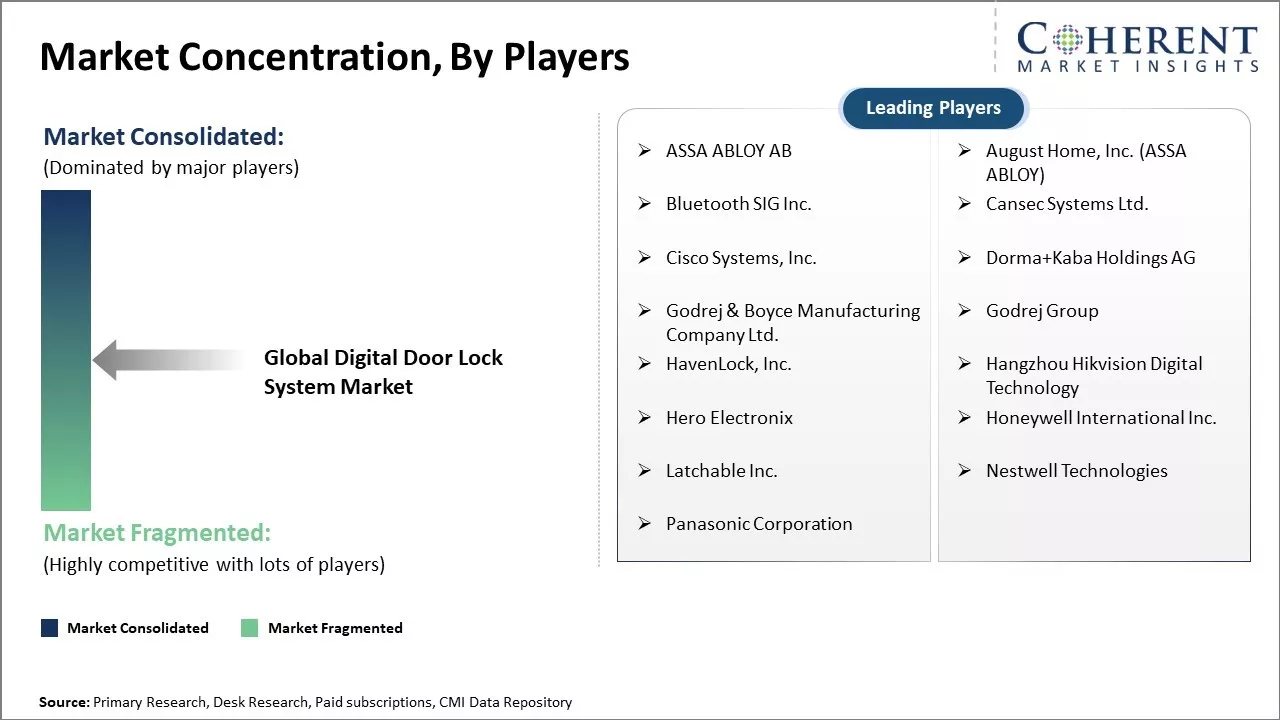
Market Concentration and Competitive Landscape
Key Developments
- In May 2025, Switch Bot launched two groundbreaking new product- SwitchBot Lock Ultra Vision Combo and SwitchBot Hub 3. The products are designed to deliver a smarter, safer, and more seamless home automation experience.
- In May 22025, Eufy launched the S3 max Video Smart Lock, its first smart lock with palm-vein recognition technology. The new S3 max is designed for easy use by people of all ages and levels of tech knowledge.
- In March 2025, ISC West, trusted security brands Yale and master Lock introduced their newest lines of smart lock for businesses and multi-family facilities.
- In September 2023, Yale Home, a leader in smart home security that protects homes throughout the United States and Canada, expanded its best-selling smart lock collection with the release of the Yale Assure Lock 2 Touch and Yale Assure Lock 2 Plus.
- In April 2023, Huawei, the global technology giant known for its innovative consumer electronics and smart home solutions, unveiled the Huawei Smart Door Lock Series 2.0 at a product launch event in Shanghai. This upgraded version of Huawei's popular smart door lock series offers advanced security features and cutting-edge technologies to enhance convenience and efficiency for users. The Huawei Smart Door Lock Series 2.0 features AI 3D face recognition 2.0, which improves unlocking speed by 20% and enables the door to be unlocked even in low-light conditions.
- In February 2023, Abode Systems, a leading provider of DIY smart home security solutions, introduced the Abode Lock, an innovative device designed to seamlessly convert standard latch-style deadbolts into advanced smart locks. This retrofit smart lock aligns perfectly with Abode's comprehensive smart home ecosystem, allowing users to upgrade their home security without the need to replace their existing deadbolt.
Market Report Scope
Digital Door Lock System Market Report Coverage
| Report Coverage | Details | ||
|---|---|---|---|
| Base Year: | 2025 | Market Size in 2026: | USD 14.04 Bn |
| Historical Data for: | 2020 To 2024 | Forecast Period: | 2026 To 2033 |
| Forecast Period 2026 to 2033 CAGR: | 11.9% | 2033 Value Projection: | USD 30.85 Bn |
| Geographies covered: |
| ||
| Segments covered: |
| ||
| Companies covered: | ASSA ABLOY AB, August Home, Inc. (ASSA ABLOY), Bluetooth SIG Inc., Cansec Systems Ltd., Cisco Systems, Inc., Dorma+Kaba Holdings AG, Godrej & Boyce Manufacturing Company Ltd., Godrej Group, HavenLock, Inc., Hangzhou Hikvision Digital Technology, Hero Electronix, Honeywell International Inc., Latchable Inc., Nestwell Technologies and Panasonic Corporation | ||
| Growth Drivers: |
| ||
| Restraints & Challenges: |
| ||
Digital Door Lock System Market Driver
- Rising concerns for enhanced security
Rising instances of burglaries and theft across both residential and commercial sectors has boosted demand for robust security systems. Traditional lock and key mechanisms are no longer considered reliable nowadays as thieves and burglars are getting more technologically equipped. Digital door locks are emerging as an effective solution as these provide advanced security with features like keycard access, remote operation, automated locks and detailed audit trails of entries and exits. In August 2024, Onetouch launched the OT500 Digital Door Lock, a sleek, high-tech solution offering enhanced security and convenience for modern homes. The built-in microchip of a digital lock makes it impossible to pick or break into the way normal locks can be broken. Multiple layers of protection like PIN codes, mobile integration and fingerprint access make it very difficult for unauthorized access, thereby proliferating the digital door lock system market revenue.
- Emergence of smart home trends
There has been a rising trend of integration of different smart home devices and technologies under a common network due to digitalization influencing lifestyles. Homeowners are looking to automate control and monitoring of various appliances and facilities for added convenience and efficiency. In line with this trend, smart locks with Wi-Fi and Bluetooth connectivity are gaining traction as these can be seamlessly controlled through smartphones and smart speakers. Voice commands via intelligent virtual assistants like Siri and Alexa enables hands-free locking and unlocking of doors. Advanced digital locks also support entry using biometrics like fingerprints without the need for keys or codes. In May 2025, TP-Link launched the DL100 Smart Deadbolt Door Lock under its budget-friendly Tapo lineup. The lock offers multiple unlocking options: the Tapo app, Bluetooth, Wi-Fi, the built-in keypad, a physical key, and voice control via Alexa, Google Assistant, or Samsung SmartThings.
Digital Door Lock System Market Opportunities
- Growing demand from commercial sectors
Global digital door lock system market can witness significant growth due to growing demand from the commercial sectors. With more businesses embracing remote and hybrid work models, there has been increased need for advanced security solutions across offices, retail stores, warehouses and other commercial establishments. For instance, the Andhra Pradesh IT and GCC Policy (4.0) for 2024–2029 aims to strengthen infrastructure gaps and boost employment in the IT and GCC sectors. It emphasizes developing co-working and neighbourhood workspaces to support remote and hybrid work, enhancing work-life balance and productivity.
Digital door lock systems allow for convenient and contactless access control while ensuring high levels of security. These can be centrally managed and programmed remotely to grant or deny access based on individual needs. This makes them well-suited for various commercial applications where user access needs to be monitored and regulated. Digital locks also integrate seamlessly with facial recognition and mobile credentialing technologies. The ability to automate access rights and monitor entry-exit logs digitally boosts their increased preference over conventional locks.
Analyst Opinion (Expert Opinion)
- Global digital door lock system market growth is driven by rising security concerns across both residential and commercial sectors. Increased adoption of smart home technologies boosts demand for digital locks as users look for more convenient access and remote monitoring capabilities. Growing commercial construction activities and investment in smart infrastructure can boost use of digital locks in hotels, offices, and public buildings.
- Higher costs of digital locks as compared to traditional mechanical locks can hamper the market growth. Interoperability issues between different solutions also hamper its broader adoption. Privacy and security risks relating to remote access can undermine confidence in networked locks.
- Increasing penetration of IoT and smart home technologies into developing markets can offer major opportunities. Partnerships between lock companies and smart home product developers can develop more feature-rich and user-friendly solutions. Asia Pacific region, led by China, India, and other developing countries, is emerging as the fastest-growing regional market due to rapid urbanization, rising incomes, and smart city initiatives.
Speak to the analyst
Want personalized insights?
Take the findings above to one of our principal consultants, or have the report rebuilt around the segments, geographies and competitors you actually track.
Market Segmentation
- Product Type Insights (Revenue, USD Bn, 2021 - 2033)
- Biometrics
- Face Recognition
- Iris Recognition
- Palm Recognition
- Voice Recognition
- Signature Recognition
- Fingerprint Recognition
- Keypad Locks
- Magnetic Stripe Locks
- Electromechanical Door Locks
- Electric Strike Locks
- End User Insights (Revenue, USD Bn, 2021 - 2033)
- Government
- Commercial
- Industrial
- Residential
- Regional Insights (Revenue, USD Bn, 2021 - 2033)
- North America
- U.S.
- Canada
- Latin America
- Brazil
- Argentina
- Mexico
- Rest of Latin America
- Europe
- Germany
- U.K.
- Spain
- France
- Italy
- Russia
- Rest of Europe
- Asia Pacific
- China
- India
- Japan
- Australia
- South Korea
- ASEAN
- Rest of Asia Pacific
- Middle East & Africa
- GCC Countries
- Israel
- South Africa
- Rest of Middle East & Africa
- Key Players Insights
- ASSA ABLOY AB
- August Home, Inc. (ASSA ABLOY)
- Bluetooth SIG Inc.
- Cansec Systems Ltd.
- Cisco Systems, Inc.
- Dorma+Kaba Holdings AG
- Godrej & Boyce Manufacturing Company Ltd.
- Godrej Group
- HavenLock, Inc.
- Hangzhou Hikvision Digital Technology
- Hero Electronix
- Honeywell International Inc.
- Latchable Inc.
- Nestwell Technologies
- Panasonic Corporation
Sources
Primary Research Interviews from the following stakeholders
Stakeholders
- Interviews with digital door lock manufacturers, home automation solution providers, security system installers, facility managers, smart building integrators, and procurement heads across major global markets.
Specific Stakeholders
- Product and innovation heads at electronic security firms (e.g., Godrej Locks, Yale, Schlage, Kaadas)
- Facility managers in commercial real estate (e.g., coworking spaces, corporate offices)
- Technology managers at hospitality groups (e.g., Hilton, OYO, IHG)
- IT heads at smart residential community developers (e.g., Lodha Group, DLF, Emaar)
- Smart home consultants and IoT integrators in residential and commercial projects
- Procurement managers at public infrastructure entities (e.g., railway authorities, municipal smart city departments)
- Operations heads at access control solution companies (e.g., dormakaba, SALTO Systems)
Databases
- UN Comtrade Database
- World Trade Organization (WTO) Trade Statistics
- Bureau of Economic Analysis (U.S.)
- Eurostat
- Directorate General of Commercial Intelligence and Statistics (DGCIS), India
- Japan External Trade Organization (JETRO)
- China Customs Statistics
- Korea Customs Service Data Portal
- National Bureau of Statistics of China
Magazines
- Security Today
- Smart Buildings Magazine
- IoT Now
- CE Pro
- SSI (Security Sales & Integration)
- Home Automation Magazine
- Builder Magazine – Smart Home Section
- Smart Cities World
Journals
- IEEE Transactions on Industrial Informatics
- Journal of Building Performance
- Journal of Intelligent & Robotic Systems
- Sensors (MDPI)
- Automation in Construction (Elsevier)
- Journal of Security and Sustainability Issues
Newspapers
- The Wall Street Journal – Smart Tech & Home Security
- The Economic Times – Smart Living & IoT
- The Hindu Business Line – Urban Tech & Infrastructure
- Financial Times – Smart Home Features
- Nikkei Asia – Consumer Electronics and Smart Cities
- South China Morning Post – IoT & Security
Associations
- Z-Wave Alliance
- Bluetooth SIG
- Continental Automated Buildings Association (CABA)
- Consumer Technology Association (CTA)
- National Electrical Manufacturers Association (NEMA) – Building Systems Division
- Security Industry Association (SIA)
- Confederation of Indian Industry (CII) – Smart Building & Smart City Panels
Public Domain Sources
- Ministry of Electronics and Information Technology (MeitY), India
- U.S. National Institute of Standards and Technology (NIST) – Smart Door Lock Guidelines
- Ministry of Economy, Trade and Industry (METI), Japan – Smart Home Policy
- Department of Homeland Security (DHS) – IoT Security Framework
- European Union Agency for Cybersecurity (ENISA)
- Smart Cities Mission (Government of India)
- EU Smart Home Market Observatory
- Reserve Bank of India (RBI) Reports on Urban Infrastructure and Housing
Proprietary Elements
- CMI Data Analytics Tool, and Proprietary CMI Existing Repository of information for last 8 years
Get access to 250+ pages report
Every segment, forecast, competitor profile and data table behind the analysis above — available for instant download.
- ESOMAR Member
- ISO 9001:2015 Certified
- D-U-N-S Registered
- GDPR & CCPA Compliant
Missing comfort of reading report in your local language? Find your preferred language:
Transform your Strategy with Exclusive Trending Reports
Frequently Asked Questions
The Digital Door Lock System Market is estimated to be valued at USD 14.04 Bn in 2026, and is expected to reach USD 30.85 Bn by 2033.
The CAGR of the Digital Door Lock System Market is projected to be 11.9% from 2026 to 2033.
Rising concerns for enhanced security and emergence of smart home trends are the major factors driving the growth of global digital door lock system market.
High initial investment cost and data security and privacy concerns are the major factors hampering the growth of global digital door lock system market.
In terms of product type, keypad locks segment is estimated to dominate the market in 2026.
ASSA ABLOY AB, August Home, Inc. (ASSA ABLOY), Bluetooth SIG Inc., Cansec Systems Ltd., Cisco Systems, Inc., Dorma+Kaba Holdings AG, Godrej & Boyce Manufacturing Company Ltd. Godrej Group, HavenLock, Inc., Hangzhou Hikvision Digital Technology, Hero Electronix, Honeywell International Inc., Latchable Inc. and Nestwell Technologies, Panasonic Corporation are the major players.
North America is expected to lead the global digital door lock system market in 2026.