

E-Pharmacy Market Size and Forecast: 2026-2033
The global E-pharmacy market size is expected to reach approximately USD 135 Bn in 2026 and is projected to grow at a compound annual growth rate (CAGR) of 13.2% during the forecast period (2026-2033), surpassing USD 320 Bn by 2033. This growth is attributable to increasing adoption of digital healthcare platforms, rising internet and smartphone penetration, growing preference for convenient and contactless medicine delivery, and expanding prevalence of chronic diseases.
Key Takeaways from the E-Pharmacy Market Report
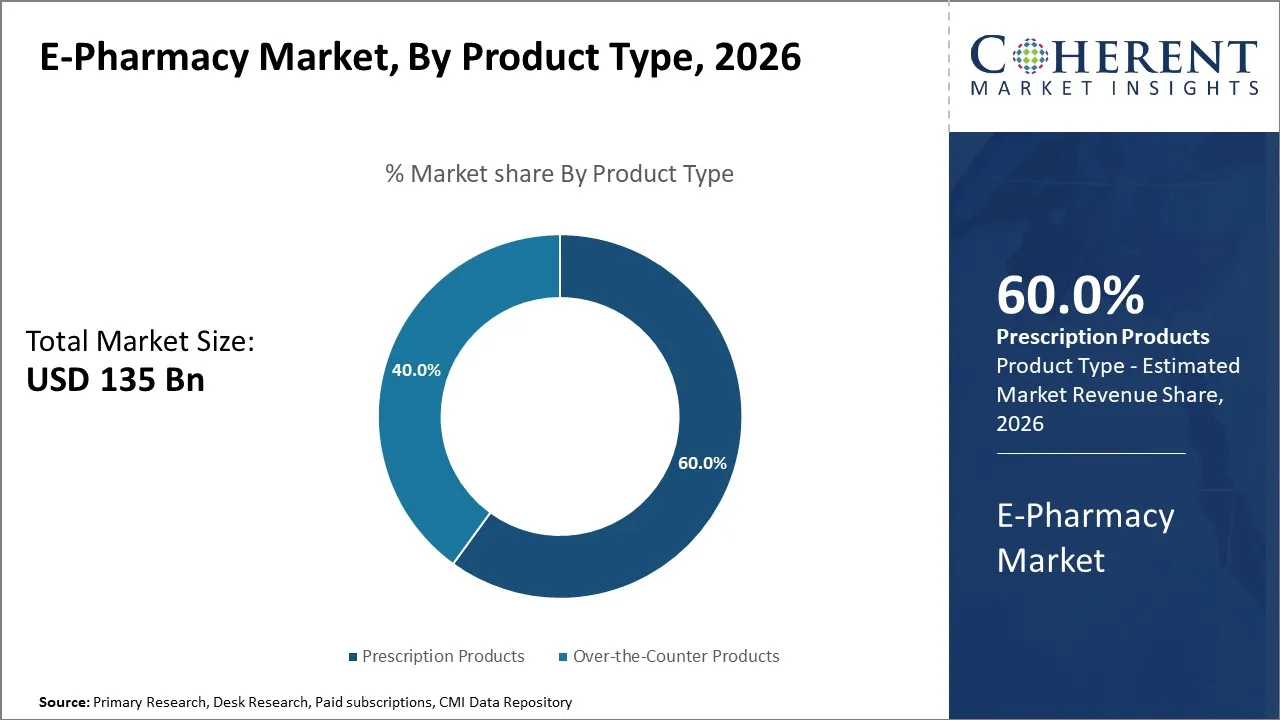
- Prescription products are expected to lead the online pharmacy market with a share of 60% in 2026, because of rising chronic disease prevalence and growth of e-prescriptions & telemedicine. According to the World Health Organization, chronic diseases account for nearly 74% of global deaths, increasing the need for long-term medication management as well as indirectly supporting growth of online pharmacy channels.
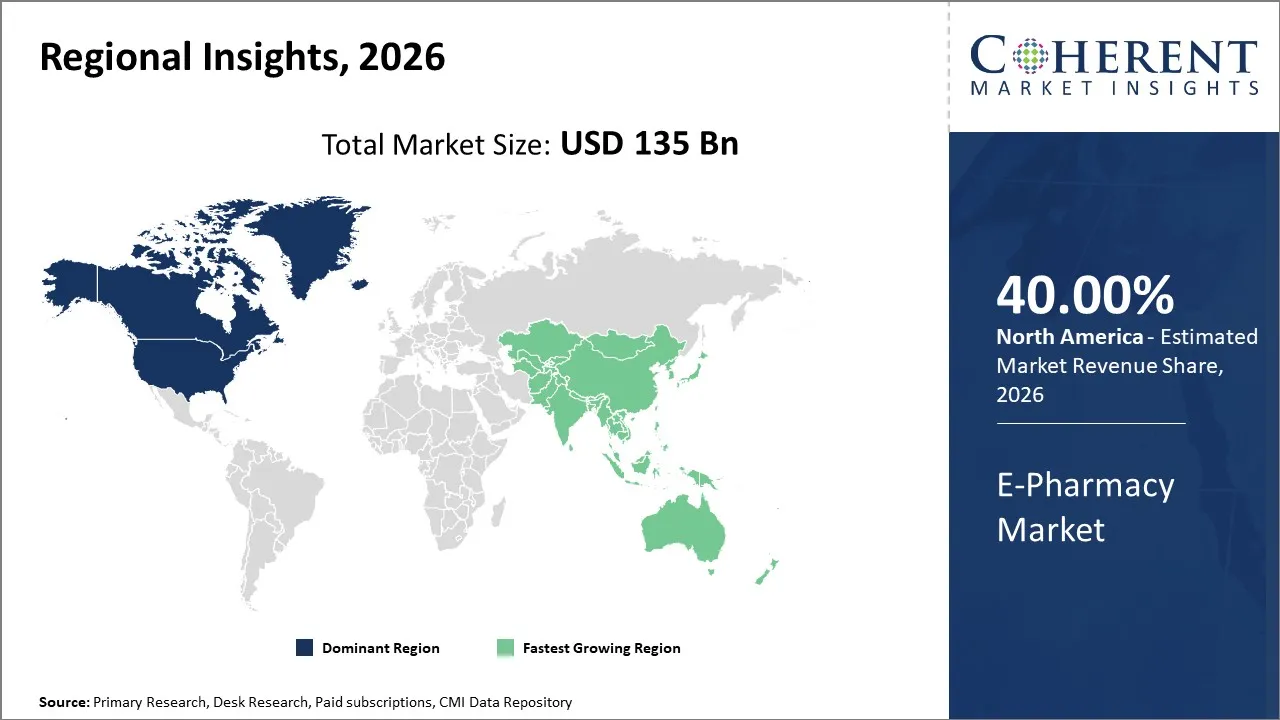
- North America is slated to lead the global E-pharmacy industry, capturing a share of about 40% in 2026, mostly due to presence of advanced healthcare infrastructure and rising adoption of online pharmacies. The region benefits from high healthcare spending. The U.S., for example, spends a high amount on healthcare, with costs reaching approximately $5.3 trillion in 2024 (CMS).
- Asia Pacific, holding a share of 30% in 2026, is poised to emerge as the most lucrative pocket for e-pharmacies, thanks to rising internet penetration, increasing smartphone usage, and expanding access to digital healthcare services
Table for the Top 4 Countries by E-pharmacy Online Visits Per 1,000 Residents in S1 2022
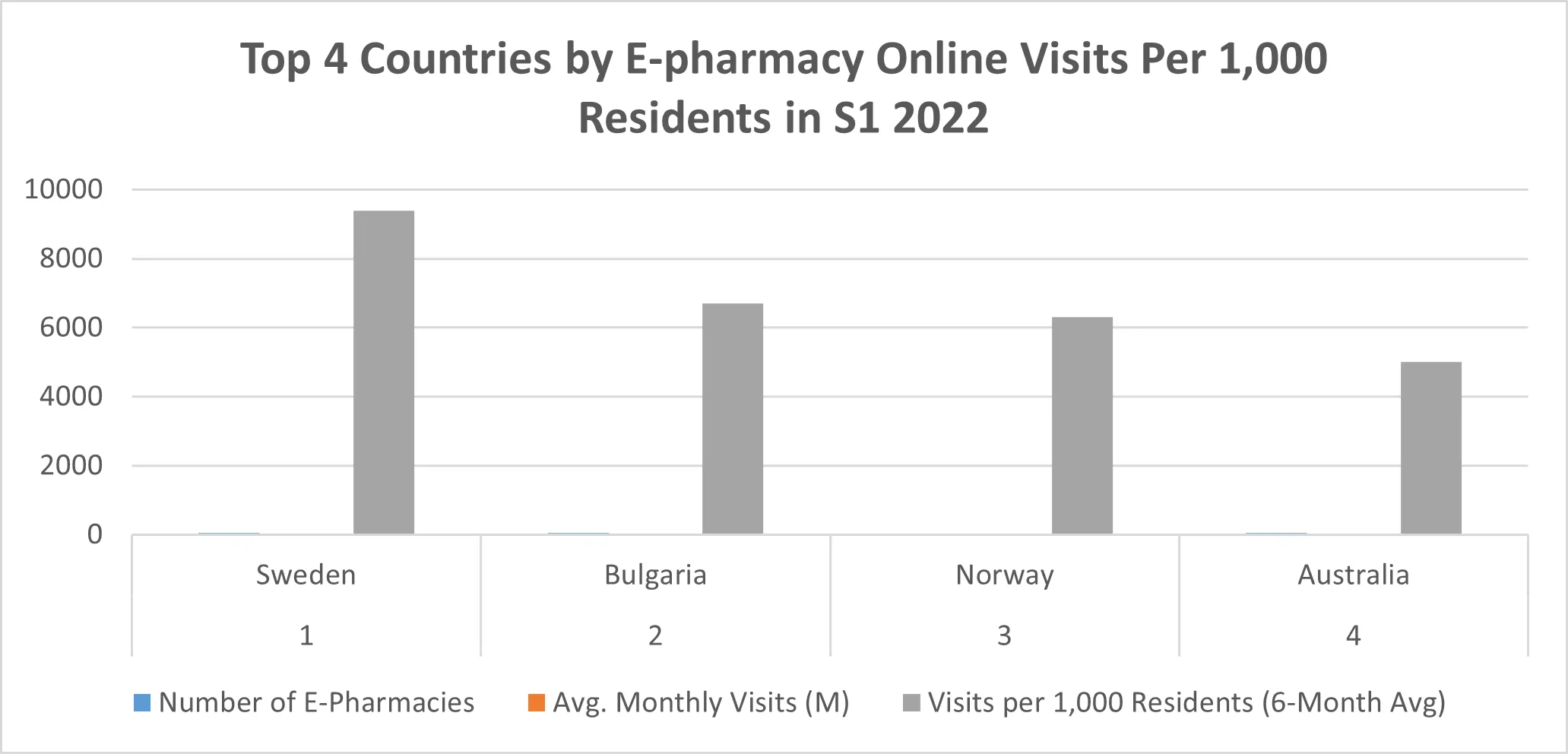
Rank | Country | Number of E-Pharmacies | Avg. Monthly Visits (M) | Visits per 1,000 Residents (6-Month Avg) |
1 | Sweden | 42 | 15.8 | 9,400 |
2 | Bulgaria | 40 | 7.8 | 6,700 |
3 | Norway | 31 | 5.7 | 6,300 |
4 | Australia | 44 | 21.3 | 5,000 |
E-Pharmacy Market Growth Drivers
Rising Prevalence of Chronic Diseases: The global incidence of chronic conditions such as diabetes, hypertension, cancer, and cardiovascular diseases is increasing significantly. For instance, according to the World Health Organization (WHO), non‑communicable (chronic) diseases (NCDs) now account for about 71% of all deaths worldwide, killing over 40 million people annually.
These conditions often require long-term medication management, boosting the demand for consistent and reliable access to medications. E-pharmacies offer convenient home delivery, subscription refills, and timely reminders, making them an ideal solution for chronic disease patients. Consequently, the growing prevalence of chronic diseases is expected to drive increased adoption of e-pharmacy services.
Increasing Internet and Smartphone Penetration: The rapid expansion of internet connectivity and widespread use of smartphones has changed consumer behavior, making it easier to access online services, including healthcare and pharmacy platforms. According to the
Similarly, global smartphone users reached around 5.78 billion in 2026, enabling easy access to mobile apps, digital prescriptions, and real-time delivery tracking. This growing digital connectivity allows consumers, especially in developing regions, to browse, compare, and order medications online with convenience. As internet and smartphone usage continue to rise, it is expected to significantly boost adoption of e-pharmacy services during the forthcoming period.
- Current Industry Events of 2026
- Market Size Estimation
- Regional Breakdown
- Competitive Landscape
- Customer Intelligence
- Segmental Analysis
- Pricing Analysis
- Key Market Drivers, Challenges & Future Trends
- Customized Insights Section
E-Pharmacy Market Innovations
Emergence of AI-Driven Personalized Prescription Services
Artificial intelligence (AI) is breathing a new life into E-Pharmacy landscape by enabling highly personalized prescription services. AI algorithms have the tendency to analyze patient health records, medication history, and lifestyle factors to recommend optimal drug therapies and dosage regimens. This reduces medication errors and ensures better adherence to treatment plans.
Predictive analytics help pharmacists anticipate patient needs, optimize inventory, and improve supply chain efficiency. Digital platforms now integrate AI chatbots that guide patients through prescription refills and answer queries in real-time, enhancing customer engagement as well as improving satisfaction.
A clear example of AI’s impact on the internet pharmacy industry is Amazon Pharmacy using AI to improve prescription processing and delivery. In 2024, Amazon Pharmacy expanded its same-day delivery service in Los Angeles and New York with the help of generative AI and ML technologies.
Smart Packaging and IoT Integration Enhancing Medication Management
Smart packaging solutions with Internet of Things (IoT) devices are changing medication management in the E-Pharmacy industry. IoT-enabled pill dispensers and packaging track medication use, send adherence alerts, and give real-time feedback to patients and caregivers. This technology helps reduce missed doses and allows healthcare providers to monitor patients remotely.
Advanced sensors also detect temperature, humidity, or tampering, ensuring drug stability and safety during storage and delivery. These innovations increase patient trust as well as optimize therapeutic outcomes while reducing waste. For example, in April 2026, It combines automated dispensing with cloud-based IoT connectivity, allowing real-time tracking of medication use, inventory control, and data analytics to improve medication management.
Current Events and Their Impact on the E-Pharmacy Market
Current Event | Description and its Impact |
Tightening E-Pharmacy Regulations in India |
|
U.S. Crackdown on Online Prescription Drug Sales and Telehealth Flexibilities |
|
Segmental Insights
Which Product Type Segment Leads the E-Pharmacy Market?
Prescription Products Expected to Lead Over OTC Products
As per Coherent Market Insights’ latest E-pharmacy market analysis, prescription products segment is projected to hold the largest market share of 60% in 2026. This is mostly due to rising prevalence of chronic diseases like diabetes, cardiovascular disorders, and respiratory conditions, which require long-term medication and regular refills. In addition, increasing digital adoption among patients and the convenience of uploading prescriptions online are significantly boosting demand for prescription-based drug purchases through e-pharmacies.
Strict regulations in many nations require valid prescriptions for certain drugs. This encourages consumers to use authorized e-pharmacy platforms for safe and compliant purchases. The use of e-prescriptions and teleconsultation services has also made it easier for patients to get prescribed medications without visiting physical pharmacies. On the other hand, over-the-counter (OTC) products segment is expected to witness fastest growth during the forecast period due to ease of access and rising self-medication trends.
Regional Insights
North America Leads E-Pharmacy Market with Rising Online Prescription Adoption
North America is expected to lead the global E-pharmacy industry, capturing a share of about 40% in 2026, attributed to advanced healthcare infrastructure and rising adoption of prescription services. This prominent market share reflects the strong adoption of online medicine delivery and digital health in the U.S. and Canada.
Consumers across North America increasingly prefer to order medicines and healthcare products online from apps or websites. This not only saves time and money but also offers greater convenience and accessibility, especially for those with mobility issues or living in remote areas. Advanced healthcare systems that integrate e-pharmacy solutions with telemedicine, insurance networks, and electronic prescriptions help streamline online drug ordering and refills.
A large aging population and rising chronic disease rates are driving demand for regular prescription refills and home delivery, which e-pharmacy platforms provide conveniently. Leading e-pharmacies are using various strategies across the regions to capitalize on emerging opportunities as well as expand their presence.
For instance, Amazon Pharmacy announced plans to launch electronic prescription kiosks in partnership with One Medical locations. This will allow patients to pick up medications like antibiotics and asthma treatments directly, expanding access beyond home delivery. This move illustrates how traditional and digital pharmacy services are blending to better meet patient needs.
Key trends driving growth in North America e-pharmacy market
- Increasing reliance on online delivery over traditional pharmacy visits.
- Integration of e-pharmacy services with telehealth consultations and insurance.
- Strong regulatory frameworks (e.g., FDA guidance on online prescriptions) that build consumer trust in e-pharmacy operations.
Asia Pacific Emerging as the Fastest Growing E-Pharmacy Market Hub
Asia Pacific is emerging as the fastest growing market for online pharmacy services, capturing a global market share of 30% in 2026, attributed to rapid digital adoption and changing consumer behaviour. Rapid internet and smartphone penetration have opened digital access to health services in countries like China, India, and Southeast Asia.
A large middle class population and growing burden of chronic diseases mean more patients need regular medication, and often prefer online ordering for convenience and cost savings. Governments and private tech platforms are investing heavily in digital health ecosystems, including telemedicine and ePharmacy integration. As a result, Asia Pacific e-pharmacy market outlook appears bright.
Telehealth adoption across Asia Pacific markets almost doubled, establishing a lasting shift in healthcare delivery. As a result, consumers increasingly rely on digital platforms to manage health services, including virtual consultations and access to e‑pharmacy solutions. This rise of telehealth is expected to boost growth of e-pharmacy market in India and other Asia Pacific regions.
Key ePharmacy market trends shaping growth in Asia Pacific
- Teleconsultation and e-pharmacy integration making it easy for patients to get advice as well as medicines in one digital journey.
- Innovations in mobile payment and logistics, enabling fast, affordable doorstep delivery even in smaller cities.
- Startup activity and new business models that focus on digital chronic care management, subscription refills, and wellness product sales.
E-Pharmacy Market Outlook – Country-wise
U.S. E-Pharmacy Market Trends
The U.S. e‑pharmacy market continues to grow steadily because American consumers increasingly embrace digital health and convenient medication delivery options. A 2023 consumer survey by ASOP Global Foundation (Alliance for Safe Online Pharmacies) found that 52% of American consumers have bought medications online, up about 10 points from 2021. Most began using online pharmacies for prescriptions and OTC medicines in the past 1–3 years, a trend that grew during and after the pandemic.
Rising geriatric population and high prevalence of chronic conditions like diabetes and cardiovascular disease are also fueling demand for regular prescription refills and doorstep delivery. In addition, major players are innovating with same-day delivery expansions to thousands of cities and integration with telehealth services, enhancing convenience as well as driving usage in both urban and suburban areas.
China E-Pharmacy Market Forecast
The e-pharmacy market in China is forecast to grow rapidly during the forecast period on account of widespread smartphone usage, digital health ecosystem integration, and strong logistics networks that enable next-day or even same-day delivery in major cities. Platforms like Alibaba Health and JD Health dominate with deep digital integrations, offering seamless prescription to delivery experiences and enhancing consumer trust. Government reforms promoting digital prescriptions and partial insurance coverage for online drug purchases have further legitimized the sector as well as encouraged broader adoption across urban and rural areas alike.
Who are the Key Players in E-Pharmacy Market?
Some of the major players in E-pharmacy market are CVS Caremark, Banner Health, DocMorris NV, Zur Rose Group AG, Right ePharmacy, PlanetRx.com. Inc., Lloyds Pharmacy Ltd., Dr. Fox Pharmacy, eDrugstore.MD, MediSave, Walgreen Co, and Rowlands Pharmacy.
Key Strategies Adopted by Industry Players
Leading e-pharmacies are expanding their online presence through user-friendly websites and mobile apps. They are striving to make it easier for customers to order medicines as well as access healthcare services. Industry players are also adopting inorganic strategies like mergers, acquisitions, partnerships, and collaborations with hospitals, clinics, and pharmaceutical companies to broaden their product portfolio and regional reach. For example,
- In March 2026, Google partnered with DocMorris, a prominent Europe-based online pharmacy, to create a comprehensive digital health companion. The partnership uses Google’s AI to improve online pharmacy services and guide users with prescriptions.
- In January 2025, Morrisons launched ‘Morrisons Clinic’, an online pharmacy service for a wide range of health and lifestyle needs. The service allows customers to access private medication quickly.
- In October 2024, Amazon Pharmacy announced plans to expand same‑day delivery of medications to 20 new cities across the United States. The company said it would open new pharmacy facilities to help deliver prescription medicines faster to customers’ homes.
Market Report Scope
E-Pharmacy Market Report Coverage
| Report Coverage | Details | ||
|---|---|---|---|
| Base Year: | 2025 | Market Size in 2026: | USD 135 Bn |
| Historical Data for: | 2020 To 2024 | Forecast Period: | 2026 To 2033 |
| Forecast Period 2026 to 2033 CAGR: | 13.2% | 2033 Value Projection: | USD 320 Bn |
| Geographies covered: |
| ||
| Segments covered: |
| ||
| Companies covered: | CVS Caremark, Banner Health, DocMorris NV, Zur Rose Group AG, Right ePharmacy, PlanetRx.com.Inc., Lloyds Pharmacy Ltd., Dr. Fox Pharmacy, eDrugstore.MD, MediSave, Walgreen Co, and Rowlands Pharmacy | ||
| Growth Drivers: |
| ||
| Restraints & Challenges: |
| ||
Analyst Opinion (Expert Opinion)
- E‑pharmacy preference has risen substantially over the past decade. Academic reviews show that consumer preference for online pharmacies increased from about 23 % in 2013 to roughly 59 % in 2018, indicating a long‑term behavioral shift toward digital medicine purchasing and not just a pandemic effect.
- A significant portion of consumers have directly adopted online medicine purchases. One global analysis found that around 38% of internet users have completed at least one online pharmaceutical purchase, signaling real transaction adoption.
- Prescription fulfillment remains a core part of e‑pharmacy transactions. In breakdowns of online pharmacy activity, prescription medicines account for approximately 63% of online orders, while over‑the‑counter products make up about 37%, showing that clinical medicine needs are a dominant driver online.
- There are clear gaps in safety and quality regulations. In India, research showed that only about 16% of e‑pharmacy websites give full drug information, like side effects and interactions. This lack of information can affect consumer trust and safety.
Speak to the analyst
Want personalized insights?
Take the findings above to one of our principal consultants, or have the report rebuilt around the segments, geographies and competitors you actually track.
E-Pharmacy Market Segmentation
- By Product Type Insights ( Revenue, USD Bn, 2021 - 2033)
- Prescription Products
- Over-the-Counter Products
- By Region Insights ( Revenue, USD Bn, 2021 - 2033)
- North America
- U.S.
- Canada
- Latin America
- Brazil
- Argentina
- Mexico
- Rest of Latin America
- Europe
- Germany
- U.K.
- Spain
- France
- Italy
- Russia
- Rest of Europe
- Asia Pacific
- China
- India
- Japan
- Australia
- South Korea
- ASEAN
- Rest of Asia Pacific
- Middle East & Africa
- GCC Countries
- Israel
- Rest of Middle East & Africa
- North America
- Key Players
- CVS Caremark
- Banner Health
- DocMorris NV
- Zur Rose Group AG
- Right ePharmacy
- PlanetRx.com.Inc.
- Lloyds Pharmacy Ltd
- Dr. Fox Pharmacy
- eDrugstore.MD
- MediSave
- Walgreen Co
- Rowlands Pharmacy
Sources
Primary Research interviews
- Interviews with e‑pharmacy executives, supply chain managers, technology leads, and operational heads across various regions
- Interviews with pharmacists, healthcare professionals, and digital health platform specialists
- Feedback from consumers using e‑pharmacy services
Databases
- Government healthcare and pharmaceutical databases (e.g., drug price and usage statistics)
- National digital health registries
- Regulatory agency drug approval and e‑pharmacy licensing databases
- Online pharmacy licensing databases for major markets
Magazines
- Pharmaceutical and healthcare industry magazines
- Digital health and healthcare IT magazines
- Retail pharmacy and consumer health magazines
Journals
- Peer‑reviewed journals in pharmacy practice and digital health
- Health informatics and telemedicine journals
- Public health and pharmaceutical sciences journals
Newspapers
- Major national newspapers covering healthcare digitization in key markets
- Business and finance sections reporting on e‑commerce in healthcare
- Regional newspapers with e‑pharmacy adoption insights
Associations
- National pharmacy associations
- Digital health and telemedicine associations
- Patient rights and healthcare consumer forums
- Professional pharmacy boards and councils
Public Domain sources
- Official government publications and policy documents
- WHO and other international health organization reports
- Legislative and regulatory acts related to digital pharmacies
- Publicly available healthcare usage statistics
- Open‑access industry and technology reports
- Patent databases and drug approval archives
Proprietary Elements
- CMI Data Analytics Tool
- Proprietary CMI Existing Repository of Information for Last 8 Years
Get access to 250+ pages report
Every segment, forecast, competitor profile and data table behind the analysis above — available for instant download.
- ESOMAR Member
- ISO 9001:2015 Certified
- D-U-N-S Registered
- GDPR & CCPA Compliant
Missing comfort of reading report in your local language? Find your preferred language:
Transform your Strategy with Exclusive Trending Reports
Frequently Asked Questions
The global market is estimated to be valued at USD 135 Bn in 2026.
The global E-Pharmacy Market value is expected to reach USD 320 Bn by 2033.
The global market is poised to exhibit a CAGR of 13.2% from 2026 to 2033.
Major growth factors include rising prevalence of chronic diseases and growing demand for medications.
Prescription products segment, with about 60% share in 2026, dominates the market.
Some major companies in the E-Pharmacy Market include CVS Caremark, Banner Health, DocMorris NV, Zur Rose Group AG, Right ePharmacy, PlanetRx.com. Inc., Lloyds Pharmacy Ltd., Dr. Fox Pharmacy, eDrugstore.MD, MediSave, Walgreen Co, and Rowlands Pharmacy.
North America, with 40% share in 2026, is set to lead the market during the forecast period