

Fallopian Tube Cancer Market Size and Forecast — 2026 - 2033
The Global Fallopian Tube Cancer Market size is estimated to be valued at USD 520 million in 2026 and is expected to reach USD 880 million by 2033, exhibiting a compound annual growth rate (CAGR) of 7.5% from 2026 to 2033.
Overview
The Fallopian Tube Cancer Market is driven by the rising incidence of gynecologic cancers, increasing awareness of early diagnosis, and advancements in genetic testing. Growing adoption of BRCA1 and BRCA2 mutation screening has improved the identification of high-risk individuals, supporting earlier detection and preventive care. Expanding access to advanced imaging technologies and minimally invasive diagnostic procedures is also contributing to market growth. Additionally, increasing use of targeted therapies, including PARP inhibitors and personalized treatment approaches, is improving patient outcomes and driving demand for innovative therapeutics. Rising healthcare expenditure, expanding oncology research programs, and ongoing clinical trials focused on rare gynecologic cancers further support the market's expansion.
Key Takeaways
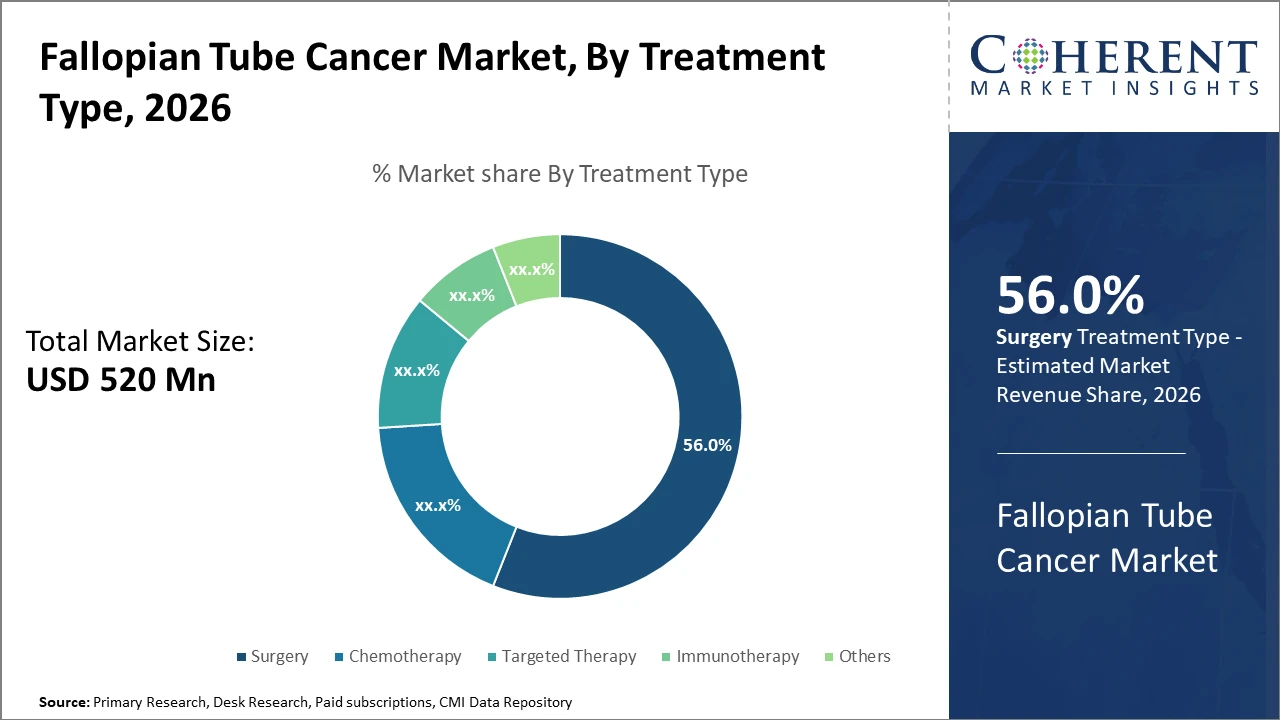
Surgery holds the largest market share at 56%, supported by its critical role in treatment and the growing adoption of minimally invasive surgical techniques that improve patient outcomes and recovery times.
Early-stage diagnosis accounts for 45% of cases, reflecting advancements in screening methods, greater awareness, and increasing emphasis on early detection strategies.
Hospitals dominate the end-user segment with a 52% market share due to their specialized oncology infrastructure, multidisciplinary care teams, and access to advanced treatment options.
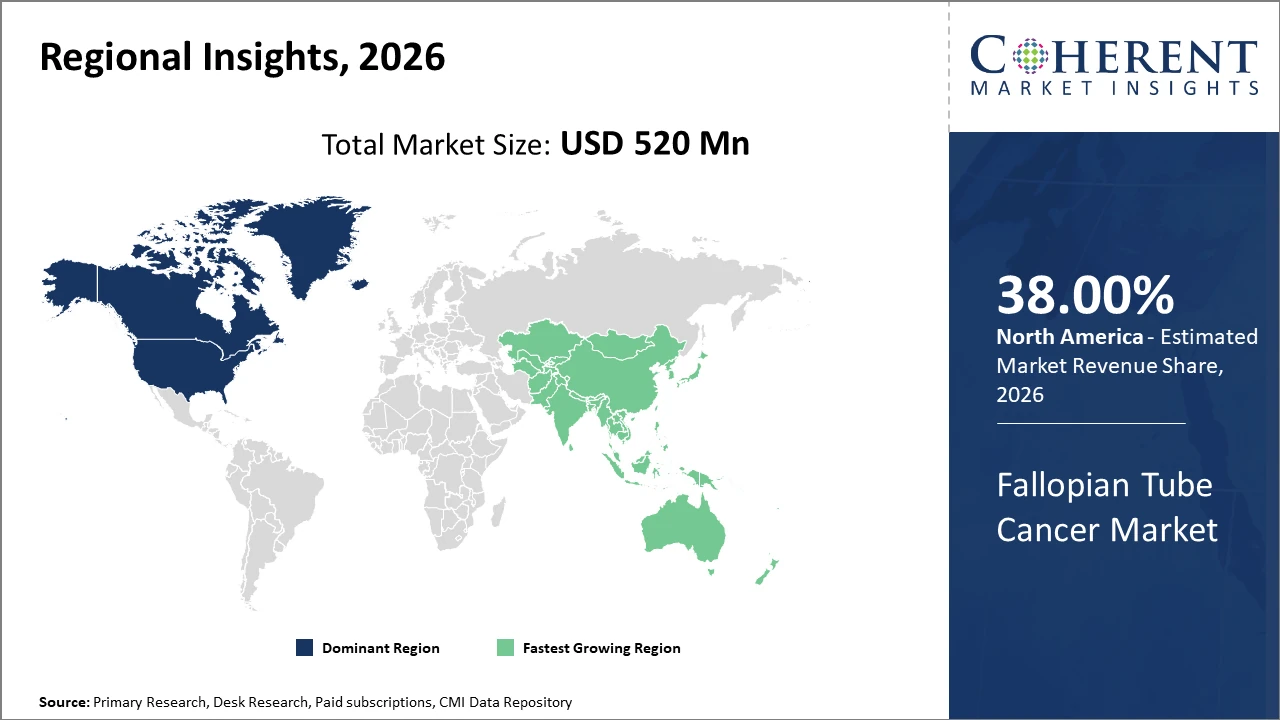
North America leads the global market with more than 38% share, driven by strong healthcare systems, high diagnosis rates, and widespread adoption of innovative cancer therapies.
Asia Pacific is the fastest-growing region, registering a CAGR exceeding 9%, supported by expanding healthcare access, rising awareness, and increasing investments in cancer care across emerging economies.
Fallopian Tube Cancer Market Segmentation Analysis
Fallopian Tube Cancer Market Insights, By Treatment Type
Surgery dominates the Fallopian Tube Cancer Market with a 56% share, owing to its central role in disease management and treatment. The segment continues to benefit from advancements in minimally invasive and robotic-assisted surgical techniques, which improve precision, reduce complications, and shorten patient recovery times. Targeted therapy is the fastest-growing subsegment, driven by progress in personalized medicine and the increasing use of therapies targeting genetic mutations such as BRCA. Chemotherapy remains a cornerstone of treatment and is frequently combined with targeted therapies to enhance clinical outcomes. Immunotherapy is gaining momentum through ongoing research, while hormonal and other supportive therapies provide additional treatment options.
Fallopian Tube Cancer Market Insights, By Stage
The Early Stage segment dominates the fallopian tube cancer market, accounting for approximately 45% of the total market share. Its leadership is supported by growing awareness, advancements in diagnostic techniques, and improved screening practices that enable earlier detection and timely treatment interventions. The Advanced Stage segment is witnessing the fastest growth, driven by increased diagnosis through enhanced imaging technologies, molecular testing, and targeted biopsy procedures, which are expanding treatment opportunities. Recurrent Stage cases are benefiting from ongoing innovations in maintenance therapies, targeted treatments, and clinical research programs. The Others category comprises rare or unclassified disease stages, representing a smaller yet stable segment of the market.
Fallopian Tube Cancer Market Insights, By End User
Hospitals dominate the fallopian tube cancer market, accounting for approximately 52% of the total market share. Their leadership is attributed to comprehensive oncology services, advanced diagnostic capabilities, multidisciplinary treatment teams, and access to specialized surgical and therapeutic interventions. Specialty clinics represent a smaller but rapidly growing segment, supported by the increasing adoption of outpatient cancer care and ambulatory oncology services. Research institutes play a vital role in advancing the market through clinical trials, translational research, and the development of innovative treatment approaches. The Others segment, including home-based care and telemedicine services, is gradually expanding as healthcare providers emphasize patient monitoring, convenience, and long-term treatment adherence.
Fallopian Tube Cancer Market Trends
Increasing adoption of targeted therapies, including PARP inhibitors and biomarker-driven treatments, is improving clinical outcomes and expanding treatment options for fallopian tube cancer patients.
The growing use of immunotherapy and immune checkpoint inhibitors is enhancing treatment effectiveness, particularly for advanced and recurrent disease cases.
Liquid biopsy technologies are gaining traction for disease monitoring, early recurrence detection, and assessment of treatment response, supporting personalized cancer care.
Rising emphasis on precision medicine is encouraging the use of genetic testing and molecular profiling to guide individualized treatment strategies.
Expanding clinical trial activity across North America and Europe is accelerating the development of innovative therapies and contributing to improved survival outcomes for patients.
Fallopian Tube Cancer Market Insights, By Geography
North America Fallopian Tube Cancer Market Analysis and Trends
North America dominates the global fallopian tube cancer market, accounting for approximately 38% of total market revenue. The region’s leadership is supported by a well-established healthcare infrastructure, strong investment in oncology research, and widespread access to advanced diagnostic and treatment technologies. The United States remains the primary contributor, benefiting from favorable regulatory pathways, expanding reimbursement coverage, and increasing adoption of targeted therapies and precision medicine approaches. The presence of major pharmaceutical companies such as Roche and AstraZeneca further strengthens market growth through continuous innovation, clinical trial activity, and the development of novel therapies for gynecological cancers.
Asia Pacific Fallopian Tube Cancer Market Analysis and Trends
Asia Pacific is the fastest-growing region in the fallopian tube cancer market, projected to register a CAGR exceeding 9% during the forecast period. Growth is driven by expanding healthcare infrastructure, increasing access to cancer diagnostics and treatment services, and rising awareness of gynecological cancers. Countries such as China, India, and Japan are investing heavily in oncology care, advanced diagnostic technologies, and specialized cancer treatment centers. Government healthcare initiatives, improving insurance coverage, and growing participation in clinical research further support market expansion. Additionally, collaborations between local healthcare providers, pharmaceutical companies, and international research organizations are accelerating the adoption of innovative therapies and improving patient outcomes across the region.
Fallopian Tube Cancer Market Outlook for Key Countries
USA Fallopian Tube Cancer Market Analysis and Trends
The United States represents the largest national market for fallopian tube cancer treatment, driven by rapid adoption of advanced diagnostic technologies, targeted therapies, and precision medicine approaches. Strong healthcare infrastructure, high healthcare expenditure, and extensive cancer research funding continue to support market growth. The presence of leading pharmaceutical companies such as Pfizer Inc. and Bristol-Myers Squibb contributes to ongoing innovation through clinical trials and new treatment developments. Additionally, a large network of specialized cancer centers, favorable reimbursement policies, and increasing use of genetic testing and biomarker-guided therapies further reinforce the United States' leadership in the global fallopian tube cancer market.
Germany Fallopian Tube Cancer Market Analysis and Trends
Germany represents a significant market for fallopian tube cancer treatment in Europe, supported by its advanced healthcare system, strong oncology research capabilities, and widespread access to specialized cancer care. The country benefits from increasing adoption of precision medicine, genetic testing, and targeted therapies, which are improving diagnosis and treatment outcomes. Growing awareness of gynecological cancers and the availability of comprehensive screening and diagnostic services further support market growth. Key trends include the rising use of PARP inhibitors, expanding clinical trial activity, and greater integration of personalized treatment approaches. Government healthcare funding and collaborations between research institutions and pharmaceutical companies continue to drive innovation in the German market.
Analyst Opinion
Rising incidence and diagnosis rates of fallopian tube cancer are increasing demand for advanced diagnostic tools and effective treatment options worldwide.
Expansion of manufacturing capacity for targeted therapies and immunotherapies is improving treatment availability and supporting market growth.
Growing adoption of multimodal treatment approaches, including surgery, chemotherapy, and precision medicine, is transforming patient management strategies.
Increasing regulatory approvals of novel therapies and favorable reimbursement policies are enhancing patient access to innovative treatments and driving market expansion.
- Current Industry Events of 2026
- Market Size Estimation
- Regional Breakdown
- Competitive Landscape
- Customer Intelligence
- Segmental Analysis
- Pricing Analysis
- Key Market Drivers, Challenges & Future Trends
- Customized Insights Section
Market Scope
| Report Coverage | Details | ||
|---|---|---|---|
| Base Year: | 2025 | Market Size in 2026: | USD 520 million |
| Historical Data for: | 2020 To 2024 | Forecast Period: | 2026 To 2033 |
| Forecast Period 2026 to 2033 CAGR: | 7.5% | 2033 Value Projection: | USD 880 million |
| Geographies covered: |
| ||
| Segments covered: |
| ||
| Companies covered: | Roche, Novartis, Pfizer, AstraZeneca, Merck & Co., GlaxoSmithKline, Johnson & Johnson, Sanofi, Bayer, Amgen | ||
| Growth Drivers: |
| ||
Fallopian Tube Cancer Market Growth Factors
The fallopian tube cancer market is experiencing steady growth due to the increasing prevalence of gynecological cancers and the rising demand for effective treatment options. Advancements in diagnostic technologies, including liquid biopsy, molecular testing, and high-resolution imaging, are improving early detection and enabling timely intervention. Favorable reimbursement policies and supportive regulatory frameworks in developed regions are enhancing patient access to innovative therapies. In addition, growing investments in oncology research, clinical trials, and precision medicine are accelerating the development of targeted treatments and personalized care approaches. These factors are collectively expanding therapeutic options, improving patient outcomes, and driving overall market growth.
Fallopian Tube Cancer Market Development
In April 2026, Labcorp announced the nationwide availability of Agilent Technologies’ PD-L1 IHC 22C3 pharmDx, the only FDA-approved companion diagnostic for identifying patients with platinum-resistant ovarian cancer who may be eligible for KEYTRUDA® (pembrolizumab) treatment.
Key Players
Leading Companies of the Market
Roche
Novartis
Pfizer
AstraZeneca
Bayer
Sanofi
Amgen
Johnson & Johnson
GlaxoSmithKline
Merck & Co.
Leading participants in the fallopian tube cancer market are increasingly focusing on strategic research collaborations, licensing agreements, and acquisitions to strengthen their oncology pipelines and maintain a competitive edge. Companies are investing heavily in the development of targeted therapies, immunotherapies, and precision medicine solutions to address unmet clinical needs and improve patient outcomes. For instance, Roche has expanded its oncology portfolio through partnerships aimed at advancing antibody-drug conjugate and biomarker-driven treatment research. Likewise, AstraZeneca has enhanced its precision oncology capabilities through strategic acquisitions and collaborations, reinforcing its position in the gynecologic cancer treatment landscape. These initiatives are accelerating innovation, broadening therapeutic options, and supporting long-term market growth.
Fallopian Tube Cancer Market Future Outlook
The fallopian tube cancer market is expected to witness substantial growth over the coming years, driven by advancements in precision oncology, targeted therapies, and immunotherapy-based treatment approaches. Increasing awareness, improved diagnostic capabilities, and wider adoption of genetic and biomarker testing are expected to support earlier detection and personalized treatment strategies. Ongoing clinical trials and research into novel therapeutic agents, including antibody-drug conjugates and PARP inhibitors, will further expand treatment options. Additionally, favorable reimbursement policies, rising healthcare expenditure, and growing investments in cancer research are anticipated to enhance patient access to innovative therapies, contributing to improved outcomes and sustained market expansion globally.
Fallopian Tube Cancer Market Historical Analysis
The fallopian tube cancer market has evolved steadily over the past decade, driven by improvements in cancer diagnostics, surgical techniques, and systemic treatment options. Historically, treatment relied primarily on surgery and platinum-based chemotherapy, with limited targeted therapeutic choices available. Growing understanding of the molecular and genetic characteristics of gynecologic cancers led to the introduction of personalized medicine approaches, including PARP inhibitors and biomarker-guided therapies. Increased awareness among healthcare professionals, expanded access to advanced imaging technologies, and stronger cancer screening programs contributed to earlier diagnosis and improved management. Additionally, rising investments in oncology research and clinical trials have continuously supported market development and innovation.
Sources
Primary Research Interviews:
Gynecologic oncologists, medical oncologists, surgical oncologists, hospital pharmacists, oncology nurses, and healthcare providers involved in the diagnosis, treatment, and management of fallopian tube cancer patients.
Clinical researchers, molecular biologists, pharmacologists, biotechnology professionals, regulatory affairs specialists, and R&D directors specializing in gynecologic oncology, targeted therapies, immunotherapies, biomarker testing, and precision medicine.
Magazines:
Oncology Times – Coverage of gynecologic cancer treatment advances, clinical developments, and oncology market trends.
Cancer Today – Insights into cancer care innovations, patient outcomes, and emerging therapeutic approaches.
Pharmaceutical Executive – Updates on oncology drug pipelines, pharmaceutical strategies, and market developments in cancer therapeutics.
Journals:
Journal of Clinical Oncology – Research on cancer therapies, clinical trials, and treatment outcomes.
Gynecologic Oncology – Studies on fallopian tube cancer management, diagnostics, and emerging therapies.
International Journal of Gynecological Cancer – Research on disease epidemiology, treatment innovations, and clinical practice developments.
Newspapers:
Financial Times – Coverage of pharmaceutical investments, oncology market growth, and healthcare industry developments.
Reuters – Reporting on drug approvals, clinical trial results, and biotechnology advancements.
Bloomberg – Insights into pharmaceutical companies, mergers and acquisitions, and oncology market expansion.
Associations:
American Society of Clinical Oncology (ASCO) – Clinical guidelines, cancer research updates, and treatment standards.
European Society for Medical Oncology (ESMO) – Oncology guidelines, clinical research, and therapeutic recommendations.
Society of Gynecologic Oncology (SGO) – Research, education, and clinical guidance related to gynecologic cancers.
Get access to 250+ pages report
Every segment, forecast, competitor profile and data table behind the analysis above — available for instant download.
- ESOMAR Member
- ISO 9001:2015 Certified
- D-U-N-S Registered
- GDPR & CCPA Compliant
Missing comfort of reading report in your local language? Find your preferred language:
Transform your Strategy with Exclusive Trending Reports
Frequently Asked Questions
Leading companies in the fallopian tube cancer market include Roche, Novartis, AstraZeneca, Pfizer Inc., and Bayer. These organizations are actively expanding their oncology portfolios through clinical research, targeted therapies, immunotherapies, and strategic collaborations.
The global fallopian tube cancer market is projected to grow from approximately USD 520 million in 2026 to USD 880 million by 2033, registering a CAGR of 7.5% during the forecast period.
Hospitals remain the largest end-user segment, accounting for around 52% of market share, owing to their comprehensive oncology services, multidisciplinary treatment teams, advanced diagnostic capabilities, and access to specialized cancer therapies.
The market is expected to witness increasing adoption of precision oncology, targeted therapies, immunotherapy, biomarker-driven treatment approaches, liquid biopsy technologies, and AI-assisted diagnostics, supporting more personalized and effective patient care.
The market is highly competitive, with companies focusing on innovation, clinical trial expansion, and pipeline development. Key challenges include high treatment costs, complex regulatory requirements, limited patient populations, and differences in reimbursement policies across regions.
Major market participants commonly pursue strategic partnerships, licensing agreements, research collaborations, acquisitions, and commercialization alliances to strengthen product portfolios, accelerate drug development, and expand their global market presence.