

Food Safety Products and Testing Market Size and Trends Forecast: 2026 - 2033
The food safety products and testing market is estimated to be valued at USD 2.83 Bn in 2026 and is expected to reach USD 4.89 Bn by 2033, exhibiting a compound annual growth rate (CAGR) of 8.1% from 2026 to 2033.
Key Takeaways of the Food Safety Products and Testing Market
- By test type, the microbiological testing segment is expected to contribute the highest share of the food safety products and testing market with 28.6% in 2026.
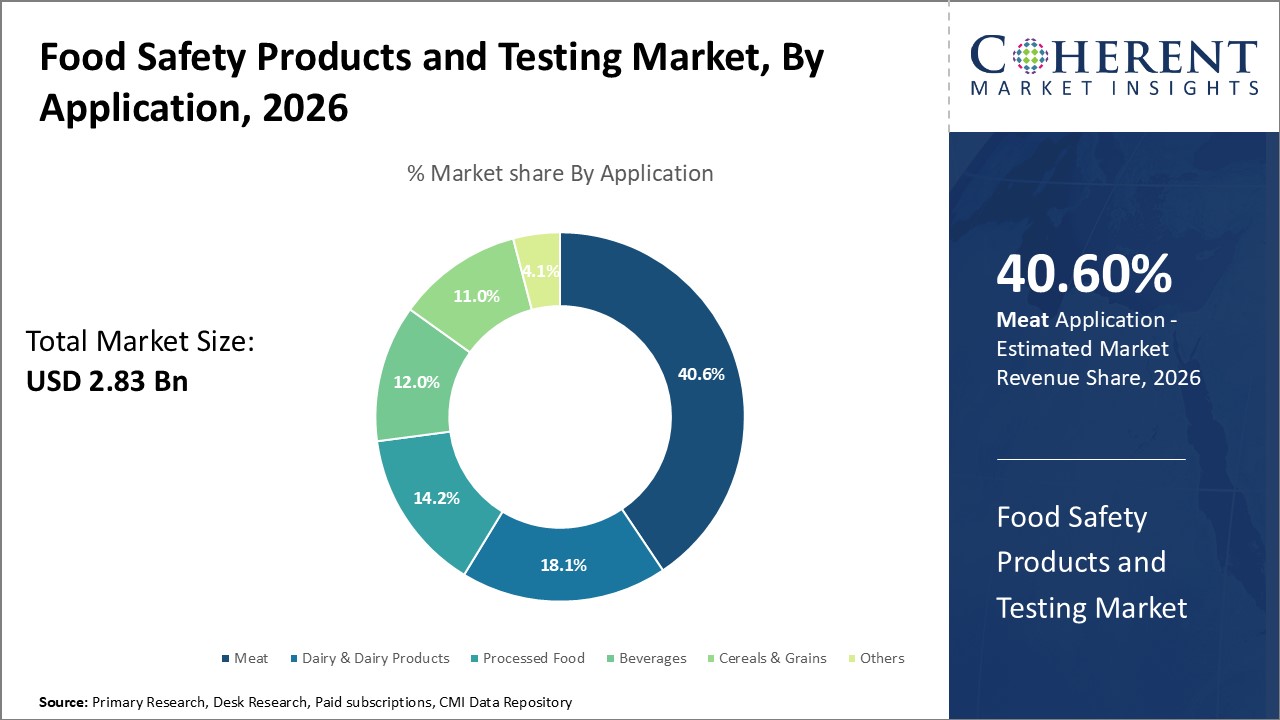
- By application, the meat, poultry & seafood products segment is expected to contribute the highest share of the food safety products and testing market with 40.6% in 2026.
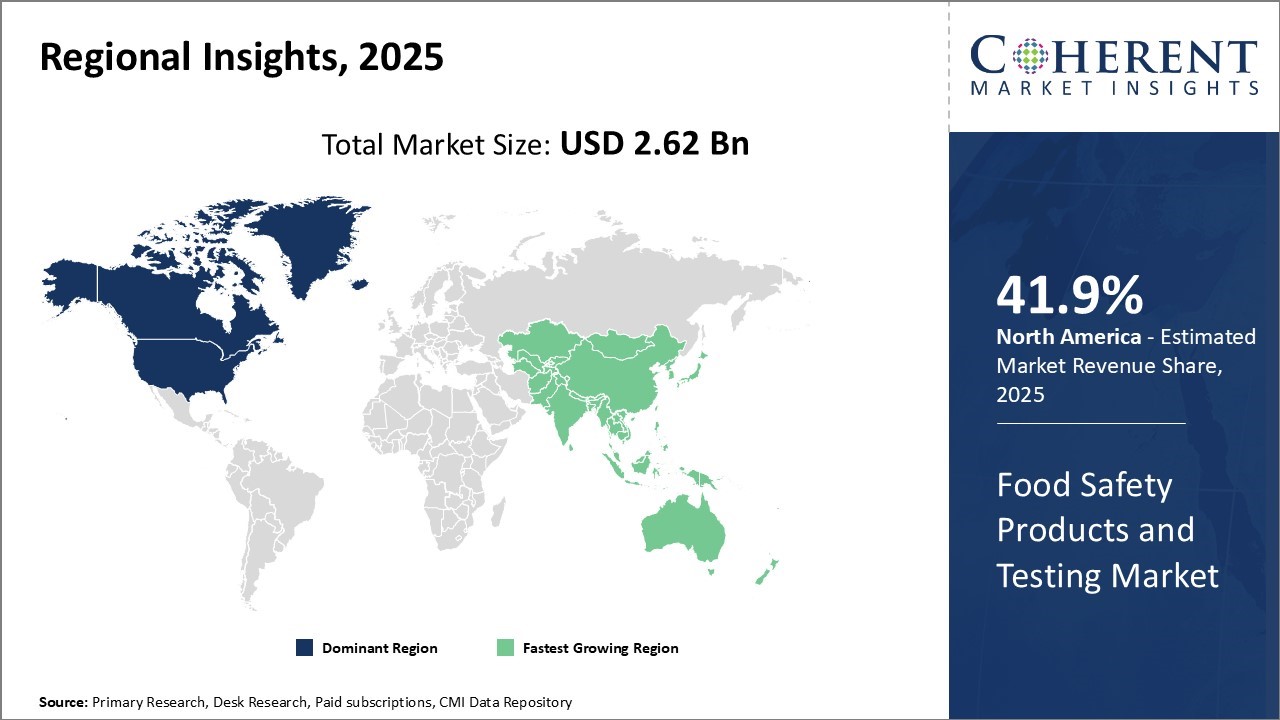
- North America is expected to hold the largest share of 41. 9% in 2026.
- Asia Pacific is expected to witness the fastest growth over the forecast period.
Market Overview
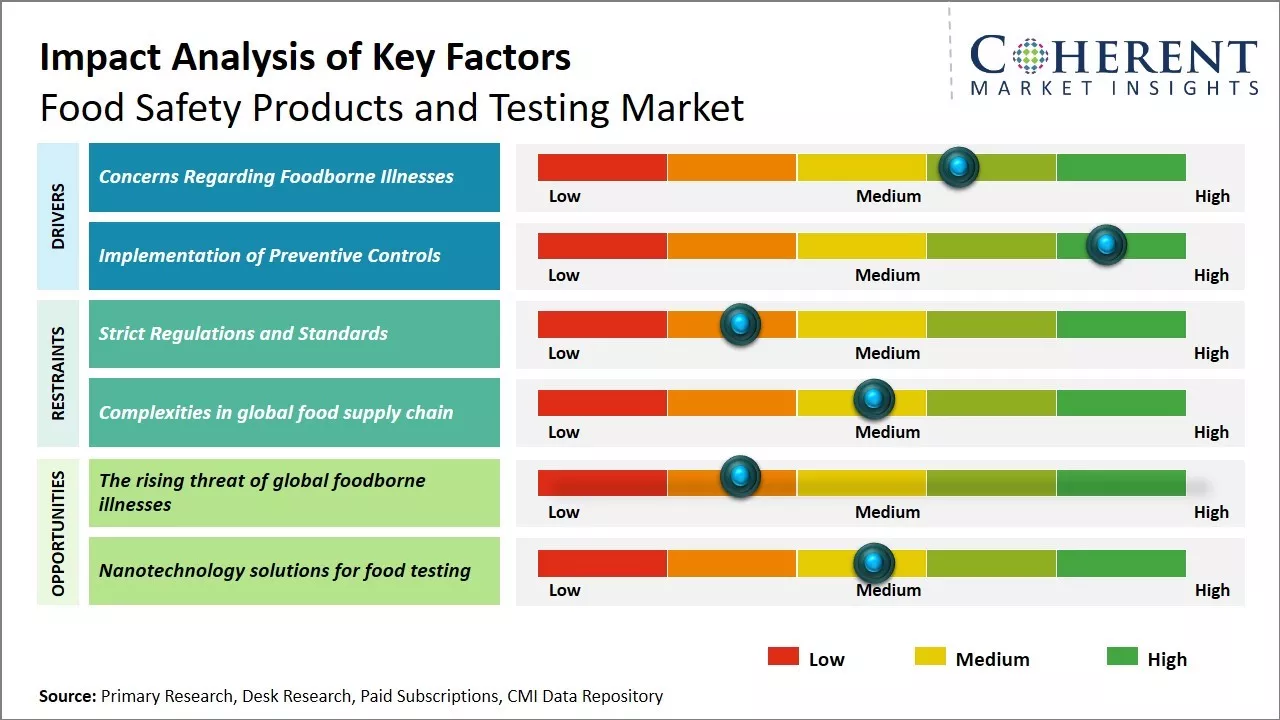
The market is expected to witness significant growth over the forecast period. Stringent government regulations around food safety and hygiene are expected to drive increased demand for food safety products and testing. Growing instances of foodborne illness outbreaks are also compelling food producers and manufacturers to strengthen their food safety controls by opting for advanced testing equipment, kits, and services.
However, consumption of contaminated meat, poultry or fish can lead to serious diseases like salmonellosis, campylobacteriosis, listeriosis, and toxoplasmosis.
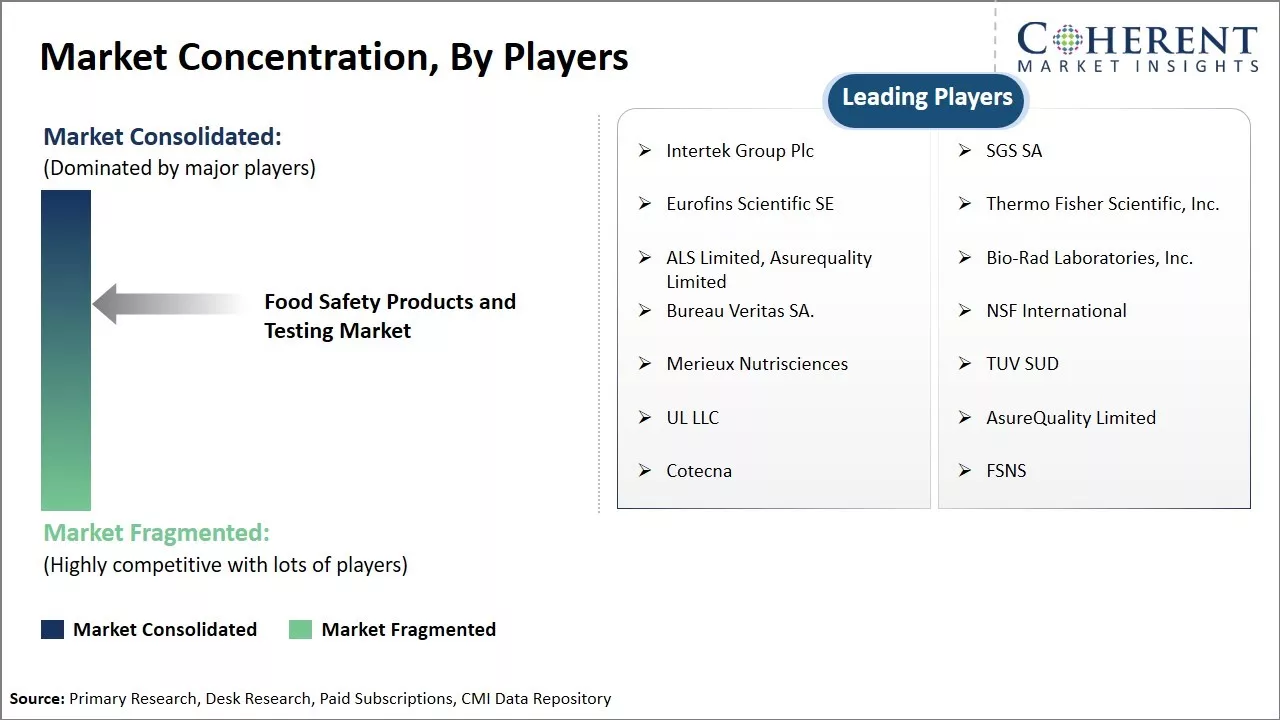
Market Concentration and Competitive Landscape
Current Events and their Impact on the Food Safety Products and Testing Market
Current Events | Description and its impact |
Technology-Driven Market Transformation |
|
Economic and Inflationary Pressures |
|
- Current Industry Events of 2026
- Market Size Estimation
- Regional Breakdown
- Competitive Landscape
- Customer Intelligence
- Segmental Analysis
- Pricing Analysis
- Key Market Drivers, Challenges & Future Trends
- Customized Insights Section
Market Trends
Increasing Incidences of Foodborne Illnesses
The increasing incidences of foodborne illnesses across the globe have become a critical driver for the expansion of the food safety products and testing market. Foodborne illnesses, caused by pathogens such as Salmonella, E. coli, Listeria, and Norovirus, pose significant health risks, leading governments and regulatory bodies to heighten scrutiny around food safety standards.
For instance, as per the World Health Organization (WHO), unsafe food causes 600 million cases of foodborne diseases and 420,000 deaths worldwide. 30% of foodborne deaths occur among children under 5 years of age. It estimated that 33 million years of healthy lives are lost due to eating unsafe food globally each year.
Segmental Insights

Food Safety Products and Testing Market Insights By Test Type: Microbiological Testing Dominates the Food Safety Market
In terms of test type, microbiological testing is expected to contribute 28.6% share of the food safety products and testing market, owing to growing concerns over foodborne illnesses.
Testing for microorganisms like pathogenic bacteria, yeasts, and molds has become imperative in ensuring the safety of foods. Recent outbreaks of foodborne diseases linked to contaminated food products have heightened awareness about the importance of microbiological quality control. Microbiological contamination remains one of the major causes of food spoilage and foodborne illnesses. Even in small numbers, certain microbes can cause serious diseases if consumed.
Food Safety Products and Testing Market Insights By Application: Meat, Poultry and Seafood Dominate Food Safety Testing
In terms of application, meat, poultry & seafood products contributes an estimated 40.6% share of the food safety products and testing market, owing to the high risk of pathogens in these foods.
Meats are highly susceptible to microbial contamination as they provide ideal conditions for bacterial growth. Poultry products also require stringent safety checks since birds can easily be carriers of foodborne illnesses. Seafood is vulnerable to contamination due to its exposure to sea water and complex production processes involved. Given their significance as a major source of protein, meat and poultry items figure prominently in the world’s diet.
Emerging Innovations in the Food Safety Products and Testing Market
- The Use of Blockchain Technology to Enhance Traceability and Transparency
- By recording every transaction and movement of food products on an immutable digital ledger, blockchain ensures authenticity, reduces fraud, and expedites recall processes if contamination is discovered. Food products traced through Blockchain networks give end-consumers and regulatory bodies greater confidence in their safety.
- The Use of Biosensors and Nanotechnology in Food Safety Testing
- Biosensors employ biological molecules as recognition elements and can detect specific contaminants such as toxins, bacteria, or pesticide residues with high sensitivity and specificity. Nanomaterials, such as gold nanoparticles or carbon nanotubes, enhance these sensors by improving signal amplification and stability.
Impacts of Artificial Intelligence (AI) on the Food Safety Products and Testing Market
The integration of AI technologies across the industry is enabling stakeholders to advance beyond traditional methods toward more intelligent, data-driven systems.
- Neogen Corporation, a leader in food safety solutions, successfully incorporated AI into its product offerings. Neogen’s rapid pathogen detection kits are now complemented by AI-powered image analysis software that interprets test results more quickly and accurately than manual methods. This AI solution helps laboratories process higher sample volumes while reducing human error.
- Clear Labs, a food safety testing company, leverages AI to enhance genomic sequencing processes for pathogen detection. Their AI-driven platform accelerates the identification of harmful bacteria such as Salmonella or Listeria in food samples with higher sensitivity and specificity compared to conventional techniques. By automating data analysis and pattern recognition, Clear Labs reduces testing turnaround times and allows producers to ensure safety with greater confidence, supporting faster decision-making and reduced risk.
Regional Insights
North America Food Safety Products and Testing Market Analysis and Trends
The North America region has dominated the global food safety products and testing market over the past decade driven by stringent regulations around food safety and quality with an estimated 41.9% of the market share in 2026. With a large consumer base and strong economic conditions, food manufacturers in the U.S. and Canada are raising their standards to comply with the various federal and local laws enacted to ensure public health and safety.
For instance, the Centers for Disease Control and Prevention (CDC) estimates that each year 48 million people get sick from a foodborne illness, 128,000 are hospitalized, and 3,000 die.
Asia Pacific Food Safety Products and Testing Market Analysis and Trends
The fast growth of the Asia Pacific food industry has propelled the region to become a major force in the global market for food safety products and testing in recent years. Countries like China, India, and Japan now account for over half of the world's population and a growing middle-income consumer. Domestic food companies as well as multinationals setting up facilities in the region are investing heavily in safety solutions to gain consumer confidence and access international markets.
For instance, as per the World Health Organization (WHO), the South-East Asia region experienced the second highest burden of foodborne diseases (FBDs) after the African Region, with more than 150 million cases and 175 000 deaths annually.
Food Safety Products and Testing Market Outlook for Key Countries
U.S. Food Safety Products and Testing Market Analysis and Trends
The U.S. Food Safety Modernization Act (FSMA) has reshaped the nation's approach to food safety by prioritizing prevention over reaction. This paradigm shift has led to an increased demand for advanced testing solutions capable of detecting pathogens like Salmonella and Listeria at early stages. This regulatory-driven approach underscores the critical role of robust testing mechanisms in maintaining food safety standards across the nation.
China Food Safety Products and Testing Market Analysis and Trends
In response to past food safety incidents, China has significantly enhanced its food safety infrastructure. The government has implemented stricter regulations and improved surveillance systems to monitor food quality. By bolstering its testing capabilities, China aims to ensure the safety of both domestically produced and imported food products, thereby restoring consumer confidence and meeting international standards.
Germany Food Safety Products and Testing Market Analysis and Trends
Germany's position as a leading food exporter necessitates strict adherence to food safety standards. The European Food Safety Authority (EFSA) enforces rigorous regulations, compelling German food manufacturers to implement comprehensive testing protocols. This includes regular checks for contaminants like pesticides and heavy metals, ensuring that products meet the high-quality expectations of international markets.
India Food Safety Products and Testing Market Analysis and Trends
India's rapid urbanization and growing population have intensified challenges related to food adulteration and contamination, particularly in urban areas. The Food Safety and Standards Authority of India (FSSAI) has responded by implementing stricter regulations and enhancing enforcement measures. Initiatives such as the "Food Safety on Wheels" mobile testing laboratories and the "Detect Adulteration with Rapid Test (DART)" guide aim to empower consumers and improve surveillance.
Pricing Analysis of the Food Safety Products and Testing Market
- North America:
- Key Markets: U.S. and Canada
- Price Characteristics: Highest pricing due to sophisticated products and compliance standards.
- Example: PCR systems typically priced at USD 30,000-USD 90,000; test kits at premium rates.
- Cost Drivers: High labor and fulfillment costs; preference for branded products.
- Europe:
- Key Markets: Germany, the U.K., and France
- Price Characteristics: Comparable to North America but with a stronger presence of local European brands (e.g., Eurofins).
- Example: ELISA kits range from USD 350 – USD 800.
- Cost Drivers: Stringent food safety regulations support demand for quality products.
- Asia Pacific:
- Key Markets: China, India, Japan, and Australia
- Price Characteristics: Wider price ranges; competitiveness due to local manufacturers.
- Example: Rapid test kits as low as USD 30 per test from local brands; instruments often 10-20% cheaper than in North America.
- Cost Drivers: Growing investments in food safety infrastructure; price-sensitive small and medium enterprises.
Market Report Scope
Food Safety Products and Testing Market Report Coverage
| Report Coverage | Details | ||
|---|---|---|---|
| Base Year: | 2025 | Market Size in 2026: | USD 2.83 Bn |
| Historical Data for: | 2020 To 2024 | Forecast Period: | 2026 To 2033 |
| Forecast Period 2026 to 2033 CAGR: | 8.1% | 2033 Value Projection: | USD 4.89 Bn |
| Geographies covered: |
| ||
| Segments covered: |
| ||
| Companies covered: | Intertek Group Plc, SGS SA, Eurofins Scientific SE, Thermo Fisher Scientific, Inc., ALS Limited, Asurequality Limited, Bio-Rad Laboratories, Inc., Bureau Veritas SA., NSF International, Merieux Nutrisciences, TUV SUD, UL LLC, AsureQuality Limited, Cotecna, and FSNS | ||
| Growth Drivers: |
| ||
| Restraints & Challenges: |
| ||
Food Safety Products and Testing Industry News
- In April 2025, Intertek launched a comprehensive suite of solutions to help companies comply with the new European Union Deforestation Regulation (EUDR). Intertek is a leading Total Quality Assurance provider to industries worldwide. This regulation affects the import and export of seven key commodities wood, rubber, cocoa, coffee, cattle, soy, and palm oil—within the European market.
- In May 2025, the General Administration of Customs of China (GACC) announced a list of products of animal origin prohibited from being imported into China due to animal diseases occurring in countries or territories.
- In February 2025, Food Safety and Standards Authority of India (FSSAI) notified NABL accredited food testing laboratories having necessary NABL accreditation as on February 06, 2025 for the purpose of carrying out analysis of samples taken under Section 47 of the Food Safety and Standards Act, 2006.
- In May 2025, Biosafe launched a publicly funded development initiative to define the specialized testing and analytical services needed for regulatory safety assessments of cultivated meat and cell-culture food. The initiative emphasizes on aligning future laboratory services with the expectations of authorities in the European Union, the U.S., Singapore, and other markets.
Analyst View
- The food safety products and testing market is witnessing significant momentum, driven by escalating consumer awareness about food contamination and regulatory mandates worldwide. Increasing incidences of foodborne illnesses and stringent government regulations are primary drivers propelling the adoption of advanced testing solutions across the supply chain.
- Additionally, the rising demand for processed and packaged foods necessitates comprehensive safety testing to ensure compliance with quality standards, further boosting market penetration. However, the high cost associated with sophisticated testing equipment and the need for skilled personnel pose notable challenges, potentially restraining rapid market expansion.
- Technological advancements, including rapid microbial detection techniques and improved chemical residue analysis, present substantial opportunities for enhancing testing accuracy and reducing turnaround times. The integration of AI and IoT in food safety testing offers promising prospects for real-time monitoring and predictive analytics.
- Companies investing in innovative, cost-effective testing solutions tailored to address regional food safety concerns are positioned to capture significant market share. Furthermore, collaborations between government bodies and private enterprises to strengthen food safety infrastructure will likely accelerate adoption and innovation.
- Overall, the food safety products and testing market is poised for robust development, driven by a combination of regulatory pressure, technological innovation, and growing consumer emphasis on food quality and safety.
Market Segmentation
- Test Type Insights (Revenue, USD Bn, 2021 - 2033)
- Chemical & Nutritional Testing
- Allergen Testing
- Genetically Modified Organism (GMO) Testing
- Microbiological Testing
- Others (Residues & Contamination Testing, etc.)
- Application Insights (Revenue, USD Bn, 2021 - 2033)
- Meat, Poultry, & Seafood Products
- Dairy & Dairy Products
- Processed Food
- Beverages
- Cereals & Grains
- Others
- Regional Insights (Revenue, USD Bn, 2021 - 2033)
- North America
- U.S.
- Canada
- Latin America
- Brazil
- Argentina
- Mexico
- Rest of Latin America
- Europe
- Germany
- U.K.
- Spain
- France
- Italy
- Russia
- Rest of Europe
- Asia Pacific
- China
- India
- Japan
- Australia
- South Korea
- ASEAN
- Rest of Asia Pacific
- Middle East & Africa
- GCC Countries
- Israel
- Rest of Middle East & Africa
- Key Players Insights
- Intertek Group Plc
- SGS SA
- Eurofins Scientific SE
- Thermo Fisher Scientific, Inc.
- ALS Limited, Asurequality Limited
- Bio-Rad Laboratories, Inc.
- Bureau Veritas SA.
- NSF International
- Merieux Nutrisciences
- TUV SUD
- UL LLC
- AsureQuality Limited
- Cotecna
- FSNS
Sources
Primary Research Interviews
- Food Safety Product Manufacturers
- Testing Laboratory Experts
- Regulatory Authorities
- Food Processing Companies
- Others
Magazines
- Food Safety Magazine
- Food Quality & Safety
- Journal of Food Protection Magazine
- Food Technology Magazine
- Others
Journals
- Food Control
- Journal of Food Science
- Food Microbiology
- International Journal of Food Microbiology
- Others
Newspapers
- The Food Safety News
- The Economic Times (Food & Agriculture section)
- Food Navigator
- The New York Times (Food Section)
- Others
Associations
- International Association for Food Protection (IAFP)
- Food Safety Magazine Association
- Codex Alimentarius Commission
- Institute of Food Technologists (IFT)
- Others
Public Domain Sources
- World Health Organization (WHO)
- Food and Agriculture Organization (FAO)
- U.S. Food & Drug Administration (FDA)
- Centers for Disease Control and Prevention (CDC)
- Others
Proprietary Elements
- CMI Data Analytics Tool – Food Safety Products and Testing Market
- CMI Existing Repository of Information for the Last 8 Years
*Definition: The food safety products and testing market consists of various instruments, solutions, and services used for ensuring the microbiological and chemical safety of food products. This includes sanitizers, disinfectants, and cleaning products that are used across the food processing and packaging industry. It also includes equipment, assays, and test kits that are used to detect pathogens, contaminants, allergens, and chemicals in food to ensure safety and compliance with regulatory standards.
Get access to 250+ pages report
Every segment, forecast, competitor profile and data table behind the analysis above — available for instant download.
- ESOMAR Member
- ISO 9001:2015 Certified
- D-U-N-S Registered
- GDPR & CCPA Compliant
Missing comfort of reading report in your local language? Find your preferred language:
Transform your Strategy with Exclusive Trending Reports
Frequently Asked Questions
The food safety products and testing market is estimated to be valued at USD 2.83 Bn in 2026, and is expected to reach USD 4.89 Bn by 2033.
The CAGR of the food safety products and testing market is projected to be 8.1% from 2026 to 2033.
Concerns regarding foodborne illnesses and implementation of preventive controls are the major factors driving the growth of the food safety products and testing market.
Strict regulations and standards and complexities in the global food supply chain are the major factors hampering the growth of the food safety products and testing market.
In terms of test type, microbiological testing is estimated to dominate the market revenue share in 2026.
Intertek Group Plc, SGS SA, Eurofins Scientific SE, Thermo Fisher Scientific, Inc., ALS Limited, Asurequality Limited, Bio-Rad Laboratories, Inc., Bureau Veritas SA., NSF International, Merieux Nutrisciences, TUV SUD, UL LLC, AsureQuality Limited, Cotecna, and FSNS are the major players operating in the food safety products and testing market.
North America is expected to lead the food safety products and testing market in 2026.